
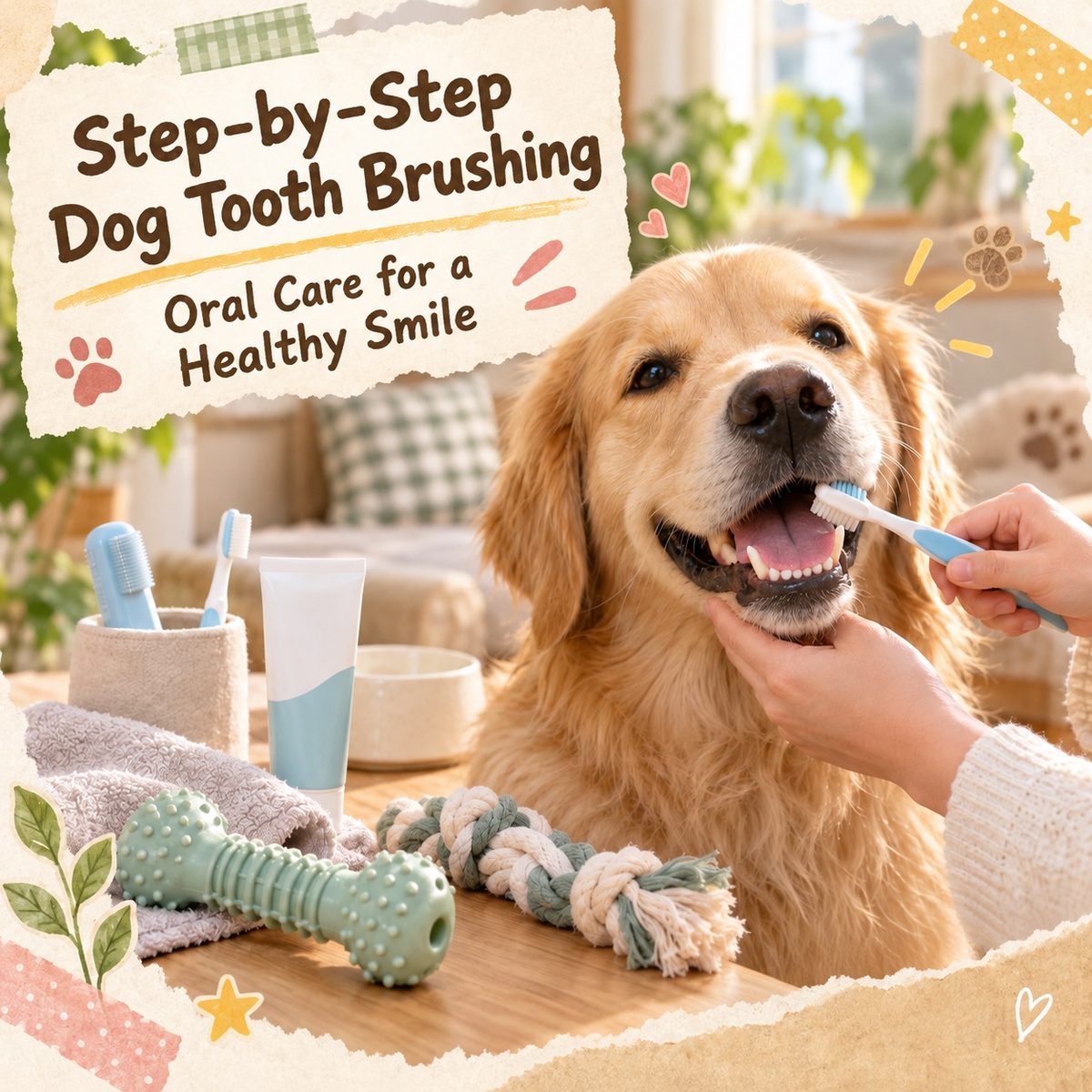
Quick answer: Dogs have 42 teeth just like humans. To avoid bad breath, tartar and tooth loss, use pet-specific toothpaste and a soft-bristled toothbrush, brushing at least once a week. If your dog resists, wipe with gauze wrapped around your finger, and supplement with dental toys—that's proper care.
Have you ever leaned close to your dog and caught a whiff of bad breath? Many owners think doggy breath is normal, but it can actually be a warning sign of dental problems! Dogs also have 42 teeth and need regular care just like us. If you neglect oral hygiene, plaque gradually builds up into tartar, which in severe cases can lead to tooth loss. Today, let PetChill walk you through the importance of brushing your dog's teeth and the correct methods!
Why must you brush your dog's teeth?
Once a dog's permanent teeth come in, plaque starts accumulating on the teeth. Plaque is made up of food debris, bacteria and saliva, and it sticks to the enamel. If it isn't brushed away regularly and is allowed to keep building up, over time it hardens into a calcium deposit—tartar.
Tartar causes the gums to become red, swollen and painful. In severe cases it can lead to periodontitis, gingivitis and alveolar pyorrhea, eventually causing teeth to loosen and even fall out. Oral problems also affect a dog's appetite and can harm overall health.
So prevention is better than helps manage—if you love your dog, you must develop the habit of brushing its teeth!
Basic facts about dogs' teeth
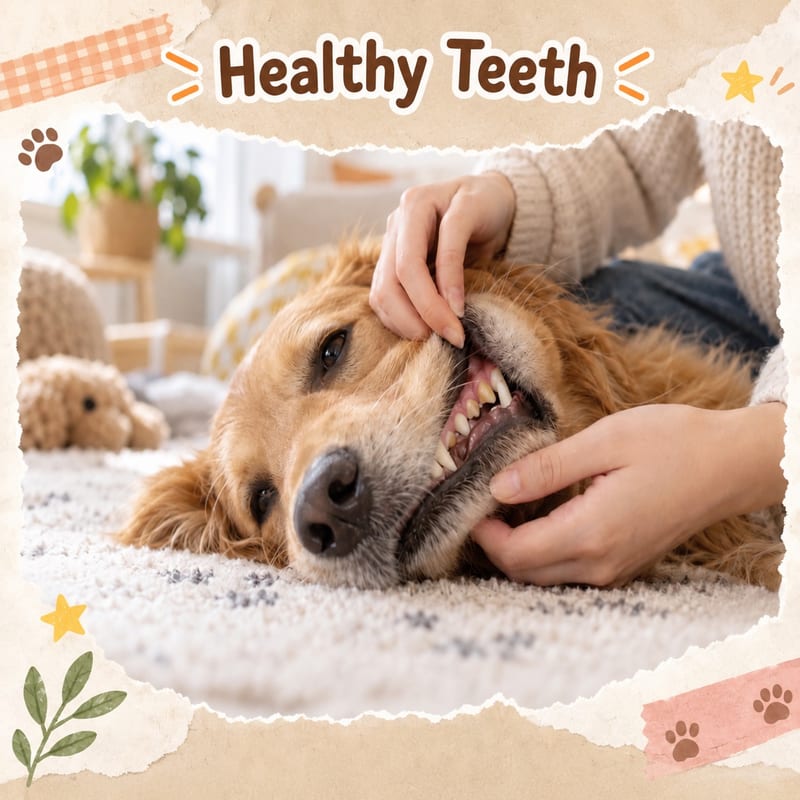
Many owners don't know that dogs actually have 42 teeth—20 in the upper jaw and 22 in the lower jaw. These teeth are a dog's powerful weapon for self-protection; only the few teeth nearest the back are used for chewing.
Healthy dog teeth should be white and the gums pink. But if plaque accumulates in the mouth, the teeth turn yellow or brown and the gums become dark red. When you notice these signs, it's time to start taking oral care seriously!
Step-by-step guide to proper brushing
Many new owners don't know how to brush their dog's teeth. Here is a detailed step-by-step guide:
Step 1: Prepare the tools
Get pet-specific toothpaste and a toothbrush. ⚠️ Never use human toothpaste, because it contains fluoride, which is harmful to dogs. Pet toothpaste usually comes in flavours dogs love, such as chicken or beef, making the brushing process smoother.
Step 2: Apply toothpaste
Squeeze an appropriate amount of pet toothpaste onto the toothbrush—not too much, a small amount is enough.
Step 3: Lift the lip and brush gently
With one hand gently lift your dog's lip, and with the other hand use the toothbrush to gently brush up and down and side to side. Be gentle, don't press too hard, to avoid hurting the gums.
Step 4: The gauze-wipe method (for dogs that resist brushing)
If your dog doesn't like brushing, wrap gauze around your finger and gently wipe its teeth and gums. This method is also very effective at removing plaque! First wrap a suitably sized piece of gauze around your finger, use the other hand to open your dog's mouth, then gently wipe with the gauze-covered finger. For dogs not yet used to brushing, you can first gently massage the teeth and gums with your finger, and switch to a toothbrush once they are used to it.
Recommended brushing frequency
According to professional advice, the recommended brushing frequency for dogs is:
- Average dog: brush once a week
- Short-nosed or breathing-impaired dogs: twice a week
- Best practice: daily brushing is most effective if you can manage it
Remember, the best time to brush is when your dog is relaxed, such as after a walk or after a meal.
Recommended dental toys
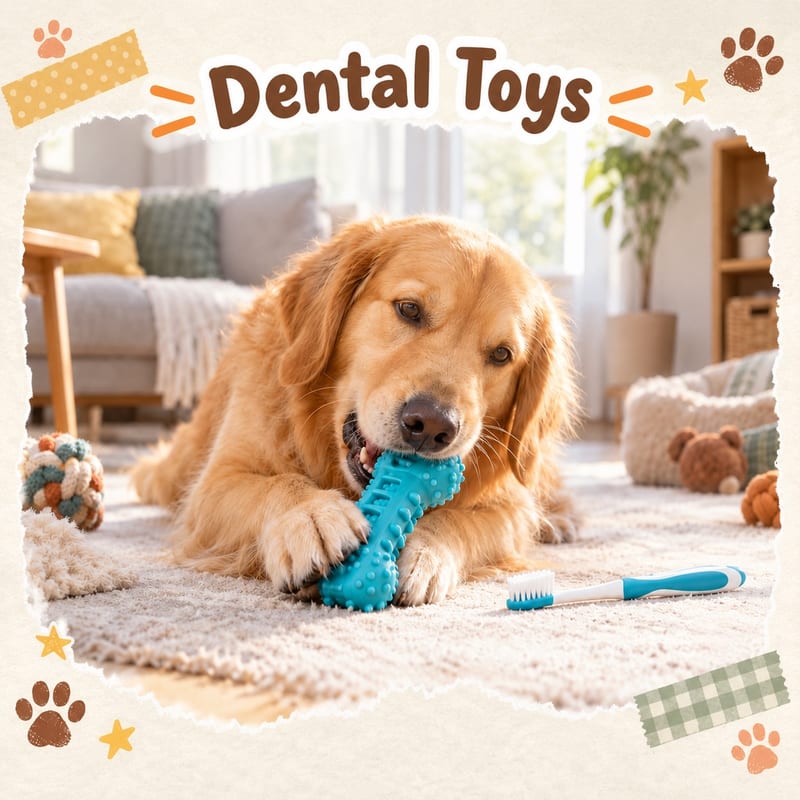
If your dog really resists brushing, don't worry too much! There are many dental toys and treats on the market that can help clean your dog's teeth:
- Dental chew sticks: friction against the tooth surface as the dog chews helps remove plaque
- Dental rope toys: clean teeth while playing, and strengthen interaction with the owner
- Deodorising biscuits: combine teeth cleaning and breath freshening; dogs enjoy them as treats
- Dental chews: bone-shaped toys designed for teeth cleaning, with textured bumps on the surface
But remember, dental toys are only a supplement—the best oral care method is still regular brushing!
| Brushing tool | Key points when buying | Where to buy in Hong Kong |
|---|---|---|
| Pet-specific toothpaste | Chicken/beef flavour, fluoride-free | Pet shops, online platforms, veterinary clinics |
| Pet soft-bristled toothbrush | Small head, long handle, doesn't scratch gums | Pet shops, pharmacy pet counters |
| Gauze finger brush | 100% cotton, washable and reusable | Pharmacies, supermarket baby sections |
| Dental toys | Dental chew sticks, rope knots, dental chews | Pet shops, pet sections of large supermarkets |
Hong Kong small-flat practical guide: brush your dog's teeth in 5 minutes
Hong Kong homes are small, and a dog can bump into furniture with one turn, so brushing needs to be quick. We suggest laying a non-slip yoga mat in the middle of the living room so your dog stands steady without slipping. First turn on the TV or air-conditioning to create background noise and reduce your dog's tension. Keep tools in a "brushing basket": toothpaste, toothbrush, gauze and a small towel all in one place, so you don't have to search around.
Schedule it around your own routine: before leaving for work in the morning or after a shower at night, when your dog is relatively tired and less resistant. Before brushing, reward with a treat gesture so your dog associates it with "food coming". Right after brushing, give a piece of dehydrated chicken jerky to create a positive cycle.
If your dog is extremely resistant, start with the "three-minute gauze finger": dampen the gauze with a little room-temperature boiled water, wrap it around your finger, and circle the outside of the teeth for 30 seconds, then the inside for 30 seconds, and 15 seconds each on the front incisors—the whole thing takes less than two minutes. After a week, gradually switch to a small-headed toothbrush, adding 10 seconds each time, slowly extending to the full five-minute routine.
Live in a walk-up building with no lift? We suggest taking your dog out for a walk right after brushing, so it links "brushing = playtime soon" and sits obediently next time. Remember to take the used gauze away and not drop it on the street—keep up civic-mindedness.
Further reading
📌 Key points
- ✅ Dogs have 42 teeth that need regular brushing, at least once a week
- ✅ Always use pet-specific toothpaste; human toothpaste contains toxic fluoride
- ✅ Brush gently, lifting the lip and brushing up, down and side to side
- ❌ Dental toys alone are not enough and cannot replace brushing
- ❌ Waiting until teeth turn yellow and gums dark red is already too late