Quick Answers
- Plaque matures in about 1 to 2 days; cleaning once daily is key to interrupting accumulation.
- VOHC-recognised in 2011, a dog toothpaste in the "plaque control" category.
- Brand data: 62% plaque reduction, 28% gingivitis reduction.
- Cannot address tartar or periodontal pockets; only veterinarian scaling can.
- Clean once daily, check once weekly, see a veterinarian every 6 to 12 months.
- Dogs have 42 teeth, cats 30; 30 to 60 seconds each time.
"The biggest benefit of long-term Petsmile toothpaste use is interrupting plaque before it matures." Plaque is formed on the tooth surface from food debris, bacteria, and salivary proteins, and thickens and matures within about 1 to 2 days; cleaning the tooth surface once daily with pet toothpaste continuously suppresses plaque volume, delays its calcification into tartar, and helps improve redness at the gum margin. Petsmile Professional Pet Toothpaste was added to the VOHC list of accepted products in 2011 for "plaque" (dog table), making it one of the few pet toothpastes in Hong Kong with a third-party review record. But to be clear: toothpaste is a tool, not a helps manage-all—already calcified tartar, periodontal pockets, and alveolar bone loss will not disappear with long-term toothpaste use.
This article covers four parts: first, what Petsmile actually is and how broad the VOHC recognition is; second, the 6 practical benefits of long-term daily use, explaining the mechanism of each; third, the boundary between what toothpaste can and cannot do, and safety points for long-term use in cats and dogs; fourth, the flavours, sizes, and prices available in Hong Kong, and the correct daily usage. To first build a complete oral care framework, see Complete Oral Care Guide for Cats and Dogs | How to Choose Tartar, Bad Breath, and Brushing Tools (2026).
What Is Petsmile Toothpaste? VOHC Recognition Scope and Formula Highlights
First, the most easily misunderstood part: VOHC recognition.
VOHC (Veterinary Oral Health Council, US) is associated with the American Veterinary Dental College; its list of accepted products is separated by product type and "claim," and requires manufacturers to submit research data for review. So when you see "VOHC accepted," you must also check which claim is accepted and whether it is on the dog or cat table.
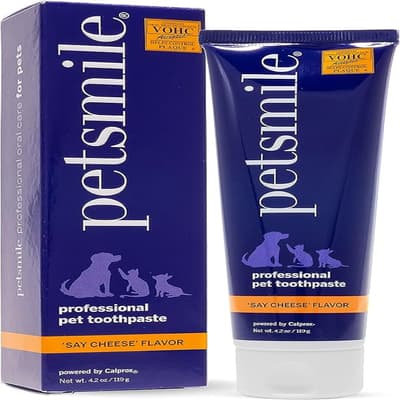
Petsmile Professional Pet Toothpaste's record: product type is toothpaste, accepted claim is "Plaque," company is Supersmile (Robell Res), it is in the consumer-purchasable category, and it received the acceptance mark in 2011. This is the most substantial difference between it and most pet toothpastes.
Three points to note, do not misinterpret:
- The recognition scope is plaque, not tartar. Already calcified hard deposits are not covered, and toothpaste cannot brush them away.
- Recognition does not equal treatment. Diagnosis and treatment of periodontal disease (anaesthetic scaling, subgingival debridement, extraction) are not waived by using toothpaste.
- The VOHC list has separate dog and cat tables. This Petsmile recognition is listed under the dog toothpaste category; the cat toothpaste category includes other brands (e.g., Healthymouth Toothpaste/Brush Kit Combination for Cats, 2015, also for plaque control). So before using it on cats, it is best to discuss the cat's oral condition with a veterinarian, especially for cats with a history of stomatitis or gingivitis.
Regarding the formula, the key points from product information are: the brand's patented ingredient Calprox is encapsulated calcium peroxide plus minerals, designed to gently dissolve the biofilm on the tooth surface—the layer to which plaque, bacteria, and stains adhere; contains calcium, magnesium, and phosphate; the brand states the product does not contain silica, microbeads, sodium lauryl sulfate (SLS), triclosan, or diethanolamine, and uses food-grade/human-grade ingredients. The brand also publishes its own test figures: 62% more plaque reduction than a control toothpaste, and 28% more gingivitis reduction. These figures should be viewed as "manufacturer-published data," not independent PetChill test results; they are cited here to explain product positioning, not to endorse any brand.
Finally, positioning. Petsmile's main selling point is "brush-free": a pearl-sized amount once daily applied to the tooth surface, no rinsing needed, and cats and dogs usually accept it well due to the taste. This design is a practical fallback for pets that cannot be brushed at all. However, there are other VOHC-accepted dental products on the market—toothpastes from different brands, oral gels, water additives, dental chews—each with its own use case; no single product suits all pets. Product choice should depend on your pet's acceptance, actual oral condition, and veterinarian advice.
6 Practical Benefits of Long-Term Daily Use
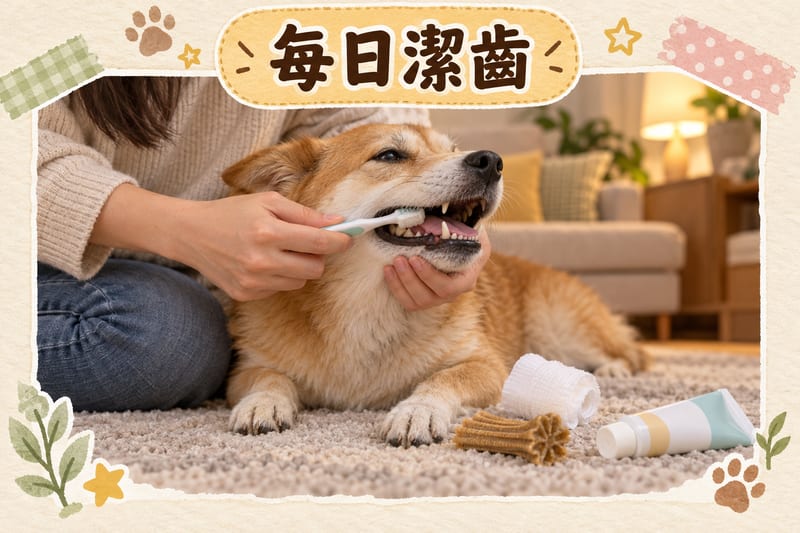
1. Interrupt accumulation before plaque matures. Plaque is a transparent film that matures within 1 to 2 days as the bacterial community becomes more complex. Cleaning once daily means interrupting the growth cycle every 24 hours, so bacteria remain in an immature stage with much lower toxicity and adhesion. This is the core value of long-term use.
2. Delay tartar formation. Tartar forms when calcium and phosphorus in saliva deposit into plaque and mineralise. The thinner and fresher the underlying plaque, the less material available for mineralisation, so tartar forms more slowly. Note: delay does not mean complete prevention; constitution, diet, and salivary pH all play a role.
3. Help improve early gingivitis. Gingivitis (stage 1 periodontal disease) is the only stage that can be completely reversed. As long as plaque at the gum margin is continuously removed, redness and slight bleeding on touch can gradually resolve; but once inflammation spreads to the periodontal ligament and alveolar bone (stage 2 and beyond), it can only be controlled, not reversed.
4. Improve breath. Most pet bad breath originates from oral plaque and tartar; when plaque volume is kept low long-term, breath usually improves. Know the boundary: if breath worsens noticeably in a short time, or smells of urine, sweetness, or rot, do not treat it as ordinary bad breath—get blood tests and an oral examination early.
5. Reduce the hidden cost of chronic dental pain. Long-term gum inflammation is painful, but pets do not say so; they may eat more slowly, start choosing soft food, stop after a few bites, become irritable, or resist having their face touched. Many owners only realise "so he was in pain" after scaling, and appetite immediately returns. Long-term oral care is the daily means of preventing this silent pain.
6. Make brushing more successful and habits easier to build. The hardest part of long-term care is not the formula, but persistence. A toothpaste with high taste acceptance can be used as a reward: praise immediately after application, then give a small treat, so the pet goes from resistance to acceptance. This often has a bigger impact on "whether you can keep it up" than the ingredient list itself.
Breaking long-term care into three layers of rhythm makes execution much clearer:
| Frequency | What to do | Goal |
|---|---|---|
| Once daily | Clean tooth surfaces with pet toothpaste and a toothbrush or damp gauze for 30 to 60 seconds | Interrupt plaque maturation, reduce accumulation |
| Once weekly | Lift the lip to check for tartar, gum colour, and breath; take photos for records | Detect changes early, provide reference for check-ups |
| Every 1 to 3 months | Replace toothbrush, check toothpaste stock, review pet's acceptance | Avoid worn tools affecting cleaning effectiveness |
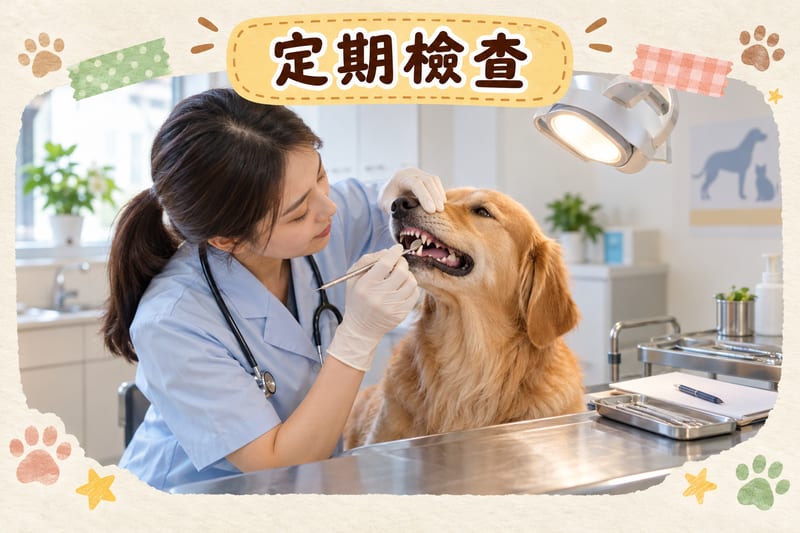
| Every 6 to 12 months | Veterinarian oral assessment (dental X-rays if needed) | Address issues that home cleaning cannot |
What Toothpaste Can and Cannot Do: Boundaries of Long-Term Use
The value of long-term use must be placed correctly to avoid disappointment. Here is a comparison of the six most common items:
| Item | What long-term toothpaste use can do | What else is needed |
|---|---|---|
| Plaque | Daily cleaning slows accumulation and prevents maturation | Mechanical friction from brushing or gauze wiping |
| Early gingivitis (stage 1) | Redness may improve with continuous cleaning | Re-check within 1 to 3 months to confirm improvement |
| Calcified tartar | Cannot do; tartar cannot be brushed away | Ultrasonic scaling under anaesthesia by a veterinarian |
| Periodontal pockets, alveolar bone loss | Cannot do; irreversible changes | Subgingival debridement, extraction if necessary, with veterinarian follow-up |
| Breath | Indirect improvement (reduced plaque and bacteria) | If breath changes suddenly or smells of urine or sweetness, blood tests needed |
| Tooth surface stains | Helps remove some surface stains | Scaling and polishing for deposited stains |
To explain: toothpaste mainly acts on the "soft" plaque layer; it cannot shatter already mineralised hard deposits, so any claim that "long-term use means no need for scaling" is invalid. Conversely, if your pet already has obvious tartar, gum recession, or loose teeth, the correct order is to have the veterinarian treat first, then maintain with daily cleaning—reversing the order will delay treatment. This logic is consistent with the principles of cat oral care; see Cat Oral Care | Guide to Cat Brushing, Tartar, Bad Breath, and Periodontal Disease.
5 Things to Note for Long-Term Use in Cats and Dogs
- Always use pet-specific toothpaste. Human toothpaste contains fluoride and xylitol (some whitening formulas have higher levels), which can poison dogs and cats and is one of the common cases on pet poison hotlines. Pet toothpaste is designed to be swallowed, so no rinsing is needed; but do not feed it like a treat without limit—a pearl-sized amount each time is enough.
- In some situations, see a veterinarian first; do not rely on toothpaste. If you see obvious tartar, persistent gum redness and bleeding, drooling, loose teeth, chewing on one side, eating slowly, or sudden breath changes, do not wait for "long-term toothpaste use to slowly improve"—book an oral assessment immediately.
- "Brush-free" does not mean no cleaning needed. The brush-free formula solves the real problem of "pets won't allow brushing," but the veterinary oral care consensus is still that mechanical friction is most effective at removing plaque. Brush if you can; if not, wipe with damp gauze; do not skip this step entirely.
- Be extra gentle during teething in puppies and kittens. 4 to 7 months is the peak teething period, and gums are naturally sensitive; during this time, use gauze instead of a toothbrush, or reduce pressure and duration. To understand teething changes, see Kitten Teething Guide | Timeline from Baby Teeth to Permanent Teeth.
- Do not neglect storage and expiry. Close tightly after use, avoid high heat and direct sunlight, and use within the period stated on the product after opening. Do not use if the toothpaste changes colour, smell, or separates, especially an old tube that has been used for a year.
Also follow one principle: if your pet is on veterinarian-prescribed medication (e.g., antibiotics, anti-inflammatory painkillers), toothpaste can only be supportive; do not stop medication or adjust dosage on your own—follow all veterinarian instructions.
5 Steps for Daily Long-Term Use
- Adjustment period (first 3 to 5 days). Put a little toothpaste on your finger and apply to the lip edge and tooth surface, then immediately praise and give a small treat to build the association "touching mouth = something good." Skipping this step often leads to a tug-of-war later.
- Accurate amount. Cats and small dogs: a pearl-sized amount; large dogs: at most a pea-sized amount. Too much makes pets feel greasy and want to spit, increasing resistance.
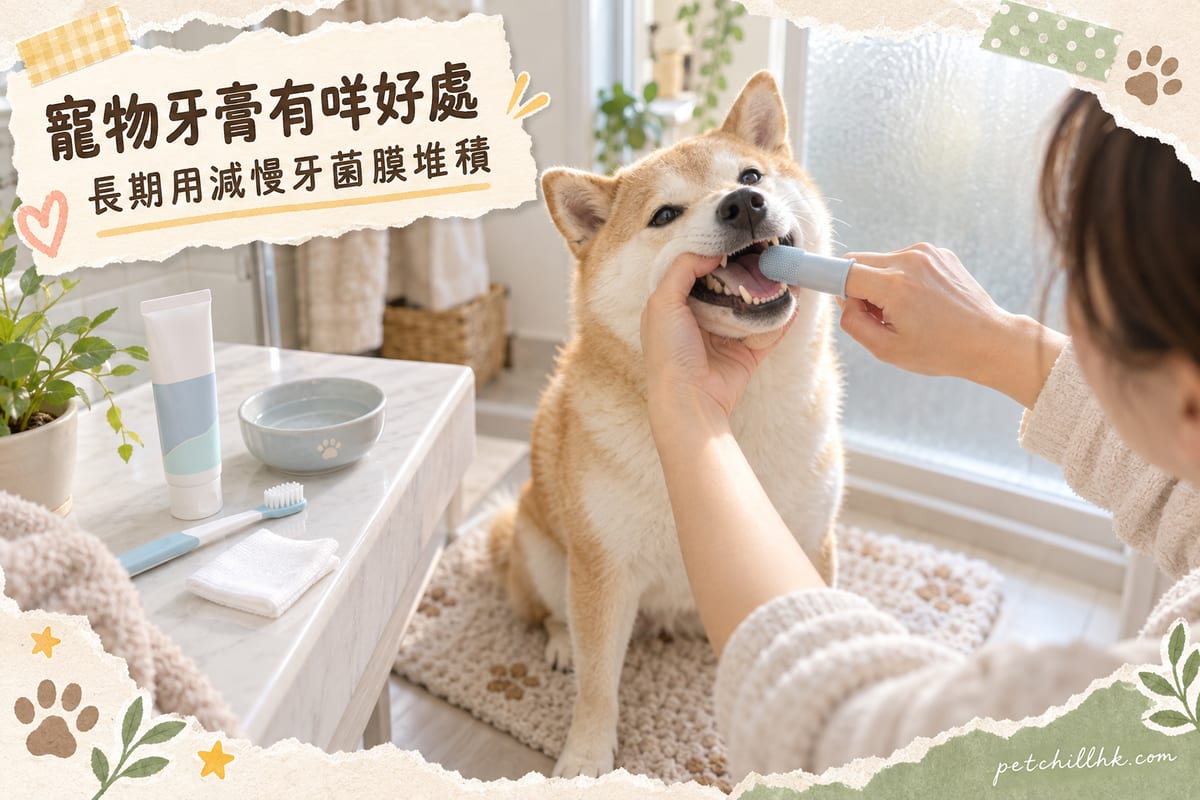
- Choose suitable tools. Finger toothbrush, soft-bristled pet toothbrush, or damp gauze are all fine; rotating the three is the most practical approach. Hold the bristles at about a 45-degree angle to the gum margin and move gently up and down. For detailed technique, see Complete Guide to Dog Brushing | 42-Teeth Care Every Hong Kong Pet Owner Should Learn.
- Do each side; do not skip. Start from one back tooth, at least 10 seconds per side, focusing on back teeth and canines—these two areas accumulate tartar most easily. 30 to 60 seconds total is enough; you do not need to brush perfectly every time.
- Finish and reward immediately. No rinsing needed; just wipe away excess around the mouth; then immediately give a small treat or play for a while, so your pet remembers this is rewarding. Long-term care depends on habit, not doing it perfectly once.
If your pet strongly resists, one compromise is: first use brush-free toothpaste to build acceptance, let them get used to having their mouth touched, then add gauze wiping two to three times a week, gradually transitioning.
Buying Petsmile Toothpaste in Hong Kong: Flavours, Sizes, and Prices
Current flavours and specifications available in Hong Kong (prices are PetChill online store listed prices):
petsmile Brush-Free Professional Pet Care Toothpaste Cheese Flavour 4.2oz (ST5249) — HK$242
Prices and stock are subject to the online store's current listed price.
| Product | Size | Price | Stock Status |
|---|---|---|---|
| petsmile Brush-Free Professional Pet Care Toothpaste Cheese Flavour (ST5249) | 4.2oz (about 119g) | HK$242 | Currently shows 0, available for pre-order |
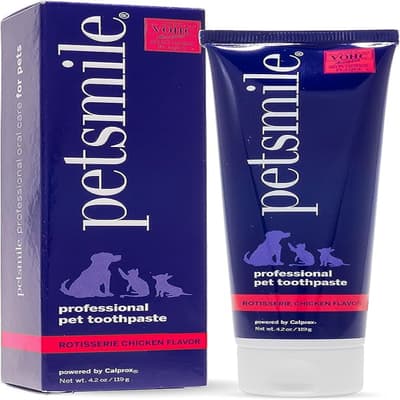
| petsmile Brush-Free Professional Pet Care Toothpaste Roasted Chicken Flavour (ST5317) | 4.2oz (about 119g) | HK$242 | Currently shows 0, available for pre-order |
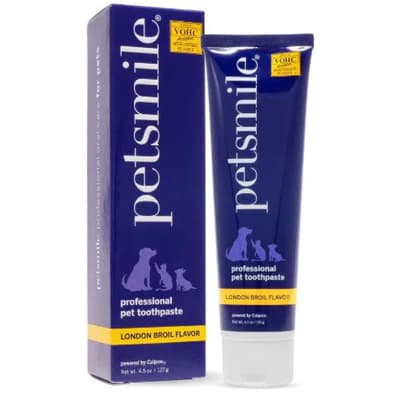
| petsmile Brush-Free Professional Pet Care Toothpaste Roasted Beef Flavour (ST2507) | 2.5oz (about 71g) | HK$168 | Currently shows 0, available for pre-order |
Choosing a size: 2.5oz is suitable for first-time tasting to see if your pet accepts it; 4.2oz is suitable for households that have confirmed acceptance and plan long-term daily use, with a lower unit cost. For flavours, cheese, roasted chicken, and roasted beef are meaty aromas generally accepted by cats and dogs; if your pet is sensitive to a certain meat or has dietary restrictions, ask your veterinarian first. Size figures are converted at about 28.35g per ounce and are for reference.
Usage note: the brush-free design is for applying to the tooth surface once daily, not as a treat or reward without limit; check toothpaste stock and expiry every 1 to 3 months. If your pet suddenly rejects a flavour, switching flavours is usually easier than forcing it.
Further Reading
- Complete Oral Care Guide for Cats and Dogs | How to Choose Tartar, Bad Breath, and Brushing Tools (2026)
- Complete Guide to Dog Brushing | 42-Teeth Care, Steps, and Dental Toys Every Hong Kong Pet Owner Should Learn
- Cat Oral Care | Guide to Cat Brushing, Tartar, Bad Breath, and Periodontal Disease
- Kitten Teething Guide | Timeline from Baby Teeth to Permanent Teeth and Teething Care
Sources: VOHC (Veterinary Oral Health Council) list of accepted products dog and cat tables, brand-published product information and own test figures, PetChill online store current listed prices.
For emergencies, contact a veterinarian immediately; this article is for reference only and cannot replace veterinary diagnosis.
Data checked as of 2026-10-12Source: PetChill editorial team