
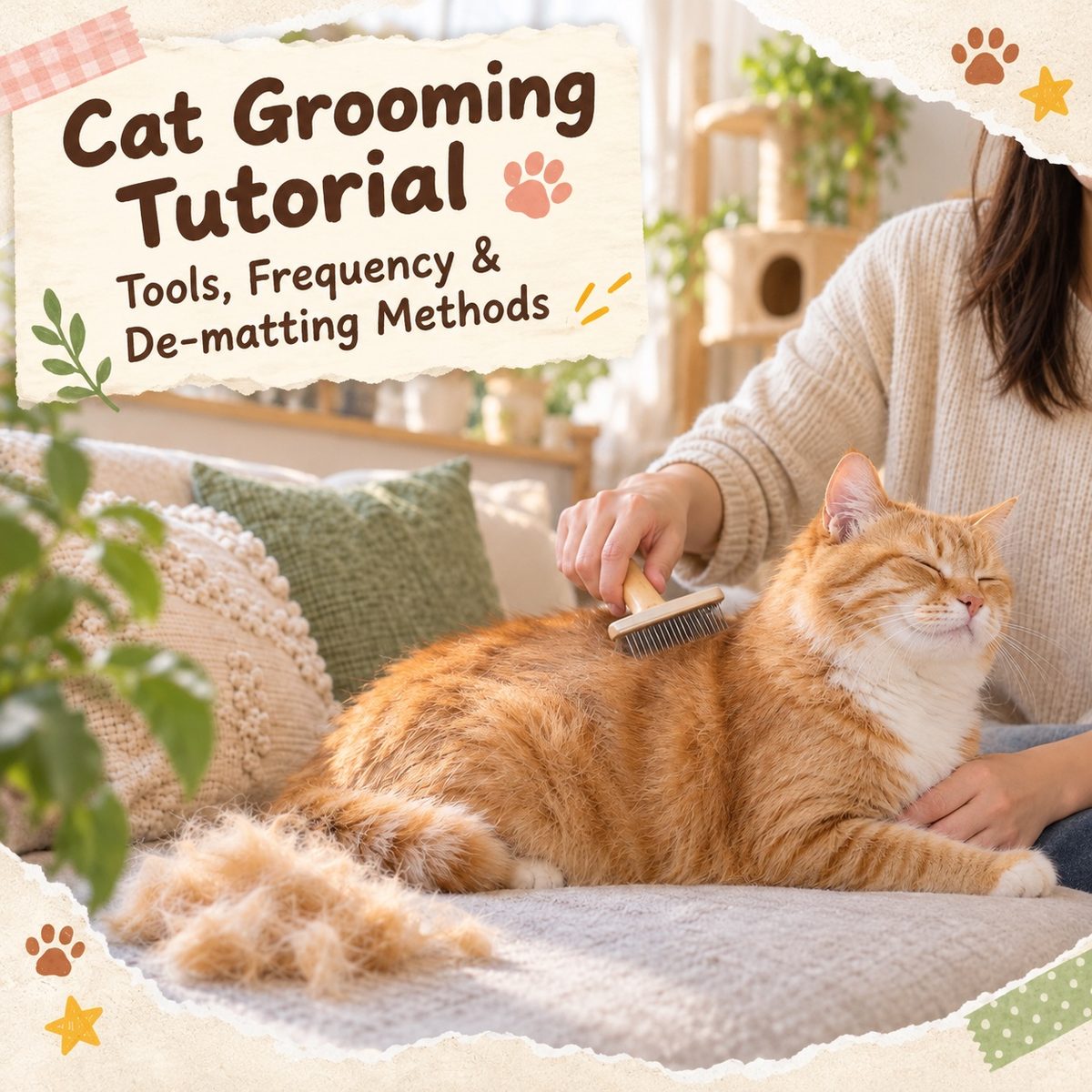
Quick answer: Brushing is the baseline of daily cat care: use a cat-specific brush and gently brush in the direction of the coat. Short-haired cats need 1-2 times a week, long-haired cats daily, and more often during shedding season. Brushing also lets you check the skin, prevent mats, reduce hairballs and strengthen your bond.
Brushing is a basic part of daily cat care: removes dead hair, prevents mats, reduces hairballs, checks the skin and strengthens your bond. Do it right by using a cat-specific brush, brushing in the direction of the coat and being gentle without tugging; short-haired cats need 1-2 times a week, long-haired cats daily. This article walks you through tools and technique step by step, including fixes for cats that hate brushing.
Why brush your cat?
Five benefits of brushing:
- Removes hair — brushes out dead hair that has shed but is still stuck in the coat, reducing hair around the home and hair your cat swallows while grooming
- Prevents mats — especially in long-haired cats; once a mat hardens it can't be combed out and may need clipping
- Reduces hairballs — less swallowed hair means fewer hairballs and less hairball-related constipation
- Checks the skin — you can feel for lumps, ringworm, fleas and wounds, catching problems early
- Strengthens your bond — once your cat is used to it, brushing becomes a regular date between cat and owner
Brushing is a baseline daily care task — more important than bathing, less fussy than fancy grooming tools, and the cheapest and most effective.
How to choose brushing tools?
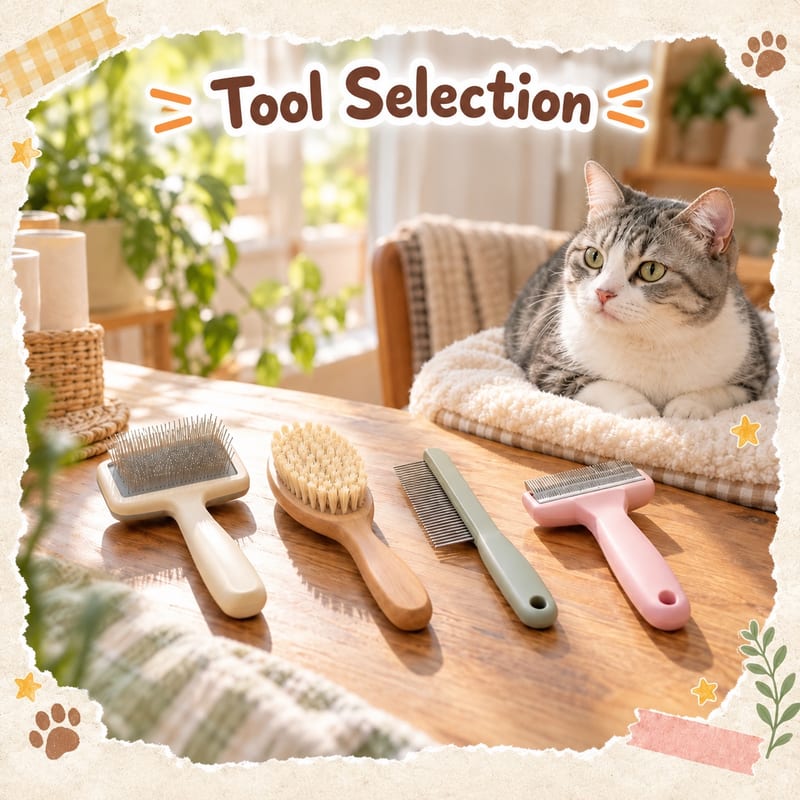
Four common tools:
| Tool | Purpose | Suitable for |
|---|---|---|
| Comb | Detangles mats, checks skin | All cats, essential |
| Slicker brush | Smooths coat, removes loose hair | Short to medium coats |
| De-shedding tool | Removes large amounts of dead undercoat | Long coats, shedding season |
| Grooming glove | Gentle interaction, removes loose hair | Cats scared of brushes |
Two principles for choosing tools: cat-specific (human combs have the wrong tooth spacing and curvature for cat fur), and one coat, one brush (long-haired cats need a de-shedding tool plus a comb). Start when they're kittens so they're used to it as adults.
How to brush a cat: five steps
- Pick the right moment — when your cat is relaxed or sleepy is easiest
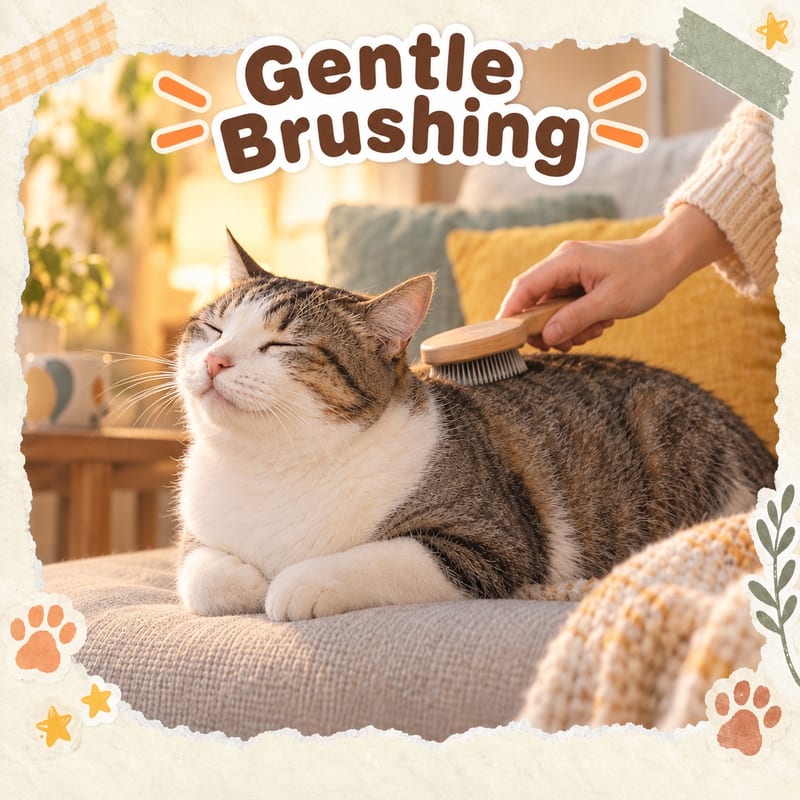
- Brush from head to tail in the direction of the coat — start with comfortable areas like the neck, back and sides
- Go slowly on limbs and tail — paws and belly are sensitive; use a comb gently, bit by bit
- Work out mats by hand first — tease them apart layer by layer with your fingers or the tip of a comb; never tug (one painful pull and your cat will refuse brushing next time)
- Check the skin as you go — look for redness, dandruff, flea dirt or bald patches while brushing
Five to ten minutes per session is enough; short and frequent is better than brushing until your cat blows up. Give treats afterwards so it ends on a good note.
Brushing frequency: how often?
| Situation | Recommended frequency |
|---|---|
| Short-haired cats | 1-2 times a week |
| Long-haired cats (Persian, Burmese, etc.) | Daily |
| Shedding season (spring and autumn) | Increase to daily or every other day |
| Thick winter coat | More often to prevent undercoat mats |
Every day you skip brushing a long-haired cat is another day for mats to form; tight, hardened knots can't be pulled apart by yourself and pulling hard can hurt the skin — leave it to a professional groomer or veterinarian.
How to fix a cat that's scared of brushing?
- Shorten sessions — even ten seconds counts as success at first; lengthen gradually
- Start with comfortable spots — chin and sides of the neck, avoid the belly and tail at first
- Positive associations — always follow brushing with a treat or toy so they learn "brushing = good thing"
- Change tools — if a slicker brush seems to prick, try a grooming glove or soft comb
- Don't chase — stop when your cat moves away; forcing it only strengthens resistance
Most cats improve within one to two weeks; if your cat is extremely panicked or even aggressive, don't force it — seek help from a behaviour consultant or groomer.
How to deal with hairballs? Brushing is the first preventive
Cats groom daily, and swallowed dead hair clumps into hairballs in the stomach. An occasional hairball is normal, but frequent dry heaving, vomiting after eating or constipation means too much hair:
- Reduce hair at the source — regular brushing removes dead hair before it's swallowed; the cheapest and most effective method
- Help it pass — hairball gel, hairball control food or a moderate amount of fish oil lubricates the gut so hair passes through
- Help it come up — a little cat grass can stimulate vomiting of hairballs; don't use often in cats with sensitive stomachs
- Observe and record — note whether vomit contains hairballs, how big and how often, and tell your veterinarian at check-ups
Shedding season (spring and autumn) is peak hairball time; increase brushing frequency immediately rather than catching up after they vomit.
Three finishing steps after brushing
- Collect dead hair — gather and throw away brushed-out hair so your cat doesn't lick it up again
- Do a check — glance at ears, eyes, claws and skin for anything unusual; catch small problems early
- Reward at the end — a treat or five minutes with a wand toy so brushing is always linked to good things
When to see a veterinarian?
If you see the following while brushing, don't just dismiss it as bad skin — book a vet:
- Localised hair loss, redness, swelling, thick dandruff (possible fungal infection or allergy)
- Widespread scratching, scabs (over-grooming)
- Lumps under the coat, persistent wounds
- Mats stuck to the skin, redness and pain when parted
This article is for reference only; consult a registered veterinarian for any concerns.
What you can do starting today
- Get a comb and try brushing your cat for five minutes tonight
- Note your cat's coat type and the corresponding frequency, and set a phone reminder
- Increase frequency during shedding season and use hairball control food to reduce hairballs
- Check the skin while brushing and take photos of anything unusual
- Give a treat after brushing to make it a daily ritual
To stock up on brushing and hairball products, see PetChill's coat care guide and cat food reviews.
Further reading
PetChill grooming team — Hong Kong's most authoritative pet knowledge platform
Hong Kong small-flat practicalities: brushing without taking up space, causing a fight or messing up the home
Hong Kong homes are small, and brushing is most feared for hair everywhere, the cat running off and neighbours complaining. These five steps help you brush comfortably even in a 300 sq ft flat.
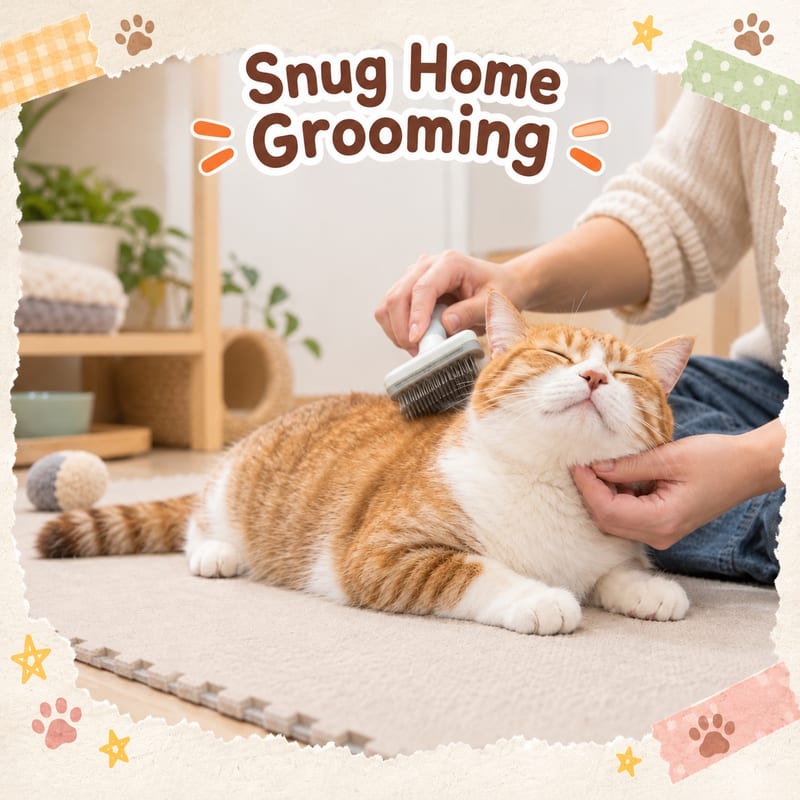
1. Set a fixed brushing spot Choose a low stool or the edge of the bed and lay down a silicone mat (under $20 at pet shops). Hair falls onto the mat, which you can pick up and throw away — no vacuuming all night. After brushing, roll up the mat and put it straight in the bin; zero hair on the floor.
2. Time management Hongkongers often get home from work at nine; try brushing five minutes before bed: your cat is dozing at the foot of the bed, you sit down and brush, then lights out. It doesn't eat into your drama-watching time. Set a daily phone reminder so you don't have to think about "when to brush".
3. Tool storage Buy a magnetic hook rack and stick it on the side of the fridge; hang the comb, slicker brush and glove together so you're not rummaging frantically in drawers. For long-haired cats, just two tools — a comb and a de-shedding tool — are enough; no need for a whole toolbox.
4. Cat scared of brushing? Try the "bathroom training method" Hong Kong bathrooms are small, but once the door is shut it becomes a confined space. Carry your cat into the bathroom, lock the door for a minute; in the small space the cat has nowhere to run and will usually let you brush for ten seconds. Remember to turn on the extractor fan to reduce noise, and let them out immediately with a treat afterwards; within two weeks they'll be used to it.
5. Hair disposal Put brushed-out hair straight into a supermarket bag and tie it up; don't flush it down the toilet (it clogs pipes). If you have a balcony, you can blow the hair into a corner and sweep it into a bag; if not, use a lint roller to pick up leftover hair — done in a minute.
Remember: Hong Kong's humid weather means you should check behind the ears and under the armpits for red spots right after brushing; if anything looks unusual, take a photo and WhatsApp your vet — no need to take leave and queue at the clinic. Try it tonight — five minutes and done!
📌 Key points
- ✅ Brushing removes dead hair, prevents mats, reduces hairballs, checks the skin and strengthens your bond
- ✅ Short-haired cats 1-2 times a week, long-haired cats daily
- ❌ Never tug at mats; one painful pull and your cat will resist brushing
- ✅ A grooming glove or soft comb can help cats scared of brushing get used to it
- ❌ See a veterinarian promptly if you notice localised hair loss, redness or thick dandruff