
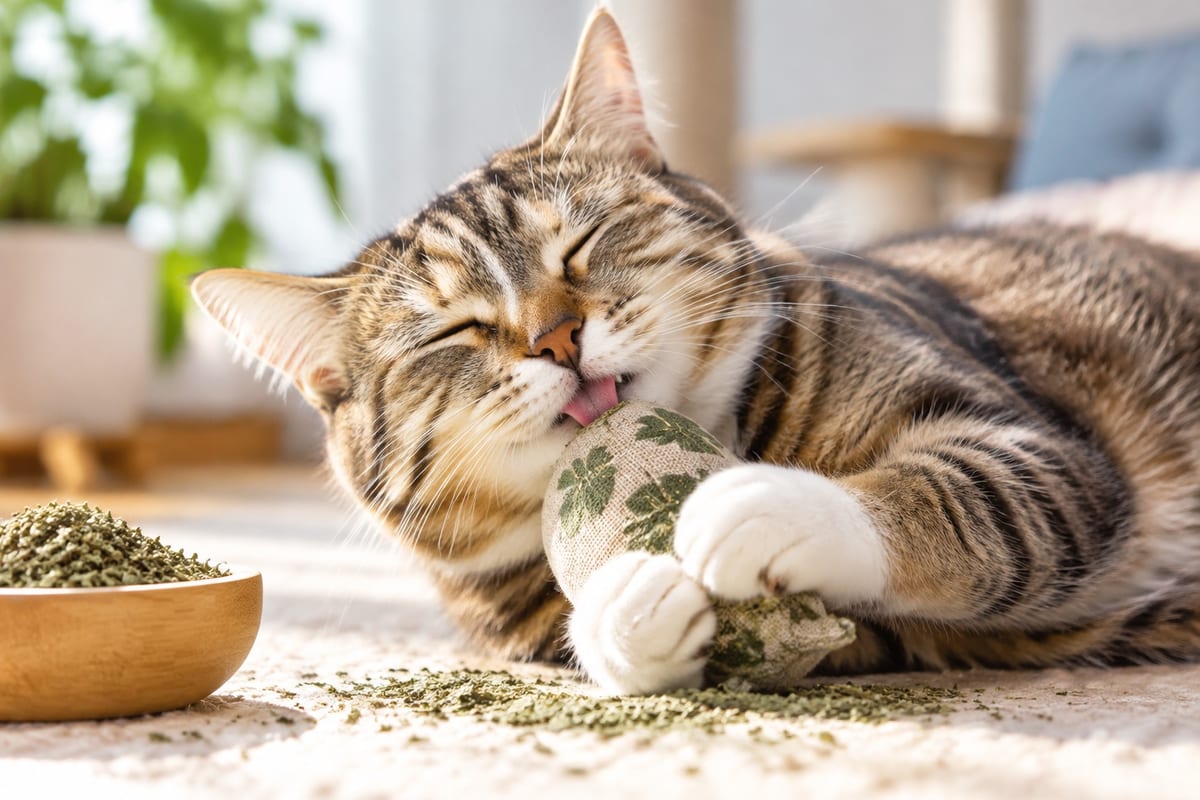
Quick answer: Catnip contains a volatile oil called nepetalactone, which stimulates the amygdala and hypothalamus in a cat's brain via the olfactory nerve in the nasal cavity, triggering a pheromone-like pleasure response. About two-thirds of cats will roll, drool, and chase the air, with each reaction lasting about 10 minutes, after which the brain automatically "resets" for 30 minutes. It is safe and non-addictive for cats.
Have you ever sprinkled catnip on the floor and watched your usually aloof and elegant feline suddenly start rolling wildly, drooling, and chasing invisible air? It looks hilarious, but behind it lies a precise neuroscientific mechanism. Catnip is no ordinary herb—it is nature's "natural stimulant" for cats. Today, PetChill takes you deep into the secrets of catnip, including why some cats show no reaction at all, how to use it safely, and a surprising mosquito-repellent fact!
What Is Catnip? A Magical Plant in the Mint Family
Catnip (scientific name: Nepeta cataria) is a plant in the mint family, bearing small pink or white flowers, native to Europe and Asia. Its magic lies in the leaves, which contain a volatile oil called nepetalactone—this is the key compound that makes cats "lose control."
Interestingly, catnip's influence extends far beyond domestic cats. Lions, tigers, leopards and other big cats also react to nepetalactone. In other words, whether it's your local Hong Kong cat or a lion on the African savannah, their brains are "hijacked" by the same chemical.
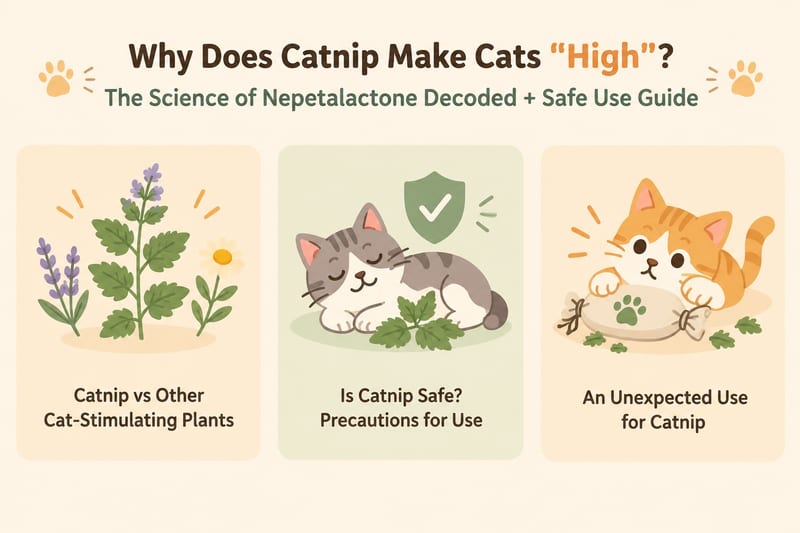
How Does Nepetalactone Work? The Brain's "Pleasure Switch"
When a cat smells catnip, nepetalactone is detected by the olfactory epithelium in the nasal cavity, which then projects signals to two key areas of the brain:
- Amygdala: regulates emotional responses—the cat's "emotional centre"
- Hypothalamus: controls hormone release and emotional regulation
The hypothalamus stimulates the pituitary gland to produce behaviour patterns similar to a "sexual response," making catnip act like an "artificial cat pheromone" (a behaviour-modifying agent). This mechanism explains why cats exhibit the following behaviours after contact with catnip:
- Rubbing and rolling on the leaves
- Purring
- Drooling
- Running around as if hallucinating
- Displaying behaviour similar to a female cat in heat
These reactions usually last about 10 minutes, after which "smell fatigue" occurs, and the cat becomes immune to catnip for about 30 minutes. This is the brain's self-protective mechanism to prevent overstimulation.
Catnip vs Other Cat-Stimulating Plants: Comparison Table
| Plant | Main compound | Percentage of responsive cats | Duration of reaction | Notes |
|---|---|---|---|---|
| Catnip | Nepetalactone | About 65% | About 10 minutes | Most common, safe and harmless |
| Silver Vine | Actinidine + Dihydronepetalactone | About 80% | About 10-15 minutes | Stronger effect, commonly used in Japan |
| Valerian Root | Actinidine | About 50% | About 5-10 minutes | Used by humans as a sleep aid; cats become excited |
| Silver Vine Fruit | Matatabilactone | About 75% | About 10 minutes | Unique to Asia, often used in cat toys |
| Tatarian Honeysuckle | — | About 50% | About 5-10 minutes | Try for cats that don't react to catnip |
Why Do Some Cats Show No Reaction?
Not all cats respond to catnip. Research shows that about two-thirds (approximately 65%) of cats have a noticeable reaction to nepetalactone, while the remaining third are completely indifferent. This difference is genetic—sensitivity to catnip is a dominant inherited trait.
The following types of cats usually do not respond to catnip:
- Kittens under 3 months old: have not yet developed sensitivity to nepetalactone
- Senior cats: response may diminish with age
- Genetically insensitive cats: naturally lack the relevant olfactory receptors
If your cat shows no reaction to catnip at all, don't worry—this is normal individual variation. You can try "silver vine" or "valerian root," which stimulate more cats. To learn how to observe changes in your cat's daily behaviour, see Cat Behaviour Interpretation Guide.
Is Catnip Safe? Usage Precautions
The good news is that catnip is generally considered harmless to cats. It is not addictive and does not cause long-term health effects. However, the following points should be noted when using it:
Safe Use Recommendations
- Use in moderation: a small sprinkle (about one teaspoon) each time is enough; do not overdo it
- Observe reactions: in very rare cases, if a cat eats a large amount of catnip, it may show mania, anxiety, or lethargy
- Control frequency: use 1-2 times per week to avoid long-term smell fatigue
- Storage: keep sealed to maintain freshness
Scenarios Suitable for Using Catnip
- Training reward: sprinkle catnip on a scratching post to encourage your cat to use it
- Environmental enrichment: add stimulation for indoor cats to reduce boredom. If you want to create a more comfortable living space for your cat, see Cat-Friendly Room Setup Guide
- Stress relief tool: use a small amount before a vet visit to help ease tension
- Interactive toys: choose toys containing catnip to add playtime fun
An Unexpected Use for Catnip: Natural Mosquito Repellent
Here's a surprising fact: nepetalactone is actually a very effective natural mosquito repellent! Research has found that nepetalactone's mosquito-repellent effect is even stronger than the common DEET.
Besides mosquitoes, catnip can also repel cockroaches and flies. So if you have a catnip plant at home, not only will your cat be happy, but insects will also keep their distance! However, note that different animals react very differently to nepetalactone—many insects avoid it at all costs, while cats are the complete opposite. To learn more about plants cats love, see Illustrated Guide to Cats' Favourite Plants.
 K9 Natural full guide →
 Feline Natural full guide →