
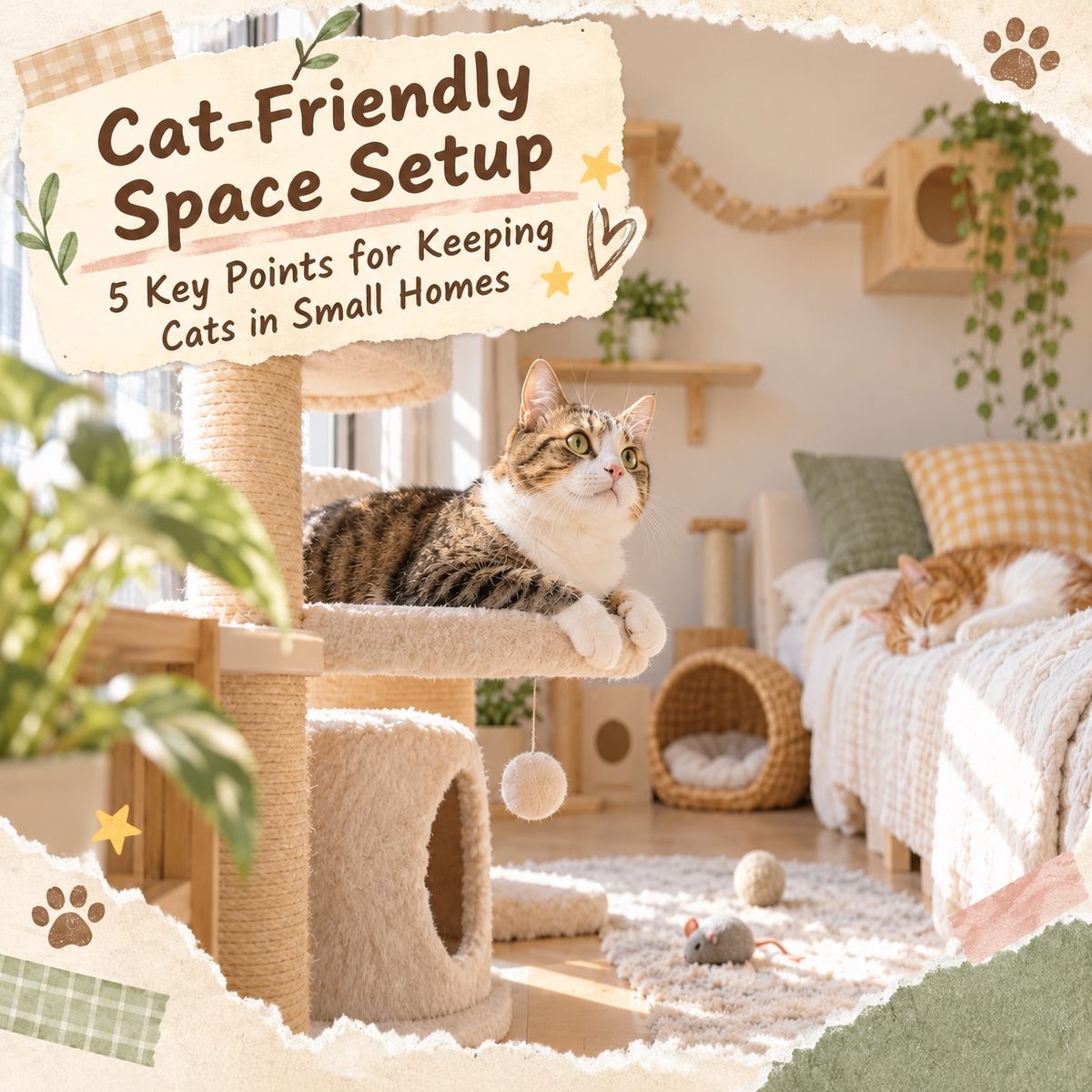
Quick answer: There are 5 key points to creating a cat-friendly space: high vantage points (cat tree at least 1.2 m), scratching zones (vertical + horizontal), window views (screens essential), resource distribution (litter boxes = number of cats + 1), and hiding spots (cardboard boxes, semi-enclosed cat beds). Even in a small room, making good use of vertical space can help your cat feel secure.
Cats are different from dogs: their living area is almost entirely confined to the home. A completely indoor cat spends more than 20 hours a day in the same space—so whether that environment suits it directly affects its physical and mental health.
Cats are naturally clean, extremely sensitive to environmental change, and sometimes timid. If you notice your cat frequently destroying things, scratching the sofa, or hiding all day, it is very likely because the living environment does not meet its instinctive needs.
The good news is that creating a cat-friendly room does not require major renovation. Most cat owners can implement the following 5 setup points right away!
Key Point 1: High Vantage Point—Give Your Cat a "Ruler of All It Surveys" Position
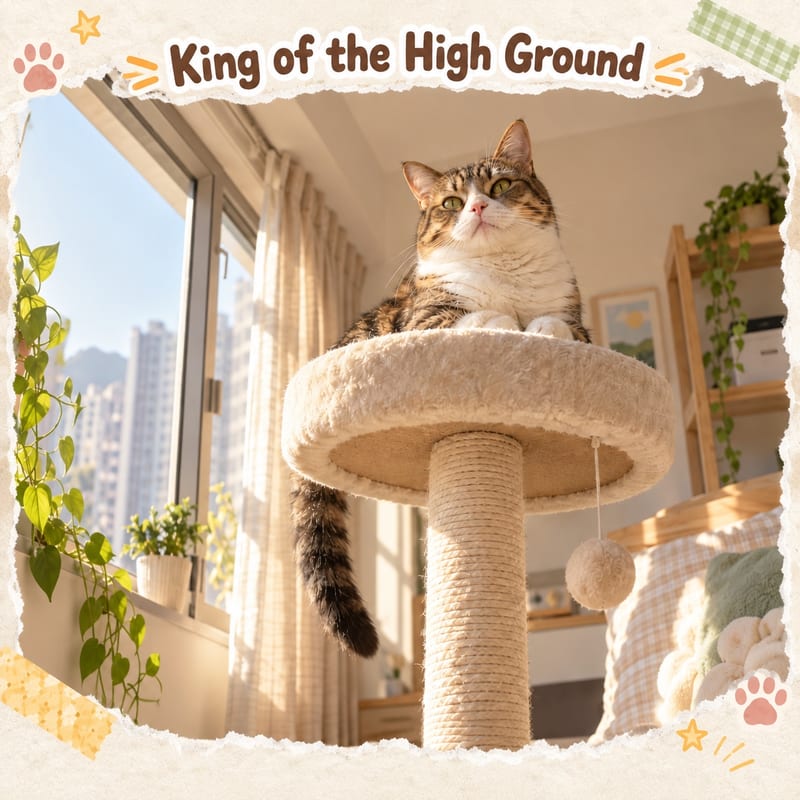
Cats naturally like to look down on their territory from high up. Observing the whole living space from above makes them feel safe and in control; this is one of the most effective ways to reduce anxiety in cats.
If you don't have a tall cabinet or shelving, a cat tree (cat tower) solves the problem. When choosing, pay attention to three things:
| Selection point | Recommendation |
|---|---|
| Height | At least 1.2 m for sufficient viewing range |
| Stability | Base must be heavy enough; it should not wobble when the cat jumps on it |
| Platform size | Top platform must fit an adult cat lying down fully |
For multi-cat households, vertical space is even more important—each cat needs its own high spot to avoid territorial disputes.

Key Point 2: Scratching Zone—If You Don't Want the Sofa Ruined, Actively Provide Alternatives
Scratching is a cat's instinct, not a bad habit. Scratching helps them remove the outer layer of old nails, stretch muscles, and mark territory with paw pad glands.
If you don't provide a dedicated scratching zone, cats will naturally choose the sofa, curtains, carpet—objects with similar texture.
Setup suggestions:
- Varied materials: sisal rope, corrugated cardboard, wood—each cat has its preference
- Prominent location: place where the cat sees it first thing after waking up (they love to stretch and scratch after sleep)
- Both vertical and horizontal: some cats like vertical posts, some like flat corrugated cardboard
Key Point 3: Window View—The Indoor Cat's "TV Channel"
Cats follow birds, pedestrians and vehicles outside with their eyes; this visual stimulation is very important for brain health. An environment with no novelty can make cats bored and even lead to stress behaviours such as over-grooming.
Creating a window view is simple:
- Place a chair or cat bed by the window
- Add a window-mounted hammock (suction cup type) directly on the glass
- Safety first: windows must have screens or restrictors to prevent cats falling! This is the main cause of countless cat accidents every year
Key Point 4: Resource Distribution—More Litter Boxes and Water Stations Than Cats
This is a detail many cat owners overlook. The American Association of Feline Practitioners (AAFP) housing guidelines recommend that the number of resources should exceed the number of cats:
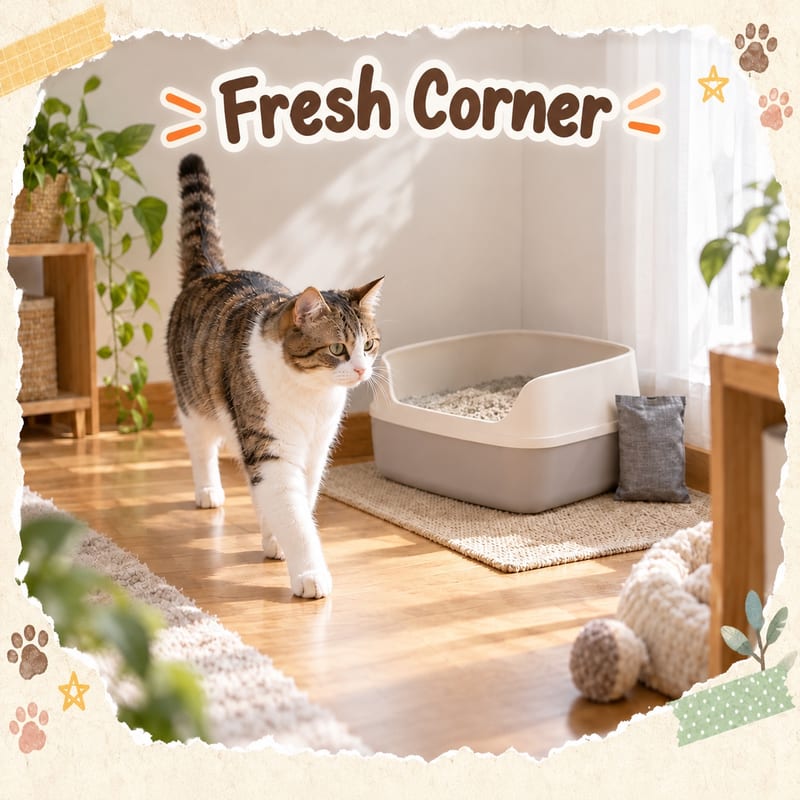
- Litter boxes: number = number of cats + 1. Even with one cat, two boxes are recommended (two cats need three). This way the cat can choose a clean one and a preferred location
- Water stations: cats are naturally reluctant to drink, so water stations should be plentiful (one cat two, two cats three), scattered in different locations at home to encourage drinking and protect urinary health
- Separate locations: do not place water bowls next to the litter box; cats instinctively feel water near waste is unsafe
Key Point 5: Hiding Spots—A Safe Refuge for Timid Cats
Guests visiting, thunder, or renovation noise can all frighten cats. You need to provide a dark, narrow, hidden place, such as:
- Cardboard boxes (free but cats love them)
- Semi-enclosed cat beds
- Natural hiding places like under the bed or on top of cabinets
Remember: when a cat is hiding, do not force it out. Let it feel safe on its own; it will come out naturally.
How to Set Up for a Cat in a Small Space?
Living in a small flat or keeping a cat in just one room? Don't worry—cats need vertical space more than floor area. Setup points for small-space cat keeping:
-
Build upwards: wall shelves, hammocks, tall cat trees—extend activity space from the floor into the air
-
Multi-functional furniture: litter box cabinets (cabinet outside, litter box inside), cat trees with hidden spots—one item, multiple uses, saves space
-
A window spot is a viewing platform: a small room usually has one window; add a cat bed by the window for the best view
-
Keep traffic routes clear: leave space between furniture for the cat to patrol; don't block it completely
How to Control Odour When Keeping a Cat in a Room?
The biggest worry about keeping a cat in a room is odour. The following methods can effectively control it:
- Scoop the litter daily: this is the most basic and effective odour-control method, at least morning and evening
- Choose low-dust clumping litter: quality tofu litter and clay litter vary greatly in deodorising ability; choose a litter with strong odour control
- Deep-clean the litter box regularly: every 1–2 weeks completely change the litter and wash the box
- Ventilation + air purifier: keep the room air circulating; if needed, add an air purifier with a HEPA filter
- Litter box location: place in a ventilated but not draughty spot, avoid next to the bed

Hong Kong Small Flat Practical Checklist: Meeting 5 Key Cat Needs Even in 300 sq ft
Hong Kong people live small, but cats' 5 key needs must still be met. The following checklist uses a 300 sq ft open-plan flat as an example, matching each setup point mentioned in the article—no major renovation, no wall drilling needed.
1. High Vantage Point—Use an IKEA BILLY Bookcase + Cat Tower
Place a 202 cm tall BILLY bookcase against the wall, leave one shelf at the top empty, add a soft cushion and you have a 1.9 m high spot; next to it add a standalone cat scratching post (base 40×40 cm, doesn't block the walkway), and the cat can jump all the way up to "rule all it surveys".
2. Scratching Zone—Use Even the 10 cm Behind the Door
Hang a vertical sisal mat behind the main door (under HK$50 on Taobao), hidden as soon as the door opens; place an A3 corrugated cardboard scratcher beside the sofa, so when the cat wakes up and stretches there is a place to scratch—the sofa is saved.
3. Window View—Window Sill + Suction Cup Hammock
Most Hong Kong windows are aluminium; use a 4-suction-cup hammock on the glass, load capacity 15 kg is stable enough; remember to add a restrictor or screen to prevent the window opening too wide. A 15 cm wide window sill is enough for a soft cushion; the cat can lie by the window and watch the street.
4. Resource Distribution—Litter Box and Water Bowl Placement Strategy
- Litter box: place in the dead corner at the kitchen entrance, use a litter box cabinet (looks like a shoe cabinet outside) to contain odour and save space; even one cat gets two, the other in the bedroom corner.
- Water stations: one on the TV cabinet (away from the litter box), another next to the window hammock, so the cat drinks while watching the street.
5. Hiding Spots—Under the Bed + Top of Wardrobe Double Insurance
Place two cardboard boxes under the bed, openings facing the wall with a 10 cm gap, so the cat can go in on its own; put a soft cushion on top of the wardrobe, plus a semi-enclosed cat bed—high, hidden and warm. When guests come, the cat can choose to hide low or survey from above.
Finally, a reminder: Hong Kong buildings are dense; renovation noise, upstairs renovation, and typhoons can all frighten cats. Remember to check screens before typhoon season, close curtains during typhoons to reduce noise, and play some light music—your cat will feel secure.
Related Product Recommendations
New pet owners need to prepare basic equipment and staple food all at once. The following are related products available at PetChill:
- Fujiichi Natural Minimalist Daily 3.0 Tofu Cat Litter Lavender 6L - Original Import (Fujiichi) — tofu litter, flushable, low dust
- Fujihime no Awayuki 3.0 Natural Whitening Soy Milk Tofu Cat Litter Original 18L - Original Import (random old/new packaging) (Fujihime no Awayuki) — tofu litter, flushable, low dust
Want to see more: Fujiichi Brand Guide
Product prices and latest offers are subject to the product page; this article is for reference only.
Further Reading
- How to Choose a Cat Tower? Size Formula + Placement Guide for Small Hong Kong Flats (2026)
- How to Choose a Litter Box? 2026 Hong Kong Litter Box Guide | Size, Placement, Cleaning
- Cat Environmental Stress Management Guide | Must-Read for Moving in Small Hong Kong Flats
- All Article Index
- PetChill Pet Supplies
📌 Key Summary
-
✅ Vertical space is more important than floor area
-
✅ Litter boxes = number of cats + 1; don't skimp
-
✅ Scooping litter twice a day is the most practical odour-control method
-
❌ No screens means a falling hazard
-
❌ Water bowls next to the litter box—cats won't drink
-
✅ 5 key setup points: high vantage point, scratching zone, window view, resource distribution, hiding spots
-
✅ Litter boxes = number of cats + 1 (AAFP guidelines)
-
✅ Cat tree at least 1.2 m high, stable base
-
✅ Small-space cat keeping relies on vertical space: wall shelves, tall cat trees, window hammocks
-
✅ Windows must have screens or restrictors to prevent falls
-
❌ Do not force a hiding cat out
-
❌ Don't expect cats to adapt on their own—if the environment is wrong, destructive and stress behaviours will only increase
 Fuji One full guide →


 Fuji Cat full guide →


 Feline Natural full guide →



