Abyssinian
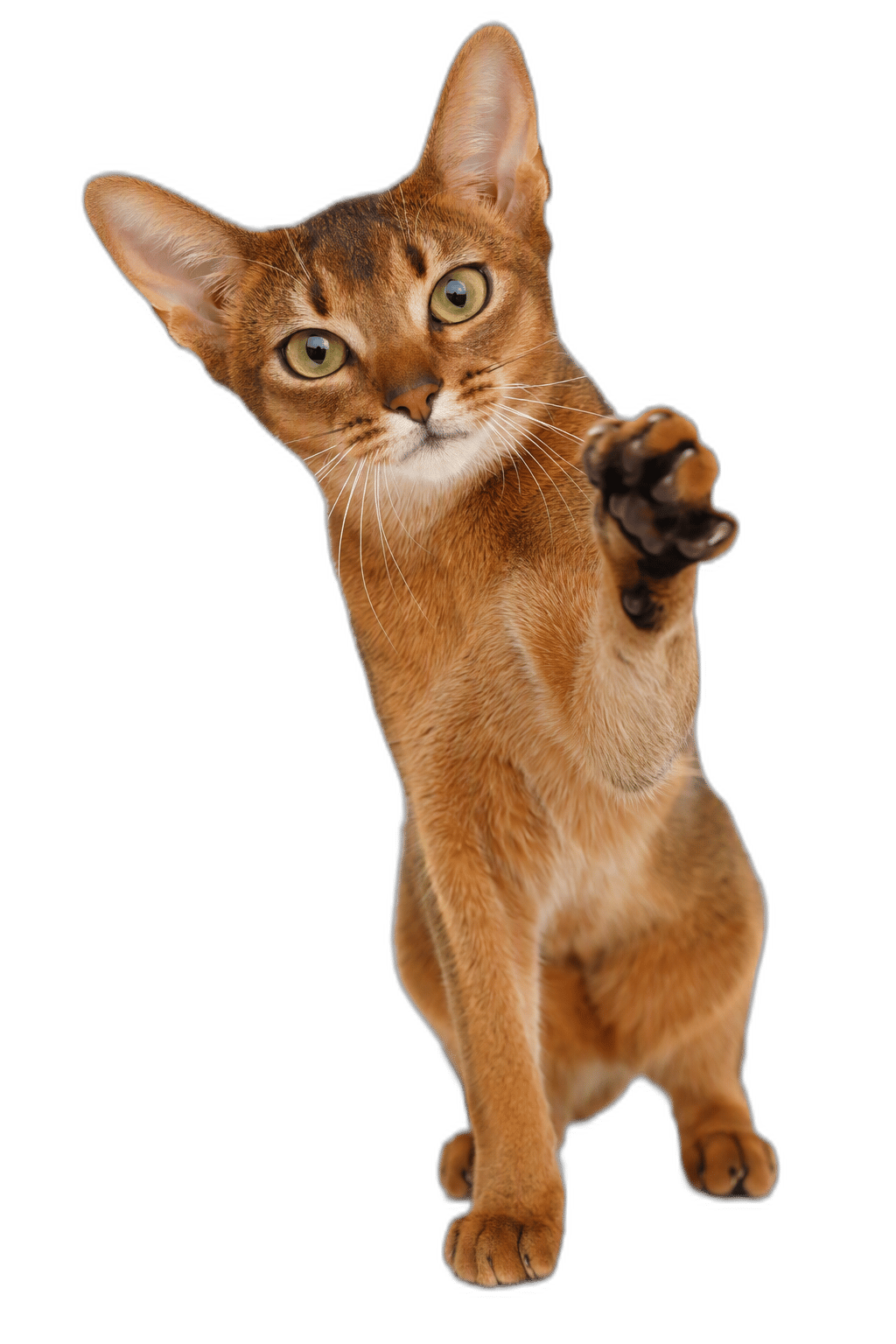
Most tabby cats have necklaces, leg bars and body stripes; the Abyssinian has none of them, because ticking (Agouti plus the Ta gene) changes the colour of the hair shaft in bands rather than in patches. The effect: an even warm colour from a distance, and up close three or four alternating light and dark bands on each hair, with a metallic sheen in sunlight. TICA's standard description of this breed is precisely ticked coat, and the same gene explains why adopted mixed-breed hare-coloured cats are so often guessed to be Abys. The fine ticking is dominant, so even mixes express about 80% of the look. The test is not stripes but: the number of bands on the hair shaft, no chest markings, and pad and nose-leather colour that matches the coat. All three together make it breed-level. Two additions: first, blue and fawn are dilute-gene variants of ruddy and sorrel, which is why they often appear in the same bloodline; second, TICA recognises more colours than CFA (including silver variants), so the two registries' standards differ, and when buying a cat ask clearly which registry it is registered with.
Size
Medium
Lifespan
12-15 years
Weight
3-5kg
Price
HK$10,000-18,000
📺 32-second video · Cantonese narration
The Abyssinian story, in one take
From Ethiopia to Hong Kong homes — how did the Abyssinian become one of Hong Kong's most popular cat breeds?
- ✓Origin story: starting in Ethiopia
- ✓Personality: Lively and active, Intelligent
- ✓Lifespan 12-15 years · Size Medium
PetChill Pet Encyclopedia
Key facts
Origin
Ethiopia
Lifespan
12-15 years
Size
Medium
Weight
3-5kg
Coat
Short coat, tabby
Price range
HK$10,000-18,000
Personality
Daily life & habits
Seven in the morning: feeding plus ten minutes of morning play (burning off energy after waking, which reduces early-morning alarm-clock behaviour). Daytime: a timed feeder for an afternoon tea slot, a window bird-watching spot with the television on (genuinely free TV), and two foraging toys rotated. Six to eight in the evening: the main play session, fifteen minutes of high-intensity hunt simulation plus ten minutes of sniffing games. Night: the main meal before bed plus a teeth brush and ear check (build the routine from a young age), and the last chase game wrapped up ten minutes before bed. Abyssinians, like people, sleep better after a good wrestle. Weekends add a new-toy test or a command-training session; the speed at which this breed learns to sit, high-five and fetch will astonish you.
Care essentials
Grooming
All four colour groups have an identical care structure: short coat with no undercoat, a rubber curry comb once a week to remove dead hair, and infrequent bathing (they keep themselves very clean). Colour does not affect care, but sheen affects how you read the cat: the metallic banding sheen is a health indicator for an Abyssinian, and it only shines when protein intake is adequate, there are no parasites and the skin is in good condition; a sudden dullness means checking nutrition and health. Sun-fading towards copper, more common in the lighter colours, can be controlled with blackout blinds; in shedding season the loss is most visible on dark colours, so households with black furniture will pick up less hair by choosing blue or fawn (a joke, but a practical one).
Exercise
TICA's official description of the breed includes constantly in motion, which is not a figure of speech but clinical-level accuracy. An Abyssinian will not sleep next to you; it sleeps on top of the cupboard, in the gap in the curtains, on your shoulder. It follows you everywhere, and on stairs it takes the railing route. What this means day to day: first, no floor is ever a safe zone, so cups and ornaments go in cupboards; second, exercise is non-negotiable, with three fifteen-minute hunt games a day plus two foraging toys, and if you do not do enough you will meet the demolition logic in the next chapter; third, residents should be mentally prepared that after getting an Abyssinian the living room will slowly fill with cat trees, and the phrase minimalist does not survive this breed.
Training
An Abyssinian's intelligence is not mysticism; it breaks down into three lines. First, observational learning: they grasp the logic of window latches, door handles and fridge doors after two or three days of watching, and the rescue community agrees this breed is top-tier at opening cupboards. Second, command training: sit, high-five and fetch are commonly taught, food drive is high and few repetitions are needed. Third, environmental engineering: they will turn on taps to drink, pull bin lids open for food, and push window restrictors to open windows. Practical implications: all breakables and medications in cupboards, fridge magnetic locks or double locks, bins with lids. On the other hand, this intelligence is an educational opportunity: a ten-minute training session is entertainment for an Abyssinian, and foraging boards, hide-the-food games and rotating new commands are the standard kit for draining the brain; a brain-drained Abyssinian is far better behaved than a body-drained one. Bonus payoff: after these three lessons you do not just have an obedient cat, because the training interaction itself is the thing done together with the owner that they enjoy most, and it fills social needs more directly than buying ten more toys, closing the loop with the three practical lines in the separation-anxiety section.
Living environment
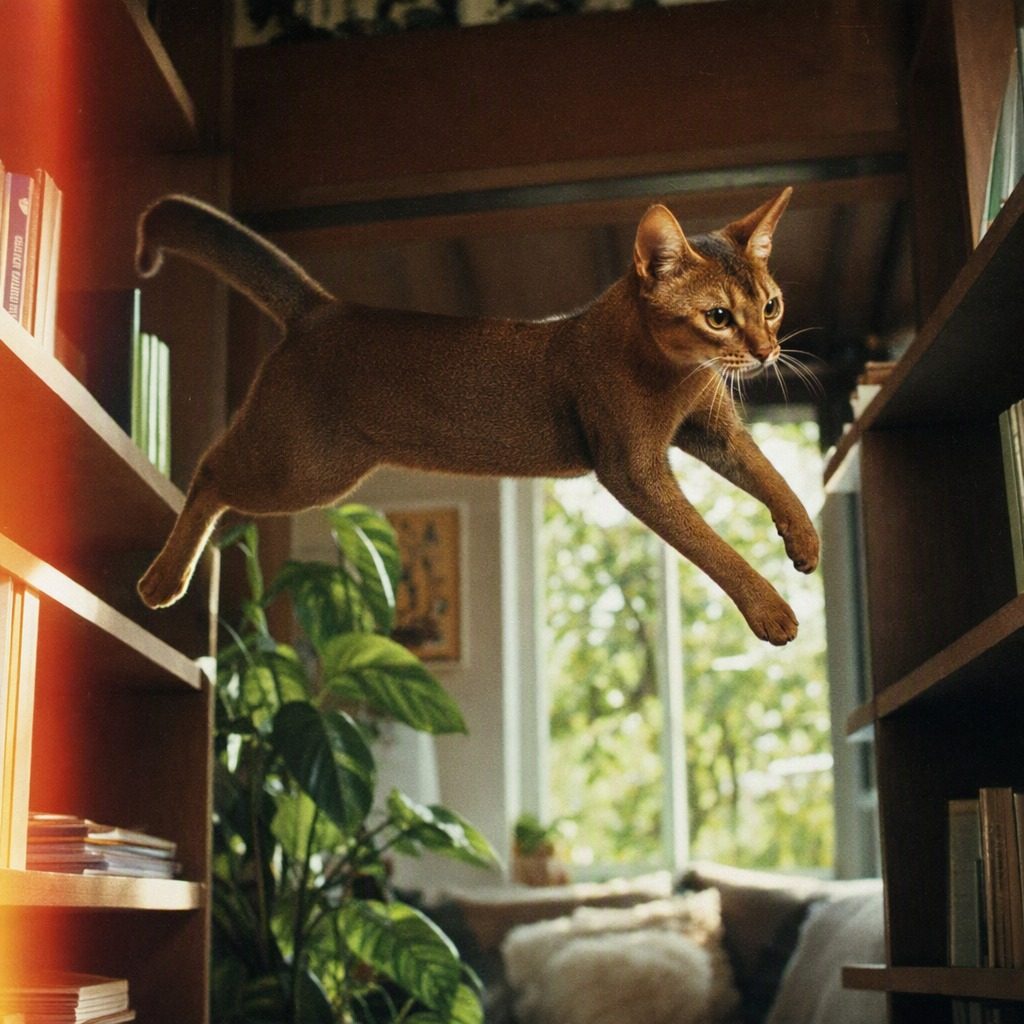
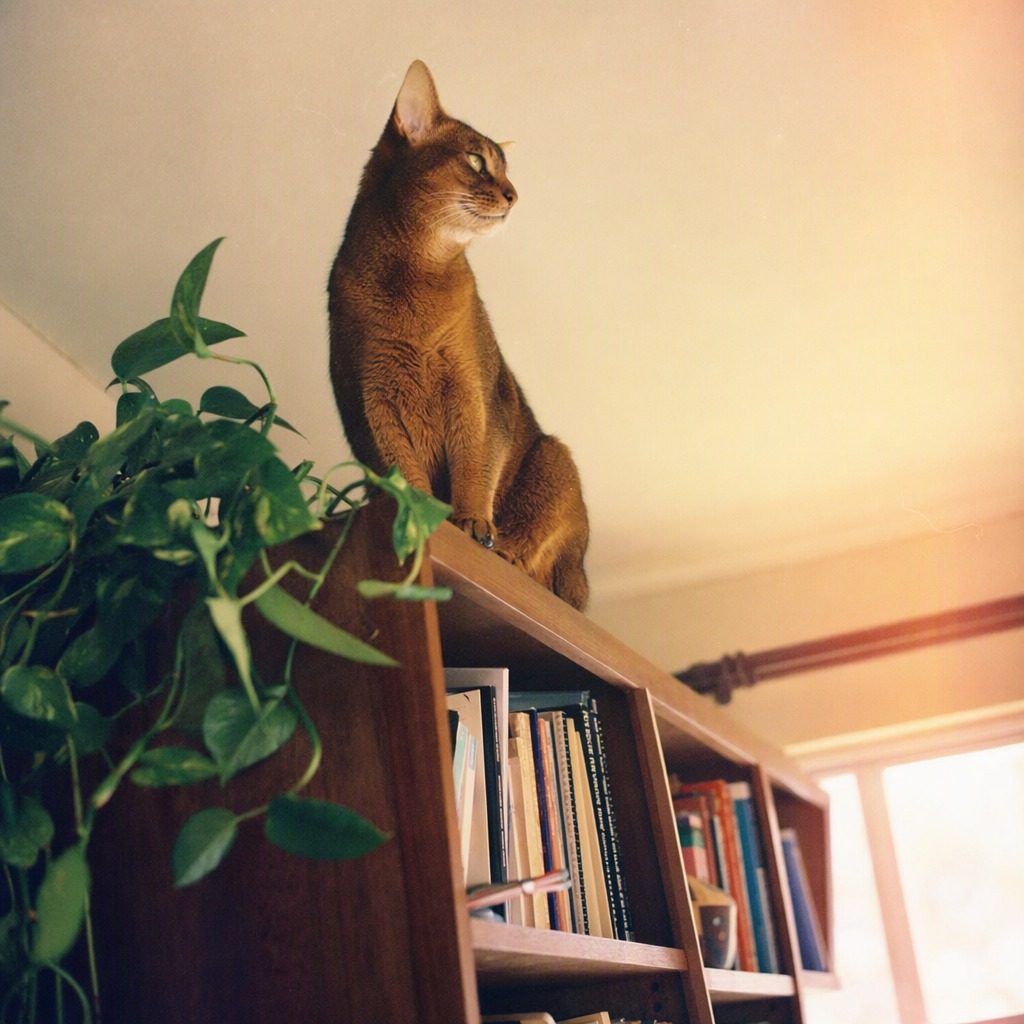
An Abyssinian's activity pattern is completely unlike a round-bodied, sleepy cat: it moves by catapult, loading up from the ground, leaping to a point two metres high, and patrolling from one high point to the next. Under this pattern, a connected aerial route is its complete territory: a tall cat tree linked to the top of a bookshelf (check it is stable and cannot topple), a 30 cm standing spot by the window, and stepping stages from the back of the sofa to the top of a cupboard. TICA's breed profile stresses that this breed is always in motion and always standing at the highest point, and small Hong Kong flats are actually its home ground: total path length is the measure of a cat's territory, and fifty metres of aerial walkway is worth more than five hundred square feet of floor. Three configuration principles: connected high points, separate zones for activity and rest (food and water kept away from sleeping spots), and a daily route check for cleaning (to prevent slipping during jumps).
Abyssinian everyday food & supplies
Chosen by species (cat) from products PetChill stocks — not a breed-specific formula. Actual suitability depends on age, weight and health.
 Special offer
Nutriplan Cat Food Complete Health Nutritional Formula 5kg (64352)
HK$123HK$128About HK$24.6 per kg
Price checked 2026-10-21; the store page shows the live price, stock and offers.

Bella & Molly's Dutch Berry Royal Selected Cat Food AAFCO Anti-Aging Grain-Free Single Protein Salmon Formula 50g (Limited Time Experience)
HK$10About HK$200 per kg
Price checked 2026-10-21; the store page shows the live price, stock and offers.

Hills Cat Food Life Stage Series Adult Formula Chicken 490g (609885)
HK$55About HK$112.24 per kg
Price checked 2026-10-21; the store page shows the live price, stock and offers.
History & origin
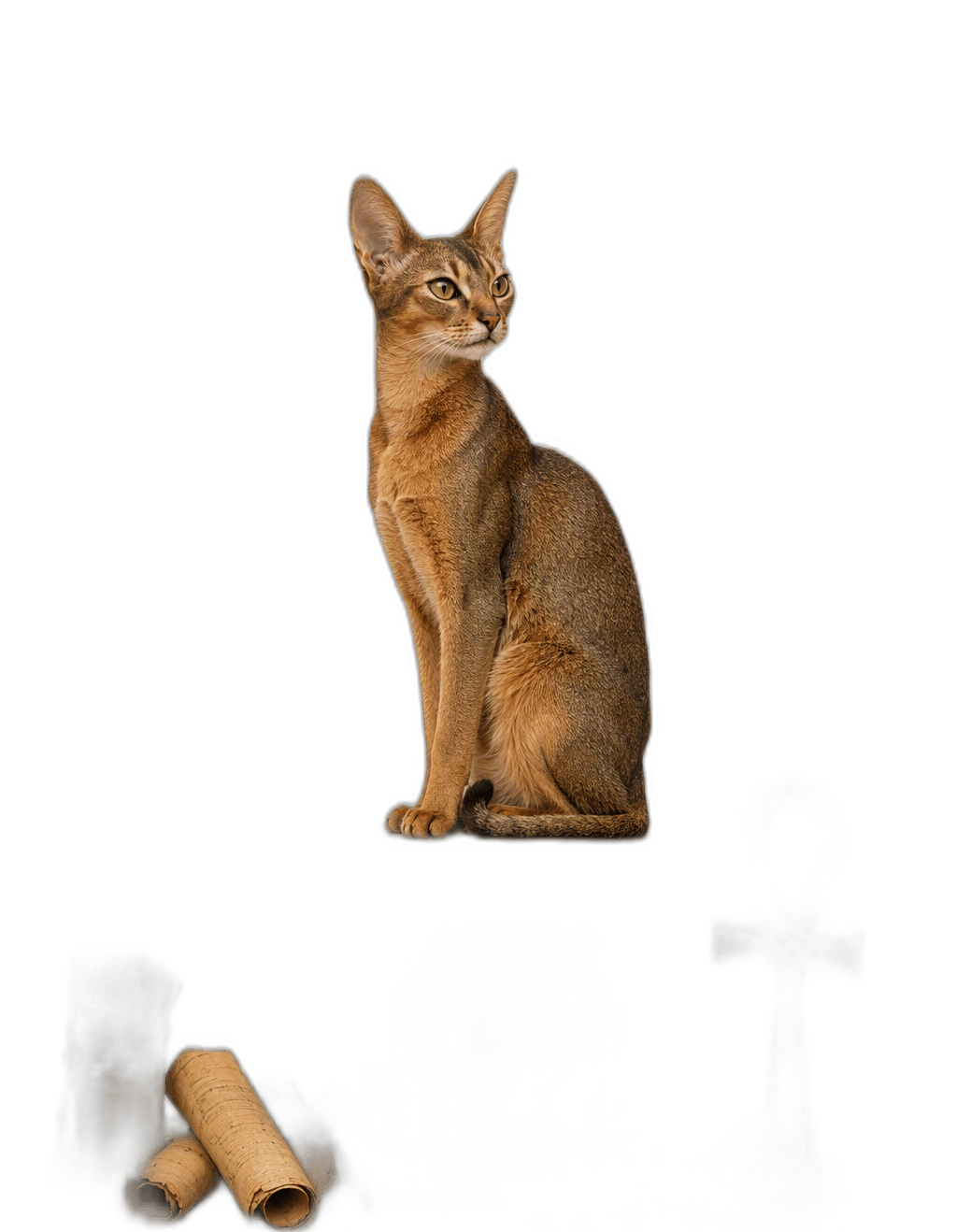
The Abyssinian is one of the oldest cat breeds, and looks like the sacred cats in ancient Egyptian murals. Its origins are somewhat mysterious: although the name refers to Abyssinia (today's Ethiopia), genetic research suggests the breed may have come from Egypt or the coast of the Indian Ocean.
In 1868, British troops brought back a cat named Zula from Ethiopia, which is considered the starting point of the Abyssinian's arrival in Europe. In 1882 they appeared at a London cat show and were a great success. What makes the Abyssinian most distinctive is its ticked coat: each hair carries several bands of colour (like rabbit fur), which makes the coat shimmer in the light.
Abyssinians are extremely active, intensely curious and remarkably intelligent, which is why they are called the monkey of the cat world. They love climbing, exploring every corner, working puzzle toys, and they will even open latches. They are not the kind of cat that lies on the sofa; they need plenty of activity and mental stimulation. If you want a cat full of energy and as charming as a little monkey, the Abyssinian is the best choice.
Who it suits
Is the Abyssinian right for you?
To be honest: separation anxiety is this breed's biggest weakness on the temperament side. Its genetic setting is group hunter, and being alone is not enjoyment for them but deprivation. Individuals left alone eight to ten hours a day long term with nothing to do may show excessive vocalising, escalated pushing of things off tables, inappropriate urination (rule out urinary tract disease first), and clinginess on your return. Three practical lines: fifteen minutes of play plus a foraging toy left behind before you go out; a window bird-watching spot plus a timed feeder to fill the daytime; and households with genuinely long working hours should seriously consider a companion cat. Do not expect to train them to be independent: you can manage the schedule, you cannot change the genes. General observations, not absolutes: males tend to explore boldly, have weaker boundaries and mix easily with small dogs; females are alert and careful, and their closeness with the owner is clearly selective (once they have chosen you, it is you all the way). Beyond sex, bloodline differences in this breed are worth noting: show lines and companion lines differ in activity level and style of clinginess, so ask the breeder about the parents' daily style before buying; adopting an adult is safest of all, because the personality is already set, and the one that walks up and head-butts your hand versus the one watching you from the corner are a completely different ten years.
Health & care
Common health issues and care advice for the Abyssinian
Pyruvate kinase deficiency (PKdef) means red blood cells cannot get enough energy, causing chronic haemolysis: red cells keep rupturing and the bone marrow keeps replacing them, which over time leads to anaemia and added strain on the spleen, and severely affected individuals need blood transfusions. The inheritance is autosomal recessive: two copies of the mutation are needed to be affected, and one copy means a lifelong healthy carrier that can still pass it on; both parents must carry at least one copy for offspring to be at risk. This breed is one of the earliest documented PKdef-affected cat breeds, and blood DNA testing is now widely available. Three practical steps: before taking a cat home, ask for both parents' PK test records (both normal is the safe position); test individuals with no records yourself (usually a few hundred dollars); and for confirmed or carrier cats, avoid oxidative drugs and onion-family toxicity for life, with regular blood panel rechecks. Well-managed, mildly affected individuals can have quality of life and lifespan close to normal.
Want to see more cat breeds?
Besides the Abyssinian, you can also compare Maine Coon, Ragdoll and Siamese (Siam Cat) — breed guides that compare personality, size and care difficulty.
Frequently asked questions
The questions people ask most about the Abyssinian
They are one of the oldest breeds; they look like the sacred cats in ancient Egyptian murals, and their history stretches back thousands of years.
Because they are extremely active, endlessly curious and love climbing and exploring, and they will even open latches and work puzzle toys, much like little monkeys.
Abyssinians have a unique ticked coat: each hair carries several bands of colour, which makes the coat shimmer in the light.
Not the best fit. Abyssinians are high-energy and need plenty of activity and mental stimulation, so they suit active households with time to play.
Yes, but in an interactive way: they will follow you around and join in whatever you are doing, rather than just sleeping on top of you.
Abyssinian articles
6 articles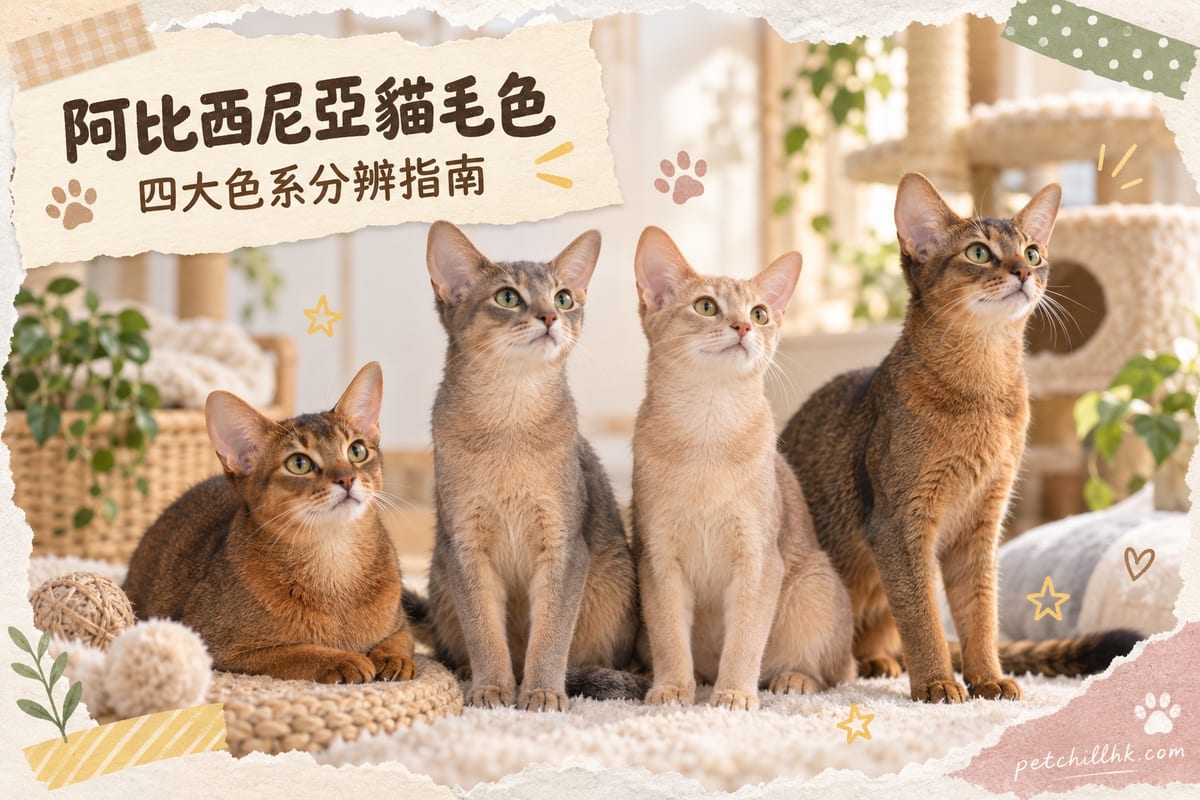
Abyssinian Cat Colour Guide|Four Main Colours, Prices and Hong Kong Market
The Abyssinian cat colours are recognised by CFA in four main colour categories: Ruddy, Sorrel, Blue, and Fawn, all presented in a ticked tabby pattern with no spots or stripes. This article breaks down the characteristics of each colour, their commonality, price differences in Hong Kong, colour variation patterns, and care tips, along with a quick reference table for the four main colours and the truth about 'black Abyssinians'.
Read the full article →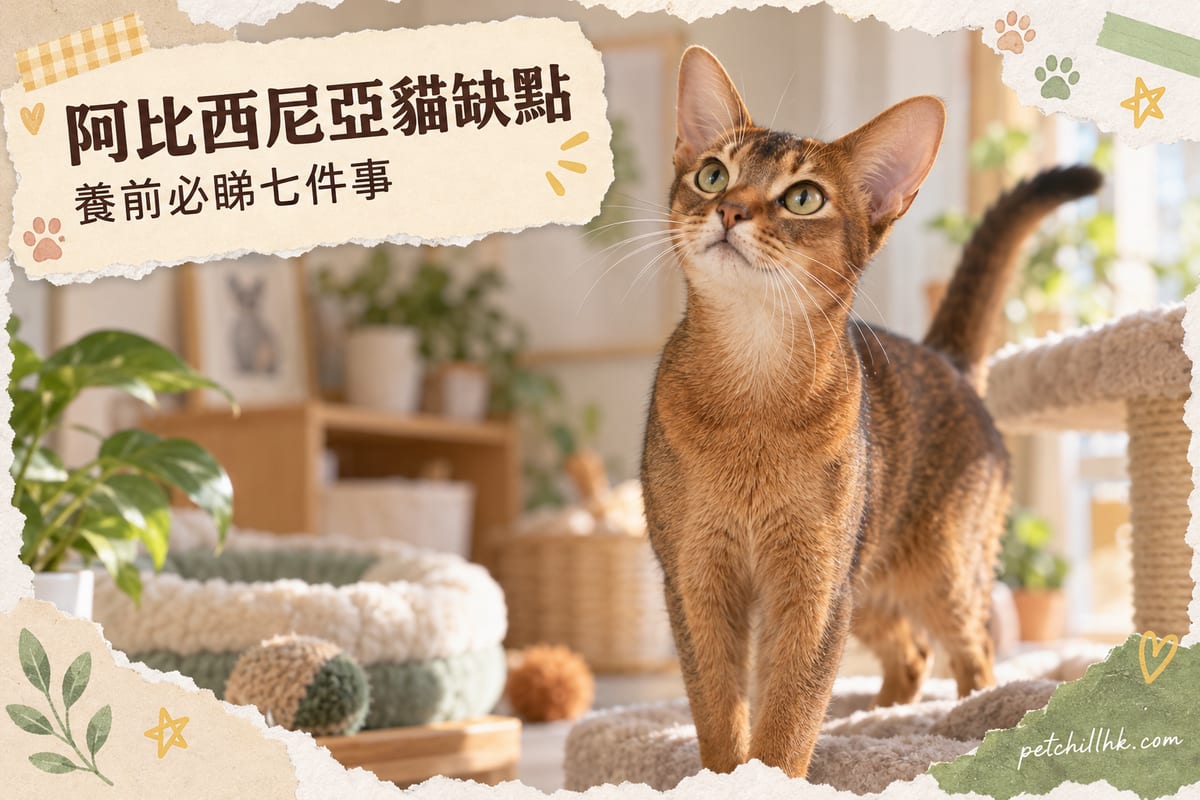
Abyssinian Cat Disadvantages: 7 Things to Know Before Getting One in Hong Kong
The Abyssinian is called the dog of the cat world, but that 'perfect nickname' comes at a price: non-stop energy, destructive boredom, 4am parkour, hereditary haemolytic anaemia and kidney risks, and a chatty streak that talks back. This article honestly lists seven disadvantages, each with a coping strategy and cost direction, so you can do an honest self-match before bringing one home.
Read the full article →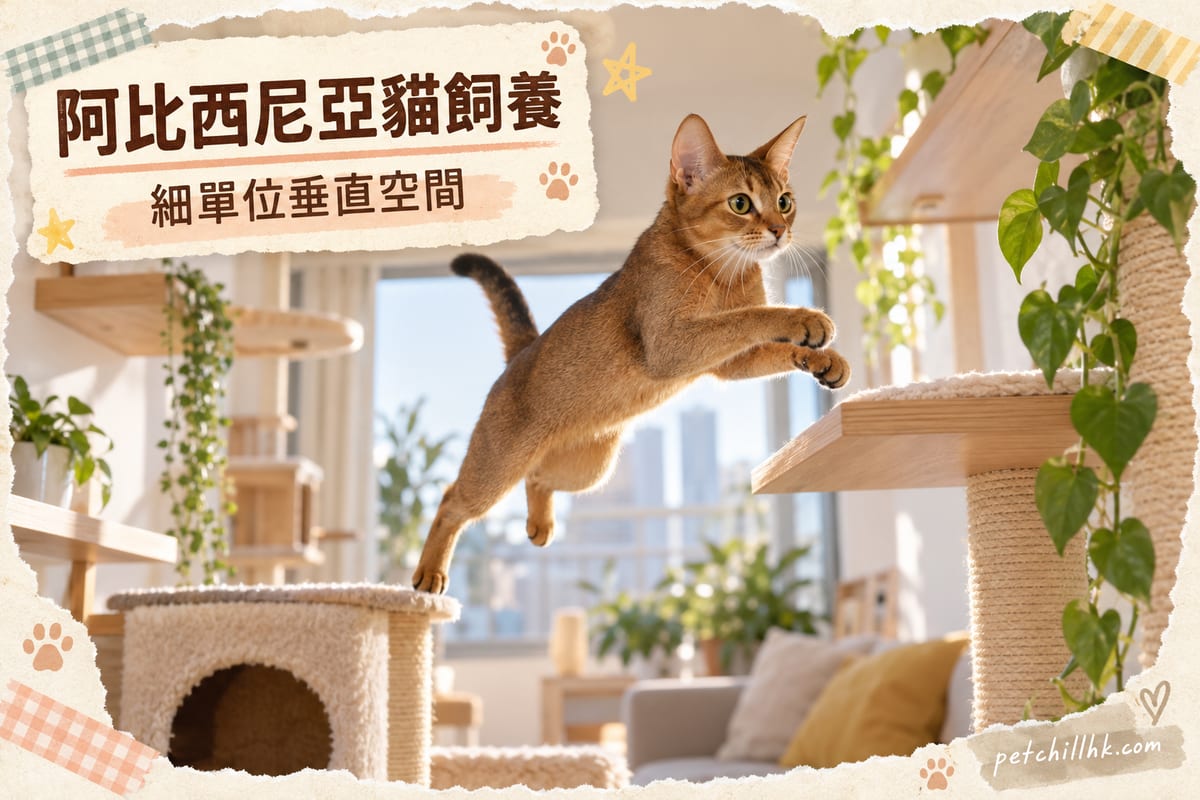
Abyssinian Cat Hong Kong Care Guide: High-Jump Champion in a Small Flat
The Abyssinian is the cat world's high-jump champion and puzzle-solving expert. Three keys to keeping this breed in a small Hong Kong flat: vertical routes, escape-proof upgrades (they can open windows and pick locks), and a high-activity energy-burning schedule. This guide breaks down Hong Kong home setup, humid-heat climate management, public housing law notes and a daily routine — essential reading for Hong Kong cat owners.
Read the full article →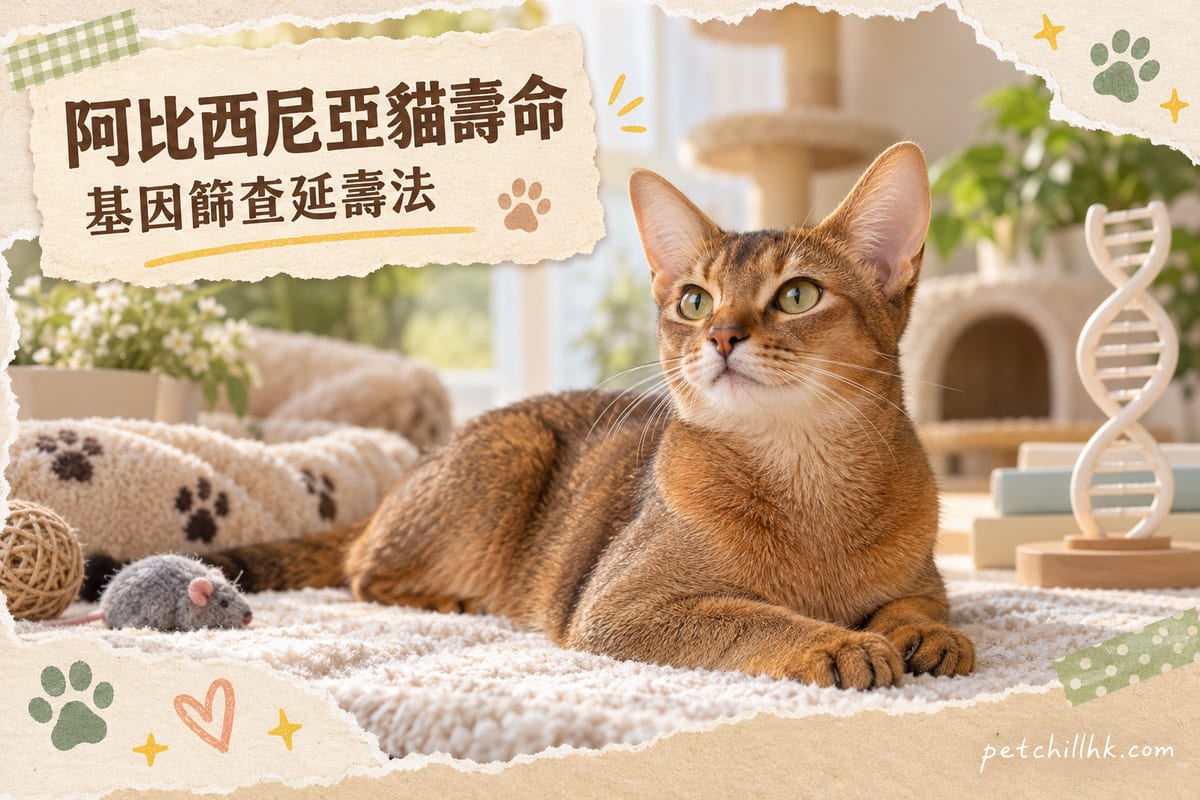
Abyssinian Cat Lifespan and Health: A Hong Kong Genetic Screening Guide
Abyssinian cats typically live 12 to 15 years, among the longer-lived breeds, but there are three breed-specific defences: PK deficiency haemolytic anaemia, renal amyloidosis and dental issues. This article breaks down the lifespan range, influencing factors, and a health management timeline from kitten to senior, showing how genetic testing and regular screening can stretch those years.
Read the full article →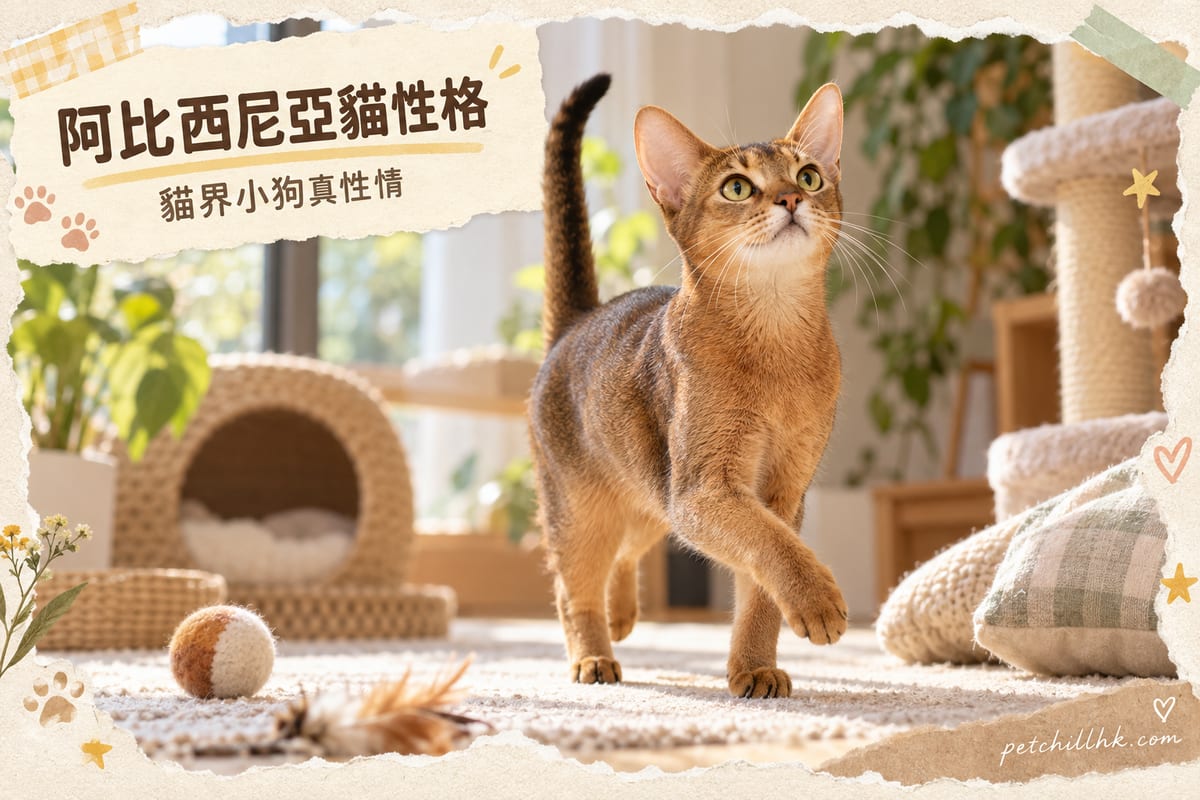
Abyssinian Cat Personality Revealed | Hong Kong Cat Owner Must-Read: How Smart Is the 'Dog of the Cat World'?
Calling the Abyssinian the 'dog of the cat world' is no exaggeration: the TICA standard states they are always on the move, highly involved with humans, and can fetch balls and open doors. This article breaks down five key personality traits, real-world intelligence, ability to live with children and other pets, the weakness of being left alone and separation strategies, and differences between males and females, helping you decide if this 'cat that opens the fridge' fits your lifestyle.
Read the full article →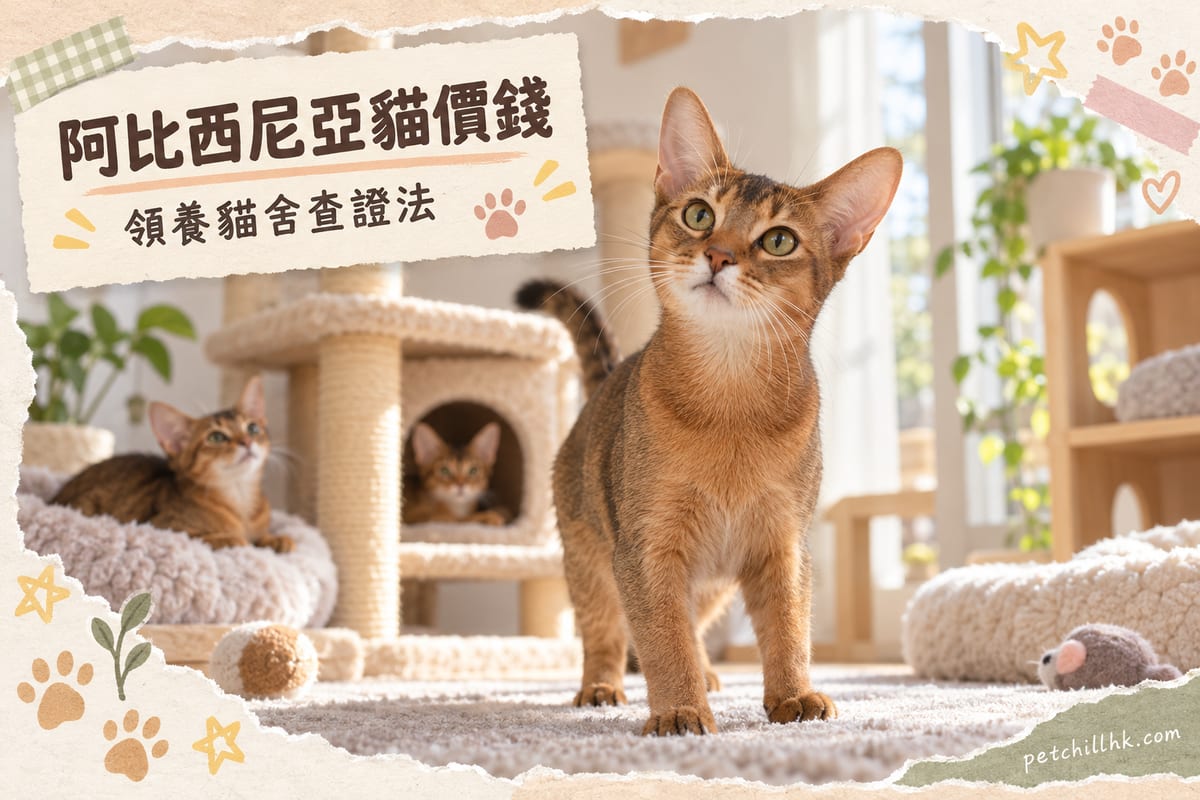
Abyssinian Cat Price: Hong Kong Catteries, Adoption and Verification Guide
How much does an Abyssinian cat cost in Hong Kong? Pet-grade from a cattery is typically HK$10,000–18,000, with pedigree-grade higher; for adoption, local SPCA and rescues occasionally have short-haired ticked tabby types, but purebred Abys are rare. This article breaks down the 2026 Hong Kong market price ranges, adoption routes, cattery verification checklist and monthly expense estimates, teaching you to avoid sick cats and scams on a reasonable budget.
Read the full article →You may also like
Other cat breeds like the Abyssinian