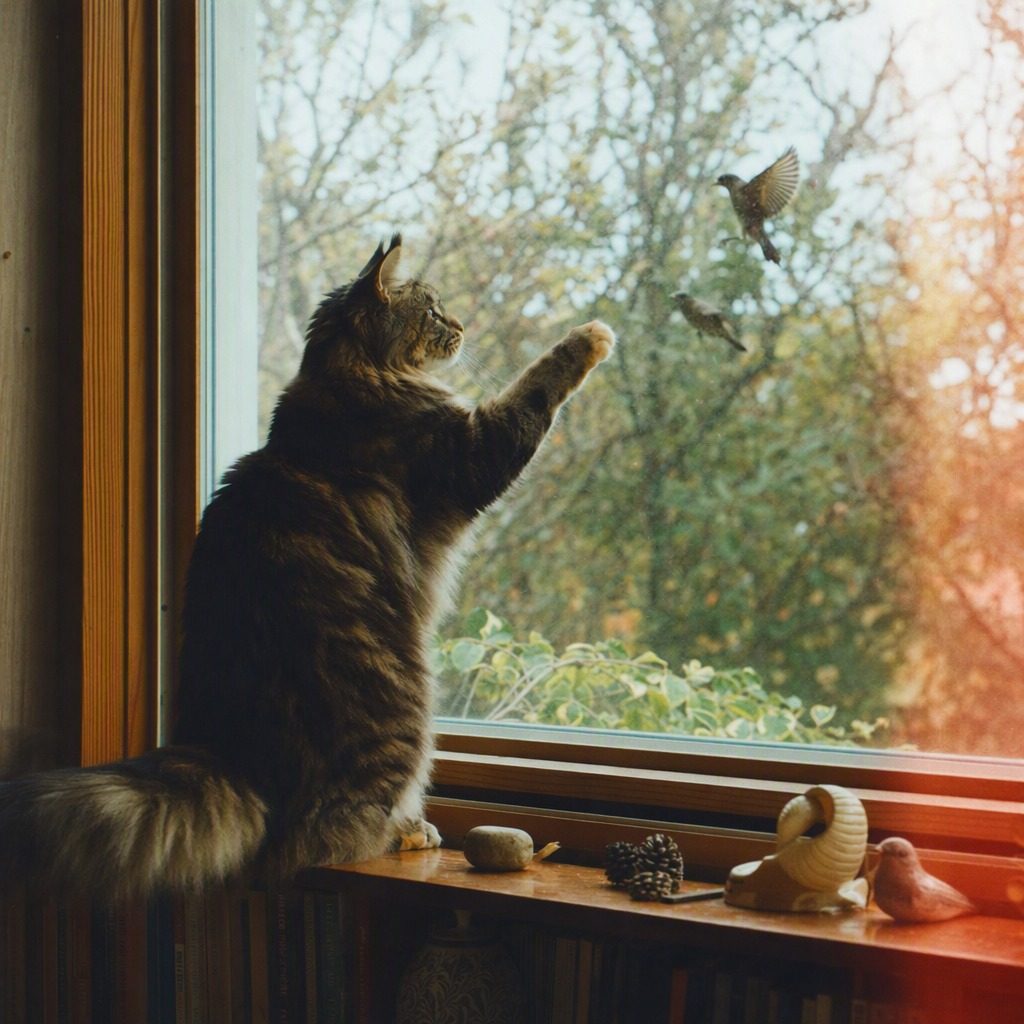
Maine Coon
The Maine Coon is one of the oldest naturally occurring cat breeds in North America, known for its huge size, thick long coat and gentle temperament — often called the “gentle giant”. Adult males can weigh 6 to 11 kg, with a body length (including the tail) of over 1 metre, making it one of the largest domestic cat breeds. Its look is unmistakable: lynx-like tufts on the ear tips, a thick neck ruff, a bushy long tail and large, intelligent eyes. Friendly, lively and clever, Maine Coons are deeply loyal to their families and make ideal family pets. Their growing period is far longer than most cats — usually 3 to 5 years to full maturity — so you need patience to let them grow up slowly. The most remarkable thing about the breed is their intelligence: Maine Coons are highly intelligent, can learn to open doors, play fetch and even respond to simple cues, and many owners describe them as a dog's heart in a cat's body. In Hong Kong they are not the most common breed, but they have grown more popular in recent years, and you can find one through a reputable breeder or an adoption organisation. This article covers the Maine Coon's daily routine, care needs, health information and keeping advice so you can understand this charming breed fully.
Size
Large
Lifespan
12-15 years
Weight
5-8 kg
Price
HK$15,000-30,000
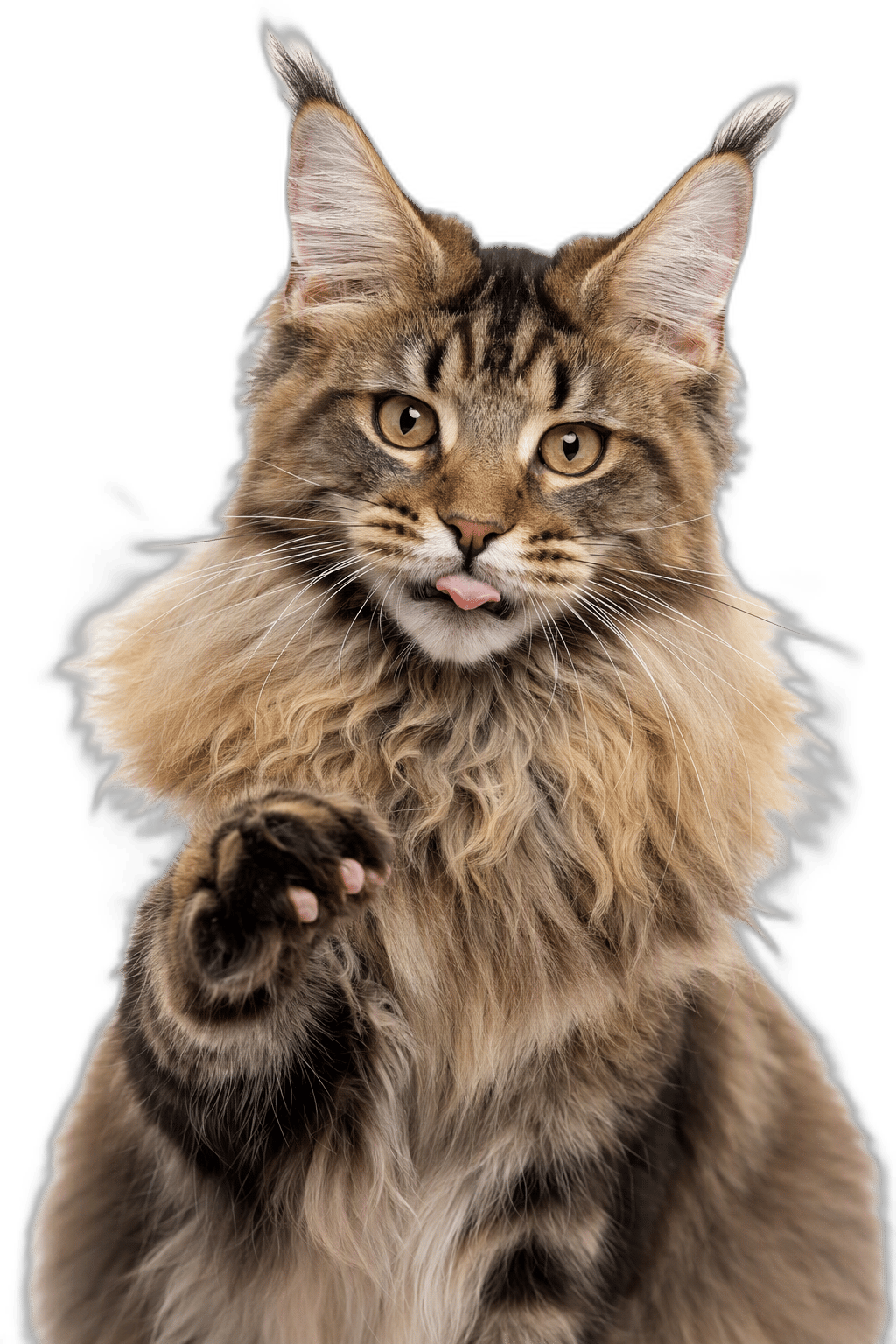
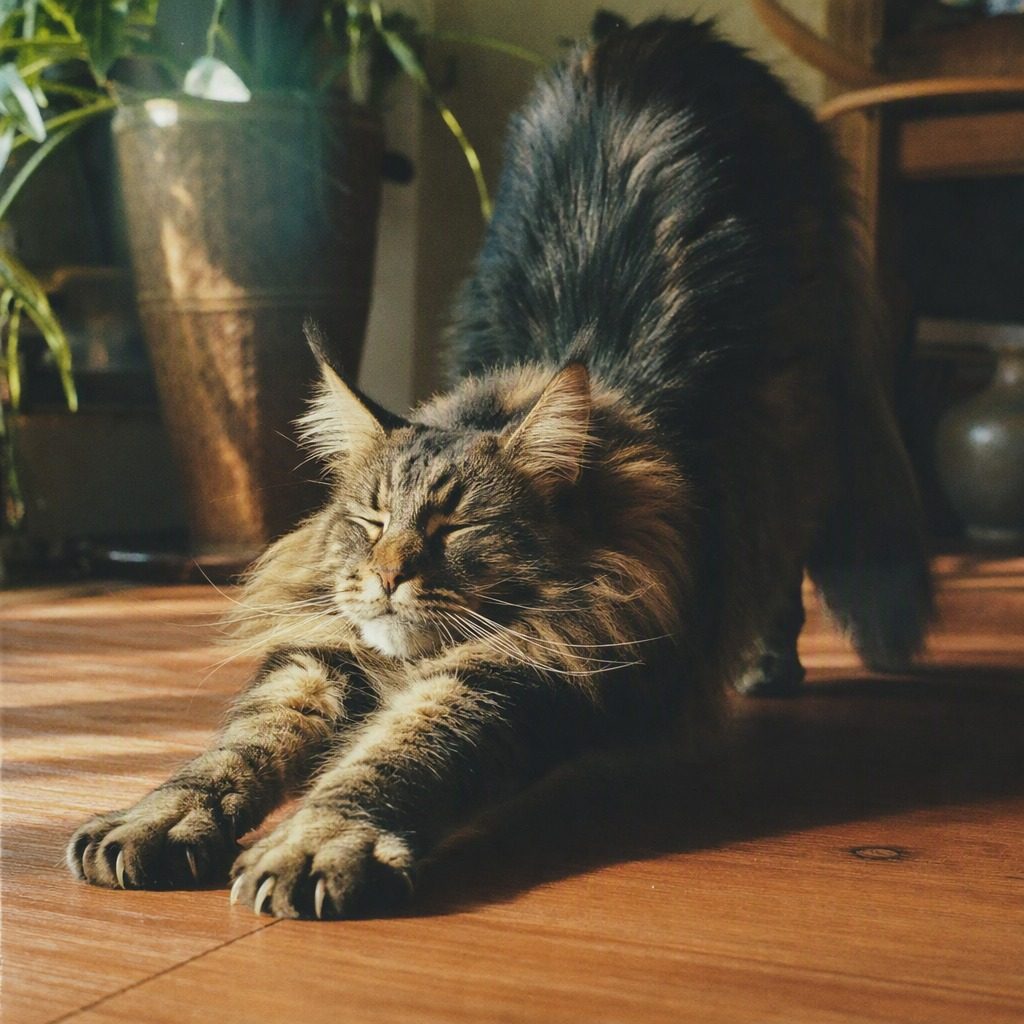
📺 32-second video · Cantonese narration
The Maine Coon story, in one take
From Maine, United States to Hong Kong homes — how did the Maine Coon become one of Hong Kong's most popular cat breeds?
- ✓Origin story: starting in Maine, United States
- ✓Personality: Gentle and friendly, Intelligent
- ✓Lifespan 12-15 years · Size Large
PetChill Pet Encyclopedia
Key facts
Origin
Maine, United States
Lifespan
12-15 years
Size
Large
Weight
5-8 kg
Coat
Long hair, many colours
Price range
HK$15,000-30,000
Personality
Daily life & habits
Maine Coons are lively, active and endlessly curious, and their daily life is full of energy and interest. Understanding their routine helps you care for this “gentle giant” better.
The rhythm of a day
In the early morning the Maine Coon wakes up bright and alert and greets you with its distinctive chirping call. It then starts patrolling its “territory”, exploring every corner of the home. Maine Coons love to climb high, so a sturdy cat tree is essential equipment. They are large — adult males can weigh 6 to 11 kg — so they need more room to move to express their athletic nature fully.
The afternoon is their rest period. They find a comfortable spot to sleep, but not for the whole day: they get up now and then to move about, drink some water and eat. Because a Maine Coon eats more than an average cat, feed a high-quality cat food in two or three meals a day so they get enough protein and nutrition. This is also a good time for owners to brush them.
At night the Maine Coon becomes more active and loves interacting and playing with you. They are very social cats, enjoy taking part in family life and will even come and ask you to play. Their high intelligence means they can play fetch with you, which is great fun.
A home that suits Hong Kong
Maine Coons need more space to move. In a small Hong Kong flat, make sure there is enough vertical space for them. A tall cat tree, a window perch with a view and plenty of toys will greatly improve their quality of life. Maine Coons adapt well; with the space set up properly they can be happy even in a Hong Kong flat. One more thing: turn on the air conditioning in summer, because a long-coated Maine Coon feels the heat.
Care essentials
Grooming
The Maine Coon's long coat is one of its most charming features, and also the biggest grooming challenge. The coat has two layers: a longer top coat of guard hair and a dense downy undercoat. That structure lets them withstand severe cold, but it also makes matting easy.
Brush at least 2 to 3 times a week, and daily during shedding season (usually spring and autumn). Use a comb and a slicker brush together, starting at the roots and working slowly to the tips, paying particular attention to the armpits, belly and behind the ears — the spots where mats form most easily.
Regular bathing matters too: about once every 4 to 6 weeks with a cat-specific shampoo. Dry the undercoat thoroughly afterwards, or skin problems follow easily. The ear hair and foot hair also need regular trimming, and nails about every two weeks. Check ear hygiene daily as well, because a long-haired cat's ears easily collect dirt.
Exercise
Maine Coons are a very lively breed and need at least 30 to 60 minutes of play every day. They love chasing toys and leaping up and down — the athletes of the cat world.
Provide a sturdy cat tree to climb and a range of interactive toys: wand toys, laser pointers, puzzle toys and so on. Maine Coons are intelligent, so they need mental stimulation as well as physical exercise. Puzzle toys burn off energy and train their thinking at the same time.
Maine Coons are also one of the few cat breeds that enjoy water. Put out a shallow basin for them to play in, or buy a pet water fountain — they will be delighted. If space allows, consider a “cat corridor” on the walls so they can run and jump.
Training
Maine Coons are extremely intelligent, among the cleverest of all cat breeds. They can learn to open doors, play fetch and even respond to simple cues. Many owners call them “a dog's heart in a cat's body”, because they love interacting with people, recognise their owner and can even be walked outside on a lead.
Use positive reinforcement with treats and praise. Because they enjoy learning new skills, you can teach them an obstacle course, a handshake or a spin. Regular mental stimulation stops them getting bored and reduces destructive behaviour.
Maine Coons are highly sociable and enjoy the company of other cats or dogs. If you already have pets at home, a Maine Coon usually settles in quickly. Even so, introduce a new arrival slowly and give them enough time to adjust.
Diet
Maine Coons eat more than an average cat and need a high-protein, quality cat food. Their large size means higher daily nutritional needs. Kittens (0 to 1 year) need high-calorie kitten food, fed 3 to 4 times a day to support fast growth.
Adults (1 to 5 years) do well on two meals a day with a food rich in animal protein; their size means more protein is needed to support muscle development. Choose a food containing omega-3 and omega-6 fatty acids, which help keep the long coat healthy.
Senior cats (over 5 years) need a lower-calorie formula to avoid obesity. Add joint supplements, as large cats are prone to joint problems. Make sure they drink enough water too — a pet water fountain can increase their intake.
Living environment
Maine Coons need a roomy home, ideally with plenty of vertical space. A tall, sturdy cat tree is essential — over 1.5 metres high is best so they can climb properly. A window perch is a favourite, letting them watch the world outside.
Because Maine Coons are big and strong, the cat tree must be stable so it cannot topple. Provide several resting spots so they can choose where to settle. They adapt well to Hong Kong homes, but need enough room to move.
Watch ventilation and temperature control too. Turn on the air conditioning in summer, because long-haired Maine Coons feel the heat. In winter they are delighted, because the long coat keeps them warm. If you have a garden or balcony, consider fitting safety netting so they can enjoy the outdoors safely.
Maine Coon everyday food & supplies
Chosen by species (cat) from products PetChill stocks — not a breed-specific formula. Actual suitability depends on age, weight and health.
 Special offer
Nutriplan Cat Food Complete Health Nutritional Formula 5kg (64352)
HK$123HK$128About HK$24.6 per kg
Price checked 2026-10-21; the store page shows the live price, stock and offers.

Bella & Molly's Dutch Berry Royal Selected Cat Food AAFCO Anti-Aging Grain-Free Single Protein Salmon Formula 50g (Limited Time Experience)
HK$10About HK$200 per kg
Price checked 2026-10-21; the store page shows the live price, stock and offers.

Hills Cat Food Life Stage Series Adult Formula Chicken 490g (609885)
HK$55About HK$112.24 per kg
Price checked 2026-10-21; the store page shows the live price, stock and offers.
History & origin
The Maine Coon is one of the oldest naturally occurring cat breeds in North America, originating in the state of Maine in the north-east United States. Its history goes back to the 19th century: long-haired cats brought to North America by early European settlers bred naturally with local short-haired cats. Legend has it they are a cross between a raccoon and a cat, but that is of course just folklore — the “Coon” in the name actually comes from a place name in Maine.
Maine Coons began as working farm cats and, with their strong build and excellent hunting instinct, became superb mousers. These practical working traits let them survive and multiply in the harsh New England climate.
In 1895 a brown tabby Maine Coon called Cosey won best in show at the first cat show held at Madison Square Garden in New York, bringing the breed wide attention. But the rise of the Persian in the early 20th century pushed the Maine Coon into decline, until a group of enthusiasts founded the Maine Coon Breeders and Fanciers Association in the 1950s and began a systematic revival.
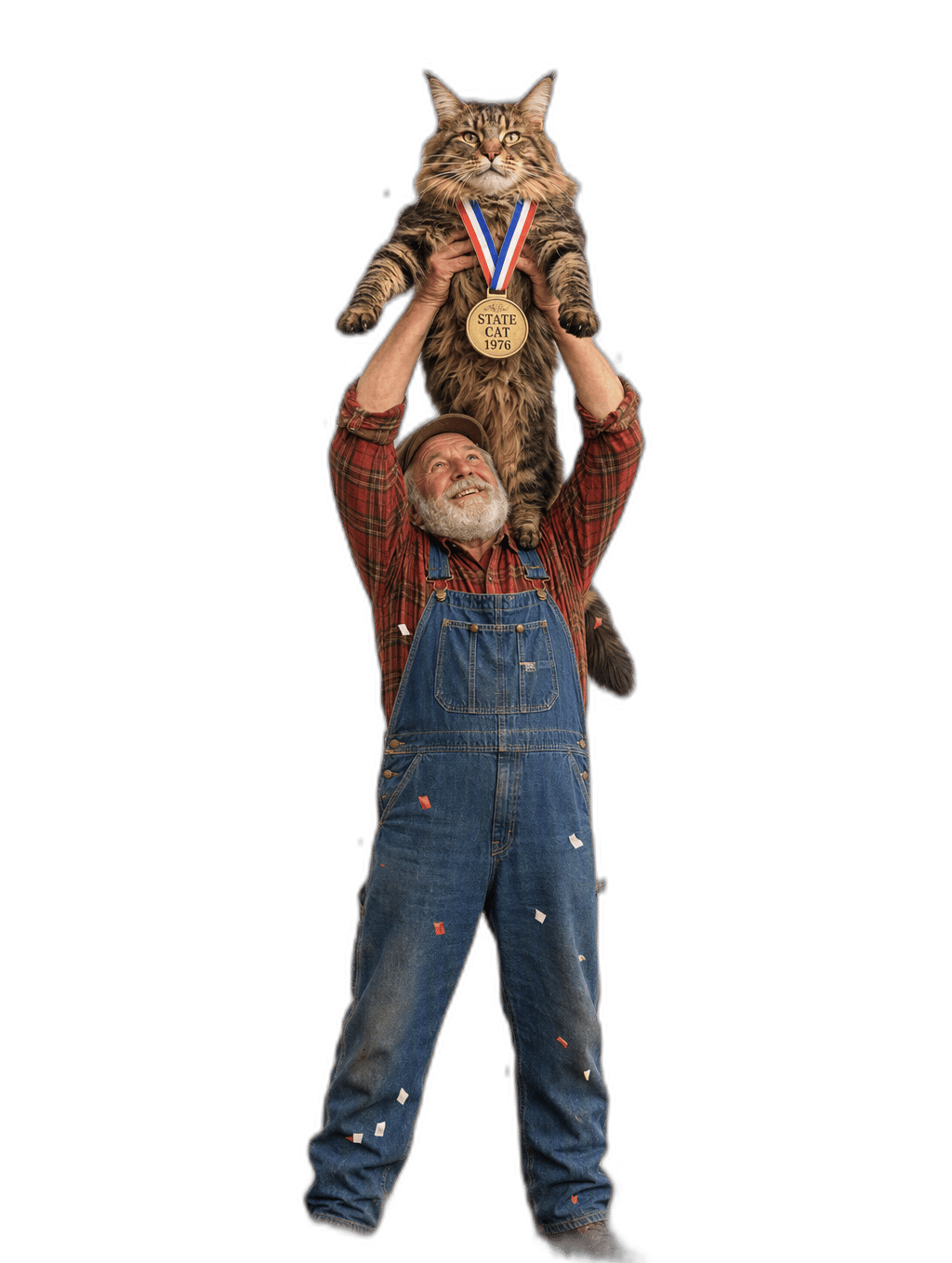
In 1976 the Maine Coon was officially named the state cat of Maine, making it one of the most iconic native American breeds. Today Maine Coons are popular worldwide, especially in Asian markets such as Hong Kong, Taiwan and Japan. Their huge size and gentle temperament have made them stars of social media. Worth noting: the Maine Coon's growing period is unusually long, taking 3 to 5 years to full maturity, which makes that enormous size all the more striking.
Who it suits
Is the Maine Coon right for you?
Maine Coons are a very popular pet breed, but they do not suit everyone. Before deciding to keep one, consider the following:
Who they suit:
- Families with enough space: Maine Coons are large and need more room to move
- People who like lively, interactive cats: they are active and love engaging with people
- People with time to spend with them: Maine Coons are social cats and dislike being alone
- People with cat experience: their care needs are higher, with regular brushing and exercise
Who they suit less:
- People in very small flats: too little space affects their quality of life
- People with no time for regular grooming: the long coat needs brushing at least 2-3 times a week
- People who are often out of the home: Maine Coons need their owner's company
If you are considering adopting a Maine Coon in Hong Kong, start by contacting local animal rescue organisations to see whether an adult Maine Coon is waiting for a home. Adopting rather than buying is the more meaningful choice.
Health & care
Common health issues and care advice for the Maine Coon
Maine Coons are generally a healthy breed, but their large size and particular genetic make-up mean there are still health issues to watch. Understanding these potential problems helps you care for them better.
The most common inherited disease is hypertrophic cardiomyopathy (HCM), a condition in which the heart muscle thickens abnormally and which can lead to heart failure. Ask the breeder for an HCM genetic test report before buying. Hip dysplasia is also common in large cats; it affects their mobility and needs weight control and moderate exercise.
Polycystic kidney disease (PKD) is another inherited disease that causes a gradual decline in kidney function. Spinal muscular atrophy (SMA) is also common in Maine Coons and affects normal muscle development. Reputable breeders should test their breeding cats for these conditions.
Note that pure white Maine Coons may carry a genetic defect causing congenital deafness, linked to the white coat gene. If you are considering a white Maine Coon, check carefully that the breeder has done the relevant genetic testing.
Take your Maine Coon to the vet for a full health check once a year and keep weight and exercise at the right level. Have the heart and joints checked regularly, and if you notice anything unusual — difficulty breathing, loss of appetite or reduced activity — take them to the vet straight away.
Want to see more cat breeds?
Besides the Maine Coon, you can also compare Ragdoll, Siamese (Siam Cat) and British Shorthair — breed guides that compare personality, size and care difficulty.
Frequently asked questions
The questions people ask most about the Maine Coon
Maine Coons usually live 12 to 15 years, longer than many other large cat breeds. With good care, a balanced diet and regular vet check-ups, some can even live past 18. Keeping them at a healthy weight and giving them enough exercise is the key to a longer life.
The main downsides are: the long coat needs frequent brushing (2-3 times a week, daily in shedding season), a bigger appetite that pushes up costs, a large body that needs more space, and a tendency to inherited conditions such as HCM (hypertrophic cardiomyopathy) and hip dysplasia. Their growing period also lasts 3-5 years, so owners need patience.
Maine Coons can be very happy in Hong Kong, but a few things matter: air conditioning in summer (long coats feel the heat), enough space at home (a cat tree is ideal) and regular grooming. Maine Coons adapt well — with the space set up properly, even a small Hong Kong flat can be comfortable for them.
Maine Coons are one of the largest domestic cat breeds. Adult males usually weigh 6 to 11 kg and females 4 to 7 kg, and body length including the tail can exceed 1 metre. Their growing period is unusually long and takes 3 to 5 years to full maturity, so their weight keeps climbing into adulthood.
Common inherited defects in Maine Coons include hypertrophic cardiomyopathy (HCM), spinal muscular atrophy (SMA), polycystic kidney disease (PKD) and hip dysplasia. Pure white Maine Coons may have congenital deafness. Before buying, ask the breeder for genetic test reports to make sure the cat is healthy.
In Hong Kong, Maine Coon kittens cost around HK$15,000 to HK$30,000, depending on pedigree, coat colour and seller. Top pedigrees or rare colours can cost more. Choose a reputable breeder and ask to see health certificates. Adoption is also a good option — some Hong Kong animal rescue organisations occasionally have Maine Coons waiting for a home.
Maine Coons are friendly, gentle and adaptable, so they are not too difficult for beginners. Their long coat does need regular brushing — at least 2-3 times a week, daily during shedding season. Their large size and big appetite also mean higher costs than an average cat. If you are willing to put in the time to learn grooming, beginners can keep them successfully.
Maine Coon weight varies by sex: adult males usually 6 to 11 kg, females 4 to 7 kg. Their growing period is unusually long and takes 3 to 5 years to full maturity, so weight keeps increasing. Kittens gain roughly 0.5 to 1 kg a month and are around 4 to 6 kg at 1 year old. Take your cat for regular vet checks to make sure the weight stays in a healthy range.
Maine Coon articles
9 articles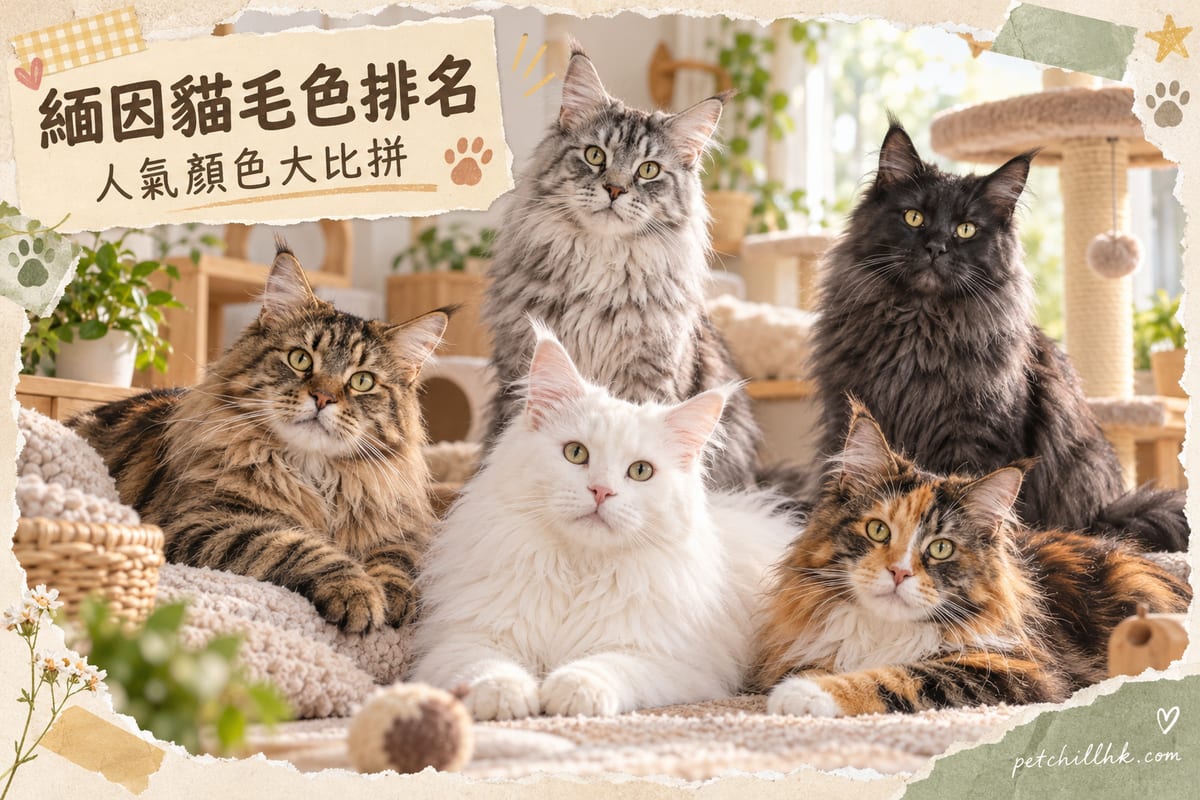
Maine Coon Colours Ranked: A Full Guide to 30+ Colours, Patterns and Popular Shades
Maine Coon colours are ranked by CFA standards into five groups: solid, tabby, bi-colour, tortoiseshell and calico, and shaded and smoke, with over 30 combinations. The most popular and recognised are brown classic tabby, silver tabby, solid black and white, smoke, and tortoiseshell and calico. Pointed, chocolate and lilac colours are not accepted by CFA (TICA has separate groups). This article includes the five-group framework, a quick-reference table of popular colours, show-standard highlights, the relationship between colour and price, care differences by colour, and the polydactyl Hemingway cat legend.
Read the full article →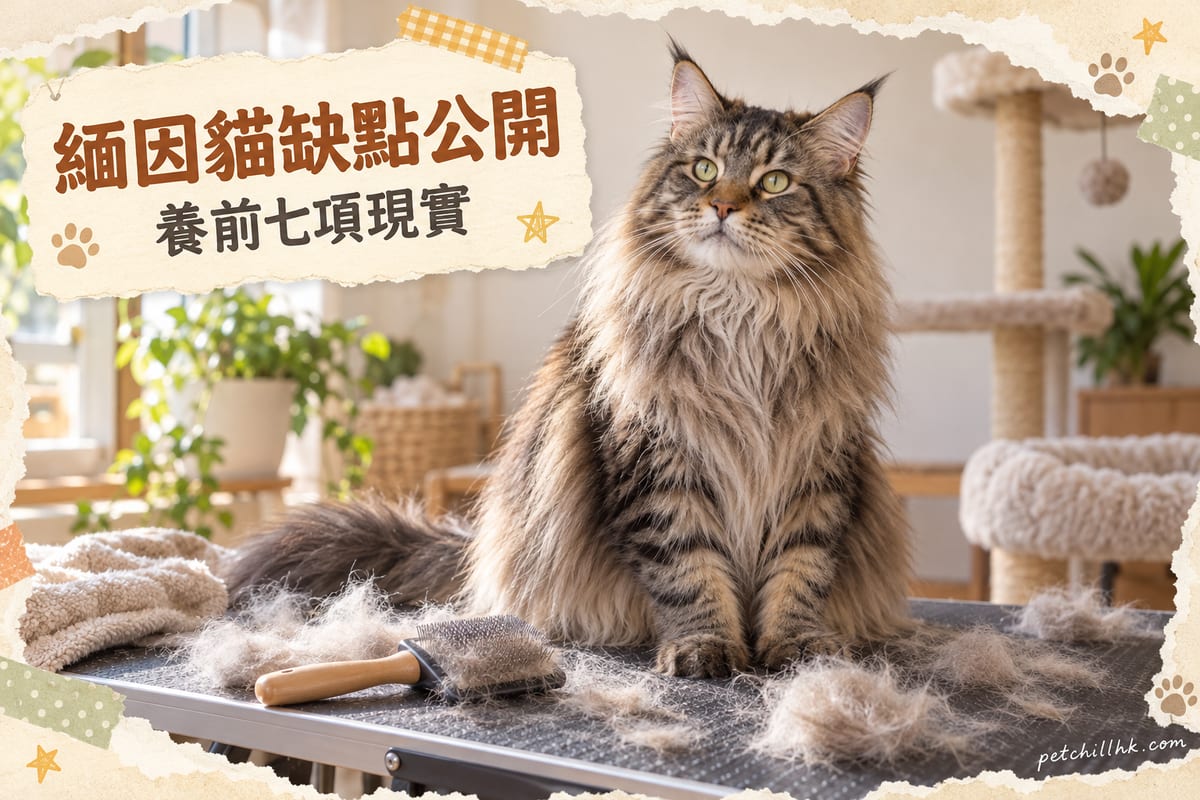
8 Real Disadvantages of Maine Coons: Space, Grooming, Costs & Solutions
The real disadvantages of a Maine Coon boil down to 8: large space requirement, long coat needing daily grooming, high food intake and costs, genetic disease risks, tendency to separation anxiety, excessive shedding, difficulty finding sources in Hong Kong, and building regulation restrictions. But each has practical solutions—reading this before deciding is far better than regretting an impulse purchase.
Read the full article →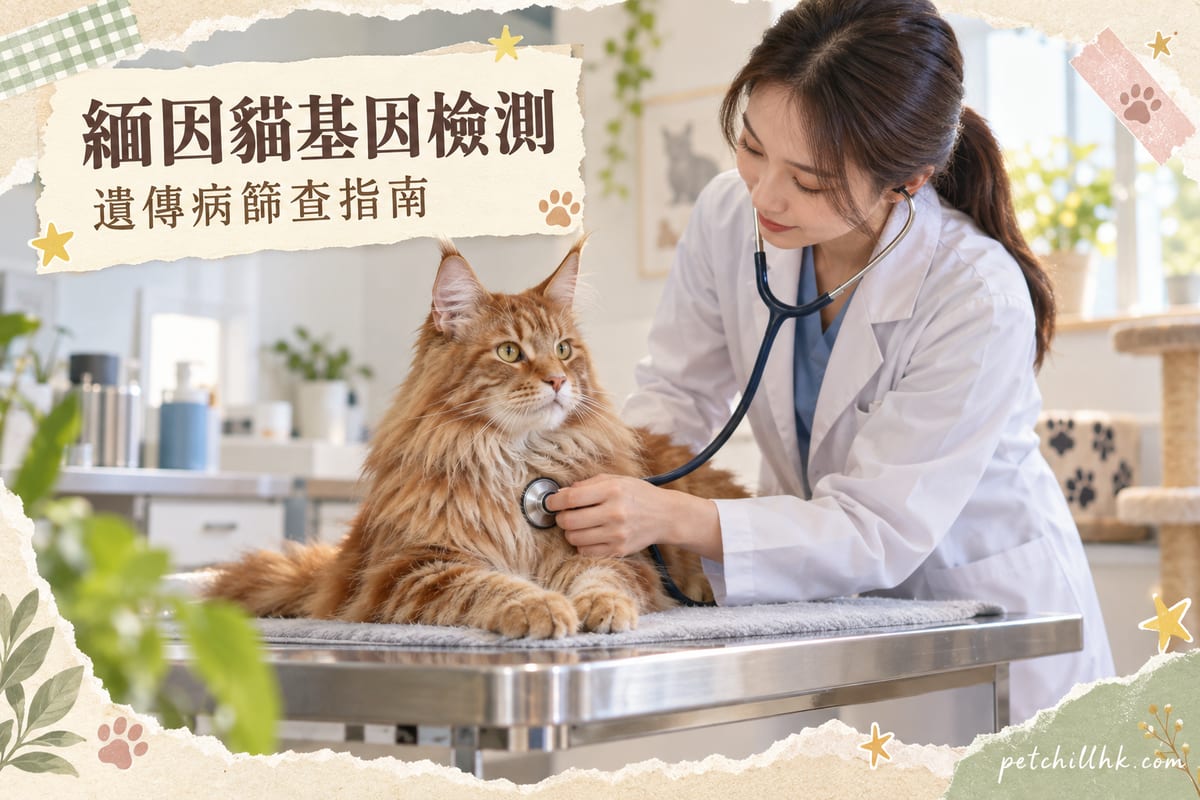
Maine Coon Genetic Health Screening: HCM, SMA, PKD & GALC
The main inherited risk for Maine Coons is hypertrophic cardiomyopathy (HCM), followed by spinal muscular atrophy (SMA), polycystic kidney disease (PKD) and GALC deficiency. Before buying, ask the cattery to show the parents' genetic test and heart ultrasound reports; from age seven, regular rechecks are recommended.
Read the full article →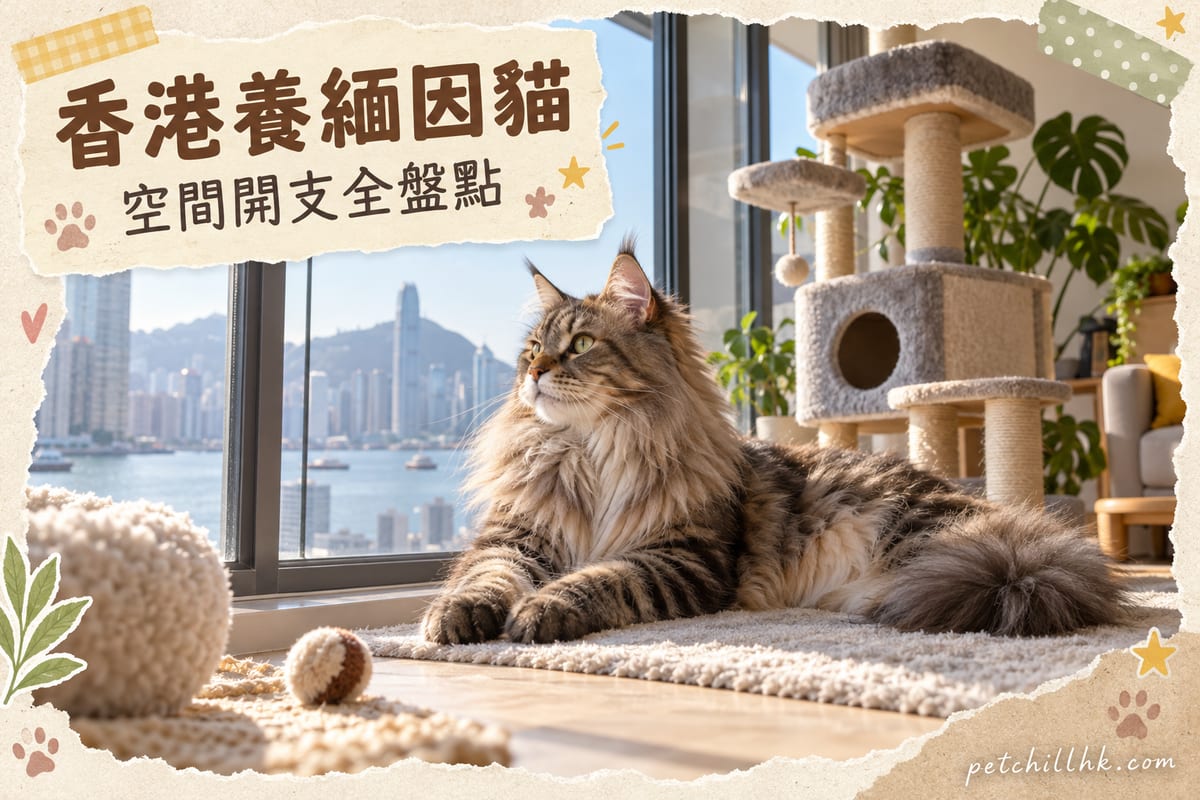
The Complete Guide to Keeping a Maine Coon in Hong Kong: Space, Air-Conditioning, Building Regulations
Everything you need to know about keeping a Maine Coon in Hong Kong: setting up a small flat, managing air-conditioning and humidity, public and private housing rules, veterinary resources and a home equipment checklist. A must-read for Hong Kong cat owners — save it now!
Read the full article →
How Long Do Maine Coons Live? 5 Key Factors Behind 12–15 Years | Hong Kong Edition
Maine Coons live an average of about 12–15 years, and TICA lists the breed's life expectancy at generally over 12.5 years. This article breaks down the 5 key factors—indoor keeping, genetic screening, weight management, vet check-ups and daily care—plus a practical Hong Kong checklist for a longer life.
Read the full article →
Maine Coon Personality and Intelligence: What Makes the Gentle Giant Tick | Hong Kong
Are Maine Coons good-natured? This article breaks down the personality traits and intelligence of the 'gentle giant': dog-like cat behaviour, trilling communication, clever examples like opening doors and solving puzzles, plus differences between male and female personalities, living with young children and other pets, and separation anxiety alone-time training, with a personality trait response table and interactive game recommendations.
Read the full article →
Maine Coon Price in Hong Kong 2026: Buying, Adoption & Full Cost Guide
In 2026, a pedigree Maine Coon kitten in Hong Kong costs around HK$15,000–40,000: pet grade $15,000–25,000, breeding grade $25,000–35,000, show grade $35,000–40,000+. Adoption via SPCA and others starts at about HK$1,700, including health check, vaccinations, microchip and neutering arrangements. This guide lists price tiers, adoption routes and monthly upkeep of about HK$1,500–3,000.
Read the full article →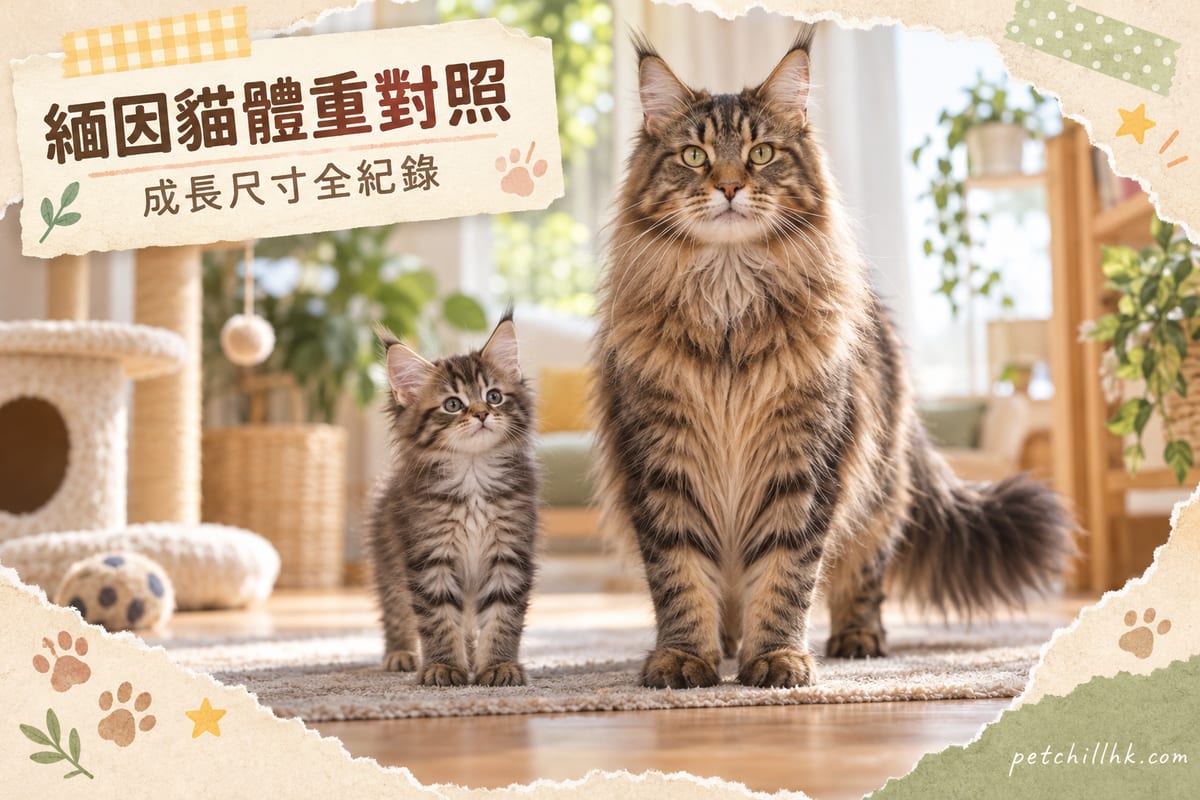
How Big Do Maine Coons Get? Males 6-10 kg, Up to 120 cm Nose to Tail
How big is a Maine Coon, really? Adult males weigh about 6-10 kg and females about 4-7 kg, with a shoulder height of 25-40 cm and a nose-to-tail length of up to 90-120 cm. This guide includes a 0-36 month growth weight chart, male vs female size differences, what counts as normal in kilos, and a weight self-check method for Hong Kong owners.
Read the full article →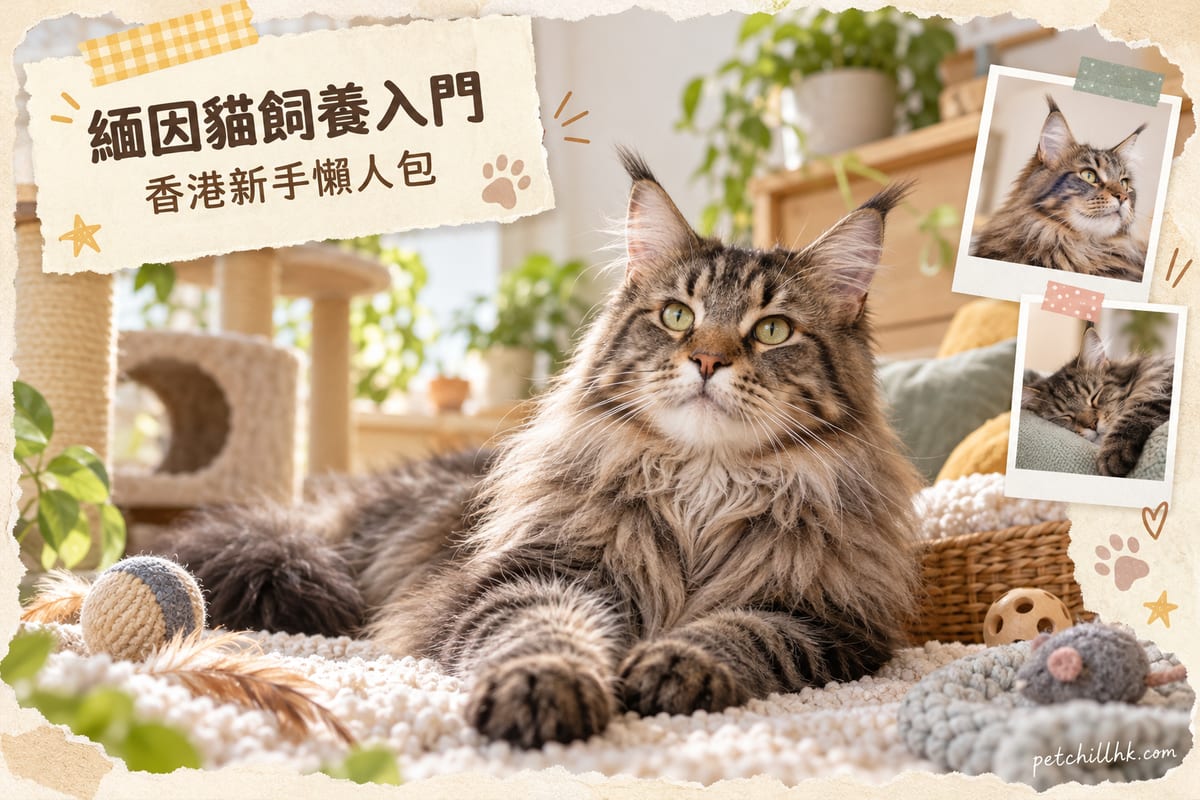
Maine Coon Hong Kong Care Guide 2026 | Personality, Price, Space Needs
The Maine Coon is a gentle giant: one of the largest domestic cats, friendly and intelligent but needing plenty of space and a high medical budget. This guide covers appearance and weight, personality, Hong Kong prices and adoption, hereditary diseases such as HCM, and when to see a vet — essential reading for Hongkongers keeping a large cat.
Read the full article →You may also like
Other cat breeds like the Maine Coon