Hedgehog
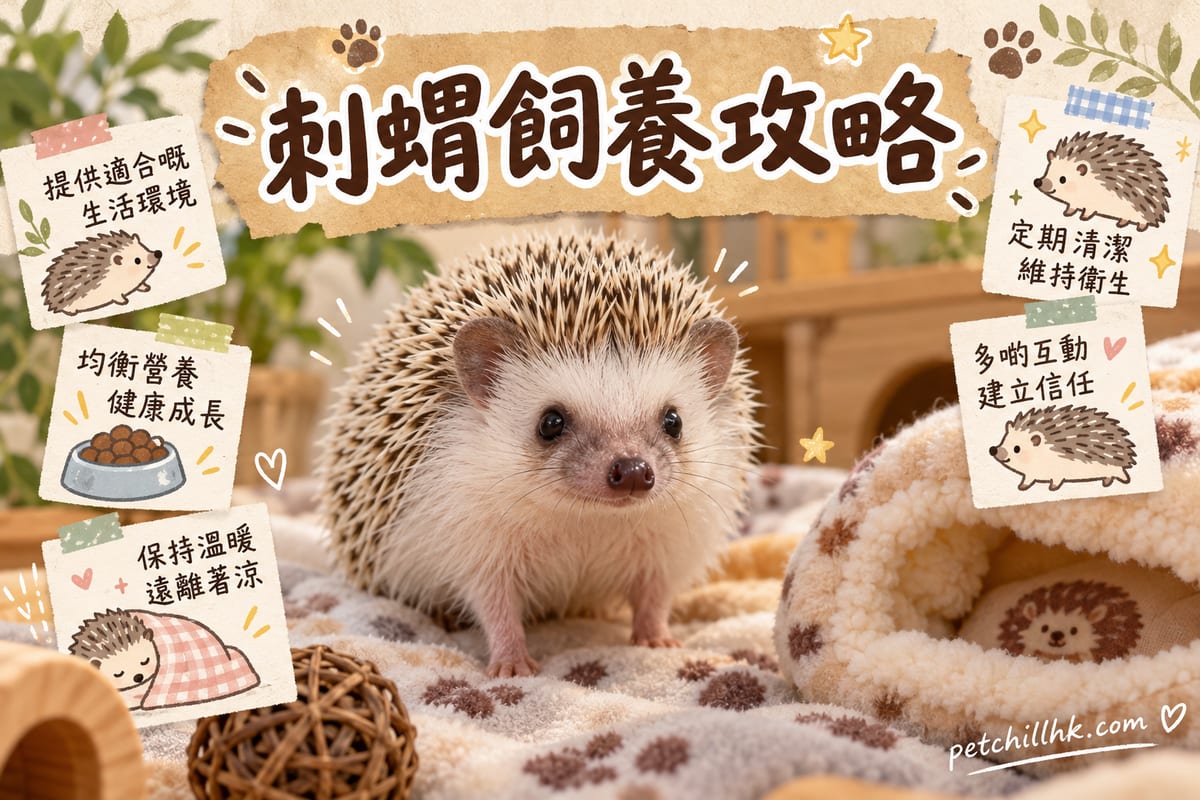
Most hedgehogs discussed in Hong Kong's pet market are African pygmy hedgehogs, one of the more common exotic pets here, but the bar for keeping them is higher than for other small animals. They are nocturnal and solitary, and roll into a spiky ball when startled. African pygmy hedgehogs are solitary animals, and veterinary husbandry guidance generally recommends one per cage; sharing a cage leads to food guarding, competition over hiding spots and fighting, with wounds usually on the face and limbs, and group housing keeps stress levels chronically high. They differ from European hedgehogs: European hedgehogs hibernate, African pygmy hedgehogs do not truly hibernate, but in low temperatures they enter torpor, a state that is harmful to them. Adult body weight varies a lot between individuals, so rather than memorising a number, weigh weekly and track the trend; most sources put lifespan at about four to six years, which is not long, so count the time and veterinary budget for the coming years before you commit. Hedgehogs are also not suited to free contact with cats and dogs: when startled they raise their spines and bite. Whether you keep one well comes down to temperature first, not diet.
Size
Small
Key facts
Size
Small
Personality
Daily life & habits
Hedgehogs are nocturnal, so the daily rhythm has to follow their active hours: dusk and night are when they are naturally active, so handling and observation should be scheduled then, and daytime should be left undisturbed as far as possible. On cleaning, remove droppings daily, spot-change the bedding weekly, and periodically do a full cage change and disinfection, using a pet-safe product and rinsing and drying thoroughly. Build a weekly weighing habit, because adult weight varies a lot between individuals and the trend is more useful than a single number; also, being so round it cannot roll up is a sign of obesity, which can affect the liver long term. Every day also run a quick check for flaky skin at the base of the spines and for intense scratching, because mites are often carried home from the shop and flare up under stress or poor conditions. Check the food daily and clear leftovers hidden in corners to avoid damp and mould. In winter read the thermometer once a day; in summer make sure the air-conditioning vent is not blowing directly onto the cage. Droppings and leftover food are the most direct daily health record, so a sudden drop in either deserves attention.
Care essentials
Grooming
The focus of hedgehog care is not washing but bedding and skin. Loose cotton wool, fabric scraps or any long-fibre material should not be used as bedding: toes and limbs are easily caught in the fibres, and a tight wrap impairs circulation and in severe cases causes tissue necrosis; shavings such as pine and cedar contain volatile oils that are not ideal to inhale long term; scented or dyed bedding is also unsuitable. Generally usable options include recycled paper bedding, aspen shavings, alfalfa pellets and hay, with at least part of the area laid about 8 to 10 cm deep to allow digging. The cleaning rhythm is daily removal of droppings, weekly spot changes, and periodic full cage changes with disinfection, using a pet-safe product and rinsing and drying thoroughly before the hedgehog goes back in. Check the skin regularly for flaky skin at the base of the spines and for intense scratching; spine loss increases during the juvenile quilling period and is normal, but heavy spine loss in adulthood points to mites. When changing bedding, also check the limbs and toes for fibres wrapped around them or for redness and swelling.
Exercise
Hedgehogs are nocturnal, and their activity is released mainly at night, so cage space and layout have to match. For housing, a large plastic tub or a single-level cage with a plastic base and wire sides both work; veterinary sources suggest a floor area of about 0.6 x 0.9 metres, and it must be well ventilated. Glass tanks are unsuitable because moisture gets trapped, causing skin and respiratory problems. Wire spacing must be tight enough, since gaps that are too wide trap limbs; the lid must be secure yet ventilated, because hedgehogs can climb and will escape through small gaps. Bedding should be about 8 to 10 cm deep over at least part of the area to allow digging: the depth exists for digging, and too thin a layer prevents the behaviour entirely. If you use a wheel, mind the noise: hedgehogs are nocturnal, a wheel turning in the middle of the night can be loud, and placement should consider family members and neighbours. The cage should also avoid air-conditioning and warm-air vents so that airflow does not blow directly onto the hedgehog. Activity is concentrated at night, so clean bedding and water should be ready before dusk; the cage position should also be out of walkways.
Training
Hedgehog training is really socialisation. Raised spines, rolling into a ball, huffing or clicking, and sudden jumps are all defensive responses that usually mean stress rather than something aimed at you, so do not give up on handling just because it rolls up. Do not reach in from above to grab it, because an approach from above feels to a hedgehog like a predator dropping out of the sky; the right way is to scoop it up slowly from underneath with a flat palm, keeping every movement slow throughout. On pacing, start from a young age, at dusk or at night during its natural active hours, for short sessions, in a quiet environment with soft light; about 15 to 30 minutes each time is enough, and longer sessions only add stress. Some individuals take several months to relax, so adjust the pace to its reactions and do not force handling. Two other behaviours are normal and need no worry: self-anointing, where it salivates and spreads the saliva over its spines, and increased spine loss during the juvenile quilling period. During socialisation, do not force it onto its back for checks or pry a rolled-up ball open; wait for it to relax on its own.
Diet
Hedgehogs are insectivorous omnivores. The academic literature notes that for captive diets on a dry-matter basis, roughly 30% to 50% protein and about 10% to 20% fat is a suitable range, so the staple should be a hedgehog or insectivore-specific food, plus insects and a small amount of fruit and vegetables. On portions, veterinary husbandry sources mention about 3 to 4 teaspoons (roughly 15 to 20 ml) of staple food per day, adjusted to weight and activity; in addition, about 1 to 2 teaspoons of wet food daily, such as canned food, cooked meat or cooked egg, or gut-loaded insects such as crickets and Dubia roaches; and about 1 teaspoon of fruit and vegetables, such as beans, pumpkin, dark leafy greens or apple. Three lines to remember clearly: raw meat and raw egg must not be fed, because of the salmonella risk; dairy causes diarrhoea; and if you cannot get the specialist food, a high-quality weight-control cat formula can substitute, but discuss it with your vet for the long term. Hedgehogs are cautious about new food, so change diets by mixing gradually. The food bowl should be washed daily, and leftovers of wet food and vegetables removed the same day.
Living environment
Temperature is the most easily underestimated part of hedgehog care, and also the most dangerous. Veterinary husbandry sources suggest keeping the environment at about 22 to 32 degrees C, with 24 to 29 degrees C the ideal range; other sources note that below about 18 degrees C the risk of entering torpor rises markedly. During torpor, body temperature and metabolic rate fall, the immune system is suppressed, and in severe cases organ function is affected, so you cannot wait until the hedgehog stops moving to act. Heating can be provided with an under-cage heat mat or a ceramic heat lamp, but leave space for heat to dissipate to avoid local overheating, and always verify with a thermometer rather than judging hot and cold by feel. For power cuts, keep an insulated box and hand warmers ready, but a hand warmer must never be placed directly against the hedgehog's body. On damp, Hong Kong's average humidity is high and bedding quickly becomes damp; damp paper bedding and hay grow mould easily and directly affect the skin and respiratory tract, so food should be sealed with a desiccant, bedding changed as soon as it is wet, and the cage kept away from bathrooms and kitchens. Veterinary sources also favour relatively low humidity, so the idea that wetter is better is a misunderstanding.
Hedgehog everyday food & supplies
Chosen by species (cat) from products PetChill stocks — not a breed-specific formula. Actual suitability depends on age, weight and health.
 Special offer
Nutriplan Cat Food Complete Health Nutritional Formula 5kg (64352)
HK$123HK$128About HK$24.6 per kg
Price checked 2026-10-21; the store page shows the live price, stock and offers.

Bella & Molly's Dutch Berry Royal Selected Cat Food AAFCO Anti-Aging Grain-Free Single Protein Salmon Formula 50g (Limited Time Experience)
HK$10About HK$200 per kg
Price checked 2026-10-21; the store page shows the live price, stock and offers.

Hills Cat Food Life Stage Series Adult Formula Chicken 490g (609885)
HK$55About HK$112.24 per kg
Price checked 2026-10-21; the store page shows the live price, stock and offers.
History & origin
Most hedgehogs discussed in Hong Kong's pet market are African pygmy hedgehogs, which are a different animal from the hedgehogs seen in the European wild. European hedgehogs hibernate; African pygmy hedgehogs do not truly hibernate, but in low temperatures they enter torpor: body temperature and metabolic rate fall, the immune system is suppressed, and in severe cases organ function is affected. That difference is the single most critical point in husbandry. You cannot go through winter with the attitude that it will hibernate on its own, and you cannot leave a Hong Kong room that drops to around ten degrees in winter without heating. African pygmy hedgehogs are solitary and nocturnal, and veterinary husbandry guidance generally recommends one per cage; when startled they raise their spines and roll up, accompanied by huffing, clicking and sudden jumps, all of which are defensive responses that usually mean stress rather than something aimed at you. Understand this background and you see why the priorities in hedgehog care are temperature, solitary space and patient socialisation rather than lively interaction. African pygmy hedgehogs are small, but the activity space and temperature control they need do not shrink because of it.
Who it suits
Is the Hedgehog right for you?
Hedgehogs suit owners willing to accommodate a nocturnal schedule and who have a temperature-stable space to spare. The first constraint is solitude: veterinary husbandry guidance generally recommends one per cage, since sharing leads to food guarding, competition for hiding spots and fighting, and wanting more than one means separate cages, so cages and heating equipment both double. The second is warmth: Hong Kong indoor temperatures can drop to around ten degrees in winter, and a room without heating must have a heat mat or ceramic heat lamp, so heating equipment has to be in place from day one and verified with a thermometer rather than by feel. The third is space and regulation: veterinary sources suggest a cage floor area of about 0.6 x 0.9 metres, and you should check in advance whether the tenancy agreement or building deed of mutual covenant restricts pets and whether the flat has room for it. Finally, hedgehogs should not mix freely with cats and dogs, since when startled they raise their spines and bite; vets in Hong Kong who see exotic pets are few, so call ahead before you start. If there are other pets at home, arrange separate rooms or separate activity times to avoid direct contact.
Health & care
Common health issues and care advice for the Hedgehog
Mites are one of the most common skin problems in pet hedgehogs, often carried home from the shop and flaring up under stress or poor conditions, so a new hedgehog should have a vet check soon after arrival. The signs to watch fall into several groups: heavy spine loss, flaky skin at the base of the spines and intense scratching are mostly related to mites and other external parasites, and need a vet's diagnosis and prescription plus a thorough clean of the cage; drooling, refusing food and weight loss may indicate dental problems, including periodontal disease or tumours, and need a vet promptly; being so round it cannot roll up is obesity, which can affect the liver long term, and the approach is fewer treats, controlled staple food and weekly weighing; nasal discharge, noisy breathing and open-mouth breathing are respiratory problems and should be treated as an emergency; unsteady walking and swaying may be neurological and need veterinary assessment without delay. Increased spine loss during the juvenile quilling period is normal, but heavy spine loss in adulthood should raise the question of mites and similar problems. Skin and respiratory problems are also linked to environmental humidity, so bedding needs to be addressed alongside treatment.
Want to see more small animal breeds?
Besides the Hedgehog, you can also compare Budgerigar, Corn Snake and Rabbit — breed guides that compare personality, size and care difficulty.
Frequently asked questions
The questions people ask most about the Hedgehog
Not recommended. Hedgehogs are solitary animals and the general advice is one per cage; sharing a cage leads to food guarding, competition over hiding spots and fighting, and group housing keeps stress levels chronically high.
Yes, and it is the most dangerous part of their care. An ambient temperature of about 22 to 32 degrees C is generally recommended, with 24 to 29 degrees C ideal; too cold and they enter torpor, which suppresses the immune system.
Recycled paper bedding, aspen shavings, alfalfa pellets or hay are the generally usable options. Avoid loose cotton wool or fabric scraps, pine or cedar shavings, and scented or dyed bedding.
The staple should be a hedgehog or insectivore-specific food, plus gut-loaded insects and a small amount of fruit and vegetables. If you cannot get the specialist food, a high-quality weight-control cat formula can be used as a substitute, but discuss it with your vet for the long term.
Not necessarily. Raising spines and rolling up are basic defensive responses, usually meaning stress or fright. Socialisation takes patience: short daily sessions from a young age at dusk, scooping it up from underneath with a flat palm; some individuals take several months to relax.
Temperature is the first hurdle; too cold and it will go into low-temperature torpor, so a stable room temperature must be maintained.
Raising spines and rolling into a ball are a defensive response to being startled; a consistent routine and slow-paced handling build trust.
Mainly insects plus a species-specific food; do not feed a single food item long term.
Mites and skin problems are the most common; also watch for dental problems and conditions caused by low temperatures.
You may also like
Other dog breeds like the Hedgehog