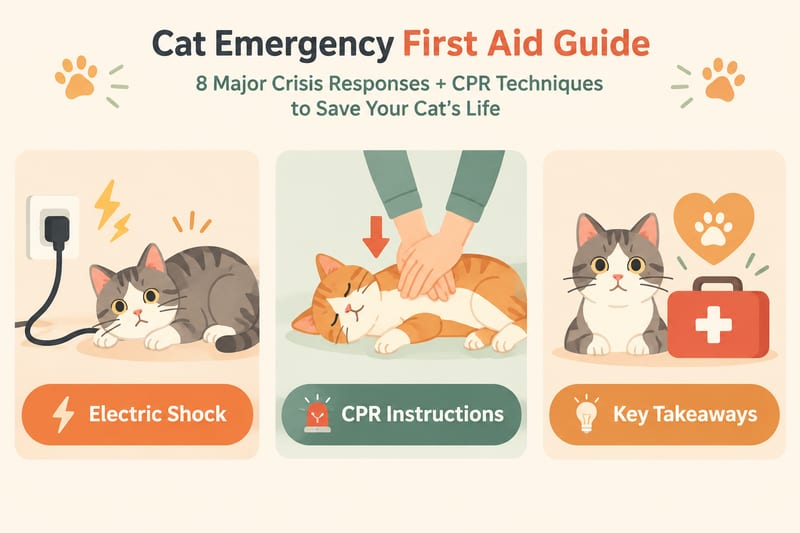
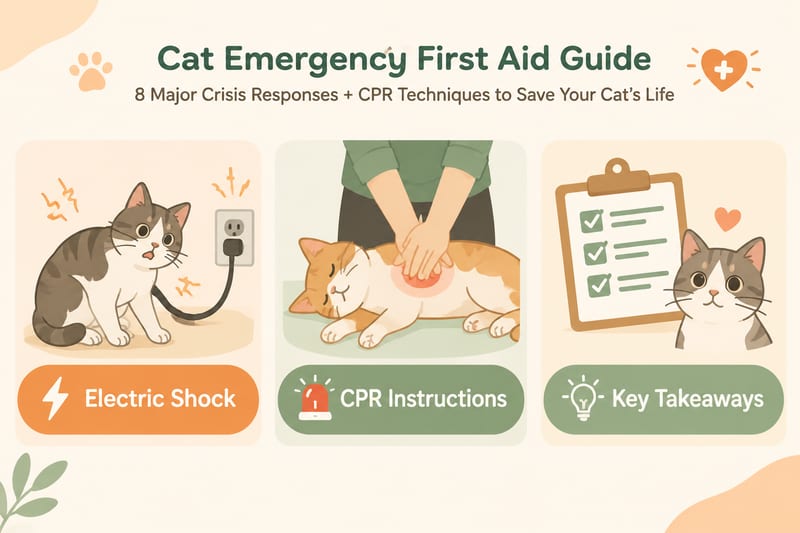
Quick answer: The core principles of cat emergency first aid are "stay calm, protect, and get to the vet." For seizures, do not restrain; for poisoning, check the mouth first; for heatstroke, cool immediately; for electric shock, unplug first; for bleeding, apply pressure with gauze; for burns, flush with cool water; for fractures, do not move the injured area; for fever, use cooling packs. Mastering these 8 crisis responses, along with CPR techniques, can save your cat's life in a critical moment.
8 Major Emergencies Severity Quick Reference Table
| Emergency | Severity | First Response | Need Immediate Vet Visit? |
|---|---|---|---|
| Seizure | ⚠️ High | Move dangerous objects away, wait for seizure to stop | Vet visit after stable |
| Poisoning/Ingestion | 🔴 Very High | Check mouth for foreign objects | Vet immediately |
| Heatstroke | 🔴 Very High | Turn on air-conditioning, use cooling packs | Cool while transporting to vet |
| Electric Shock | 🔴 Very High | Unplug first, check breathing and heartbeat | Vet immediately |
| Bleeding | ⚠️ Medium to High | Apply gauze pressure for 10 minutes | Vet if bleeding continues |
| Burns | ⚠️ Medium to High | Flush burn with cool water | Keep cooling on the way to vet |
| Fracture | ⚠️ High | Immobilize with hard board or thick towel | Vet immediately |
| Fever (>39.5°C) | ⚠️ Medium | Cool armpits and groin | Vet after cooling |
Seizures: Protection Is More Important Than Intervention
When a cat has a seizure, it may foam at the mouth, fall over and convulse, or even lose bladder and bowel control. Do not panic—the most important thing is to protect the cat from hitting furniture or other hard objects. Move dangerous items away and let the seizure stop on its own. After it stops, wrap the cat in a blanket and observe for a while; if stable, take it to the vet immediately.
⚠️ Never try to hold the cat down or pry open its mouth—these actions will only injure both you and the cat. Seizures can sometimes be related to heatstroke or poisoning. If you notice abnormal body temperature along with the seizure, refer to Cat Weight and Health Indicators for more on monitoring your cat's condition.
Poisoning/Ingestion: Time Is Life
When a cat ingests a foreign object, first open its mouth to check for any remnants. If you can still see it and it can be safely removed, use your fingers to take it out. But if the object has been swallowed, or if the cat has ingested a liquid, take it to the vet immediately—liquids can reach the intestines within hours, and delay can cause greater harm.
Common dangerous items include: human medications, cleaning agents, insecticides, lilies, chocolate, etc. Always keep these items stored safely out of reach. After ingestion, the cat may show symptoms such as vomiting and diarrhea. If abnormal behavior persists, refer to Early Signs of Illness in Cats for early detection.
Heatstroke: Cool While Transporting to Vet
During the hottest summer days, cats can suffer heatstroke, especially in closed rooms or cars without air-conditioning. A cat with heatstroke will have a body temperature over 41°C and show symptoms such as rapid breathing, drooling, and lethargy.
Treatment: Turn up the air-conditioning and let the cat lie in a spot not directly in the draft. Wrap cooling packs in a towel and place them on the cat's abdomen to cool it down. If the cat can still drink, offer water immediately. While cooling with wet towels or cooling packs, get to the vet as soon as possible. Cats are prone to dehydration during heatstroke; afterwards, pay attention to Cat Hydration and Dehydration Prevention to ensure they replenish enough water.
Electric Shock: Cut the Power Before Rescuing the Cat
A cat biting through an electrical cord and getting shocked is extremely dangerous. Remember: before picking up the cat, you must unplug the cord! Humans are also at risk of electric shock. After unplugging, check the cat for breathing and heartbeat. If the heart has stopped, perform CPR (see instructions below) and take the cat to the vet immediately.
Bleeding: Apply Gauze Pressure to Stop Bleeding
For minor bleeding, apply pressure with gauze. Press continuously for about 10 minutes; if bleeding continues, keep applying pressure while taking the cat to the vet as soon as possible. ⚠️ Never use human disinfectants on the cat's wound—some medications can cause continuous bleeding in cats, which is very dangerous.
Burns: Flush with Water Immediately to Cool
After a burn, the most important thing is to cool the wound immediately by flushing the burned area with cool water. On the way to the vet, you can place cooling packs wrapped in a towel to continue cooling. Do not apply ice directly to the cat's skin.
Fractures: Do Not Move the Injured Area
When a cat has a fracture, try not to move the injured area. If the cat is in pain, be extra careful when picking it up not to touch the injured area. Immobilize the injury with a hard board or thick towel and take the cat to the vet immediately.
Fever: Cool First, Then Vet
A cat's normal body temperature is 38–39.2°C. A temperature above 39.5°C is considered fever. Cooling method: wrap cooling packs in a towel and apply to the armpits and groin. ⚠️ Do not cool too suddenly or excessively, and avoid direct contact of ice with the cat's body. If the cat is shivering, wrap it in a blanket to keep warm and take it to the vet. Long-term or recurrent fever may be related to the immune system; regular vaccination can prevent many diseases.
🚨 CPR Instructions
When a cat is not breathing and the heart has stopped, the following steps may save its life:
- Lay the cat on its side with the left side facing up.
- Locate the area just below the base of the left front leg (roughly over the heart).
- Insert four fingers (index to little finger) and squeeze near the base of the front leg.
- Press once per second, using your fingertips to apply pressure.
- While continuing compressions, get to the vet as soon as possible.
Essential First Aid Kit for Cat Owners
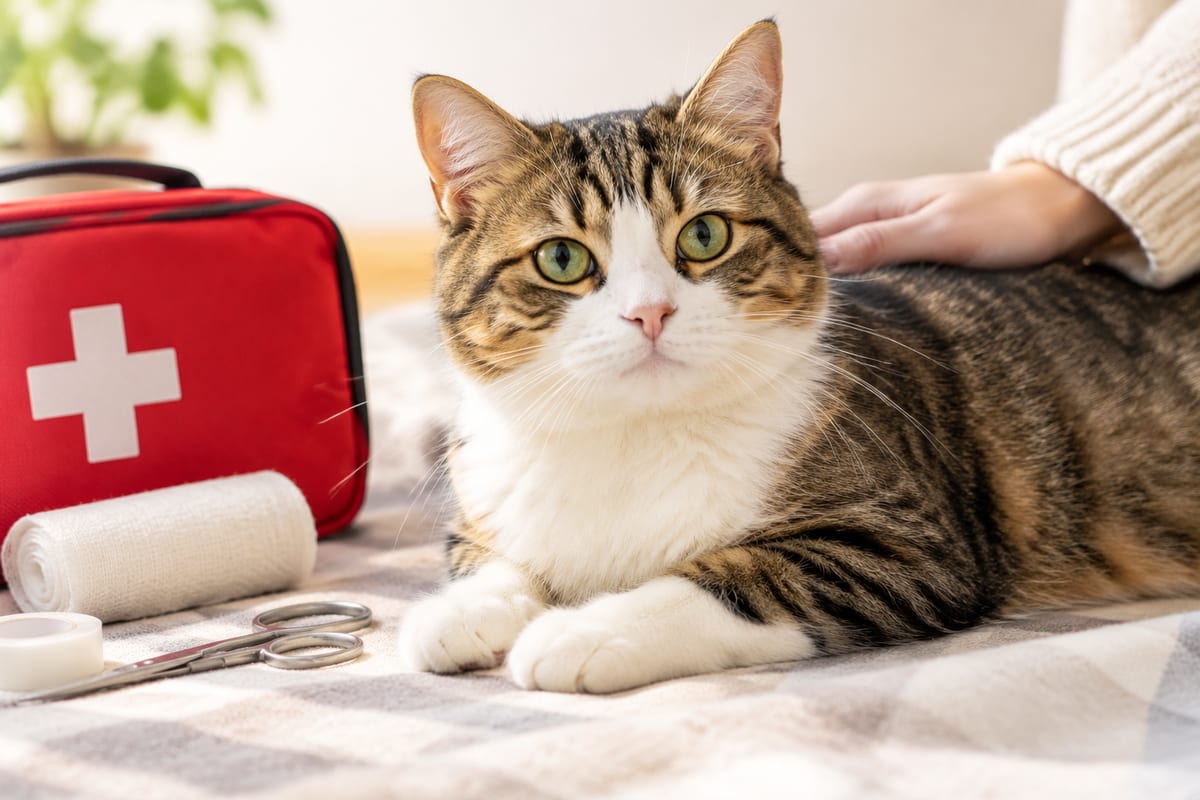
Every cat owner should prepare a cat first aid kit:
- Gauze, bandages, medical tape
- Sterile saline solution for cleaning (do not use human disinfectants)
- Cooling packs, towels
- Thermometer
- Disposable gloves
- Vet emergency phone number
Common First Aid Mistakes vs Correct Actions
| Mistake | Correct Action | Reason |
|---|---|---|
| Restraining a cat during a seizure | Move dangerous objects away, let seizure stop | Restraint may cause fractures or injure both cat and person |
| Inducing vomiting after poisoning | Check mouth, take to vet immediately | Inducing vomiting may cause secondary harm |
| Using ice to cool heatstroke | Use cooling packs or wet towels | Extreme temperature difference can cause shock |
| Picking up the cat immediately after electric shock | Unplug first, then handle | Prevent human electric shock |
| Using hydrogen peroxide to disinfect wounds | Clean with saline solution | Hydrogen peroxide is toxic to cats |