Quick answers
- For a cat with neurological damage, daily care can be divided into 4 main areas: fall-proof and slip-proof home modifications, a fixed care routine, rehab as directed by your veterinarian, and a check-up every 1 to 3 months.
- The 4 most common causes are poisoning, head or spinal trauma, vestibular syndrome, and epilepsy. Care priorities differ greatly depending on the cause, so the first step must be a diagnosis, not buying equipment.
- Make at least 8 home modifications: lay non-slip mats on main walkways, add low ramps, switch to a low-sided litter box, place food and water bowls low, fix entry and exit routes, remove high cat trees, leave a small night light on, and add thick soft bedding to resting spots.
- Rehab is generally designed by a veterinarian or pet physiotherapist: 5 to 15 minutes per session, 2 to 3 times a day, which is more effective and safer than one 1-hour session.
- Seek emergency care immediately for seizures lasting more than 5 minutes, not eating or drinking for 48 hours, difficulty breathing, or sudden paralysis. Do not wait.
- Long-term support relies on numbers: weigh and measure hind-leg circumference every 2 to 4 weeks, check skin and pressure points 1 to 2 times daily, and do a quality-of-life score every 2 to 4 weeks.
- Medications, acupuncture, laser therapy and other 3 types of treatment all follow veterinary instructions; any change in dosage requires at least 1 veterinary confirmation, and you must not stop medication on your own.
The question "What long-term care or special treatment measures does a cat with neurological damage need in daily life?" has no single answer, because "neurological damage" refers to a set of functional deficits, not a disease name. The same unsteady walking or head tilt can be caused by poisoning, a road accident, an inner ear problem, or a temporary state after a seizure. Which functions are affected determines what needs to be supplemented in daily life: if balance is affected, you need fall prevention and support; if limb coordination is affected, you need slip prevention and muscle strength training; if swallowing is affected, you need to change food texture and bowl height; if urination control is affected, you need to manage urine pads and skin cleaning.
So practical long-term care can be summarised in an order: first diagnose and stabilise the condition, then modify the environment so the cat "won't get hurt again", then use short, frequent rehab to preserve muscle and joint mobility, and finally use regular check-ups and quality-of-life scores to decide whether treatment should be intensified or shifted towards palliation. This article follows that order, explaining the differences between the 4 major causes, the 5-level symptom triage, the 8-item home modification checklist, daily rehab content, and the pressure sores, weight and family division of labour issues most often overlooked by Hong Kong households. All medical content in this article is general care information only; any medication and treatment plan must be decided by a veterinarian.
Why neurological damage is not a single disease: the 4 major causes and how they differ
The same phrase "neurological damage" means completely different things in different cats. The 4 most common causes in Hong Kong each have typical timelines and presentations, and the timeline is often the first clue to distinguishing the cause. Acute onset (appearing within minutes to hours) usually points to poisoning, trauma or a vascular event; gradual worsening over days usually indicates infection or inflammation; slow deterioration over months may be degeneration or a tumour.
Poisoning cases deserve special attention from Hong Kong cat owners because many toxins are right at home: the whole lily plant (including pollen and vase water) is highly dangerous to cats; pyrethrin-based dog spot-on products mistakenly used on cats, rat poison, and human painkillers can all cause neurological symptoms. The principle for these situations is "don't wait for all symptoms to appear"—seek veterinary care immediately upon suspected ingestion, and bring the packaging or a sample of vomit. To first identify common toxins, see Pet Poisoning First Aid Guide (Part 1): Household Chemicals, Pesticides and Toxic Plant Risks and List of Foods Toxic to Cats.
| Common cause | Typical situation | Main signs | When most obvious | Care focus |
|---|---|---|---|---|
| Poisoning | Lilies, pyrethrin spot-on, rat poison, accidental human medication | Drooling, abnormal pupils, tremors, seizures, circling | Minutes to 24 hours after ingestion | Immediate veterinary care, then long-term monitoring of liver, kidneys and neurological status |
| Trauma | Falling from height, road accident, door trap, impact | Unilateral hind-limb weakness, dragging, crying in pain, altered consciousness | Immediately to 48 hours after the event | Restrict activity, prevent falls, imaging as directed by veterinarian |
| Vestibular syndrome | Extension of inner or middle ear problems, some cases unknown | Head tilt, nystagmus, circling, falling, vomiting | Most severe in first 3 to 7 days | Vertigo relief, fluid therapy, fall prevention, low food and water facilities |
| Epilepsy | Primary epilepsy or brain lesions | Generalised seizures, incontinence, post-ictal confusion for 30 minutes | At the time of seizure and the following 24 hours | Time and record, environmental safety, medication as directed by veterinarian |
One easily misjudged point: when an older cat suddenly becomes unsteady or has a head tilt, many owners first think it is a "stroke", but the proportion of vascular strokes in cats is far lower than vestibular problems and hypertension-related retinal disease. The dividing line is whether there are seizures, unilateral facial drooping, or sudden vision loss. If you also see a sudden increase in water intake or significant weight loss, consider endocrine-related causes; these require blood tests rather than observation. For a long-term care framework for older cats, see Senior Cat Care Complete Guide, and address kidney, joint and cognitive issues separately rather than changing everything at once.
Symptom triage table: 5 levels from "record and observe" to "go to hospital now"
The most useful tool for caring for a cat with neurological damage is not equipment but a set of triage standards. With triage, family members won't argue over "one thinks it's very serious, the other thinks wait two days". The following 5 levels are arranged from mild to severe; symptoms at the same level can last for weeks, but once the level jumps, reassessment is needed.
| Level | Signs | Recommended action | Time window |
|---|---|---|---|
| Level 1 | Occasional unsteady walking, slight hesitation before jumping down, normal appetite and energy | Home slip-proof modifications, record daily gait videos | Observe for 3 to 7 days, submit records at check-up |
| Level 2 | Obvious head tilt or intermittent loss of balance, but can eat, drink and toilet independently | Book veterinary examination, add low food and water bowls and fall prevention | See veterinarian within 2 to 3 days |
| Level 3 | Frequent falls, circling, needs support to stand, reduced food intake | See veterinarian same day or next day, start feeding assistance and skin checks | Within 24 to 48 hours |
| Level 4 | Seizures, persistent vomiting, not eating for over 24 hours, urinary or faecal incontinence | Treat as emergency, call veterinarian immediately to arrange examination | Immediately |
| Level 5 | Seizure lasting over 5 minutes, cluster seizures, difficulty breathing, quadriplegia, unconsciousness | Go to hospital immediately, keep cat on its side and airway clear en route | Immediately, do not wait |
There are two items in the triage that Hong Kong families most easily overlook. First, time the seizure. Many people's first reaction is to look for a phone to ask for help, and end up unable to say how long the seizure lasted, yet "2 minutes" and "8 minutes" require completely different responses. It is recommended that family members divide roles: one person times and films, another clears hard objects nearby. Second, protect the cat during the post-ictal "confused period". For 10 to 30 minutes after a seizure, the cat may have blurred vision and disorientation, and may run and bump into things, so close balcony doors, window screens and obstacles in advance, and do not force medication or water during this time to avoid choking.
If symptoms are Level 1 to 2, you can first do a home check and keep a log, but this does not mean you can delay. The key to deciding "can it wait" is the trend: is it getting worse within the same day, are there new symptoms? An important principle for neurological symptoms in dogs and cats is that "sudden, rapidly worsening, unilateral" signs are usually emergencies, while "bilateral, slowly progressive" signs can mostly be scheduled for an appointment. This principle cannot replace veterinary judgement, but it can help you decide whether to go to the emergency clinic tonight.
Home modification checklist: 8 fall-proof, slip-proof and low-level feeding facilities
Environmental modification is the most effective "non-drug treatment" for cats with neurological damage. The reason is simple: one fall can set back a cat that was recovering by weeks, while non-slip mats and low ramps are a one-time investment. The goal of modification is not to turn the home into a barrier-free ward, but to allow the cat to walk to its food bowl, litter box and resting spot by itself, maintaining basic autonomy.
| Area | Modification item | Specific action | Budget reference |
|---|---|---|---|
| Whole floor | Non-slip on main walkways | Lay non-slip mats or short-pile carpet along the route between living room, corridor, litter box and food bowls; fix seams with tape | HK$100 – $300 |
| Access points | Ramps or steps instead of jumping | Add ramps or 2 to 3 steps beside sofa and bed, keep slope gentle, add non-slip fabric on surface | HK$150 – $900 |
| Litter box | Switch to low-sided with surround | Box edge height should mean the cat does not need to jump; place absorbent urine pads outside the box for easy cleaning of incontinence | HK$80 – $300 |
| Food and water | Low, shallow dishes | Place food and water bowls on the floor, use shallow wide dishes to avoid stretching the neck; if swallowing problems, adjust to a paste as directed by veterinarian | HK$60 – $170 |
| Resting spot | Thick soft bedding and warmth | Bedding at least 3 cm thick, away from draughts, room temperature 24 to 26°C; in winter add a heat pad but do not place directly against skin | HK$100 – $400 |
| High facilities | Remove or block | Remove cat trees and high cabinet routes above 1 metre; do not expect the cat to "know not to jump" | HK$0 |
| Night time | Leave a small light on | Install motion-sensor night lights to reduce disorientation and bumping into furniture at night | HK$50 – $150 |
| Danger zones | Close doors, windows and kitchen | Keep balcony doors, window screens and kitchen door closed; tidy cables into trunking | HK$50 – $200 |

There are several ordering considerations for modifications. First, do "prevent further injury" before "make care easier". That is, lay non-slip mats and block high areas first, then consider buying urine pads and care supplies. Second, do not change too much at once. Cats with neurological damage are more sensitive to environmental changes than healthy cats; if you change the litter box, move bowls and change food on the same day, you may not be able to tell whether a "setback" is the condition or adjustment. Third, keep familiar scents. Do not throw away old pads and towels immediately; placing them next to the new resting spot can help the cat orient itself.
For cats with incontinence or limited mobility, consumables need to be planned in advance. The most basic combination is "absorbent urine pads + non-slip mats + low-sided litter box": place urine pads outside the litter box and at resting spots, change at least 1 to 2 times a day, wipe dry immediately on skin contact to avoid urine burns. Below are general care products available at PetChill's online store; they are for daily care, not treatment products. This article does not represent any brand's position; choose according to your cat's actual size and veterinary instructions:
- My Potty Pad LITE Charcoal Pet Urine Pad 60x90 L Size 24 sheets (LMPPC024) — HK$73
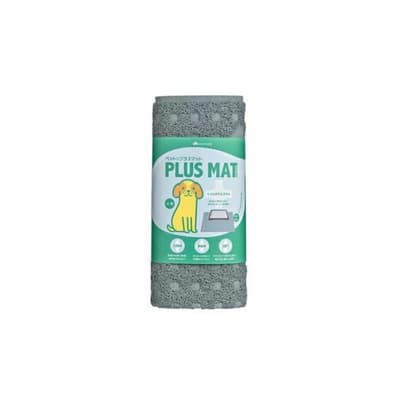
- Japan SANMATE Plus Mat Non-slip and Tracking-control Mat (for cats and dogs) — HK$105
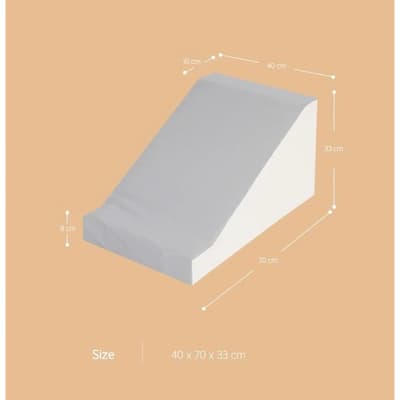
- Dfang Pet Bed Mat Reinforced Non-slip Fabric Pet Ramp M (70cm × 40cm × 33cm) — HK$928 (available for pre-order)
Prices and stock are subject to the online store's current listed price.
Rehab and daily care: what can be done in 5 to 15 minutes per session
Rehab is not training; it is "preserving function in the shortest time". After neurological damage, muscles and joints can deteriorate rapidly within weeks, especially the hind limbs. So frequency matters more than intensity: 2 to 3 times a day, 5 to 15 minutes each time, is better than once a week for 1 hour. The following exercises should only be started after assessment by a veterinarian or pet physiotherapist; do not copy them blindly.
First, passive range of motion. Support the cat's hind limbs with your hands and slowly flex and extend each joint 5 to 10 times; movements should be slow and without resistance. Second, standing support practice. Use a towel sling under the abdomen to let the cat stand on all fours for 30 seconds to 2 minutes, several times a day, to train proprioception. Third, guided walking on the ground. Use food or a toy to guide the cat to walk 1 to 2 metres in a straight line on a non-slip surface; keep sessions short. Fourth, tactile and massage stimulation. Gently stroke the paws and massage thigh muscles to help maintain sensory input and blood circulation.
| Recommended practice | Not recommended |
|---|---|
| 5 to 15 minutes per session, 2 to 3 times a day | One 30 to 60 minute session, then nothing for several days |
| Perform on non-slip floor, owner sitting low near the ground | Perform on sofa, bed or wet tiles |
| Cat still relaxed and willing to eat at the end | Continue until the cat pants, cries or struggles |
| Record how many repetitions and how far the cat walked each time | Just write "seems better" based on feeling |
| Give medication on time as prescribed | Adjust dosage or stop medication on your own |
It is worth noting that veterinarians may arrange acupuncture, laser therapy, hydrotherapy or other adjunctive options depending on the case; these have indications and contraindications and must be assessed by a veterinarian. What owners can do is cooperate, record and observe responses: changes within 24 to 48 hours after each treatment (willing to walk a few more steps, more tired) are worth writing in the log. Also, neurological symptoms can sometimes be related to the medication itself; for example, some anti-epileptic drugs can change a cat's appetite and energy. The correct action then is to notify the veterinarian, not to stop medication on your own. For general principles of medication safety, see Pet Medication Safety Complete Guide.
Skin and elimination care are two sides of the same coin. Cats with limited mobility are prone to pressure injuries at bony prominences (hips, elbows, outer ankles), so check 1 to 2 times daily: feel for hard lumps, redness or hair loss, and watch for redness on skin soaked with urine. Turning the cat does not need to be done mechanically every hour, but when awake, changing position each time and keeping bedding flat are necessary actions. If pressure sores, wound discharge or persistent licking and biting occur, consult a veterinarian; do not apply ointments yourself—especially those containing steroids or human antibiotics.
Long-term support: check-up rhythm, weight and muscle mass tracking
Long-term care tests not the enthusiasm of one or two weeks, but whether it is still being done six months later. To make care sustainable, institutionalise the work: use calendars, charts and family division of labour instead of memory and feeling. Below is a practical rhythm table; actual frequency should be adjusted according to veterinary advice.
| Item | Recommended frequency | Recording method | Action if abnormal |
|---|---|---|---|
| Neurological check-up | Every 1 to 3 months, can extend once stable | Veterinary records + home videos | Book earlier if symptoms jump a level |
| Weight | Every 2 to 4 weeks | Same scale, same time of day | Notify veterinarian if loss exceeds 5% in a month |
| Hind-limb circumference and strength | Every 4 weeks | Tape measure at thickest part of thigh | Review rehab plan if shrinking two consecutive times |
| Skin and pressure sore check | 1 to 2 times daily | Tick on checklist | Treat redness or broken skin same day |
| Quality-of-life score | Every 2 to 4 weeks | 5-point score (eating, mobility, sleeping, interaction, pain) | If 3 areas clearly worsen, discuss treatment direction |
| Medication review | As arranged by veterinarian | Prescription and blood test reports | Contact veterinarian immediately if side effects appear |
Keeping records has two practical purposes. First, the basis for a veterinarian adjusting treatment is trend, not a single performance; having 3 months of weight and videos is far more useful than "seems worse lately". Second, records align family members' judgements. Neurological care usually requires 2 to 3 people rotating; if only one person remembers the prescription and check-up dates, care quality will decline with fatigue.
Family division of labour can be allocated as follows: one person responsible for medication and check-up arrangements (the part needing most accuracy); one person responsible for environmental cleaning and changing urine pads (the most physically demanding part); one person responsible for feeding, rehab records and companionship. Spend 10 minutes once a week going through the log to see if any item has not been done for several consecutive days. Hong Kong flats are small and the cat's activity range is limited, which actually helps control the environment—you don't need to modify the whole home, just manage the routes between the four points "food, water, litter, sleep" to maintain basic autonomy.
Regarding diet, cats with neurological damage often fall into two extremes: eating little due to nausea and difficulty swallowing, or gradually gaining weight due to reduced activity. Being overweight increases the burden on joints and rehab, while being underweight means insufficient repair capacity. The approach is fixed weighing and fixed portions; when changing food or food texture, follow veterinary instructions. If persistent vomiting or vomiting immediately after eating occurs, do not dismiss it as "part of the neurological problem"; refer to the triage principles in Does My Cat's Vomiting Need Immediate Veterinary Care? to judge severity.
Palliative care considerations: using a 5-point score to decide direction
A reality of neurological damage is that some cats can recover to eating, drinking and toileting independently, some will have permanent deficits, and some will continue to deteriorate. The hardest decision for caregivers is not "whether to treat" but "when to shift the focus from extending days to reducing suffering". This decision should not be made in a moment of late-night breakdown, but with tools, records and a veterinarian together.
The most commonly used tool is the 5-point quality-of-life score: eating (voluntary eating, weight loss), mobility (can move independently, pain), sleeping (rest is stable or interrupted), interaction (responds to calls, social willingness), pain (crying in pain, panting, stiffness, avoiding touch). Score each item 0 to 2, every 2 to 4 weeks. If 3 areas have clearly worsened for 1 to 2 consecutive weeks, it is time to arrange an honest conversation.
Palliative care includes: pain relief and vertigo relief medication as directed by the veterinarian, managing nausea, keeping skin clean and dry, providing soft and warm resting spots, and reducing unnecessary handling and examinations. These measures are not giving up; they concentrate limited bodily resources on comfort. Conversely, if persistent seizures, difficulty breathing or uncontrollable pain occur, discuss with the veterinarian immediately rather than waiting for the "next check-up".
Finally, one point must be made clear: online case sharing and recovery timelines have limited reference value. The prognosis of neurological damage depends on the location, cause and timing of the injury; different cats can have completely different outcomes. What you need to do is grasp the controllable parts—environmental safety, care rhythm, records and check-ups.

Further reading
- Senior Cat Care: Daily Routine and Home Care Checklist from Age 7 (Hong Kong)
- Senior Cat Cognitive Dysfunction: What Hong Kong Cat Owners Must Know About Night Crying, Wandering and Inappropriate Urination
- Cat Arthritis Guide: What Hong Kong Cat Owners Must Learn—Not Jumping High Isn't Laziness, 5 Signs + Home Modifications
- Pet Poisoning First Aid Guide (Part 1): Household Chemicals, Pesticides and Toxic Plant Risks
For emergencies, contact a veterinarian immediately; this article is for reference only and cannot replace veterinary diagnosis.
Information checked as of 2026-10-12Source: PetChill editorial team
 Fuji One full guide →