
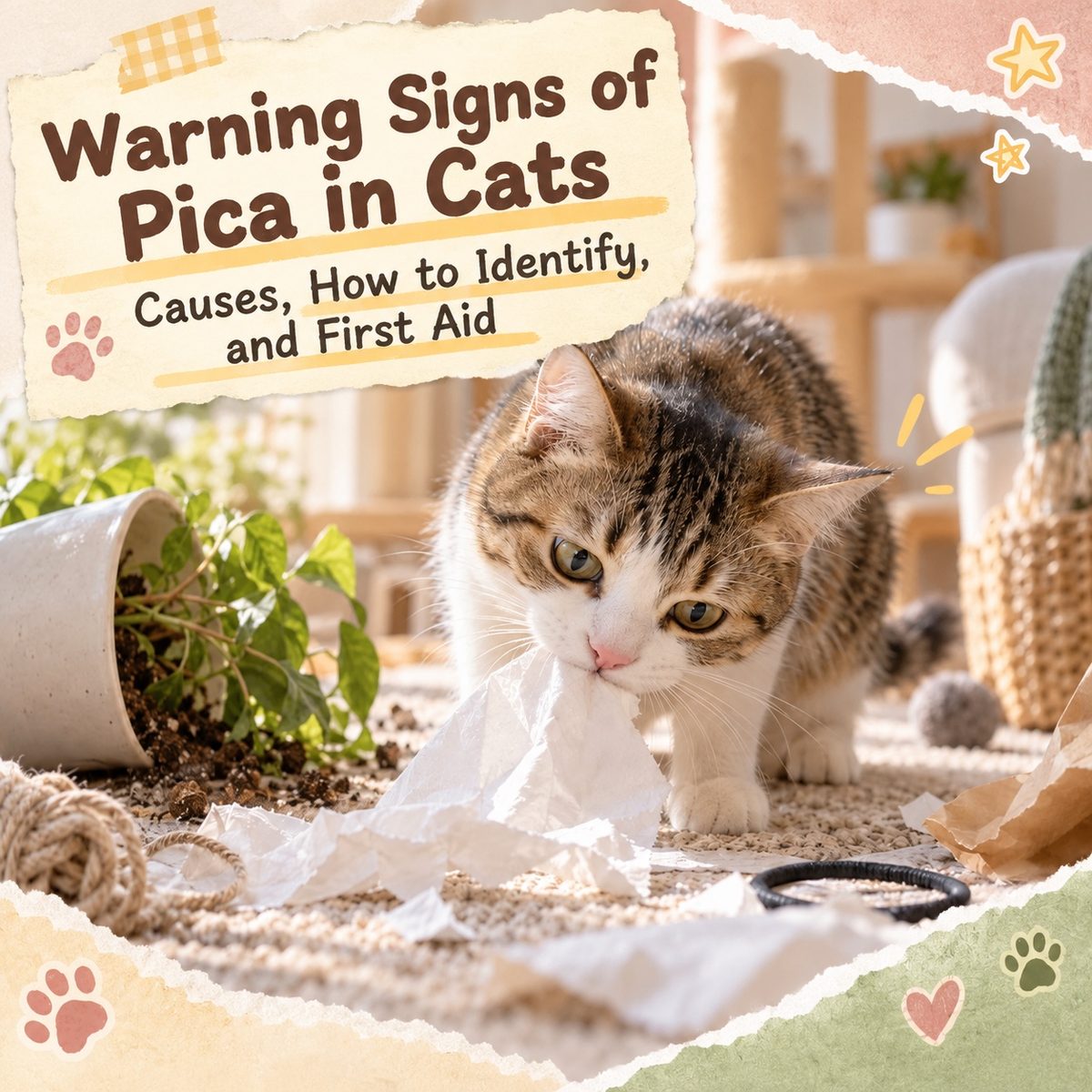
Quick answer: Pica is the abnormal behaviour of a cat repeatedly licking or swallowing non-food items (cat litter, sweaters, plastic, threads). It may hide health problems such as liver disease, anaemia or parasites, or stress and nutritional deficiencies. If your cat has actually swallowed a foreign object, never try to induce vomiting yourself — improper induction can cause secondary harm and must be judged by a veterinarian. If signs of blockage appear — repeated vomiting, refusal to eat, abdominal pain — seek veterinary care immediately.
Have you ever seen your cat suddenly start licking sand, chewing sweaters, or even swallowing cardboard? Many people think it is just the cat "being playful", but this behaviour has a proper name — pica — and it may hide serious health problems and stress signals. Today PetChill takes you through the causes, common signs and management of pica, to help protect your cat's health!
What is cat pica?
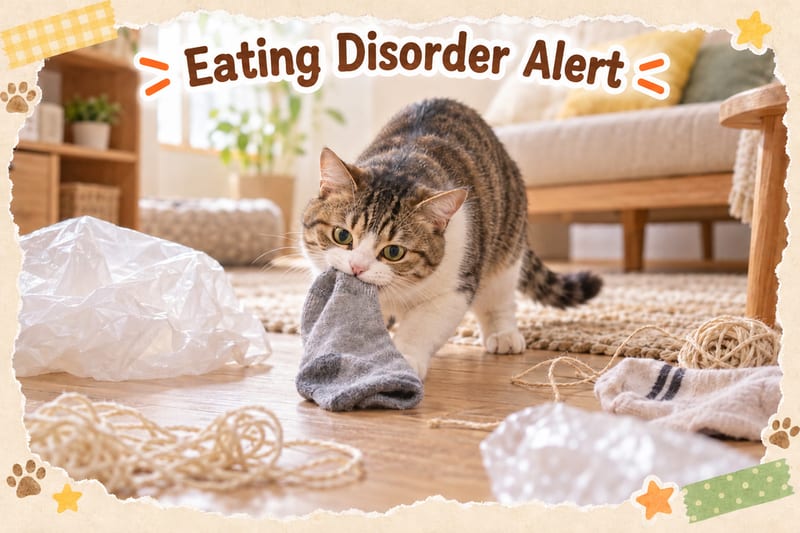
Pica refers to the abnormal behaviour of a cat repeatedly licking or swallowing non-food items. Common "targets" include:
- Cat litter, soil, sand grains
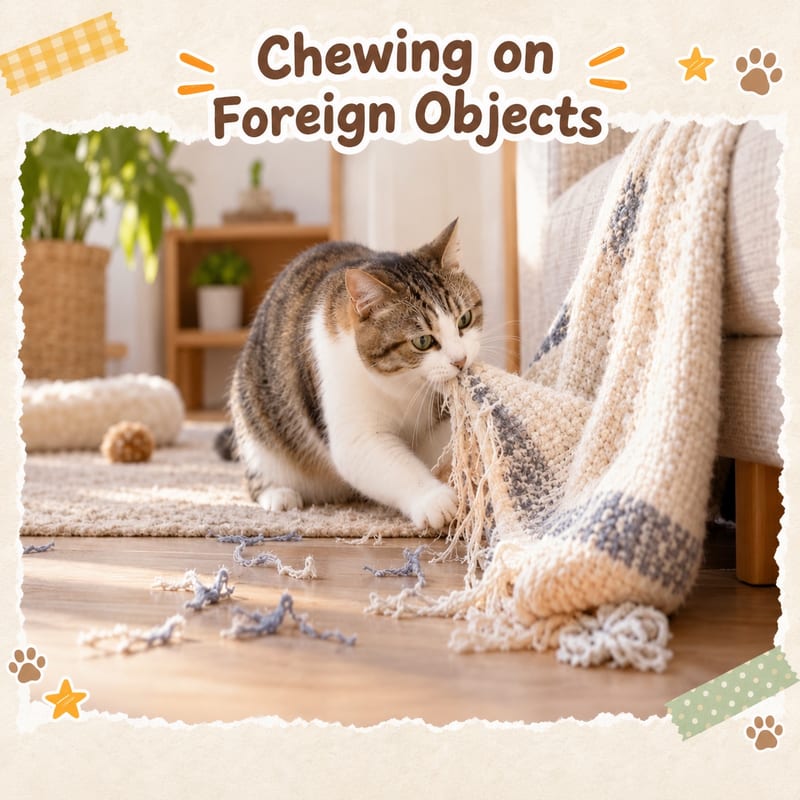
- Sweaters, blankets, fabric fibres
- Cardboard boxes, sponges, plastic bags
- Metal objects, rubber products
- Plant leaves
An occasional lick may just be curiosity, but if the cat does it repeatedly and persistently, or with increasing frequency, it should be taken seriously.
Common causes of pica
Physical health problems
A cat licking sand, soil or metal may be linked to internal disease:
- Liver dysfunction: when the liver is affected, cats may show pica behaviour
- Anaemia: iron-deficiency anaemia can drive cats to lick soil and other mineral-containing items
- Gastrointestinal discomfort: when the stomach or intestines are uncomfortable, cats may try to swallow objects to relieve the discomfort
- Parasite infection: internal parasites can cause poor nutrient absorption, triggering pica
Psychological factors
- Leaving the mother cat too early: suckling sweaters, blankets and similar behaviours stem from the memory of nursing from the mother. Kittens weaned too early retain a "suckling reflex" and gain a sense of security by suckling objects
- Stress and anxiety: environmental changes, lack of interaction, long periods alone and similar factors can cause pica as self-soothing
- Boredom and lack of stimulation: indoor cats without enough toys and interaction may use "random chewing" to pass the time
Nutritional deficiencies
When the diet lacks certain nutrients (such as fibre or minerals), cats may instinctively seek substitute items to supplement them.
How to tell curiosity from pica
| Behaviour trait | Curious exploration | Pica |
|---|---|---|
| Frequency | Occasional, once | Repeated, persistent |
| Intensity | Stops after a light lick | Actually swallowed |
| Target | Will try many items | Fixated on one type of item |
| Accompanying signs | Normal | May come with vomiting, reduced appetite |
If you notice persistent pica behaviour, especially with the following signs, seek veterinary care as soon as possible:
- Repeated vomiting or retching
- Marked decrease in appetite
- Lethargy, reduced activity
- Over-grooming (repeated licking of the same spot until bald)
- Abnormal bowel movements (constipation or diarrhoea)
Emergency handling: what to do if your cat swallows a foreign object
This is emergency knowledge every cat owner should know. If you find your cat has swallowed a foreign object, follow these principles:
Passage time for foreign objects
Generally, small, smooth, non-toxic foreign objects (such as small plastic pieces) usually pass in the stool within 24–72 hours. But actual passage time depends on the size and shape of the object and the cat's gastrointestinal condition. During this period, closely monitor bowel movements and demeanour.
These situations need an immediate vet visit
- Linear foreign objects (yarn, ribbon, rubber bands): these are the most dangerous! Linear objects can "concertina" in the intestines, causing intestinal folding and even perforation — never wait for them to pass on their own
- Sharp objects: needles, bone fragments and the like may pierce the digestive tract
- Large or numerous foreign objects: may directly block the intestines
- Signs of blockage: repeated vomiting, complete refusal to eat, swollen and painful abdomen, extreme lethargy, no bowel movement for over 48 hours
Why you must not induce vomiting at home
Many cat owners' first thought is to "make the cat vomit", but this approach should absolutely not be done yourself:
- Inducing vomiting in cats requires specific medication, and the dose and timing must be judged by a veterinarian
- If the object is sharp or has already entered the intestines, inducing vomiting can cause secondary harm (oesophageal tearing, object stuck in the throat)
- For some objects (such as corrosive substances), inducing vomiting worsens the harm
The correct approach is: note the time of ingestion and details of the object, and contact a veterinarian immediately, so professionals can decide whether to observe, remove via endoscopy, or operate.
How is intestinal blockage handled?
If the veterinarian diagnoses an intestinal blockage, endoscopy or surgery may be needed to remove the foreign object. Surgery costs depend on the location and complexity of the object; actual fees vary by clinic, so ask your veterinarian directly. This is exactly why preventing pica is so important — treatment costs far more than prevention.
What to do if pica is discovered
Step 1: Rule out health problems
Take your cat to a pet hospital for a full examination, including blood tests and X-rays. If a foreign object is found in the gastrointestinal tract, the doctor may recommend endoscopy.
Step 2: Improve the environment
- Increase daily interactive play time, at least 15–20 minutes
- Enrich the home environment: cat trees, hiding spaces, window perches
- Provide safe alternatives: catnip toys, chew toys
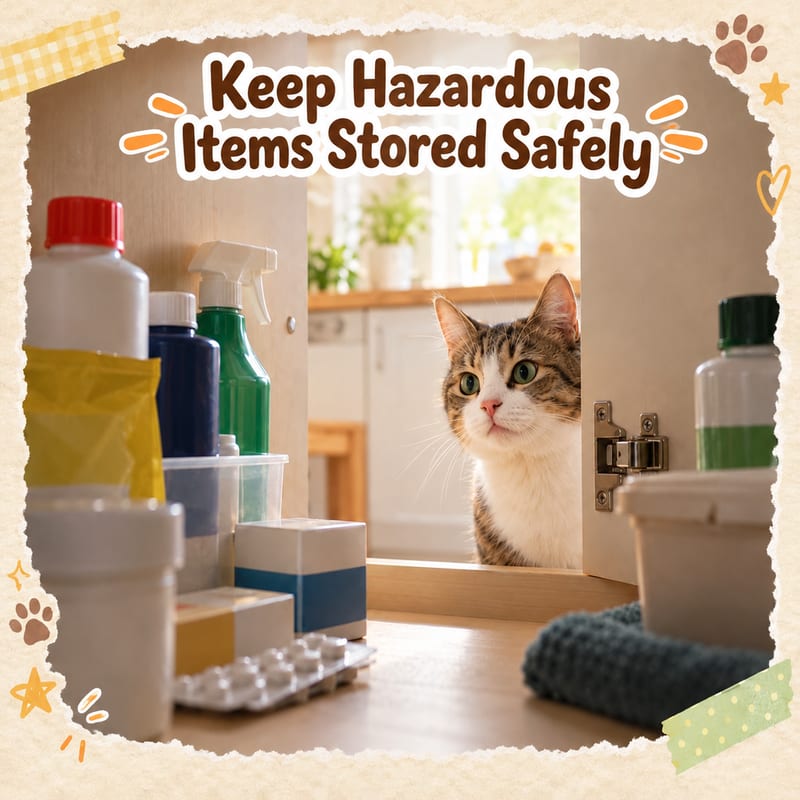
- Store dangerous items away: rubber bands, threads, plastic bags, small parts
Step 3: Adjust the diet
- Choose a nutritionally balanced cat food with sufficient fibre content
- Ask your veterinarian whether specific nutrients need supplementing
- Avoid sudden changes of cat food
Step 4: Relieve stress
If health problems are ruled out, pica may stem from stress. Try:
- Keeping a regular daily routine
- Providing a stable, quiet resting space
- Using cat calming sprays or diffusers
- Spending more time with your cat
Prevention beats treatment: daily health monitoring
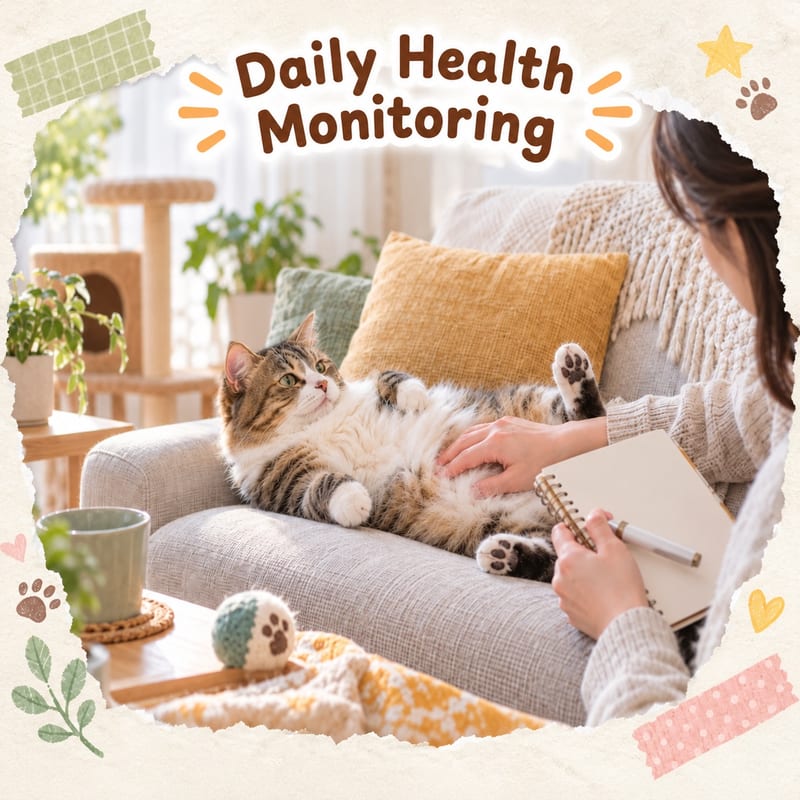
Learning to observe changes in your cat's daily behaviour is key to preventing all kinds of health problems. You can regularly do these simple checks for your cat:
- Observe breathing rate: normal is 20–40 breaths per minute (15–25 when resting)
- Monitor heart rate: normal range is 120–240 beats per minute
- Watch diet and bowel movements: any sudden changes
- Observe activity level: any sudden lethargy or unusual hyperactivity
If abnormalities are noticed for several days in a row, consult a veterinarian as soon as possible.
Hong Kong small-flat practicalities: secure dangerous items within 24 hours + when to rush to a 24-hour clinic
1. Immediate tidy-up: 15-minute checklist
Hong Kong homes are small and cluttered. Set a timer and complete the following within 15 minutes:
- Kitchen: put all rubber bands, cling-film cores and disposable plastic bags into airtight boxes, in high drawers.
- Bedroom: put sweaters and socks into laundry bags first, then into the wardrobe; put cotton pads and threads into drawers.
- Living room: immediately put away tape and staples from delivery boxes; cover cables by the window with cable tidies.
- Bathroom: put away elastic bands and dental floss picks; hang bath sponges on hooks up high.
2. Redirect attention: making use of small-flat space
- Vertical space: add a non-slip mat on top of the wardrobe and place catnip toys there to encourage climbing.
- Window sill: place a sturdy stool and add a window bird feeder so the cat can watch birds.
- Evening interaction: when you get home from work, play with a laser pointer or feather wand for 15 minutes to burn off energy.
3. When to rush to a 24-hour clinic
Hong Kong night consultations are expensive, but for the following situations do not hesitate:
- Linear foreign objects: if you suspect your cat has swallowed yarn or a rubber band, go immediately; these will not pass on their own.
- Sharp objects: such as needles or bone fragments — even if the cat is still eating, an X-ray is needed immediately.
- Blockage signs: vomiting more than twice in a row, complete refusal to eat, obvious pain when the abdomen is touched — leave immediately.
Night clinic route tips:
- Hong Kong Island: 24-hour vets in Wan Chai and North Point; a taxi is fastest, about 15–20 minutes.
- Kowloon: night clinics in Mong Kok and Tsim Sha Tsui; use a ride-hailing app, as cars are easier to find late at night.
- New Territories: overnight emergency care in Tai Wai and Sha Tin; drive or call a taxi, and note tunnel tolls.
Remember to bring: cat carrier, medical records, and a sample of the suspected foreign object (such as the remaining thread) to help the vet judge quickly.
Frequently asked questions (FAQ)
Q: Does a cat licking a sweater always mean pica? A: Not necessarily. If it only licks briefly once in a while, it may just be curiosity. But if it does so repeatedly and persistently, or actually swallows fibres, it could be pica — observe the frequency and intensity.
Q: Should I worry about suckling behaviour in kittens? A: Kittens suckling blankets, fingers and the like mostly stems from leaving the mother cat too early and is an emotional need. It usually decreases naturally as they grow up. But if it continues into adulthood or comes with swallowing behaviour, consult a veterinarian.
Q: How long does it take for a swallowed foreign object to pass? A: Small, smooth, non-toxic foreign objects generally pass in the stool within 24–72 hours. But linear objects (yarn, ribbon, rubber bands) are very dangerous — do not wait for them to pass; see a veterinarian immediately.
Q: What should I do if my cat has eaten plastic? A: First note the time of ingestion and the size of the plastic. If it is small and soft, monitor bowel movements for 24–72 hours; if it is larger, harder, has sharp edges, or the cat vomits or stops eating, see a veterinarian immediately. Never try to induce vomiting yourself.
Q: Can I induce vomiting at home for my cat? A: Absolutely not recommended. Inducing vomiting in cats requires specific medication, and the dose and timing must be judged by a veterinarian. If the object is sharp or has already entered the intestines, inducing vomiting can cause secondary harm. The correct approach is to contact a veterinarian immediately.
Q: How do I know if my cat has an intestinal blockage? A: Typical signs include repeated vomiting, complete refusal to eat, a swollen and painful abdomen, extreme lethargy, and no bowel movement for over 48 hours. If any one appears, seek veterinary care immediately — intestinal blockage is an emergency and delay can be life-threatening.
Q: Can pica be completely cured? A: It depends on the cause. If it is caused by illness, the pica behaviour usually disappears once the underlying disease is treated. If it is a behavioural issue, environmental improvement and behaviour training can greatly improve it, but it may take longer.
Q: How can I prevent my cat from eating dangerous items? A: Store rubber bands, threads, plastic bags and small parts out of reach; choose cat toys that are not easily torn apart; regularly check your cat's favourite spots for leftover small objects. Also provide enough interactive toys to satisfy chewing needs.
This article is for reference only and cannot replace professional veterinary diagnosis. If your cat has swallowed a foreign object, shows persistent vomiting or abnormal behaviour, please contact your attending veterinarian or a 24-hour pet emergency centre as soon as possible.
PetChill's Reminder: A cat's abnormal behaviour is often its way of "talking" — using actions to tell you that something is wrong physically or mentally. When you notice your cat starting to lick or chew indiscriminately, careful observation and timely response are the best love you can give.
Further reading
- List of foods toxic to cats | 10 common foods poisonous to cats that Hong Kong cat owners must read
- Cat environmental stress management guide | Essential reading for moving in small Hong Kong flats
- The complete cat behaviour decoder 2026 | The real meaning behind 30 actions
- All article index
- PetChill pet supplies
📌 Key takeaways
-
✅ Repeated licking of cat litter, sweaters or plastic is a pica warning sign
-
❌ Never induce vomiting yourself — it easily causes secondary harm
-
✅ Linear foreign objects are the most dangerous; see a vet immediately
-
❌ Pica is not "playfulness"; it may hide liver disease or anaemia
-
✅ Prevention means storing threads and plastic bags away and adding interactive toys
-
✅ Seek medical help immediately for vomiting, refusal to eat or abdominal pain
-
✅ Pica = repeatedly licking/swallowing non-food items; may be a health alert
-
✅ Three main causes: physical illness (liver, anaemia, parasites), psychological stress, nutritional deficiency
-
✅ The 24–72 hours after swallowing a foreign object is the observation period; closely watch bowel movements and demeanour
-
✅ Linear foreign objects are the most dangerous; see a vet immediately if found
-
✅ Never induce vomiting at home yourself
-
❌ Repeated vomiting, refusal to eat, abdominal pain = signs of intestinal blockage; seek medical care immediately
-
❌ Do not just think it is "cute" and let pica behaviour continue