
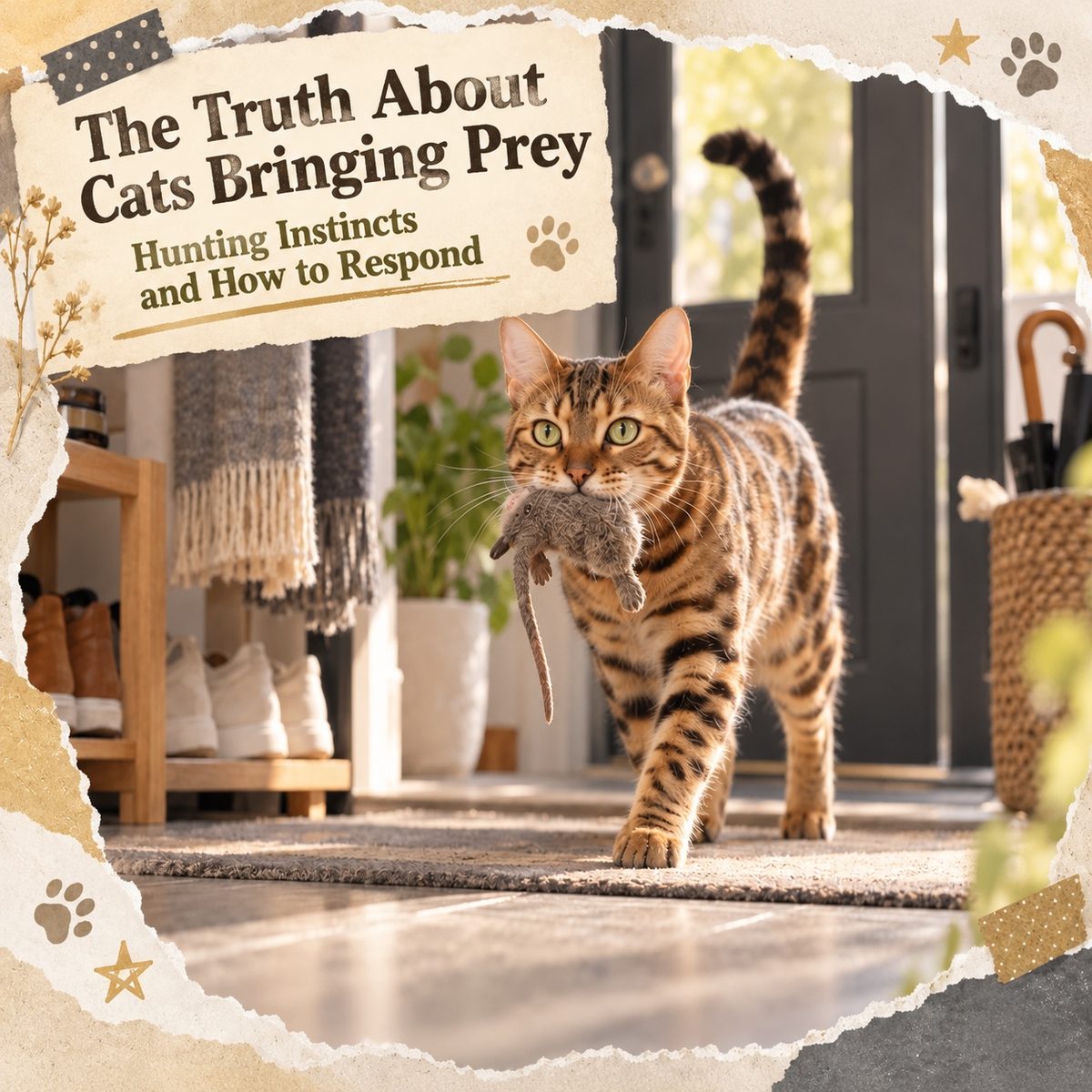
Quick answer: A cat bringing home "prey" (dead cockroach, gecko or even a mouse) is not simply a "I love you" confession, but a mix of maternal feeding instinct, residual hunting instinct and trust in its environment. The safest response has 4 steps: don't panic, never punish, calmly dispose of it in front of the cat, and then drain its hunting desire daily with toys. Many artificial studies and behavioural observations point out: well-fed indoor cats are actually more likely to show this "gift-giving" behaviour — so the key is not to stop hunting, but to satisfy the instinct while maintaining hygiene.
You come home from work in the morning, and a proud cat drops half a cockroach at your feet, then looks at you with expectant eyes — are you touched or devastated? Many cat owners have heard the saying "cats bring prey because they see you as family", but the answer from behaviour science and evolutionary biology may differ from what you think. This article breaks down the three main theories behind cats' "big gifts", 4 correct response steps, a comparison table of right and wrong approaches, so that next time you receive a "gift", you'll know how to be grateful and how to handle it.
Why do cats bring prey home? Three mainstream theories
Theory 1: Maternal instinct — seeing you as a kitten who can eat but can't hunt
In the wild, from the time her kittens are weaned, a mother cat will first bring fully killed prey back to the nest to feed them, then gradually switch to "half-dead" prey to teach them how to catch and kill. Some behaviourists believe that when your cat brings prey to you, it has entered "parent mode", seeing you as a huge, lazy giant baby who can't hunt at all, and worrying you'll go hungry. This intention does have a maternal component — but whether it's out of love is still debated.
Theory 2: Residual hunting instinct — not a gift, just can't help it
The second explanation is more realistic: even if you feed your cat well with Premium cat food commonly used by vets, cats are natural predators. The sequence of chase, pounce, bite-kill is driven by the dopamine reward system and has nothing to do with hunger. Often after catching something, they can't be bothered to eat it, and because something else distracts them (like you coming home), they just put the prey down. So "gift-giving" may just be a human interpretation — we want so much to prove our cats love us that we wrap a random hunting behaviour into a heartwarming story.
Theory 3: Showing off hunting skills to the family
Another theory is that cats bring prey home to show off their ability. However, in behaviour science, whether cats' social cognition supports such a complex motive as "showing off" has no empirical evidence yet. What they expect from you is more likely just applause, attention and a reaction.
The table below helps you see the core logic and strength of evidence of the three theories at a glance:
| Theory | Core logic | Strength of evidence | What owners can actually do |
|---|---|---|---|
| Maternal feeding instinct | Sees you as a "kitten who can't hunt", worries you'll go hungry | Medium — common in individuals whose mother cat taught them | Don't over-interpret, just respond calmly |
| Residual hunting instinct | Chase-pounce-bite-kill sequence driven by dopamine, unrelated to hunger | Stronger — well-fed indoor cats also "gift" | 10–15 minutes of hunting-style play daily to release |
| Showing off hunting skills | Wants a reaction and applause from family members | Weak — no empirical support for cats having a "showing off" motive | Don't praise excessively, avoid reinforcing the behaviour |
Interesting detail: cats that "gift" may have had a stray mother
Research observations found that cats that never received hunting lessons from their mother mostly just hunt and deal with prey themselves, and won't bring prey back to others. Conversely, many cats that "deliver to your door" have been influenced by their mother's hunting course — this behaviour is "taught", not purely inherited. If your cat was adopted and its mother was a street cat, the chance of it giving you a "big gift" is much higher.
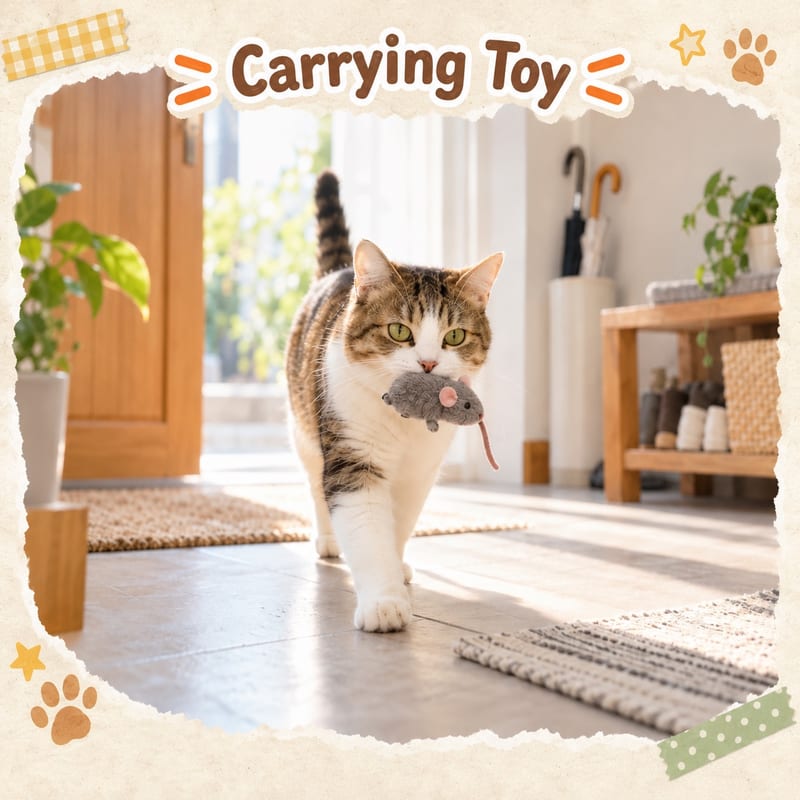
What to do when your cat gives a "gift"? 4 correct steps
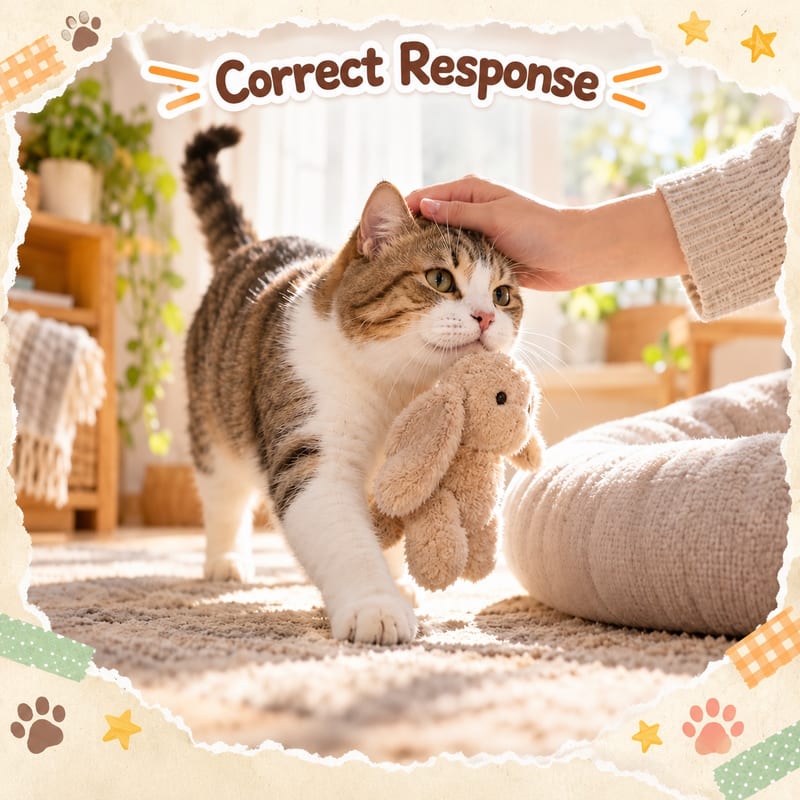
- Stay calm, don't scream: An exaggerated reaction will confuse the cat — in its eyes, you are the "kitten" that needs to be fed, and a startled yell won't teach it anything.
- Never punish: Punishment cannot stop instinct, and will damage the trust between you and your cat.
- Dispose of it quietly in front of the cat: Calmly pick up the prey and throw it away; no need for exaggerated praise, and don't show disgust in front of the cat.
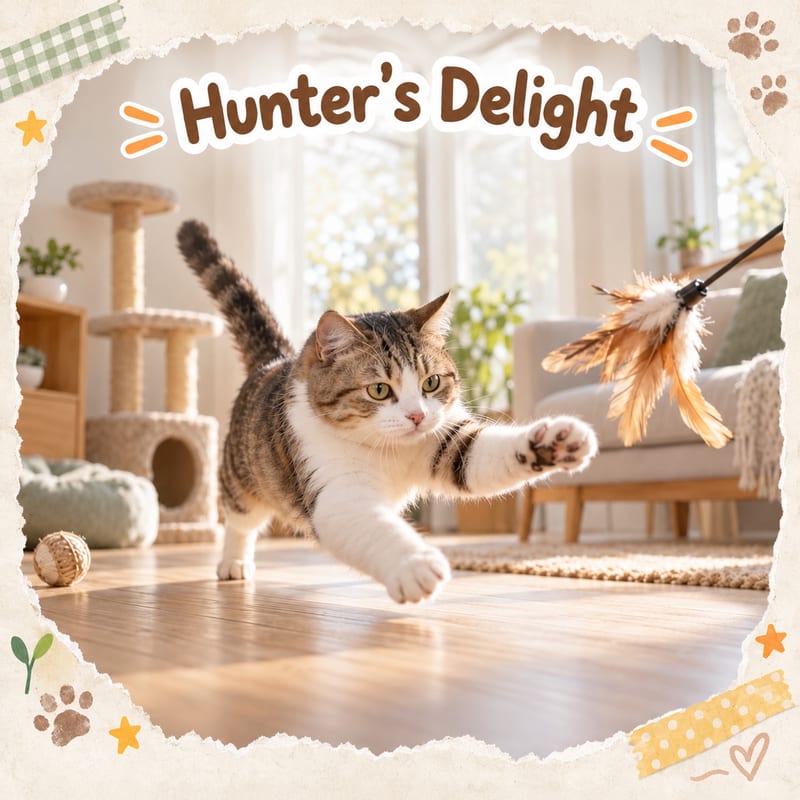
- Redirect the hunting desire to toys: Playing hunting-style games with your cat for 10 to 15 minutes daily is the most effective "anti-gift" method.
Many cat owners get the first step wrong, and end up with more and more "gifts". Compare the right and wrong approaches:
| Situation | Common wrong approach | Correct approach |
|---|---|---|
| Cat drops prey in front of you | Scream, scold, chase the cat | Stay calm, pick it up and throw it away in front of the cat |
| Want to respond to the cat's "kindness" | Exaggerated praise, immediately reward with a big treat | A gentle response is enough, don't reinforce the gift-giving behaviour |
| Want to reduce future gifts | Punish, cage, feed even more | Daily sufficient hunting games + puzzle feeders to burn energy |
Three ways to satisfy the hunting instinct while maintaining hygiene and bond
- Wand toy "ambush-chase-catch" rhythm: Imitate the escape path of prey, and always let the cat "successfully catch" once at the end to feel satisfied before stopping. If your cat gets overexcited and bites hands during play, you can refer to Causes of cat play aggression and 4 correction methods to distinguish between excited aggression and what needs to be addressed.
- Puzzle feeders and treat-dispensing toys: Put dry food inside so the cat has to "hunt" for its meal, burning energy while preventing obesity.
- Timed electronic toys for release: For office workers who leave early and return late, automatic moving toys can help take care of the empty hunting heart; many "midnight zoomies and destruction" problems stem from daytime hunting energy having no outlet — see The scientific explanation for cats' midnight zoomies.
A special note for the Hong Kong environment: geckos and cockroaches often appear at home, and cats that "get some air" by the window can easily strike; if you live on a high floor, remember to install sturdy fall-prevention nets and screens, protecting both the ecosystem and your cat — for specific methods of window and balcony protection, see Cat high-rise fall prevention guide. Also, behind a cat's hunting talent is an amazing body structure; how paw pads, tail and night vision work together can be seen in Complete analysis of cat hunting instinct.
Key summary
- ✅ Cat bringing prey = a mix of maternal feeding + residual hunting instinct + trust, not a love confession, but at least it means your cat isn't afraid of you
- ✅ Cats that received hunting lessons from their mother (especially offspring of street cats) are more likely to "deliver to your door"
- ✅ 4 steps to respond: don't scream, don't punish, calmly handle in front of the cat, then double the playtime
- ✅ 10–15 minutes of hunting-style play daily is the most effective "anti-gift" method
- ❌ Exaggerated praise or harsh scolding — both make the problem worse
- ❌ Overfeeding or using food to "suppress instinct" is completely ineffective; hunting desire is unrelated to hunger
- ❌ Allowing cats to hunt outdoor cockroaches and geckos — the risk of parasites and bacteria far outweighs the benefit of "fewer gifts"
PetChill's Reminder
Receiving a "big gift" from your cat means you share a special trust. Handle it the right way, then redirect its hunting desire to toys, and both you and your cat will be much more relaxed. PetChill has wand toys, puzzle feeders, electronic hunting toys and quality cat food to help your cat — whether a domestic shorthair or a pedigree — live happily and healthily.
To learn more about cat behaviour, stay tuned to PetChill's latest articles! (Reference: three main theories of cat behaviour science and evolutionary biology on domestic cat hunting behaviour; this article is for reference only. If your cat has health issues, please consult a licensed veterinarian.)
 Wellness Core full guide →