
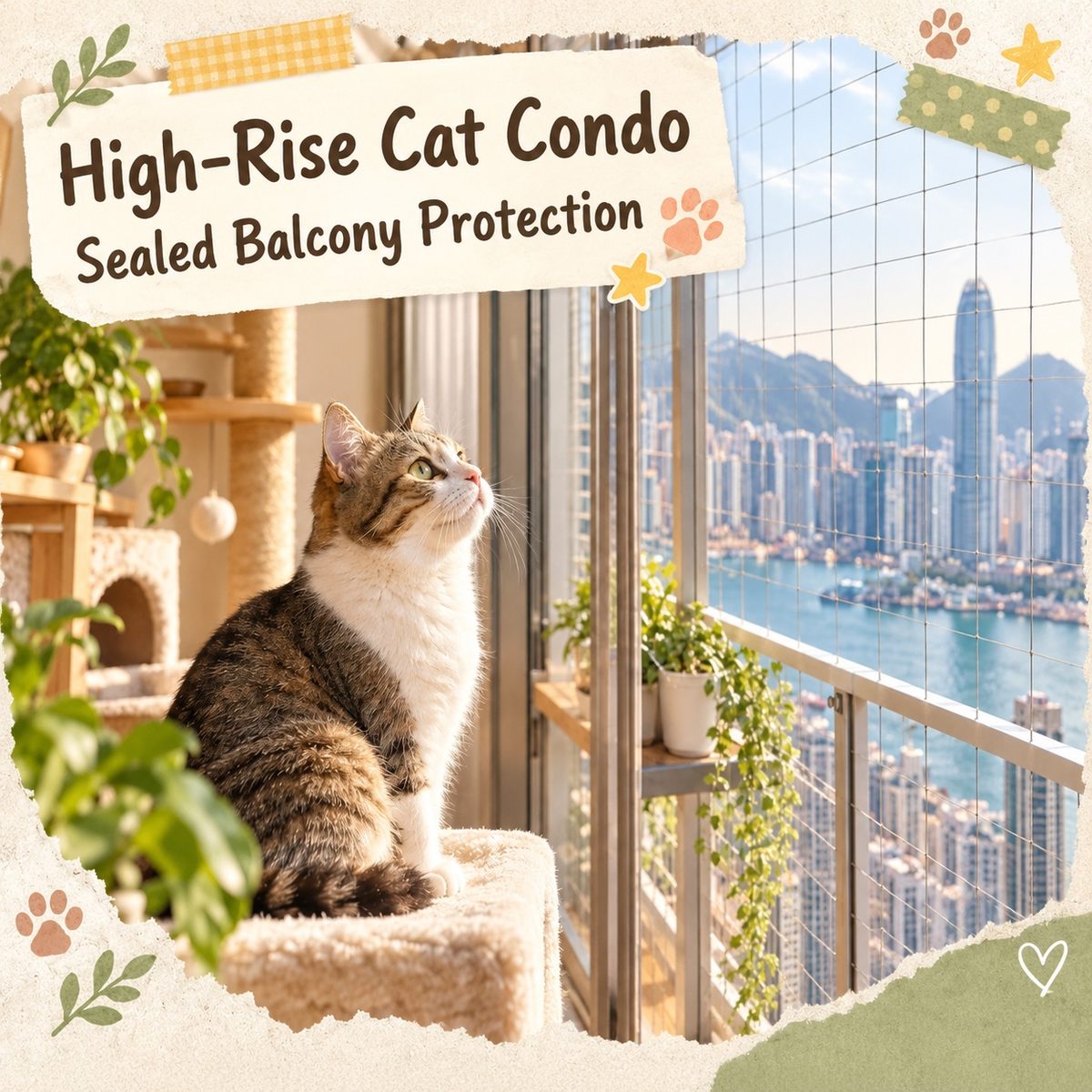
Quick answer: For high-rise cat keeping in Hong Kong, the safest approach is: install metal anti-fall netting on all windows, fully enclose the balcony, keep climbing objects at least 1 metre away from window sills, add double anti-escape protection at the main door, and combine with daily indoor interactive play — only then can the risk of falling be completely eliminated.
Which floor do you live on? In Hong Kong, one of the biggest safety threats to cats is not cars — it's windows. The Cat Encyclopedia points out that many cats die after falling from open windows or balconies while chasing birds and insects flying past. A cat's hunting instinct is written into its genes; superstitions like 'cats have nine lives' and wishful thinking like 'it won't jump out' cannot protect it. Today PetChill explains clearly: how to create a genuinely safe environment for cats in high-rise homes.
Why do cats fall? It's not a question of whether they want to
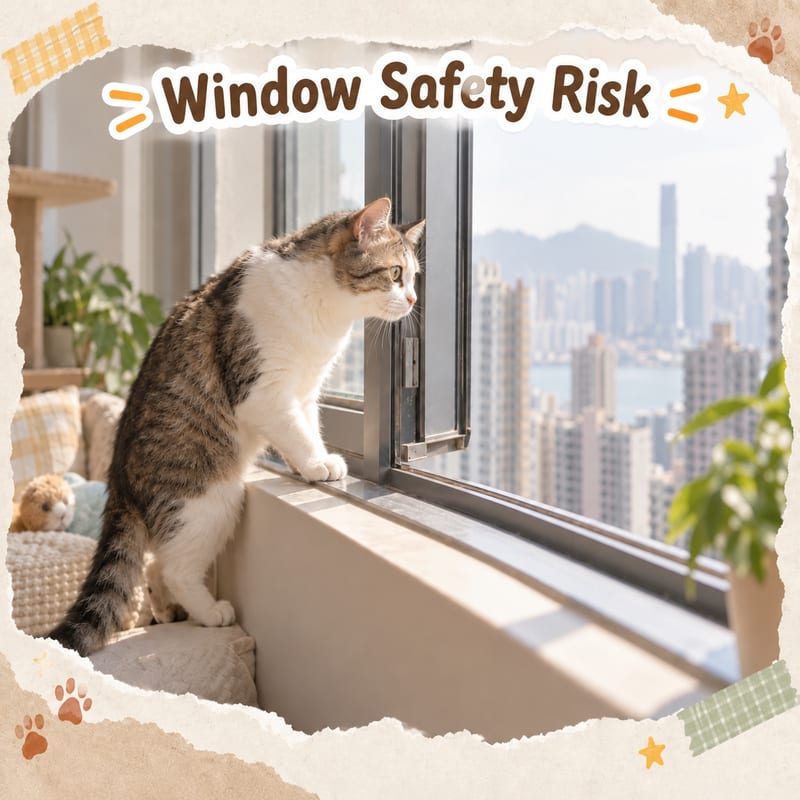
Many cat owners assume cats have good balance and will definitely stop themselves, but clinical reality is the opposite. A cat's pursuit reflex is faster than thought: when a bird, moth or even a leaf swaying in the wind appears outside the window, the cat instinctively pounces, and in that instant it does not assess distance or landing point.
Three other points are equally dangerous:
- Fine mesh screens are not fall protection: a cat's claws can loosen them with one swipe, or even push the whole panel out
- Insect-screen nylon netting is not bite-resistant: kittens and curious cats will chew through it
- Clutter on window sills is a launch pad: books, cat trees and stools near the window are effectively a 'launch platform' for your cat
The spinal trauma chapter of Cat Diseases also warns: after a fall, a cat may have paralysed hind legs and difficulty urinating, and the golden rescue window is very short — so prevention beforehand is always better than rescue afterwards.
5 key measures against falls in high-rise homes
Measure 1: Seal windows with metal anti-fall netting (the core measure)
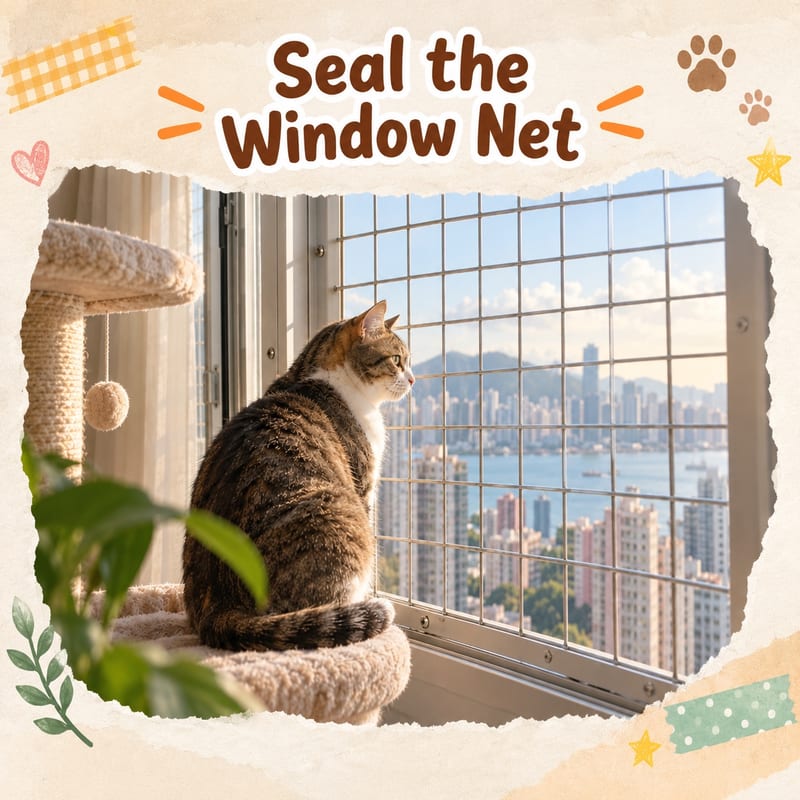
Install stainless steel or aluminium-framed anti-fall netting (known in the market as 'steel mesh') on every window that opens — not fine insect mesh. Key points: the mesh must be fine enough (a finger cannot poke through), the frame must be fixed to the window frame rather than magnetically attached, and check monthly for looseness. Rental versions are available from the trade with no drilling, using clamp-style fixing, and can be restored when you move out.
Measure 2: Fully enclose the balcony so it can become your cat's Eden
The Complete Encyclopedia for First-Time Cat Owners puts it well: a balcony fitted with safety netting is a cat's Eden — it can sleep in the sun, breathe fresh air, and be safe and comfortable. The key is 'fully enclosed': a railing alone is not enough; it must be sealed from floor to ceiling, paying attention to railing gaps (a kitten can slip right through), air-conditioner platforms, drainage channel positions and gaps in metal gates.
Measure 3: Tidy up window sills and window-opening habits
Do not place cat trees, stools, sofa backs or other climbable furniture within 1 metre of a window. For households that like to open windows for ventilation, use a 'top-hung window limiter' or window lock to keep the gap within 5cm; before anti-fall netting is installed, never fully open windows in any room shared by people and cats.
Measure 4: Anti-escape engineering at the door
Falls often begin with an escape. Add double anti-escape protection at the main door: an entrance gate or cat barrier, and confirm the cat's position before opening the door; train the cat not to wait at the door — you can use an automatic feeder and scheduled play to move their 'waiting-for-food ritual' from the door to the dining table.
Measure 5: Enough indoor play so the cat doesn't think about outside
The World Guide to Raising Famous Dogs and Cats points out: cats that are alone at home all day need regular playtime, ideally with a feline companion; bored cats become much more stressed, overweight, and may even develop behavioural problems such as scratching and urinating outside the litter box. Wand-toy play twice a day for 15 minutes each time, plus a window-side birdwatching spot (so-called 'cat TV'), is the most effective way to replace the urge to venture outside with indoor enrichment.
| Anti-fall measure | Key checkpoints | Common mistakes |
|---|---|---|
| Metal anti-fall netting | Mesh fine enough, frame fixed, monthly inspection | Using magnetic attachment or fine insect mesh |
| Fully enclosed balcony | Railing gaps, air-conditioner platform, drainage channel | A railing alone is not enough |
| Window sill tidying | No climbable furniture within 1 metre | Placing a cat tree as a jumping platform |
| Window-opening habits | Top-hung window limiter, gap ≤5cm | Fully open windows for ventilation |
| Main door anti-escape | Entrance gate, confirm cat's position | Not checking where the cat is before opening the door |
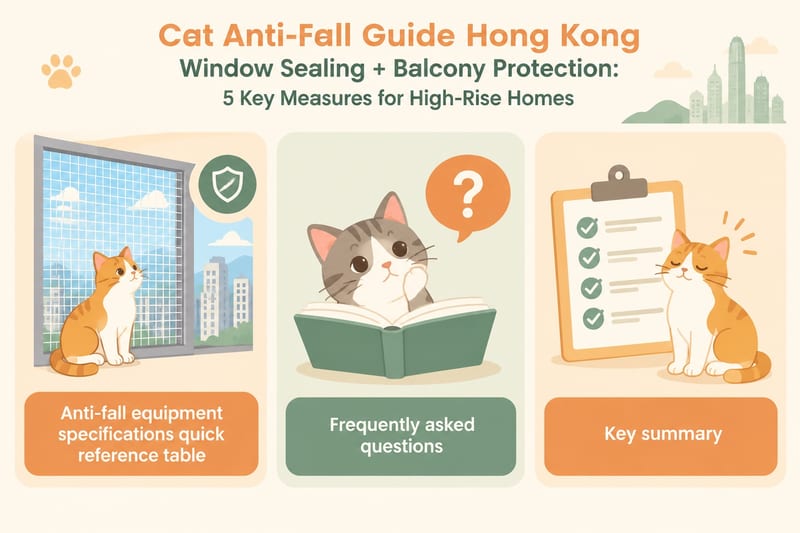
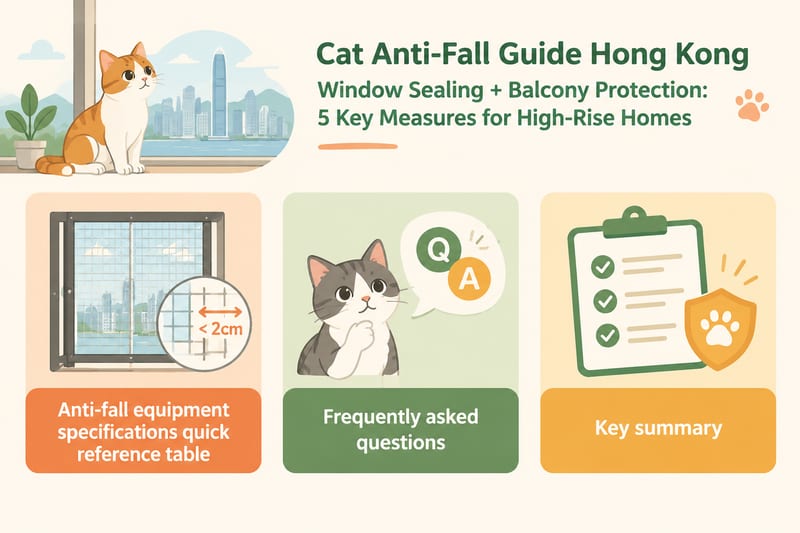
Anti-fall equipment specifications quick reference
| Protection item | Safety standard | Common errors |
|---|---|---|
| Window anti-fall netting | Stainless steel/aluminium-framed steel mesh, mesh diameter <2cm, frame fixed | Substituting fine insect screens or magnetic screens (loosens with one swipe) |
| Balcony enclosure | Fully enclosed from floor to ceiling, railing gaps too small for a kitten's head | Only enclosing halfway, missing the air-conditioner platform and drainage channel |
| Window-opening gap | Top-hung window limiter kept within 5cm | Fully opening windows for ventilation with no limiter |
| Window sills/furniture near windows | No cat trees, stools or sofas within 1 metre of windows | Clutter becomes a 'launch pad' |
| Entrance | Double anti-escape gate, confirm cat's position before opening the door | Letting the cat wait at the door after training fails |
| Monthly inspection | Check four corner screws, bottom wear, bite marks | Never inspecting after installation |
If a fall does happen, these are the steps to take
-
Do not pick the cat up and stroke it immediately: there may be fractures and internal injuries, and incorrect handling can worsen spinal damage
-
Support the cat on a rigid board or cardboard, slide it gently into a carrier, and minimise spinal bending
-
Check breathing and gum colour: pale gums indicate a risk of internal bleeding and are the highest-level emergency
-
Take the cat to the vet immediately, even if it looks normal — the typical delayed injuries in fallen cats are lung contusion and bladder rupture, and the golden rescue window is measured in hours
Medical content is for reference only and cannot replace a veterinarian's diagnosis; in any situation after a fall, the cat should be seen in person at the earliest opportunity.
Frequently asked questions
Q: Can a cat fall and get injured even from the second floor? A: Yes. The 2nd to 4th floors are precisely the 'danger height band' with the highest cat injury and death rates — high enough for a cat to accelerate but not high enough for it to complete its air-righting reflex and adjust its posture, so the landing angle is the most damaging. Genuinely high floors sometimes have higher survival rates because there is enough time to decelerate and right itself. So no matter which floor, window sealing is essential.
Q: How dense does anti-fall netting need to be to be safe? A: The standard is 'a kitten's head cannot get through': mesh diameter under 2cm, with no gaps between the frame and the wall or window frame. Magnetic insect screens and fine mesh screens cannot be used as fall protection — cats can push them open with their heads or bite through them. Inspect once a month, focusing on the four corner screws and wear along the bottom.
Q: My cat stares out of the window all the time — will it get bored if I seal the windows? A: Sealing with netting does not seal off the view — in fact you can then open the window with peace of mind and let your cat sleep on the sill in the sun. To make it happier, add a window-mounted cat bed, put a bird feeder outside the window, and combine with daily scheduled wand-toy play; your cat's 'TV time' will already be enriching enough.
Q: I've had my cat for years and never opened the window — do I still need to install protection? A: Yes. The vast majority of falls happen on the one occasion when 'nothing has ever happened before': opening windows for renovations, opening windows for ventilation after a typhoon, a bug chase that leads onto the sill — any single moment is enough. Install it once and you never have to worry for the rest of your cat's life.
Q: I rent and don't want to drill holes — what can I do? A: Rental versions are available from the trade with no drilling required, using clamp-style fixing (clamp-on steel mesh) to grip the window frame, leaving zero trace when you move out. But note: the frame must be fixed or clamped tight enough that it cannot be pushed open; magnetic attachment must not be used.
Practical checklist for small Hong Kong flats: rentals, subsidised housing and public housing all covered
Living small in Hong Kong doesn't mean you can't protect your cat. Below is a checklist applying the article's advice to three common housing types — doable in one weekend.
Rented flat / subdivided flat
- No-drill metal mesh: buy 'clamp-on steel mesh' from Taobao or a renovation shop; clamp it onto the window frame and it leaves zero trace when you move out.
- Window sill space: use a foldable shoe rack to temporarily store clutter, and move the cat tree to the centre of the room, away from the window.
- Doorway anti-escape: put a retractable baby gate (about two feet wide) at the entrance, check where the cat is before opening the door, and make it a habit.
Subsidised housing / private flats
- Drilled metal mesh: owners will approve it because it can be restored. Find an aluminium window shop to measure and custom-make it, labour and materials included; one window takes about two to three hours to install.
- Full balcony enclosure: use stainless steel wire mesh plus rivets, sealed to the top. Add fine mesh over the air-conditioner platform to stop the cat getting behind the unit.
- Top-hung window limiter: buy one for a dozen dollars or so at a hardware shop; DIY by drilling two screws to limit the window-opening angle.
Public housing
- Apply to the management office: drilling in public housing requires a form first, but it is usually approved. Use silver aluminium frames for the metal mesh — neat in appearance and less likely to attract neighbour complaints.
- Window sill no-go zone: apply double-sided tape along the sill edge; the cat will find it uncomfortable to step on and will naturally stop jumping up (as the article says: reduce launch pads).
- Corridor anti-escape: public housing entrances are narrow, so switch to a 'single-side folding gate' or 'magnetic mesh gate' so you don't bump into people when opening the door.
Weekend practical schedule
Saturday morning: measure and place orders for materials; afternoon: install metal mesh and limiters. Sunday: tidy the window sills, install the gate, and finally play with your cat with a wand toy for a full fifteen minutes to test their reaction to the new environment. Take photos as a record afterwards, and repeat the metal mesh screw check on the first Sunday of every month to ensure long-term safety.
Related links
PetChill's Reminder
The essence of fall prevention is trading a one-off effort for a lifetime of peace of mind: metal anti-fall netting on windows, a fully enclosed balcony, clear window sills, an anti-escape entrance, and enough indoor play — all 5 measures in place, and only then are you doing right by the cat that sleeps by the window every day.
Related reading:
- Complete Cat Emergency First Aid Guide|8 Major Crisis Responses + CPR Techniques
- Complete Guide to Cat Vomiting|6 Major Causes + First Aid
- Cat Super Senses Revealed|5 Superpowers You Definitely Didn't Know
- Complete Guide to Cat Body Language|Read Your Boss's Mind
To learn more about cat home safety, stay tuned to PetChill's latest article updates!
Further reading
- Hong Kong Summer Heatstroke High-Risk Breeds Guide for Flat-Faced Cats
- FIP in Cats: The Hope of GS-441524
- PetChill Pet Supplies: Window Sill Protection Products
📌 Key summary
-
✅ Metal anti-fall mesh must be fine enough that even a finger cannot poke through
-
✅ Balconies must be fully enclosed from floor to ceiling, and railing gaps must be checked
-
❌ Fine insect screens and nylon netting cannot stop cat claws and teeth
-
❌ Putting a cat tree on the window sill is like building your cat a jumping platform
-
✅ 15 minutes of wand-toy play daily + a window-side birdwatching spot reduces the urge to rush outside
-
❌ Picking a cat up immediately after a fall can worsen spinal injury at any time
-
✅ Metal anti-fall netting (steel mesh) is the only reliable window-sealing solution; fine insect screens and magnetic screens are not fall protection
-
✅ Balconies must be fully enclosed 'from floor to ceiling', paying attention to railing gaps, air-conditioner platforms and drainage channels
-
✅ The 2nd to 4th floors are the danger height band with the highest injury and death rates — living low is not safe
-
✅ Keep the area within 1 metre of windows clear and remove every climbable 'launch pad'
-
✅ Wand-toy play twice a day for 15 minutes each time + a window-side birdwatching spot; with enough indoor play, the cat won't think about outside
-
❌ Don't believe 'cats have nine lives' or 'my cat is good and won't jump' — accidents happen on the one occasion when 'nothing has ever happened before'
-
❌ After a fall, do not pick the cat up and stroke it at once; support it on a rigid board and take it to the vet immediately (it may have internal bleeding even if it looks normal)