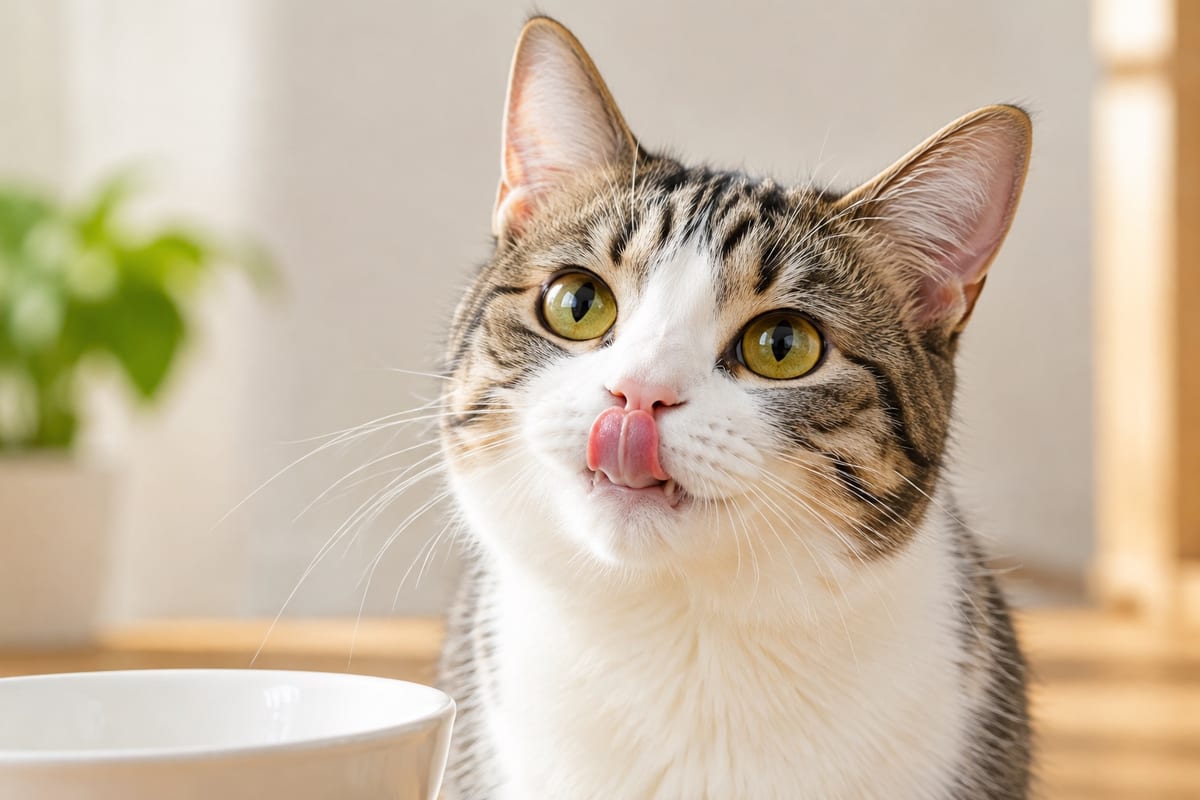
Have you ever offered a sweet treat to your cat and gotten zero reaction? It's not that they don't like it—they genuinely can't taste sweetness! A cat's tongue and taste system are vastly different from humans', hiding many unexpected facts. Today, let PetChill take you deep into the biology behind our feline friends' tongues. After reading, you'll admire even more the evolutionary wisdom of these mysterious animals.
Quick Answer: Cats truly cannot taste sweetness—they genetically lack sweet taste receptors. A cat's tongue has only about 473 taste buds (humans have about 9,000), but its surface is covered with 200–300 keratinized hook-like papillae that serve three functions: grooming, scraping meat, and drinking. When drinking, the tongue tip laps 4 times per second, forming a water column through surface tension. Cats choose food mainly by smell, which is 14 times more sensitive than humans', not by taste.
Can't Taste Sweetness? Because They're Born Without Those Taste Buds
A human tongue can detect five tastes: sweet, sour, bitter, salty, and umami. But cats have only four—they completely lack the ability to taste sweetness. Scientific research has found that cats' tongues lack the specific taste buds for perceiving sweetness, and this is related to their genes. The gene responsible for making sweet taste receptors has lost its function in felines, so sweetness is a "non-existent" taste for them.
This trait isn't unique to domestic cats—all wild felines, from cheetahs to lions, have no interest in sweets. The reason is simple: cats are obligate carnivores, and their diet relies entirely on protein and fat. Sugars in nature are not essential nutrients for them. So next time you see your cat completely indifferent to cake or chocolate, don't think they're picky—they truly can't perceive that sweetness.
Cat Tongues Have 200 to 300 Keratinized Papillae with Many Functions
A cat's tongue surface is covered with tiny keratinized projections, numbering about 200 to 300. These projections are small and hard, shaped like hooks, making a cat's tongue feel rough like sandpaper. This unique structure makes the cat tongue a multi-functional tool:
- Meat-eating tool: Can scrape residual meat off bones completely clean
- Built-in comb: The keratinized projections can comb through tangled fur while removing loose hair and dirt
- Drinking tool: Uses high-speed tongue movement to "pull" water into the mouth
The location of these keratinized projections also matters—those on the sides, tip, and back of the tongue are mainly responsible for distinguishing tastes, while those on the tongue surface are mainly for grooming and eating. You could say a cat's tongue is like a Swiss Army knife.
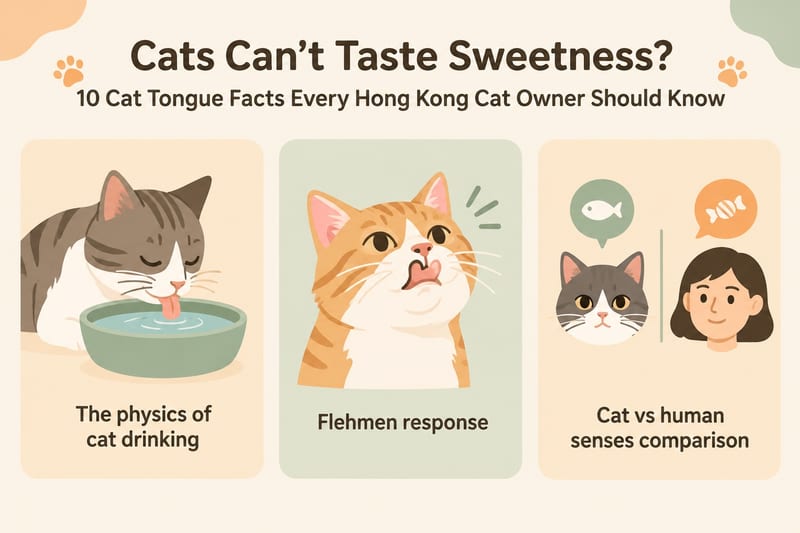
The Physics of Cat Drinking: 4 Laps per Second Forming a Water Column
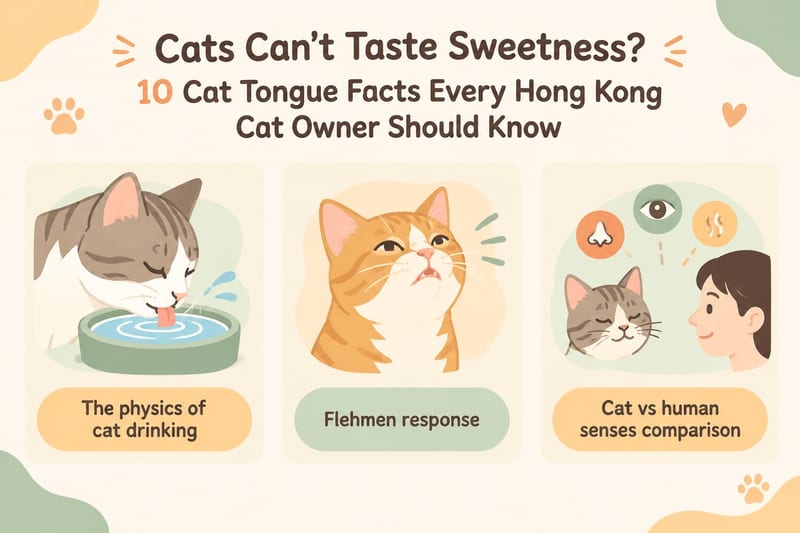
Have you ever noticed how your cat drinks? They don't scoop water with their tongue like dogs do; instead, they use an awe-inspiring physical technique. High-speed cameras reveal that a cat's tongue tip lightly touches the water surface, using surface tension to form a thin column of water, then quickly pulls that column into the mouth. This action repeats about 4 times per second, too fast for the naked eye to see clearly.
Even more interesting, when a cat drinks, its lower jaw moves down and the tongue curls upward, creating a perfect fluid dynamics cycle. Some physicists have even studied this phenomenon specifically, finding that cats drink with efficiency and precision far beyond human expectations. Next time you see your cat elegantly lapping water at the bowl, take a moment to observe this natural physics performance.
240 Bones Make Cats Extremely Flexible
Cats can perform all sorts of acrobatic moves thanks to their 240 bones—34 more than a human's 206. These extra bones are mainly distributed in the spine and tail, giving cats extremely high spinal flexibility. You may notice that when cats get up, they arch their backs and stretch their limbs—this action relaxes and activates over 500 muscles throughout the body, preparing them for jumping and running.
Additionally, a cat's collarbone has become greatly reduced, connected only by flexible tendons. This evolutionary feature makes a cat's front body slimmer, allowing them to easily slip through narrow fence gaps and woods while retaining climbing and grasping abilities. You could say a cat's body is a success story of evolution—over 40 million years of evolution, they have perfectly balanced flexibility and practicality.
Cat Canines Are Born for Eating Meat
Cats have sharp canine teeth typical of carnivores, shaped like cones, specifically for tearing meat from prey. However, a cat's dental structure has an interesting feature—their teeth cannot grind food, because carnivore teeth evolved for "cutting" rather than "grinding."
A cat's small incisors are mainly for grooming fur, not eating. You can observe cats gently nibbling their fur with their incisors—this is actually part of their grooming routine. Also, kittens are born completely toothless; their baby teeth start to emerge around 6 weeks after birth, and the teething process takes up to 8 months to complete.
Cat Taste Receptors Can Distinguish Four Tastes
Although cats can't taste sweetness, their taste system can still distinguish four tastes: salty, bitter, sour, and umami. Among these, umami is the most important to cats—this taste mainly comes from protein-rich foods, and the substance responsible for umami is glutamate. Humans extract the salt from glutamate to make MSG, used to enhance food's umami. Cats are naturally especially sensitive to this taste.
It's worth noting that cats are also highly sensitive to bitterness. This trait may be an evolutionary protective mechanism—many toxic substances in nature have a bitter taste, so cats sensitive to bitterness can avoid accidentally eating harmful plants or spoiled meat.
Flehmen Response: Cats "Smell" with Their Upper Palate
Have you ever seen a cat smell something and then open its mouth, slightly curl its upper lip, revealing an expression that looks like "disgust"? This is actually called the "Flehmen Response," a special sensory behavior where cats use the projections on their tongue to absorb scent molecules and send them to the vomeronasal organ in the upper palate for analysis.
This response allows cats to "taste" scents in the air, especially pheromone messages left by other cats. So when your cat makes this expression after sniffing something new you brought home, they don't find it unpleasant—they're just using a unique way to gather more scent information.
Cat vs Human Taste Senses Comparison
| Item | Cats | Humans | Why It Matters |
|---|---|---|---|
| Number of taste buds | About 473 | About 9,000 | Cat taste is far less sensitive than humans' |
| Sweet taste perception | Completely absent (genetic defect) | Present | It's normal for cats to ignore cake and chocolate |
| Distinguishable tastes | Salty, bitter, sour, umami (4) | Sweet, sour, bitter, salty, umami (5) | Umami (protein) is what cats are most sensitive to |
| Smell sensitivity | 14 times that of humans (over 200 million olfactory receptors) | Baseline | Cats choose food by smell more than taste |
| Tongue keratinized projections | 200–300 hook-shaped | None | Multi-functional tool for grooming, scraping meat, drinking |
Cats' Taste Isn't Sensitive, But They Have Other Sensory Advantages
Overall, cats are not particularly sensitive to food flavors. Compared to humans' roughly 9,000 taste buds, cats have only about 473—a huge difference. But this doesn't mean cats' eating experience is worse than humans'—they have a stronger sense of smell as compensation.
A cat's sense of smell is 14 times more sensitive than a human's, with over 200 million olfactory receptors. This means that when choosing food, cats rely mainly on smell, not taste. If a dish doesn't smell right, even if it tastes good, your cat may turn up their nose. This also explains why cats react so strongly to freshly opened canned food—because fresh aroma is the key to attracting them.
PetChill's Reminder
A cat's body is full of evolutionary wisdom—every projection on the tongue, every bone's position, is the result of nature's careful design. Understanding these facts not only helps you appreciate your cat's uniqueness but also helps you care for their daily needs more attentively.
A cat's taste is closely related to nutrition—if you want to know how to choose high-protein, nutritionally balanced food for your cat, check out Cat Nutrition Complete Guide; if you're worried your cat isn't interested in canned food, Cat Hydration Guide will teach you how to use food aroma to stimulate their desire to drink. Also, cats' super-sensitive sense of smell has more amazing secrets—feel free to read Cat Super Senses World.
For more cat fun facts, keep following PetChill's latest articles!
 Royal Canin full guide →