🤖 AI Summary
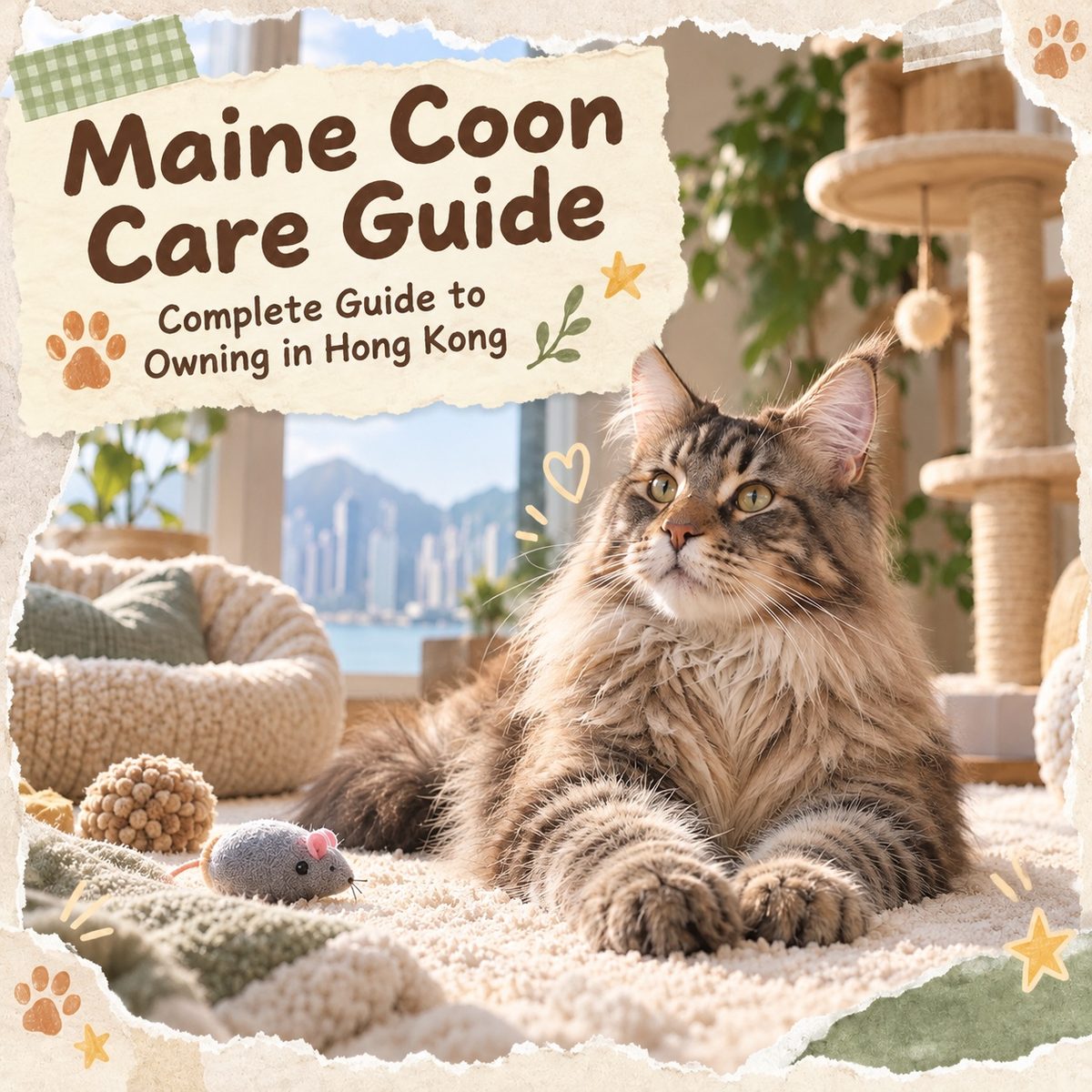
The Maine Coon is North America's oldest natural long-haired cat breed. Males weigh 6-10 kg and can reach 100 cm in length, making it one of the largest domestic cat breeds. Gentle, intelligent and friendly, it is known as the "gentle giant" and is quite suitable for beginners.
• Average lifespan 12-15 years; with good care, longer
• Three genetic diseases to screen for: hypertrophic cardiomyopathy (HCM), spinal muscular atrophy (SMA), hip dysplasia
• Hong Kong purchase price about HK$15,000-40,000 (for reference only)
Quick answer: Maine Coons are easy to keep. They are gentle, intelligent and beginner-friendly, often called the "dogs of the cat world"; however, they eat a lot, need plenty of exercise, and shed heavily in shedding season, requiring brushing 2-3 times a week. Average lifespan 12-15 years.
Contents
-
What breed is the Maine Coon? 5 must-know traits
-
Are Maine Coons easy to keep? Personality, pros and cons
-
How long do Maine Coons live? 5 habits to extend lifespan
-
3 common genetic diseases and screening guide
-
Hong Kong price range and monthly costs (HKD)
-
Can a Maine Coon live in a 400 sq ft Hong Kong flat?
-
Shedding and grooming guide
-
Where to adopt or buy in Hong Kong?
-
When to see a vet? Red-flag checklist
-
FAQ
Maine Coon Lifespan Overview: 30-Second Summary
The short answer for Maine Coon lifespan is "12-15 years", but behind this number are three controllable variables: genetic disease screening, weight management, and indoor keeping. The table below lists the core factors affecting lifespan, then we break down costs and methods item by item.
| Item | Details |
|---|---|
| Average lifespan | 12-15 years (indoor cats) |
| Outdoor lifespan | Generally 2-5 years shorter (accidents, infections, parasites) |
| Neutering effect | Neutered individuals live longer on average; reproductive disease risk greatly reduced |
| Three lifespan killers | Hypertrophic cardiomyopathy (HCM), obesity, chronic kidney disease |
| Fully grown age | 3-4 years (slow development, slow ageing) |
| Senior years start | From about 10 years, check-ups every six months |
| Hong Kong price | About HK$15,000-40,000 |
| Monthly basic costs | About HK$1,000-1,800 |
Three things you must know:
- "12-15 years" is an average, not a maximum — with full screening and good weight control, Maine Coons over 15 are not rare.
- Slow development means a longer "youth" — ordinary cats are fully grown at 1 year; Maine Coons at 3-4 years, and their ageing curve is similarly delayed.
- HCM is the biggest enemy — annual heart ultrasound (about HK$1,800-3,000) is a practical lifespan-extending expense, not an extra.
Lifetime Cost of a Maine Coon (2026 Hong Kong Prices)
Based on a median lifespan of 13 years, the "entry fee" for a Maine Coon is only about 10% of the total lifetime cost. The table below is a realistic estimate at Hong Kong prices:
| Item | Range | Notes |
|---|---|---|
| Purchase/adoption | HK$15,000-40,000 | Registered breeder with screening records |
| First-year vaccines + neutering | HK$2,500-5,000 | Three vaccines plus neutering surgery |
| Oversized equipment (one-off) | HK$2,500-6,000 | Solid wood cat tree, extra-large litter box, carrier |
| Monthly food | HK$500-900 | Eats 1.5-2 times an ordinary cat |
| Monthly litter | HK$150-300 | Extra-large box uses more |
| Monthly grooming | HK$0-400 | DIY saves a lot |
| Annual check-up + heart ultrasound | HK$2,000-4,000 | Every six months from age 10 |
| Lifetime total (13 years) | About HK$180,000-350,000 | Excluding emergency surgery |
Many prospective owners only count "how much to buy the cat" and not "how much to keep the cat". A HK$25,000 Maine Coon can cost ten times its price over thirteen years — that is the real number for decision-making.
Who is a Maine Coon Suitable For?
| Owner type | Suitability | Reason |
|---|---|---|
| First-time cat owner with sufficient budget | Suitable | Gentle, trainable, forgiving |
| With children or other pets | Suitable | High tolerance; "gentle giant" is well deserved |
| Work-from-home household | Very suitable | High interaction needs; thrives with company |
| Tight monthly salary, insufficient savings | Not recommended | Lifetime cost from HK$180,000; emergencies can run five figures |
| People unwilling to brush | Not recommended | Double long coat mats in shedding season, leading to skin problems |
Reverse self-check (three questions):
- Can your home fit a 1.8 m solid wood cat tree?
- Can you set aside HK$2,000-4,000 every year for heart screening?
- Can you spare 30 minutes daily for play and exercise?
If two of the three answers are "no", you won't experience the "easy" side of a Maine Coon — its gentleness is bought with space, time and budget.
Maine Coon Lifespan Compared with Other Large Cats
| Breed | Average lifespan | Fully grown | Main genetic risks | Monthly food cost |
|---|---|---|---|---|
| Maine Coon | 12-15 years | 3-4 years | HCM, SMA, hip dysplasia | HK$500-900 |
| Ragdoll | 12-17 years | About 4 years | HCM, PKD | HK$400-700 |
| Norwegian Forest Cat | 14-16 years | About 3 years | HCM, diabetes | HK$400-700 |
| Siberian | 12-15 years | About 3 years | HCM | HK$400-700 |
| Domestic shorthair | 13-17 years | About 1 year | Varies | HK$250-500 |
The Maine Coon's lifespan is middling among large cats; what really makes the difference is not the breed but screening frequency and weight management — same 12-15 years, but with or without heart screening are two different destiny curves.
Maine Coon Lifespan Care by Age (0-15 years)
| Age | Care focus | Recommended checks | Approximate cost |
|---|---|---|---|
| 0-1 year | High-protein kitten food, socialisation, vaccines, neutering | Three vaccines + pre-neuter blood test | HK$2,500-5,000 |
| 1-3 years | Growth nutrition, establish brushing habit | Annual check-up | HK$600-1,200 |
| 3-6 years | Golden period for weight management, first heart ultrasound | Check-up + heart ultrasound annually | HK$2,000-4,000 |
| 7-10 years | Switch to mature food, monitor water intake | Check-up + heart ultrasound + blood/urine tests | HK$2,500-4,500 |
| 10+ years | Kidney monitoring, joint care | Full check-up every six months | HK$4,000-8,000/year |
The logic is simple: later medical costs are two to three times earlier ones. Put "HK$4,000-8,000 per year after age 10" into your budget before getting the cat, so you won't be caught off guard in the senior years.
Four Common Misconceptions About Maine Coon Lifespan
| Misconception | Reality |
|---|---|
| Large cats must be short-lived | Size is not directly negatively correlated with lifespan; Maine Coons at 12-15 years are similar to ordinary cats; the key is HCM screening |
| Neutering shortens lifespan | The opposite — neutering greatly reduces reproductive diseases and fighting risks; statistically neutered cats live longer on average |
| Eating a lot means big and healthy | Overfeeding leads to overweight, increasing joint and heart strain and directly shortening lifespan; ideal body condition is the indicator |
| No symptoms in old cats means no check-up needed | Cats hide symptoms; HCM and kidney disease have zero early symptoms; half-yearly checks after age 10 are the only way to catch them early |
Half of a Maine Coon's lifespan is decided by the breeder's screening, half by your daily management. The homework you do when choosing a cat and the checks you do over the next ten years are the same investment.
Maine Coon Lifespan and Pet Insurance: Worth It?
Large cats have high medical costs; is insurance essential? In numbers: Hong Kong pet insurance annual premiums are generally HK$2,000-5,000 (depending on age and coverage), with deductibles and claim limits; a major heart surgery for a Maine Coon can cost HK$30,000-60,000. Comparison of two strategies:
| Strategy | Annual cost | Suitable for | Risk |
|---|---|---|---|
| Buy insurance | HK$2,000-5,000 | Liquid cash under HK$50,000 | Exclusions, premium increases with age |
| Self-funded medical fund | Save HK$500-1,000 monthly | Stable saving habits | Fund may be insufficient if something happens early |
| Hybrid | Insurance for first 5 years + save simultaneously | Most families | More management hassle |
Practical advice:
- Kitten stage (0-2 years) has the lowest premiums; it's the window to lock in a low price.
- Before buying, check whether "genetic diseases are covered" — HCM is the most common claim for Maine Coons; a plan that doesn't cover it is of little use for this breed.
- Whichever route you choose, aim for a reserve of HK$50,000+ so you have options when facing major surgery.
Insurance and self-funding are not a philosophical either-or; it's a cash-flow arithmetic problem. Calculate how many years it takes you to save HK$50,000; that gap is where insurance matters.
Final Checklist Before Deciding: Three Gates to Confirm You're Ready
- Budget gate: Lifetime cost from HK$180,000; first-year one-off expenses about HK$25,000–45,000 (cat purchase + vaccines/neutering + equipment) — only continue if the numbers work.
- Space gate: A spot for a 1.8 m solid wood cat tree, an extra-large litter box, wall shelves — only continue if all three are available.
- Time gate: 30 minutes daily play, brushing 2–3 times a week, two vet visits a year — only continue if you can do it.
Pass all three gates and a Maine Coon will be your best choice; if any gate is red, wait six months and recalculate.
What Breed is the Maine Coon? 5 Must-Know Traits
The Maine Coon is North America's oldest natural cat breed, originating in Maine in the northeastern United States. By the 19th century it was a common mouser on New England farms. In 1895, a Maine Coon named Cosey won "Best Cat" at the New York Madison Square Garden cat show, becoming one of the earliest native American show breeds; in 1985, Maine officially designated it the "state cat".
According to Guinness World Records, a Maine Coon holds the record for the longest domestic cat — 123 cm long. Not every Maine Coon is that extreme, but the title "giant of the cat world" is well deserved.
Maine Coon breed quick facts:
| Item | Male | Female |
|---|---|---|
| Weight | 6-10 kg | 4-7 kg |
| Length (including tail) | 100-120 cm | 90-100 cm |
| Coat length | Long (double coat) | Long (double coat) |
| Personality | Gentle, friendly, intelligent | Gentle, slightly independent |
| Average lifespan | 12-15 years | 12-15 years |
5 must-know traits:
-
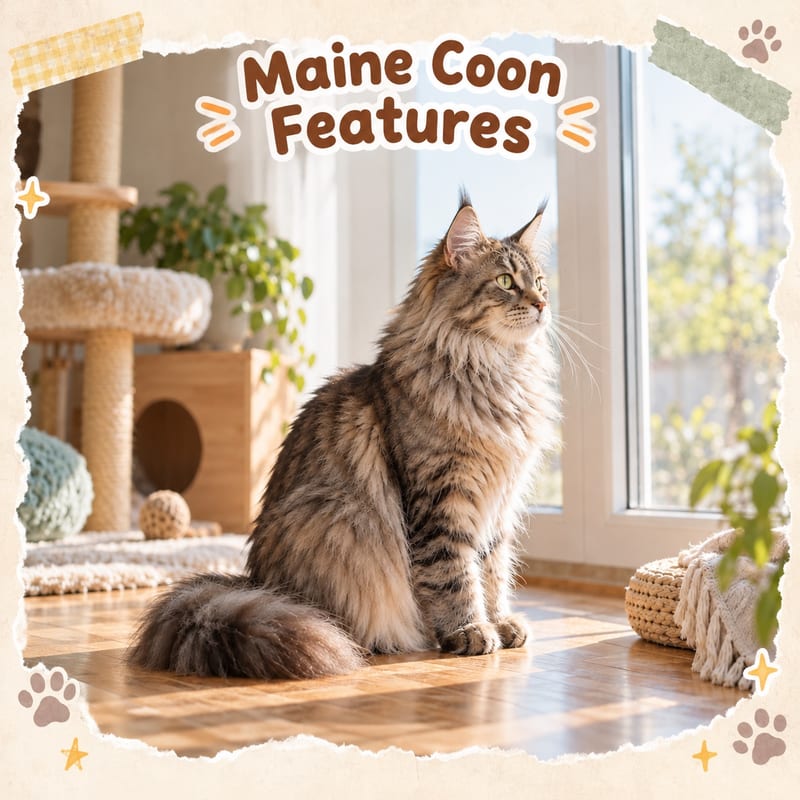
Lynx tips: Distinctive tufts at the ear tips, the Maine Coon's most iconic feature
-
Water-resistant double coat: Long outer coat repels water, downy undercoat insulates, allowing them to withstand harsh New England winters
-
Long, bushy tail: Can wrap around the body for warmth, up to 40 cm long
-
Rectangular build: Long, solid body with large bone structure; slow to mature (3-5 years to fully develop)
-
"Trill" vocalisation: Not an ordinary meow but a short, trilling "chirp", their way of communicating
Are Maine Coons Easy to Keep? Personality, Pros and Cons
The Maine Coon's personality is the opposite of its imposing looks — gentle, friendly and intelligent; this contrast is exactly why it's called the "gentle giant".
4 personality traits:
- Affectionate but not clingy: Likes to be near you but won't constantly demand cuddles; can accept you going to work
- Intelligent and trainable: Learning ability among the best in the cat world; can learn "sit", "shake" and even leash walking
- Friendly to children and other pets: High tolerance, suitable for multi-pet households
- Loves water: Many Maine Coons enjoy playing with taps, unlike most cats
Honest pros and cons:
| Pros ✅ | Cons ⚠️ |
|---|---|
| Gentle, beginner-friendly | Large appetite (adult about 80-100 g dry food daily) |
| Intelligent, trainable, interactive | High exercise needs, 30+ minutes daily play |
| Friendly to children and other pets | Heavy shedding in season, frequent brushing needed |
| Adaptable, cold-tolerant | Large size; litter box/carrier/cat tree all need oversizing |
| Quiet, gentle voice | Higher genetic screening costs (heart ultrasound) |
Conclusion: If you can accept higher food, grooming and medical costs, the Maine Coon is a very beginner-friendly large companion cat.
How Long Do Maine Coons Live? 5 Habits to Extend Lifespan
The average lifespan of a Maine Coon is 12-15 years, similar to ordinary domestic cats (12-14 years); with good care, some can live healthily beyond 15. However, according to research from the Royal Veterinary College (RVC) in the UK, some Maine Coon populations have a median lifespan of about 11 years — the difference mainly comes from genetic disease screening and weight management.
5 habits to extend lifespan:
-
Annual heart check: HCM is the number one health threat for Maine Coons (detailed below); annual auscultation plus heart ultrasound when necessary can detect it before symptoms appear
-
Lifelong weight management: Maine Coons mature slowly; don't feed adult portions before they're grown. After adulthood, maintain ideal body condition (ribs palpable, waist visible); obesity greatly increases diabetes and heart strain
-
Plenty of water: Large cats have higher kidney load, and cats naturally have a weak thirst drive — a flowing water fountain is a practical investment
-
Dental care: Chronic gingivitis lets bacteria enter the bloodstream, affecting the heart and kidneys; brush teeth 2-3 times a week plus regular tartar checks
-
Indoor keeping + stress management: Indoor cats live significantly longer than outdoor cats; environmental enrichment (cat trees, window perches) reduces stress-related diseases
3 Common Genetic Diseases and Screening Guide
Maine Coons have 3 common genetic diseases; understanding them before buying or adopting can avoid heavy medical burdens later.
1. Hypertrophic Cardiomyopathy (HCM)
HCM is the most common heart disease in cats; the heart muscle thickens abnormally and pumping function declines. American Shorthairs and Maine Coons are high-risk breeds. Early signs may be subtle, such as reluctance to move or slightly fast breathing; by the time it's discovered it's often advanced, sometimes with blood clots causing hind-leg paralysis. HCM is mainly inherited through MyBPC gene mutation and can be detected early through genetic testing + heart ultrasound. When buying, ask the breeder for the parents' HCM genetic test reports.
2. Spinal Muscular Atrophy (SMA)
SMA causes degeneration of spinal neurons, affecting hind-limb muscle development; kittens show abnormal gait from about 3-4 months. SMA is not painful and cats can still live happily, but there is currently no cure. The good news: SMA has a clear genetic test, and testing both parents can completely prevent it.
3. Hip Dysplasia
A common joint problem in large cats; some veterinary studies estimate the prevalence in Maine Coons can reach 18%. Symptoms include reluctance to jump up or down, abnormal gait, and hind-limb muscle loss. Weight management is the most important preventive measure; severe cases may require surgery.
PKD (polycystic kidney disease) is less common in Maine Coons than in Persians, but asking for kidney test reports before buying is still a prudent step.
Screening checklist (must ask before buying/adopting):
- ☐ Parents' HCM genetic test reports (MyBPC3)
- ☐ Parents' SMA genetic test reports
- ☐ Kitten health check records (heart auscultation)
- ☐ Vaccination card + deworming records
Hong Kong Price Range and Monthly Costs (HKD)
Maine Coon purchase prices in Hong Kong (2026, for reference only; individual breeder/organisation quotes prevail):
| Source | Price range | Notes |
|---|---|---|
| Registered breeder (with genetic screening reports) | HK$20,000-40,000 | Pedigree certificate + health guarantee |
| Pet shop | HK$15,000-30,000 | Should show vaccination card + check records |
| Online low-price ads | HK$9,800-14,000 | ⚠️ Beware: risk of no genetic screening |
Monthly cost budget (adult Maine Coon, HKD):
| Item | Monthly cost | Notes |
|---|---|---|
| Cat food (high-protein formula) | $600-1,000 | Large appetite; needs large-breed formula |
| Cat litter | $200-400 | Extra-large litter box recommended |
| Grooming (DIY) | $0-100 | Brush + ear cleaning supplies |
| Toys/miscellaneous | $100-200 | Durable large toys |
| Basic total | About $900-1,700 | Excluding medical |
| Heart check (annual) | About $1,500-3,000/year | Ultrasound extra |
Reminder: A "bargain" Maine Coon online that is clearly below market price likely has no genetic screening, incomplete vaccines, or even unknown origin. HCM treatment can cost over a thousand a month long-term; a cheap cat can easily become an expensive patient.
Can a Maine Coon Live in a 400 sq ft Hong Kong Flat?
Yes, but with conditions. Maine Coons don't need a mansion, but they need "vertical space + daily exercise".
Practical keeping in Hong Kong flats:
- Minimum space: A 400-500 sq ft flat is enough; the key is to build upwards — a floor-to-ceiling cat tree or wall shelves creating an "aerial route"
- Oversized equipment: Litter box length at least 1.5 times the cat's body length (Maine Coons need extra-large); carrier, backpack, scratching posts all need upsizing; ordinary small-cat equipment won't do
- Air-conditioning in Hong Kong summer: The double long coat hates heat; Hong Kong is humid and hot from May to October, so 24-hour air-conditioning or at least daytime air-conditioning is essential; also brush frequently to avoid hairballs and skin problems
- Window safety: Heavy body; window screens must be sturdy, stronger than for ordinary cats
- Humid weather: In the March-April damp season, keep food sealed against moisture (see PetChill's cat food storage guide) and check skin for eczema
Not suitable if: tight budget, no time for daily play, or cat hair allergy — Maine Coon shedding is top-tier in the cat world.
Shedding and Grooming Guide
Maine Coons are double-coated long-haired cats; they have two major sheds a year (heaviest in spring) and shed moderately the rest of the time.
Brushing SOP:
| Period | Frequency | Tools |
|---|---|---|
| Normal | 2-3 times a week, 5-10 minutes each | Comb + slicker brush |
| Shedding season (spring/autumn) | Daily | Comb + undercoat rake |
| Mat removal | Immediately | Loosen with fingers first, don't pull hard |
3-step brushing: Start from the back of the neck, brush with the coat → back and sides → finally belly and trousers (mat-prone areas). In shedding season, use hairball gel or fibre powder to reduce hairball risk.
Diet points: High animal protein formula (protein ≥35%) is the foundation for large long-haired cats; Omega-3 (fish oil) helps coat shine and skin health; adult Maine Coons eat about 80-100 g dry food daily (split into two meals), adjust according to weight and activity. For detailed calculations, see PetChill's cat nutrition guide.
Bathing: Once every 2-3 months is enough (indoor cats); in shedding season, monthly baths help remove loose hair. The Maine Coon's water-resistant coat takes longer to wet.
Where to Adopt or Buy in Hong Kong?
Adoption routes (PetChill recommends prioritising):
- SPCA Hong Kong: Occasionally Maine Coons or Maine Coon mixes await home visits
- Hong Kong animal adoption centres and other registered rescue organisations: Adult cats have established personalities and are easy to match
- Facebook adoption groups: Look for "Maine Coon adoption" communities, but beware of mixed breeds passed off as purebreds
Purchase routes and checklist:
- Choose a licensed pet shop (AFCD licence) or registered breeder
- Visit in person: see the parents (preview size/personality), hygiene, kitten's alertness
- Must obtain: pedigree certificate (TICA/CFA), HCM + SMA genetic reports, vaccination card, microchip record
- Refuse: online deposits based only on photos, "promotions" at less than half market price, sellers refusing genetic reports
Which route? Want a kitten to raise from young + clear pedigree health records → choose a compliant breeder or reputable pet shop. Whichever source, genetic reports and health records are the bottom line.
When to See a Vet? Red-Flag Checklist
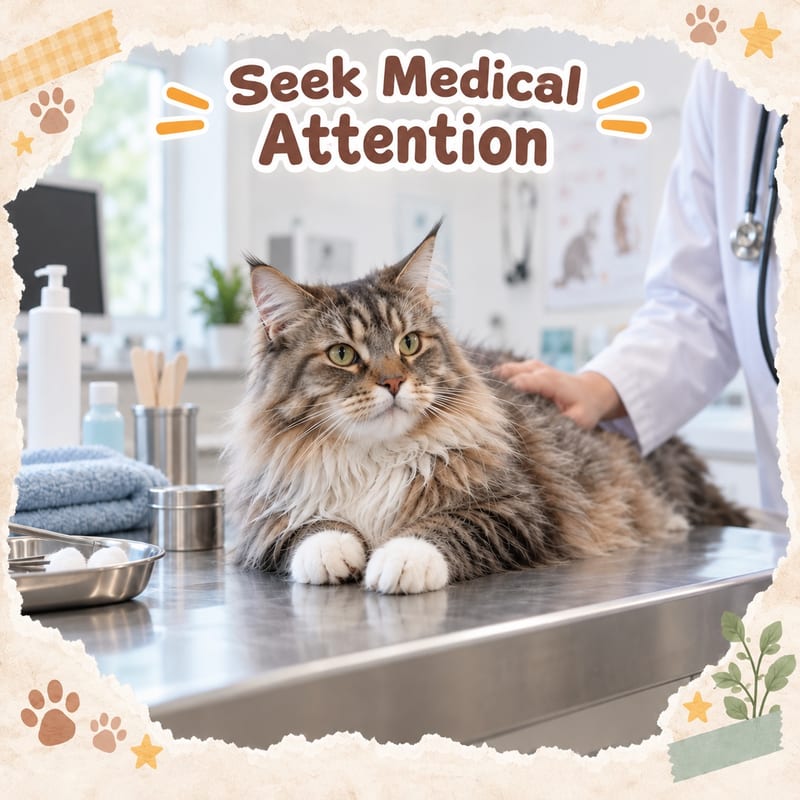
Maine Coons have several breed-related distress signals; contact a vet immediately if any appear:
- ⚠️ Rapid breathing or open-mouth breathing (resting rate over 40 breaths per minute) — HCM emergency signal
- ⚠️ Sudden hind-leg weakness or paralysis — typical sign of a blood clot blocking vessels; every second counts
- ⚠️ Abnormal hind-limb gait, reluctance to jump — sign of worsening hip joint problem
- ⚠️ Complete anorexia for 24 hours — not eating can trigger fatty liver
- ⚠️ Sudden weight loss + increased drinking and urination — warning sign of kidney disease or diabetes
This article is for reference only and cannot replace veterinary diagnosis. If you have health concerns, consult a registered veterinarian.
 Royal Canin full guide →