
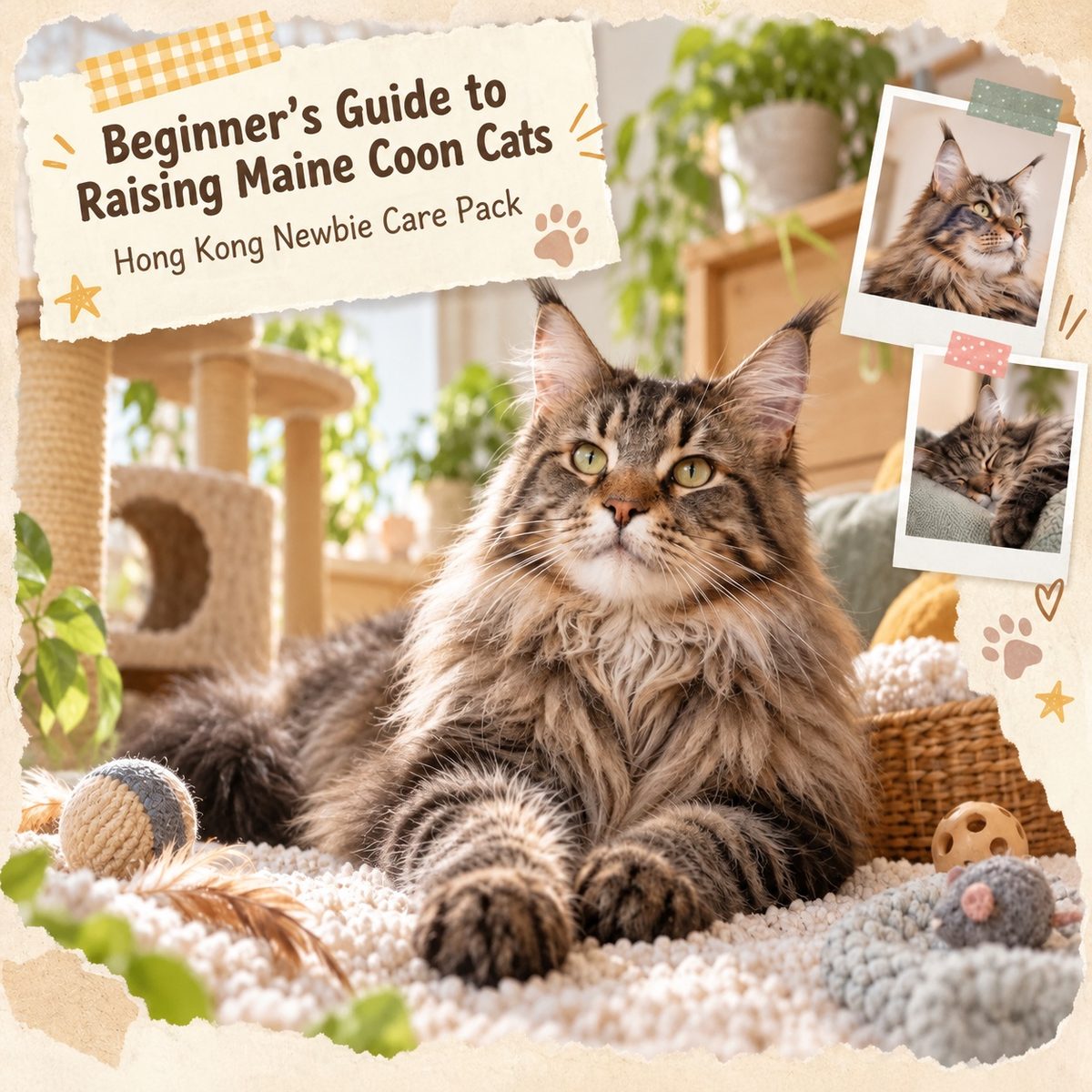
Quick answer: The Maine Coon is a gentle giant: friendly, intelligent and trainable, but large, a big eater and expensive to insure medically. Keeping one in Hong Kong needs 500 sq ft or more, a sturdy tall cat tree and annual heart checks; those in small flats or on tight budgets should think twice.
The Maine Coon is one of North America's oldest natural breeds, known as the 'gentle giant': friendly with children and other pets, intelligent and trainable, but large, a big eater and costly medically. It suits households with 500 sq ft or more, a comfortable budget and a wish for a 'cat that acts like a dog'; those in small flats or on tight budgets should think carefully.
Origins and appearance: one of the largest domestic cats
Originating in Maine, USA, it was already a popular farm cat in the 19th century and became Maine's official state cat in 1985.
Appearance and size:
| Item | Male | Female |
|---|---|---|
| Weight | 6–10 kg | 4–7 kg |
| Length | 100–120 cm | 90–100 cm |
| Shoulder height | 25–40 cm | 25–35 cm |
Identifying features:
- 'Lynx tips' on the ears
- Long, bushy tail
- Large, oval eyes
- Double coat: water-resistant outer layer plus warm undercoat
- Over 75 colour combinations, commonly brown tabby, silver tabby and solid
Maine Coon personality: why the gentle giant is so popular
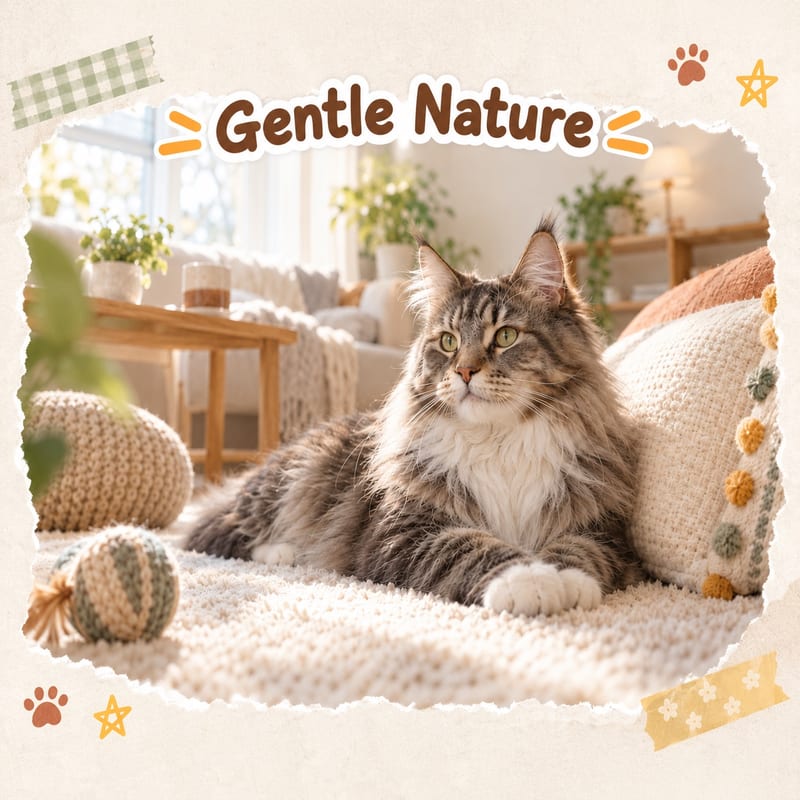
- Gentle and friendly: friendly with children and other pets, not aggressive — a recognised family cat.
- Intelligent and curious: learns quickly and can be trained; it also likes playing with water and can turn on taps.
- Affectionate but independent: enjoys your company but is not overly clingy and can be left alone.
- Loves to 'chat': communicates with a chirp rather than the noise of a Siamese.
Maine Coon care essentials: coat, exercise, diet
Coat care
- Brush 2–3 times a week; daily during shedding season to prevent mats and hairballs
- Trim nails regularly; for long-haired individuals, keep the area around the bottom clean
Diet
- High-protein cat food (≥35%), starting at about 80–100 g of dry food a day (adjust to weight and activity)
- The biggest risk for a large cat is obesity straining the joints — portion control and weight records are essential
- Some wet food helps with hydration; for food choices see PetChill's cat food reviews
Exercise and space
- Needs a sturdy tall cat tree (an ordinary small tree topples the moment it pounces)
- Choose large, durable toys; daily interactive play is a must
- Intelligent enough to be trained to walk on a lead
Space needs
- A living space of 500 sq ft or more is recommended
- Choose a large or open-top litter box; in a small box it cannot turn around
Hereditary diseases and medical care: when to see a vet
| Disease | What to watch |
|---|---|
| Hypertrophic cardiomyopathy (HCM) | Hereditary heart disease; regular heart checks |
| Hip dysplasia | Common in large cats; control weight to reduce strain |
| Polycystic kidney disease (PKD) | Hereditary kidney disease; ask for screening reports before buying |
When to see a vet:
- Abnormal panting after exercise, rapid breathing
- Unsteady walking on the hind legs, unwillingness to jump up
- Sudden increase in drinking and urination
- Poor appetite, weight loss
- Purple tongue or gums (emergency — go immediately)
Ask the breeder for HCM/PKD genetic screening reports before buying; after adoption, an annual heart ultrasound is the most worthwhile medical investment for a large cat.
Hong Kong living tips: small flats, hot humid summers
- Layout: fix the cat tree against a wall so it doesn't block walkways; vertical space matters more than floor area
- Hot humid summers: the double coat hates stuffiness — keep the air-conditioning dry, brush the undercoat diligently in shedding season, and put out extra water bowls
- Non-slip floors: large cats slip on polished tiles and can hurt their joints; runners in the corridor help
- Moving and decluttering: Maine Coon kit (large cat tree, large litter box, food volume) is all a matter of scale; renting households should think about storage space first
Hong Kong prices and adoption
Buying:
| Source | Price |
|---|---|
| Registered breeder | $20,000–40,000 (with pedigree certificate and health reports) |
| Pet shop | $15,000–30,000 (always confirm the source) |
| Adoption | $2,000–5,000 |
Adoption routes: Hong Kong animal adoption centres, Maine Coon rescue organisations, online adoption platforms. Even pedigree cats are sometimes abandoned; adoption is a serious option.
What you can do today
- Measure your home to confirm a sturdy tall cat tree will fit.
- When meeting a breeder you like, ask directly for HCM/PKD screening reports.
- Switch to a larger litter box and food bowl (if you already have one
). 4. Set aside a budget for an annual heart check for a large cat.
For how to choose cat food for a large cat and how much to feed, see PetChill's cat food reviews for comparisons.
This article is for reference only; consult a registered veterinarian if in doubt.
Further reading
Maine Coon in-depth series
- Maine Coon lifespan → | 8 disadvantages → | Keeping in Hong Kong → | Weight chart → | Genetic screening → | Price and adoption → | Coat colour guide → | Personality and intelligence → | Breed profile →
More cat guides
- Cat breed guide → | Siamese → | Ragdoll → | Cat food guide →
- Maine Coon complete guide 2026 (price, lifespan, care) →
Practical checklist for small Hong Kong flats: how to live comfortably under 500 sq ft
1. Maximise vertical space
- Fit floating shelves and a floor-to-ceiling cat pole; even a 1 m wide corridor works. Fix with expansion bolts — a Maine Coon landing hits like a small dog.
- Add a cushion on top of the wardrobe as a cat bed; store out-of-season bedding there too — dual purpose.
2. Hide a large litter box
- Choose an open plastic tray 60 cm or more, placed behind the bathroom door or under the kitchen cabinet; if there really is no room, remove a cabinet door to make a semi-open 'cat toilet' with a magnetic curtain to contain odour.
3. Three summer cooling essentials
- Air-conditioning on at 25–26 °C with a circulating fan to blow through the undercoat;
- Brush daily in shedding season; removing a fifth of the undercoat makes the home less stuffy;
- Put two extra 1 L water bowls in the kitchen and bathroom, add ice cubes to keep water moving; the more a Maine Coon drinks, the more it urinates, reducing kidney strain.
4. Non-slip and noise management
- Lay 60 cm joint mats in the corridor — non-slip and sound-absorbing, so night-time landings don't wake the neighbours;
- Use a silicone non-slip mat under the food bowl so it doesn't slide around at mealtimes.
5. Moving/renting checklist
- Before signing a lease, ask the landlord whether you may drill walls for a cat pole;
- For a large cat tree, large litter box and 20 kg cat food storage box, book a van when moving;
- Before moving out, count the screw holes in the walls and fill them with wall filler to avoid losing your deposit.
Follow these five steps and even a 400 sq ft open-plan flat can be tidy and comfortable for a Maine Coon.
📌 Key points
- ✅ 500 sq ft or more plus a sturdy tall cat tree for enough play
- ✅ High-protein cat food, daily brushing, annual heart ultrasound
- ✅ Breeders must provide HCM/PKD genetic screening reports
- ❌ Small litter boxes and small cat trees topple on a pounce and can injure joints
- ❌ Obesity worsens hip and heart strain; strictly control portions



