
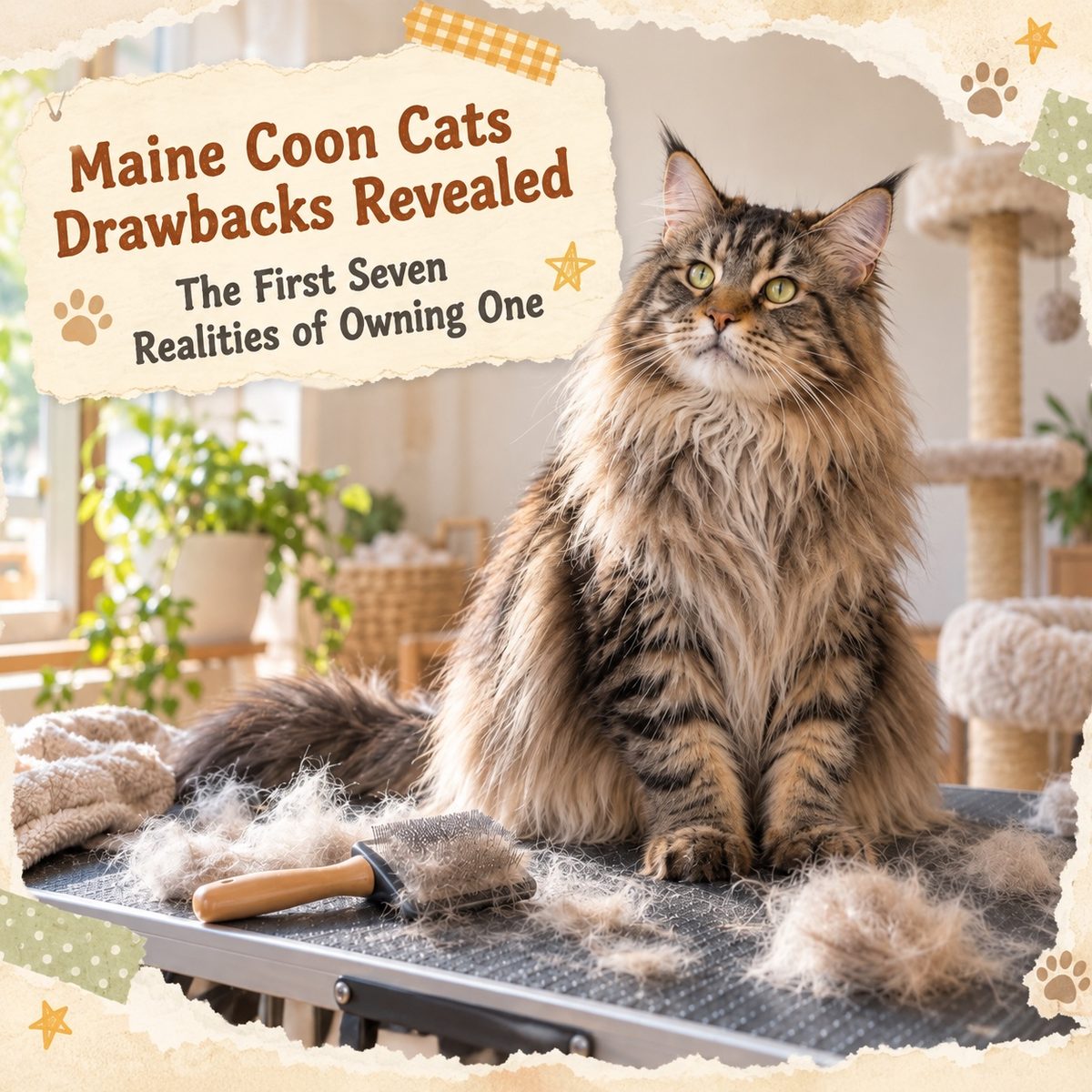
Quick answer: The real disadvantages of a Maine Coon boil down to 8: large space requirement, long coat needing daily grooming, high food intake and costs, genetic disease risks, tendency to separation anxiety, excessive shedding, difficulty finding sources in Hong Kong, and building regulation restrictions. But each has practical solutions—reading this before deciding is far better than regretting an impulse purchase.
Want a full picture of the Maine Coon? Start with the Maine Coon breed profile and the complete Maine Coon guide.
What kind of cat is a Maine Coon? 30-second summary
The Maine Coon (Maine Coon) is a large semi-longhaired breed originating from Maine, USA. Known for its size, neck ruff and dog-like personality, it is called the 'gentle giant' and is a niche but increasingly searched breed in Hong Kong. The table below lists the specs Hong Kong owners look up most; later sections break down price, owner matching and the four most common misconceptions.
| Item | Maine Coon |
|---|---|
| Origin | Maine, USA |
| Average lifespan | 12–15 years (up to 16 years indoors) |
| Weight | Male 6–10 kg / Female 4–7 kg |
| Length | Nose to tail tip can exceed 100 cm |
| Shoulder height | About 25–40 cm |
| Coat | Semi-long double coat, prominent neck ruff, bushy tail |
| Shedding | High (doubles in shedding season) |
| Personality | Gentle, people-oriented, trainable, dog-like manners |
| Maturity | Fully developed at about 4 years |
| Activity level | Moderate, needs vertical space more than floor area |
| Hong Kong price | About HK$18,000–35,000 |
| Monthly basic costs | About HK$1,300–2,300 |
Three basics you must know:
- Big does not mean hyperactive — Maine Coons have moderate activity but need an extra-large litter box and a floor-standing cat tree.
- Clinginess is a double-edged sword — good for easy handling and training, bad because long periods alone can trigger anxiety signals.
- Long coat is a long-term commitment — brush at least 2–3 times a week, daily in shedding season; if you don't brush, mats are expected.
In one sentence: the Maine Coon is a 'big, people-oriented breed that needs more space and more brushing'. Whether your home can permanently accommodate a floor-standing cat tree is the decisive question.
Maine Coon price and monthly costs (2026 Hong Kong market)
Price is only the entry fee; what really affects the decision is fixed monthly spending. The table below shows actual 2026 Hong Kong market ranges; ask about each item clearly before ordering.
| Item | Range | Notes |
|---|---|---|
| Registered cattery | HK$18,000–35,000 | With pedigree certificate, parents' HCM ultrasound records |
| Licensed pet shop | HK$12,000–22,000 | Quality varies greatly; check vaccination records yourself |
| Adoption | HK$0–2,000 | Occasional Maine Coon or mix, rare |
| Vaccines (first year, 3 doses) | HK$900–1,500 | Annual booster thereafter |
| Neutering | HK$2,500–4,500 | Higher due to weight and anaesthetic dosage |
| Microchip | HK$200–500 | Including AFCD registration |
| Monthly food | HK$500–900 | High-protein dry food + complete wet food |
| Monthly cat litter | HK$200–350 | Extra-large litter box, usage about 30% more than average |
| Monthly deworming (amortised) | HK$100–180 | By weight; heavier costs more |
| Medical reserve (recommended) | HK$300–600 | Cardiac ultrasound, hip evaluation |
| Monthly total | About HK$1,300–2,300 | Excluding major medical and neutering |
The Maine Coon medical reserve is not an 'insurance-style' expense but a necessity: one cardiac ultrasound plus blood test starts at HK$1,800, recommended annually from age 7; hip X-ray costs another HK$800–1,500.
Three savings (without affecting health):
- Choose large-pack clumping cat litter; saves HK$50–80 per month.
- Do vaccines and deworming at the same vet; packages are usually 10% cheaper.
- Buy a solid wood floor-standing cat tree once; it lasts longer than two cheap climbing frames.
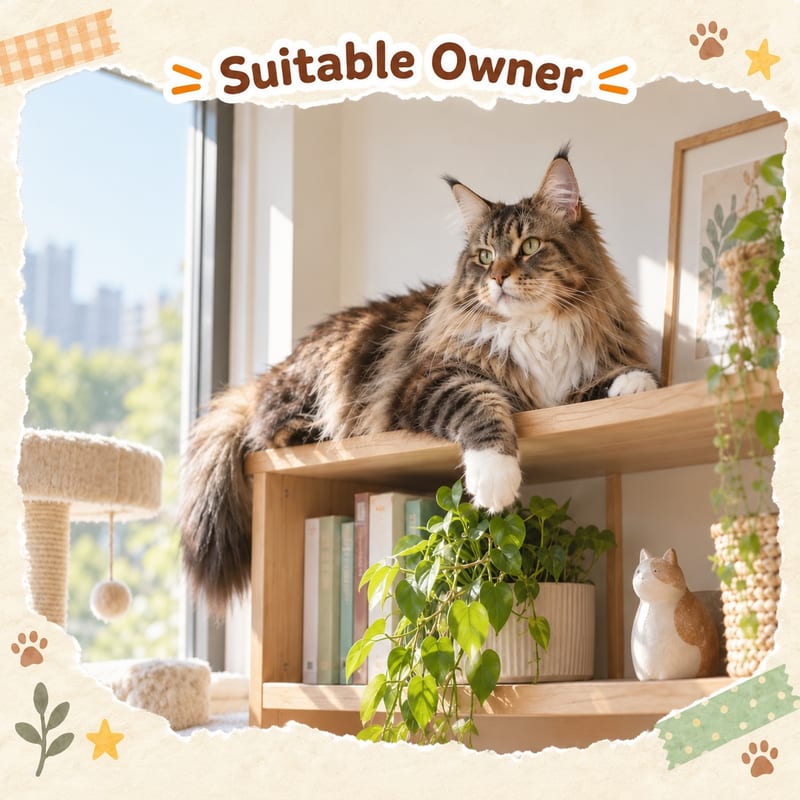
Who is a Maine Coon suitable for?
The real requirement for a Maine Coon in a Hong Kong flat is not 'floor area' but 'wall space and time'. The table below compares owner types.
| Owner type | Suitability | Reason |
|---|---|---|
| Family with someone home at regular times | Very suitable | People-oriented and responsive; interaction is rewarding |
| Home with wall space for a floor-standing cat tree | Suitable | Enough vertical space; small flats can work too |
| Out for more than 10 hours daily | Not recommended | Prone to separation anxiety unless two cats |
| Doesn't want daily hair cleanup | Not recommended | Semi-long coat + large size = double shedding |
| Tight budget, no medical reserve | Think twice | Genetic screening and large-cat surgery are costly |
Reverse self-test (three questions):
- Can your home permanently accommodate a 60–80 cm wide floor-standing cat tree?
- Can you spare 15 minutes daily for brushing and interactive play?
- Can you accept a 'big kid' until age 4 and set aside HK$300–600 monthly medical reserve?
If you answer 'no' to two of the three, the Maine Coon's disadvantage list will seem especially long; if you answer 'yes' to all three, its return rate is among the best of large cats.
Maine Coon vs other large breeds
If you want a large cat, the Maine Coon is not the only choice. The table below compares the breeds most often considered alongside the Maine Coon, to help you decide by space and budget.
| Breed | Male weight | Coat | Monthly basic costs | Beginner-friendly |
|---|---|---|---|---|
| Maine Coon | 6–10 kg | Semi-long double | HK$1,300–2,300 | Needs time + budget |
| Ragdoll | 5–8 kg | Semi-long silky | HK$1,200–2,000 | Yes (long-haired) |
| Norwegian Forest Cat | 5–8 kg | Long double | HK$1,200–2,000 | Yes |
| Siberian | 5–8 kg | Long triple | HK$1,200–2,000 | Yes |
| British Shorthair | 4–6 kg | Short | HK$700–1,300 | Yes |
Key choices:
- Want largest size + strong affection: Maine Coon, but accept the highest grooming and medical reserve.
- Want large but easier to manage: Ragdoll, with silkier coat and fewer tangles.
- Want low maintenance: go straight to British Shorthair, monthly costs nearly half.
In summary: there is no better or worse among large breeds, only which one your 'wall space, time and budget' can support.
Four most common Maine Coon misconceptions
Before deciding, clear up these four common misunderstandings.
| Misconception | Reality |
|---|---|
| Maine Coons are 'lazy indoor cats' needing no grooming | Semi-long coat + double undercoat; brush at least 2–3 times a week, daily in shedding season |
| Big means they eat little and don't get fat | Still growing until 4 years; measure feed and weigh monthly; excess weight strains joints |
| Can't keep a Maine Coon in a small Hong Kong flat | They need vertical space and an extra-large litter box; a 60–80 cm wide cat wall is enough |
| High price guarantees health | Price and parental screening records are different things; check pedigree registration and HCM reports yourself |
All four misconceptions can be solved with one document: ask the breeder for parental genetic screening and ultrasound reports. 'Cheap pretty photos' without documents still carry risk.
Maine Coon health check schedule: what to test and when
The Maine Coon's main concerns are heart (HCM), hips and weight. Regular checks are far cheaper than crisis care:
| Age | Recommended items | Approximate cost |
|---|---|---|
| 8–12 weeks | First vaccine + deworming + microchip | HK$800–1,500 |
| 4 months | Second and third vaccines | HK$600–1,000 |
| 6 months | Pre-neutering blood test + neutering | HK$3,000–5,500 |
| 1 year | Annual check-up + vaccine booster | HK$600–1,000 |
| 2–6 years | Annual check-up; from 3 years add cardiac auscultation | HK$700–1,400 |
| 7+ years | Annual cardiac ultrasound + blood + urine tests | HK$2,000–3,500 per visit |
Three daily observations (free but daily):
- Respiratory rate: over 30 breaths per minute at rest is an early warning sign of HCM.
- Hind leg gait: stiffness after jumping or reluctance to jump may indicate hip problems.
- Weight: weigh monthly; a drop of more than 5% in a month warrants a vet visit.
Budget reminders:
- Cardiac ultrasound costs about HK$1,800–2,500 per session; not every clinic offers it, may need referral to a specialist.
- Hip X-ray costs another HK$800–1,500; combine with annual check-up to save one anaesthesia.
The Maine Coon is one of the few breeds where 'testing buys peace of mind': one cardiac ultrasound at about HK$1,800–2,500 is more than ten times cheaper than a heart failure emergency.
Fair hearing: why do people still want Maine Coons?
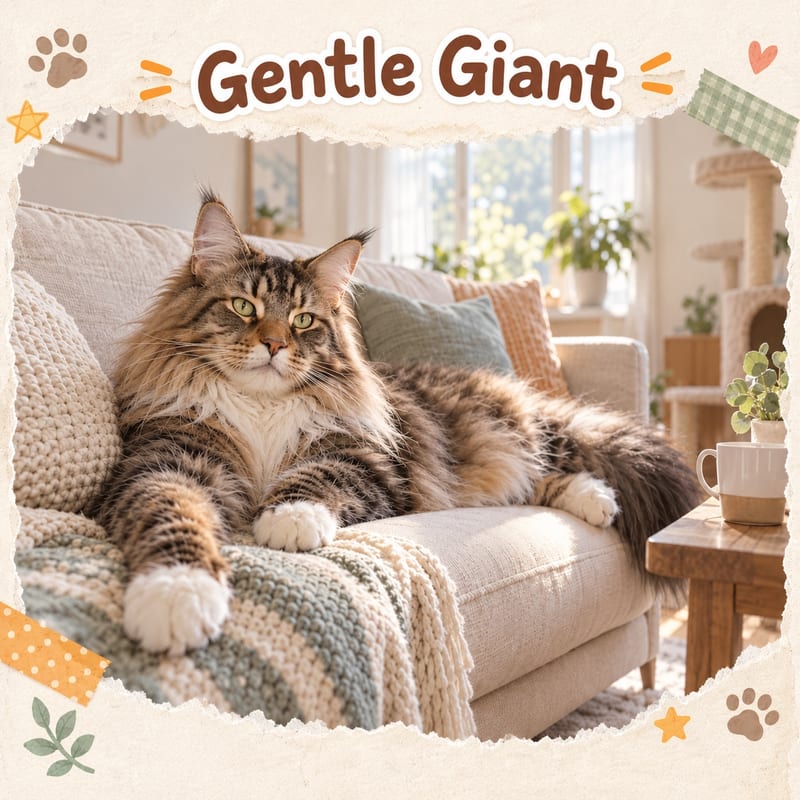
This article is not a deterrent. The Maine Coon is called the 'gentle giant', friendly and family-oriented; TICA's breed introduction describes them as 'big, gentle, good-natured goofs'. Precisely because they are so lovable, we have a responsibility to spell out the disadvantages before you decide:
The fairest principle of cat ownership: the right owner is one who knows the disadvantages and still accepts them.
The following 8 disadvantages each come with practical solutions and cost directions.
Disadvantage 1: Large size, genuinely large space requirement
Male Maine Coons typically weigh 6–10 kg, females 4–7 kg, and nose to tail tip can exceed one metre. That means:
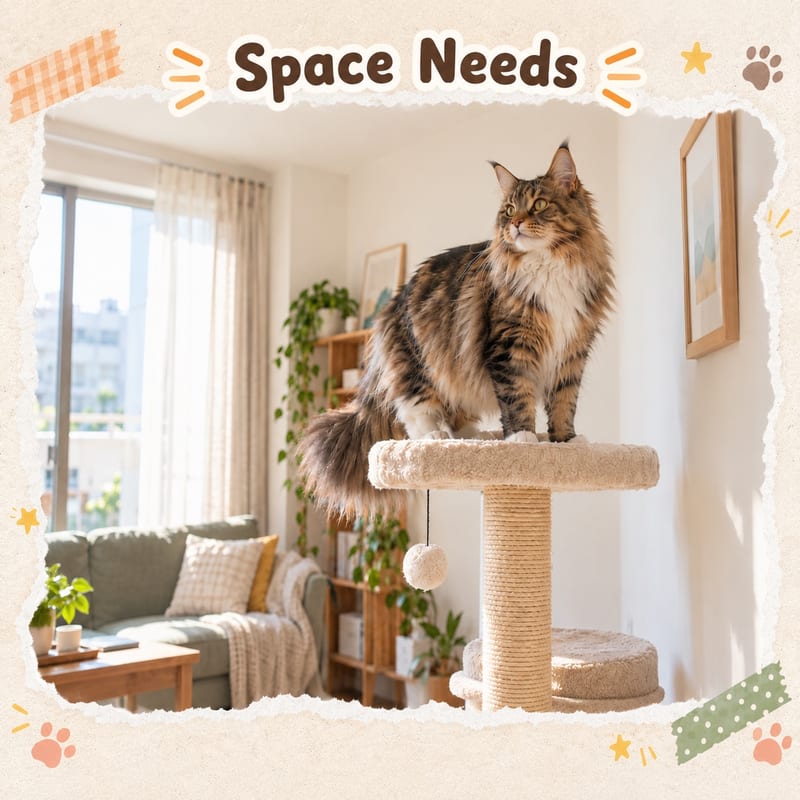
- Ordinary cat trees are too small and unstable for them; a large solid wood floor-standing cat tree is needed.
- Ordinary litter boxes are hard for them to turn around in; buy extra-large (recommended 1.5 times the cat's body length).
- Carriers, beds and food bowl stands all need 'large cat' specifications; less choice, higher price.
Solution: Although Hong Kong flats are small, Maine Coons do not rely on large floor area—they need vertical space. A wall-mounted floor-to-ceiling climbing system (about 60–80 cm wide) is enough. Measure your home before getting one and reserve a 'cat wall' spot.
Disadvantage 2: Long coat grooming is 'daily homework'
The Maine Coon's semi-long coat is less prone to matting than a Persian's, but if you don't brush, it will mat. Mats pull on the skin, causing pain and inflammation; severe cases need shaving. Ingested hair also increases vomiting and hairball problems.
Solution:
- Brush at least 2–3 times a week; daily during shedding season (usually spring and autumn).
- Use a slicker brush + comb combination; focus on behind ears, armpits, belly, tail base.
- Establish brushing habits from a young age with treat rewards.
- If matting is severe, let a professional groomer or vet handle it; do not cut with scissors yourself.
Disadvantage 3: Large appetite, costs add up quickly
A big cat eats half to twice as much. Add cat litter usage (more in, more out), larger cans and dental treats, and monthly costs are clearly higher than keeping a 4 kg cat.
Solution: Choose high-density nutritious quality food rather than 'cheap big bags'; use a measuring cup to control portions (overweight increases medical costs); budget regular check-ups and emergency medical reserve separately—don't skimp on medical care.
Disadvantage 4: Genetic health risks must be faced
Maine Coons need attention in three areas: hypertrophic cardiomyopathy (HCM), hip dysplasia, and spinal muscular atrophy (SMA). For HCM, a study reviewing 3,310 tested samples showed about 34% of tested Maine Coons worldwide carry the MYBPC3-related mutation; but to be clear—carrying the gene does not mean disease (incomplete penetrance), and a negative result does not guarantee zero risk.
Solution: This is a disadvantage you can 'buy insurance' for—get from a reputable breeder who screens parents genetically and by cardiac ultrasound; after getting the cat, include cardiac assessment in regular checks from age 7. For detailed testing arrangements, see the Maine Coon genetic health screening guide.
Disadvantage 5: People-oriented, so possible separation anxiety
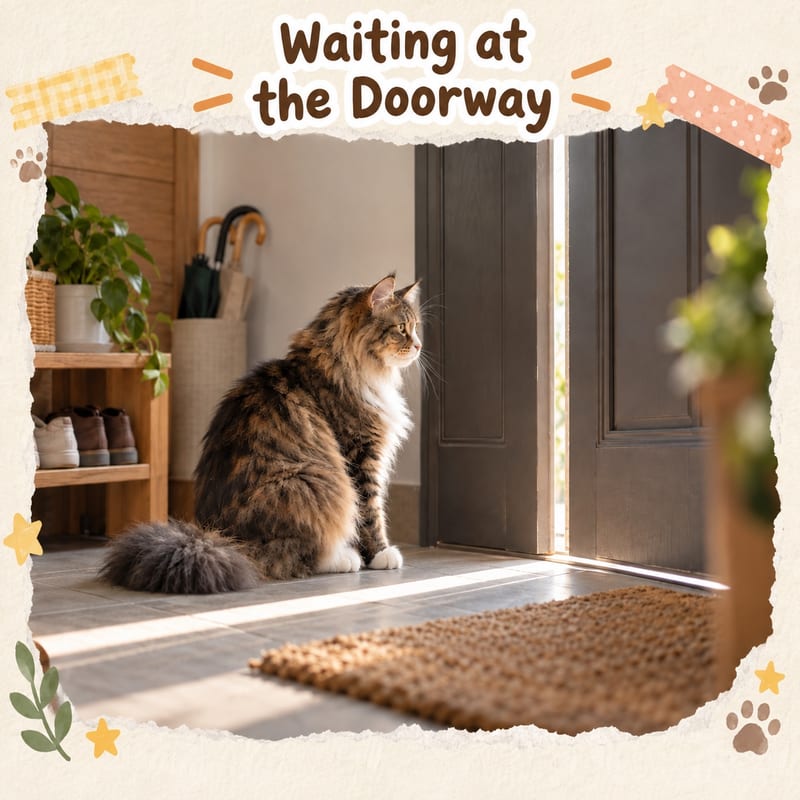
The other side of the 'gentle giant': many Maine Coons need more companionship than the supposedly independent cat. Long periods alone may lead to anxiety signals such as excessive vocalisation, decreased appetite, or inappropriate urination. They are also known to mature slowly—TICA notes they usually fully develop around 4 years, psychologically still a big kid, needing companionship for longer than you might think.
Solution: A fixed routine is the cheapest stress reliever; 15–20 minutes of high-intensity interactive play after getting home; leave food puzzles and window viewing spots before going out; if the whole family is out more than 10 hours daily, seriously consider two cats for company.
Disadvantage 6: Shedding is like a 'walking dandelion'
Long coat + large size = double shedding area. In shedding season, black and white clothes both get 'coloured', and hairball vomiting frequency rises.
Solution: Brushing (as above) + daily lint roller + air purifier; diet with quality protein and Omega fatty acids helps stabilise coat quality. To be honest: shedding can only be controlled, not eliminated; those who can't accept it will struggle long-term.
Disadvantage 7: Hard to find sources in Hong Kong, and expensive
The Maine Coon is a niche breed in Hong Kong; reputable breeders are limited and prices generally start from tens of thousands of HKD. For adoption, occasionally cat rescue organisations or breed-specific rescues come across Maine Coons or mixes, but it's rare. Fewer sources mean more risk: online cases of 'pretty photos, cheap purebreds' are actually sick cats or non-existent.
Solution: Request to visit the cat and its parents, check pedigree registration (TICA/CFA), obtain genetic screening documents; for adoption, regularly check breed searches on local cat adoption platforms. For detailed price and adoption channel analysis, see the Maine Coon price and adoption guide.
Disadvantage 8: Building regulations and tenancy restrictions
Before keeping a cat in Hong Kong, confirm three levels of rules:
- Public housing: The Housing Authority's current policy allows tenants to keep small household pets that do not cause nuisance, including neutered cats; keeping without approval breaches the tenancy and can trigger the estate management points system.
- Housing Society buildings: From April 2025, the Housing Society in principle allows tenants to keep small household pets (including neutered cats), except where the building's deed of mutual covenant or estate rules explicitly prohibit.
- Private buildings / rental flats: Entirely subject to the building's deed of mutual covenant and tenancy terms; many owners explicitly prohibit pets; violation can lead to being asked to remove the cat or even affect the tenancy.
Solution: Confirm tenancy and deed terms in writing before getting a cat; for rentals, ask clearly 'cats allowed' at the flat-hunting stage; public housing / Housing Society tenants ensure the cat is neutered in a timely manner and keep proof.
5 verification steps before getting a Maine Coon (follow to avoid pitfalls)
- Measure space: Reserve a wall spot for a 60–80 cm wide floor-standing cat tree, and confirm an extra-large litter box fits; if not, don't force it.
- Calculate: Use the cost table above plus food, litter, deworming and medical reserve; if the total doesn't fit your budget, better to wait.
- Check legislation: Confirm the three levels—public housing, Housing Society, and private/rental—preferably in writing about the deed and tenancy.
- Verify documents: Ask the breeder for parents' HCM genetic screening and cardiac ultrasound reports, plus TICA/CFA pedigree registration, and request to visit the cat and its parents.
- Book a vet: Find a vet familiar with large cats before getting the cat, arrange post-arrival check-up and vaccine plan, and annual cardiac ultrasound from age 7.
At a glance: 8 disadvantages × solutions × monthly extra cost direction
| Disadvantage | Solution | Monthly extra cost direction (HKD, safe estimate) |
|---|---|---|
| Large space requirement | One wall vertical climbing system | Equipment depreciation about $100–200 |
| Long coat grooming | Brushing tools 2–3 times a week | Supplies about $50–150 (one-off amortised) |
| Large appetite | Measured feeding + high-density food | About $200–500 more than average cat |
| Genetic disease risk | Genetic screening + regular cardiac ultrasound | Medical reserve $300–600 |
| Separation anxiety | Fixed routine + daily interaction | Basic $0, puzzle toys one-off |
| Excessive shedding | Brushing + lint roller + air purifier | Consumables about $50–150 |
| Hard to find sources | Check documents, avoid grey imports | One-off verification cost |
| Legal restrictions | Pre-check deed and tenancy | $0 (but essential) |
Note: The above are general estimate ranges; actual figures vary by individual, prices and service providers, for budget planning reference only.
Who is actually suitable for a Maine Coon?
Compare: if you meet most of the following, most of the disadvantages are manageable:
- Have fixed daily time to interact with the cat (not a home with nobody all day)
- Home can reserve a wall for the cat, or willing to accept a 'shared space' mode with cats on tables and shelves
- Monthly cat budget is flexible, with a separate pet medical reserve
- Accept brushing and hair cleanup as part of life
- Have confirmed that tenancy / deed / estate policy allows cats
Conversely, if you want an 'independent, low-maintenance, budget-limited' feline companion, a short-haired medium breed may suit you better—this is not bad news; it helps you and your future cat choose right.
Key takeaways
- ✅ 8 Maine Coon disadvantages: space, grooming, appetite, genetic risks, separation anxiety, shedding, sources, legislation—all have solutions
- ✅ Space issues solved by vertical space, no mansion needed; one wall is enough
- ✅ Long coat care is daily/every-other-day work: brush at least 2–3 times a week, daily in shedding season
- ✅ Genetic risks like HCM can be actively managed through screening documents + regular checks
- ✅ Monthly costs are generally several hundred to over a thousand dollars higher than a small cat, plus medical reserve
- ✅ Must verify before getting one: public housing policy (neutered cats allowed), Housing Society arrangements, private building deed and tenancy
- ✅ Honestly accepting the disadvantages and still wanting one is the safest decision
Related reading
- Maine Coon lifespan and health explained: the link between health risks and lifespan
- Complete guide to keeping a Maine Coon in Hong Kong: air-conditioning, humidity, home setup practicalities
- Maine Coon personality and intelligence: understanding the 'gentle giant' behaviour
- For large cat climbing frames, extra-large litter boxes and long-haired grooming supplies, browse PetChill pet supplies
Further reading
- Comparison of 12 cat breeds: personality and price →
- Common diseases, preventive care, vet information →
- Comparison of 12 cat breeds: personality and price →
- Common diseases, preventive care, vet information →
- Cat trust signals →
- Complete guide to cat microchipping →
- Cat ringworm →
- Cat vomit colour chart →
 Fuji One full guide →





