
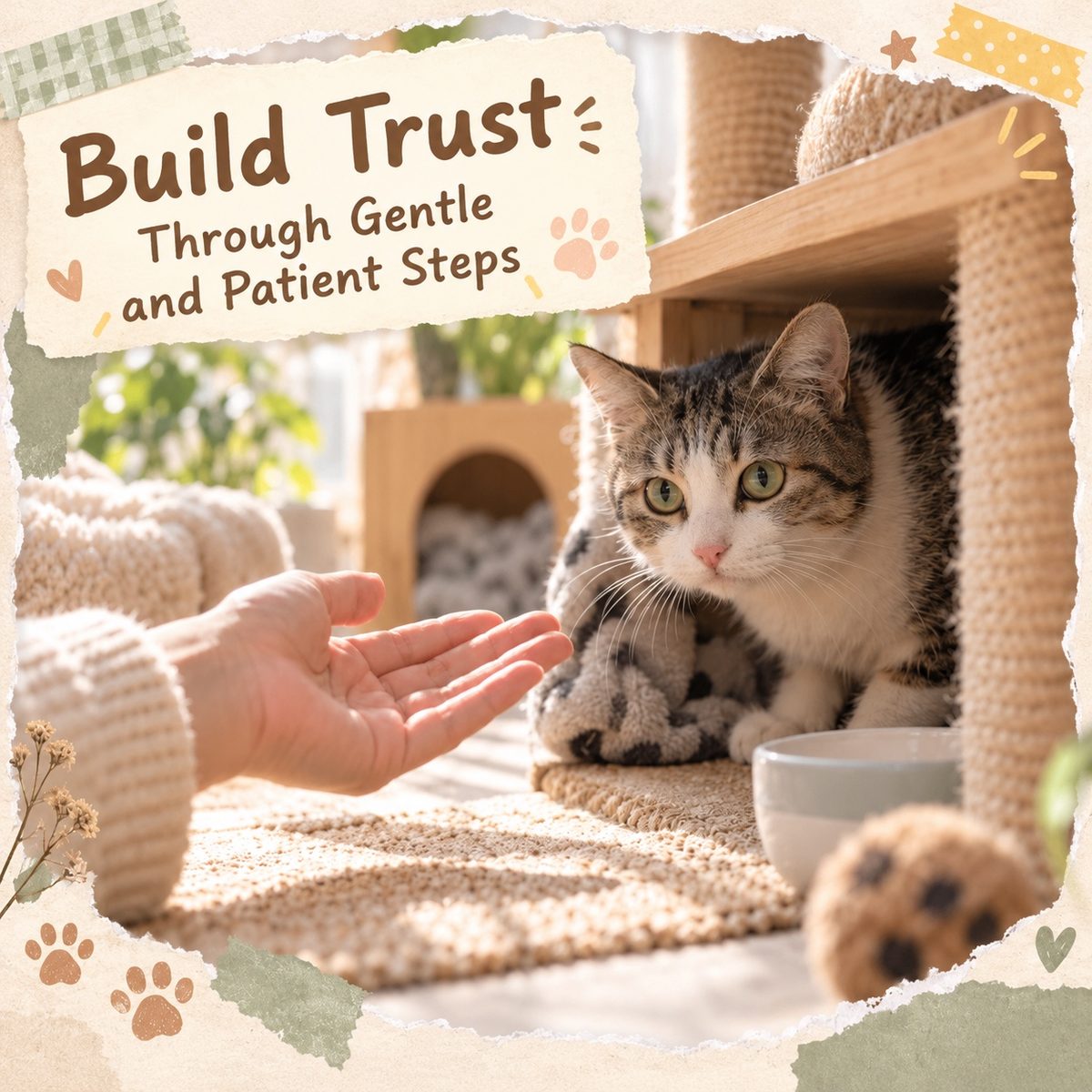
Quick answer: A rescue cat not being affectionate doesn't mean they don't love you. Every cat has a different personality and history — some adjust in days, others need months. The key is: respect the cat's pace, use interactive play to build positive associations, and provide a safe personal space. A cat's trust isn't shown only by "letting you hold them" — slow blinking, head-bumping you, and sleeping near you are all signals that say "I trust you."
"Are rescue cats really not affectionate?" "Will an adopted cat be hard to get along with?" These are the questions many first-time adopters ask most. In fact, rescue cats are just like pet-shop cats — some are affectionate, some are slow to warm up. What matters isn't their background but the "personality match" between you and the cat. Even if your cat won't sit on your lap or let you hold them, it doesn't mean they don't love you — every cat has their own way of relating.
In this guide we debunk common myths about rescue cats, cover adoption requirements, process and costs, then show you how to assess personality match, read your cat's trust signals, and use 3 practical methods to build a deep bond with cats of different personalities.
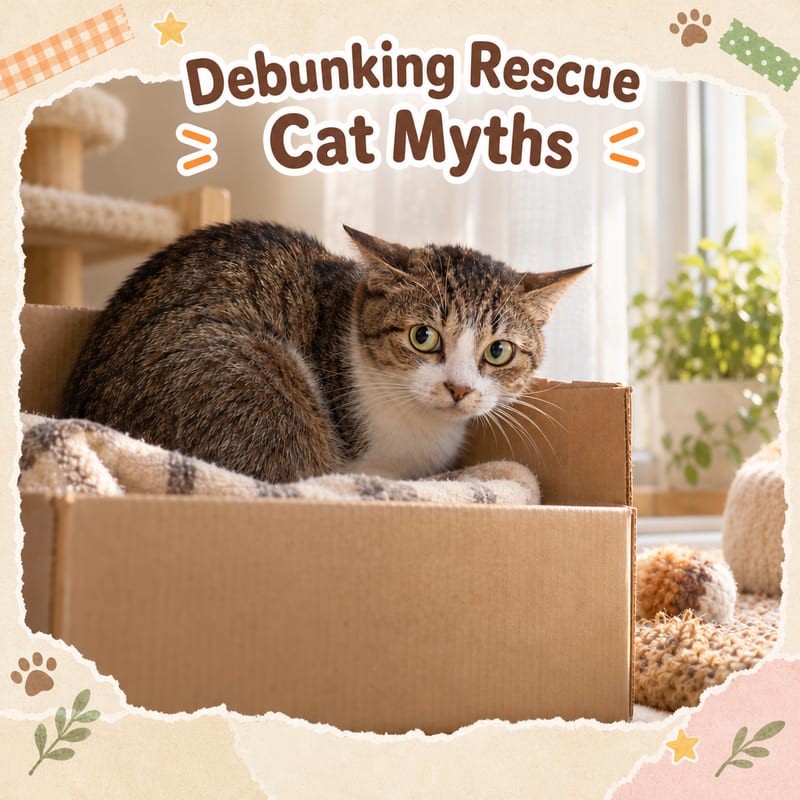
Debunking Rescue-Cat Personality Myths
Many people worry: "Compared with pet-shop cats, are rescue cats worse in personality?" Most of this worry is unnecessary. Among rescue cats, many are gentle and used to being around people — some were adopted before and returned to the shelter due to life changes, others were street cats raised with care by volunteers. Animal shelters hold regular adoption events so adopters can meet cats several times and observe their true personality through interaction. Compared with a brief encounter at a pet shop, adoption events actually give a more accurate picture of whether a cat matches you.
What really matters isn't "are rescue cats hard to care for" but "do you and this cat match." If a cat strongly resists being held at an adoption event, forcing an adoption may not lead to a good relationship. Seriously confirming that your personalities match is the key to a successful adoption.
| Common myth | The reality |
|---|---|
| Rescue cats are always unfriendly | Many rescue cats are used to people and gentle; affection depends on individual experience and personality, not background |
| Street cats will be wild after adoption | Most street cats can build trust with people after being cared for by volunteers; they just need more time to adjust |
| Pet-shop cats are always better behaved | Pet shops are stressful environments, so a cat's behaviour may not reflect their true personality; meeting them several times at adoption events gives a clearer picture |
| An adopted cat will hold a grudge forever | Cats get nervous when their environment changes, but consistent positive interaction can rebuild trust — there's no such thing as "holding a grudge" |
How to assess personality match
- Observe reactions: When you pick up the cat, are they relaxed or struggling? Mild nervousness is normal, but persistent hissing or aggression means they need more time to adjust.
- Meet several times: Don't decide based on one meeting. Visit the adoption event or shelter a few times so the cat gets used to your presence.
- Ask the volunteers: Shelter volunteers know each cat best — ask about daily habits, health and preferences.
- Watch for the cat's initiative: If a cat approaches you, head-bumps you or slow-blinks at you, they usually feel safer around people.
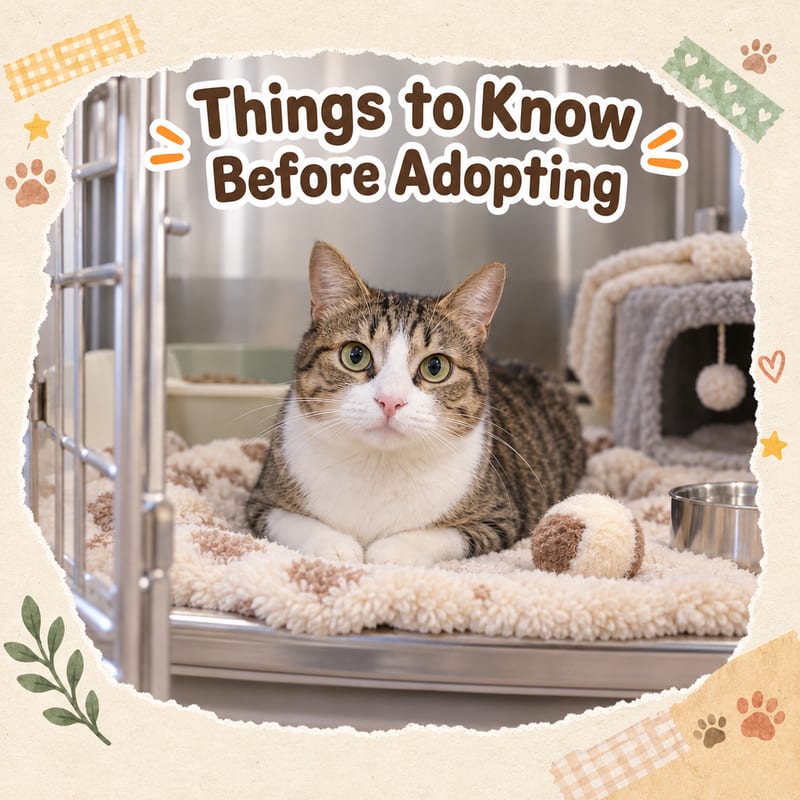
Before You Adopt: Requirements, Process, Costs and Home Visits
Before deciding to adopt, understanding the adoption process helps you prepare and avoids giving up halfway because you didn't know the requirements. Below are the general arrangements of mainstream adoption channels in Hong Kong (actual requirements depend on the individual organisation):
Common adoption requirements
- At least 18 years old, with a stable home and income
- Your home must allow pets (if renting, you need the landlord's consent)
- Commit to neutering, regular vaccinations and deworming
- Willing to accept a home visit or provide regular updates on the cat
- Commit never to abandon the cat — adoption is a lifelong decision
General adoption process
-
Attend an adoption event or book a visit: Meet the cats in person and learn about their personalities
-
Fill in an adoption application form: Provide details of your living environment and pet experience
-
Home visit / interview: Some organisations arrange a volunteer home visit to confirm the environment is suitable for a cat
-
Sign the adoption agreement: Confirm both parties' responsibilities
-
Bring the cat home: Some organisations follow up on how the cat is adjusting
Adoption costs at a glance (reference range)
| Item | Typical range | Notes |
|---|---|---|
| Adoption fee | Free to a few hundred dollars | Some organisations charge a basic admin fee or share of medical costs |
| Neutering surgery | Depends on the organisation | Many organisations neuter the cat before adoption |
| First vaccination | Depends on the organisation | Some organisations give the cat their first jab |
| Basic supplies | From around a few hundred dollars | Litter tray, cat food, scratching board, carrier, etc. |
Reminder: On the search for "adopting a cat without a home visit" — a home visit isn't meant to make things difficult; it's the organisation safeguarding the cat's welfare. Most home visits are friendly chats, and as long as your home is safe and clean you'll pass.
Domestic cat adoption is worth considering
Domestic cats (Hong Kong cats) are a common adoption choice in Hong Kong: generally healthy, varied in personality and highly adaptable. If you want a stable family cat, look out for domestic cats at adoption events — volunteers can usually describe each cat's personality clearly.
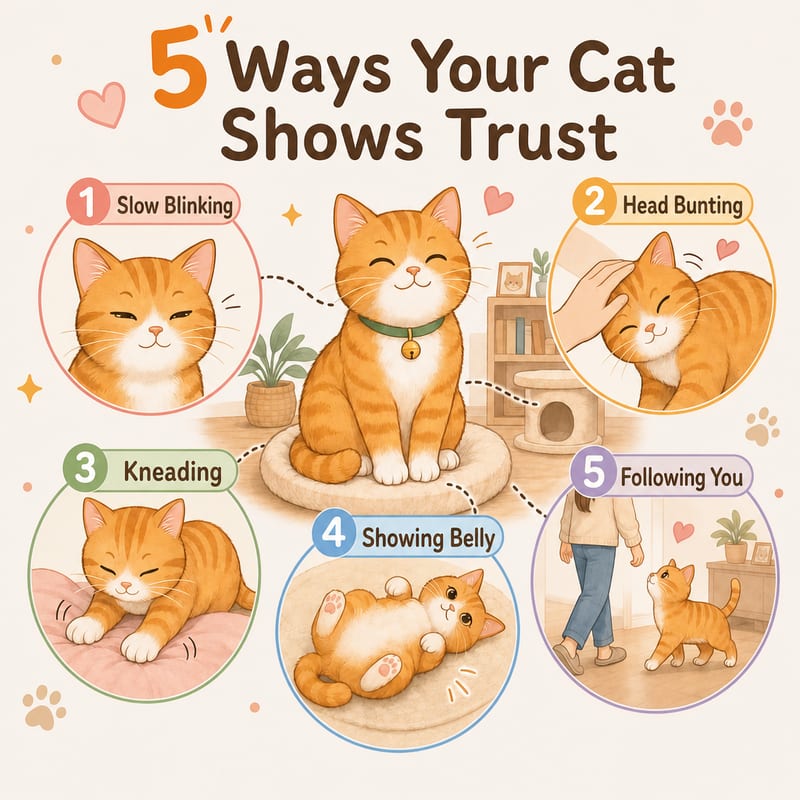
8 Signals Your Cat Trusts You
"They won't let me hold them — does that mean they don't like me?" Many new cat owners think this. In fact, cats show trust in many ways, and "letting you hold them" is just one. All of the following behaviours are your cat saying "I trust you":
-
Slow blinking: When a cat looks at you and blinks slowly, it's the cat world's "kiss." You can slow-blink back.
-
Head-bumping you: When a cat rubs their head or cheek against your hands or legs, they're marking you with their scent — meaning "you're mine."
-
Kneading: When a cat kneads on you or a blanket, it's the comforting nursing action from kittenhood — a sign they're very relaxed.
-
Showing their belly: The belly is a cat's most vulnerable spot; lying down and showing their belly in front of you is a sign of high trust (note: showing the belly doesn't necessarily mean they want a belly rub!).
-
Following you: When a cat follows you from the living room to the kitchen, they're not just waiting for food — they want to be with you.
-
Sleeping near you: When a cat chooses to rest within your line of sight, they feel safe by your side.
-
Approaching with tail up: A tail held straight up with a slight curve at the tip is a cat's happy greeting.
-
Licking you: When a cat licks your hand or hair, they're treating you as a companion and "grooming" you.
3 Ways to Build a Deep Bond
1. Respect the cat's pace
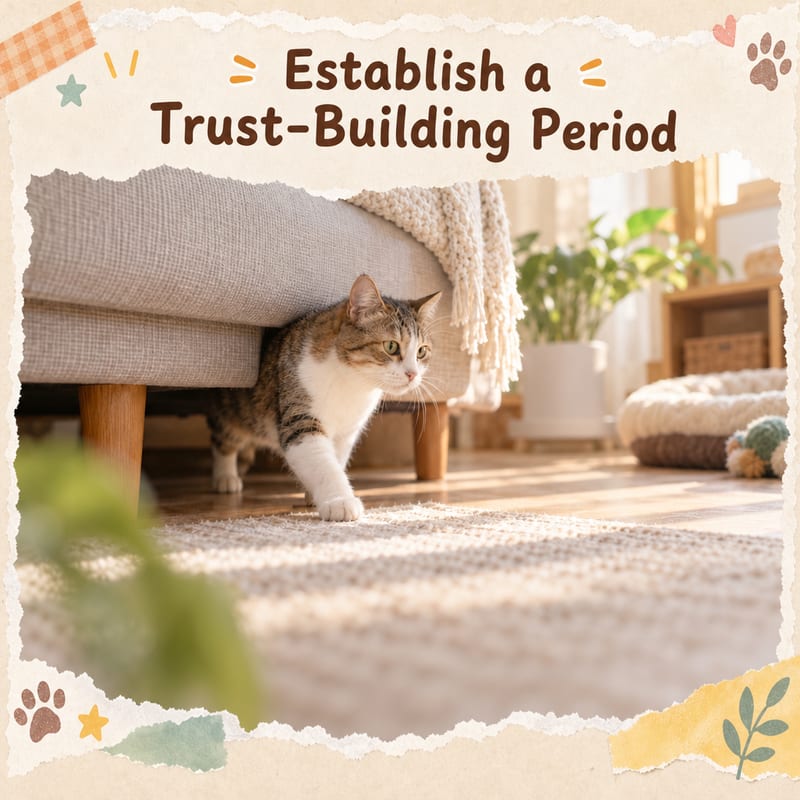
Don't force your cat to do anything they're uncomfortable with. If they don't want to be held, let them be. Feed and scoop the litter at fixed times each day so the cat knows you're a reliable presence. Trust takes time — you can't rush it. Practical tips:
- When the cat is hiding under the bed or in their bed, don't pull them out by force
- Before petting, offer your hand to sniff and let them come to you
- Avoid staring into your cat's eyes for long periods (cats see this as a threat); use slow blinking instead
2. Use interactive play instead of forced contact
Rather than forcing cuddles, play with a wand toy. Play is the most natural way for cats to interact, and during play they gradually associate you with "fun." Practical tips:
- Play for 10–15 minutes at a fixed time each day, moving the wand like prey
- Give a small treat after play to complete the "hunt → eat" satisfaction cycle
- Don't use your hands to tease the cat during play, to avoid teaching them to bite hands
3. Create a safe shared space
Set up a safe corner just for your cat at home so they have somewhere to hide and rest. When a cat feels safe, they'll naturally be more willing to approach you. Practical tips:
- Prepare a covered cat bed or cardboard box in a quiet corner
- Place the litter tray, food bowl and water bowl separately and keep them clean
- Sit quietly, read or use your phone near the safe corner and let the cat come to you, rather than approaching them
New Cat Adjustment Timeline
Every cat adjusts at a different speed, but you can generally refer to these stages — being prepared will keep you from worrying too much:
| Stage | Common behaviour | What you can do |
|---|---|---|
| First 1–3 days | Hiding, not eating or eating very little, nervous and alert | Prepare a quiet separate room, don't rush contact, put down food and water at set times |
| First two weeks | Starting to explore, willing to eat, active at night | Fixed feeding times, gentle interaction with a wand toy, establish a daily rhythm |
| Around 1 month | Approaching you, starting to have a favourite sleeping spot | Gradually increase interaction time, try using treats to build positive associations |
| After 2–3 months | True personality shows, may start being affectionate or demanding attention | Keep a stable routine and reinforce the bond |
If your cat hasn't eaten or drunk anything for more than a week, or has persistent vomiting or diarrhoea, contact a veterinarian immediately — don't wait.
Common Mistakes: 5 Things That Destroy Trust
Often a cat won't warm up to their owner not because they're "hard to care for" but because we unknowingly do things that scare them. Avoid these 5 things in particular:
-
Forcing cuddles / forced kisses: Makes the cat feel out of control and want to escape even more
-
Shouting or punishing the cat: Cats don't understand cause and effect of punishment; they just associate you with fear
-
Rushing introductions to the whole household / other pets: A new cat needs time to adjust; too much stimulation too soon can overwhelm them
-
Sudden environment changes: Moving house, major renovations, frequently moving furniture — all make a cat feel unsafe
-
Luring with food then grabbing: Creates a negative association that "approaching you = being caught"
What to Do with an Extremely Fearful Cat
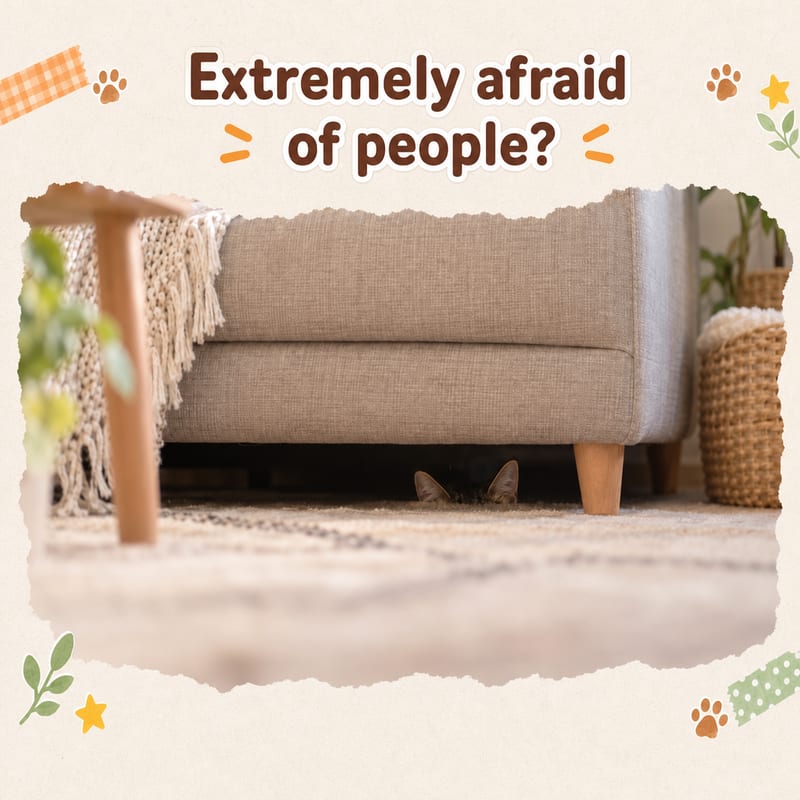
Some rescue cats, due to past negative experiences, are extremely fearful of people or even aggressive. If you encounter the following, seek professional help:
- The cat keeps hissing or threatening with no improvement for more than two weeks
- Aggressive behaviour that injures you or your family
- The cat completely stops eating or drinking for more than 48 hours due to fear
You can contact the adoption organisation's volunteers for advice, or find a veterinarian with cat behaviour experience / a professional cat behaviour consultant. Extremely fearful cats sometimes need a longer desensitisation process, and professional guidance can save you and your cat a lot of detours.
Related Product Recommendations
New pet owners need basic equipment and complete food ready at once. Here are related products available at PetChill:
- Fuji One Natural Minimal Daily 3.0 Tofu Cat Litter Lavender 6L - Official Import (Fuji One) — tofu litter, flushable, low dust
- Fujihime no Awayuki 3.0 Natural Purifying Soy Milk Tofu Cat Litter Original 18L - Official Import (random old/new packaging) (Fujihime no Awayuki) — tofu litter, flushable, low dust
See more: Fuji One Brand Guide
Product prices and latest offers are subject to the product page; this article is for reference only.
PetChill's Reminder
Adopt, don't shop — it's the best way to give a stray cat a warm home. Every cat deserves love, whether or not they're "affectionate." Remember, the bond between you and your cat isn't measured by "will they let me hold them" but built slowly through everyday companionship and understanding.
To learn more about cat behaviour and adoption, keep following PetChill's latest articles!
Further Reading
- Cat Environmental Stress Management Guide | Essential Reading for Moving in Small Hong Kong Flats
- The Complete Cat Behaviour Decoder 2026 | The Real Meaning Behind 30 Actions
- Full Guide to Getting a Second Cat | 5-Step New/Old Cat Separation Tutorial for Hong Kong
- All Articles Index
- PetChill Pet Supplies
 Fuji One full guide →


 Fuji Cat full guide →


 K9 Natural full guide →



