
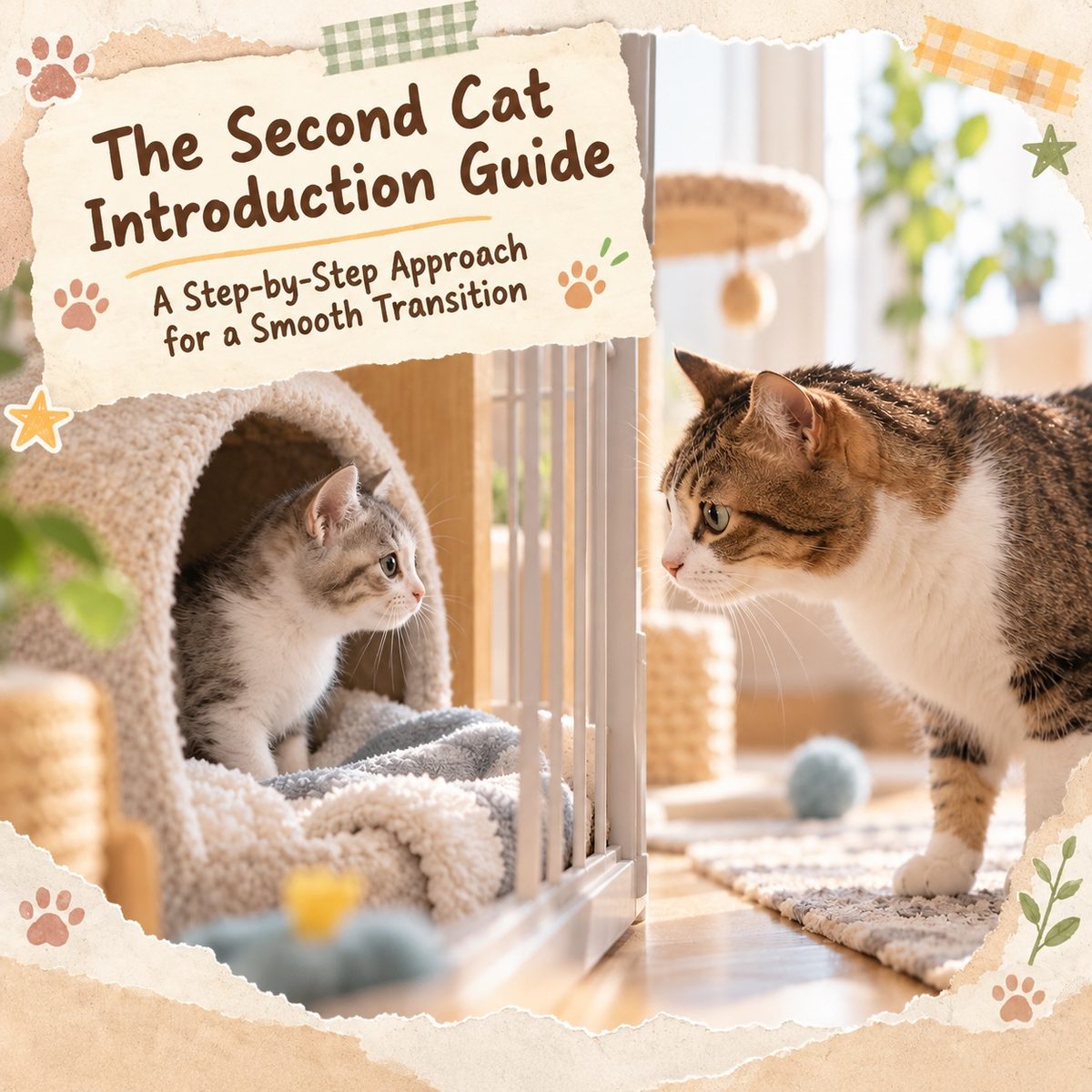
Getting a second cat is the wish of many cat owners — one more furry kid at home means double the happiness. But if you think you can just carry the new cat home and let it meet your resident cat "face to face", you could be in for days of hissing, fighting, even urine marking! Why do cats need to meet slowly? How can you help new and old cats live peacefully together? This complete guide walks you through everything from the isolation period and scent swapping to the actual meeting, step by step, so your two cats can go from strangers to roommates.
Quick answer: Never let the new cat meet your resident cat immediately after arriving home. The correct approach is to first settle the new cat in a separate room for about two weeks, during which you swap scents with towels, then allow visual contact through a door gap or barrier, and only then arrange short face-to-face meetings. The whole process usually takes 2 to 8 weeks, depending on the personalities of both cats. The American Society for the Prevention of Cruelty to Animals (ASPCA) points out that a gradual introduction is the key to reducing cat conflict and building a long-term harmonious relationship.
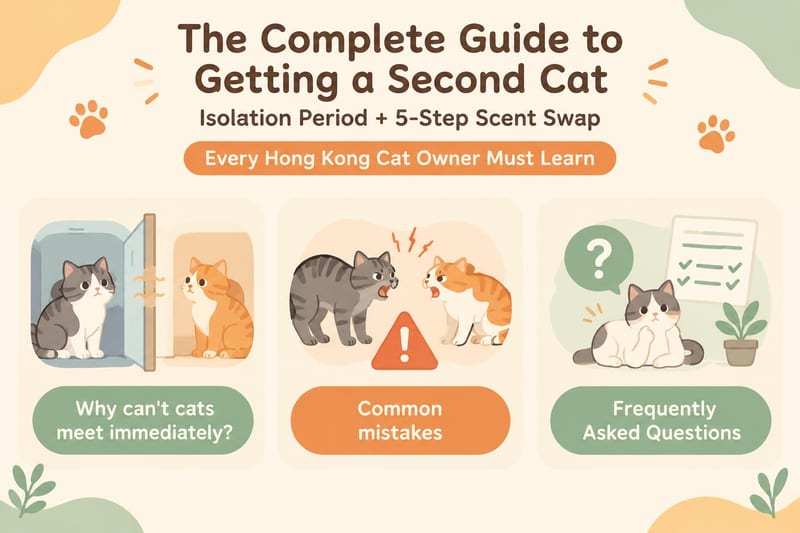
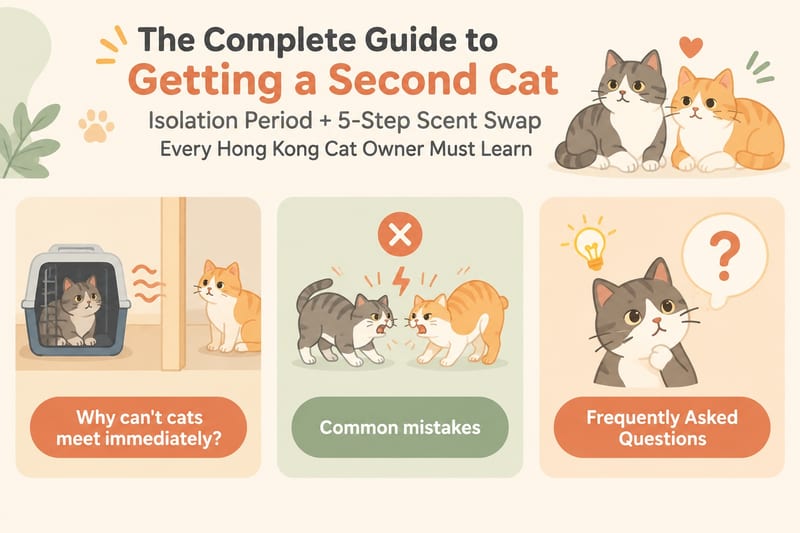
Why can't cats meet immediately?
Cats are highly territorial animals. To a resident cat that has lived there a long time, the whole home is its territory, and a strange cat suddenly appearing is an "intruder at the door", so it will naturally be on guard, hiss, even attack. And the new cat, in a new environment, is already full of stress; being forced to face a strange bigger cat will only make it more frightened.
According to pet behaviour research, cats build social relationships mainly through scent recognition, not sight. They need time to confirm through scent that the other is "no threat" before they slowly lower their guard. So the core principle of introducing a new cat comes down to one sentence: swap scents first, then swap glances, and only meet at the end.

Preparation checklist before getting a second cat
Before bringing the new cat home, prepare the following items, each a separate set, to avoid resource competition:
| Item | Suggested quantity | Purpose |
|---|---|---|
| Litter box | 1 per cat + 1 spare | Avoid toilet competition and urine marking |
| Water stations | At least 2 around the home | Separate drinking spots to reduce conflict |
| Food bowls | One separate set per cat | Feed separately to avoid food guarding |
| Separate room or large barrier | For the new cat only | For the first two weeks of isolation |
| Cat pheromone product | 1 set | Soothe tension in both cats |
| Towels 2-3 | For scent swapping | Wipe and swap scents with each other |
Tip: The litter box "N+1" rule (number of cats plus one) is the gold standard for avoiding toilet conflict in multi-cat households — be sure to follow it.
The 5 steps to introducing new and old cats
Step 1: Isolate in a separate space (weeks 1-2)
After the new cat arrives home, settle it directly in a separate room the resident cat doesn't often enter, fully equipped with a litter box, water, food, a cat bed and toys. During this time the two cats only "smell and hear each other" but never meet.
During isolation, play with your resident cat and give treats as usual, so it understands "the new cat is here and my life has lost nothing", avoiding jealousy. At the same time, spend time in the room with the new cat every day to help it adjust to the new environment.
Step 2: Scent swapping (weeks 1-2, in parallel)
Gently wipe a towel on the new cat's cheeks and body, then let the resident cat sniff it and reward with a treat afterwards; do the same in reverse, using another towel on the resident cat and letting the new cat sniff it. When neither side hisses or puffs up at the other's scent, you can move to the next step.
Advanced method: swap the two cats' sleeping mats, or take turns letting the new cat out to explore the living room while the resident cat inspects the room, so both get used to the scent the other leaves behind.
Step 3: Visual contact (weeks 2-3)
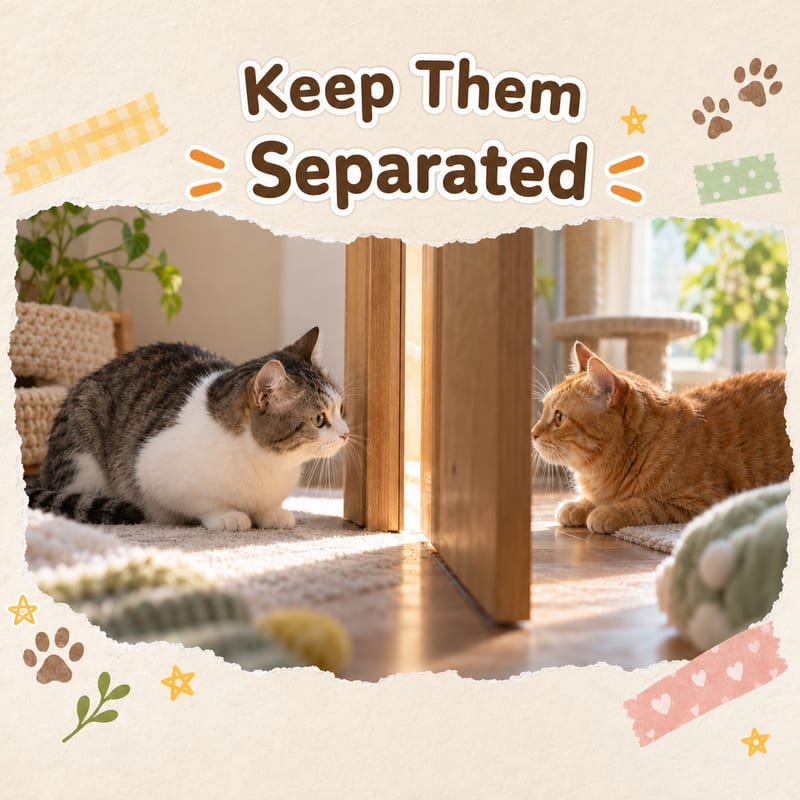
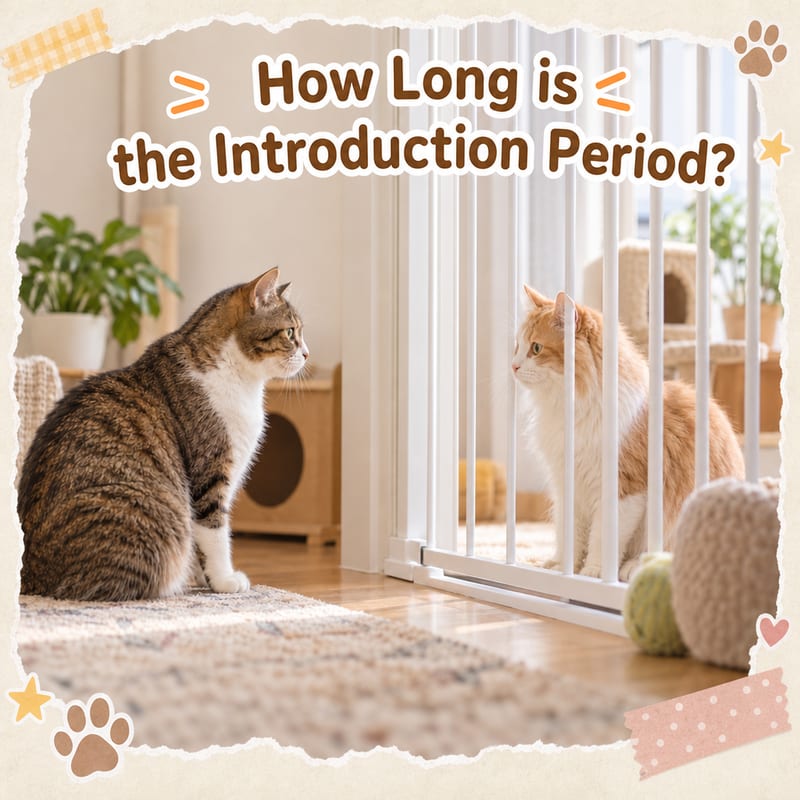
Once scent is passed, open the door a crack, or use a baby gate/glass door to separate them, so the two cats can see each other but not touch. This stage is the best time to feed or give treats on both sides of the door — building the positive association "seeing the other = good food".
If either side hisses or growls, immediately increase the distance; don't force it.
Step 4: Short meetings (from weeks 3-4)
When the two cats can look calmly at each other through the barrier, even sleep on either side of the door, you can arrange a proper meeting. The first meeting should be 5-10 minutes, using toys or treats to distract them, with someone watching the whole time. If it goes well, gradually extend the time; if there's chasing, ears flattened, or puffing up, separate immediately and go back a step.
Step 5: Long-term coexistence observation (weeks 4-8)
Once the two cats can share a room without interfering with each other, you can let the new cat move freely. But keep watching for resource competition: toilet grabbing, food grabbing, blocking paths, etc. The most common problem in multi-cat households isn't fighting, but one cat being suppressed long-term and hiding away — this kind of "cold violence" also needs to be addressed.
Common mistakes compared: doing it right vs doing it wrong
| ✅ Right approach | ❌ Wrong approach |
|---|---|
| Isolate the new cat in a separate room for two weeks | Let the two cats contact freely on day one |
| Swap scents with towels and adapt gradually | Hold the two cats face to face to "meet" |
| Use treats during meetings to build positive associations | Shout at or punish a cat for hissing |
| Separate litter box and food bowl per cat | Two cats share one set of resources |
| Separate immediately at conflict and go back a step | Force the two cats together "it'll work out naturally" |
How long does the introduction period take?
Every pair of cats progresses differently; here's a general reference:
| Cat combination | Estimated time |
|---|---|
| Kitten + gentle adult cat | About 1-2 weeks |
| Adult + adult (compatible personalities) | About 2-4 weeks |
| Adult + adult (more sensitive personalities) | About 4-8 weeks |
| Cats with a stray background, very wary | 8 weeks or more |
Remember: slower is better than faster. Rushing the steps is the number one cause of a broken relationship between new and old cats. If reactions are still intense after more than a month, consult a veterinarian or cat behaviour consultant, and you can also use cat pheromone products to help soothe emotions.

Hong Kong small-flat practicalities: how to isolate in a 300 sq ft unit?
Hong Kong property is expensive, and many families live in open-plan or one-bedroom units without a separate room to isolate the new cat. Here are practical approaches for small Hong Kong flats:
1. Use a tall cat cage/large dog crate as a "temporary isolation room" Buy a tall metal cage 90 cm or higher, place it in a corner of the living room, put a litter box, water bowl and soft bedding inside, then cover three sides with cloth, leaving the wall-facing side for ventilation. The resident cat can still move freely in the living room but cannot directly contact the new cat, achieving isolation.
2. Turn the bathroom into a new-cat suite If the flat has only one bathroom, you can settle the new cat in the bathroom for two weeks; when people use the bathroom, turn on the exhaust fan and be quick. Remember to place the litter box away from the toilet to avoid the water sound scaring the cat.
3. Hong Kong-style variation on scent swapping Do the towel method as usual, but Hong Kong is humid and towels easily get a musty smell. It's better to use disposable kitchen paper towels instead, changing them daily and throwing them away after use to reduce bacteria. After wiping the cat's cheeks, place the paper towel next to the other cat's food bowl and feed freeze-dried treats while it sniffs — the effect is just as good.
4. Use a "glass sliding door" for visual contact If your flat has a glass sliding door (for example between the bedroom and living room), you can use it directly. The two cats see each other through the glass but can't pounce. At the first meeting, open a can of wet food on both sides at the same time to build a positive association.
5. Turn a shared corridor into a buffer zone If the two cats can already meet briefly but the flat is small, turn the corridor into a buffer zone: first let the new cat out into the corridor for 5 minutes while the resident cat stays in the room; then swap roles, letting both take turns exploring the other's scent and gradually increasing the safe distance.
6. Watch out for noise from upstairs and downstairs Renovation noise from upstairs and the rubbish chute opening and closing in Hong Kong both increase cat stress. During isolation, turn on air-conditioning or a fan for white noise to mask sudden sounds and reduce emotional outbursts.
Finally, Hong Kong has plenty of veterinary clinics; if the two cats are still hissing continuously and losing appetite after more than a month, take them to a nearby clinic for a basic check-up to rule out health problems, then consider a referral to a behaviour specialist.
PetChill's Reminder
Getting a second cat is an endurance race — with full preparation and a step-by-step approach, the vast majority of cats can go from strangers to good friends. From litter boxes and barriers to pheromone products, PetChill has everything ready for you to help both of your bosses transition smoothly! To learn more about multi-cat households, keep following PetChill's latest articles.
Further reading
- Cat Environmental Stress Management Guide | Must-read for Relocating in Small Hong Kong Flats
- How to Choose a Litter Box? 2026 Hong Kong Litter Box Guide | Size, Placement, Cleaning
- The Complete Cat Behaviour Decoder 2026 | The Real Meaning Behind 30 Actions
- All article index
- PetChill pet supplies
📌 Key takeaways
-
✅ Isolate the new cat for two weeks after arrival to avoid immediate conflict
-
✅ Swap scents with towels to build familiarity
-
✅ Use treats during meetings to build positive associations
-
❌ Free contact on day one easily triggers fighting
-
❌ Two cats sharing one set of resources intensifies competition
-
✅ The new cat must be isolated separately for about two weeks after arrival — scent first, meeting later
-
✅ Swap scents with towels and use treats to build positive associations
-
✅ Follow the N+1 rule for litter boxes; separate food bowls and water stations
-
✅ Start meetings at 5-10 minutes; go back a step immediately at any conflict
-
❌ Never let the two cats contact directly on day one, and never punish a hissing cat
-
❌ Don't force coexistence; every pair progresses differently — slower is better than faster
 Fuji One full guide →

