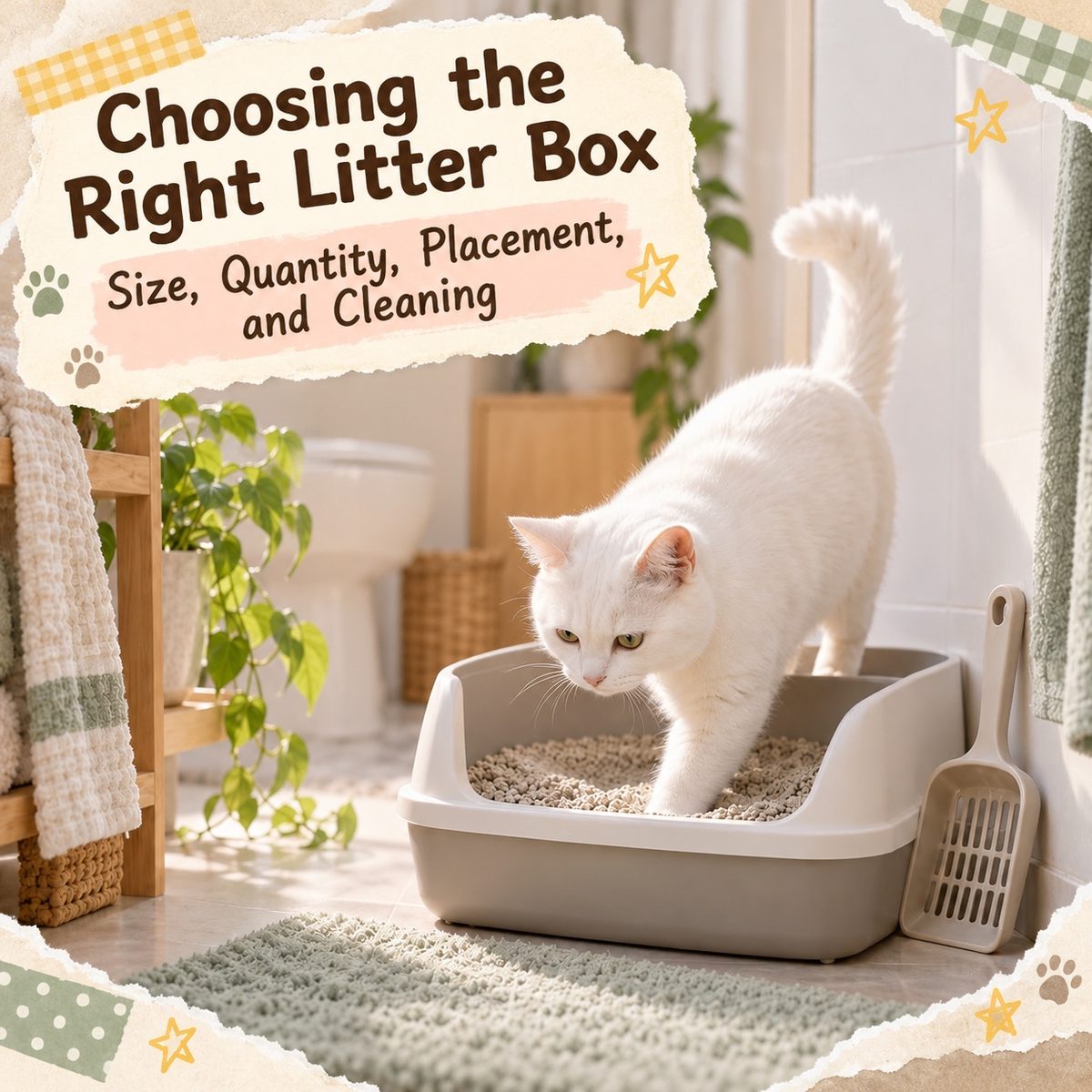
Quick answer: When choosing a litter box, remember the four key principles: "1.5x body length, number of cats plus one, quiet and ventilated spot, scoop daily." Beginners should start with an open box to observe their cat's reaction, then decide whether to upgrade to a covered or automatic model, naturally reducing odour and cleaning burden.
Choosing the right litter box can greatly reduce odour and cleaning burden: size at 1.5x the cat's body length, quantity following "number of cats plus one," placed in a quiet, ventilated spot, scooped daily. Beginners should start with an open box, observe the cat's reaction, then consider upgrading to a covered or automatic model. This is part of the complete cat litter guide series.
Quick answer: The litter box length should be ≥ 1.5x the cat's body length, quantity follows "number of cats + 1," and it should be placed in a quiet, ventilated spot. Beginners are safest starting with an open box; in small Hong Kong flats, choose a semi-covered box (about $58–$68), a covered box if odour is a concern (from $270), or an automatic model if you want to skip scooping (from $577).
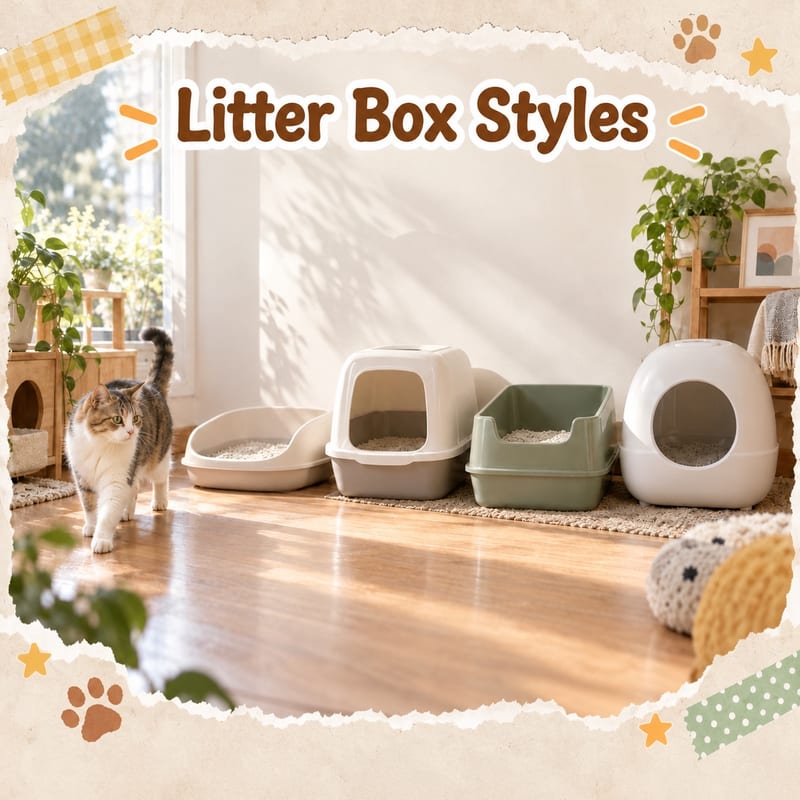
What are the differences between the five types of litter boxes?
| Type | Checked price (2026-10-01) | Pros | Cons | Suitable for |
|---|---|---|---|---|
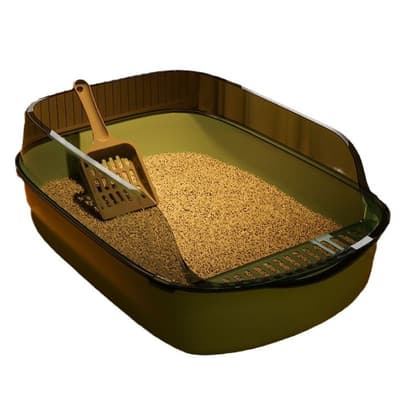
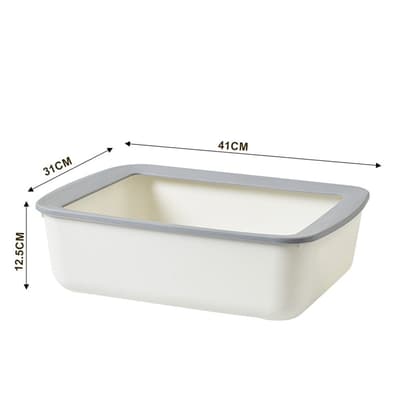
| Semi-covered / open | $58 (extra large) / $68 (medium) | Good ventilation, high acceptance, easy to clean | Average at preventing litter scatter | Beginners, sensitive cats, small flats |
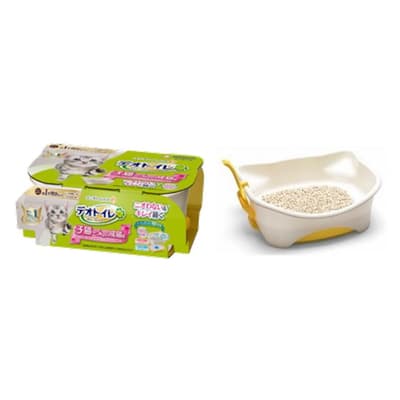
| Double-layer box (for pine litter) | $229 (Unicharm mini double-layer set) | Litter on top, pee pad below, powder falls through automatically | Only suitable for clumping wood litter | Households using pine litter |
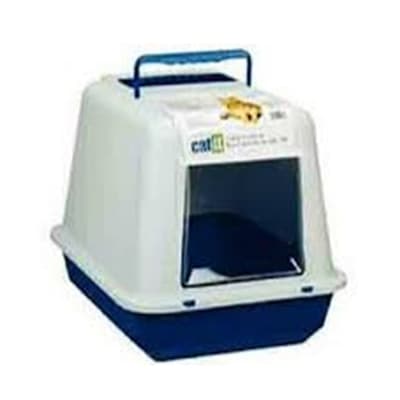
| Covered | $270 (Catit large with lid) / $431 (Petio necoco) / $438 (Petmate with scoop) | Reduces odour, prevents litter flying out, gives privacy | Poorer ventilation, some cats dislike the dark interior | Cleanliness-focused households |
| Automatic | $577 (sensor model) / $2,579 (Pura Max) / $3,299 (anti-pinch model) / $5,039 (flagship model) | Automatic scooping, excellent odour control | Needs power, mechanical noise may scare cats, consumables extra | Busy, multi-cat households |
| Top-entry | Checked 2026-10-01: PetChill currently has no models on sale | Prevents litter flying out, reduces tracking | Not suitable for senior cats or cats with joint issues | Young, active cats |
Covered boxes have poorer ventilation and some cats dislike the dark interior; automatic models need power and the mechanical noise may scare cats, so observe your cat's reaction before deciding to upgrade; top-entry boxes are not suitable for senior cats or cats with joint problems.
Hong Kong actual prices: boxes and consumables (checked 2026-10-01)
| Product (checked) | Type | Front-end price |
|---|---|---|
| Selected extra-large semi-covered litter box with litter-trapping design | Semi-covered (extra large) | $58 |
| Selected anti-splash medium semi-covered litter box (white-grey) | Semi-covered (medium) | $68 |
| Unicharm mini double-layer litter tray set, ivory white | Double-layer (for wood litter) | $229 |
| Hagen Catit large covered litter box | Covered | $270 |
| Petio necoco covered single-layer litter box, black | Covered | $431 |
| Petmate litter box with lid and scoop | Covered | $438 |
| PETKIT Pura Cat sensor automatic litter box | Automatic | $577 |
| PETKIT Pura Max smart automatic litter box | Automatic | $2,579 |
| PETKIT Pura X smart anti-pinch fully automatic litter box | Automatic (anti-pinch) | $3,299 |
| PETKIT Pura Max N50 deodorising cubes (box of 3) | Automatic machine consumable | $65 |
| PETKIT litter box dedicated litter filter net | Automatic machine consumable | $85 |
| Purial daily non-stick litter box spray 100ml | Cleaning product | $45 |
Monthly cost reminder: Open/covered boxes are a one-time expense; automatic machines, besides the main unit, cost about $81–$209 per month (deodorising cubes $65/box, filter net $85, cat litter $24–$88, waste bags $10–$28), depending on usage frequency and model.
How to choose for small Hong Kong flats?
- Size first: A small flat doesn't mean a small box — if the box is too small, cats will refuse to use it. Instead of downsizing, choose a "semi-covered medium" (about $68) and use a litter mat and side guards to reduce tracking.
- Odour control: Hong Kong is humid, and open boxes in small flats can smell. Choose semi-covered with an activated carbon filter, or scoop twice daily (more effective than changing the box).
- Placement: Avoid kitchen fumes and the washing machine; a bathroom with an extractor fan is ideal, but make sure the cat can get in at all times.
- Multi-cat: At least one set per floor, quantity following "number of cats + 1," and don't cluster all boxes in one corner.
How to calculate size and quantity?
Selection principle: litter box length ≥ 1.5x the cat's body length, so the cat can turn around and dig inside.
| Cat type | Recommended size | Notes |
|---|---|---|
| Kittens (<6 months) | 30x40cm | Low entry for easy access |
| Adult cats (average build) | 40x50cm | Suitable for most cats |
| Large cats (Maine Coon etc.) | 50x60cm+ | Needs more room to move |
| Senior cats | 40x50cm low entry | Avoid high walls that are hard to climb |
For quantity, remember the n+1 rule: number of litter boxes = number of cats + 1. Two for one cat, three for two cats; insufficient boxes in multi-cat homes increase stress and the risk of inappropriate urination, and multi-floor homes should have one per floor.
Placement: where is good and where is not?
Good spots: quiet corners (bathroom, balcony), good ventilation, easy for the cat to reach; in multi-cat homes, place them on different floors or areas to avoid clustering.
Bad spots:
- Next to food and water bowls — cats dislike eating and toileting in the same area
- Beside the washing machine or dryer — sudden noise can scare the cat
- High-traffic walkways — no privacy, the cat may not dare enter
- Sealed, unventilated spaces — odour accumulates and the cat becomes more reluctant
Cleaning frequency: what to do daily, weekly, monthly
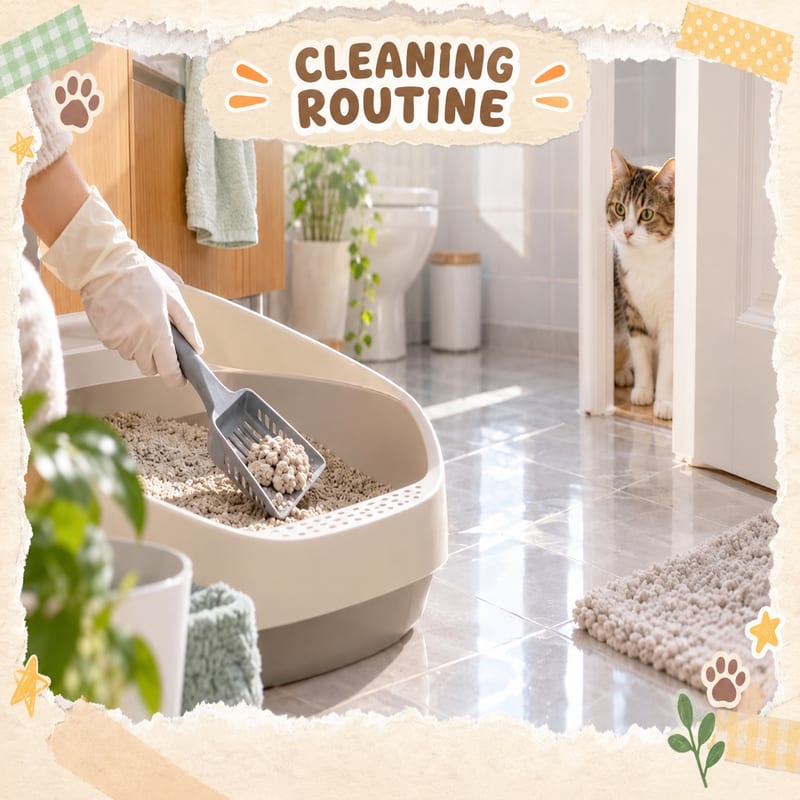
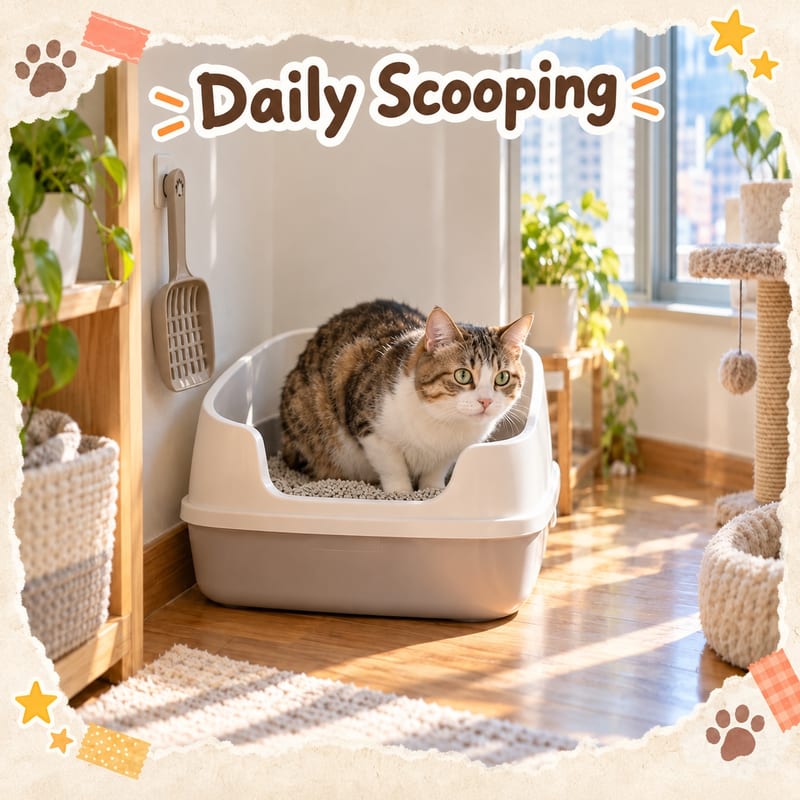
- Daily: scoop at least 1-2 times; top up new litter to maintain 5-7cm depth; check the firmness of urine clumps for abnormalities.
- Weekly: rinse the box with warm water, use a pet-specific cleaner (avoid strong chemical smells), dry thoroughly before adding new litter.
- Monthly: deep clean with diluted white vinegar or pet disinfectant; check the box for cracks and scratches (where dirt and bacteria hide); assess whether to replace it.
If litter is too thin, cats feel uncomfortable digging to the bottom and urine clumps stick; too thick is wasteful. 5-7cm is a general starting point, adjusted to your cat's digging habits.
Scooping is also a daily health check: normal urine clumps are about palm-sized, and faeces are formed without blood or mucus. If clumps suddenly become larger and more frequent (increased drinking and urination may signal kidney disease or diabetes), or if the cat stays in the box a long time without producing a clump and cries, these are not "bad litter" issues and should be addressed promptly. Wash hands after scooping; pregnant women should especially avoid contact with cat faeces (toxoplasmosis risk) and let other family members handle it.
How to arrange for multi-cat homes and small flats?
Multi-cat homes: Don't put all boxes in the same place — one cat may guard the spot, and others will hold their urine or urinate inappropriately. The best approach is to spread them across different rooms and floors so cats don't have to "compete for the toilet." Besides litter boxes, automatic boxes have a blind spot for multi-cat homes: they may not distinguish which cat produced which waste, so observing health is less direct than with open boxes.
Small flat strategies: Hong Kong's average living space is small, so think about placement this way: the bathroom is first choice (ventilation, easy to rinse); a windowless bathroom needs a dehumidifier or fan running on schedule; a balcony box needs shade and rain protection, and make sure the litter doesn't get wet. To reduce odour, a covered box with activated carbon filter, daily scooping, and a litter mat to trap tracking — these four together are more effective than buying expensive litter.
What to do if your cat doesn't use the litter box or urinates inappropriately?
Check four things in order: first, is the box clean enough (cats are extremely sensitive to odour); second, is the litter type suitable (changing litter too quickly causes resistance); third, is the location too busy or noisy; fourth, health problems. Urinary tract infections, cystitis, kidney disease etc. can cause sudden inappropriate urination or crying while toileting — this is not a behaviour problem but a symptom of illness. If there is no improvement after adjusting the environment for two to three days, or if you see blood in urine or frequent visits to the box with no urine produced, see a veterinarian immediately; don't wait.
Ranking of common litter box mistakes
Based on the questions owners ask most, the top five mistakes are:
| Rank | Mistake | Consequence | Correction |
|---|---|---|---|
| 1 | Not scooping often enough | Cat finds it dirty and urinates elsewhere | At least 1-2 times daily |
| 2 | Box too small | Cat's rear hangs outside the box | At least 1.5x body length |
| 3 | All boxes clustered in one corner | Multi-cat competition and urine holding | Spread across different areas |
| 4 | Washing the box with strongly scented cleaner | Cat rejects the smell | Warm water + pet-specific cleaner |
| 5 | Keeping an old box too long | Scratches harbour bacteria and smell | Replace when cracked |
Also note: don't put the litter box in a completely sealed cabinet to avoid odour — the smell accumulates and becomes worse, and the cat may abandon it due to heat. For a newly adopted cat in the first week, ask the previous owner what litter and box they used, keep the original routine, then change gradually; this can significantly reduce the chance of not using the box.
When to upgrade to covered or automatic
Not everyone needs an upgrade, but these situations are worth considering:
- Odour complaint level: In a small flat where the box is visible from the door and guests smell it on entering — a covered box with activated carbon filter can noticeably improve things; choose a top-vented design, not a completely sealed "box."
- Out from 9 to 9: If you can't scoop twice a day, an automatic box's scheduled cleaning can hold the line; but for holidays or business trips over two days, a jammed automatic box is a disaster scene, so have a backup box.
- Cat already used to open boxes: Transition from open to covered gradually — first remove the lid for a week, then put it on without locking, finally fully close; if the cat refuses midway, take a step back, don't force it.
- Kittens and senior cats: Both should stay with open, low-entry boxes; automatic boxes' moving parts and entry height are not friendly to them.
Before upgrading, remember the iron rule: the type of litter box is never the first step to solving inappropriate urination — first rule out urinary tract disease, then improve cleaning and placement, and only then consider buying a new box.
What you can do starting today
- Measure your cat's body length from nose to tail base once, multiply by 1.5 to get the minimum litter box length.
- Count how many cats you have and make sure the number of boxes is enough: "number of cats plus one."
- Walk around your home and move the litter box away from food/water and walkways to a quiet, ventilated corner.
- Set a habit of scooping twice daily, morning and evening, and wash the box weekly on a schedule.
- Want to upgrade to automatic? Rent or borrow one for a week or two first, and only buy once you see your cat accepts it.
For more litter choices, see the complete cat litter guide; PetChill's product guide also has hands-on tests of boxes and litter. This article is for reference only; consult a registered veterinarian for any concerns.
Further reading
- Cat refuses litter box / inappropriate urination →
- Pros and cons of plant-based cat litter →
- How probiotic tofu litter works →
- Cat litter recommendations Hong Kong 2026 →
- Home care for cat upper respiratory infections →
- Buying an automatic litter box: suitability for small flats and consumable costs →
- Complete tofu litter guide →
📌 Key takeaways
- ✅ Litter box length ≥ 1.5x cat's body length, so the cat has room to turn around
- ✅ Number of boxes = number of cats + 1, avoiding competition and inappropriate urination
- ✅ Place in a quiet, ventilated spot, away from food/water and noise
- ❌ Washing the box with strongly scented cleaner makes cats reject the smell
- ❌ Clustering all boxes in one corner makes it easy for multi-cat households to guard spots
Sources
- PetChill product database (checked 2026-10-01,
mpdt_app=7,mpdt_showlist=1, prices use front-end selling pricempdt_lowest_price) - International Cat Care — Litter and litter tray problems
- Cornell Feline Health Center — Feline House Soiling
Price validity: Prices in this article were verified on 2026-10-01 from the PetChill product database; actual selling prices are subject to the product pages.
This article is for general purchasing reference; if toileting behaviour changes suddenly or there is blood in urine, no urine, etc., consult a registered veterinarian immediately.
 Feline Natural full guide →
 Petio full guide →