
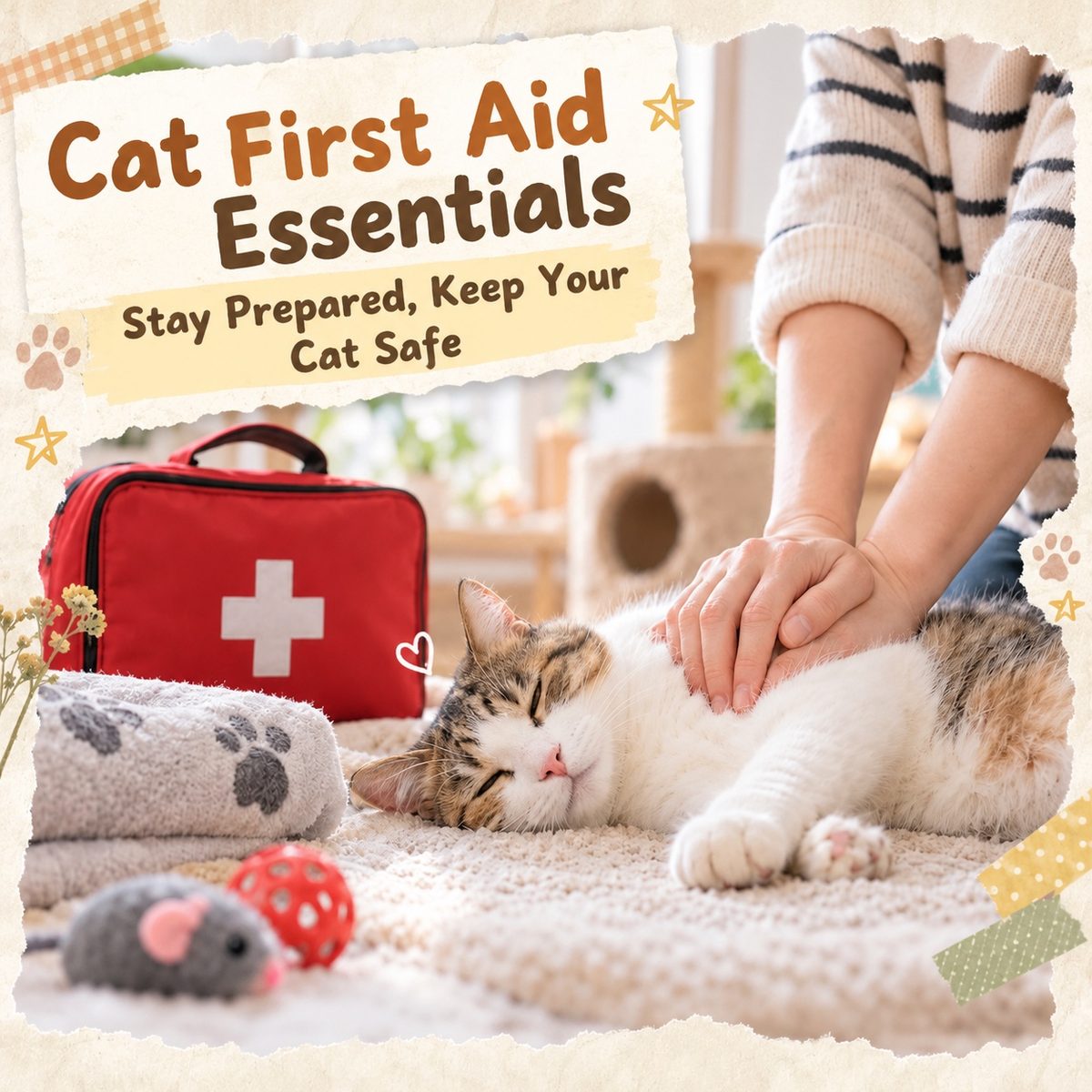
Quick answer: The core principles of cat emergency first aid are "stay calm, protect, get to the vet." During a seizure, do not restrain; for poisoning, check the mouth first; for heatstroke, cool immediately; for electric shock, unplug first; for bleeding, apply pressure with gauze; for burns, flush with cool water; for fractures, do not move the injured area; for fever, use cooling packs. Mastering these 8 crisis responses, together with CPR techniques, can save your cat's life in a critical moment.
Quick Reference Table: Severity of 8 Major Emergencies
| Emergency | Severity | First Response | Need Immediate Vet Visit? |
|---|---|---|---|
| Seizure | ⚠️ High | Move dangerous objects away, wait for seizure to stop | Vet visit after stable |
| Poisoning/ingestion | 🔴 Extremely high | Check mouth for foreign objects | Vet immediately |
| Heatstroke | 🔴 Extremely high | Turn on air-conditioning, cool with cooling packs | Cool while heading to vet |
| Electric shock | 🔴 Extremely high | Unplug first, check breathing and heartbeat | Vet immediately |
| Bleeding | ⚠️ Medium to high | Apply gauze pressure for 10 minutes | Vet if bleeding continues |
| Burns | ⚠️ Medium to high | Flush burn area with cool water | Keep cooling en route to vet |
| Fracture | ⚠️ High | Immobilise with hard board or thick towel | Vet immediately |
| Fever (>39.5°C) | ⚠️ Medium | Cool armpits and inner thighs | Vet after cooling |

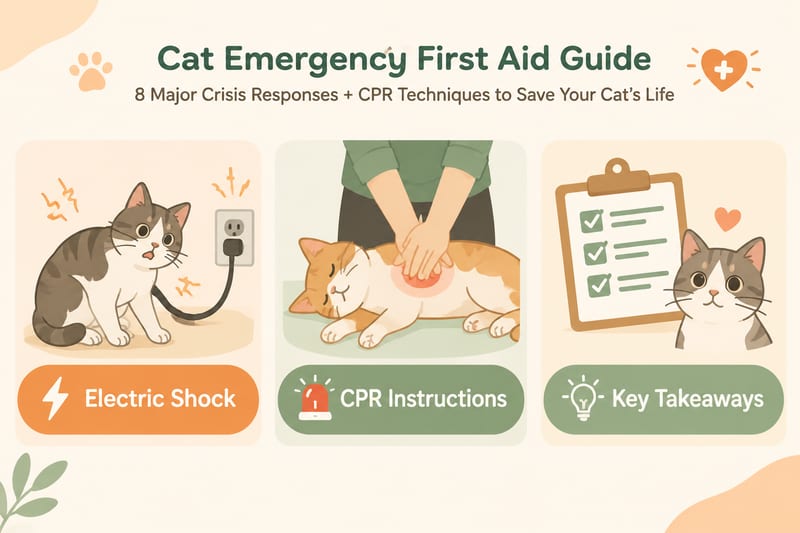
Seizures: Protection Is More Important Than Intervention
When a cat has a seizure, it may foam at the mouth, fall over and convulse, or even lose bladder and bowel control. Do not panic — the most important thing is to protect the cat from hitting furniture or other hard objects. Move dangerous objects away and let the seizure stop on its own. After it stops, wrap the cat in a blanket and observe for a while; if stable, take it to the vet immediately.
⚠️ Never try to hold the cat down or pry open its mouth — these actions will only injure both you and the cat. Seizures are sometimes related to heatstroke or poisoning; if you notice abnormal body temperature at the same time, see Cat Weight and Health Indicators for more on monitoring your cat's condition.
Poisoning/Ingestion: Time Is Life
When a cat ingests a foreign object, first open its mouth to check for any remnants. If you can still see it and it can be safely removed, use your fingers to take it out. But if the object has already been swallowed, or the cat has drunk some liquid, take it to the vet immediately — liquids reach the intestines within hours, and delay causes greater harm.
Common dangerous items include: human medications, cleaning agents, insecticides, lilies, chocolate, etc. Always keep these items stored safely out of reach. After ingestion, the cat may vomit or have diarrhoea; if abnormal behaviour persists, see Early Signs of Illness in Cats to judge early.
Heatstroke: Cool Down While Heading to the Vet
During the hottest summer days, cats can get heatstroke, especially in closed rooms or cars without air-conditioning. A cat with heatstroke will have a body temperature above 41°C, with symptoms such as rapid panting, drooling, and lethargy.
What to do: Turn the air-conditioning up high, let the cat lie in a spot not directly in the airflow, and place a towel-wrapped cooling pack on the cat's abdomen to cool it down. If the cat can still drink, give it water immediately. While cooling with a wet towel or cooling pack, get to the vet as soon as possible. Cats dehydrate easily during heatstroke; afterwards, pay attention to Cat Hydration and Dehydration Prevention to ensure they replenish enough water.
Electric Shock: Cut the Power Before Rescuing the Cat
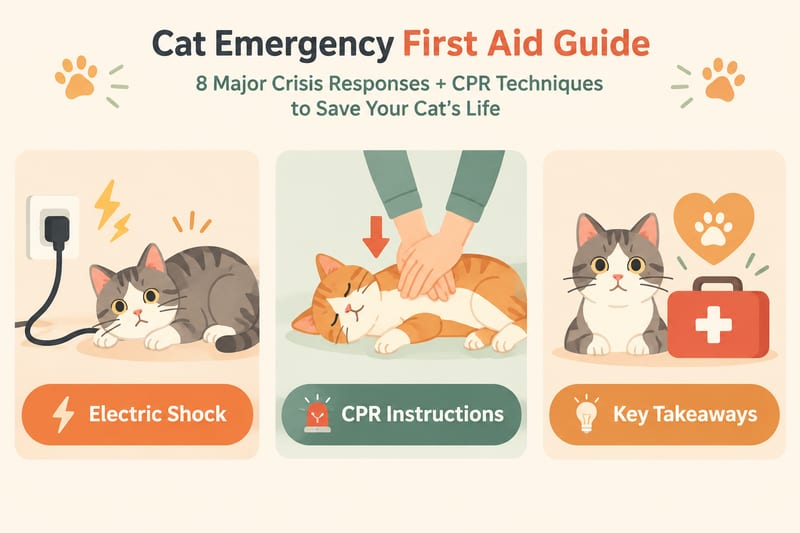
A cat biting through a live wire and getting shocked is extremely dangerous. Remember: before picking up the cat, you must unplug the cord! Humans are also at risk of electric shock. After unplugging, check whether the cat is breathing and has a heartbeat. If the heart has stopped, perform CPR (see the guide below) and take the cat to the vet immediately.
Bleeding: Apply Pressure with Gauze
For minor bleeding, apply pressure with gauze. Press continuously for about 10 minutes; if bleeding continues, get to the vet as soon as possible while applying pressure. ⚠️ Never use human disinfectants on a cat's wound — some medications can cause unstoppable bleeding in cats, which is very dangerous.
Burns: Flush with Water Immediately
After a burn, the most important thing is to cool the wound immediately by flushing the burn area with cool water. On the way to the vet, you can place a cooling pack wrapped in a towel to continue cooling. Do not put ice directly on the cat's skin.
Fractures: Do Not Move the Injured Area
When a cat has a fracture, try not to move the injured part. If the cat is in pain, be especially careful not to touch the injured area when picking it up. Immobilise the injury with a hard board or thick towel and take the cat to the vet immediately.
Fever: Cool First, Then Vet
A cat's normal body temperature is 38 to 39.2°C. Above 39.5°C is considered fever. Cooling method: place towel-wrapped cooling packs on the armpits and inner thighs. ⚠️ Do not cool too suddenly or excessively, and avoid direct contact with ice. If the cat is shivering, wrap it in a blanket to keep warm and take it to the vet. Long-term or recurrent fever may be related to the immune system; regular vaccination can prevent many diseases.
🚨 CPR Guide
When a cat is not breathing and the heart has stopped, these steps may save its life:
-
Lay the cat on its side, with the left side of the body facing up
-
On the cat's left side, just below the base of the front leg (roughly the heart position)
-
Insert four fingers (index to little finger) and grip near the base of the front leg
-
Compress once per second, using firm pressure with the fingertips
-
While continuing compressions, get to the vet as soon as possible
Essential First Aid Kit for Cat Owners
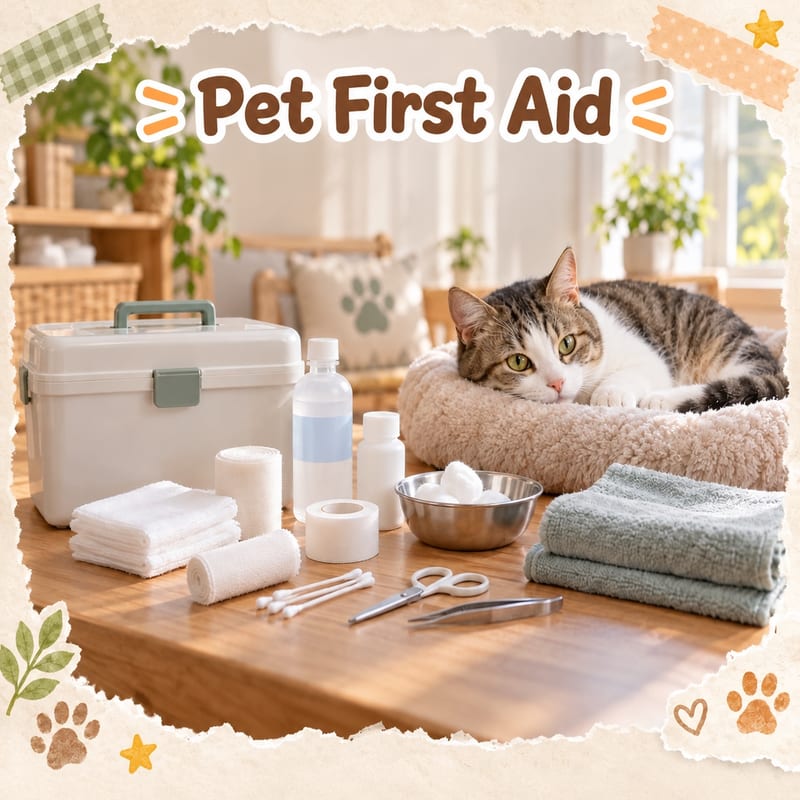
Every cat owner should prepare a cat first aid kit:
- Gauze, bandages, medical tape
- Sterile saline for cleaning (not human disinfectants)
- Cooling packs, towels
- Thermometer
- Disposable gloves
- Vet emergency phone number
Common First Aid Mistakes vs Correct Actions
| Mistake | Correct Action | Reason |
|---|---|---|
| Holding the cat down during a seizure | Move dangerous objects away, wait for seizure to stop | Restraint may cause fractures or injure both cat and person |
| Inducing vomiting after poisoning | Check the mouth, go straight to the vet | Inducing vomiting may cause secondary harm |
| Using ice to cool a heatstroke cat | Use cooling packs or wet towels | Too great a temperature difference can cause shock |
| Picking up the cat immediately after electric shock | Unplug first, then handle | Prevent human electric shock |
| Using hydrogen peroxide to disinfect wounds | Clean with saline | Hydrogen peroxide is toxic to cats |
Hong Kong Small-Flat Practicalities: Three Steps for First Aid in a Tiny Home
Hong Kong homes are small, and cats often get into trouble in places where you can barely turn around. These three steps help you achieve "stay calm, protect, get to the vet" even in a 300 sq ft space.
Step 1: Improvise with what you have to immobilise the injured
- After a fracture or electric shock: Use a hard board from a dismantled A4 cardboard box, together with tights or a necktie as a securing strap, and place the cat with the board into a pet carrier to avoid secondary injury.
- For bleeding: Layer kitchen paper thickly as gauze, wrap the outer layer with cling film to apply pressure and stop bleeding, while also preventing the cat from shaking it off.
Step 2: Air-conditioning + fan dual cooling
- Heatstroke scenario: Turn the air-conditioning up to 26°C immediately, place the cat in a corner not in the fan's airflow, and put a towel-wrapped frozen water bottle on the cat's belly. Hong Kong summers are hot and humid; while cooling, also turn on a dehumidifier to avoid trapping moisture.
Step 3: Get out the door within 5 minutes
- Pre-mark two nearby emergency vets on your phone map (one along the MTR line, one reachable by taxi), and save their addresses as quick SMS messages so you can send them to the driver or family with one tap.
- Keep the pet carrier hanging by the door, stocked with: a towel, a small bottle of saline, and the vet's card. Grab the bag and go — no last-minute searching.
Remember: Hong Kong traffic is unpredictable. If the situation is extremely critical (e.g., no breathing after electric shock), call an ambulance immediately, state "pet emergency," and the paramedics will help contact a 24-hour vet to receive you.
