
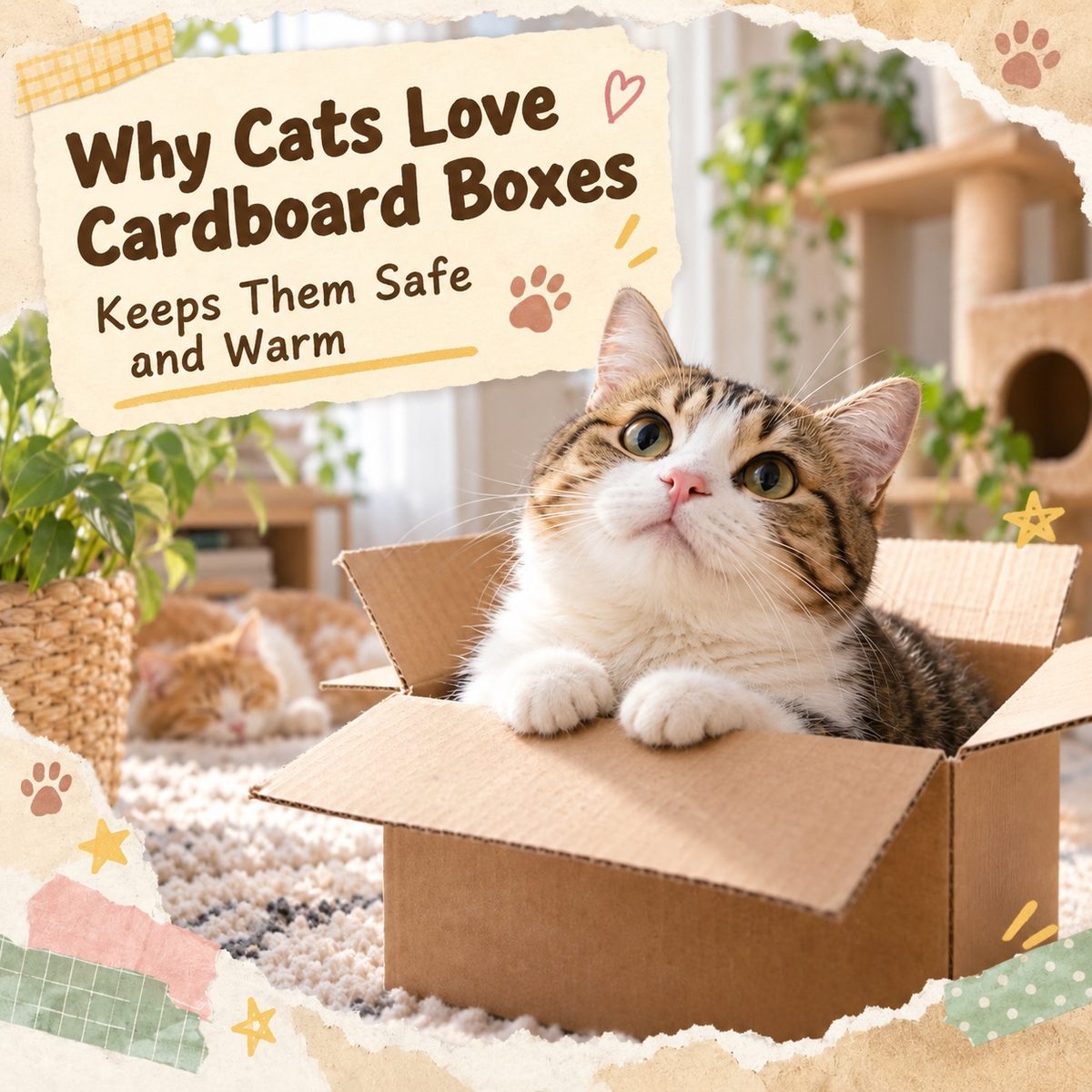
Quick answer: Cats love cardboard boxes because boxes provide five key functions: a 'stress-reducing space', an 'ambush base', 'warmth', the 'urge to squeeze in', and a 'safe observation point'. A study by Utrecht University in the Netherlands confirmed that cats with boxes have significantly lower stress levels. Using boxes is the lowest-cost way to boost your cat's well-being, but remember to remove tape and staples and replace them regularly for safety.
Have you ever spent hundreds of dollars on a nice cat bed, only for your cat to ignore it completely and instead love squeezing into a delivery box? This is the 'cardboard box mystery' that cat owners worldwide encounter. In fact, cats' obsession with boxes isn't just stubbornness—there are solid scientific reasons behind it. Today, PetChill reveals the 5 secrets of why cats love cardboard boxes so much, and teaches you how to use boxes to improve your cat's quality of life.
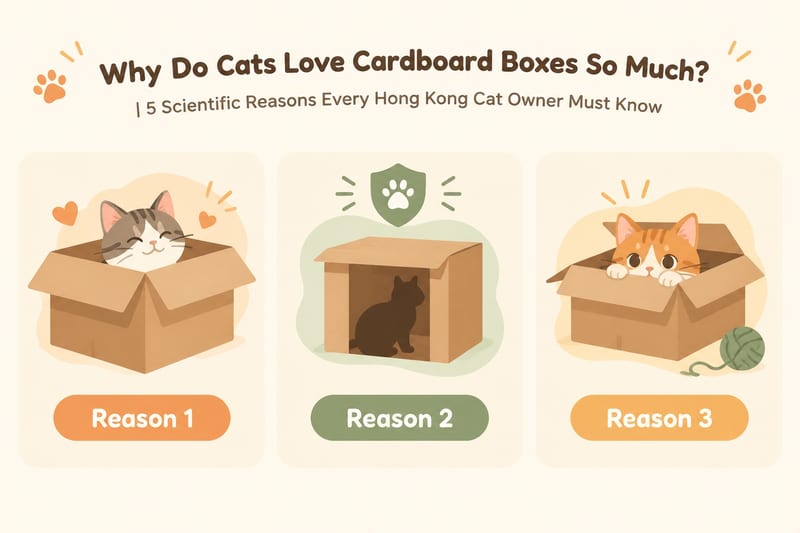
Reason 1: Cardboard boxes are natural 'stress-reducing chambers'
A 2014 study by the animal behaviour research team at Utrecht University in the Netherlands found that newly sheltered cats given cardboard boxes had significantly lower stress levels than those without boxes. The study tracked cats in shelters and found that cats with boxes to hide in adapted to new environments faster and had noticeably lower stress scores.
The reason is simple—a cardboard box provides a narrow, enclosed, safe space that allows the cat to escape external stimuli and threats. Cats' coping strategy is to 'hide' rather than 'confront'. When they feel stressed or uneasy, retreating into a box makes them feel safe immediately. This is an innate survival instinct—in the wild, narrow spaces protect them from predators.
Practical tip: For newly adopted cats or after moving house, place several boxes in different rooms to help your cat adapt to the new environment faster.
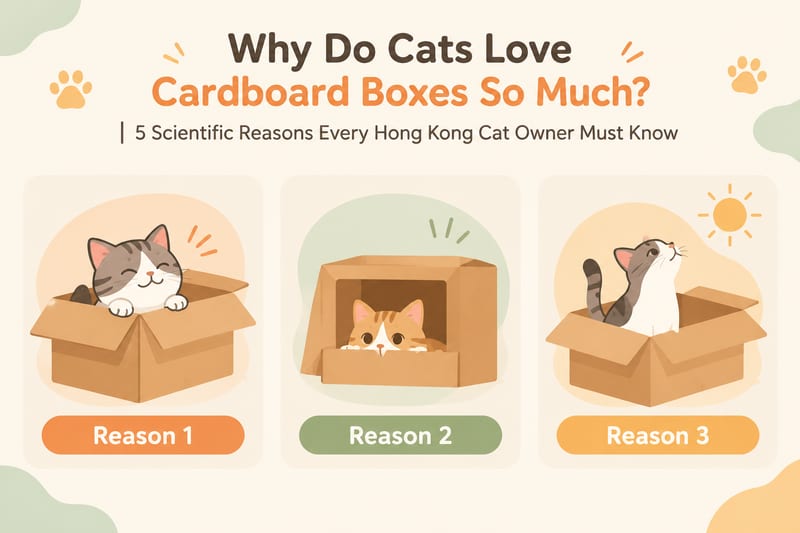
Reason 2: Cardboard boxes are the perfect 'ambush base'
Cats are natural hunters, and a cardboard box provides an ideal ambush position. In the wild, cats use narrow spaces like tree hollows and rock crevices to ambush prey. The opening of a box is like a 'hunting window'—the cat can wait inside and then suddenly leap out at passing 'prey' (maybe your feet or a teaser wand).
If you have multiple cats, you might see one cat sitting inside a box, and when another cat walks by, the one inside suddenly reaches out a paw to swat—that's typical ambush behaviour! This behaviour is not just play; it's an important way for cats to maintain their hunting skills.
Practical tip: Place treats or toys inside the box to stimulate your cat's hunting instinct and provide rich mental stimulation.
Reason 3: The temperature of a cardboard box is just right
Research indicates that a cat's 'thermoneutral zone' (the temperature range where they don't need to expend extra energy to keep warm or cool down) is 30-36°C, much higher than the human 25-30°C. The corrugated cardboard of a box has excellent insulation properties, helping cats stay warm.
This explains why cats especially love boxes in winter—the temperature inside a box can be several degrees higher than outside, making it a natural heater for cold-sensitive cats! The air-layer structure of corrugated cardboard works like insulation in a building, effectively blocking heat loss.
Practical tip: In winter, line the box with a soft mat or old blanket to further improve insulation and turn the box into a warm cat bed.
Reason 4: Cardboard boxes satisfy the 'urge to squeeze in'
A cat's body is perfectly built for squeezing into narrow spaces—they have no collarbone and 5 more vertebrae than humans, allowing them to easily squeeze into spaces smaller than their body. This ability is key to survival in the wild—narrow spaces protect them from large predators.
A cardboard box perfectly satisfies this 'squeeze in' instinct. Even if the box looks too small for the cat, they will try every way to squeeze in—because in their genes, 'squeezing' equals 'safety'. This behaviour stems from the feline instinct to find safe dens in the wild.
Practical tip: Don't force your cat out of the box; let them decide when to come out. This is a sign they feel safe.
Reason 5: Cardboard boxes are social 'safe observation points'
Cats are observant animals; they like to watch what's happening around them from a safe environment. A cardboard box provides a semi-enclosed space where the cat can observe the outside while feeling safe. This is especially important for shy or nervous cats.
If you see your cat sitting inside a box with its head poking out observing the surroundings, that's a sign they feel safe and relaxed—they trust the environment but retain an 'escape route'. This 'advance or retreat' position allows the cat to hide immediately if they feel threatened.
Practical tip: Place boxes in areas where your cat frequently spends time, such as the living room or bedroom, so they can use this 'safe observation point' anytime.
Comparison of different cardboard box types
| Box type | Pros | Cons | Suitable for |
|---|---|---|---|
| Corrugated box | Good insulation, sturdy, easy to find | Heavier, takes up space | Long-term use, winter warmth |
| Shoebox | Small and easy to store, cats like it | Limited space, easily crushed | Short-term play, small cats |
| Delivery box | Free, easy to obtain, medium size | May have printing odour | Daily use, new cat adaptation |
| Paper bag | Light, easy to move | Easily torn, not sturdy | Temporary play, short trips |
Cardboard box vs cat bed comparison
| Item | Cardboard box | Cat bed |
|---|---|---|
| Price | Free or very low | Tens to hundreds of dollars |
| Cat acceptance | Very high | Varies by cat |
| Cleaning difficulty | Can be replaced directly | Requires regular washing |
| Durability | Short (weeks) | Long (months to years) |
| Insulation | Good | Depends on material |
| Aesthetics | Average | Better |
DIY cardboard box modification tips
-
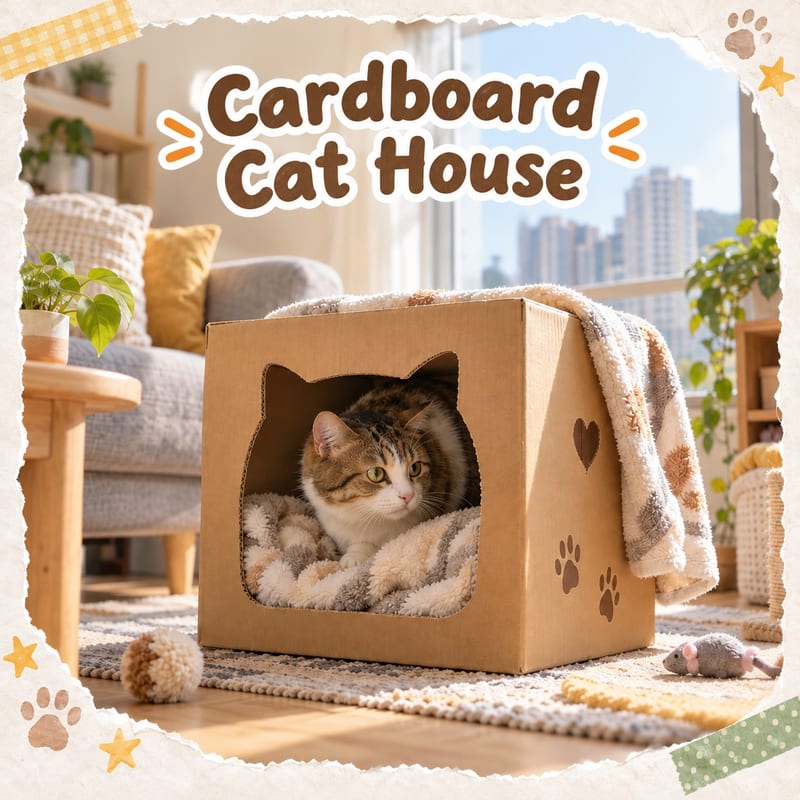
Window design: Cut a small window in the side of the box so the cat can observe the outside, increasing the sense of security.
-
Multi-level structure: Stack several boxes to create a 'cat castle', providing more exploration space.
-
Soft padding upgrade: Line the bottom of the box with a soft mat or old clothes to increase comfort and retain the owner's scent.
-
Tunnel connection: Connect two boxes with tape to create a 'tunnel', increasing play value.
-
Regular replacement: Replace with a new box every 2-4 weeks to maintain cleanliness and novelty.
Where to find free cardboard boxes in Hong Kong?
- Supermarkets: ParknShop, Wellcome and other supermarkets usually have free boxes for customers.
- Online shopping platforms: Keep boxes from HKTVmall, Taobao, etc.
- Wet markets: Vegetable and fruit stalls often have discarded boxes.
- Office: Bring home boxes from office deliveries.
- Community recycling stations: Some recycling stations have clean boxes available.
Hong Kong small flat practical guide: 3 steps to create a safe and space-saving cardboard cat nest
Hong Kong homes are small, but it's not hard to give your cat an extra cardboard paradise—just follow the two principles of saving space and safety.
Step 1: Choose boxes—for small flats, pick a 'shoebox + delivery box' combo Place a shoebox on the windowsill or under the bed for short-term hiding; place a delivery box (about 30×40cm) beside the sofa, just the right height to serve as a side table—dual purpose. Remember to choose boxes with no printing or only single-colour printing to reduce ink smell.
Step 2: Safety checklist
- Use scissors to cut away all tape; don't tear by hand to avoid residue.
- Run a fingernail along the edges to confirm no protruding staples or hard plastic fragments.
- Line the bottom with an old T-shirt or towel to absorb moisture and odour; just shake out fur daily.
Step 3: Space-saving placement
- Vertical use: Tape two delivery boxes together and stack them into a 'two-tier cat tree'—top level as a viewing platform, bottom as a sleeping nest.
- Furniture integration: Insert a box into an IKEA KALLAX cube, cut a round window on the exposed side, and it instantly becomes a hidden cat room.
- Regular rotation: Each time you receive a new box from online shopping, throw away the old one immediately to keep your small flat tidy and odour-free.
Follow these steps, and without extra space, your cat instantly gets a private world, and you save money.
PetChill's Reminder
To cats, a cardboard box is not just a toy but their 'safe base'. Next time you see your cat squeeze into a box and refuse to come out, don't think they're being stubborn—they're just doing what a cat should do! Using boxes is the lowest-cost way to boost your cat's well-being. Remember to check the box regularly and keep it clean so your cat can enjoy their little world with peace of mind.
To learn more about cat behaviour, stay tuned for the latest articles from PetChill!
Further reading
📌 Key summary
- ✅ Cardboard box = natural stress-reducing chamber, essential for new cats or moving house
- ✅ Add a soft mat in winter, and the box instantly becomes a warm cat bed
- ✅ Cut windows + stack up for a free cat castle upgrade
- ❌ Don't leave tape or staples—they can easily scratch your cat
- ❌ Replace immediately if the box grows mould or gets wet to prevent bacteria growth
✅ Cardboard boxes are a cat's natural stress-reducing chamber; a study by Utrecht University in the Netherlands confirmed they lower stress levels
✅ Boxes satisfy five major instinctual needs: hunting, warmth, squeezing in, and observation
✅ Corrugated boxes have the best insulation, suitable for winter; shoeboxes are good for small cats or short-term play
✅ Using boxes is the lowest-cost way to boost your cat's well-being—a must-learn skill for new cat owners
❌ Don't use boxes with strong printing odours or that are damp and mouldy
❌ Don't force your cat out of the box; respect their safe space
❌ Remember to remove tape and staples to prevent your cat from swallowing or getting injured