
Quick answer: Dog heatstroke is a failure of the body's temperature regulation; body temperature soaring above 41°C can cause organ failure. The most deadly scenario is "ten minutes out of the car"—inside a car it can reach 50°C in just over ten minutes. Owners must know the 5 high-risk moments and the 6-step first aid to save a life.
Hong Kong summers are long, hot and humid, and the risk of dog heatstroke is far higher than you might think. Many owners think "ten minutes out of the car is fine", but in reality a dog can reach a deadly high body temperature in just half an hour inside a sealed car. Heatstroke is not simply "being too hot"—it is a breakdown of the body's temperature regulation, which in severe cases can lead to organ failure. This article teaches you to recognise the 5 high-risk moments, understand the symptoms, and master the correct 6-step first aid to keep your pet safe through summer.
Why are dogs so sensitive to heat?
Dogs' cooling mechanisms are very different from humans'. Most of their body is covered in fur, sweat glands are ineffective, and the main area that can actually dissipate heat is the paw pads. So they rely on rapid panting (fast open-mouth breathing) to evaporate moisture from the mouth and respiratory tract to cool down.
A normal dog's body temperature is about 37.5°C to 39°C. When the environment is too hot and internal heat cannot escape, body temperature can soar above 41°C, entering the heatstroke danger zone. The following types of dogs are especially high-risk:
- Flat-faced breeds: pugs, French bulldogs, Boston terriers, etc., have short narrow nasal passages and panting is particularly inefficient
- Double-coated thick-fur breeds: huskies, Samoyeds, chow chows, etc., retain too much warmth and dissipate too little
- Overweight, senior, or dogs with heart or lung disease
- Puppies: their temperature regulation is not yet mature
If a dog is placed in a hot environment, they can overheat quickly and even suffer more serious consequences. So in hot weather, never leave a dog in a car or a sealed room, and never tether them somewhere without adequate shade and water.
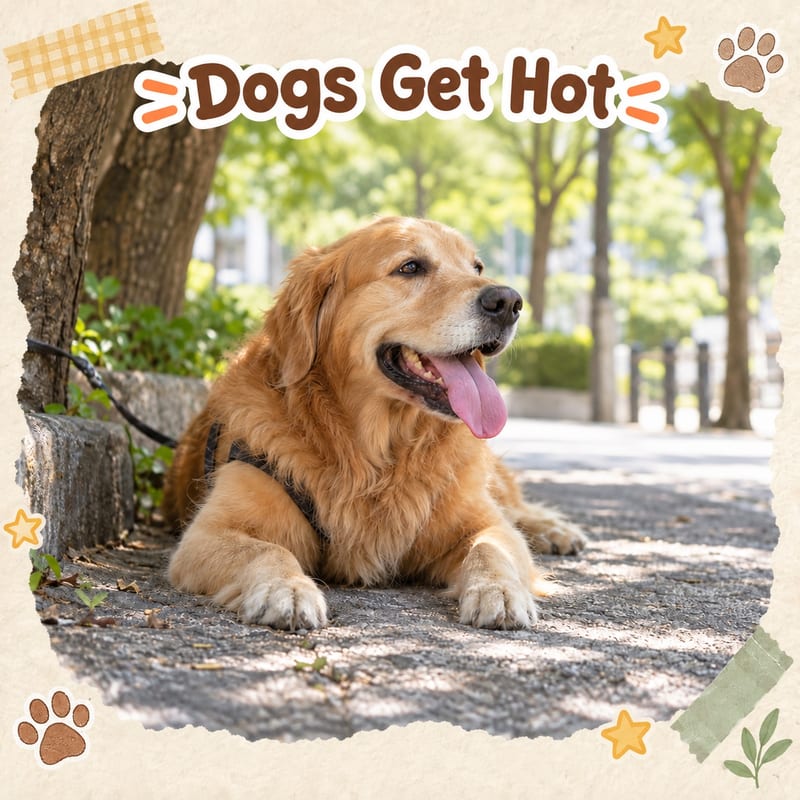
5 high-risk moments—the first is the most common mistake
-
Left in a parked car: even with windows cracked, the interior can soar above 50°C within ten-plus minutes—the most common deadly scenario
-
Midday street walks: the sun beats directly on the ground at noon in summer; ground temperature can exceed 50°C and burn paw pads at any moment
-
Intense exercise in high heat: body temperature rises sharply after prolonged running, and panting cannot keep up, easily triggering heatstroke
-
Spaces without air-conditioning or water: balconies, metal cages, sealed rooms—direct sunlight plus poor ventilation is extremely dangerous
-
Prolonged sun exposure without seeking shade: some dogs won't stop playing, so owners must actively arrange shady rest spots
| High-risk moment | Immediate risk | First aid starting point on site |
|---|---|---|
| Left in a parked car | Rises to 50°C within 10+ minutes | Open the door immediately, carry the dog out, move to a cool air-conditioned room |
| Midday street walk | Ground 50°C+ burns paw pads | Pick up the dog and move off the hot ground, check paws and rinse with cold water |
| Intense exercise in heat | Body temperature spikes, panting can't keep up | Stop activity, move to shade and cool down slowly |
| No air-conditioning, no water | Direct sun + poor ventilation | Move to an air-conditioned room, offer water first then cool |
| Prolonged exposure without avoiding | Dog plays without stopping | Carry forcibly into shade, apply wet towel to major blood vessels |
How to recognise heatstroke symptoms
A dog's reaction to heatstroke can be divided into three stages from mild to severe:
- Early: panting intensifies, drooling, restlessness, constantly seeking water
- Middle: gums bright red or purple-red, high fever, vomiting, limb weakness
- Critical: seizures, unsteady walking, confusion or even coma
Once in the critical stage, even if cooled down, take the dog to a vet immediately, because internal organ damage may only show up later.
6-step heatstroke first aid (memorise it—it can save a life)
-
Move away from the heat source immediately: move the dog to shade or an air-conditioned room
-
Offer drinking water: let them drink slowly to rehydrate—never force water down
-
Physical cooling: soak the whole body with cold or ice water, focusing on the armpits, groin, neck and other major blood vessel areas, or wrap ice bottles in a wet towel
-
Keep measuring rectal temperature: measure every 5 minutes, and stop cooling at around 39°C to avoid over-cooling
-
Warm them if they start shivering: if the dog begins to shiver or feels cold, warm them moderately to prevent hypothermia
-
Get to the vet as soon as possible: whether or not the dog improves after cooling, take them to a vet promptly to check internal organs. Do not rely on home treatment alone—seek professional care in time
Practical summer heat prevention tips
- Keep cool drinking water and a shady rest spot indoors; in hot weather keep the dog in a cool place
- Walk early morning or evening; before heading out, test the ground with the back of your hand for 5 seconds to see if it's too hot
- Don't shave the coat down to the skin—fur actually insulates and protects from the sun; a moderate trim is enough
- For long outdoor activities, use a sunshade, cooling mat and portable water bottle
- Before going out, always ask yourself: "I can stand the heat, but my pet can't"
Hong Kong small-flat practicalities: zero-gap heatstroke-proof setup
Hong Kong homes are small, and running the air-conditioner at full blast worries you about electricity bills. In fact, with the right approach, even 300 sq ft can become a dog's summer haven.
1. Airflow + convection is most practical
Place the dog bed at the air-conditioner outlet and window convection point, and use a fan to strengthen air movement. If the air-conditioner is a window unit, add a deflector to direct air downwards and avoid blowing directly on the dog's head.
2. Tile floor + cooling mat double cooling
Kitchen and bathroom tile floors are naturally cool; lay a washable cooling mat and the dog will naturally choose the coolest spot to sleep. Remember to leave space under the mat for heat to escape—don't press it flat against the floor.
3. 24-hour flowing water
Hong Kong tap water is drinkable; use a circulating water fountain to keep water temperature and flow. The more the dog drinks, the faster they cool. Change water daily and filter out debris to prevent bacteria.
4. 3-minute checklist before going out
- Back-of-hand ground test for 5 seconds: if it's too hot, switch to indoor toilet training pads.
- Bring a collapsible water bottle + sun umbrella—even a walk to the local park is safe.
- When you get home, turn on the air-conditioner for 5 minutes to cool down before letting the dog in, avoiding a sudden hot-cold switch.
When to go to the vet immediately?
If the dog is still panting for over 30 minutes after cooling, vomiting, gums turning purple, or you're unsure about internal injury, go to a 24-hour emergency vet hospital immediately. Night clinics exist on Hong Kong Island, Kowloon and the New Territories—search "24hr vet" on Google Maps and you'll find one. Don't wait until the next morning.
Taking your dog swimming is a great way to cool off in summer; for venues and prices, see Dog Swimming Pools Hong Kong|Pool Map by District + Price Comparison.
Related links
Hong Kong wet markets, minibuses—dangerous too? Real-life local heat avoidance
Hong Kong life is fast-paced, and many people "casually" take the dog out, not realising the hidden heatstroke traps. Here are the most common local scenarios and how to defuse them.
1. Wet market grocery run—15-minute speed mode
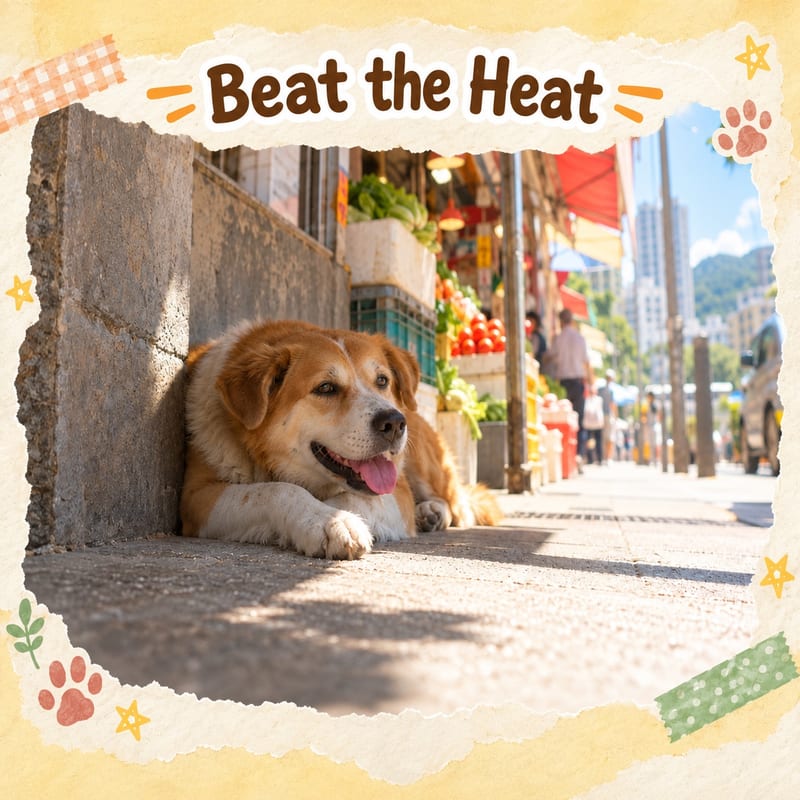
Wet markets are crowded, stuffy, and the floor is wet and hot. Before taking the dog in, test the ground temperature with the back of your foot; if it's too hot, turn back immediately. Offer water from a portable bottle every 3 minutes throughout, and leave as soon as you've bought what you need—don't stop to chat. If the dog starts panting heavily, pick them up and leave, and cool down at the air-conditioned entrance of a nearby convenience store.
2. Minibus/red van—big temperature difference between front and back rows
The air-conditioning on minibuses is usually concentrated in the front, while the back rows are like a steamer. Before boarding, ask the driver if you can sit at the very front; if refused, rather wait for the next one. For journeys over 10 minutes, bring a small fan to blow on the dog and crack a window for convection. After getting off, don't start walking immediately—rest at a convenience store entrance for 5 minutes before setting off again.
3. Home air-conditioner set to auto-off after 2 hours?
Many Hong Kong people use a "2-hour off timer" to save electricity, and the dog wakes up hot in the middle of sleep. Switch to "sleep mode" or "energy-saving mode" to maintain 26–27°C, and keep the fan on to strengthen convection. If you really must turn off the air-conditioner, move the dog to the bathroom tile floor beforehand, set up a cooling mat and circulating water, to at least last until you return.
4. Park grass actually hotter?
Many people think grass is always cooler, but at noon the grass surface temperature can easily exceed 45°C. Before walking on grass, do the back-of-hand test; if it's too hot, switch to a shaded concrete path. Remember to bring a sun umbrella, offer water every 5 minutes, and wetting the paw pads can cool the dog instantly.
5. Pre-work "toilet break" 3-minute speed routine
Before leaving in the morning, turn on the air-conditioner for 3 minutes to cool the room, then take the dog down in the lift. Use a training pad, and the whole process takes no more than 3 minutes. When you get home, close the curtains immediately and turn on the fan to avoid direct sunlight. If the dog is panting heavily, apply a wet towel to the armpits and sides of the neck, observe for 5 minutes, and if no improvement, go to the emergency vet immediately.
Further reading
- Complete dog bathing and grooming guide
- Dog moving house adaptation guide
- PetChill summer pet supplies
📌 Key summary
- ✅ Flat-faced, thick-coated, overweight, old and young dogs are most prone to heatstroke
- ✅ Midday street ground can exceed 50°C—walk early morning or evening
- ✅ 6-step heatstroke first aid: move away from heat → offer water → physical cooling → measure rectal temperature → prevent hypothermia → vet immediately
- ❌ Never shave the coat completely—fur itself insulates and protects from the sun
- ❌ Cracking car windows doesn't help—never leave a dog in a parked car
- ❌ Don't force water—just let them drink slowly