
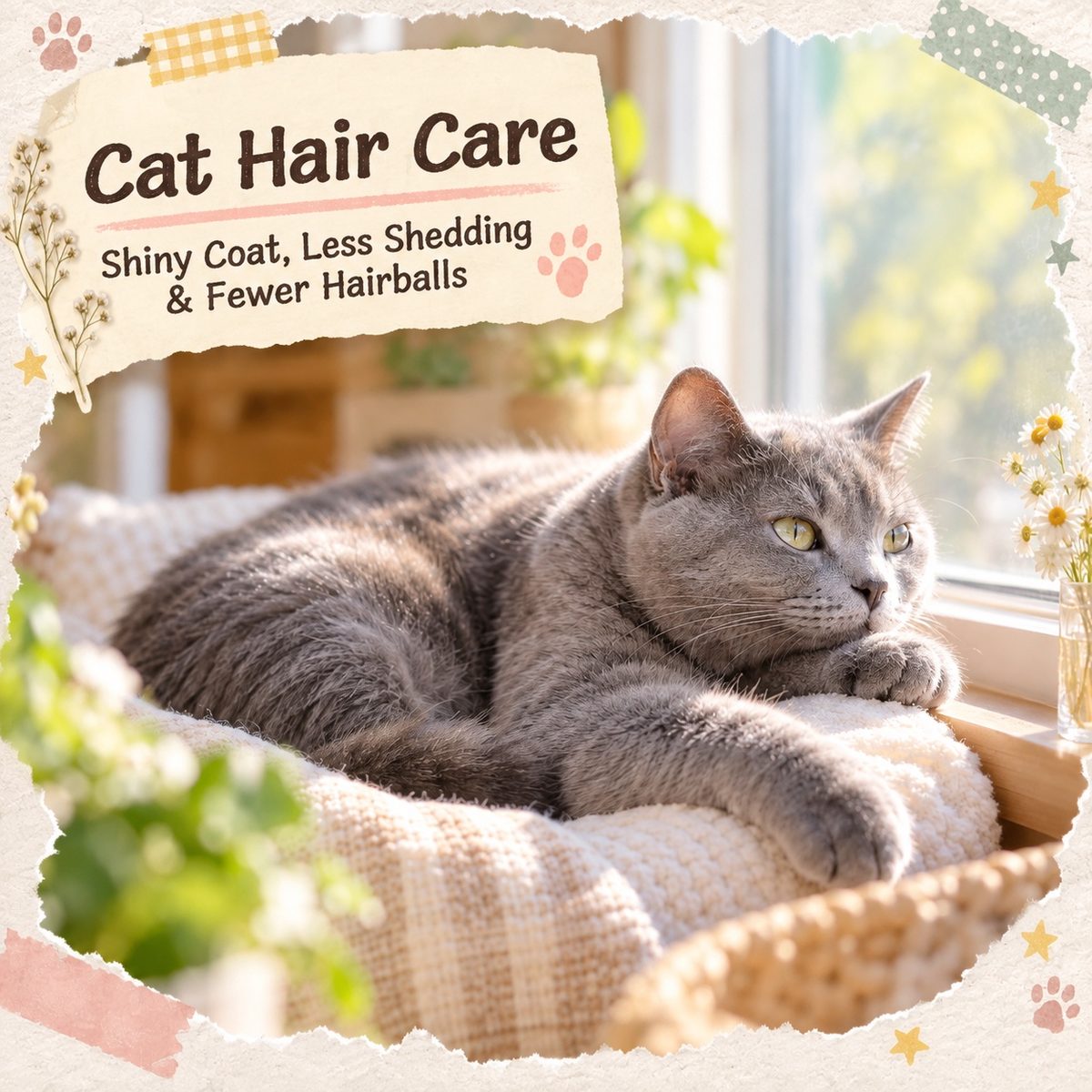
Quick answer: To get a beautiful coat, less shedding and no hairball blockages, remember three key points: a high-protein diet + daily brushing + attention to skin health. If you see localised baldness, redness or frequent vomiting, see a vet immediately—don't delay.
A cat's coat is a health "barometer". For a beautiful coat, remember the three pillars: nutrition (high protein + Omega-3 fish oil), grooming (daily brushing), and skin (watch for allergies and parasites). Shedding during shedding season is normal, but localised baldness and redness are not; hairball problems are prevented and managed with brushing + hairball gel + cat grass. This article breaks it all down.
How can I make my cat's coat shiny?
Coat shine reflects internal health—good nutrition is the foundation of a beautiful coat. Four methods:
- Quality diet—Cats are carnivores and need sufficient animal protein; hair is mainly made of keratin.
- Omega-3 fish oil—Supports the skin barrier and makes the coat shine; can be obtained from fish oil supplements or fish-based recipes.
- Frequent brushing—Removes dead hair, stimulates blood circulation to the skin and hair follicles, and wipes away dust.
- Skin health—Allergies, fleas and ringworm all make the coat dull and sparse; treat the root cause first.
Good nutrition leads to a naturally beautiful coat—external care alone cannot rescue coat quality caused by long-term nutritional deficiency.
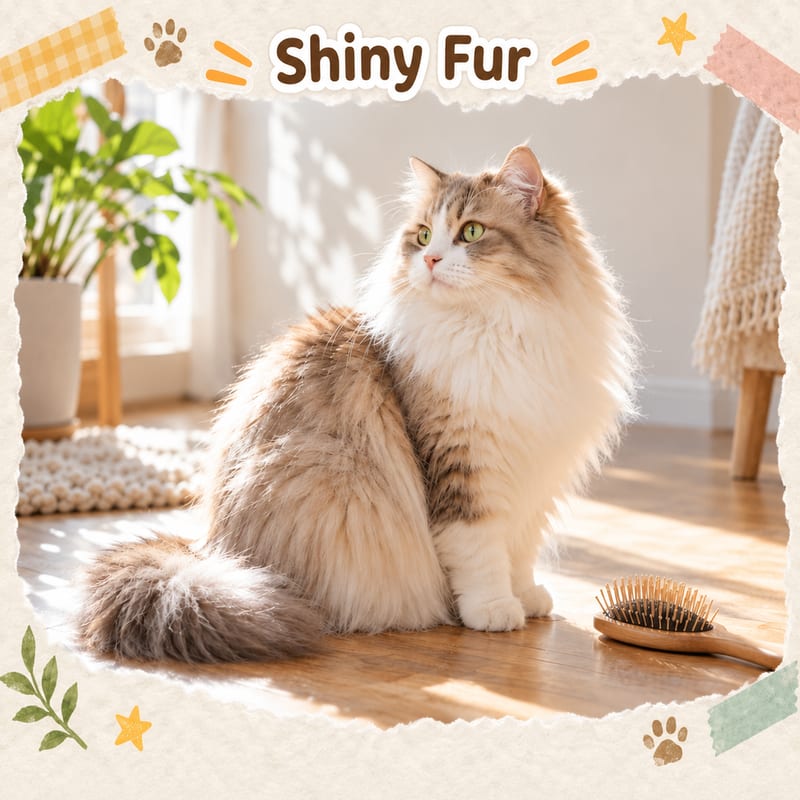
What should I do if my cat sheds constantly?
Shedding itself is normal; the key is to distinguish normal shedding from abnormal shedding:
Normal shedding:
- Especially heavy during spring and autumn shedding seasons.
- Evenly distributed over the whole body, never down to bare skin.
- Management: frequent brushing + vacuuming to reduce hair around the home.
Abnormal shedding (pay attention):
- Localised hair loss, bald patches or visible skin.
- Red, swollen skin, thick dandruff, persistent scratching.
- Causes include skin allergies, parasites (fleas/ringworm), nutritional deficiency, stress or illness.
Healthy cats shed evenly and do not develop localised baldness. If you see "patchy shedding", don't assume it's normal—arrange a vet check.
How can I avoid hairball problems in my cat?
When cats groom themselves, they swallow dead hair, which accumulates in the stomach into hairballs. Mild cases may cause occasional vomiting of hair; severe cases can affect appetite and bowel movements.
Four prevention and control measures:
- Frequent brushing—Reduces the amount of hair swallowed at the source; the most effective measure.
- Hairball gel / hairball-control food—Lubricates the intestines and helps hair pass out in the stool.
- Cat grass—Helps bring up hairballs from the stomach.
- Watch for blockage warning signs—Frequent dry heaving, not eating, constipation, bloated abdomen: see a vet.
Complete blockage of the intestines by hairballs is rare but serious; don't delay. Brushing is the most cost-effective way to prevent hairballs; waiting for them to vomit hairballs is a remedy after the fact.
Shedding season survival guide
| Period | What to do |
|---|---|
| Spring and autumn shedding seasons | Increase brushing to daily, use a de-shedding comb to remove undercoat |
| All year | Sufficient protein + continuous fish oil supplementation |
| Monthly | Check behind the ears, chin and armpits for redness or hair loss |
| If abnormalities appear | Localised baldness, worsening itching—book a vet appointment |
Indoor cats live in constant temperature year-round, so shedding may not be as "punctual" as seasonal cats; they shed all year, so don't stop the brushing routine.
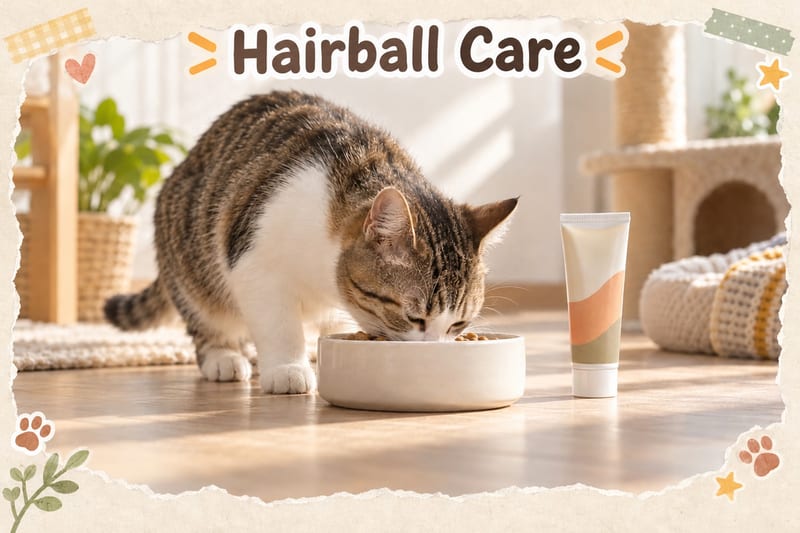
Weekly skin and coat check
During brushing time, do a quick body scan; five areas most likely to hide problems:
- Behind the ears and collar area—Mats, black spots, common sites of cat acne.
- Chin—Blackheads (chin acne), related to bowl cleanliness and plastic bowl sensitivity.
- Mid-back—Itching when pressed, miliary red bumps often related to flea allergy.
- Belly and trousers—Areas where long-haired cats get urine or stool stains.
- Tail base—Greasy clumps of hair (overactive tail glands).
How to check: Part the hair against the grain to look at the skin, not just the coat; if you see dandruff, red rings, bald patches or small black dots (flea dirt), take a photo and see a vet if it persists.
Environmental factors beyond nutrition
- Adequate water intake—Skin moisture comes from within; wet food and circulating water fountains help.
- Humidity control—Hong Kong's spring "returning south" damp weather makes skin prone to fungal infections; in dry winter, use a humidifier.
- Moderate sunbathing—Sleeping on the windowsill in the sun is fine; no need to deliberately chase sunlight—the idea that sun improves a poor coat is a myth.
- Stress reduction—Over-grooming and shedding are often related to anxiety; environmental enrichment (high places, hiding spots, play) is more effective than coat products.
Breed-specific coat care priorities
Different coats need different care:
| Type | Representative breeds | Care priorities |
|---|---|---|
| Short, dense plush | British Shorthair, American Shorthair, domestic cat | Brush 1-2 times per week; during shedding season use a de-shedding comb to thin the undercoat |
| Long, silky | Persian, Burmese | Brush daily; check behind ears and trousers daily |
| Semi-long | Ragdoll, Norwegian Forest Cat | Brush every other day; ruff around the neck mats most easily |
| Curly / hairless | Devon Rex, Sphynx | Less hair means wiping the body to remove oil; pay attention to skin moisturising |
Domestic cats (Hong Kong cats) have coats adapted to the local hot and humid climate; generally short-haired and easy to manage, but during spring and autumn shedding seasons the shedding volume is astonishing—a de-shedding comb + vacuum cleaner are essential.
Kittens and senior cats: Kittens have soft coats that mat easily; start brushing habits early. Senior cats have slower metabolism and duller coats; besides brushing, pay attention to nutrition and diseases (thyroid and kidney disease can both show in the coat).
When to see a vet?
- Localised bald patches, red swollen skin, thick dandruff or scabs.
- Sudden heavy shedding accompanied by lethargy or loss of appetite.
- Frequent vomiting or dry heaving, constipation lasting more than two days, hard bloated abdomen (suspected hairball blockage).
- Coat overall changes from shiny to dull for several weeks (possible metabolic or endocrine problem).
This article is for reference only; consult a registered veterinarian for problems.
What you can do starting today
- Start brushing for five minutes daily this week; use a de-shedding comb during shedding season.
- Check the protein source of your cat food; consider adding fish oil supplementation.
- Stock up on hairball gel or hairball-control food and feed regularly during shedding season.
- Take a photo of your cat's back every month to compare coat condition for changes.
- If you see localised shedding, book a vet appointment immediately—don't wait.
To choose the right coat-care food and fish oil products for your cat, refer to PetChill's cat food reviews and grooming care guides.
Further reading
PetChill grooming team — Hong Kong's most authoritative pet knowledge platform
Hong Kong small-unit practical checklist: 7-day coat care schedule
Hong Kong homes are small, and cat hair flies everywhere. Here is a 7-day coat care schedule designed for Hong Kong people—no large space or expensive equipment needed, just follow it.
Monday: Start-of-week brushing day
- Before brushing your teeth in the morning, use a de-shedding comb on your cat for 5 minutes, focusing on behind the ears, chin and trousers.
- Vacuum the floor immediately after brushing to prevent hair sticking to the floor from the damp spring weather.
Tuesday: Skin check day
- While your cat naps, part the hair against the grain to check the back and belly, and use your phone to photograph any red or black spots.
- If you suspect flea dirt (black dots that turn red when wet), book a vet appointment that evening.
Wednesday: Hydration day
- Clean the circulating water fountain, change the water, and add a few ice cubes to attract your cat to drink.
- Add some wet food to dinner to help skin retain moisture.
Thursday: Hairball day
- During shedding season: feed 1cm of hairball gel before breakfast; outside shedding season: feed cat grass instead.
- Observe bowel movements that day; hair in the stool is normal, but see a vet if constipation lasts more than two days.
Friday: Environmental stress reduction day
- After work, spend 10 minutes playing with your cat using a wand toy to reduce over-grooming due to stress.
- Check the cat tree for accumulated hair and use a lint roller to remove it.
Saturday: Deep cleaning day
- Use a mattress vacuum on the cat bed and sofa crevices to reduce hidden hair.
- Wash the cat bowls and switch to stainless steel or ceramic bowls to avoid plastic bowl sensitivity.
Sunday: Record and compare day
- Take a photo of your cat's back and compare coat colour and density with last week.
- If you notice obvious deterioration (dull, sparse), book a vet appointment for next Monday.
Tips
- Hong Kong's humid weather: after brushing, run a dehumidifier for 1 hour to reduce skin fungal growth.
- Domestic cats shed astonishingly during spring and autumn shedding seasons; daily brushing is recommended. For long-haired cats like Ragdolls, check behind the ears and trousers daily to avoid matting.
- Senior cats have slower metabolism and their coats dull easily; besides brushing, consider nutritional supplements recommended by your vet.
Follow this 7-day cycle, and even small Hong Kong units can easily keep a cat's coat beautiful.
📌 Key summary
- ✅ High protein + fish oil are the foundation of a beautiful coat
- ✅ Daily brushing reduces shedding and hairballs
- ❌ Localised bald patches are not normal shedding
- ❌ Sunbathing alone will not improve the coat
- ✅ See a vet immediately for abnormal shedding or vomiting