
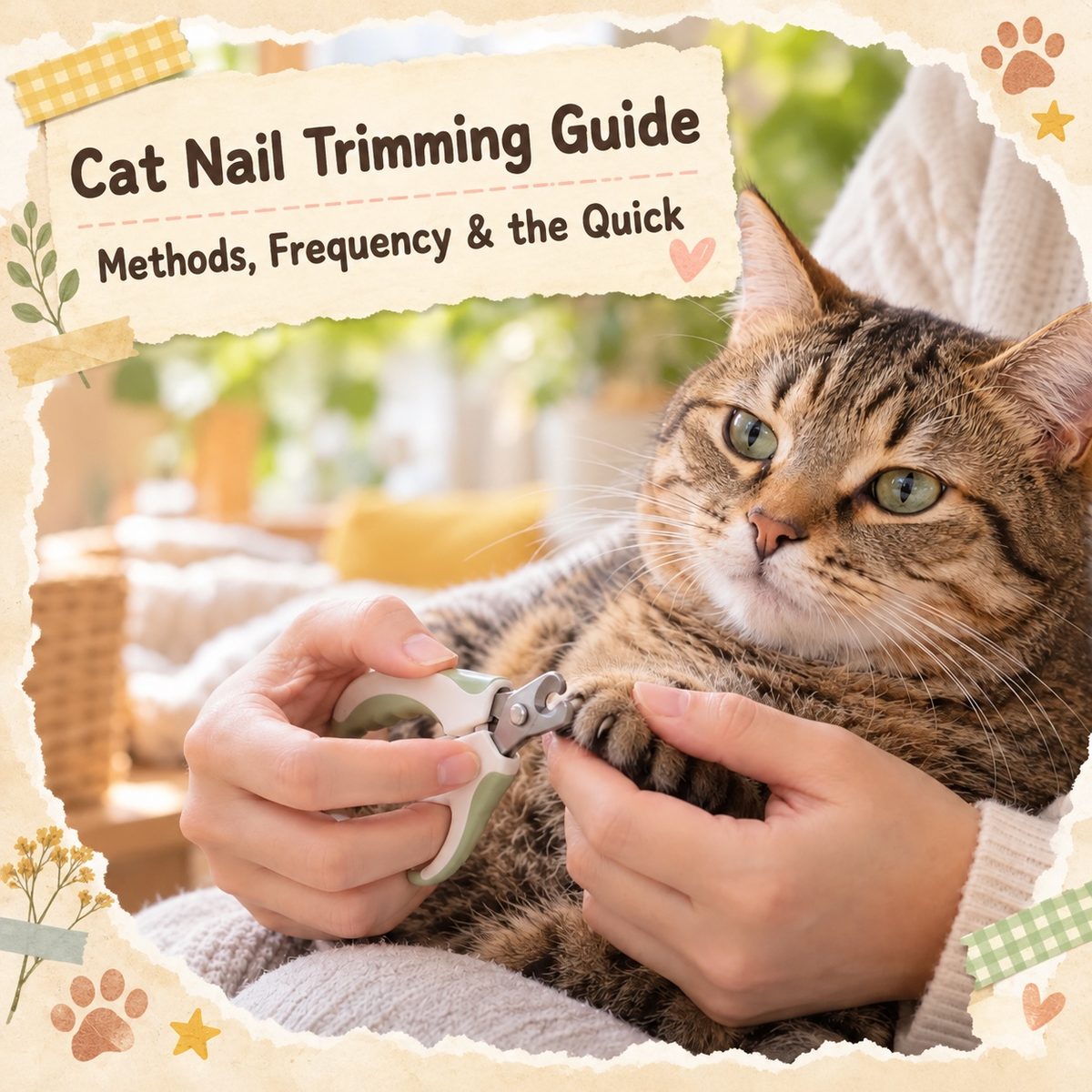
Quick answer: For indoor cats, use cat-specific nail clippers every 2–4 weeks to cut 1–2 mm off the white transparent tip, avoiding the pink blood line. Reward with treats immediately after. If you cut too deep, press styptic powder for ten seconds; if bleeding doesn't stop, see a veterinarian right away.
The golden rule of cat nail trimming is simple: cut only the white transparent tip, avoid the pink blood line. Use cat-specific clippers and trim every 2–4 weeks. If you accidentally cause bleeding, press styptic powder or cornflour on it. Outdoor cats wear their claws down naturally, so indoor cats are the ones that most need their owner's help — nails can grow so long they curl into the paw pads, causing pain and inflammation.
Do cats need their nails trimmed?
Yes, especially indoor cats. Outdoor cats scratch tree bark and wear their claws on concrete, naturally shortening them; indoor cats only have the sofa and scratching posts, so wear is much slower.
Three problems with long claws in indoor cats:
- Snagging — long claws catch on clothing, sofa fabric, window screens; pulling makes it worse and can even cause avulsion
- Curling into the paw pads — nails grow and curl back into the paw pads, a genuinely painful accident, most common in senior cats
- Scratching people — one swipe during play or being held can draw blood, a risk for both children and cats
How to judge: Press the paw pad to extend the nail; if the tip extends more than 3–4 mm or starts snagging, it's time to trim.
First, know the blood line
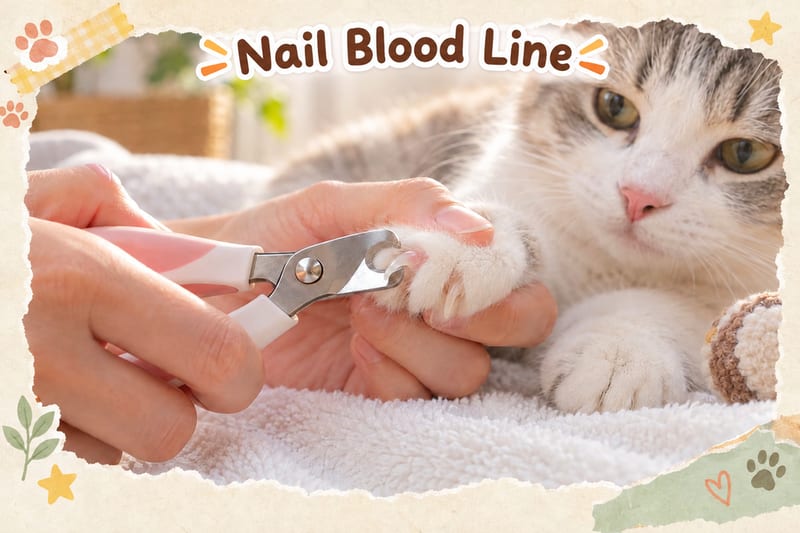
A nail has two parts:
- White transparent tip — keratin, no nerves or blood vessels, trimming doesn't hurt
- Pink blood line (Quick) — contains blood vessels and nerves; cutting it causes bleeding, pain, and frightens the cat
On light-coloured nails, hold them up to the light and you'll see the pink line; on dark nails you can't see it, so use the 'shave thin layers' method: cut very little each time, watch the centre of the cut, and stop as soon as a pink dot appears.
How to trim cat nails: five steps
- Gather your tools — cat-specific nail clippers (human scissors can split nails), styptic powder, treats
- Pick your moment — when the cat is sleepy and most relaxed; two people make it easier (one soothes, one trims)
- Press the pad to extend the claw — gently press both sides of the paw pad and the nail extends naturally
- Check the blood line and cut — cut only 1–2 mm of the white tip; better less than more
- Reward after — give a treat after each paw; if you can't finish, spreading it over several days is fine
Front paws have five nails, back paws four, twenty in total; you don't have to do it all at once — doing just two paws a day is still progress.
Nail trimming tips
- Start from kittenhood — when a kitten lets you handle its paws, trim one nail; once used to it, they won't resist as adults
- Don't fight the cat — stop if they struggle; forcing it will cement 'nail trimming = bad' in their mind
- Don't trim when tense — when scared, claws retract tightly and it's easy to cut too deep
- Check back paws regularly — back claws grow slower but can also curl into the paw pads
- Extra care with senior cats — nails are thick and brittle, prone to splitting; press to soften before cutting, do small amounts multiple times
| Step | Key reminder |
|---|---|
| 1. Tools | Cat-specific clippers, styptic powder, treats |
| 2. Timing | When the cat is sleepy or most relaxed |
| 3. Extend claw | Gently press both sides of the paw pad, the nail extends naturally |
| 4. Cut | Cut only 1–2 mm of the white tip, avoid the pink blood line |
| 5. Reward | Give a treat after each paw; spreading over several days is fine |
What to do if you cut the blood line
If you cut too deep and it bleeds, don't panic:
- Stop the bleeding immediately — press styptic powder (or cornflour/flour as a substitute) on the bleeding spot for about ten seconds
- Observe — most stop quickly; if it's still oozing after more than ten minutes of pressure, contact a veterinarian
- Soothe + treats — don't shout or scare the cat, so it doesn't become afraid of nail trimming
- Cut shallower next time — the blood line recedes as nail trimming becomes routine, making it easier over time
Can't do it? Three alternatives
For cats that really won't cooperate, it doesn't mean giving up:
- Groomer/vet to trim — do it during regular check-ups, every two to three months; it's not a failure, it's sensible
- Nail caps (soft gel caps) — after trimming, use special glue caps to cover the tips; they fall off with new nail growth in about four to six weeks. Suitable for temporary protection of furniture and in homes with children, but check regularly for loss and ingestion
- More scratching materials — add more sisal posts and cardboard to increase natural wear, and extend the interval between trims
⚠️ Never do this: 'declawing' is the removal of the last toe bone, equivalent to cutting off a finger; it's illegal in many places, and Hong Kong veterinarians are ethically opposed. Never consider it.
The chain consequences of not trimming
What happens if you don't trim? From mild to severe:
- Snagging on gauze, felt, pulling the nail loose
- The tip piercing the paw pad, causing inflammation and pus (most common in senior cats, requires surgery)
- Scratching people and other cats, worsening fight injuries
- Claws cannot fully retract, walking posture changes
So trimming isn't about 'aesthetics', it's about pain prevention.
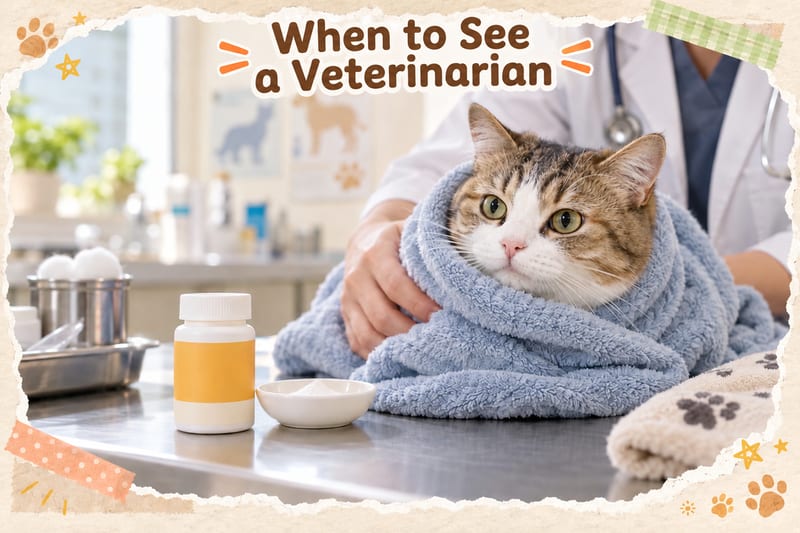
When to see a doctor
- The nail has already pierced the paw pad, with redness, swelling, and pus
- Bleeding after trimming won't stop, or the paw pad is swollen and painful days later, not bearing weight
- Nails abnormally thickened or crumbling (possible fungal or metabolic issues)
This article is for reference only; consult a registered veterinarian for problems.
What you can do starting today
- Buy cat-specific nail clippers and styptic powder and keep them in a drawer
- Tonight, try pressing the paw pad to extend the claw and identify the blood line (you don't have to cut)
- Set a phone reminder to trim every 2–4 weeks
- Start with the most relaxed front paw
Start with two paws, reward with treats immediately after trimming 5. Check senior cats' back paws monthly for curling into the paw pads
To combine nail trimming with daily grooming, see PetChill's brushing tutorial and coat care guide.
Further reading
PetChill grooming team — Hong Kong's most authoritative pet knowledge platform
- 5-step stress-free nail trimming →
- Cat and dog neutering guide →
- Cat weight management and BCS →
- 5 tips for training cats to scratch →
- The secret of cat purring →
Hong Kong small-unit practicalities: trimming nails in a 300 sq ft flat without a fight
Hong Kong homes are small; when a cat gets nervous there's nowhere to escape, making nail trimming a disaster. Here's a practical checklist designed for Hongkongers:
1. Setting the scene
- Choose the sofa corner where the cat likes to sleep, lay a towel for grip, and place a treat bowl nearby.
- Close windows, turn off the TV, avoid direct air-conditioning, and reduce noise distractions.
2. Schedule
- After 10 pm when the cat starts getting tired is the best time; if you work late, try before breakfast when hunger makes treats more tempting.
- Trim only two nails on the front paws each time, and the back paws the next morning; no need to do it all at once.
3. One person vs two
- Single owner: let the cat lie on its side on your lap, use your left forearm to gently hold the cat, and trim with your right hand; let it go immediately after, don't chase it.
- Couple/family: one person distracts with treats, the other trims quickly, then hand over to the other for reward.
4. Styptic powder substitutes
- If you don't have styptic powder at home, cornflour or flour works; available in Hong Kong supermarkets, keep it in your nail trimming kit.
5. When to see a doctor
- Nail already pierced the paw pad, red, swollen, and pus: go immediately to a 24-hour emergency vet (e.g., night clinics in Kowloon City, North Point).
- Bleeding after trimming won't stop despite pressure, or the cat limps and won't bear weight the next day: book a daytime clinic for an X-ray to rule out fracture or infection.
Remember, most Hong Kong veterinary clinics open half-day on Sundays; call ahead to confirm before you go, don't just show up.
📌 Key summary
- ✅ Cut only the white transparent tip, avoid the pink blood line
- ✅ Trim every 2–4 weeks, most important for indoor cats
- ❌ Never consider declawing, it's equivalent to cutting off a finger
- ❌ Don't force if struggling; nail trimming becomes a trauma
- ✅ Senior cats' back claws curl into paw pads easily; check monthly
 Fuji One full guide →

