
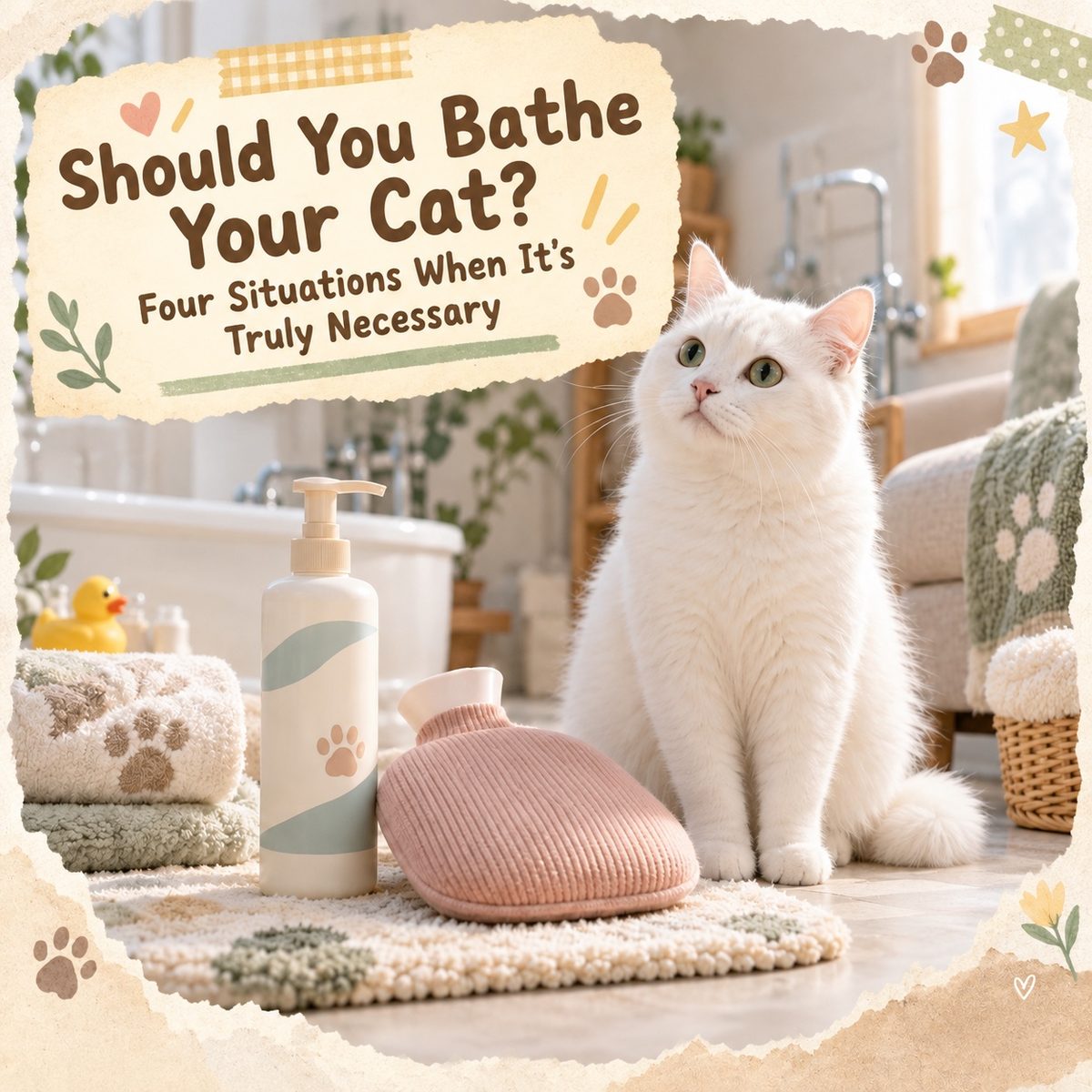
Quick answer: Healthy cats stay clean through daily grooming and most never need a bath in their lifetime. Only dirty cats, those needing medicated baths prescribed by a vet, long-haired cats that are hard to manage, or elderly/sick cats that can't groom themselves need bathing. Frequent washing actually damages the skin's natural oils.
Direct answer: Most cats don't need baths. A cat's tongue has barbs, and daily grooming is its built-in cleaning system. Frequent bathing strips natural oils and dries out the skin. Only dirty cats, those needing medicated baths for skin conditions, or long-haired cats that are hard to manage need bathing. This article explains when a bath is necessary and how to do it safely.
Do cats need baths?
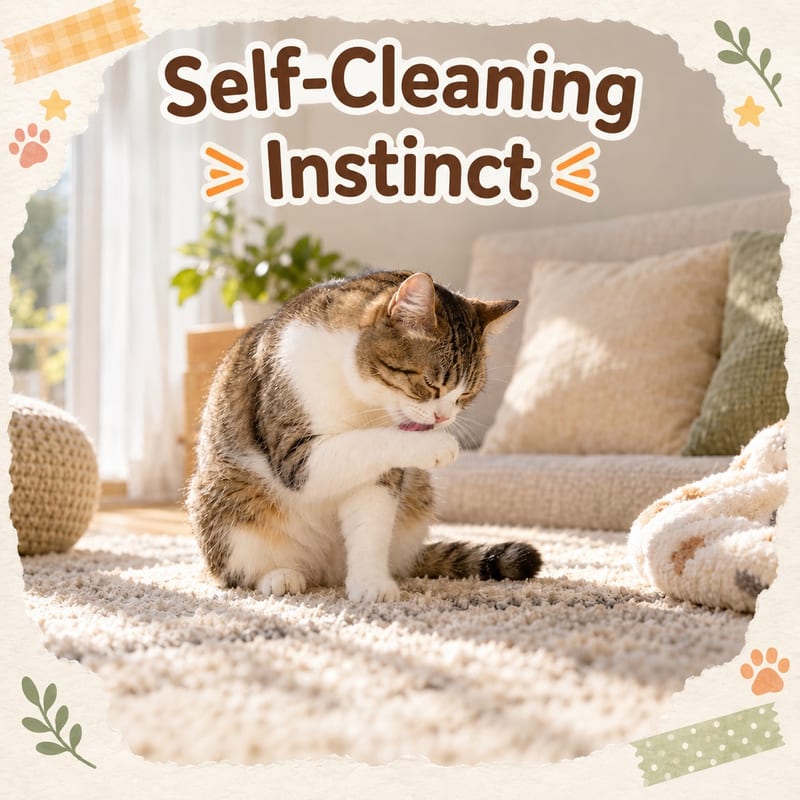
Mostly no. Cats are naturally clean animals and spend a large part of their waking hours grooming:
- Grooming — the barbs on the tongue act like a comb, removing dirt, dust, and loose dead hair from the coat.
- Natural oils — oils secreted by the skin protect the coat's shine and water resistance; over-washing destroys this layer.
- Self-cleaning efficiency — healthy cats maintain themselves, and their coat stays clean enough.
Most cats never need a bath in their lifetime. It may look like cats are obsessive about grooming, but they really do handle it themselves.
The four situations where a bath is truly needed
Normal cats don't need baths, but there are exceptions:
- Very dirty — spilled something all over the body, rolled in oil or harmful chemicals (e.g., cleaning agents, motor oil). Can't wait; bathe immediately to prevent licking it off.
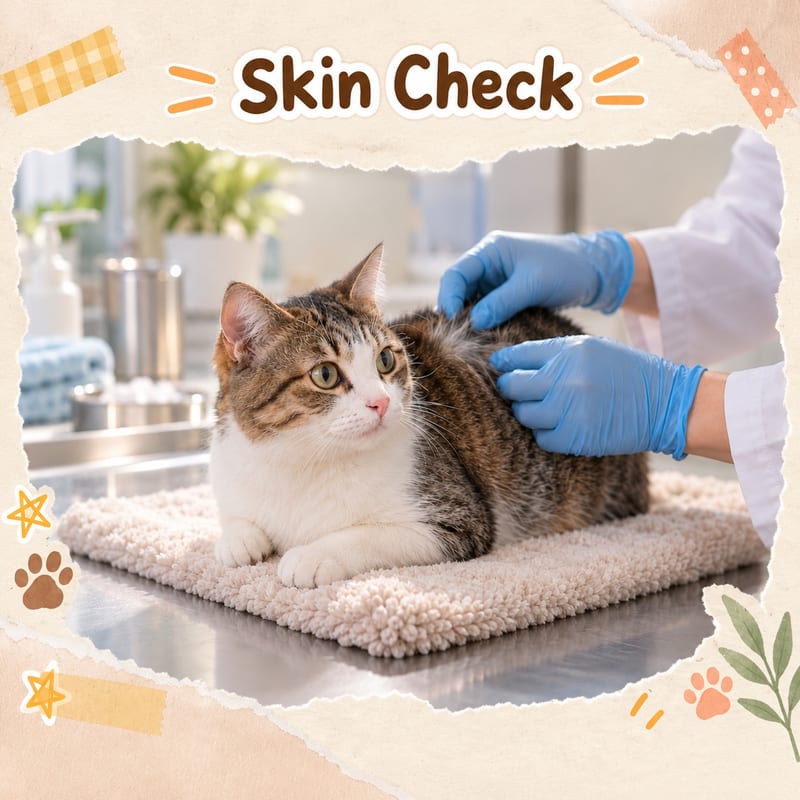
- Skin disease — vet-prescribed medicated baths, following the instructed frequency and medicated shampoo.
- Long hair hard to manage — long-haired breeds like Persians easily get dirty around the anus and abdomen and can't clean themselves thoroughly.
- Elderly/sick cats — joint pain or weakness prevents self-grooming; the owner needs to help clean.
If your cat is healthy, lives indoors, and hasn't rolled in something dirty, there's no need to bathe — blind bathing does more harm than good.
| Situation | Recommended action |
|---|---|
| Healthy short-haired indoor cat | No bath needed; rely on brushing and damp towels |
| Spilled something dirty | Immediate spot clean or bath with cat-specific shampoo |
| Vet-prescribed medicated bath | Follow instructed frequency and medicated shampoo |
| Long-haired cat | Daily brushing, spot clean the rear |
| Elderly/sick cat | Increase brushing, spot clean, don't force a bath |
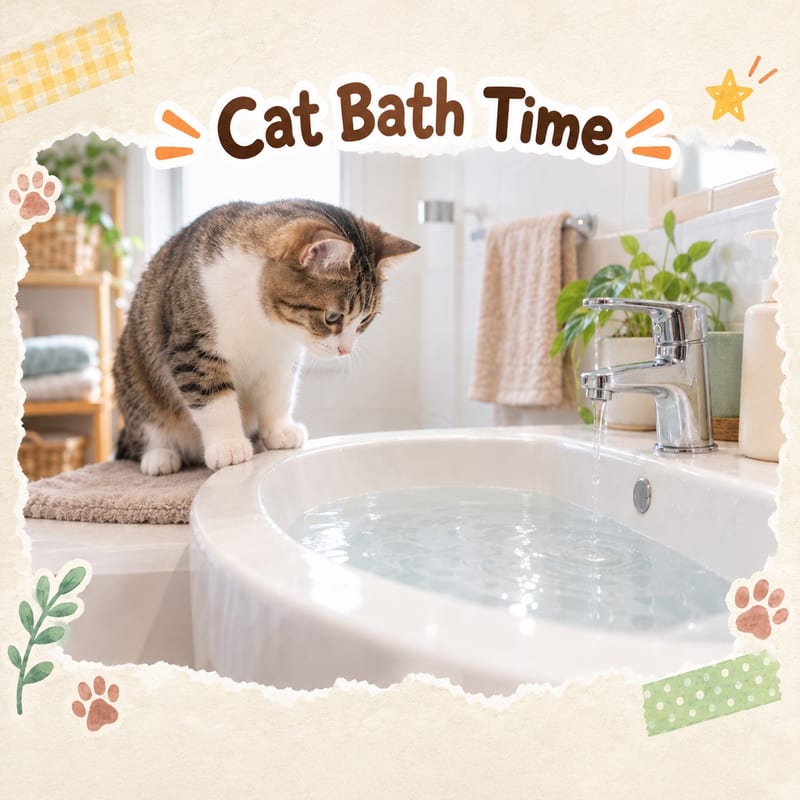
If a bath is really needed: six precautions
- Cat-specific shampoo — human shampoo has the wrong pH and ingredients for cat skin, causing irritation and sensitivity.
- Warm water — cold water frightens cats; too hot harms the skin. Lukewarm is fine.
- Quick rinse, fast dry — keep the whole process as short as possible; towel dry and blow dry immediately after rinsing.
- Don't wet the head and ears — water in the ear canal can cause inflammation; wipe the face with a damp towel instead.
- Prevent chills — dry and warm the cat immediately after bathing; don't leave it wet in a cold draft.
- Handle gently — fear of water is normal; hold gently and don't punish. If one person can't manage, use a two-person assembly line (one bathes, one soothes).
⚠️ If the cat struggles violently, hisses, or breathes rapidly, stop immediately. Forcing a bath can cause a stress response, and stress itself is more harmful to the cat's health than being dirty.
How to keep your cat clean without bathing
Daily cleaning for a healthy cat doesn't require water at all:
- Brushing — brush daily or every other day to remove dust and dead hair; it's the most effective "dry cleaning".
- Damp towel wipe — wipe dirty spots with a wrung-out warm damp towel, then dry immediately.
- Spot cleaning — wipe the mouth after meals, wipe the rear of long-haired cats after toileting; the owner does the spots the cat can't reach.
- Environmental cleaning — keep the litter box and bed clean so the cat is less likely to get dirty.
The best way to reduce the need for baths is actually frequent brushing — fewer mats, less shedding, and fewer hairballs ingested.
Special care for long-haired and senior cats
Long-haired cats (Persian, Burmese, Norwegian Forest Cat, etc.) have long coats that tangle easily and attract dirt; they are the group most in need of owner assistance:
- Daily brushing — start the habit from kittenhood, focusing on behind the ears, the collar area, armpits, belly, and trousers.
- Around the anus — check for stuck debris after toileting; clean with a damp cotton ball and dry, without dunking the whole cat.
- Dealing with mats — gently tease apart loose mats with your fingers or a comb; if a mat is hard and tight against the skin, don't cut it yourself — leave it to a groomer or vet.
Senior cats have stiff joints and reduced grooming ability, so their coat easily becomes oily, matted, and messy:
- Brush more often, use gentle motions, and avoid sore spots.
- Watch for greasy patches on the lower back and tail base (stud tail problem).
- A sudden decline in coat condition is often a warning sign of illness; seeing a vet is better than bathing.
Kittens should not be bathed before completing their vaccinations (to avoid stress and infection); spot-clean dirty areas with a warm damp towel.
When to see a vet
- After bathing, skin redness, heavy shedding, or persistent scratching — may be sensitivity to the shampoo or an underlying skin disease.
- The cat stops grooming entirely, and the coat becomes messy and oily — often a sign of illness or pain; see a vet for a check-up rather than bathing.
- During medicated baths, if the condition doesn't improve or worsens, follow up with the vet to adjust the plan.
This article is for reference only; consult a registered veterinarian for any concerns.
What you can do starting today
- Assess which category your cat falls into: healthy short-haired indoor cat — no bath needed; note this and don't feel guilty.
- Buy a cat-specific shampoo for emergencies, but don't treat it as a daily necessity.
- Establish a daily brushing routine: daily for long-haired cats, once or twice a week for short-haired cats.
- Keep damp and dry towels handy; use "dry cleaning" for dirty spots.
- If skin or coat condition persists abnormally, book a vet appointment; don't try to solve it with bathing.
To learn how to choose grooming tools, see PetChill's brushing tutorial and coat care guide.
Further reading
PetChill grooming team — Hong Kong's most authoritative pet knowledge platform
Hong Kong small-flat practicalities: how to bathe a cat without a bathtub
Hong Kong homes are generally small, without a bathtub or shower cubicle, but you can still bathe your cat safely with the following tools and steps:
Preparation
- Use a kitchen sink or large plastic basin placed in the shower area/standing space; line the bottom with a towel for grip.
- Prepare two bottles: one with warm water diluted with cat-specific shampoo, another with plain warm water for rinsing.
- Keep towels and a hairdryer (low heat + diffuser nozzle) within reach to avoid leaving mid-bath.
Bathing process
- First turn on the hairdryer on low heat in the room so the cat gets used to the sound and is less startled.
- Gently place the cat in the basin and pour the diluted shampoo over the back, avoiding the head and ears.
- Rinse quickly with warm water, holding the cat's chest with one hand and pouring with the other.
- Immediately wrap in a large towel to absorb water, then blow dry on low heat, brushing while drying to prevent tangles.
- Right after bathing, turn on a heater or warm air blower and keep the room above 25°C until the coat is completely dry.
Hong Kong weather tips
- During the humid "returning south" season, don't open windows immediately after bathing; use a dehumidifier to dry the indoor air first to prevent the cat from catching a chill.
- In winter, preheat the bathroom with a heat lamp for 5 minutes to raise the temperature and reduce temperature-shock stress.
Remember: in Hong Kong's small spaces, it's best to work in pairs — one person holds and soothes, the other operates — and finish within 5 minutes to minimise stress.
📌 Key summary
- ✅ Cats are naturally self-cleaning; grooming is enough.
- ❌ Frequent bathing strips natural oils.
- ✅ Exceptions: dirty, medicated baths, long-haired, senior cats.
- ✅ Daily brushing is the most effective dry cleaning.
- ❌ Don't bathe kittens before completing vaccinations.
🆕 2026 update: the truth about "cats don't need baths", exceptions, and how to use no-rinse products
Direct answer: Healthy short-haired cats generally don't need regular baths — they groom themselves and their skin has a natural oil layer for protection. Baths are needed in exceptional cases: long-haired/hairless breeds, skin disease (vet instructions), contact with oil or excrement, or elderly/overweight cats with reduced self-care. In Hong Kong's humid weather, "keeping dry" is more important than "frequent bathing".
Bath or not? Comparison table
| Situation | Bath needed? | Action | Triage |
|---|---|---|---|
| Healthy short-haired adult, indoor | No regular bath needed | Brushing 2–3 times a week is enough | 🟢 Normal |
| Long-haired breeds (Persian, Maine Coon, etc.) | Regular care needed | Spot clean every 2–4 weeks + daily brushing | 🟡 Needs care |
| Hairless breeds (Sphynx) | Regular cleaning needed | Wipe body every 1–2 weeks with damp cloth/pet-specific cleaner | 🟡 Needs care |
| Contact with oil, paint, excrement | Spot cleaning needed | Warm water + pet shampoo, dry immediately after spot wash | 🟡 Immediate action |
| Skin disease (fungus, mites, seborrhea) | Medicated bath needed | Only as directed by vet with medicated products and frequency | 🔴 Vet instructions |
| Flea/tick infestation | Needs concurrent treatment | Use vet-prescribed medication (spot-on/oral primarily) | 🔴 Vet instructions |
| Elderly/overweight cat with poor self-care | Assisted cleaning needed | Wipe body with damp cloth 1–2 times a week + brushing | 🟡 Needs care |
| Post-surgery or unhealed wound | No full-body bath | Spot clean only, avoid the wound | 🔴 Vet instructions |
Special precautions during Hong Kong's humid season
- Fungal risk: Cats have a thick coat; if not dried thoroughly after bathing, prolonged dampness on the skin encourages fungal growth (especially March–September in Hong Kong).
- Drying requirements: Long-haired cats must be dried to the roots after bathing; don't wrap in a towel and let it air dry.
- Dehumidifying and cleaning: Keep the home ventilated and regularly wash cat beds and blankets — more effective than frequent bathing.
- Indoor air-conditioning: Don't let a damp cat into an air-conditioned room; dry it first.
How to use no-rinse/spot-cleaning products (PetChill current prices, verified 2026-10-02)
| Product type | Example | Price | Usage |
|---|---|---|---|
| Daily deodorising spray | MBPL Care Natural Deodorising Antibacterial Spray 50ml (cat & dog) | $29 | Spray from about 20cm onto the coat or fabric; don't spray directly on the face |
| Deodorising antibacterial spray | Japanese brand mineral litter cleaning, loose hair removal, natural fragrance spray 200ml | $38 | Use after wiping the coat to help remove loose hair and odour |
| Large-capacity deodorising | Japanese LEC Pet Deodorising Antibacterial Spray 400ml | $48 | For cat beds and litter box surroundings; not for the cat's body |
| Brushing tool | Mlaximilian wooden-handled pin brush (for short hair) | $48 | 2–3 times a week, brush in the direction of the coat to reduce hairballs |
| Dead hair removal | One-push dead hair removal pet massage brush | $48 | Use more often during shedding season (spring/autumn) |
| Long-haired comb | FOBnimarut long-haired cat row pin brush | $55 | Brush long-haired cats daily to prevent tangles |
| Bathing anti-scratch bag | Japanese Nekoichi cat bathing anti-scratch bag | $65 | Use when a bath is essential to reduce scratches and stress |
| Bathing aid bag | Bathing gadget multi-functional cat washing bag | $35 | Entry-level option for short spot cleaning |
Key usage points: No-rinse products are cleaning aids and cannot replace vet-prescribed medicated baths; sprays should not be applied directly to the cat's face, eyes, ears, or wounds.
🟢🟡🔴 Triage guide
| Situation | Triage | Recommendation |
|---|---|---|
| Smooth coat, no skin odour, no itching | 🟢 | No bath needed; regular brushing is enough |
| Slightly oily coat, mild body odour | 🟡 | Wipe with damp towel + brushing, or no-rinse spray |
| Matted coat, local stains | 🟡 | Spot clean and dry; consider regular grooming for long-haired cats |
| Red skin, hair loss, constant licking/scratching | 🔴 | Possible skin disease/allergy/parasites; see a vet |
| Low energy or shivering after bathing | 🔴 | Possible chill or discomfort; keep warm and monitor; see a vet if it persists |
Sources (supplementary)
- International Cat Care: Grooming your cat
- International Cat Care: Everyday care for your cat
- International Cat Care: Problem behaviour in cats (over-grooming and other behavioural issues)
 K9 Natural full guide →
 Feline Natural full guide →
 Fuji One full guide →

