
Quick answer: FVRCP is a core vaccine that all cats must receive: kittens start at 6-8 weeks with three doses, and adult cats get an annual booster. The 5-in-1 only adds FeLV and chlamydia, and is only considered based on the risk of your cat going outside or contact with other cats.
As a responsible cat owner, taking your cat for regular vaccinations is the first line of defence for their health. But when you walk into a veterinary clinic and hear terms like "FVRCP", "5-in-1", and "rabies vaccine", do you often feel confused? Today, PetChill will help you understand everything about cat vaccines.
Core vs non-core vaccines
Cat vaccines are broadly divided into two categories:
Core vaccines (essential)
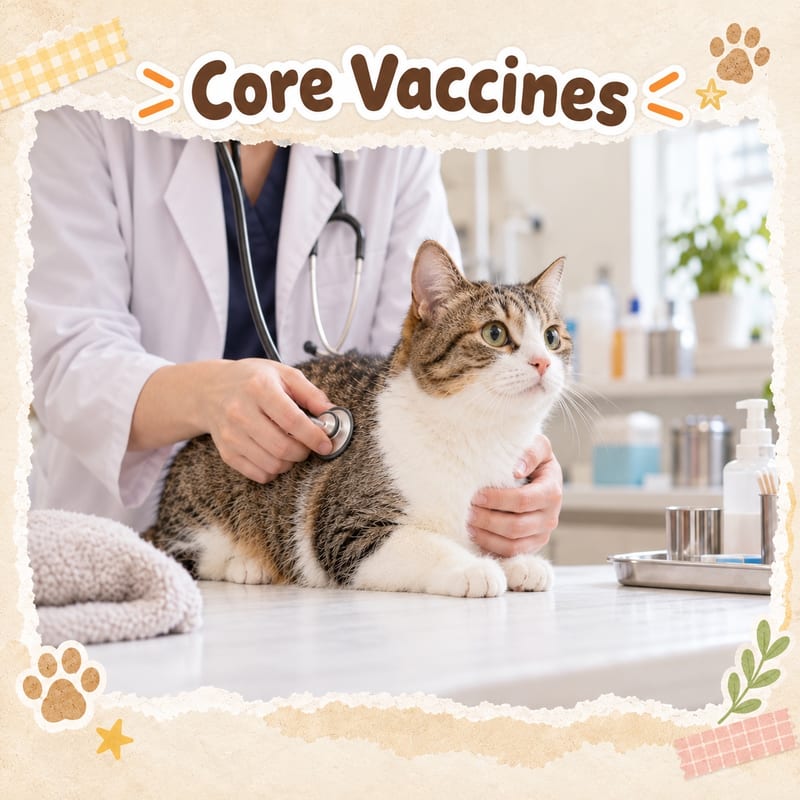
- FVRCP vaccine: Protects against feline panleukopenia (feline distemper), feline calicivirus, and feline herpesvirus. These three diseases are highly contagious, and feline panleukopenia has a mortality rate of 50%-90%, so it must not be taken lightly.
Non-core vaccines (given as needed)
- 5-in-1 vaccine: Adds feline leukemia virus (FeLV) and feline chlamydia to the FVRCP base.
- Rabies vaccine: Required by law in some regions according to local regulations.
Recommended vaccination schedule for kittens
| Age (weeks) | Vaccine | Notes |
|---|---|---|
| 6-8 weeks | First dose of FVRCP | Initial vaccination |
| 10-12 weeks | Second dose of FVRCP | Booster |
| 14-16 weeks | Third dose of FVRCP + rabies | Completes primary immunity |
Adult cats need an annual booster to maintain antibody levels. Some veterinarians recommend antibody testing (titer test) to determine whether a booster is needed.
Precautions before and after vaccination
Before vaccination:
- Ensure your cat is healthy, with no sneezing, runny nose, or other symptoms.
- Deworming should ideally be completed one week before vaccination.
- For cats newly brought home, allow 7-10 days to adjust to the environment before vaccination.
After vaccination:
- Mild swelling at the injection site may occur and usually resolves within 1-2 weeks.
- A few cats may experience lethargy or decreased appetite, usually recovering within 24-48 hours.
- In very rare cases, allergic reactions (facial swelling, vomiting) may occur and require immediate veterinary attention.
Common myths about vaccination
Q: Do indoor cats need vaccinations?
A: Yes! Viruses can be brought indoors on owners' clothing and shoes, so even cats that never go out are at risk.
Q: Can too many vaccines harm my cat?
A: Modern vaccine technology has improved greatly, and serious side effects are extremely rare (about 1 in 10,000). Compared with the risk of disease, timely vaccination remains the best choice.
Q: Can I vaccinate my cat at home myself?
A: Not recommended. Vaccine storage and administration are strictly regulated; improper handling can make the vaccine ineffective or cause infection.
PetChill's Reminder
Vaccines are the most cost-effective investment in preventive medicine. Rather than spending a lot on treating diseases, it's better to vaccinate regularly to build a protective net. We recommend that owners keep a vaccination record and combine it with an annual health check so that your cat can live a long, healthy life with you for many more years.
To learn more about cat health, stay tuned for the latest articles from PetChill!
Hong Kong small-flat practical guide: 7-day checklist before and after vaccination
Space is tight in Hong Kong, and cats get stressed easily, so extra care is needed before and after vaccination. The following 7-day checklist helps you put the article's advice into practice without rushing around.
Three days before vaccination
- Reduce stress: Place the carrier in the living room as a cat house, with a towel and catnip, so your cat can go in and sleep on its own, reducing fear of the carrier.
- Deworming check: If not previously dewormed, get cat-specific deworming medication from a pharmacy, dose by weight, and complete at least seven days before vaccination.
- Health observation: Record appetite and litter box habits daily, and watch for sneezing or watery eyes. If anything is abnormal, reschedule.
On vaccination day
- Transport: Call a taxi or pet-friendly Uber. Put a pee pad in the carrier bottom, and bring an extra towel to cover the carrier door to reduce outside stimulation.
- Clinic process: Upon arrival, tell the nurse whether this is the first vaccination or a booster, show the previous vaccination record card, and let the veterinarian examine your cat before deciding which vaccine to give.
Four days after vaccination
- Settle in a quiet room first: In small Hong Kong flats, keep your cat in a room or bathroom for half a day to calm down and avoid disturbance from other pets.
- Monitor side effects: Reduced eating and activity in the first 24 hours is normal. If appetite is still poor after 48 hours, or if the injection site is swollen and hot, take your cat to a 24-hour emergency clinic immediately (e.g., CityU Veterinary Medical Centre, Kowloon Animal Hospital, etc.).
- Pause bathing: Hong Kong's humid weather makes many owners wipe their cats daily. For three days after vaccination, use pet wipes for local cleaning, avoiding the injection site.
Long-term management
- Use a phone app (e.g., "PetNote") to record each vaccination date and set a reminder for next year's booster.
- At the annual health check, proactively ask your veterinarian: "Do we need an antibody test this year?" to avoid over-vaccination.
Follow these steps, and even in Hong Kong's smallest flats, you can vaccinate your cat with peace of mind without getting overwhelmed.
Further reading
- All articles index
- PetChill pet supplies
- Cat ringworm (dermatophytosis) treatment →
- Cat vomit colour chart →
- Cat ear mite and earwax colour identification →
- Cat poop observation guide →
- Complete guide to cat hairballs →
📌 Key points
- ✅ FVRCP is a core vaccine; kittens start at 6-8 weeks with three doses
- ✅ Adult cats need an annual booster to maintain antibodies
- ❌ The idea that indoor cats don't need vaccines is wrong
- ❌ Self-vaccinating at home is high-risk and not recommended
- ✅ Pay attention to health status and side effects before and after vaccination
 Wellness Core full guide →