
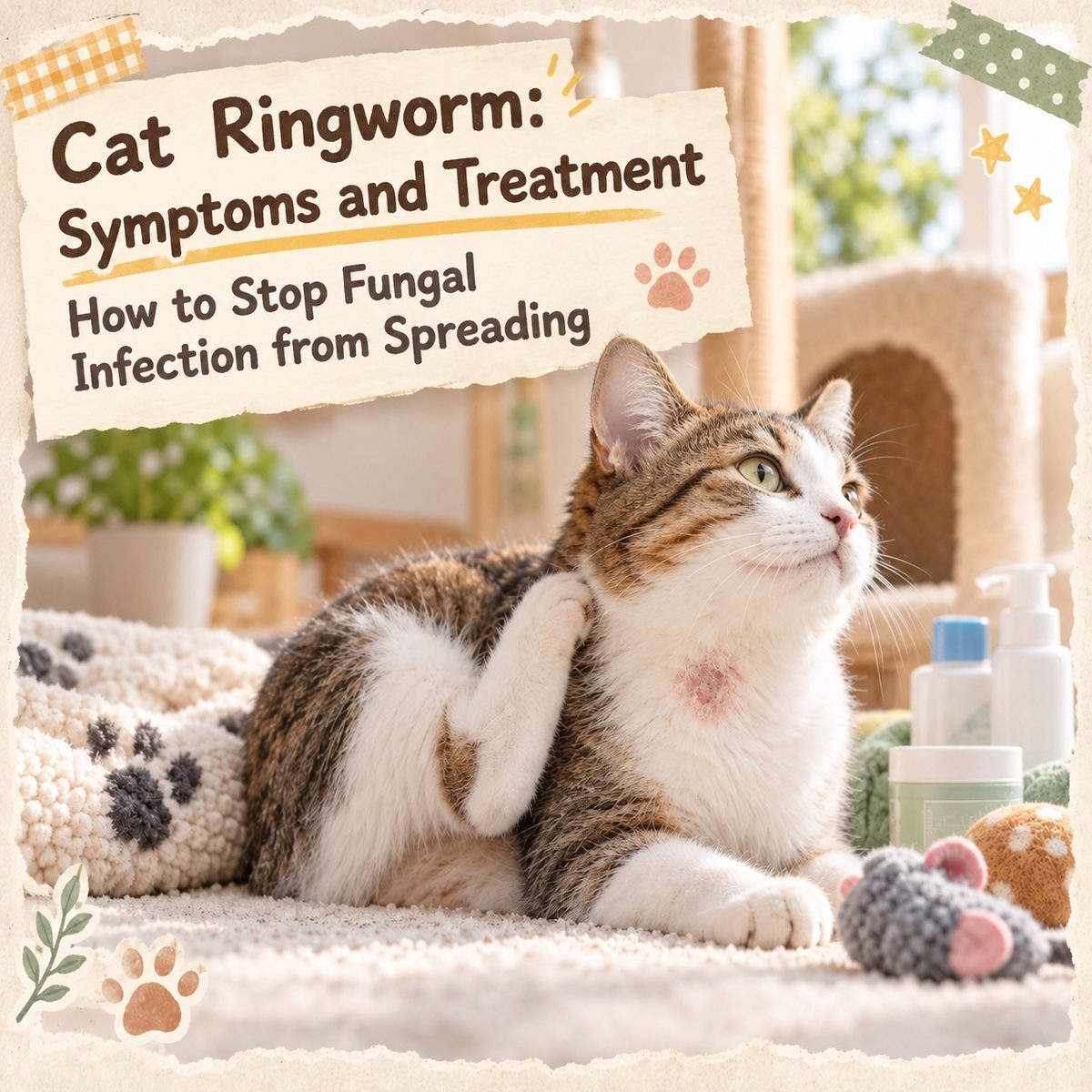
Quick answer: Cat ringworm is a common fungal infection in Hong Kong's humid environment and can spread to humans. If you see circular bald patches, put on gloves and isolate the cat immediately, see a veterinarian as soon as possible for confirmation, and treat with medication while disinfecting the environment with high heat. Do not stop medication midway if you want to eradicate it.
Cat ringworm is a skin infection caused by dermatophyte fungi. It thrives in Hong Kong's humid environment and can spread to humans. If you see circular bald patches on your cat, do not touch them with bare hands—see a veterinarian early for confirmation, follow the treatment course, and clean the environment at the same time. Only by doing all three in parallel can you eradicate it. This article explains the causes, symptoms, transmission risks, treatment steps and prevention methods of cat ringworm in one go.
What is cat ringworm? Why is it especially common in Hong Kong?
Cat ringworm is an infection caused by dermatophyte fungi multiplying on the cat's skin surface, damaging the hair shaft and keratin layer. Medically it is called dermatophytosis. It is not a worm or an allergy, but a genuine fungal disease, so the care approach is completely different from ordinary dermatitis.
Hong Kong has high humidity all year round, and small flats have limited ventilation. Clothing, fabrics and carpets easily become slightly damp over long periods—this is exactly the environment fungi love most. In addition, Hong Kong has a high cat population density and active adoption and boarding, with frequent cat-to-cat contact, making cat ringworm one of the most common skin diseases among local cats.
Cats prone to infection:
| Group | Why the risk is higher |
|---|---|
| Kittens, senior cats | Immune system immature or declining |
| Sick or immunocompromised cats | Poor ability to fight fungi |
| Long-haired cats | Coat traps moisture and is hard to dry |
| Newly adopted or boarded cats | Carry the fungus during incubation without obvious symptoms |
| Multi-cat households | Close contact easily spreads infection |
Tip: Cat ringworm is not "caused by poor grooming". Healthy adult indoor cats are at lower risk, but fungal spores are everywhere; the key is keeping the environment dry and detecting abnormalities early.
How to recognise cat ringworm? Look for circular bald patches
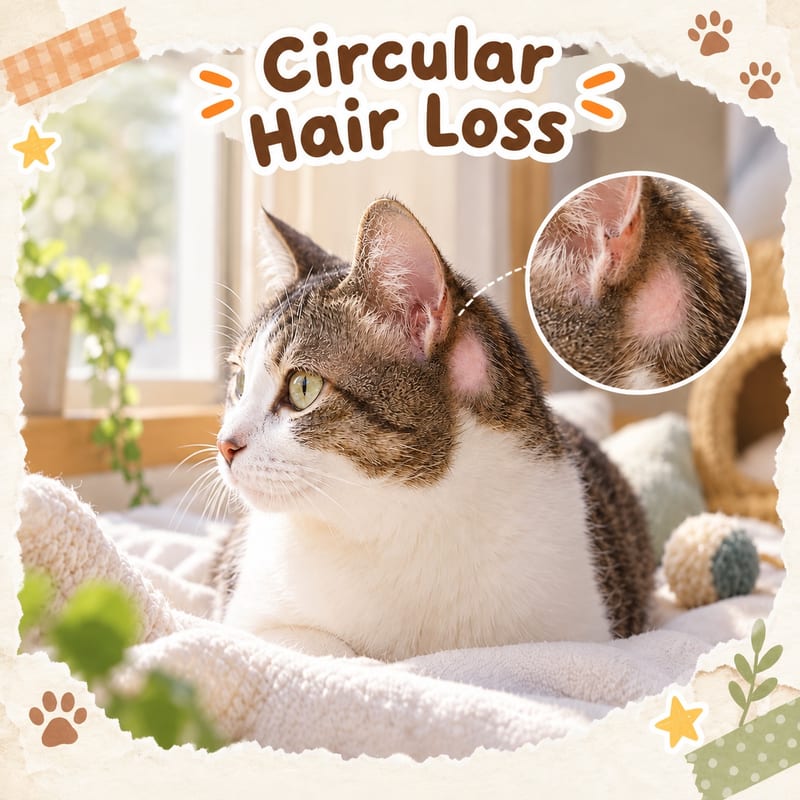
The most typical sign of cat ringworm is circular bald patches: hair breaks and falls out from the centre, forming a roughly circular bald area, with the edge of the skin reddened in a ring and fine scales often visible on the surface.
Common locations and symptoms:
- Head, around the ears, face—most typical; rough and scaly to the touch
- Front legs, paws—places cats frequently lick and rub
- Whisker roots, nose bridge—sometimes only slight hair loss with redness and swelling
- Varying degrees of itchiness—some cats scratch frantically, others show no reaction at all
- In severe or prolonged cases, bald patches may expand and merge into irregular shapes, or even spread over the whole body
Tip: Hair loss does not equal cat ringworm—allergies, ear mites, regrowth after clipping, and psychological over-grooming can all cause hair loss. Be alert when you see "circular bald patches with a red ring of scale", and accurate diagnosis must rely on a veterinarian's microscopic examination or fungal culture. Guessing on your own or using human ointment can easily lead to misdiagnosis and prolong treatment.
Can cat ringworm spread to humans? Yes! These people need to be extra careful
Yes. Cat ringworm is a zoonotic fungal disease that can be transmitted from cats to humans, medically called animal dermatophytosis. After infection, people usually develop red, circular, well-defined, very itchy patches on the skin, often mistaken for eczema and treated late.
Higher-risk groups:
- Children—immune system not fully mature, and they like to cuddle and play closely with cats
- People with weaker immunity—the elderly, those with chronic illnesses, those taking immunosuppressive drugs
- People who directly touch the infected cat's lesions, or who have long-term contact with the infected cat's blankets, combs, cat beds or carriers
There are two main transmission routes:
- Direct contact—touching the infected cat's contaminated hair or scales
- Indirect contact—spores land on combs, fabrics, carpets or sofas, and people become infected after touching them
Four household protection measures:
- Wash hands thoroughly before and after handling the infected cat, and wear disposable gloves when applying medication or cleaning lesions
- Isolate the infected cat in an easy-to-clean space (hard flooring, not fabric cat beds), and temporarily suspend close contact with other pets and children
- Do not share blankets, combs or bedding with the infected cat, and other cats should temporarily not share the same set of tools
- If a family member develops red, circular, itchy patches on the skin, they should see a doctor—human ringworm requires a human dermatologist, not veterinary ointment
How is cat ringworm treated? Four steps, none can be skipped
Treating cat ringworm is a combination therapy; missing any step makes relapse easy:
- See a veterinarian for confirmation—first use microscopy or fungal culture to confirm dermatophyte infection, rule out allergies and ear mites, and do not use human ointment blindly
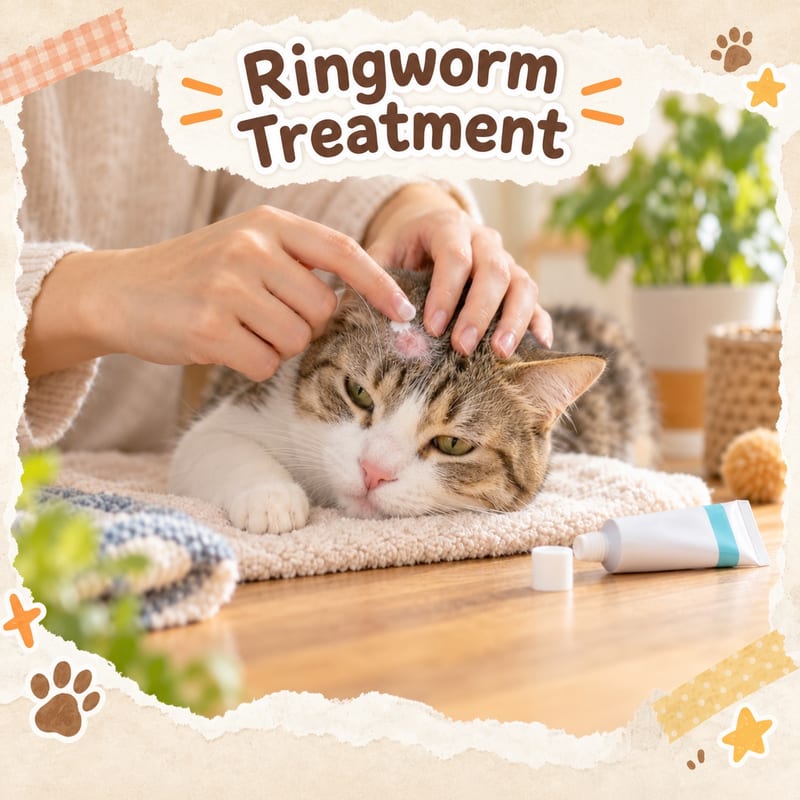
- Topical medication—antifungal ointment, medicated baths or wet compresses for local lesions to reduce surface contamination
- Oral medication—for severe, multi-site or chronically recurrent cases, a veterinarian prescribes oral antifungal drugs dosed by body weight
- Clip the hair around lesions—allows medication to reach the skin directly and reduces contaminated shed hair spreading around the house (follow your veterinarian's instructions on the clipping area)
The most important principle of treatment: do not stop medication midway. The skin looking better and the red ring fading does not mean the spores have been cleared. Stopping early is the most common cause of relapse; most cases require continued medication for several weeks, and the decision on when to finish is based on the veterinarian's follow-up results (including a negative culture).
Questions to ask your veterinarian at follow-up:
- When is it appropriate to do another culture to confirm?
- Do other cats in the home need simultaneous examination or preventive treatment?
- How should the frequency of medicated baths and home cleaning be coordinated?
Environmental cleaning: not killing spores is as good as not treating
The most stubborn aspect of cat ringworm is that fungal spores can survive in the home environment for a long time, and ordinary cleaning may not kill them. Treating only the cat and not the home makes it easy to abandon treatment halfway:
- Wash at high temperature the infected cat's bedding, blankets and fabrics; where suitable, treat with diluted bleach
- Clean and disinfect combs, toys, carriers and food bowls, and do not share them with other cats during this period
- Vacuum regularly throughout the home, especially shed hair under sofas, under low cabinets and along carpet edges
- Wipe hard floors with diluted bleach-type cleaners (first confirm they are safe for cats and let them dry completely before letting the cat return)
- Keep the home dry and well-ventilated; use a dehumidifier on humid days—fungi fear dryness most
Tip: Seal and discard vacuum bags and dust bin contents containing shed hair immediately; isolate the cat in another room during cleaning to prevent it from walking over wet cleaning agents.
Cat ringworm prevention: keep dry + boost immunity + isolate new cats first
- Keep the environment dry—dehumidify and ventilate; do not hang wet clothes near where the cat sleeps
- Check the skin weekly—when holding the cat, feel around the ears and front legs for bald patches, red rings or scales
- Adequate nutrition—high-quality diet with sufficient protein and essential fatty acids so the skin barrier and immunity can hold up
- Isolate new cats first—newly adopted or boarded cats should be isolated and observed for a period, confirmed to have no skin abnormalities, and given a skin check before joining the household cats
- Separate tools in multi-cat households—each cat has its own comb and bedding to reduce cross-transmission
When to see a doctor?
If the following occur, do not wait and observe—book a veterinarian as soon as possible:
- Seeing suspected cat ringworm signs such as circular bald patches, red rings, scales
- Hair loss area expanding in a short time, or multiple lesions appearing at once
- The cat scratches or bites until skin is broken, oozing or crusting, with risk of secondary bacterial infection
- Lesions in sensitive areas such as around the eyes, ear canal, nose bridge
- Family members (especially children) develop red, circular, itchy patches on the skin
- Recurrent episodes during treatment, or bald patches reappearing after stopping medication
What you can do starting today
- This week, hold your cat and check once: any hair loss or red rings around the ears and front legs
- On humid days, use a dehumidifier and keep the cat's sleeping area dry and ventilated
- When a new cat enters the home, isolate and observe the skin first, and book a veterinarian check first
- As soon as you see a circular bald patch: do not touch with bare hands, wear gloves, and book a veterinarian for confirmation as soon as possible
- Make handwashing after handling the cat a family habit, especially for children
A cat's skin and coat condition is closely related to daily nutrition. To choose the right food for your pet and take care of the skin barrier, see PetChill's cat food reviews and nutrition guides.
This article is for reference only; consult a registered veterinarian for any concerns.
🟢🟡🔴 Red-flag triage table: when cat ringworm needs an immediate vet visit
| Observation | 🟢 Home care (follow vet instructions) | 🟡 Book vet soon (within 1–3 days) | 🔴 Seek medical attention immediately (same day) |
|---|---|---|---|
| Extent of hair loss | Only 1 small circular bald patch (<1cm) | Multiple bald patches spreading, obvious edges | Extensive hair loss, affecting face or whole body |
| Skin appearance | Mild scaling, no redness or swelling | Scaly edges of circular bald patches, crusting, thickened skin | Extensive redness, swelling, oozing, pus, obvious pain |
| Itchiness | Occasional scratching, mostly normal | Frequent scratching, increased licking, head shaking | Scratching until bleeding, unable to sleep, continuous crying |
| Energy and appetite | Normal | Slightly tired, slightly reduced appetite | Refusing food, lethargic, fever |
| Family situation | No one has skin symptoms | Family member has suspected ringworm red ring | Children, elderly or immunocompromised have symptoms (need simultaneous medical attention) |
| Other pets | Other cats and dogs have no symptoms | Other pets develop bald patches | Multiple pets break out at the same time |
| Kittens/senior cats | Adult cat, good body condition | Kittens, senior cats, sick cats (weaker immunity) | Kittens with systemic infection or refusing food |
| Treatment response | Improvement within 2 weeks of medication as instructed | No improvement after 2–4 weeks of medication | Spreads or worsens after medication |
How long does cat ringworm treatment take? Stage by stage
Cat ringworm treatment can be long; here are the typical stages (actual duration depends on severity, the cat's immunity and the veterinarian's judgement):
| Stage | Approximate time | Key points during this period | Common misconception |
|---|---|---|---|
| Diagnosis stage | Week 0–1 | Veterinary examination (may use UV lamp or culture), start medication, environmental cleaning | "Buy ointment and apply as soon as you see a bald patch"—wrong, confirm first |
| Early treatment | Week 1–2 | Medication as instructed, daily environmental cleaning, isolate new cats | "Stop medication as soon as it stops spreading"—wrong, spores remain |
| Improvement stage | Week 2–4 | New hair starts to grow, bald patches shrink; treatment must continue | "Recovered when hair grows back"—appearance recovery ≠ non-infectious |
| Consolidation stage | Week 4–8 | Continue medication until the veterinarian confirms; follow-up or culture recheck | "No need for follow-up once better"—follow-up is the only way to confirm eradication |
| Conditions for stopping medication | After week 8 (depending on case) | The veterinarian decides based on clinical examination/culture results | Stopping early on your own = main cause of relapse and infecting family members |
When is it considered "recovered"?
Judging recovery is not by seeing hair grow back with the naked eye, but by:
- Skin lesions completely resolved, new hair growing normally
- Veterinarian examination shows no signs of active infection (some cases require another fungal culture with negative result)
- Completion of the entire prescribed course (usually longer than the appearance recovery period)
As long as the course is not complete, the cat may still be infectious—this is especially important for households with children or immunocompromised members.
Frequently asked questions
Q: Can cat ringworm spread to humans? A: Yes. Cat ringworm is a zoonotic disease, and fungal spores can infect humans through direct contact or contaminated objects. People with weaker immunity (young children, the elderly, those on immunosuppressive therapy) are at higher risk. If a family member develops a suspected circular red ring on the skin, they should see a doctor as well and home cleaning should be intensified.
Q: How long does cat ringworm take to helps manage completely? A: It depends on severity, but generally several weeks to several months. The key is to complete the entire course—even if the hair has regrown and the skin looks healed, spores may still remain. Stopping medication early on your own is the most common cause of relapse, so you must follow the veterinarian's instructions to complete the course and attend follow-up visits.
Q: Can I buy ointment to apply to my cat myself? A: No. First, many skin conditions (such as mites other than fungi, bacterial infections, allergic hair loss) look similar to cat ringworm, and using the wrong medication will delay treatment; second, the concentration and formulation of human antifungal drugs may not be suitable for cats, and some ingredients can poison cats if licked. A veterinarian must confirm the diagnosis first.
Q: How can I disinfect the environment effectively? A: Fungal spores can survive in the environment for a long time, so treating the cat alone is not enough. Key points: vacuum daily (especially where the cat spends time and sofa crevices), regularly wash cat beds, blankets and toys (hot water washing is suitable), and treat hard surfaces with disinfection methods instructed by your veterinarian or product guidelines. After disinfection, wipe with clean water to avoid the cat contacting residual chemicals.
Q: In a multi-cat household, if one cat is infected, what should I do with the others? A: Fungal spores spread very easily through shared litter boxes, blankets and mutual grooming, so veterinarians generally recommend checking and treating all cats together, not just the one with symptoms. At the same time, increase the frequency of litter box cleaning, temporarily separate cats and avoid sharing supplies.
Q: How can I prevent cat ringworm from recurring? A: Boost overall immunity and reduce environmental spores: keep the home dry (humidity favours fungi), provide balanced nutrition, reduce stress, isolate and observe new cats before introduction, and groom regularly to detect abnormalities early. For recurrent cases, ask your veterinarian to check for underlying health problems.
Q: What PetChill products can help with cat ringworm care? A: [PetChill HK] offers moisture-proof and dehumidifying products, pet-specific disinfectant cleaning products, hypoallergenic shampoos, grooming tools and vacuum accessories for the environment. Self-pickup service is available at the Fo Tan, Yuen Long and Fanling stores, helping you deal with both the cat and the environment at the same time.
Sources
- International Cat Care — Ringworm in Cats — causes, zoonotic risk, symptoms and treatment principles of cat ringworm
- International Cat Care — Itchy cat: when it is not fleas — other common causes of itchy skin in cats (helps distinguish cat ringworm from other skin problems)
Hong Kong veterinary fee reference (published on clinic websites)
- Hong Kong Leo Animal Medical Centre (LAMCVET, Yau Ma Tei): basic consultation $350|night consultation $600|emergency consultation $600|referral consultation $600 (official fee schedule)
- Creature Comforts (East District Animal Hospital / Tseung Kwan O Veterinary Clinic): Tseung Kwan O from $420|East District daytime (8am–9pm) from $370|evening (9pm–12am) from $550|late-night emergency (12am–8am) from $1,100|home visit service from $1,050 (official information)
Consultation fees only cover history taking and basic examination; blood tests, imaging, medication and hospitalisation are charged extra and quoted by the clinic according to actual circumstances. Prices are subject to the clinic's latest announcement; this article is for reference only.
Disclaimer
This article is general pet health information and cannot replace veterinary diagnosis or treatment. Each cat's condition, medical history and medication contraindications are different; any symptom assessment and treatment plan (including drug type, dosage and course length) must be decided by a registered veterinarian after an in-person consultation. If your cat shows red-flag symptoms mentioned in this article, please go to a veterinary clinic or 24-hour emergency animal hospital immediately. Fee information in this article is excerpted from official clinic websites; prices may change at any time and are subject to the clinic's latest announcement.
Further reading
- Pet Health Care →
- Cat Ear Mites →
- Pet Allergy Itch Relief →
- Cat Fleas →
- Cat Vomit Colour Chart →
- 8 Types of Cat Skin Diseases Differentiation →
- Cat Poop Observation Guide →
- Complete Guide to Cat Hairballs →
- Cat Symptom Self-Check Guide (12 major symptoms quick reference + 🟢🟡🔴 red-flag triage table) — compare the severity of each symptom and when to seek veterinary care at a glance
📌 Key summary
- ✅ Circular bald patches + red ring of scale = see a veterinarian immediately
- ✅ Treatment requires ointment + oral medication + environmental disinfection together
- ✅ Use a dehumidifier on humid days to keep the cat's sleeping area dry
- ❌ Do not use human ointment blindly; it easily causes misdiagnosis and prolongs treatment
- ❌ Stopping medication when the skin looks better leads to a very high relapse rate