Whether to induce vomiting after a cat or dog eats something toxic is always the veterinarian's decision. The only three things an owner should do straight away are: remove the pet from the poison, keep the packaging, and contact the veterinarian or a 24-hour emergency clinic immediately. Do not induce vomiting yourself.
Quick answers
- Whether to induce vomiting after ingestion is always the veterinarian's decision. Owners should not induce vomiting, give medication, oil or activated charcoal themselves.
- Never induce vomiting yourself in these situations: after corrosive cleaners or drain cleaner, petroleum products and neat essential oils, sharp objects (glass, needles, bones) or string-like foreign bodies; if the pet is already vomiting or is unconscious, fitting or struggling to breathe; and if there is uncontrolled bleeding or suspected impaired clotting.
- On spices: garlic, onion, spring onion, Chinese chives, shallot and garlic or onion powder are high risk. Irritant spices such as Sichuan pepper, star anise and five-spice powder, usually paired with high-salt, high-oil processed food, should not be fed either.
- For cosmetics and skincare, watch for preservatives (sodium benzoate, benzyl alcohol), salicylic acid, alcohol, fragrance and essential oil ingredients, and keep them all in lidded drawers. Wait until skincare has fully dried before touching your pet.
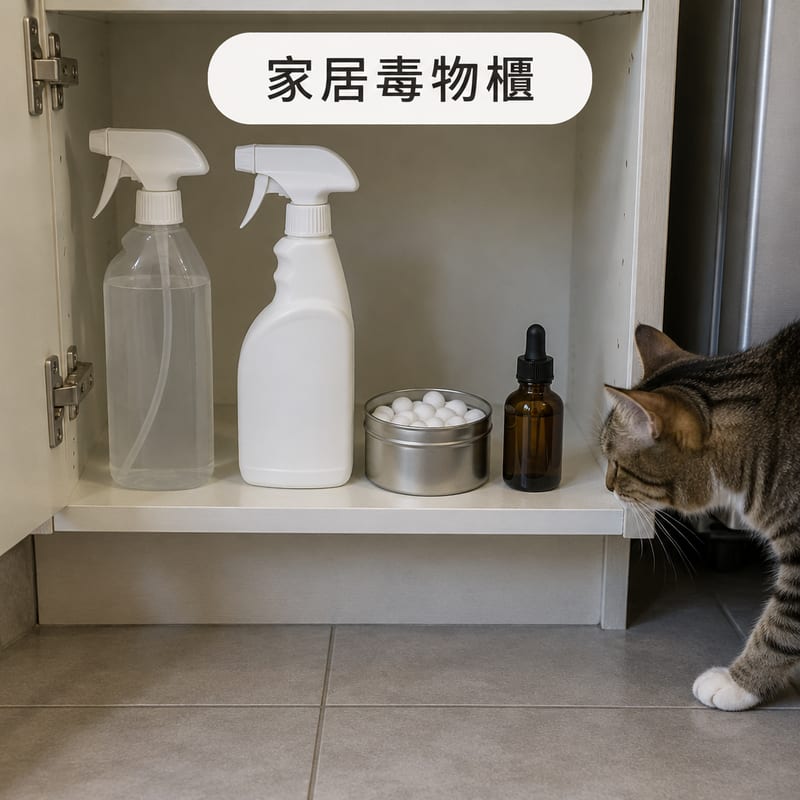
- Mothballs, insect repellents and essential oils such as eucalyptus and jasmine can cause problems through fumes and skin contact alone. Diffusers and ultrasonic aroma diffusers should not be placed in areas your pet uses.
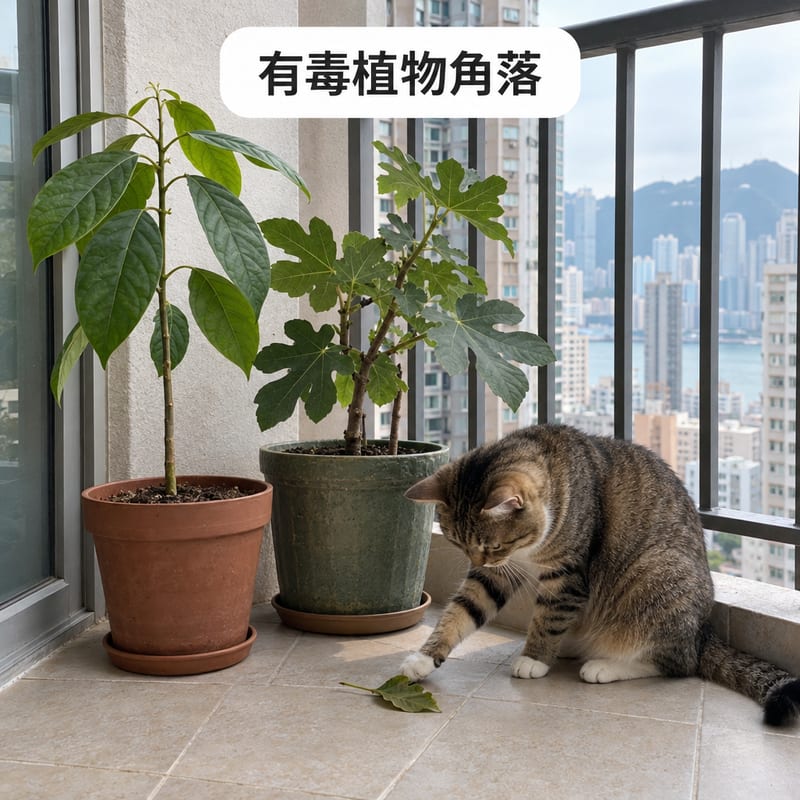
- Plants such as fig, avocado, lilies and dieffenbachia are risky for cats and dogs; balcony and windowsill pots should be placed out of reach.
Key points
- Part 1 covered mixing household cleaners, insecticide exposure routes and basic principles for seeking help; this article does not repeat them. It focuses on the vomiting decision, spices, cosmetics and skincare, mothballs and insect repellents, essential oils, and plants such as fig and avocado.
- Inducing vomiting is not a required step, and there are contraindications. With corrosives, petroleum products, sharp objects or string-like foreign bodies, inducing vomiting causes secondary harm; pets with uncontrolled bleeding or clotting problems should certainly not be made to vomit.
- Symptoms can be delayed. The haemolytic reaction caused by allium foods, and the neurological signs of essential oils and camphor-type products, may only become obvious hours or even one to several days later. "Fine for a few hours after eating" does not mean safe.
- "Natural" does not mean safe. Essential oils, aromatherapy, natural cleaning products and natural insect-repellent sachets carry risks for pets too.
- Hong Kong has no dedicated pet poison hotline. The help-seeking flow is: call your family veterinarian → if the clinic is closed, call a 24-hour emergency clinic → have ready the packaging, amount, time of exposure and your pet's weight.
- All doses, medications and management decisions belong to the veterinarian. This article covers only risks, contraindications and when to seek help, and gives no DIY treatment methods.
Hong Kong homes are small, and cosmetics, cleaning products, insect repellents and balcony plants are often within arm's reach, while cats groom and lick their paws every day, so a single contact can lead to ongoing exposure. Part 1 broke down mixing cleaners, insecticide exposure routes and basic principles for seeking help (see Cats and Dogs Eating Poison Part 1). This article continues from there, starting with the most frequently asked question about inducing vomiting, then going through spices, cosmetics and skincare, mothballs and insect repellents, essential oils and plants one by one.
When should vomiting be induced immediately after a cat eats something harmful?
There is no standard answer of "induce vomiting within so many minutes". Whether to induce vomiting depends on the type of poison, the estimated amount, the time of exposure and the pet's own health, and must be decided by a veterinarian. What owners can do is provide accurate information as quickly as possible, while clearly knowing which situations mean you must never induce vomiting yourself.
Inducing vomiting carries its own risks: it may cause secondary burns to the oesophagus and mouth, perforate the intestine with a foreign body, or cause aspiration into the trachea leading to a severe lung reaction. The following are contraindications — if you see them, do not do it yourself; go straight to the veterinarian:
- Corrosive substances: drain cleaner, bleach, strong acid or alkali cleaners, mould removers. Inducing vomiting makes the corrosive burn the oesophagus and mouth a second time.
- Petroleum products and neat essential oils: petrol, kerosene, turpentine, neat aromatherapy oils. Aspiration into the trachea can cause a severe lung reaction.
- Sharp objects or string-like foreign bodies: broken glass, needles, bones, toothpicks, thread, string, fishing line. Inducing vomiting and pulling can cut or perforate the intestine.
- The pet is already vomiting, unconscious, fitting, struggling to breathe or having difficulty swallowing: inducing vomiting can cause choking or even suffocation.
- Uncontrolled bleeding, suspected impaired clotting or an existing clotting problem: inducing vomiting increases the bleeding risk. This is an emergency — go to the clinic immediately.
- Heart disease, epilepsy, a history of abdominal surgery or pregnancy: high risk; must be assessed by a veterinarian.
Veterinarians sometimes consider inducing vomiting within a short window after ingestion, but that decision involves medication, dose and timing calculations and must be made by the veterinarian. Owners imitating it at home carries risks far greater than any benefit.
Why is uncontrolled bleeding so dangerous? Uncontrolled bleeding in cats and dogs can come from trauma, or from impaired clotting — for example after eating anticoagulant rat bait, bleeding develops gradually and is hard to notice at first, and by the time it is noticed a lot of blood may already have been lost. Common risks of DIY handling include: pressing for a long time without seeking help, sprinkling styptic powders or human medicines, pulling hard on an embedded object, and assuming that once bleeding stops no follow-up is needed. Get the pet to the veterinarian as soon as possible, keep it calm and warm on the way, and note when the bleeding started, roughly how much, and whether there was contact with rat bait or other chemicals.
Vomiting does not mean safe either. If vomiting was induced by the veterinarian, watch for energy, breathing, gum colour, further vomiting and bowel movements at home, and attend follow-up visits or blood tests as instructed. Abnormal vomit or stool (blood streaks, black stool, foreign body fragments) should be kept as a sample and taken to the clinic. Many poisons have delayed effects, so "bright and alert after vomiting" does not mean follow-up can stop.
| Situation | Why you should not induce vomiting yourself | What the owner should do immediately |
|---|---|---|
| Ate drain cleaner, bleach, strong acid or alkali | The corrosive burns the oesophagus and mouth again, possibly perforating it | Do not give water or milk; go to the veterinarian immediately and bring the product bottle |
| Ate petrol, kerosene, neat essential oil | Aspiration into the trachea can cause a severe lung reaction | Keep the area ventilated, do not induce vomiting, contact the veterinarian or emergency clinic immediately |
| Ate glass, needles, bones, string-like objects | Inducing vomiting and pulling can cut or perforate the intestine | Remove the remaining objects, go to the clinic immediately and bring a sample of the same object |
| Already vomiting, unconscious, fitting, struggling to breathe | Very high risk of choking, suffocation and aspiration | Keep the airway clear and set off for a 24-hour emergency clinic immediately |
| Uncontrolled bleeding or suspected clotting problem | Inducing vomiting worsens bleeding and may delay stopping it | Get to the clinic as soon as possible; note when bleeding started and whether rat bait was involved |
| Heart disease, epilepsy, pregnancy, history of abdominal surgery | High-risk cases needing veterinary assessment | Call the veterinarian first, give the medical history, then follow instructions |
What should I do if my cat accidentally eats Sichuan pepper, garlic or onion?
Spices are one of the most easily overlooked categories in Hong Kong homes. Garlic, onion, spring onion, Chinese chives, shallot, yellow chives and garlic sprouts are all allium foods containing sulphur compounds that destroy red blood cells and cause haemolytic anaemia; both cats and dogs are affected, and cats are generally considered at higher risk. The easiest thing to miss is the "hidden source": hotpot broth, braising liquid, meatballs, dumpling filling, sausages, canned soup, instant noodle seasoning packets, skewer marinades, and even some home-cooked pet food recipes include garlic or onion powder. Powdered and concentrated versions are high in concentration and hard to estimate, so the risk is usually higher than fresh chopped.
Sichuan pepper, star anise, five-spice powder, curry powder and chilli powder are irritant spices that irritate the mouth and gut, and the spicy hotpot, braised dishes, skewers and cold dishes Hongkongers eat are usually also high in salt and oil, some with minced garlic and onion too. The principles after ingestion are the same as for other poisons:
- Separate immediately: move the remaining food, broth, packaging and dishes away from the pet so it cannot eat more.
- Do not induce vomiting yourself: the irritant passing back up the oesophagus increases the risk of burns and choking; whether to induce vomiting is the veterinarian's decision.
- Keep the information: food packaging, restaurant receipt or the name of the broth, and note roughly how much was eaten and when.
- Ask the veterinarian immediately: mention whether garlic, onion, onion powder or other seasonings were also eaten, because combined seasonings carry a much higher risk than a single spice.
- Watch for delayed reactions: the haemolytic reaction from allium foods may only become obvious one to several days later; even if the pet seems fine at the time, follow up with blood tests as instructed.
If a cat sneaks a lap of spicy hotpot broth or licks the edge of the pot, consider the high salt and oil as well as the spices. Managing excessive salt intake does not include forcing water; leave all decisions to the veterinarian. (Further reading: Which human foods are safe or toxic for cats and dogs)
| Spice or food | Main risk | Common signs | What to do after ingestion |
|---|---|---|---|
| Garlic, onion, spring onion, Chinese chives, shallot | Sulphur compounds destroy red blood cells, causing haemolytic anaemia | Lethargy, pale gums, rapid breathing, dark urine | Do not induce vomiting; contact the veterinarian immediately with amount and time |
| Garlic powder, onion powder, seasoning packets | High concentration, hard to estimate, hidden in broths and processed food | Vomiting, diarrhoea, poor appetite, weakness | Keep the packaging, ask the veterinarian immediately; blood tests may be needed |
| Sichuan pepper, star anise, five-spice powder, chilli powder | Irritate the mouth and gut, usually with high salt and oil | Drooling, vomiting, abdominal pain, diarrhoea | Do not give water or milk; remove the food and ask the veterinarian immediately |
| Spicy hotpot broth, braising liquid, skewer marinade | Multiple spices plus high salt, compounding the risk | Thirst, vomiting, unsteady walking, dullness | Treat as an emergency; take the broth name or receipt to the clinic |
Which ingredients in household cosmetics or skincare can be harmful to cats?
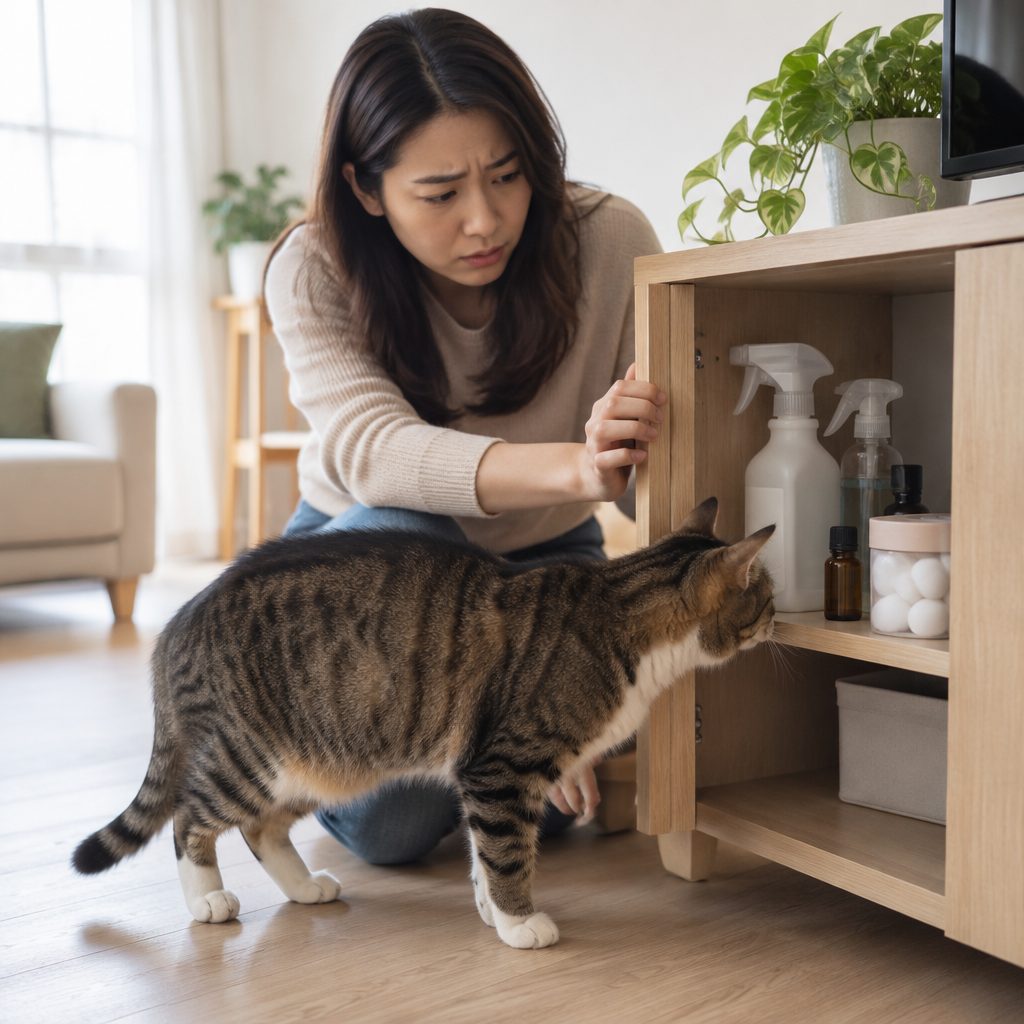
In Hong Kong homes, dressing tables, bedside cabinets and bathroom counters are usually covered in skincare and cosmetics — and cats love to lie on them. Watch for these ingredients one by one:
- Sodium benzoate and benzyl alcohol: common preservatives found in toners, serums, wet wipes, mouthwash and some hand washes. Cats' livers have a limited ability to metabolise these, and ingestion or prolonged skin contact can cause a burden, with drooling, vomiting, lethargy or skin irritation.
- Salicylic acid: exfoliating and anti-acne products, some shampoos and some medicated pet shampoos may contain it. Cats licking their paws or skin where the product sits, or biting through a bottle, can lead to exposure.
- Alcohol and alcohol-containing products: alcohol toners, alcohol wipes, hand sanitiser, mouthwash. Alcohol affects the central nervous system, blood sugar and body temperature; after using hand sanitiser, wait until it is completely dry before touching your pet.
- Fragrance and essential oils: lavender, tea tree, eucalyptus, peppermint and citrus oils often appear in massage oils, aromatherapy sprays and skincare. Diffused products carry a higher risk for cats.
- Nail polish, polish remover and hair dye: contain solvents, have irritant fumes, and the bottles are easily bitten through.
- Toothpaste and mouthwash: some contain fluoride, xylitol or alcohol and must not be licked by pets.
The most practical prevention is: keep all skincare in lidded drawers or high cabinets; close and wipe the counter after use; wait until skincare is completely dry before touching your pet; do not let pets lick your hands or face; throw cotton pads and wet wipes straight into a lidded bin. After ingestion, do not induce vomiting or feed anything to "neutralise" it; contact the veterinarian immediately and bring the product bottle or ingredient list.
| Ingredient | Common products | Main risk to cats | What the owner should do |
|---|---|---|---|
| Sodium benzoate, benzyl alcohol | Toners, serums, wet wipes, mouthwash | Preservatives; cats have limited metabolism and may show gut and skin reactions | Store products away; if eaten, ask the veterinarian immediately with the ingredient list |
| Salicylic acid | Exfoliating and anti-acne products, shampoo, some medicated shampoos | Licking product off skin or biting through a bottle can cause exposure | Do not let cats lick your hands; keep products in lidded drawers |
| Alcohol | Toners, alcohol wipes, hand sanitiser, mouthwash | Affects the central nervous system, blood sugar and body temperature | Wait until dry before touching pets; treat ingestion as an emergency |
| Essential oils and fragrance | Massage oils, aromatherapy sprays, skincare | Inhalation and skin contact can both cause problems | Keep out of pet areas; ventilate when diffusing |
| Toothpaste, mouthwash | Everyday bathroom counter items | Fluoride, xylitol and alcohol ingredients | Put away after use; never leave within reach |
Are mothball, insect repellent and essential oil fumes toxic to pets, and what symptoms can they cause?
Yes, and it is not necessarily about swallowing them. Mothballs (including naphthalene or paradichlorobenzene moth-proof products) release volatile gases continuously, so pets lying beside clothing, shoe cabinets or wardrobes that held mothballs can be affected by inhalation and skin contact. Cats are short and close to the floor and cabinet bottoms, so inhaled concentrations are usually higher than for people; combined with grooming, substances on the coat are ingested by mouth. Insect repellents, repellent sachets and wooden moth-proof strips work the same way — the fumes persist and spread widely.
Common signs include drooling, vomiting, lethargy, unsteady walking and tremors; severe cases may fit, breathe rapidly or have abnormal body temperature. If your household has recently changed over seasonal clothing or opened a shoe cabinet, and your pet shows these signs at the same time, contact the veterinarian immediately and say clearly whether mothballs or insect repellents are used at home.
With essential oils, cats' livers lack the enzymes to effectively metabolise many oil components, so eucalyptus, tea tree, peppermint, citrus and turpentine-type oils carry higher risk. Exposure routes are more numerous than you might think: mist from diffusers and ultrasonic aroma diffusers, massage oils, scented candles, repellent collars or spot-ons, essential oil cleaning sprays, and even oil bottles knocked over so the oil gets on the coat. Common signs include drooling, vomiting, dullness, unsteady walking, tremors, and red or itchy skin; rapid breathing and open-mouth breathing are emergency warning signs.
One point to note: "natural" does not mean safe. The American Veterinary Medical Association (AVMA) notes that even household cleaning or aromatherapy products labelled natural carry risks for pets; pets should be moved away while they are used and should not return until surfaces and air are back to normal. Checking ingredients before buying cleaning products is more practical than fixing things afterwards. (Further reading: Household toxins and cat risk checklist, Toxic plants for cats list)
| Product | Main exposure routes | Common signs | Household protection |
|---|---|---|---|
| Mothballs, moth-proof balls | Inhaling volatile gases, skin contact, grooming | Drooling, vomiting, unsteady walking, tremors | Keep wardrobes and shoe cabinets closed; do not let pets lie on affected clothing |
| Repellent sachets, wooden moth-proof strips | Continuous fumes, chewing | Drooling, vomiting, lethargy, skin irritation | Store sealed and completely out of reach |
| Eucalyptus, tea tree, peppermint oils | Diffuser mist, skin contact, drinking neat oil | Vomiting, unsteady walking, tremors, abnormal breathing | Do not diffuse in pet areas; lock neat oils away |
| Citrus and turpentine-type oils | Cleaning sprays, aromatherapy, repellent spot-ons | Red, itchy skin, drooling, dullness | Switch to simple-ingredient products; ventilate after use |
How dangerous are plants such as fig and avocado to cats?
Most Hong Kong homes have windowsills and small balconies, and potted plants are a common decorating habit, but some plants are risky for cats and dogs:
- Fig: the leaves and sap contain irritant compounds; contact can cause dermatitis, and eating leaves or stems may cause drooling, vomiting and stomach upset. Households growing fig trees outdoors or in village houses should clear fallen fruit and pruned leaves straight away.
- Avocado: the skin, leaves, stone and the plant itself all carry risk, and the flesh should not be fed either. After ingestion, watch for vomiting, diarrhoea, lethargy and breathing.
- Lilies, dieffenbachia, dumb cane and calla lily: high-risk plants, some varieties especially serious for cats; cat-owning households should avoid keeping them.
- Common foliage plants such as aloe, golden pothos and monstera: contain calcium oxalate crystals or anthraquinones; chewing can cause burning in the mouth, heavy drooling and vomiting.
- Vase water and cut stems and leaves: vase water accumulates compounds leached from the stems and leaves, so a cat drinking vase water and chewing stems carry similar risk; cut stems and leaves should go straight into a lidded bin.
Household protection: hang pots or add netting; fit a guard on the balcony door; empty vase water daily; keep aromatherapy and essential oils out of pet areas; if your cat chews plants, offer safe alternatives such as cat grass. After ingestion, do not induce vomiting yourself; first remove the plant, note which part was eaten and roughly how much, then ask the veterinarian. (Further reading: Basic principles of pet emergency first aid)
| Plant | Risky parts | Common signs | Protection |
|---|---|---|---|
| Fig | Leaves, stem sap | Dermatitis, drooling, vomiting, stomach upset | Clear fallen leaves immediately after pruning; move pots out of reach |
| Avocado | Skin, leaves, stone, flesh | Vomiting, diarrhoea, lethargy, abnormal breathing | Never feed it; keep the plant out of reach |
| Lilies, dieffenbachia, dumb cane | Whole plant, especially leaves and flowers | Drooling, vomiting, dullness; some varieties are serious | Avoid keeping them in cat-owning homes |
| Aloe, golden pothos, monstera | Leaf flesh, sap | Burning mouth, heavy drooling, vomiting | Hang or net them; keep off the floor and low cabinets |
| Vase water, cut stems and leaves | Water in the vase, scattered stems and leaves | Stomach upset, contact irritation | Change and empty water daily; bin stems and leaves immediately in a lidded bin |
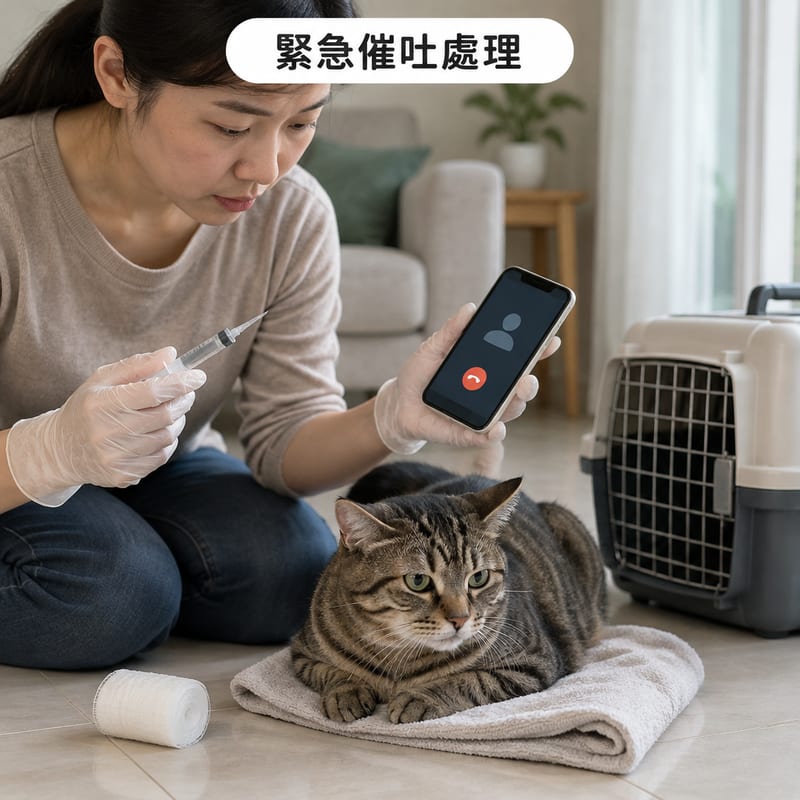
When to see the veterinarian immediately
Treat all of the following as emergencies — do not wait, and do not "observe overnight" first:
- Fitting, loss of balance, staggering, abnormal pupils or reduced response to light: neurological signs that may be linked to essential oils, mothballs, insect repellents or other poisons.
- Rapid breathing, open-mouth breathing, persistent coughing or changed gum colour: may be inhaling irritant gases, or anaemia or low oxygen already developing.
- Repeated vomiting, vomiting blood, heavy drooling, difficulty swallowing or obvious mouth pain: suspected contact with corrosive chemicals or irritant spices.
- Uncontrolled bleeding, a wound that keeps oozing, bleeding gums or nose: may be linked to impaired clotting; this is an emergency and should not be observed at home.
- Eating plants, essential oils, mothballs, cosmetics, food containing garlic or onion, or any type of cleaner: even with no symptoms at the time, a veterinary assessment is needed, because some reactions are delayed.
- Dullness, unresponsiveness, abnormal body temperature, persistent diarrhoea or no bowel movements: warning signs of systemic effects.
If you are not sure which category it falls into, treat it as an emergency. Hong Kong has no dedicated pet poison hotline. The help-seeking flow is: call your family veterinarian first; if the clinic is closed, call a 24-hour emergency clinic; if the pet is already fitting, struggling to breathe or unconscious, set off for the emergency clinic directly, keeping the airway clear and the pet warm on the way. Overseas, the ASPCA Animal Poison Control Center (https://www.aspca.org/pet-care/animal-poison-control) offers 24-hour poison advice; it is an overseas service, and Hong Kong owners should make the local veterinarian their first point of contact.
When calling or arriving at the clinic, have ready: the product packaging or label, a plant sample or photo, a vomit sample, the exposure route and time, the pet's weight and age, and any chronic illness or current medication. This information helps the veterinarian decide faster and is the owner's most valuable contribution. (Further reading: Emergency warning signs such as vomiting and fitting in cats, Common mistakes in cat hypoglycaemia first aid, Pet medication safety essentials)
Prevention at home matters just as much: keep chemicals in lidded cabinets; keep mothballs and insect repellents out of pet areas; keep skincare and medicines in drawers; net or hang balcony plants; switch diffused products to simple-ingredient alternatives; move pets to another room while cleaning, then wipe surfaces with clean water and ventilate. Here are some examples to consider (prices follow the current online shop listing):
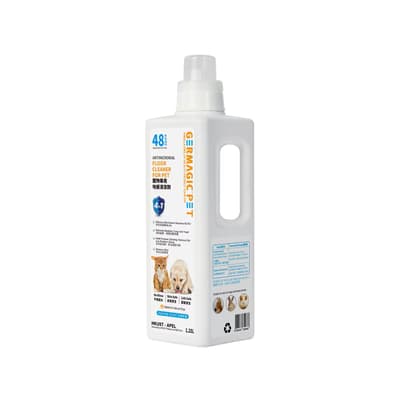
- Germagic Pet Floor Cleaner for Cats and Dogs 1.25L — HK$207; pets must still be moved away during cleaning and the area kept ventilated.
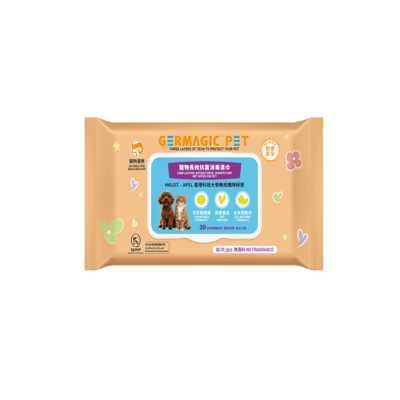
- Germagic Long-lasting Antibacterial Disinfectant Wipes for Cats and Dogs — HK$45.5; suitable for daily cleaning of floors and counters; use and discard to avoid residue.
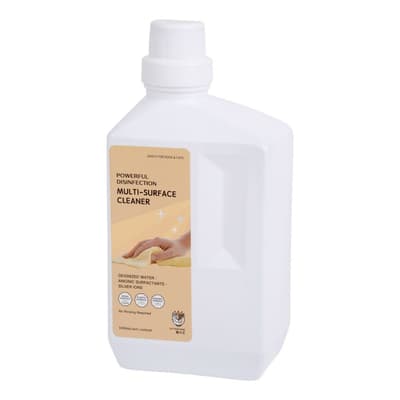
- Mao Quan Wang Antibacterial Multi-surface Cleaner for Cats and Dogs 1000ml — HK$98; for multi-surface cleaning in cat and dog areas.
Different cleaning products should not be mixed, and residue should be wiped away with clean water afterwards; for related practices see Safe choices for litter box cleaning products and White vinegar residue and cat safety.
Further reading
- Pet poisoning first aid (Part 1): mixing cleaners, insecticides and when to seek help
- Household toxins and cat risk checklist
- Toxic plants for cats list
- Basic principles of pet emergency first aid
- Emergency warning signs such as vomiting and fitting in cats
- Emergency steps if a cat eats grapes
- Pet medication safety essentials
- Safe choices for litter box cleaning products
References: WSAVA Global Guidelines (https://wsava.org/global-guidelines/), AVMA household hazards guidance (https://www.avma.org/resources-tools/pet-owners/petcare/household-hazards), International Cat Care (parent body of ISFM) cat safety advice (https://icatcare.org/advice/keeping-your-cat-safe/) and poisoning guidance (https://icatcare.org/advice/poisoning/), Hong Kong AFCD pet food safety guidance (https://www.afcd.gov.hk/tc_chi/quarantine/qua_petfood/qua_petfood.html), ASPCA Animal Poison Control Center (https://www.aspca.org/pet-care/animal-poison-control).
Reviewed by the PetChill veterinary editorial team. This content is for reference only and cannot replace veterinary diagnosis, prescription or treatment.
In an emergency, contact a veterinarian immediately; this article is for reference only and cannot replace veterinary diagnosis.
Information checked as of 2026-10-14 · Source: compiled by the PetChill editorial team
 K9 Natural full guide →
 Feline Natural full guide →
 Fuji One full guide →