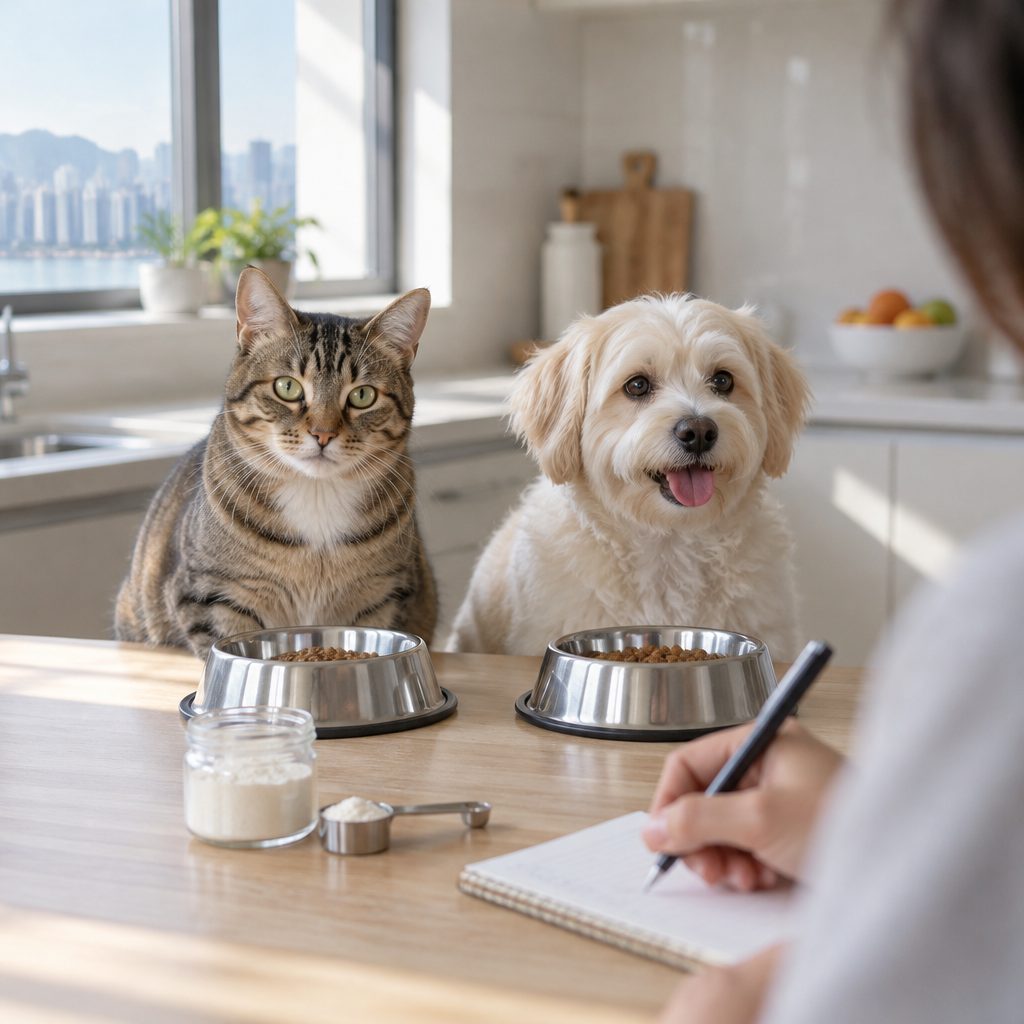
The key to pet gut health lies in a stable eating routine and early observation: diet transitions should be gradual over 7 to 10 days, watch for gut flora imbalance during antibiotic courses, probiotics are only supportive and not a treatment, and once stool shows mucus, blood streaks, black colour or persistent diarrhoea, it should be examined by a veterinarian rather than self-medicated.
Quick answers
- Probiotics are not medicine: they can help maintain gut flora but cannot replace veterinary diagnosis and treatment. If symptoms persist or recur, the cause must be investigated first.
- Transition food slowly: start with the old food as the majority, add only a small amount of new food each day, and if soft stool appears, go back to the previous ratio until stool is formed before continuing.
- Antibiotics disrupt gut flora: may cause reduced appetite, soft stool, diarrhoea or constipation. The focus is on hydration, recording changes, attending follow-ups on time, and not stopping medication on your own.
- Look at four things together when observing stool: shape, colour, presence of mucus or blood streaks, and frequency, together with energy and appetite.
- High-risk warning signs: black tarry stool, large amounts of fresh blood, persistent vomiting, lethargy or complete refusal to eat — see a veterinarian immediately.
Key summary
- Soft stool after a diet transition is mostly due to gut flora and digestive enzymes not yet adapting to the new formula; gradual ratios and small frequent meals can greatly reduce it.
- Probiotics and prebiotics are two different things: the former are live microorganisms, the latter are food for beneficial bacteria; both play a supportive role.
- Diarrhoea during an antibiotic course is a common side effect, but you must not stop the medication or adjust the dose on your own.
- A small amount of mucus in stool can be normal secretion; large amounts, jelly-like, bloody or black stool should be examined by a veterinarian.
- A cat not eating at all for more than 24 hours is high risk because cats are at risk of fatty liver; do not take the attitude of "wait another night".
- Hong Kong is humid; after opening, cat food and supplements should be sealed and kept in a cool, dry place, as moisture and oxidation affect palatability and safety.
When a cat has a poor appetite, how does the temperature of wet and dry food affect appetite? What are the risks of long-term appetite stimulants?
Cats are smell-driven animals; often "whether to eat" is decided by aroma, not just hunger. So temperature and freshness directly affect appetite.
- Wet food: served straight from the fridge, the aroma is weakest, and many cats sniff and walk away. Warming to room temperature or slightly warm (not hot to the touch) usually improves acceptance. You can warm the pouch in warm water; do not heat directly until hot.
- Dry food: after opening, contact with air causes oxidation, and Hong Kong's humid weather makes it prone to moisture, so the aroma gradually fades. Adding a little warm water to soften can release aroma, but it must be eaten in that meal and not left overnight.
- Storage location: sealed, cool, dry, away from the stove, sink and direct sunlight. Do not pour the whole bag into an uncovered container for long-term storage.
- Meal schedule: fixed times, small frequent meals; cats can have 3 to 4 meals a day. Sudden changes in timing or a noisy environment can make some cats refuse food.
- Watch for: upper respiratory problems, nasal congestion, oral pain or dental disease can affect smell and eating; this kind of appetite loss is a symptom, not "fussiness".
| Practice | Why it helps | Note |
|---|---|---|
| Warm wet food to room temperature or slightly warm | Releases aroma, suits cats' smell-based foraging | Not hot to the touch; do not leave uneaten food at room temperature |
| Add a little warm water to dry food | Softens texture and releases aroma | Eat in that meal to avoid bacterial growth |
| Fixed times, small frequent meals | Builds routine, reduces eating pressure | Do not replace main meals with treats |
| Appetite stimulants | Prescribed by a veterinarian for specific clinical situations | Do not buy on your own or use long-term |
Risks of long-term appetite stimulant use: these drugs are veterinary prescriptions, usually for short-term or specific situations, such as post-surgery or cases of weight loss due to chronic disease. Long-term use requires consideration of several points: first, the drug may mask the underlying cause and delay diagnosis; second, some drugs have side effects, such as affecting gut motility or burdening other organs; third, long-term reliance can make owners neglect dietary and environmental adjustments. Any dose and course length must be decided by a veterinarian. (Further reading: Risks of long-term appetite stimulant use)
Why does a cat have a poor appetite, diarrhoea or constipation after taking antibiotics?
Antibiotics target bacterial infections but do not distinguish good from bad bacteria. During the course, the number and diversity of normal gut flora change, so gastrointestinal reactions are not uncommon.
- Reduced appetite: may be related to nausea, bloating, gastrointestinal discomfort, or the bitter taste of the pill. Some cats drool, refuse food or hide after medication; this is a common reaction.
- Diarrhoea or soft stool: imbalance of flora changes intestinal absorption and motility; it is one of the most common side effects of antibiotic courses.
- Constipation: reduced water intake, decreased food intake, low activity or pain can all cause constipation; it is not necessarily the opposite of diarrhoea.
- Do not stop medication on your own: stopping midway may leave the infection untreated and lead to bacterial resistance. If side effects occur, notify the veterinarian, who will decide whether to adjust or add support.
- The place of probiotics: if the veterinarian agrees to use probiotics, it is generally recommended to give them about 2 hours apart from antibiotics to avoid the antibiotic killing the probiotics at the same time. This should be followed according to veterinary instructions; do not adjust on your own.
- When will it recover: most cases gradually improve within days to weeks after the course ends. If soft stool persists long after stopping, faecal testing and further investigation are needed; do not dismiss it as a "post-course after-effect".
- The role of B vitamins: gut flora participates in the synthesis of some vitamins; long-term gut problems or malabsorption can affect vitamin B12 absorption. But the safest approach is for a veterinarian to judge based on blood tests; do not supplement on your own.
| Time point | What to do | Note |
|---|---|---|
| Medication | Follow the dose and timing instructed by the veterinarian | Do not adjust or stop on your own |
| About 2 hours after medication | If the veterinarian agrees, probiotics can be given | Avoid antibiotics affecting probiotics at the same time |
| Each meal | Record food intake and whether food is refused | Bitter taste can make some cats drool |
| Daily | Record stool shape, frequency, presence of mucus or blood | Bring records to follow-up for the veterinarian's reference |
| After the course ends | Observe for 1 to 2 weeks | If soft stool persists, faecal testing is needed |
(Further reading: Pet antibiotic side effects and management, Managing diarrhoea and constipation in cats during antibiotics, Forms of vitamin B12 supplementation for cats)
Which probiotic strains are most suitable for improving gut sensitivity? What is the difference between probiotics and prebiotics?
Probiotics, prebiotics and postbiotics are often confused, but their definitions and uses differ. The International Society of Feline Medicine (ISFM/International Cat Care) points out that probiotics are live bacteria that can be taken with food, while prebiotics help the gut's own beneficial bacteria grow; both are sometimes used alongside medication as supportive management for diarrhoea, not as a replacement for diagnosis and treatment.
| Item | What it is | Common examples | Function | Note |
|---|---|---|---|---|
| Probiotics | Live microorganisms | Lactobacillus, Bifidobacterium, Enterococcus, yeasts | Supplement gut flora, may help manage diarrhoea | Supportive role, cannot replace diagnosis |
| Prebiotics | Food for beneficial bacteria, mostly fibre or oligosaccharides | Psyllium husk powder, inulin, fructo-oligosaccharides | Help the gut's own beneficial bacteria grow | Dose must be decided by a veterinarian; risk if water intake is insufficient |
| Postbiotics | Metabolites or non-viable components of microorganisms | Some formulas list postbiotics | May work without live bacteria | Labelling is not standardised; check ingredients clearly |
About strains: under a species (e.g. Lactobacillus) there are many strains, and the strength of clinical evidence differs between strains. So "which strain is most suitable" cannot be generalised; it depends on the cause, individual differences, stated viable count and storage conditions. When choosing a product, it is worth noting the following:
- Look at strain codes, not just species names: a code indicates a specific research background and a clearer ingredient list.
- Look at viable count and expiry date: viable bacteria decline with time and temperature; products close to expiry may be less effective.
- Look at storage requirements: some products require refrigeration; Hong Kong's hot, humid summers mean you should not store them in the kitchen or car.
- Look at the target animal: cat and dog formulas are not necessarily interchangeable; for products labelled "for cats and dogs", check the dose carefully.
- Ask a veterinarian about psyllium husk powder: it is a fibre; arbitrary dosing can cause bloating, and with insufficient water intake there is even a risk of blockage. How much to add daily must be decided by a veterinarian based on body weight, water intake and gut condition; do not follow online numbers on your own.
Probiotics are a supportive tool, not a panacea. If a pet has persistent soft stool, vomiting or weight loss, the cause must be investigated: parasites, food intolerance, chronic intestinal disease and endocrine problems can all be sources. (Further reading: How to choose pet probiotics, Cat gastroenteritis and probiotic evidence, Hydrolysed protein prescription food brands)
Below are examples of gut health products in stock at PetChill; prices are subject to the live price on the online store:
- Mao Zhang Medical Probiotic Health Meat Puree Pet Gut Health Soft Stool Buster for Cats and Dogs 6g x 30 sticks — HK$220.
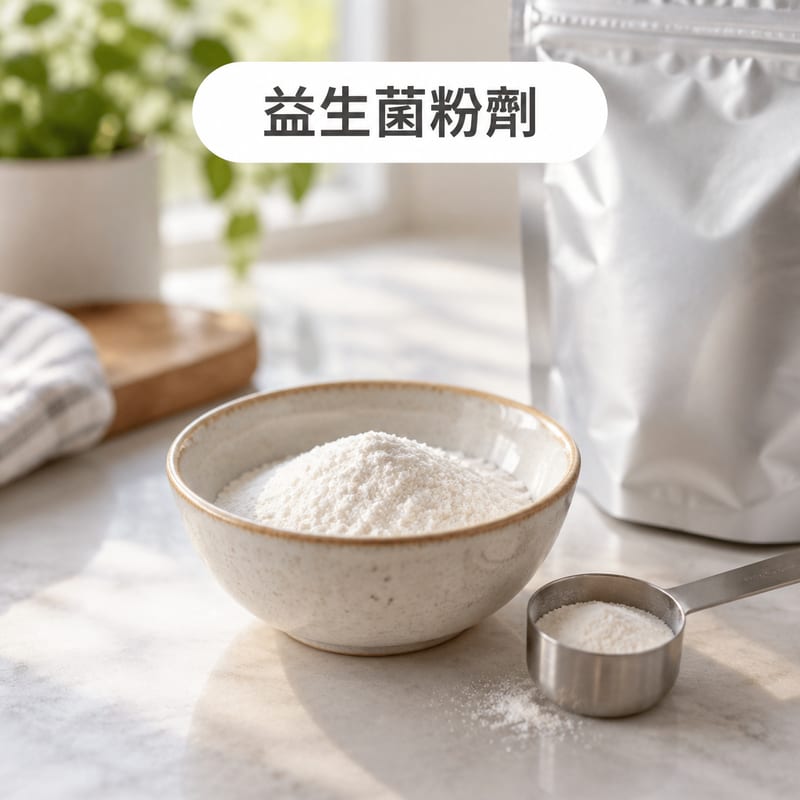
- Fera Pets Cat and Dog Nutritional Supplement Organic Probiotic and Prebiotic Nutrition Powder 72g (for dogs and cats) — HK$326.
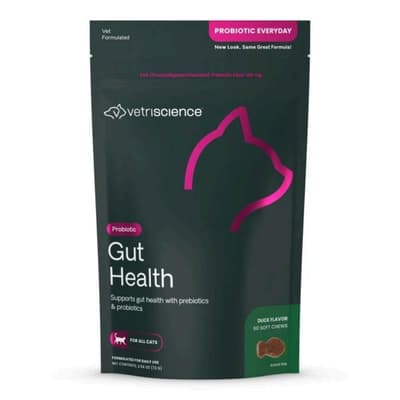
- VetriScience Probiotic Chewable Tablets for Cats 60 tablets Duck Flavour — HK$195.
How should you gradually transition food when soft stool or diarrhoea occurs after a diet change?
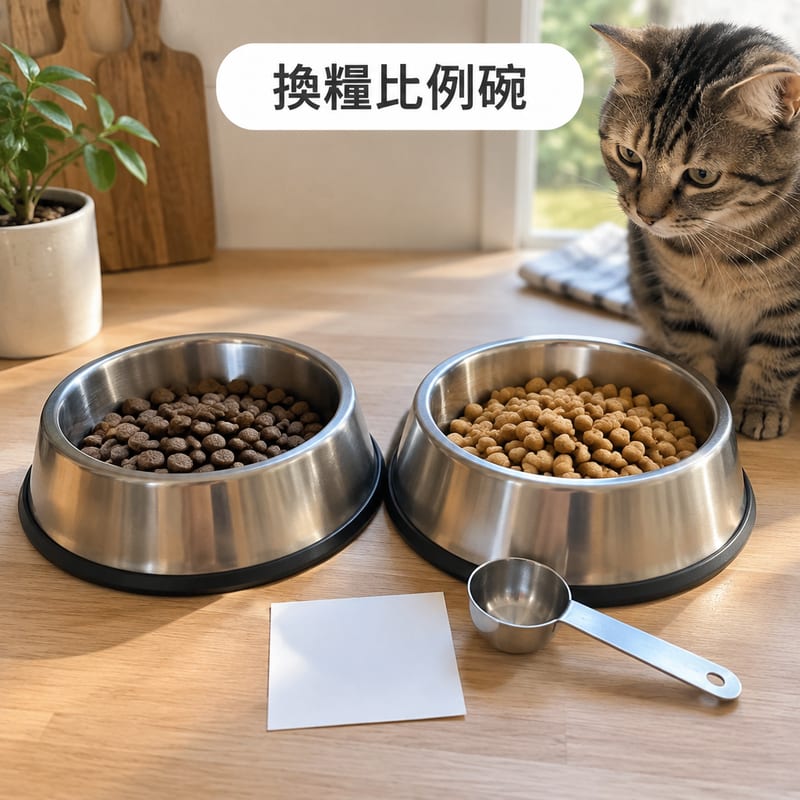
Soft stool caused by a diet transition is because gut flora and digestive enzymes need time to adapt to the new formula's protein, fat and fibre ratios. Switching all at once, or adding several new foods at the same time, is most likely to cause problems. The common approach is gradual over 7 to 10 days; for sensitive cases or those with a history of gut disease, the veterinarian may require longer.
| Day | Old food ratio | New food ratio | Observation focus |
|---|---|---|---|
| Days 1 to 2 | About three-quarters | About one-quarter | Stool shape, refusal to eat |
| Days 3 to 4 | About half | About half | If soft stool, go back to the previous step |
| Days 5 to 6 | About one-quarter | About three-quarters | Food intake and energy |
| After day 7 | Zero | All | Continue observing for a week |
Principles for managing soft stool:
- Stop increasing the new food, or even go back to the previous ratio, until stool becomes formed again.
- Keep water intake adequate. Diarrhoea causes loss of water and electrolytes; international feline care guidelines also remind that hydration is important in severe diarrhoea, and a veterinarian may recommend electrolyte solutions rather than plain water alone.
- Small frequent meals to reduce the digestive burden at one time.
- Do not add treats, supplements or human food at the same time, otherwise it is hard to tell what caused the reaction.
- Do not add anti-diarrhoeal or anti-vomiting drugs on your own. Whether to use medication and which one must be decided by a veterinarian.
Things you should not do: switch all at once, mix several foods together, add seasoning or gravy to entice eating, or add probiotics and then new food on your own when soft stool appears. This only makes symptoms and causes harder to distinguish.
Special situations: if the veterinarian instructs a transition to prescription food (e.g. gastrointestinal prescription or hydrolysed protein formula), follow the veterinarian's schedule, which may not be 7 days; prescription food must also be used after veterinary assessment and should not be fed long-term on your own.
| Situation | Recommended action |
|---|---|
| Formed but soft | Go back to the previous ratio, observe for 1 to 2 days |
| Watery diarrhoea but normal energy and appetite | Stop increasing new food, hydrate, observe; seek veterinary care if no improvement |
| Diarrhoea with vomiting or complete refusal to eat | Contact a veterinarian immediately; do not wait |
| Bloody, black or jelly-like mucus | Bring a fresh stool sample to a veterinarian as soon as possible |
For food choices during transition, consider products labelled easy to digest or sensitive stomach formulas:
- Nature's Protection Cat Sensitive Digestion Cat Food for Adult Cats with Sensitive Stomach 400g — HK$48.6.
- Royal Canin Prescription Food Cat Wet Food GASTROINTESTINAL FIBRE RESPONSE Adult Cat Gastrointestinal High Fibre Easy Digestion Prescription (Gravy) 85g — HK$19.5. Prescription food requires veterinary assessment.
- Petio Dog Treats Lactic Acid Bacteria Gut Health Bites 80g — HK$33. Treats cannot replace main meals.
(Further reading: Complete guide to cat food transition)
How long after opening should cat food be used up? How long should stool, constipation and bloating be observed?
How long after opening should cat food be used up? The principle is the sooner the better. After opening, dry food oxidises on contact with air, and Hong Kong's humid weather makes it prone to moisture and mould; once the aroma is lost, cats may refuse food, and in severe cases safety may be affected. Practical approach: seal, keep in a cool, dry place, and use within the manufacturer's stated post-opening period; if you smell rancidity, see clumping or insects, do not feed. Uneaten wet food after opening should be covered and refrigerated immediately and eaten within a short time. (Further reading: Post-opening usage period for cat food)
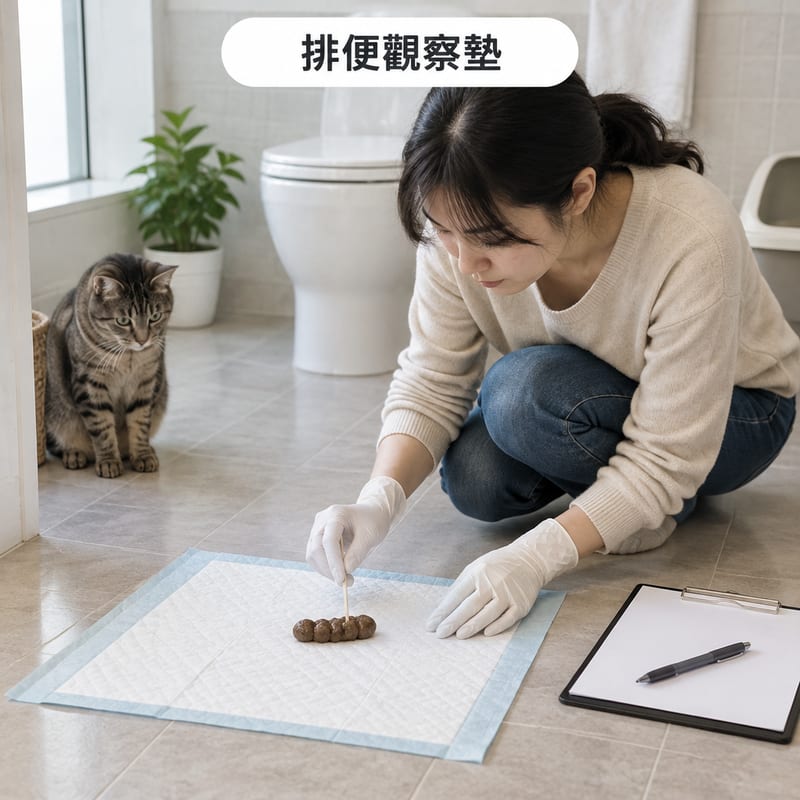
Is mucus or blood streaks in stool normal? A small amount of clear mucus can be normal intestinal lubricating secretion, but if large, jelly-like, bloody or recurrent, faecal testing is needed. Note: although a small amount of fresh blood looks alarming, international feline care guidelines indicate it is generally not an immediate emergency, but it should still be examined by a veterinarian; in contrast, black tarry stool indicates bleeding in the upper digestive tract and requires immediate contact with a veterinarian.
| Stool appearance | Possible direction | Recommended action |
|---|---|---|
| Formed but soft | Transition too fast, food intolerance, mild gastrointestinal upset | Go back to the previous transition ratio, observe for 1 to 2 days |
| Small amount of clear mucus | Normal intestinal lubricating secretion | Observe; if recurrent, faecal testing |
| Large amount of mucus or jelly-like | Intestinal inflammation, parasites, flora imbalance | Bring a fresh stool sample to a veterinarian |
| Bright red blood | Bleeding in the large intestine or near the anus | Seek veterinary examination; do not delay |
| Black tarry | Bleeding in the upper digestive tract | Contact a veterinarian immediately |
| Grey-white or pale | Bile or digestive absorption problems | Seek veterinary care |
| Watery diarrhoea | Infection, food intolerance, other diseases | If lasting several days, with vomiting or poor energy, seek veterinary care immediately |
How long can constipation and abdominal bloating be observed? Constipation is not "wait another day and it will be fine". If a cat strains but cannot pass stool, stool is dry hard and small, no bowel movement for more than a day, or accompanied by vomiting, complete refusal to eat or lethargy, seek veterinary care as soon as possible. The same applies to abdominal bloating: brief bloating may be related to diet or swallowed air, but if it lasts more than one or two days, the abdomen is tense and hard, the pet will not let you touch it, or vomiting and reduced appetite occur at the same time, do not wait any longer, because obstruction, ascites or severe intestinal inflammation must be ruled out.
When would a doctor recommend X-rays or ultrasound? When symptoms recur and the cause is unclear, a veterinarian will consider imaging; common situations include: recurrent vomiting or diarrhoea but blood and faecal tests show no clear result, suspected swallowed foreign body or intestinal obstruction, abnormal findings on abdominal palpation, suspected chronic intestinal disease or tumour, and poor response to treatment. X-rays are better for seeing foreign bodies, gas distribution and overall outline; ultrasound can show intestinal wall layers and changes in abdominal organs. Whether to do it and which type is decided by the veterinarian based on history.
What is the relationship between sudden increases in drinking and urination and the gut? A cat drinking more, urinating more, eating more but losing weight can be an early sign of diabetes or other endocrine or kidney problems. These are not gastrointestinal diseases, but they affect appetite, weight and overall condition, so when gastrointestinal symptoms recur, the veterinarian usually assesses them together. Recording water intake and body weight daily is the most practical way to detect problems early. (Further reading: Cat diabetes care guide)
When to see a veterinarian immediately
The following situations cannot wait, and you should not self-medicate:
- Recurrent vomiting or vomiting blood, especially retching after vomiting, vomiting foreign objects, or blood in vomit.
- Diarrhoea with fresh blood, black or tarry stool; the latter indicates upper digestive tract bleeding and is an emergency warning sign.
- Complete refusal to eat for more than 24 hours, or markedly reduced water intake. Cats not eating for a long time are at risk of fatty liver, and kittens and puppies are also prone to dehydration.
- Lethargy, weakness, difficulty waking or unsteady walking.
- Tense hard abdomen, painful on touch, clearly not allowing touch, with vomiting or no bowel movement; obstruction must be ruled out.
- Kittens, puppies, senior cats, senior dogs or pets with chronic disease showing gastrointestinal symptoms; deterioration is usually faster than in healthy adults.
- Symptoms during diet transition or antibiotic course persist for several days without improvement, or continue to worsen.
Before going to the clinic, preparing the following information will help the veterinarian: what was eaten, approximate amount, when it started, stool record (frequency, shape, colour, presence of mucus or blood), medication record, names of usual food and supplements. In an emergency, never induce vomiting or give any medication on your own.
Further reading
- Complete guide to cat and dog gut health: vomiting, diarrhoea, soft stool, mucus stool
- Cat food transition guide: gradual method and managing soft stool
- Pet probiotic guide: how to choose and when to use
- Cat gastroenteritis explained and scientific evidence for probiotics
- Managing cat constipation and daily prevention
- Cat poop observation guide: shapes and recording methods
Authoritative references
- International Cat Care (ISFM) Diarrhoea in cats: https://icatcare.org/articles/diarrhoea-in-cats
- International Cat Care (ISFM) Tritrichomonas foetus infection in cats (diet, probiotics and imaging): https://icatcare.org/articles/tritrichomonas-foetus-infection-in-cats
- International Cat Care (ISFM) Diabetes mellitus in cats (recording water intake and urine output): https://icatcare.org/articles/diabetes-mellitus-in-cats
- WSAVA Global Nutrition Guidelines (nutritional assessment and individualised nutrition plans): https://wsava.org/global-guidelines/global-nutrition-guidelines/
- Hong Kong Agriculture, Fisheries and Conservation Department (owner's responsibility for proper care and management of animals): https://www.afcd.gov.hk/tc_chi/quarantine/tnr_trial_programme.html
Veterinary warning: In an emergency, contact a veterinarian immediately; this article is for reference only and cannot replace veterinary diagnosis. This article was reviewed by the PetChill Veterinary Editorial Team; content is for reference only and cannot replace veterinary diagnosis, prescription or treatment.
Information checked as of 2026-10-14 · Source: PetChill Editorial Team
 Royal Canin full guide →
 Almo Nature full guide →
 Feline Natural full guide →