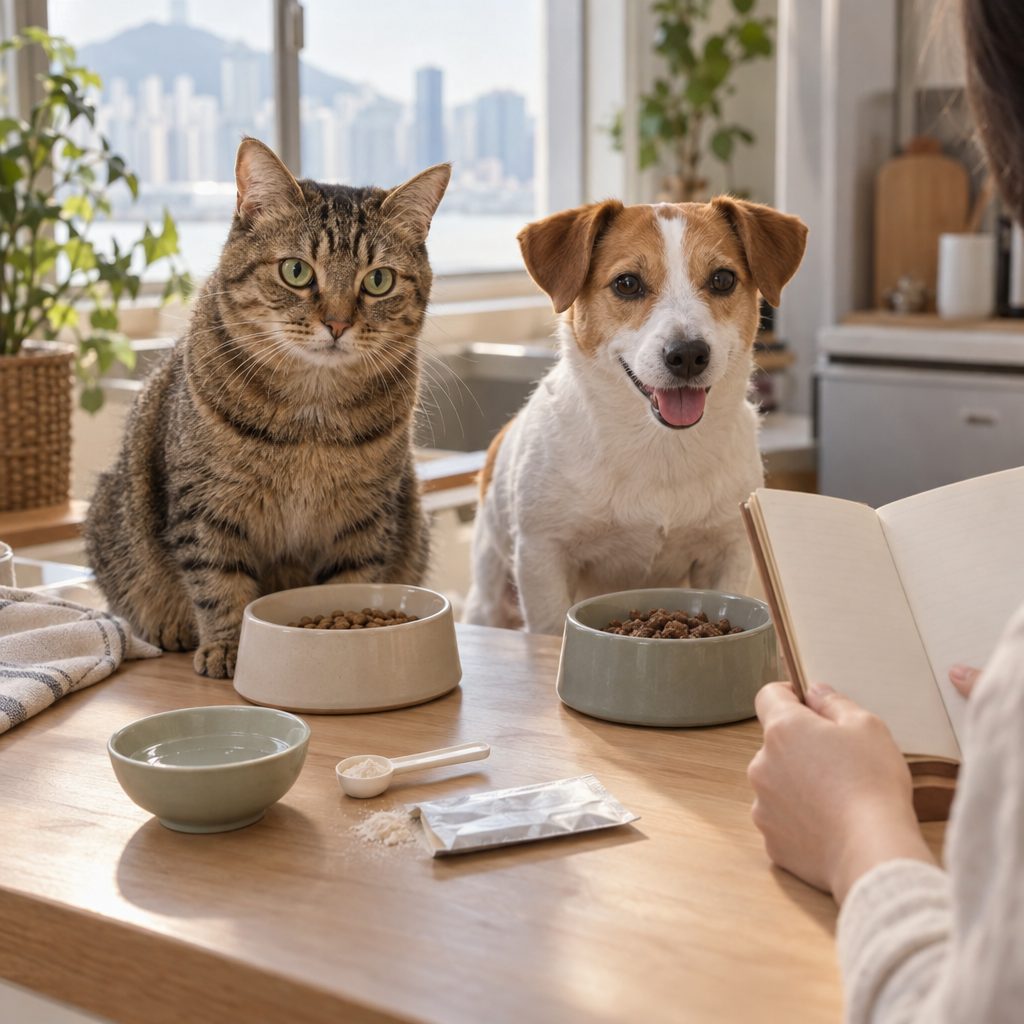
Probiotics are supportive, not medicine: transition food slowly, finish medicated food in the same meal, and during diarrhoea hydration and record-keeping are the most practical steps. Psyllium husk powder and montmorillonite powder should only be used under veterinary instruction; dehydration, unproductive hairball retching, mucous stools and coccidia should all be handed to a vet.
Quick answers
- Probiotics are supportive: they help the existing gut flora rebuild its environment, but cannot replace investigating the cause. For persistent diarrhoea or vomiting, test for parasites, food intolerance and inflammation first.
- Medicated food has a time limit: medicine mixed into food should be finished in the same meal; do not leave it out for hours to be eaten slowly, and do not re-add medicine because the pet refuses to eat.
- No human medicine in the home kit: anti-diarrhoeals, anti-emetics, painkillers and adsorbents (montmorillonite powder) all require a veterinary prescription; human painkillers carry a highly toxic risk for cats.
- Fibre must be used correctly: psyllium husk powder needs adequate water intake and a vet-set dose; do not add it yourself based on online figures.
- Dehydration is the red line: diarrhoea and vomiting cause loss of water and electrolytes; poor skin elasticity, dry gums and reduced urine output mean seek veterinary help immediately, and severe cases need fluid therapy rather than just electrolyte water.
- Distinguish hairballs from mucous stools: occasional vomiting of a hairball can be monitored; continuous retching, unproductive vomiting, large amounts of mucus or jelly-like stools require veterinary attention.
Key summary
- Probiotics work by "helping the existing flora" rather than killing bacteria, so when choosing a product look at strain numbers, viable count, expiry date and storage method, not just the species name.
- Antibiotics affect both pathogenic bacteria and gut flora; reduced appetite, soft stools or vomiting during the course are common; do not stop the medication or adjust the dose yourself.
- The first step when a pet refuses food after a food transition is to rule out disease; the second is to slow the ratio and improve the eating environment, not to immediately add appetite enhancers or flavourings.
- Dietary principles during diarrhoea recovery come first: plain, low-fat, small frequent meals; hydrolysed protein, low-residue and high-fibre prescription diets serve different purposes and should be chosen by a vet.
- Psyllium husk powder and montmorillonite powder are tools, not "universal anti-diarrhoeals"; the former needs adequate water intake, and the latter is an adsorbent that affects the absorption of other medicines.
- Hong Kong summers are hot and humid; probiotics and fibre products should be stored sealed as labelled, some require refrigeration, and they should not be kept in the kitchen or in a car.
Why are probiotics effective for restoring a cat's gut flora balance? How should probiotics be chosen and used?
Diarrhoea and antibiotic courses both reduce the number and diversity of gut flora. Probiotics do not "kill bad bacteria"; they help the existing flora rebuild its environment through several routes:
- Competitive exclusion: probiotics adhere to the gut mucosal surface, reducing the space for pathogenic bacteria to attach.
- Competition for nutrients: competing with other microorganisms for nutrient sources.
- Production of metabolites: some strains produce short-chain fatty acids and other metabolites that alter the gut environment, making it easier for beneficial bacteria to grow.
- Supporting the gut barrier: when the gut mucosal barrier is stable, the absorption of water and electrolytes has a better chance of recovering.
But note the boundary: diarrhoea is not necessarily caused by flora imbalance. Parasites (including coccidia), food intolerance, chronic intestinal disease and endocrine problems can all cause persistent diarrhoea, and these cases will not improve by adding probiotics. Probiotics are therefore supportive and cannot replace faecal testing and veterinary examination.
When choosing a product, consider the following:
- Strain numbers, not just species names; a number indicates a specific research background.
- Labelled viable count and expiry date; viable bacteria decline over time and with temperature.
- Storage requirements; some products require refrigeration; Hong Kong summers are hot and humid, so do not keep them in the kitchen or in a car.
- Suitability; cat and dog formulas are not necessarily interchangeable, and for products labelled "for cats and dogs" check the dosage clearly.
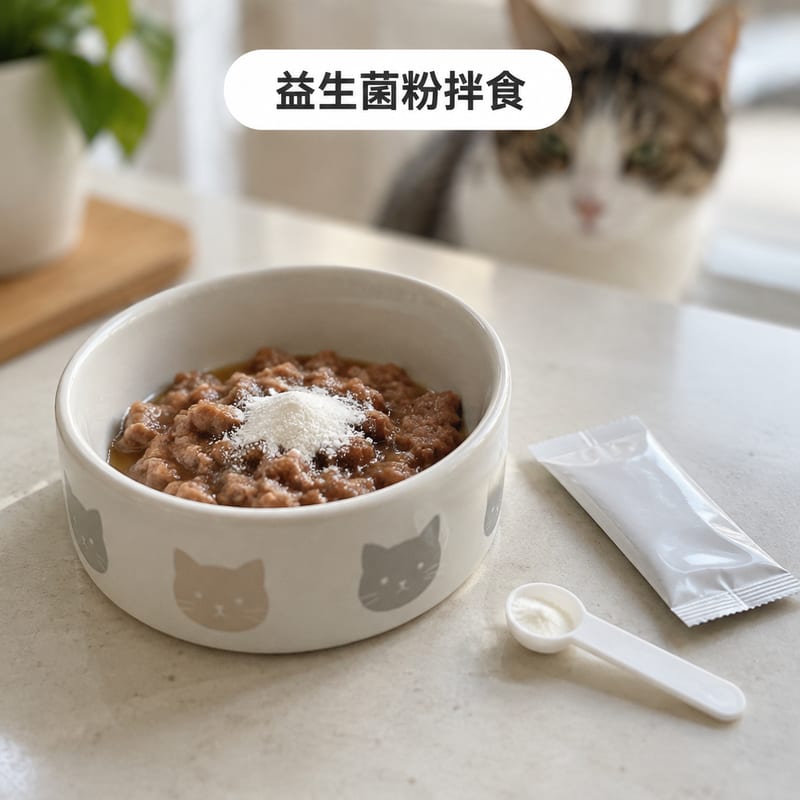
- Product form; powders are convenient to mix into wet food, while pastes and chewable tablets suit cases of food refusal or difficulty mixing, but all must follow the label and veterinary instructions.
Timing and method of use:
| Item | Recommended practice | To avoid |
|---|---|---|
| Mixing temperature | Mix into room-temperature or slightly warm wet food | Adding to hot food or reheating; high heat affects viable bacteria |
| Time limit after mixing | Finish in the same meal; do not leave overnight | Leaving out for hours to be eaten slowly; Hong Kong weather makes spoilage likely |
| During antibiotics | Generally about two hours apart; follow veterinary instructions in practice | Feeding at the same time as antibiotics |
| Storage after opening | Seal as labelled; refrigerate if required | Keeping beside the stove, by a window or in a car |
| Course length | Decided by the vet based on cause and response | Adding it yourself long-term every day, treating it as a daily supplement for a whole year |
Probiotics are a supportive tool; their effect is related to product storage, feeding time and the existing diet. Also note: if the pet has a chronic illness or is taking other medicines, ask the vet before adding any supplement. (Further reading: How to choose pet probiotics, Pet gut health part 1)
The following are examples in stock at PetChill; prices and stock are subject to the live price shown on the online shop:
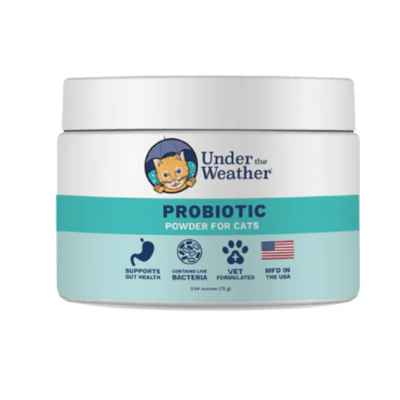
- Under the Weather Probiotic Nutritional Powder for Cats 72g (UTW083) — HK$189.
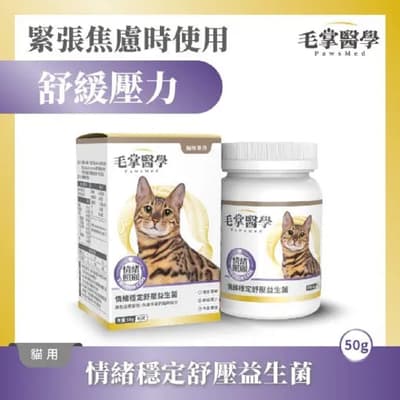
- Mao Zhang Medical Cat Calming Stress Relief Probiotic 50g — HK$121.
When a cat has gastrointestinal discomfort, what common household medicines can be used?
Direct answer: the home medicine kit should not contain human medicines, only medicines prescribed by a vet. The only "essentials" are a few items: clean water, electrolyte replacement fluid under veterinary instruction, probiotic products, and unseasoned recovery food. All other medicines require a prescription.
Categories that must not be used on your own:
- Adsorbents (e.g. montmorillonite powder): these are medicines that adsorb substances and water in the gut. Use the pet-specific formulation and dose prescribed by a vet, because adsorbents affect the absorption of other medicines and usually need to be given separated in time from other drugs. Splitting a human tablet in half or opening half a sachet yourself is high-risk and offers no safeguards.
- Anti-diarrhoeals and anti-emetics: these slow gut motility or suppress the vomiting reflex. Used before the cause is identified, they mask warning signs of obstruction, infection and inflammation, delaying diagnosis.
- Human painkillers: high risk for cats and dogs. The International Cat Care (iCatCare) clearly states that acetaminophen (paracetamol) is highly toxic to cats; cats cannot metabolise it into a safe substance, and it severely damages the liver and red blood cells — even part of a tablet can cause serious poisoning. Any pain relief must be prescribed by a vet.
- Human gastrointestinal medicines, probiotic drinks, activated charcoal: the doses and ingredients are not designed for pets and should not be given on your own.
Vet-prescribed probiotic pastes or fibre products are common supportive tools, but long-term use still requires veterinary assessment and should not be given daily as a routine supplement. (Further reading: What to note with long-term use of Pro Kolin Advanced, Boundaries of home management for cat gastrointestinal discomfort)
After medicine is mixed into food, how long should it take to finish? The principle is finish in the same meal; do not leave it out for more than half an hour to an hour. There are three reasons: food left at room temperature spoils easily, especially wet food and food mixed with medicine; the medicine's smell is released over time, making the cat notice it and refuse to eat; and if the cat eats only half, you do not know how much medicine was actually consumed. If the pet refuses food, do not re-add medicine to the remaining food and feed again; repeated dosing is high-risk. Record how much was eaten, then ask the vet how to proceed.
| Household support | Role | Boundaries of use |
|---|---|---|
| Clean water | The most basic hydration | Provide at all times; monitor water intake during diarrhoea |
| Electrolyte replacement fluid | Replaces water and electrolytes lost through diarrhoea and vomiting | Use pet-specific formulas; dose per vet or label |
| Probiotics | Support flora rebuilding | Avoid giving at the same time as antibiotics; store per label |
| Psyllium husk powder | Soluble fibre, adjusts stool consistency | Dose set by vet; adequate water intake essential |
| Montmorillonite powder | Adsorbent-type medicine | Prescription only; separate in time from other medicines |
| Human painkillers, anti-diarrhoeals, anti-emetics | No safe home use | Must never be given on your own |
Does adding psyllium husk powder help a cat's bowel movements? How should it be used correctly?
Psyllium husk powder is a soluble fibre that swells into a gel after absorbing water, helping faeces retain moisture and adjusting texture. So it may be useful for two types of cases: constipated cats (softening faeces and making them easier to pass) and some diarrhoea cases (improving the formation of watery faeces). However, "helpful" does not equal "you can add it yourself", because fibre is a double-edged sword.
Correct usage principles:
- Dosage set by the vet: calculated according to body weight, water intake, condition and type of daily food; do not add on your own based on online figures. International Cat Care (iCatCare), when discussing constipation care, also emphasises that high-fibre diets should be recommended by a vet, because different cases need different fibre types.
- Must add water: after mixing into wet food, add a small amount of extra water so the fibre has enough moisture to swell. When water intake is insufficient, fibre will instead make faeces drier and harder, and may even increase the risk of blockage.
- Start with a very small amount and feed in divided portions: increasing the amount all at once easily causes gas, abdominal discomfort and loose stool.
- Record the response: note down the amount, water intake, faecal shape and frequency, and give it to the vet for reference at follow-up visits. (Further reading: Cat constipation management and daily prevention, Cat poop observation guide)
- Situations where it is not suitable: cats with suspected intestinal obstruction, complete refusal to eat, obvious dehydration, severe vomiting, or unstable chronic illness must all see a vet first; fibre must not be relied on for management. Long-term constipation, straining without passing stool, or accompanying vomiting should also not be delayed.
| Support tool | Main function | When to use | Biggest risk |
|---|---|---|---|
| Psyllium husk powder | Soluble fibre, helps faeces retain water | Constipation, some loose stool cases (vet instructions) | Insufficient water intake causes gas or blockage |
| Probiotics | Helps rebuild gut flora | Support during food transition, antibiotic courses | Improper product storage reduces live bacteria count |
| Montmorillonite powder | Adsorbent-type medication | Diarrhoea cases prescribed by vet | Affects absorption of other drugs; must be prescribed |
| Hairball paste products | Lubricates and helps expel hairballs | Shedding season, long-haired cats (per label or vet instructions) | High calories, long-term dependence, unclear ingredients |
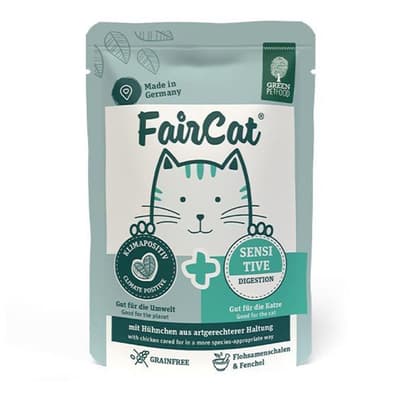
For ready-made staple food options containing psyllium husk, you can look at this one; prices are subject to the online store's current listed price:
When switching cat food, how should you handle a cat refusing to eat the new food? Should you add a food topper?
The order of handling food refusal is very important: first rule out illness, then adjust the method, and only lastly consider a food topper. If the cat also shows vomiting, diarrhoea, poor spirits, drooling or obvious weight loss, then it is not "picky eating" but a symptom, and a vet should be seen first. International Cat Care (iCatCare) points out that even eating less than usual for just three days can have a significant impact on a cat's health, so appetite problems in cats should be addressed early.
Practical ways to improve eating (directions suggested by iCatCare):
- Put out only one type of food at a time; do not put out several different flavours at once, as too many choices actually make cats more resistant.
- Use a shallow, wide bowl; ceramic is generally better than reflective metal or plastic bowls, because some cats resist the smell and reflection of bowls.
- Eat in a quiet location, away from busy foot traffic and other pets.
- Slightly warming the food to release aroma can help appetite, but if the cat is feeling nauseous, strong smells will instead make it more uncomfortable.
- Do not feed human meat gravy, soup or baby food; such foods may contain ingredients toxic to cats such as onion.
- Absolutely do not force-feed: syringe feeding or stuffing food in will cause serious complications and will also make the cat more resistant to eating.
- Do not switch to prescription food while unwell: wait until the cat's spirits and appetite recover before switching, which can reduce negative associations with the new food.
Handling food refusal during food transition:
| Situation | Suggested approach |
|---|---|
| Completely refuses new food but will eat old food | Go back to mainly old food, with the new food at a very small proportion, mixed in gradually |
| Picks out the new food and leaves the old food | Slow down the proportion, extend the transition period, do not force a complete switch |
| Eats little of the old food, spirits average | See a vet first to rule out illness, then consider transitioning with a recovery-period food recommended by the vet |
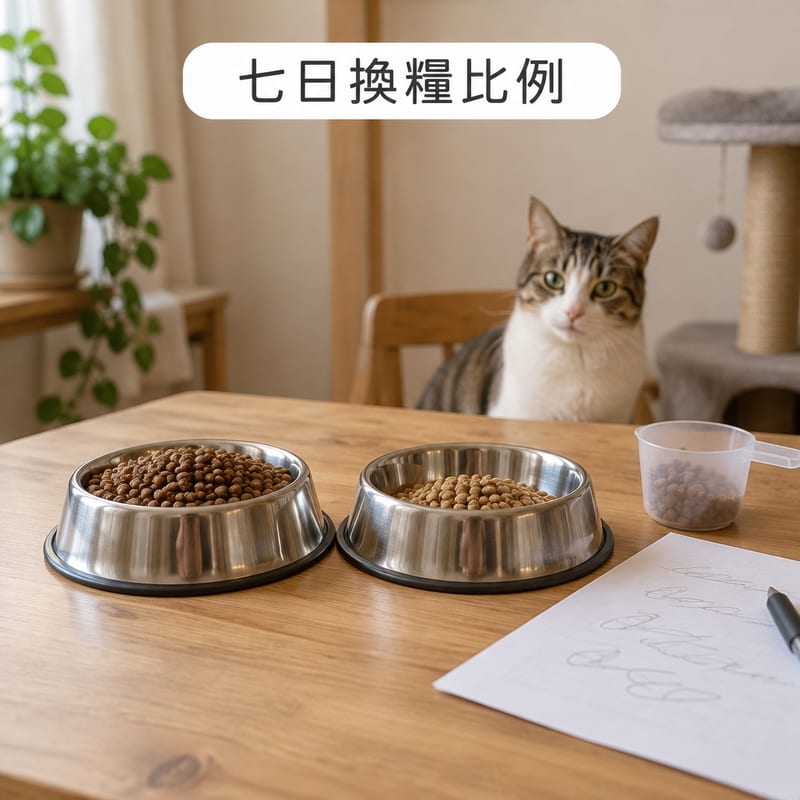
| Switching to high-protein high-fat food (e.g. formulas like Orijen) | Extend the transition period to ten to fourteen days; do not add new treats or supplements at the same time |
| Refuses food for more than one day, or completely stops eating | Seek medical help immediately; cats are at risk of fatty liver and you cannot wait |
Should you add a food topper? You do not need to add one from the start. A food topper is only a tool and cannot solve the problem of transition pacing. If you use one, choose a pet-specific product with clear ingredients, no onion or garlic, and low sodium, and follow the label or vet instructions for the amount; long-term reliance on food toppers will make picky eating worse and will also mask the real appetite problem. (Further reading: Complete guide to cat food transition)
When a cat has diarrhoea, which foods help restore gastrointestinal function?
The dietary goals during diarrhoea are threefold: reduce the burden on the intestines, replenish water, and restore normal defecation. The following practices are general principles; which one to use and for how long should be decided by the vet according to the condition.
Short-term recovery period options to consider:
- Cooked skinless chicken breast or white fish, plain, no salt, oil or seasoning, chopped finely or mashed.
- Steamed and mashed pumpkin, small amount, no sugar or spices.
- A small amount of white rice or plain congee, used to provide a mild source of carbohydrates.
- Small, frequent meals, three to four meals a day, better than one large bowl at once.
- Feed at room temperature; do not feed straight from the fridge.
To avoid during diarrhoea:
- High-fat, fried and fatty meat, including human meat gravy and sauces.
- Dairy products (many adult cats and dogs are lactose intolerant, which will make diarrhoea worse).
- New treats, new supplements, raw meat and undercooked food; only change one thing at a time.
- Any food containing onion, garlic, alcohol or artificial sweeteners.
Long-term dietary choices: distinguish their purposes:
| Diet type | Main approach | Common use | Note |
|---|---|---|---|
| Hydrolysed protein formula | Breaks protein into small molecules, reducing the chance of immune system recognition | Suspected food allergy or food intolerance | Requires vet assessment; do not feed long-term on your own |
| Low-residue (low-fibre) formula | Reduces the amount of intestinal residue, lowering digestive burden | Acute diarrhoea recovery period, some intestinal diseases | Not suitable for constipation cases that need fibre |
| High-fibre gastrointestinal formula | Provides fibre, improves motility and faecal texture | Chronic constipation, some large intestine problems | Must supplement sufficient water |
| Recovery-period wet food | High moisture, easy to digest, good palatability | Short-term transition, cases with poor appetite | Mostly for short-term use, not as a long-term staple |
Many owners worry "will long-term feeding of hydrolysed protein food cause pets to develop tolerance problems with protein". The current understanding is: the design purpose of hydrolysed protein is to avoid immune system recognition, and it will not "train pets to stop being afraid of the original allergens"; what really needs attention is that you must not feed prescription food long-term on your own, because long-term nutritional needs, body weight and changes in condition need vet follow-up. (Further reading: Hydrolysed protein prescription food brands and uses, Senior cat gastrointestinal and low-residue diet choices)
Below are in-stock examples you can consider; prices and stock are subject to the online store's current listed price:
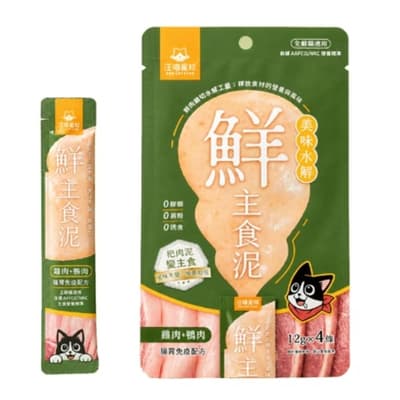
- Wang Miao Xing Qiu Cat Delicious Hydrolysed Fresh Staple Mousse Gastrointestinal Immunity Chicken + Duck 12gx4 (FS350) — HK$26.
- Petio Dog Treats Additive-Free Gastrointestinal Care Chicken + Vegetable Pieces 120g (90503308) — HK$33. Treats cannot replace main meals.
After using antibiotics or painkillers, how long does a cat's decreased appetite last? How do you judge that gastrointestinal function has recovered?
Antibiotics: Antibiotics do not distinguish between good and bad bacteria. During the course, the quantity and diversity of gut flora will change, so decreased appetite, soft stool, diarrhoea or constipation are not uncommon. Most cases will gradually improve as the course ends, usually within a few days to one or two weeks. Three points to note: first, you must not stop the medication on your own or adjust the dose; second, if there is complete refusal to eat for more than twenty-four hours, persistent vomiting or obvious deterioration in energy, contact the vet immediately; third, if soft stool persists long-term after stopping the medication, it cannot be treated as a "post-course after-effect" — stool testing and further investigation are needed.
Regarding painkillers: Vet-prescribed painkillers (for example, post-surgery painkillers) may cause drowsiness, sedation, decreased appetite or mild gastrointestinal discomfort, and most improve as the drug effect wears off and the course ends. If black tarry stool, vomiting blood, facial swelling, rapid breathing or convulsions occur, these are warning signs and you should seek medical attention immediately. You must not adjust the dose of any painkiller on your own or reuse leftover medication from a previous occasion.
How to tell whether vomiting is caused by antibiotics or another illness? Look at the timing and accompanying symptoms: occurring shortly after taking the medication, no fever, no abdominal pain, and reasonable energy — more likely related to the medication; conversely, if vomiting is unrelated to the timing of medication and is accompanied by fever, abdominal pain, bloody stool, lethargy or complete refusal to eat, it should be treated as another illness. If you cannot tell, hand it over to the vet and do not stop the medication on your own.
| Observation item | Normal direction | Seek vet care |
|---|---|---|
| Appetite | Gradually recovers after the course | Complete refusal to eat for more than twenty-four hours |
| Stool | Gradually forms from soft stool, frequency returns | Black tarry, large amount of fresh blood, jelly-like mucus |
| Vomiting | None or occasional once | Persistent vomiting, unable to drink water |
| Energy | Gradually returns to active | Lethargy, unsteady walking, difficult to wake |
| Weight | Stable or slowly recovering | Obvious continuous decline |
How to judge that gut function has recovered? Look at four things: stool formed and frequency returned to normal, no mucus and blood, appetite, energy and weight stable, no recurrent vomiting. If soft stool persists for more than one to two weeks, stool testing is needed. In addition, long-term gut problems or malabsorption can affect the absorption of vitamin B12, and B12 deficiency can make the gut more sensitive, but the safest approach is for the vet to judge through blood tests — do not supplement on your own. (Further reading: How to handle decreased appetite in cats after antibiotics, Pet antibiotic side effects and response, Supplement forms of vitamin B12 for cats)
Digestive problems caused by dehydration in cats — how do electrolyte drinks help?
Diarrhoea and vomiting reduce the absorption of water, nutrients and electrolytes while increasing loss. When discussing diarrhoea, the International Cat Care (iCatCare) points out that diarrhoea occurs because stool passes through the gut too quickly, with insufficient absorption of water, nutrients and electrolytes. Therefore, replenishing water and electrolytes is the core of diarrhoea care, not something done "in passing".
The role of electrolyte replacement fluids: Provides sodium, potassium, chloride and water to help the body maintain fluid balance, particularly suitable for cases with mild to moderate loss that are still willing to drink. It is not a medicine and cannot replace fluid therapy: pets with severe dehydration, persistent vomiting or complete inability to drink need the vet to provide fluids via drip.
What must not be used as a substitute: Sports drinks and human electrolyte tablets contain sugar, sodium levels and additives that are not suitable for cats and dogs; you also must not add salt to water on your own — excessive salt can cause more serious problems.
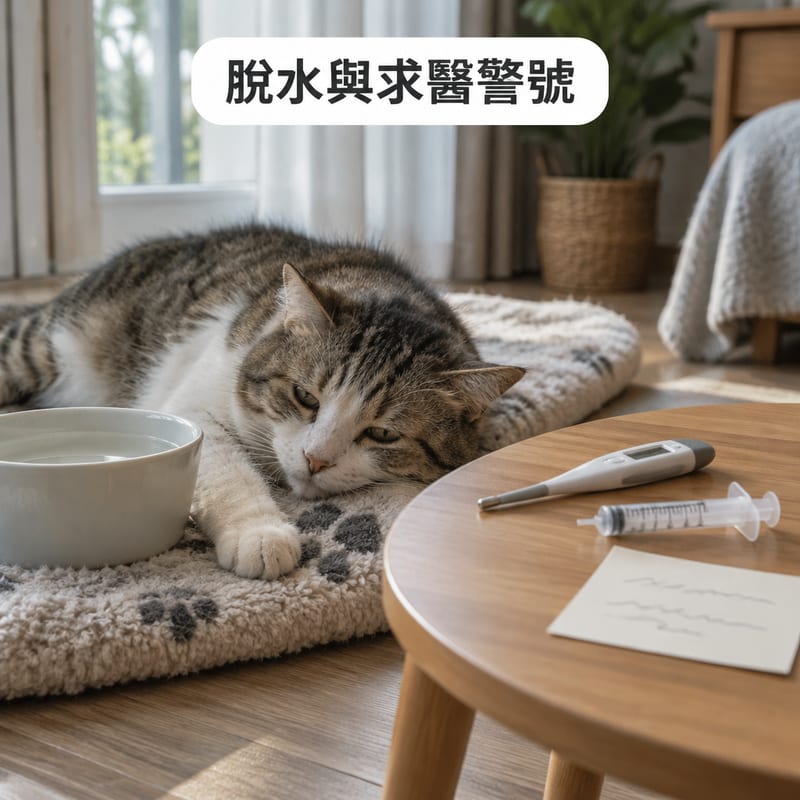
Assessing dehydration at home: You can check the following items; if any one is obviously abnormal, seek veterinary care as soon as possible.
| Assessment item | Normal | Mild dehydration | Obvious dehydration (seek vet immediately) |
|---|---|---|---|
| Skin elasticity (gently pull up at the nape) | Springs back immediately on release | Slower to spring back | Skin stays standing |
| Gums | Moist, pink | Slightly dry | Dry, sticky, pale or dark in colour |
| Eye sockets | Normal | Slightly sunken | Obviously sunken |
| Urine output | Normal frequency | Reduced | Almost no urine |
| Energy | Normal | More tired | Lethargic, weak |
| Weight | Stable | Slight decline | Obvious decline |
(Further reading: Signs of dehydration in cats and handling, Methods for cat drinking and hydration)
The following are examples of pet-specific electrolyte replacement fluids; prices and stock are subject to the live prices shown on the online store:
- Oralade Hydrate+ Electrolyte Rapid Rehydration Nutritional Fluid 330ml (OHC1) (for cats) — HK$80.
- Oralade Active High-Efficiency Electrolyte Drink 250ml (Active-C) (for dogs) — HK$65.
What to do if a cat cannot vomit out a hairball? What does mucus in the stool mean?
Hairballs: Cats spend a lot of time each day grooming, and some hair is swallowed. A review article in the Journal of Feline Medicine and Surgery (JFMS), citing a survey of owners at veterinary clinics, states that about one in ten healthy short-haired cats vomits hairballs twice or more per year, and the rate for long-haired cats is about twice that of short-haired cats. So "occasionally vomiting a hairball" can be observed, but an increase in frequency, or being unable to vomit it out, requires attention.
- Routine management: Daily grooming (more frequent during shedding season), increasing water intake and the proportion of wet food, choosing high-fibre or hairball-control formula food, and using hairball products according to the vet's advice or the label.
- Warning signs of being unable to vomit: Continuous retching, opening the mouth to gag but nothing comes out, rapid or noisy breathing, deterioration in energy, no appetite, hard distended abdomen, no bowel movement. These situations may be hairball obstruction, intestinal obstruction or respiratory problems, and you should go to the vet clinic immediately. Do not induce vomiting on your own, and do not feed human petroleum jelly or large amounts of oil.
- Things you should not do: Adding a large amount of fibre all at once, using lubricants without the vet's consent, or treating "vomiting hairballs" as normal and ignoring weight loss.
Mucus in stool: A small amount of clear mucus can be normal lubricating secretion from the gut and does not necessarily mean illness. But a large amount, jelly-like, blood-tinged, recurrent, or accompanied by diarrhoea, vomiting, poor energy and weight loss requires stool testing. Mucus does not necessarily equal parasites — intestinal inflammation, flora imbalance and food intolerance can all cause mucus in stool; however, intestinal parasites such as coccidia are one of the common causes, especially in kittens, group-housing environments, newly adopted cats, or cats just brought home from a pet shop.
Coccidia (Cystoisospora) are single-celled parasites. After infection, watery diarrhoea, mucus in stool, decreased appetite, dehydration and vomiting are common, with higher risk in kittens. Diagnosis relies on the vet testing stool (sometimes more than once is needed, because the number of eggs fluctuates), and treatment is prescribed by the vet; the focus of home care is promptly cleaning up stool, daily cleaning of food and water bowls and the litter box, and isolating and testing stool for new cats entering the home. (Further reading: Complete guide to hairballs in cats, How to distinguish mucus in cat stool, Cat emergency first aid guide)
The following are in-stock examples related to hairball control and shedding; prices and stock are subject to the live prices shown on the online store:
- VetriScience Hairball Tablets for Cats 60 tablets/bag (0900866.060) — HK$88.
- Mao Zhang Medical Science Probiotic Hairball Control Health Meat Paste Natural Hairball Shedding for Cats 6g x 30 sticks — HK$160.
When to see the vet immediately
The following situations cannot wait, and you should not use medication on your own:
- Vomiting or diarrhoea accompanied by lethargy, fever, abdominal pain, or not allowing you to touch the belly.
- Black tarry stool, large amounts of fresh blood, or jelly-like bloody mucus.
- Completely not eating for more than twenty-four hours, or kittens and puppies skipping several meals; cats not eating for a prolonged period carry a risk of fatty liver.
- Obvious dehydration: poor skin elasticity, dry gums, sunken eye sockets, almost no urine, or persistent vomiting and unable to drink water.
- Unable to bring up hairballs: continuous retching, hard distended abdomen, no bowel movement — obstruction must be ruled out.
- New symptoms during medication: facial swelling, seizures, rapid breathing, yellowing of gums or whites of the eyes — contact the vet immediately.
Before bringing your pet to the clinic, preparing the following information will help the vet assess: what medication was used and when, how much was eaten, bowel movement record (frequency, shape, colour, presence of mucus or blood), changes in water intake and urine output, names of regular food and supplements, and whether there has been a recent food change or new food added.
This article was reviewed by the PetChill Veterinary Editorial Team. The content is for reference only and cannot replace veterinary diagnosis, prescription or treatment.
Further Reading
- Pet Gut Health Part 1: Probiotics, Food Transition and Bowel Movement Basics
- Complete Guide to Cat and Dog Gut Health: Vomiting, Diarrhoea, Soft Stool, Mucus Stool
- Boundaries of Home Management for Cat Gastrointestinal Discomfort
- How to Choose Pet Probiotics and When to Use Them
- Cat Food Transition Guide: Gradual Method and Soft Stool Management
- Boundaries of Home Care for Cat Vomiting
Authoritative References
- International Cat Care (iCatCare/ISFM) Diarrhoea in cats: https://icatcare.org/articles/diarrhoea-in-cats
- International Cat Care (iCatCare/ISFM) How to encourage your cat to eat: https://icatcare.org/articles/how-to-encourage-your-cat-to-eat
- International Cat Care (iCatCare/ISFM) Constipation in cats: https://icatcare.org/articles/constipation-in-cats
- WSAVA Global Nutrition Guidelines: https://wsava.org/global-guidelines/global-nutrition-guidelines/
- Cannon M. Hair Balls in Cats (Journal of Feline Medicine and Surgery, 2013): https://journals.sagepub.com/doi/full/10.1177/1098612x12470342
- Agriculture, Fisheries and Conservation Department, Hong Kong (owners' responsibility for proper care and appropriate management of animals): https://www.afcd.gov.hk/tc_chi/quarantine/tnr_trial_programme.html
Veterinary warning: In emergencies, contact a vet immediately; this article is for reference only and cannot replace veterinary diagnosis. Information checked as of 2026-10-14Source: Compiled by the PetChill Editorial Team
 Feline Natural full guide →
 Orijen full guide →
 Almo Nature full guide →