Gut microbiome imbalance is not just about diarrhoea: stress and anxiety, antibiotic courses and switching food too quickly can all cause imbalance, leading to soft stool, vomiting and reduced appetite. This article focuses on the related gastrointestinal symptoms, low-fat low-residue diet, food transition pace and fresh food storage.
Quick answers
- Microbiome imbalance is not just diarrhoea: stress, antibiotics and switching food too quickly can all cause gut microbiome imbalance, with signs including soft stool, constipation, vomiting, bloating, reduced appetite, and even effects on ears and skin.
- Diarrhoea during antibiotics is a common reaction: you must not stop the medication or adjust the dose on your own; notify the vet and let the vet decide whether supportive treatment is needed.
- For diarrhoea, look at diet and hydration first: a low-fat, easily digestible, low-residue diet can reduce the burden on the gut; prescription food must follow the vet's instructions, do not mix it yourself or add extras.
- Switch food slowly: keep the old food as the base, add only a small amount of new food each day, and go back to the previous ratio as soon as you see soft stool.
- Fresh food and soup pouch storage: store unopened packs in a cool, dry place; refrigerate immediately after opening and consume as soon as possible; check the labels on staple food pouches and complementary soup pouches carefully.
Key summary
- Stress affects gut motility and secretion through the gut-brain axis; common signs are alternating soft stool and constipation, vomiting and reduced appetite. This does not necessarily mean serious disease, but if it persists, the cause must be investigated.
- Antibiotics affect both pathogenic bacteria and the gut's existing microbiome; diarrhoea, soft stool and reduced appetite are common reactions, and any decision to stop medication must be made by the vet.
- Appetite stimulants (e.g. Metoclopramide) are vet prescription drugs used for specific clinical situations; they are not "appetite supplements", and vomiting should be reported to the vet immediately.
- A low-residue diet means reducing intestinal residue and insoluble fibre; combined with a low-fat formula, it can reduce the digestive burden during diarrhoea.
- Probiotics play a supportive role; products such as Pro Kolin Advanced are not suitable for all cats, and cases with chronic illness or immune problems must ask the vet first.
- Hong Kong is humid; fresh food pouches, soup pouches and prescription cans must be refrigerated immediately after opening, warmed to room temperature or slightly warm before feeding, and must not be left at room temperature for long.
When cats are under stress or anxiety, what indigestion symptoms can gut microbiome imbalance cause?
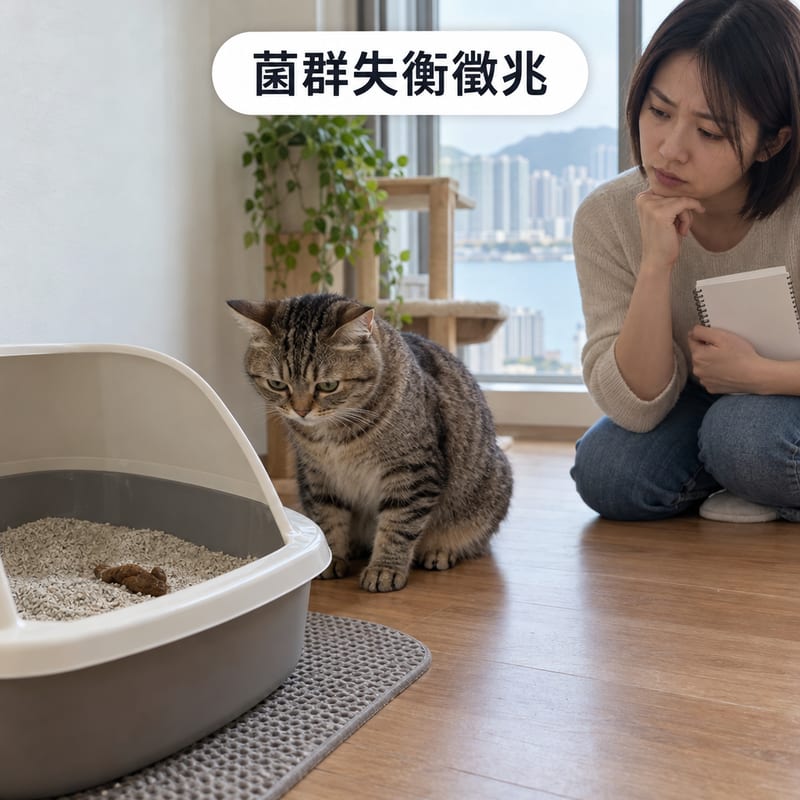
There is a two-way channel between the gut and the central nervous system; stress signals change gut motility speed, digestive juice secretion and the barrier function of the intestinal mucosa, while also affecting the composition of the gut microbiome. So when cats and dogs face moving house, a new family member, renovation noise, a changed litter box location or long periods alone, the first signs are often gastrointestinal reactions rather than obvious emotional expressions.
Common symptoms of indigestion include:
- Changes in stool form: soft stool, watery diarrhoea and constipation occurring alternately, more or fewer bowel movements, and possibly sudden defecation outside the litter box.
- Mucus or a small amount of blood streaks: if it recurs, stool testing is needed; it cannot be treated as a purely stress reaction.
- Vomiting: mostly small amounts after eating or on an empty stomach; if it becomes repeated vomiting, seek veterinary care as soon as possible.
- Reduced appetite and fussy eating: stress suppresses the willingness to eat, but a cat not eating at all for more than twenty-four hours is high risk; do not take the attitude of "observe for another night".
- Bloating, farting, abdomen not allowing touch: reflects intestinal gas and pain.
- Behavioural clues: hiding, over-grooming, licking the abdomen, and prolonged crouching (commonly known as hen squatting) can all be signs of gastrointestinal discomfort.
| Observed sign | Possible direction | When to hand over to the vet |
|---|---|---|
| Soft stool but normal energy and appetite | Stress, switching food too quickly, mild food intolerance | No improvement within one to two days, or recurring |
| Constipation, straining but unable to pass stool | Insufficient water intake, fibre or hairball problems, pain | No bowel movement for more than one day, or accompanied by vomiting |
| Alternating soft stool and constipation, with mucus | Gut microbiome imbalance, chronic intestinal inflammation | Stool testing needed if recurring |
| Vomiting plus diarrhoea, markedly reduced appetite | Infection, gastroenteritis, foreign body or drug reaction | Contact the vet immediately |
What help does adjusting the microbiome provide for ears and skin? The gut microbiome, immune system and skin barrier influence each other; from the vet's perspective, gastrointestinal, skin and ear problems are assessed together. Clinically, after gastrointestinal problems are addressed, some cats and dogs show improvement in itching, scratching frequency and ear canal discharge, but this does not mean probiotics can directly helps manage skin disease or otitis. For ear canal odour, redness and swelling, repeated head shaking and ear scratching, the vet must first check whether it is ear mites, fungal or bacterial infection, then combine this with gastrointestinal management. For relevant background, see the Comprehensive Guide to Cat Skin Diseases.
Which diseases easily cause gastrointestinal bleeding? Black tarry stool, vomiting blood or large amounts of fresh blood cannot be treated as ordinary gastrointestinal discomfort. Clinically, directions to consider include: severe gastroenteritis and intestinal ulcers, intestinal damage caused by ingesting sharp foreign bodies or linear foreign bodies, intestinal tumours, coagulation problems or poisoning, severe parasite infections, and gastrointestinal irritation caused by some drugs (e.g. non-steroidal anti-inflammatory drugs). All these situations must be judged by the vet using blood tests, imaging or endoscopy; do not use medication to stop bleeding on your own.
Can parasites cause difficulty defecating? Yes. Parasites such as roundworms, tapeworms, coccidia and Giardia can cause diarrhoea, mucus, weight loss and abdominal pain, and after severe infection or intestinal inflammation, cats may also hold back from defecating because of pain, resulting in constipation and difficulty defecating. These situations rely on stool testing for diagnosis, and medication must be prescribed by the vet; it is not recommended to buy deworming drugs and try them randomly. For daily prevention and deworming arrangements, see the Cat and Dog Deworming Guide.
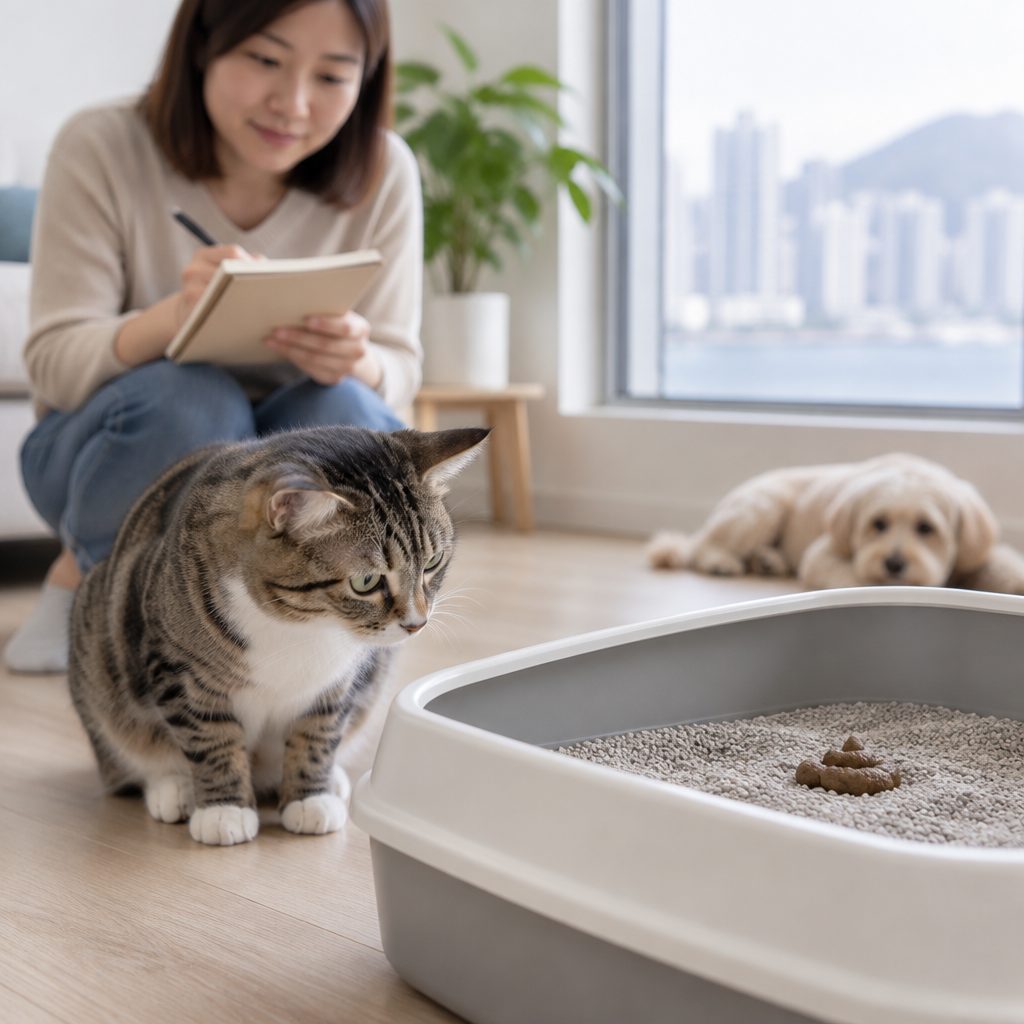
Stress-related gastrointestinal reactions mostly improve as the environment stabilises; but if symptoms recur, the cause must be identified by elimination. Things that can be done at home first: fixed feeding times, do not randomly change the number and location of litter boxes, provide hidden resting spots, reduce sudden noise, and record daily stool form. For related behaviour and stress management, see the Cat Stress Response Guide.
If diarrhoea or soft stool occurs during antibiotic treatment, how should it be handled? When should the vet be consulted?
Antibiotics do not distinguish between pathogenic bacteria and the gut's existing good bacteria; during the course, the number and diversity of the gut microbiome will change, so diarrhoea, soft stool and reduced appetite are not rare. The international veterinary community has also reminded in recent years that diarrhoea should not be taken for granted as something to treat with antibiotics; the focus should instead be on restoring the gut environment and finding the cause. A related AVMA report discussed this trend (AVMA: Pet diarrhoea maybe hold antibiotics). In other words, whether to use antibiotics and whether to stop must be decided by the vet.
How high is the chance of diarrhoea after tetracyclines (e.g. Doxycycline)? There is no probability figure that applies to all cases, because the risk is related to dose, course length, the animal's own gut condition and whether there are other diseases. What can be certain is: gastrointestinal reactions are one of the common adverse reactions of this class of drugs; vets generally remind owners to give with water or with food to reduce oesophageal and stomach irritation, and to record changes in stool and appetite. So the question is not "what is the probability", but "is there monitoring and timely reporting".
What owners can do during the course:
- Do not stop medication or add doses on your own: stopping midway may leave the infection uncleared and increase antimicrobial resistance; if a dose is missed, do not double the dose on your own to make up for it; ask the vet.
- Record three things: daily stool form and frequency, food intake at each meal, and whether there is vomiting or drooling.
- Maintain adequate hydration: diarrhoea causes loss of water and electrolytes; the vet may recommend electrolyte replacement fluids rather than just plain water.
- Do not add new treats, supplements or human food at the same time: otherwise it is impossible to tell whether it is a drug reaction or a food reaction.
- Ask the vet about probiotics: if the vet agrees to use them together, they are generally arranged to be fed separated from the antibiotics by a period of time, to avoid the antibiotics also affecting the probiotics; follow the vet's instructions for the actual timing and method.
How does an appetite stimulant (Metoclopramide) work? This type of medication is a veterinary prescription. It mainly works by affecting gastrointestinal motility and nerve signals, promoting gastric emptying and upper gastrointestinal motility, and it also has an anti-vomiting effect, so it is commonly used in cases of slow gastric emptying, repeated vomiting, or when short-term support for eating is needed. What you need to note is: it is "helping the gut to function" and not a universal appetite stimulant that "makes cats want to eat", and you must not buy it yourself for long-term feeding. Possible digestive discomfort symptoms include vomiting, diarrhoea, abdominal discomfort, restlessness, or behavioural changes (such as meowing more, pacing). If persistent vomiting occurs during medication, you should not stop or increase the medication yourself; instead, notify the vet immediately and let the vet decide whether adjustment is needed. Long-term use of appetite stimulants may also mask the underlying cause; for related risks you can refer to Risks of long-term use of appetite stimulants.
Will using an appetite stimulant together with antibiotics (such as penicillin, cephalosporin) increase adverse reactions? Using multiple medications together can theoretically increase the chance of gastrointestinal discomfort or other interactions, so any combination must be assessed and scheduled by a vet; you must not add or reduce medication yourself, or mix the two medications into the same meal. In practice, medication is usually given at separated times according to the vet's instructions, and you should continuously observe bowel movements and mental state during the course. For general principles of medication safety you can refer to Pet medication safety guide.
How do anti-inflammatory drugs compare with dietary adjustment? Anti-inflammatory drugs (such as some steroids or non-steroidal anti-inflammatory drugs) are veterinary prescriptions, used to control inflammation in the intestines or other tissues, and may be necessary treatment in cases such as inflammatory bowel disease or severe gastroenteritis; but they have side effects and contraindications, especially non-steroidal anti-inflammatory drugs, which are related to gastrointestinal ulcers and kidney function. Dietary adjustment (low-fat, easily digestible, low-residue, or hydrolysed protein formulas) is a relatively gentle long-term management approach, but it cannot handle acute severe inflammation. The two work together rather than being an either-or choice; whether medication is needed and for how long are all decided by the vet according to the condition. If diarrhoea still does not improve after medication according to the vet's instructions, international feline care guidelines recommend that if diarrhoea persists for more than a few days, or is accompanied by not eating and poor mental state, you should return to the clinic for examination as soon as possible (International Cat Care: Diarrhoea in cats).
| Medication / treatment direction | Common gastrointestinal reactions | What owners can do | What must never be done |
|---|---|---|---|
| Tetracyclines (Doxycycline) | Nausea, soft stool, decreased appetite | Give with water or with food, record bowel movements, maintain water intake | Stop medication yourself or make up with a double dose |
| Penicillin, cephalosporin | Diarrhoea, soft stool, decreased appetite | Give medication on time, observe for vomiting | Combine with other medications yourself |
| Appetite stimulant (Metoclopramide) | Vomiting, diarrhoea, restlessness | Notify the vet immediately if vomiting occurs | Increase dose yourself, long-term use |
| Anti-inflammatory drugs (prescription steroids / non-steroidal anti-inflammatory drugs) | Gastrointestinal irritation, ulcer risk | Follow the vet's instructions fully and attend follow-up visits | Feed randomly on an empty stomach, stack with other anti-inflammatory drugs |
| Dietary adjustment (low-fat, easily digestible, low-residue) | Too-rapid transition causes soft stool | Gradual transition, small frequent meals | Change everything at once, mix in snacks or complementary foods |
(Further reading: Pet antibiotic side effects and how to respond, How to handle diarrhoea and constipation in cats during antibiotics)
When a cat has diarrhoea, how do you choose a low-fat, easily digestible diet? What is a low-residue diet?
The goal of a low-fat, easily digestible diet is to reduce the fat and complex components that the gut has to process: fat slows gastric emptying and increases intestinal secretion, so low-fat formulas are mostly used during diarrhoea; "easily digestible" generally means a single source of protein and carbohydrates, with processing methods that make absorption easier. Practical principles are: plain, no added seasoning, small frequent meals, keep at room temperature to slightly warm, and do not try new foods at the same time. The AFCD animal management care guidelines also remind owners to avoid feeding human food, and pets that are ill or injured should be treated by a registered vet as soon as possible (AFCD: Take good care of your dog).
What is a low-residue diet? "Residue" refers to the remaining insoluble fibre, skin, seeds, fascia, etc. in food; these increase stool bulk and stimulate intestinal motility. A low-residue diet means reducing such components in the short term, giving the gut time to repair, and is suitable for cases of acute diarrhoea, intestinal inflammation, or post-surgery recovery. Note: low-residue does not mean no fibre; long-term complete absence of fibre can instead make defecation difficult; whether low-residue is needed and for how long are decided by the vet according to the condition.
Can prescription food be mixed with other cat food? Yes, but there must be veterinary instructions. There are three reasons: first, mixing changes the formula ratio and weakens the original nutritional design of the prescription food; second, if symptoms occur after mixing, it is difficult to determine which one caused the problem; third, some prescription foods (such as hydrolysed protein formulas) are most harmed by mixing in other protein sources, which directly affects efficacy. If the cat refuses the prescription food, the correct approach is to return to the clinic and discuss with the vet a transition method or flavour, rather than adding complementary cans, meat paste, or snacks yourself. For related formula background you can refer to Hydrolysed protein prescription food brands.
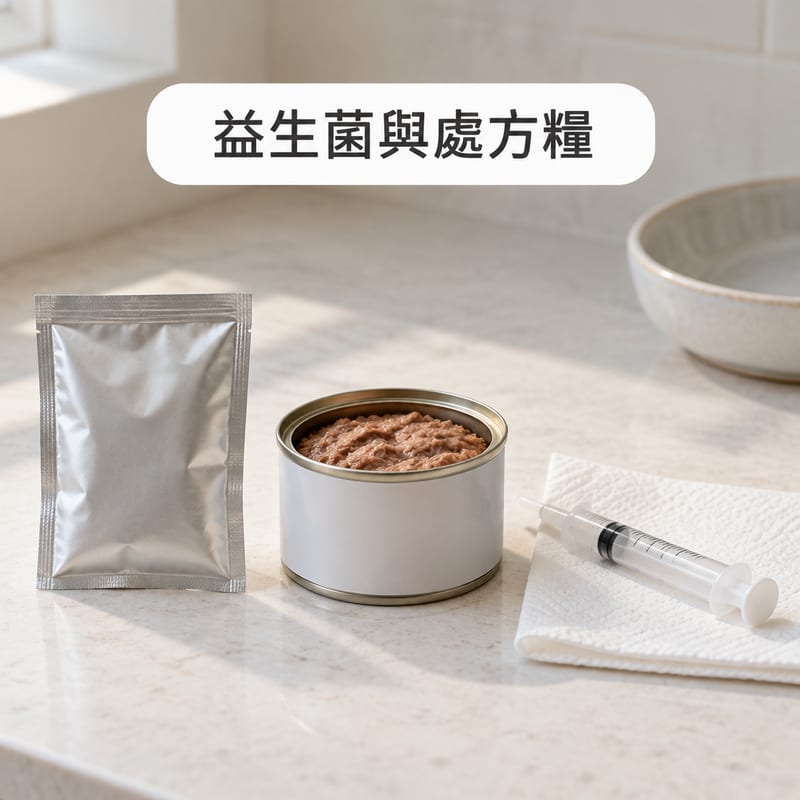
Is there a time limit for storing prescription canned food? Yes. After opening the can, cover and refrigerate immediately, and use within the time indicated on the packaging; take out only the portion for that meal each time, warm to room temperature to slightly warm before feeding, do not pour leftovers back into the can, and do not leave at room temperature for long. Hong Kong's weather is humid and hot, and wet food left at room temperature spoils faster, so it is not recommended to open several cans at once or leave the can with the spoon in the kitchen. For storage and label interpretation you can refer to Pet food storage guide.
How should the dry-to-wet food ratio be adjusted for different life stages? There is no universal ratio; the WSAVA Global Nutrition Guidelines emphasise that an individual nutritional assessment should be made for each animal (WSAVA Global Nutrition Guidelines). The general direction is: kittens and puppies need high energy and more frequent meals; adult cats can use a dry-wet mix to maintain oral and water balance; older cats, kidney disease, or urinary tract cases mostly need to increase the proportion of wet food to supplement water, because cats naturally have low water intake. Milk powder and freeze-dried products have low moisture content; if used as a staple food long-term, extra attention should be paid to total water intake and drinking habits; low-protein formulas are prescriptions for specific situations such as kidney disease and must not be fed to healthy cats on your own. For the trade-offs of dry-to-wet ratio you can refer to How to choose dry food vs wet food and Senior cat food selection guide.
The following are gastrointestinal formulas and easily digestible options in stock at PetChill; prices are subject to the instant marked price on the online store:
- Royal Canin Prescription Food Royal Canin Cat Food GASTROINTESTINAL gastrointestinal series adult cat gastrointestinal high-fibre easily digestible prescription 2kg (discontinued) — HK$390. Prescription food requires veterinary assessment.
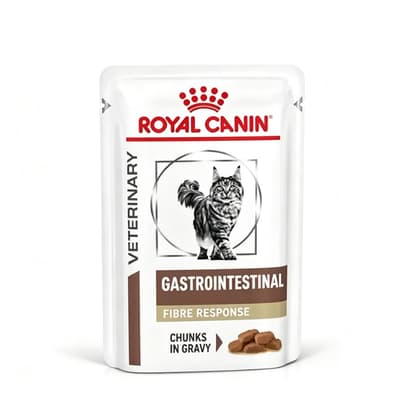
- Royal Canin Prescription Food Cat Wet Food GASTROINTESTINAL FIBRE RESPONSE adult cat gastrointestinal high-fibre easily digestible prescription (gravy) 85g — HK$19.5. Prescription food requires veterinary assessment.
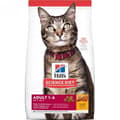
- Hills Prescription Food Cat Canned i/d digestive care formula 5.5oz (4628) (discontinued) — HK$40. Prescription food requires veterinary assessment.
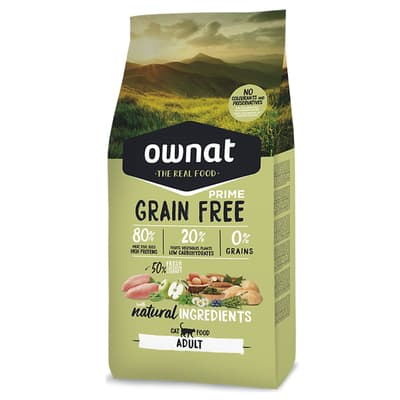
- ownat All Life Stages Cat Food selected free-range chicken and turkey easily digestible 400g — HK$70.
How long does it take to switch cat food? When will diarrhoea or constipation appear after switching food?
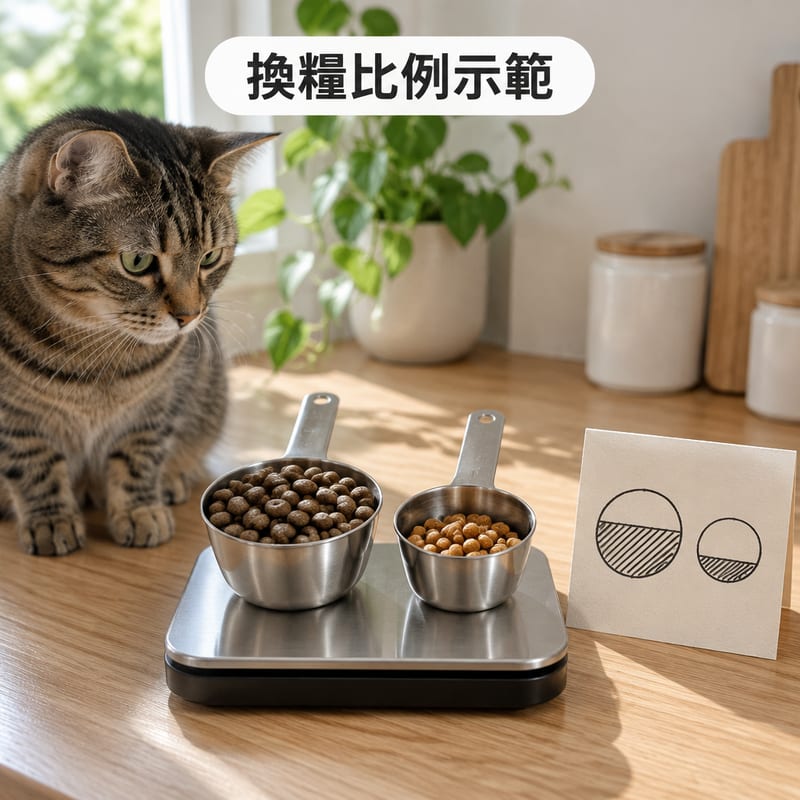
Gastrointestinal reactions caused by switching food happen because the gut microbiota and digestive enzymes need time to adapt to the new formula's protein, fat and fibre ratios. The reaction time can be very fast: soft stool can appear as early as the first one or two meals after switching, and it is also possible that the frequency and form of bowel movements only change after one to several days. Therefore, every meal during the food transition period must be recorded — you cannot "switch first and check later".
Shortest and longest duration: the common approach is a gradual transition over seven to ten days, but this is not a hard standard. The shortest is not recommended to be "switching completely within one or two meals", because the gut has no time to adapt; as for the upper limit, for cases with sensitive digestion, a history of chronic intestinal disease, or switching to prescription food under veterinary instruction, the vet may require extending it to a longer period, or even adjusting step by step according to follow-up results. The food transition schedule is decided by the vet and the cat's response, not by the calendar.
| Stage | Old food ratio | New food ratio | Observation and handling |
|---|---|---|---|
| Day 1 to 2 | About three-quarters | About one-quarter | Record stool form; if soft stool appears, go back to the previous step immediately |
| Day 3 to 4 | About half | About half | Watch appetite and energy; do not add treats at the same time |
| Day 5 to 6 | About one-quarter | About three-quarters | If diarrhoea or constipation occurs, stop at the increased new food amount |
| After Day 7 | Zero | All | Continue observing for one week; if anything abnormal, investigate the cause |
How to handle indigestion during a dog's transition period? The principle is the same as for cats: stop at the increased new food amount, go back to the previous ratio, maintain water intake, feed small meals more frequently, and pause all new treats and supplements. During a dog's diarrhoea, the most important things are hydration and monitoring mental state; if diarrhoea lasts more than a few days, contains blood or is black, is accompanied by vomiting, lethargy or a hard distended abdomen, go to the vet clinic immediately. In addition, during a dog's food transition, it is not recommended to use "human yogurt" or other homemade food as a transition, because lactose and added sugar will instead worsen soft stool.
After switching food, is the stool too dark or too light a sign of gastrointestinal problems? Colour is an important clue:
- Normal: medium to dark brown, formed, holds together when picked up.
- Black and tarry: indicates bleeding in the upper digestive tract, an emergency warning sign, cannot wait.
- Greyish-white, pale yellow or oily-shiny: may be related to bile secretion, fat digestion and absorption, or pancreatic problems; seek medical attention.
- Bright red: mostly bleeding in the large intestine or near the anus, requires examination (heavy bleeding is an emergency).
- Dark green or with undigested food: may be related to eating too fast, dietary changes or rapid intestinal motility; if it persists, get it checked.
These are only directions and cannot be used for self-diagnosis. For the complete observation method, refer to the Cat Poop Health Observation Guide and How to Tell Apart Mucus and Blood Streaks in Cat Stool.
How to choose probiotic supplements? Is Pro Kolin Advanced suitable for all cats?
Probiotics are live microorganisms, prebiotics are food for beneficial bacteria, and both play a supporting role. International feline care guidelines also point out that probiotics and prebiotics can sometimes be used alongside medication as support for diarrhoea management, but cannot replace diagnosis and treatment. When choosing a product, look at four things: whether the strains have numbers, the stated live bacteria count and expiry date, storage requirements (some need refrigeration), and the target users (cat and dog formulas are not necessarily interchangeable).
Pro Kolin Advanced suitability: this type of gel-type/powder-type probiotic and prebiotic product is commonly used by vet clinics for support during diarrhoea, but it is not suitable for all cats. Situations requiring veterinary assessment include: kittens, chronic diseases (such as kidney disease, diabetes), immunosuppression, severe or persistent vomiting, taking multiple medications, and diarrhoea accompanied by fever or blood. Dosage and number of days of use must also follow veterinary instructions; do not add it on your own long-term. If vomiting worsens, the cat stops eating completely or its energy declines after use, stop using it and contact the vet immediately. (Extended: What to note about long-term use of Pro Kolin Advanced, How to choose pet probiotics)
Can dogs be given human yogurt as a probiotic source during food transition? Not recommended. The reasons are: human yogurt contains lactose, and many adult cats and dogs are lactose intolerant, which will instead worsen bloating and soft stool; some products have added sugar and artificial sweeteners; and the strains and live bacteria counts in human yogurt are not designed for pets, so the actual intake cannot be controlled. To use probiotics, choose a clearly labelled pet formula and feed according to veterinary or product instructions.
When does the microbiota recover after antibiotics? Most cases improve gradually as the course ends, but it should not be treated as a usually timetable. If long-term soft stool persists after stopping the medication, faecal testing and further examination are needed, rather than continuously adding probiotics. For the relationship between gastroenteritis and probiotics, refer to Cat Gastroenteritis and Probiotics.
Storage methods for Astkatta soup pouches and Tap Tap Pet Meal fresh food: the storage principle is three-stage handling: "unopened, after opening, leftovers". Whether Astkatta soup pouches can be used as a staple food depends on the label: those labelled "staple pouch" or "complete staple" (such as Astkatta Feast Fresh Meat Feast Complete Staple Pouch) can be used as a staple food according to package instructions; those labelled soup pouch, complementary food or "supplement" are for hydration or mixing with food, and cannot be used alone as a main meal long-term, otherwise nutrition will be unbalanced. Prescription canned food such as Hill's is the same — it is for veterinary prescription use and must be used as a staple food according to veterinary instructions. For general principles on food storage and opened portions, refer to Usage period of cat food after opening.
| Product type | Unopened storage | Handling after opening | Time limit and notes for consumption |
|---|---|---|---|
| Soup pouch (complementary/hydration soup pouch) | Cool and dry, away from sunlight and the stove | Squeeze out the portion for the meal, refrigerate the remainder immediately with the lid on | Cannot be the sole staple food; warm to room temperature or slightly warm before feeding |
| Staple pouch (labelled complete staple) | Same as above, check the best-before date | Refrigerate immediately after opening, take out per meal | Use as staple food according to package instructions; do not leave leftovers at room temperature for long |
| Fresh food meal pouch (e.g. Tap Tap Pet Meal) | Refrigerate or store in a cool place according to packaging | Refrigerate after opening, do not leave in the bag at room temperature for long | Warm before feeding, do not repeatedly freeze and thaw |
| Prescription canned food (e.g. i/d gastrointestinal formula) | Cool and dry, avoid high temperatures | Cover and refrigerate after opening the can, take only the portion for each meal | Requires veterinary instruction; do not mix-feed with other food on your own |
The following are examples in stock at PetChill; prices are subject to the live price shown on the online store:
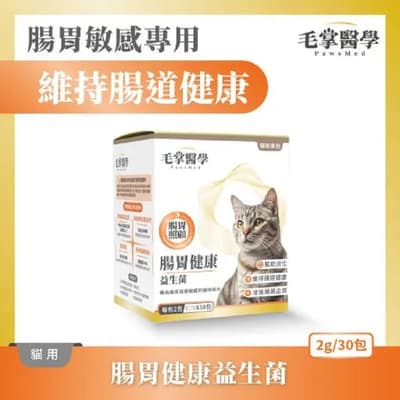
- Furry Medical Cat Gastrointestinal Health Probiotics 2g x 30 packs — HK$141.
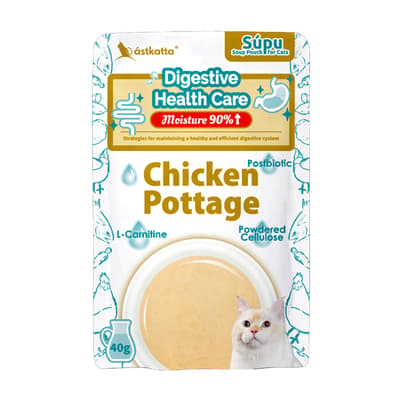
- Astkatta Iceland Can Cat Wet Food Pouch Intestinal Care Formula Chicken Soup Pouch 40g — HK$9. For hydration and mixing with food; cannot be the sole staple food.
- Astkatta Feast Cat Wet Food Fresh Meat Feast Complete Staple Pouch Pure Mackerel 110g — HK$29.
- Tap Tap Pet Meal Cat Staple Meal Pouch Sea Bass Essence Series Slow-Simmered Free-Range Chicken x Quail Egg 80g — HK$19.
When to see a vet immediately
The following situations cannot wait, and you should not use medication on your own:
- Diarrhoea with a large amount of fresh blood, black or tarry stool, the latter indicates bleeding in the upper digestive tract and is an emergency warning sign.
- Repeated vomiting or vomiting blood, especially persistent vomiting during medication, notify the vet immediately rather than stopping the medication on your own.
- Not eating at all for more than twenty-four hours, or a noticeable decrease in water intake. Cats not eating for a prolonged period carry a risk of fatty liver, and puppies and kittens are also prone to dehydration.
- Lethargy, weakness, unsteady walking or hiding away.
- A distended, hard abdomen that is painful to touch, or clearly not allowing handling, together with vomiting or no bowel movements, obstruction must be ruled out.
- Diarrhoea still not improving after medication as instructed by the vet, or diarrhoea persisting for several days or more, accompanied by fever and weight loss.
- Ingestion of foreign objects, medication overdose or exposure to toxic substances, do not induce vomiting on your own, bring the packaging and go to the clinic immediately.
This article was reviewed by the PetChill Veterinary Editorial Team. The content is for reference only and cannot replace veterinary diagnosis, prescription or treatment.
In case of emergency, contact a vet immediately; this article is for reference only and cannot replace veterinary diagnosis. Information verified as of 2026-10-14Source: PetChill Editorial Team
 Royal Canin full guide →
 Astkatta full guide →
 Hill's full guide →