
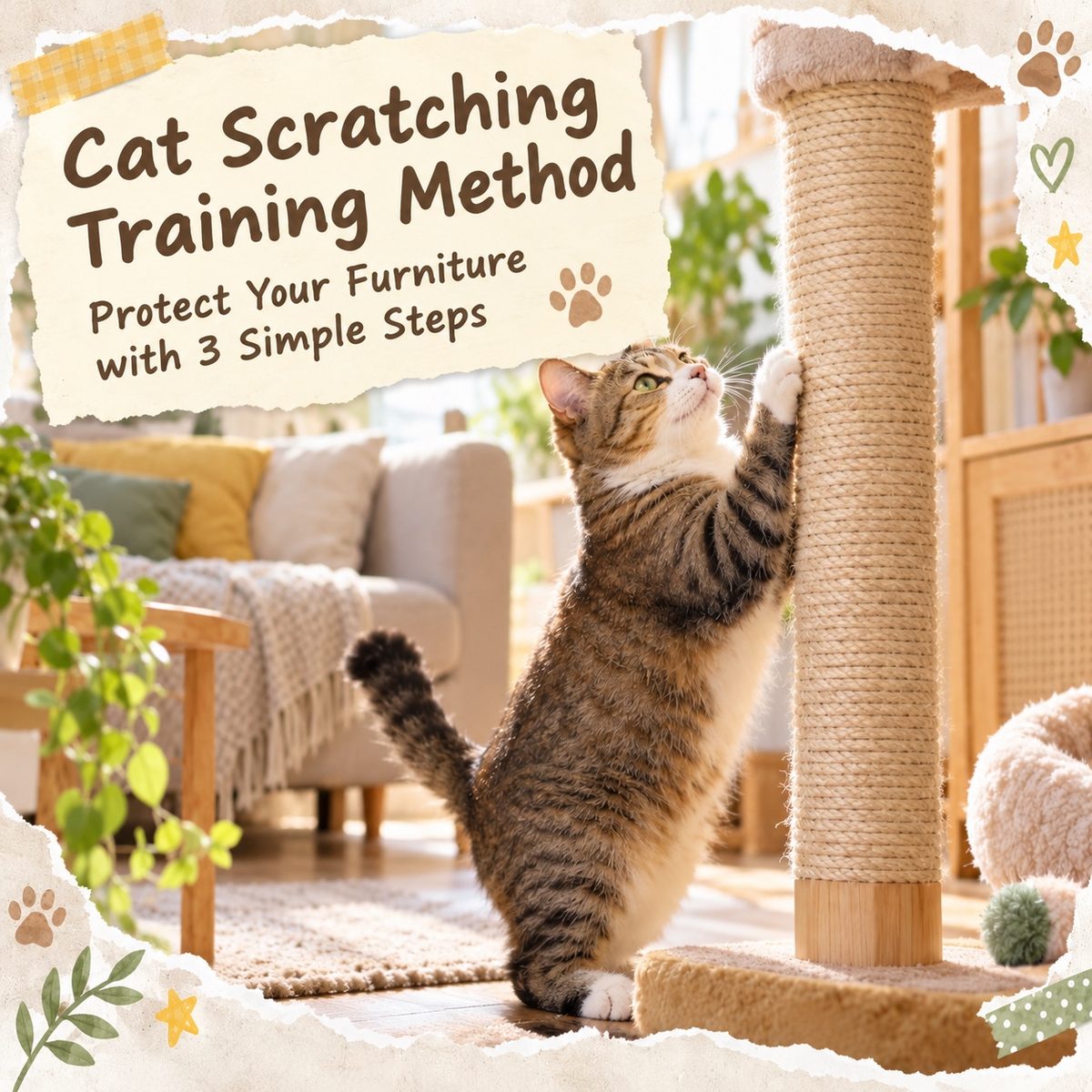
Quick answer: Scratching is an innate feline instinct with three key functions: removing old claws, stretching muscles, and marking territory. Instead of stopping scratching, choose the right scratching post + correct placement + training to protect your furniture and keep your cat happy!
Coming home to find new 'claw marks' on the sofa? Wallpaper torn to shreds? Don't get angry yet! Cats don't scratch to deliberately destroy things—it's an instinctive behaviour honed over millions of years of evolution. Today, let's understand the real reasons cats scratch and how to solve the problem at its root!
Why Do Cats Scratch? 3 Reasons You Didn't Know
Many cat owners think scratching is just 'nail trimming', but it has deeper meaning for cats:
1. Removing old claws to keep them healthy
A cat's claws grow in layers. The outer old layer needs to be removed through scratching to reveal the sharp new claw underneath. This process is as natural and necessary as humans cutting their nails. To learn more about cat nail care, see Trim Your Cat's Nails Without Help: 5 Easy Steps.
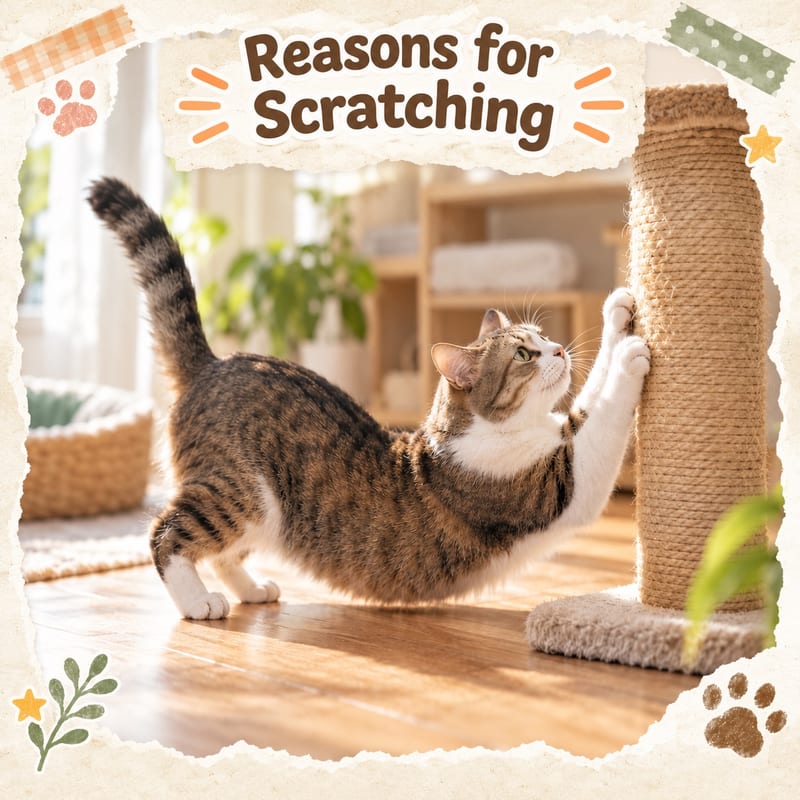
2. Stretching the whole body
When scratching, cats fully extend their front limbs while stretching back, shoulder, and paw muscles. This is very important exercise for cats that curl up in their beds for long periods. Combined with the techniques in The Complete Guide to Cat Massage, it can help your cat relax even more!
3. Marking territory and building security
Cats have scent glands on their paws. Scratching leaves a unique scent and visual marks (claw marks). This is how they tell other animals 'this is my territory' and makes them feel safe and relaxed.
Scratching Post Material Comparison Table
Before buying a scratching post, understand the pros and cons of three common materials:
| Material | Popularity | Durability | Price | Suitable for | Pros | Cons |
|---|---|---|---|---|---|---|
| Corrugated cardboard | ★★★★★ | ★★★☆☆ | 💰 | All cats | Most popular, replaceable, various shapes | Sheds easily, needs regular replacement |
| Sisal rope | ★★★★☆ | ★★★★★ | 💰💰 | Cats that scratch hard | Durable, long-lasting | More expensive, acceptance varies by cat |
| Sisal | ★★★☆☆ | ★★★★☆ | 💰💰 | Cats that like a wild feel | Texture similar to tree bark, mimics nature | Some cats dislike the feel |
Buying advice: For first-time buyers, prepare 2-3 different materials at once, observe which your cat prefers, then buy in bulk. Corrugated cardboard is the safest starter choice!
5 Ways to Protect Furniture from Cat Claws
Now that we understand the importance of scratching, our strategy should not be to 'stop scratching' but to 'guide scratching to the right places'!
Method 1: Provide multiple scratching posts
There are three common materials:
- Corrugated cardboard scratching post — most popular with cats, affordable, can be placed horizontally or vertically
- Sisal rope scratching post — highly durable, suitable for cats that scratch vigorously
- Sisal scratching post — texture close to tree bark, mimics wild scratching experience
It's best to prepare 2-3 different materials at once, observe which your cat prefers, then buy in bulk.
Method 2: Correct placement is key
Many owners buy scratching posts but their cats won't use them—the biggest reason is wrong placement! Cats scratch most at two peak times:
-
After waking up — so there must be a scratching post near the bed
-
After eating — near the food bowl is also ideal
Also, if your cat already has a fixed 'crime scene' (e.g., a corner of the sofa), placing a scratching post near that spot works best! For more tips on cat space arrangement, see Cat-Friendly Room Setup Guide.
Method 3: Protect existing furniture
Before training succeeds, temporarily protect furniture with these methods:
- Stick double-sided tape on sofa corners (cats dislike sticky textures)
- Spray citrus scent (cats naturally dislike citrus)
- Cover frequently scratched areas with anti-scratch protectors
Method 4: Regular nail trimming
Trim your cat's nails every 2-3 weeks to effectively reduce scratching damage. But note: trimming can never replace scratching—scratching is a combined behaviour of exercise, emotional release, and territory marking!
Method 5: Increase exercise
Energetic cats scratch more frequently. Play with your cat using a wand toy for 15-20 minutes daily to burn off energy, naturally reducing the chance of 'itchy paws' damaging furniture.
3 Steps to Train Your Cat to Use a Scratching Post
If your cat is already used to scratching the sofa, don't worry! These 3 steps can help you successfully redirect the habit:
Step 1: Attract attention
Sprinkle a little silvervine (catnip) powder on the scratching post, or spray with silvervine spray. Most cats can't resist this scent and will actively go over to rub against it!
Step 2: Guide interaction
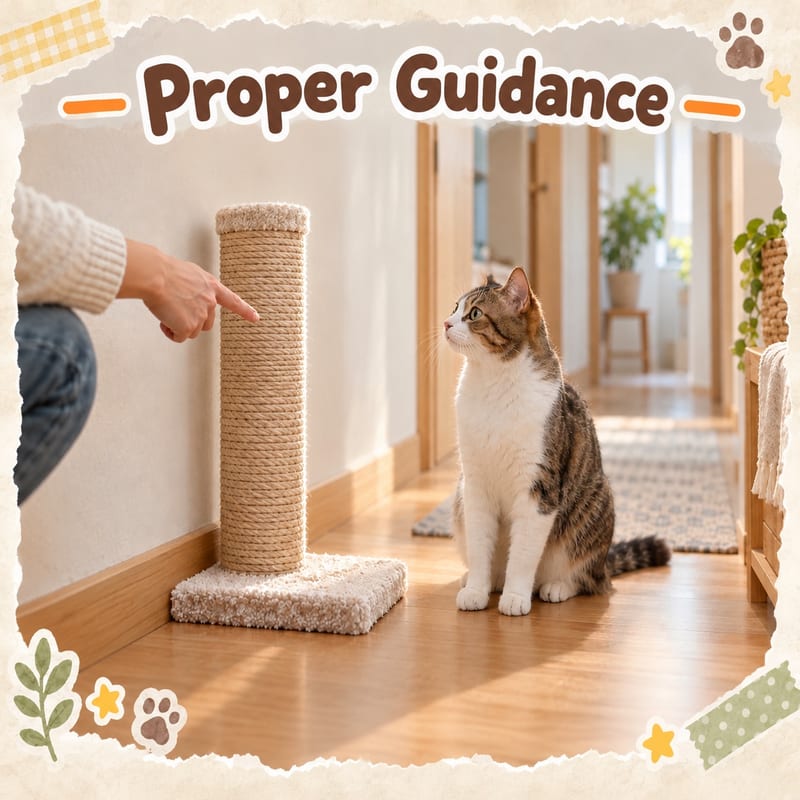
Play with a wand toy near the scratching post, letting your cat touch the post while excited. When their claws touch the post, praise immediately and give a treat.
Step 3: Build habit
Guide your cat to the scratching post at fixed times daily (e.g., after waking up, after meals). After a few days of repetition, your cat will automatically form a routine of 'wake up → scratch → eat'.
Tip: If your cat starts scratching the post, never interrupt or take the post away while they're scratching—this creates a negative association with the post!
Common Mistakes vs Correct Approach
| Common mistake ❌ | Correct approach ✅ |
|---|---|
| Buy only one scratching post and put it in the living room | Place 2-3 around the home, one near the bed and one near the food bowl |
| Put the scratching post in a corner where no one goes | Place in areas where the cat frequently spends time and near the 'crime scene' |
| Shout at the cat when it scratches the sofa | Quietly guide the cat to the scratching post, reward immediately on success |
| Use only one material | Prepare multiple materials, observe preference then buy in bulk |
| Rely solely on nail trimming | Trimming is only supplementary; scratching's stretching and behavioural needs cannot be replaced |
| Interrupt the cat while scratching | Wait until finished, never interrupt positive behaviour! |
Hong Kong Small Flat Practical Checklist: 7-Day Scratch Habit Transfer in a Two-Room Flat
Day 1: Identify the 'crime scene'
When you get home from work, don't get angry first. Use your phone to photograph the spots your cat scratches most—usually the right armrest of the sofa, the bedroom door frame, the side of the shoe cabinet. Remember, these are the golden spots for placing scratching posts later.
Day 2–3: Buy all equipment at once
Go to the pet shop after work:
- 1 corrugated cardboard vertical scratcher (place next to the sofa)
- 1 sisal rope hanging door post (hang on the back of the bedroom door)
- Double-sided tape + citrus spray (for furniture protection) All together cost just over a hundred dollars, much cheaper than replacing the sofa.
Day 4–5: Set up + reward
Stick the corrugated cardboard next to the sofa armrest, about 20 cm away, and sprinkle a little silvervine on the surface. When you see the cat approach, immediately use a wand toy to guide it to scratch the board. As soon as it scratches, give a treat + gently say 'good job'. At the same time, stick double-sided tape on the sofa armrest to make it feel 'unpleasant'.
Day 6–7: Establish routine
Hongkongers know best the importance of 'routine'. Every morning at 7 am, play with the cat for 5 minutes with a wand toy, then guide it to the scratcher, then feed breakfast. At 10 pm when you get home from work, repeat. After two days, the cat will naturally know 'wake up → go to scratcher → wait for canned food'.
Common Hong Kong dilemmas
- Small public housing entrance? Choose a 30 cm wide vertical board, place against the wall, doesn't block the door.
- Landlord won't allow drilling? Use damage-free hooks + Velcro, remove without marks when moving out.
- Cat ignores the new board? Move the board to the window—Hong Kong cats love watching the street, they'll naturally go over to scratch.
Follow this, and after a week you can sit comfortably on the sofa binge-watching, no longer worrying about your new Nordic-style sofa turning into 'cat scratch fabric'!
Further Reading
🆕 2026 Update: 5 Types of Scratching Posts + Placement Formula + 4 Furniture Protection Tips
Direct answer: Scratching is a complex need for nail maintenance, stretching, and scent marking—an essential behaviour, not mischief. The solution is not to forbid but to provide a scratcher 'more attractive than the sofa': correct material, sufficient height, correct location, and at least 'number of cats + 1'.
Comparison of 5 Types of Scratching Posts (with current PetChill prices, verified 2026-10-02)
| Type | Pros | Cons | Suitable for | Example product | Price |
|---|---|---|---|---|---|
| Corrugated cardboard flat | Cheap, easy to replace | More shedding, short lifespan | Cats that like horizontal scratching | HelloDOG Corrugated Cardboard Cat Scratcher Square | $10 |
| Corrugated cardboard thick | More durable, high density | Still consumable | Adult cats that scratch hard | Corrugated Cardboard Cat Scratcher Thick & Dense | $18 |
| Sisal flat/mat | Durable, texture like tree bark | Higher price | Prefer vertical or diagonal scratching | Sisal Mat Cat Scratcher 40×30cm | $28 |
| Sisal cylinder/post | Full stretch, also serves as climbing post | Takes up space | Cats needing vertical stretch | Japan MARUKAN Single Post Cat Scratching Post Cat Tree | $175 |
| Scratcher + bed combo | Space-saving, multi-functional | Need to replace core when worn | Small flats, cats that like to curl up and scratch | Corrugated Cardboard 2-in-1 Cat Scratcher Bed | $85 |
Cost concept: Corrugated cardboard scratchers start at $10, consumable, usually need replacement every 1–3 months (depending on scratching frequency); sisal types are more durable but not all cats accept the texture. The most practical approach is to place 'one corrugated + one sisal' at the same time and see which your cat chooses.
Placement Formula (just follow)
- One next to the sleeping area—cats usually stretch and scratch first thing after waking.
- One at the main entrance/exit—scent marking territory is their natural habit.
- One at the corner of the sofa or furniture—directly intercept the 'target object'.
- At least one horizontal and one vertical—some cats only scratch horizontal, some only vertical; you won't know until you try.
- Number ≥ number of cats + 1—two cats need at least 3, to avoid competition.
- Height must allow full stretch—vertical posts should allow the cat to 'reach high and scratch'; too short and they usually won't use it.
4 Furniture Protection Tips
- Double-sided tape or anti-scratch stickers on sofa corners (test one corner first, observe cat's reaction).
- Transparent film/thick cloth cover—temporary protection while providing correct scratchers.
- Place scratchers close to the sofa—replace prohibition with 'more attractive choices', higher success rate than chasing away.
- Regular front claw trimming (every 2–3 weeks, trim 1–2mm of the transparent tip) to reduce scratch depth.
🟢🟡🔴 Triage Guide
| Situation | Triage | Advice |
|---|---|---|
| Scratches a few times daily, scratcher shows wear | 🟢 | Normal behaviour, replace consumables regularly |
| Only scratches sofa, not scratcher | 🟡 | Change material, change location, add taller vertical post |
| Sudden increase in scratching frequency | 🟡 | Check stress sources (new member, moving, strangers) |
| Scratches own body, skin red and damaged | 🔴 | Possible skin disease or allergy, arrange vet check |
| Cries when scratching, won't jump onto post | 🔴 | Possible joint pain, arrange vet check |
Sources (Update)
- International Cat Care: Scratching on furniture and carpets
- Cats Protection: Cats and Scratching
- International Cat Care: Position Statement on the Declawing of Cats
 Fuji One full guide →

