
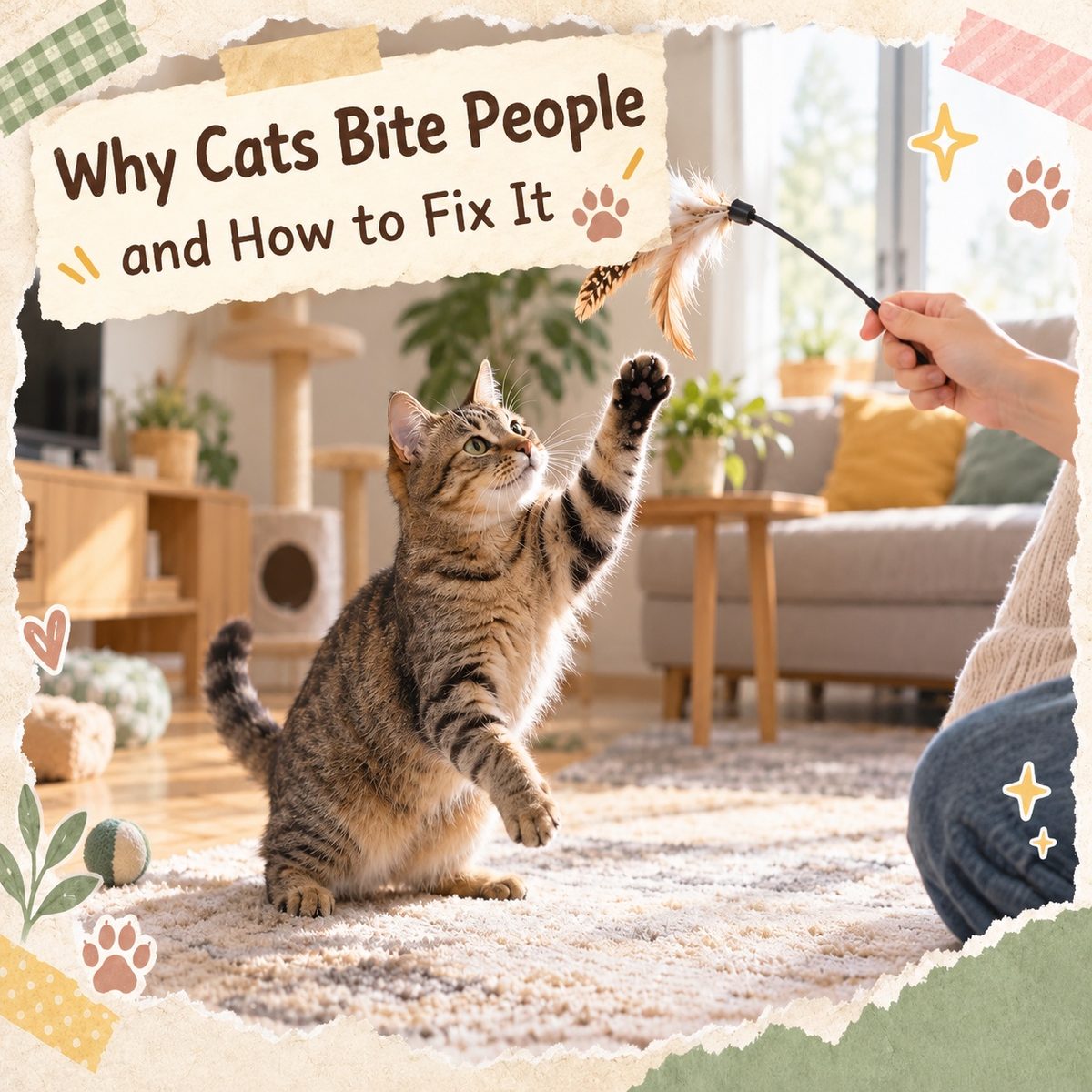
Quick answer: Cat biting has more than one cause. First use the "6-type triage" to judge (play, over-petting, fear, redirected, pain, attention-seeking), then treat by type: play type, put the toys away; petting type, shorten contact; fear type, change the environment; pain type, see the veterinarian. The common principle: biting = interaction ends, but punishment is not allowed.
"My cat bites me after two strokes" is one of the most common behaviour questions from Hong Kong cat owners. Most answers online are "don't play with your hands" and "scream when bitten" — but these answers don't address the real cause. Biting can come from six completely different sources, and the handling is different too.
3 Key Points
- Triage first, then treat: the same move (such as screaming) works for the play type but only makes the fear type worse.
- Biting = interaction ends, but punishment is not allowed; the goal is to teach the cat that "controlling force = interaction continues".
- A sudden change from gentle to hard biting = see the veterinarian first; pain is the most common hidden cause.
Cat Biting 6-Type Triage Table
| Type | Typical situation | Body signals | Handling direction | Triage |
|---|---|---|---|---|
| 1. Play biting | Kittens, you play with hands or feet | Dilated pupils, tail swishing, no tension | Switch to handheld toys; stop for 30 seconds when bitten | 🟢 Normal (needs guidance) |
| 2. Over-petting (petting aggression) | Petting to the 30th second, touching belly or tail base | Skin twitching, tail swishing, ears turning back | Shorten petting to 5–10 seconds; avoid no-go zones | 🟡 Change the rhythm |
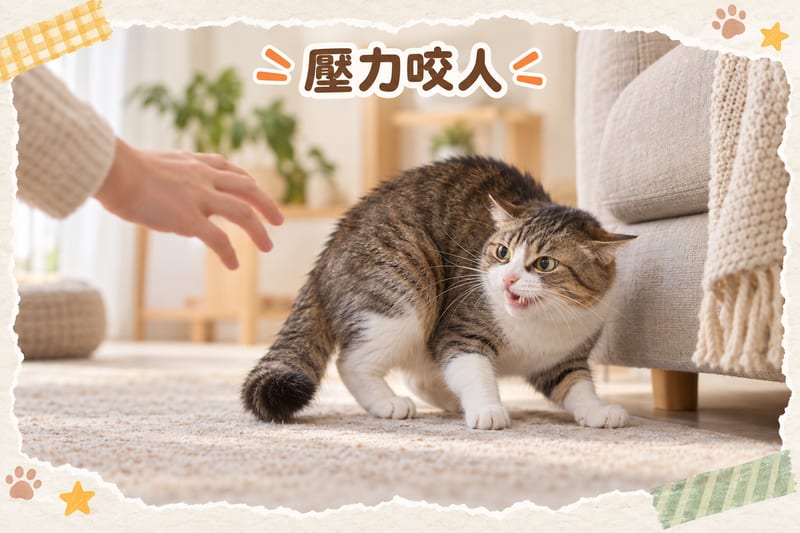
| 3. Fear biting | Strangers, moving house, veterinarian, sudden noises | Body crouched, ears fully flattened back, pupils large | Provide hiding spots; don't force contact | 🔴 Handle if it persists |
| 4. Redirected aggression | Sees a cat outside the window, hears a dog upstairs, turns and bites the person nearby | Sudden outburst, then runs away | Block the trigger; provide high escape routes | 🔴 Seek help (needs environment + behaviour intervention) |
| 5. Pain biting | Only bites when a specific area is touched (back, joints, mouth) | Only bites fixed spots, resists being touched | Arrange a veterinarian check the same day | 🔴 Seek help immediately |
| 6. Attention-seeking biting | Light bites hands and feet when you work or talk on the phone | Looks at you after biting, leads you somewhere | Zero reaction + scheduled play time | 🟡 Build a routine |
| 7. Disturbed in sleep | Changes position at night, you roll over and touch it | Sudden scratch or bite, then springs away | Don't lie on the cat; add a separate sleeping spot | 🟡 Change sleep arrangements |
| 8. Teething discomfort | Kittens 3–6 months, frequent chewing | Chews objects more than people, drooling | Provide chew toys; check teeth | 🟢 Age-related |
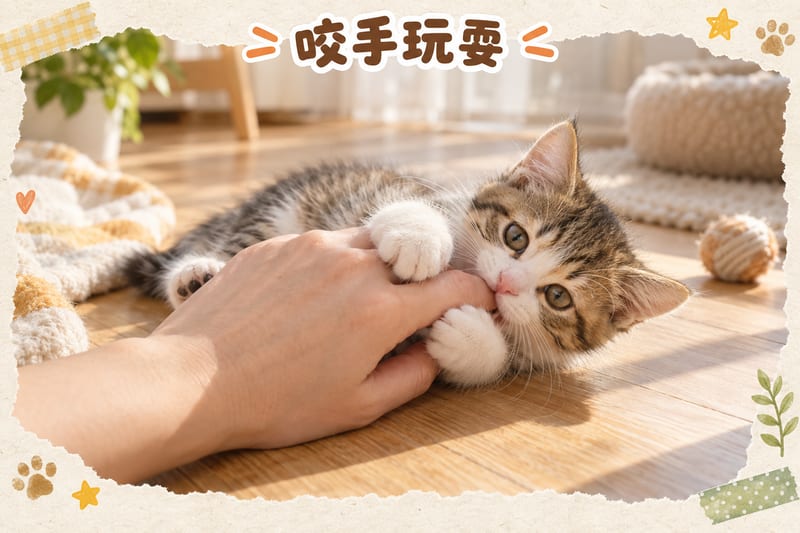
5 Correction Steps (for types 1, 2, 6)
- Step 1: Make your hand a dead object — when bitten, don't pull, don't push, don't yell; stop moving for 30 seconds, then leave. Pulling your hand = reward (prey fighting back).
- Step 2: Build "toy = hunting" — 2 sessions a day, 10 minutes each, use a wand toy to complete chase → pounce → catch → eat, ending with a treat or small meal.
- Step 3: Shorten contact — change petting to "5–10 seconds at a time, several times a day", pet the chin and cheeks, and watch the tail signals.
- Step 4: Whole family consistent — all family members react the same way (stop interacting); one person can't be strict while another is soft, or the cat won't learn the boundary.
- Step 5: Log for 2 weeks — note the time, location, and trigger (where you pet, what time, whether outsiders were present); after 2 weeks you'll see the pattern, and most cases can find the source this way.
Treating Bite Wounds (Humans)
- Wash immediately with water and soap for at least 5 minutes (don't scrub hard)
- Disinfect (iodine or medical disinfectant), cover with clean gauze
- If the wound swells, hurts, feels hot, or worsens within 24 hours → seek medical help (cat bites are deep and infection risk is high)
- Hands, joints, people with weaker immunity → seek medical help directly, don't wait

Red Lines: These 4 Situations Need a Professional
- Biting suddenly becomes harder, frequency rises sharply (rule out pain first)
- Bites when a fixed area is touched (back, joints, mouth, ears)
- Bites until bleeding, attacks family members (especially children)
- Accompanied by spraying, over-grooming, refusing food, hiding for more than 48 hours
Hong Kong Reality
- Overlapping paths in small flats: in 200–400 sq ft flats, human and cat paths easily cross, and ankles often become hunting targets. Add cat trees and high walkways so the cat can "walk above" instead of chasing feet.
- Night routine: Hongkongers generally come home late, cats are alone for long daytime hours, and energy builds up until it explodes late at night. Play before bed is the most effective investment.
- Multi-cat households: concentrated resources (one water bowl, one litter box) are a breeding ground for conflict; remember the "number of cats + 1" rule.
Common Questions
Q: Is yelling "ouch" effective? A: It sometimes works for play-type kittens (mimicking a littermate's pain cry), but for the fear or redirected type it only makes things worse. The most reliable approach is "zero reaction + interrupt the interaction".
Q: Can I use a water spray to stop biting? A: Not recommended. Scare-based methods increase anxiety and distrust, make behaviour problems harder to handle in the long run, and may make the cat avoid you.
Q: My cat licks me right after biting — is that an apology? A: It's not an apology, but it is an appeasement signal. It may feel tense or want to repair the interaction. You just need to stop that interaction; no special response is needed.
Q: Biting is especially frequent during teething — should I buy chew toys? A: Yes. Providing safe chew toys (such as sisal balls, cotton rope toys) is better than letting it bite hands. Also do 2 play sessions a day to burn energy; teething usually lasts 3–6 months, after which it clearly decreases.
Q: When should I consider a behaviour veterinarian? A: If there's still no improvement after more than 4 weeks of environmental modification and play rhythm, or if biting already affects daily life (family members injured, afraid to touch the cat), you should seek a veterinarian or behaviour expert for assessment.
Sources
- AAFP/ISFM Feline-Friendly Handling Guidelines
- International Cat Care: Problem behaviour in cats
- International Cat Care: Handling and interactions
- AAFP/ISFM Feline Environmental Needs Guidelines (five pillars)
PetChill's Reminder
Biting behaviour is mostly related to "hunting needs". Rather than playing with your hands, prepare wand toys, sisal balls, and puzzle toys so the cat has the right outlet. PetChill now sells interactive toys from $7.5 (hanging telescopic wand toy) and sisal balls at $12; buy several and rotate them to keep things fresh.
Disclaimer: This article is behavioural education information and does not constitute veterinary diagnosis or treatment advice. If your cat suddenly shows worse biting, signs of pain, or refuses food, consult a registered veterinarian as soon as possible.
Related Articles
- The Complete Cat Behaviour Decoder: What 30 Actions Really Mean →
- Cat Belly Up = Wants Petting? 4 Meanings →
- Recognising and Easing Chronic Cat Anxiety →
- Cat Tail Language: 8 States Illustrated →
- Handling Acute Cat Stress Reactions →
- Hong Kong New Cat Owner 90-Day Roadmap →
 Feline Natural full guide →