
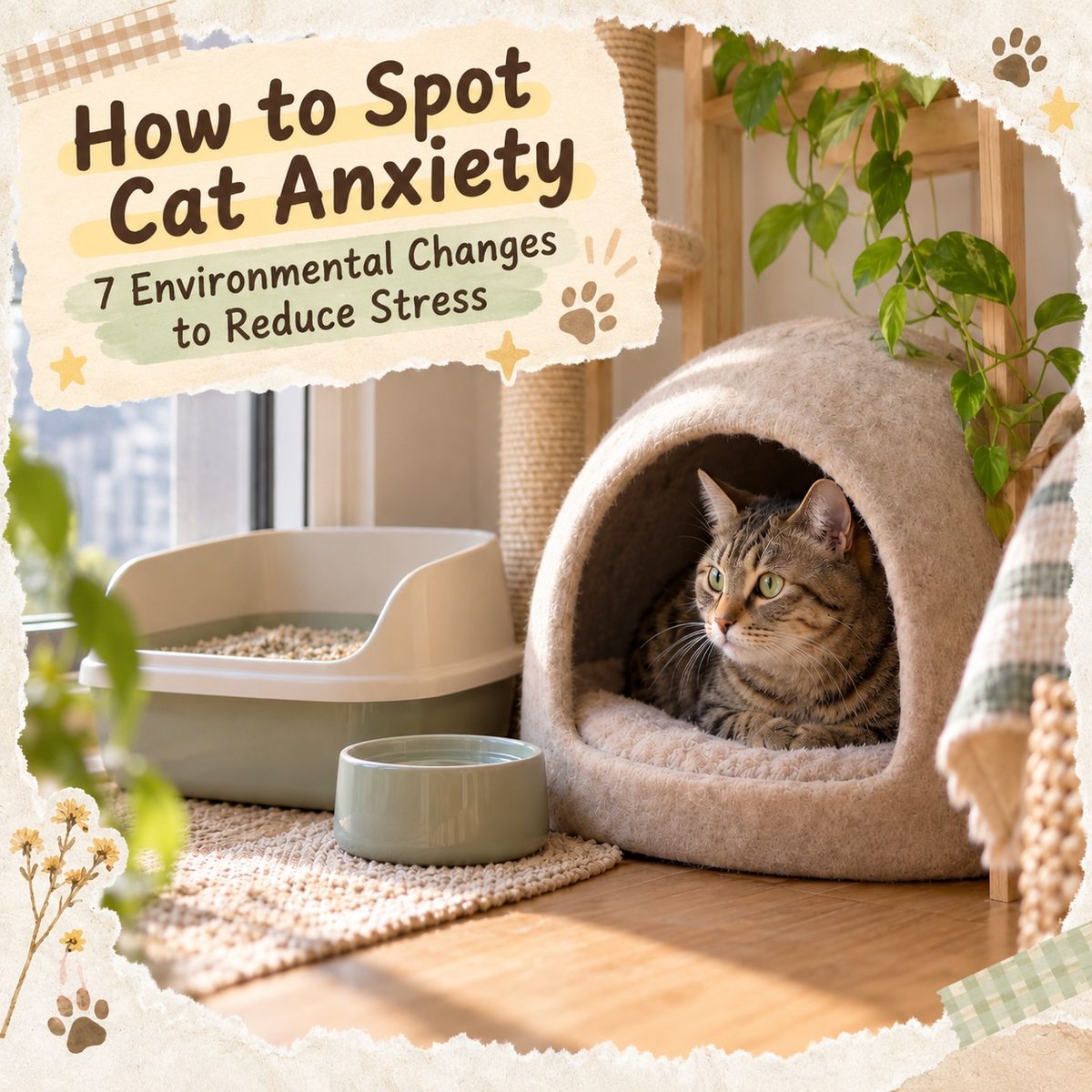
Quick answer: Cat anxiety is a long-term, persistent state of tension, different from one-off acute stress. Use the four-dimensional scale (appetite, grooming, hiding, elimination) to assess severity, then start with the environment: resources 'number of cats + 1', multiple hiding spots, predictable routines, and scent management. If over-grooming leads to bald patches, food refusal, or hiding continuously for more than 48 hours, see a veterinarian first to rule out pain and illness.
Cats are sensitive animals and react to changes in their environment. But 'a one-off scare' and 'long-term anxiety' are two different things: the former usually settles within days, while the latter can drag on for months, gradually leading to over-grooming, food refusal, elimination outside the litter box, and even aggression towards family members.
This article focuses on chronic anxiety (long-term, persistent). If your cat is showing an immediate reaction after a sudden event (vet visit, burst pipe, loud noise), please see the companion article 'Responding to Cat Stress Reactions'—the two articles complement each other.
3 Key Points
- Chronic anxiety is a 'persistent' problem, not a single event; observe for at least 2 weeks.
- The environment is the first line of management: resources, hiding spots, routine, and scent—do all four.
- Rule out physical causes (pain, skin disease, endocrine issues, kidney disease) before addressing emotions.
Four-Dimensional Cat Anxiety Scale (2-Week Observation Period)
| Dimension | 🟢 Normal | 🟡 Mild | 🟠 Moderate | 🔴 Seek Help |
|---|---|---|---|---|
| Appetite | Normal, regular | Slightly picky | Eating half as much | Refusing food for over 24 hours |
| Grooming | Normal, even | Licking more in one area | Thin fur on belly/thighs | Licking to baldness, red or damaged skin |
| Hiding | Comes out normally | Hides only when guests visit | Hides more than half the day | Hides continuously for over 48 hours |
| Elimination | Normal in litter box | Occasionally at the edge | Urine/feces outside the box | Frequent urination, blood in urine, crying in pain |
| Social | Initiates interaction | Less interaction | Avoids touch | Aggressive to family or continuous howling |
| Sleep | Stable | Light sleep, easily woken | Day-night reversal | Continuous howling at night |
How to use: If any cell drops to 🟠 or 🔴, address the 🔴 first (veterinarian), then use environment fixes for the rest.
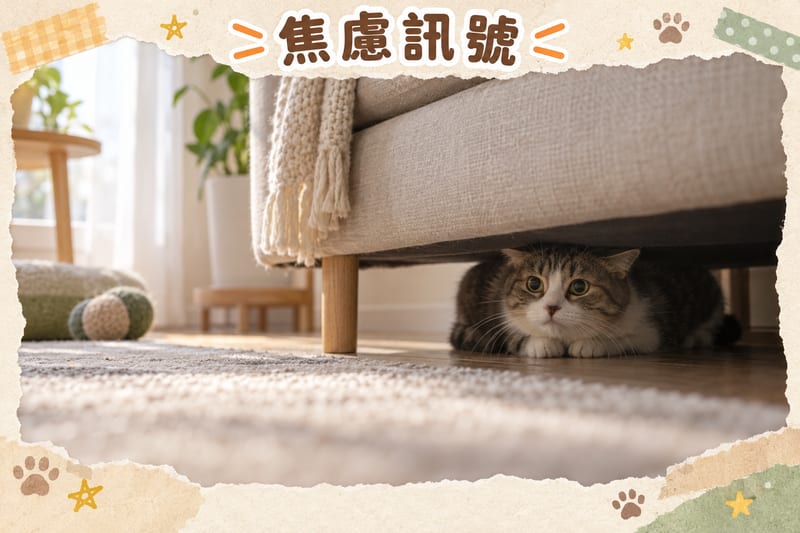
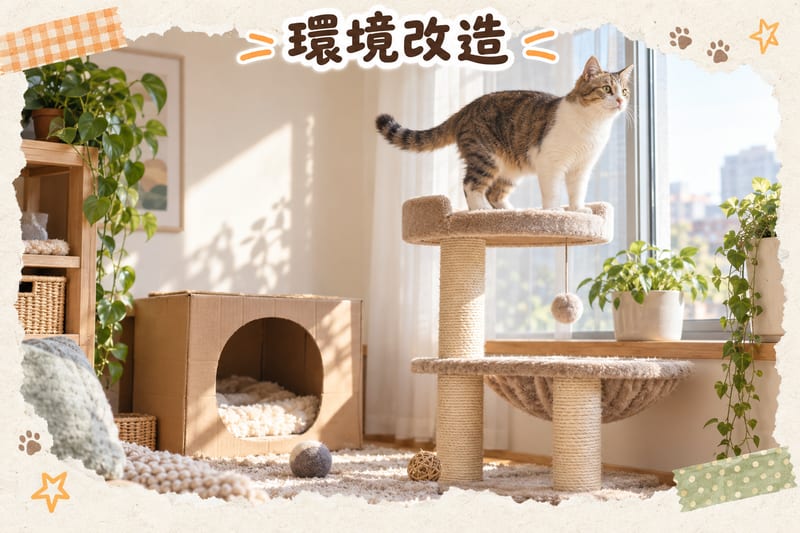
7 Environment Fixes
- Safe room/refuge—Set up at least 3 high or semi-enclosed hiding spots (e.g., cat bed, top shelf, wardrobe top).
- Resources 'number of cats + 1'—Litter boxes, water bowls, food bowls, and resting places should all outnumber the cats, and be placed separately.
- Predictable routine—Fixed times for feeding, play, and grooming; cats build a sense of security through regularity.
- Scent management—Avoid strong fragrances or essential oils (many are toxic to cats); keep familiar-scented items (old blankets) to help adaptation.
- Noise buffer—When vacuuming, renovating, or when the living room is crowded, give the cat a room away from the noise.
- Vertical space and sightlines—High platforms let cats 'look down without being looked down on', reducing ground-level conflict stress.
- Forewarn changes—Start preparing gradually 2 weeks before moving, adding a new family member, or renovating; don't change everything at once.
Mood-Support Products: Practical Use (Current PetChill Prices)
| Type | Product | Price | Usage Suggestion |
|---|---|---|---|
| Pheromone cat litter | Monster Tribe Pheromone Happy Tofu Cat Litter 2.7kg | $62.5 | Provides calming signals in the toileting area; transition to new litter over 7 days |
| Pheromone cat litter | Monster Tribe Cat Litter Pheromone Happy Clay Cat Litter 4kg | $63.1 | Same as above; clay litter is usually more readily accepted |
| Mood treats | Pet Lab Nutrition Research Institute Calming Catnip Treats (Bonito Flavour 20g) | $45 | Use as rewards during play or training; not medication |
| Catnip | Coolcat Natural Catnip & Catmint 40ml | $20 | Provides sniffing exploration; about 30% of cats don't respond to catnip, which is normal |
| Catnip | Australian aristopet CATNIP 10g | $22 | Can be placed on scratching posts or in toys to increase interaction |
| Catnip jar | PETKIT Vitality Catnip Jar | $23 | For those who want to grow fresh catnip themselves |
| Water fountain | Pet Water Fountain USB Automatic Circulating Water Dispenser (Transparent Flower) | $58 | Running water encourages drinking; be alert if water intake drops during anxiety |
| Water fountain | Pet Water Fountain USB Automatic Circulating (Three-Head Outflow) | $78 | Consider for multi-cat households |
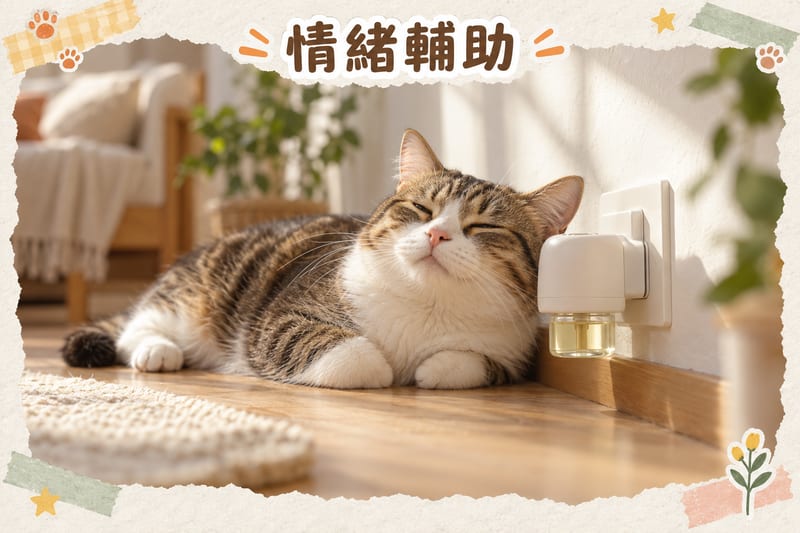
To be honest: Products are supplementary. What truly resolves chronic anxiety is the environment, routine, and resources; products just make the process smoother. Also, pheromone products currently sold in Hong Kong are mainly cat litter types (not plug-in diffusers). If you need a diffuser type, ask your veterinarian or clinic to order one.
When to See a Veterinarian?
- Over-grooming to baldness, red or damaged skin, or wounds
- Refusing food for over 24 hours, weight loss
- Elimination outside the litter box, frequent urination, blood in urine (possible urinary tract disease, an emergency)
- Sudden fear of people, overreaction to sounds
- Hiding continuously for over 48 hours, continuous howling
- Aggression towards family members (especially children)
Order: Veterinarian rules out physical causes → environment fixes → behavioural intervention (guided by a veterinary behaviourist if necessary).
Hong Kong Realities
- Small flats + many family members: Dense foot traffic and noise mean cats need space to 'opt out'; a room with a door or a high cave-like spot is the minimum requirement.
- Humid season: Itchy skin increases licking behaviour; rule out skin problems before judging emotions.
- Long working hours/late nights: For cats left alone during the day, environmental enrichment (window perch, puzzle feeders, timed feeders) is more practical than increasing companionship time.
- Frequent moving: Hong Kong leases are fluid; keeping old furniture smells and routines is the most effective way to reduce stress.
Sources
- AAFP/ISFM Feline Environmental Needs Guidelines (Five Pillars of Environmental Needs)
- AAFP/ISFM Feline Environmental Needs Guidelines (PMC full text)
- International Cat Care: Problem behaviour in cats
- International Cat Care: Everyday care for your cat
PetChill's Reminder
The first step in managing anxiety is the environment, the second is routine, and products come third. PetChill has pheromone cat litter, catnip, and mood treats in stock to use alongside environment fixes; if your cat is already showing 🔴 signs, please see a veterinarian first.
Disclaimer: This article is behavioural education information and does not constitute veterinary diagnosis or treatment advice. If your cat refuses food, over-grooms to baldness, eliminates outside the litter box, or shows sudden behavioural changes, please consult a registered veterinarian as soon as possible; all medication use must be prescribed by a veterinarian.
Related Articles
- Responding to Cat Stress Reactions (Acute Events) →
- The Complete Book of Cat Behaviour Decoding: What 30 Actions Really Mean →
- Cat Biting: 6 Types + 5 Steps to Correct →
- Cat Belly Up = Wants to Be Petted? 4 Interpretations →
- Complete Guide to Litter Box Placement and Toileting Problems →
- Hong Kong New Cat Owner 90-Day Roadmap →
 Feline Natural full guide →
 K9 Natural full guide →