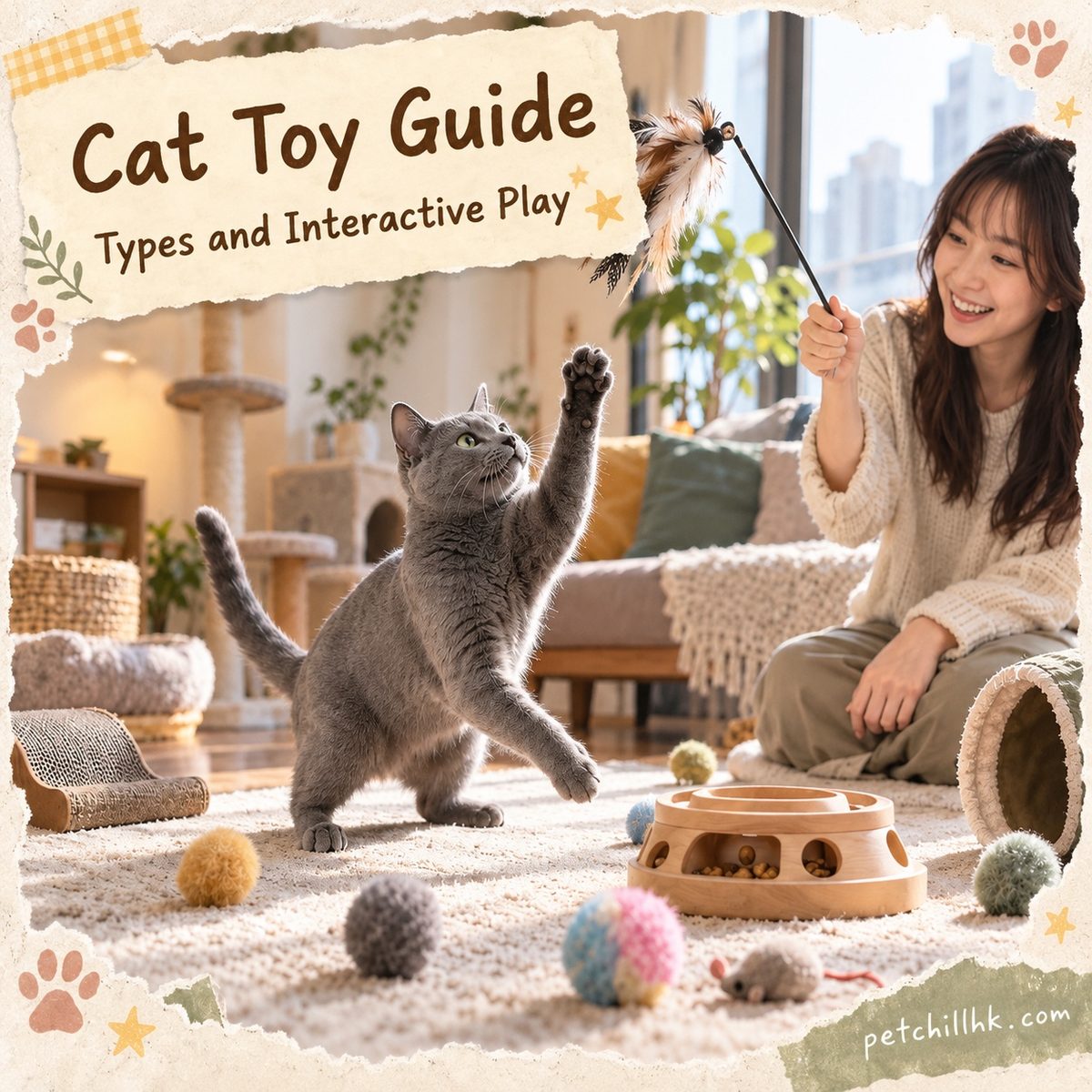
Quick answer: Indoor cats need toys to pay off their 'hunting instinct debt': two daily wand-toy sessions of 'floor-dragging' chasing → let them pounce → feed immediately after, plus self-play balls, food puzzle toys, and cardboard box rotation. This reduces night running, destruction, and obesity.
Cats are born hunters. Indoor cats don't need entertainment; they need hunting substitutes: energy with nothing to chase turns into late-night running and furniture scratching. This article covers how to mix the five major types, safety bottom lines, and interactive play.
Why cats must have toys
To understand what toys do for cats, compare with life in the wild:
- Hunting instinct outlet: the urge to hunt a dozen times a day is trapped in a 600 sq ft flat, so artificial substitutes are essential.
- Exercise and weight control: indoor cat obesity is a common problem in Hong Kong; regular playtime is the easiest exercise prescription to follow.
- Boredom and destruction prevention: a bored cat will find things to do—scratch the sofa, pull tissues, hold a concert at 3 a.m.
- Stress relief: the satisfaction of successfully 'catching something' reduces anxiety, especially in multi-cat households.
- Bonding: shared play is the most direct positive interaction between owner and cat; trust is built through play.
In short: more than half of indoor cat behaviour problems can be traced back to 'energy with nowhere to go'.
Conversely, if your cat already shows night roaming, attacking feet, or frantic tissue pulling, adding toys is often far more effective than punishment—because the root of these behaviours is usually not 'no discipline' but 'hunting instinct debt'. Toys are the tool to pay off that debt.
How to mix the five major toy types
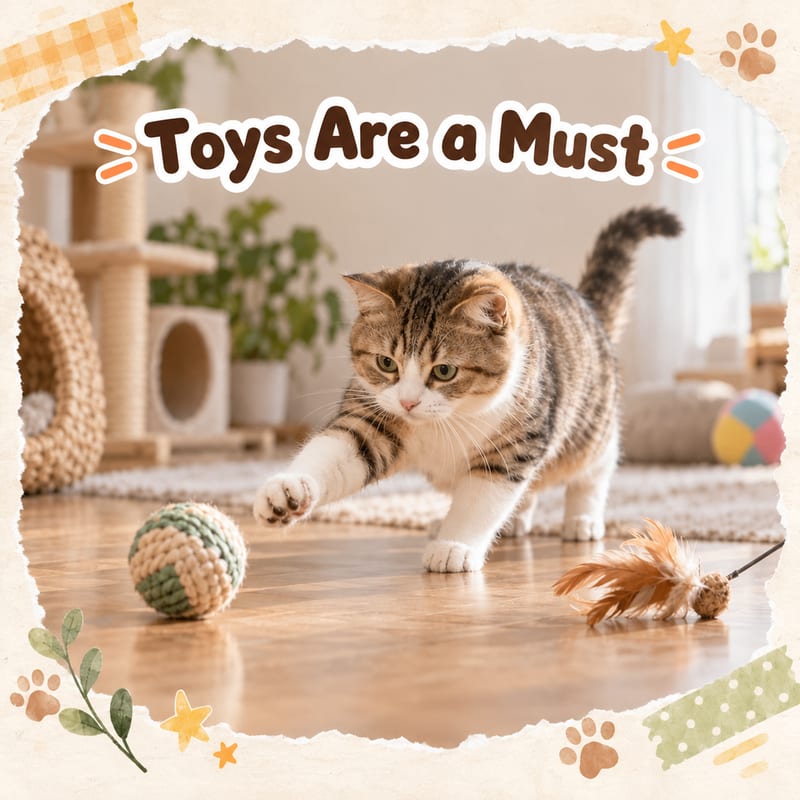
Different types target different instinct stages; the ideal is a 'combination punch' rather than buying just one:
| Type | Examples | What it satisfies | Best time |
|---|---|---|---|
| Wand toys | Feather wand, rope wand | Simulates prey, human-cat interaction | Daily main play |
| Self-play | Furry balls, bouncy balls, bells | Practice ambush, solo exercise | When owner is out |
| Puzzle | Food-dispensing ball, snuffle mat | Foraging thinking, slow eating | Replace part of each meal |
| Catnip | Catnip plush | Olfactory pleasure, relaxed rolling | Once or twice a week as reward |
| Hide-and-seek | Cardboard boxes, tunnels | Hiding and ambush, security | Always available |
Starter combo suggestion: one high-quality wand toy + two self-play balls + one food puzzle toy + one cardboard box already covers the full hunting sequence.
A note on budget allocation: spend money on wand toys and puzzle toys—the two categories that need interaction and mechanical quality. For consumables like bouncy balls, paper balls, and feathers, just buy cheap backups, because their fate is to roll under the sofa and disappear forever.
Four safety bottom lines for choosing toys
Every year there are news stories of cat toys injuring cats. Check before buying:
- Small parts test: any part that can be swallowed whole (plastic eyes, bell cores, small feathers) is unacceptable—kittens swallowing foreign objects is a common emergency.
- String discipline: wand toy strings and feather wand lines must be put away after play—a cat biting and swallowing a long string alone can cause intestinal entanglement, which requires surgery.
- Sharp edges and durability: must not tear apart or come off when bitten; avoid electric toys with designs that pinch paws or tails.
- Battery screws: toys with button batteries must have secure locking designs; swallowing a battery is an immediate emergency.
No matter how cheap, safety is zero tolerance.
Also, when shopping online, watch two things: first, check buyer reviews for mentions of 'bitten apart and parts fell off after two days'—this is the most honest indicator of structural quality; second, avoid buying electric toys claiming 'automatic endless play' as the only toy—machines don't follow the cat's rhythm and stay still to be pounced on, so over time the cat loses interest and the machine becomes background noise outside the positive cycle.
Correct interactive play: chase—pounce—eat
Many owners complain 'my cat won't play with me', but the problem is usually the play style, not the cat. The correct rhythm simulates the full hunting sequence:
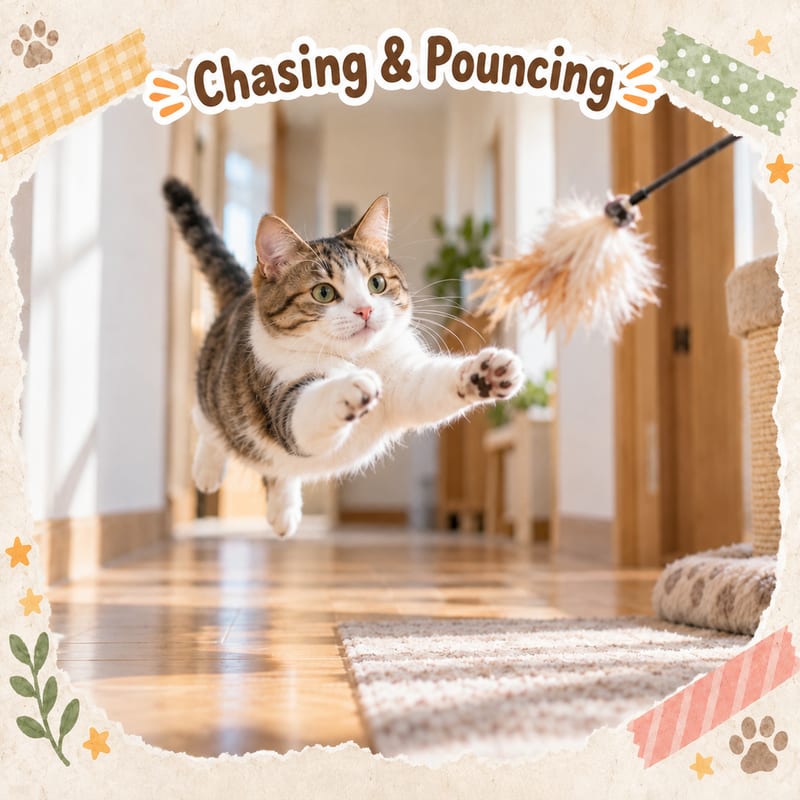
- Drag along the floor like prey: don't wave the wand in front of the cat's eyes; drag it on the floor, hide behind the sofa, stop suddenly—that's how prey moves.
- Let the cat win sometimes: pause several times to let the cat pounce; if it never catches anything, it will give up.
- Feed immediately after play: at the end, give a treat or main meal to complete the psychological loop of 'caught → ate'.
- Put the wand away: after play, put the wand in the cupboard and leave only self-play toys on the floor.
- Two or three sessions daily, 10-15 minutes each, best at dawn and dusk—this is the most direct way to tackle late-night running.
With this sequence, 80% of 'aloof cats' will transform into 'play maniacs' within two weeks.
Toy rotation and DIY toys
- Rotation system: only keep three or four toys out at a time, store the rest, and swap every three to five days—to the cat, 'disappear and reappear' equals new. This is the number one zero-cost way to extend toy life.
- Cardboard box upgrade: drill a few holes to make an ambush box; line it with an old T-shirt for your scent—a 'hunting fortress with your smell'.
- Old sock DIY: cut the sock tube, stuff with catnip, and make a snuffle toy; but use a version with no holes and no long threads.
- Egg carton tunnel: break open a paper egg carton and lay it out in a row for a cheap maze; put a few kibbles inside to turn it into a beginner puzzle toy.
The same four safety bottom lines apply to DIY toys: no small parts, no long strings, no sharp edges, no chemically treated materials.
Toy maintenance and disposal
Wand toy feathers and rope ends are consumables; replace the head or wand when feathers fall off or fuzz up. Wash food puzzle toys weekly with warm water, otherwise oils go rancid and the cat will reject both toy and food. Disposal criteria are simple: anything bitten into pieces, with loose threads, or rusted metal must be thrown away immediately—toy money can be spent again, but emergency fees for swallowing foreign objects are far more expensive.
When to adjust play
Playing correctly matters more than buying a lot. Adjust strategy in these situations:
- Complete lack of interest: first rule out illness (toothache, joint pain, eye problems can all make cats stop playing); if no improvement in two to three weeks, see a veterinarian.
- Biting during play: usually a habit from playing with hands since kittenhood; switch to a long wand toy to re-establish the rule 'pounce on the target, not the hand'.
- Senior cats: switch to slow, floor-level, low-jump play; puzzle feeders are better than chasing; don't force big jumps with bad joints.
- Multi-cat households: each cat needs its own toys and playtime, otherwise a single toy becomes a source of conflict; rotating 10 minutes of solo play per cat is the simplest fair approach.
- Shy new cats: don't chase them to play in the first two weeks; place toys near hiding spots and let them explore; overenthusiasm can link play with stress.
- Overweight cats: move part of the daily portion into food puzzle toys—eating and playing combined.
What you can do starting today
- Go through the four bottom lines and remove dangerous toys at home, especially checking for long strings and small parts.
- Buy a wand toy and start 'floor-dragging' play for ten minutes tonight, then give a treat immediately after.
- Make a weekend maze from a paper egg carton.
- Set two daily play sessions, morning and evening, tie them to an alarm, and stick with it for two weeks before evaluating behaviour changes.
Want to match food puzzle bowls, catnip, and wand toys for best value? Visit petfood.com.hk to compare product reviews item by item; for catnip toy usage and safety limits, you can also check our catnip guide.
Related product recommendations
You don't need many daily items, but they must be suitable. Here are related products available at PetChill:
- Fuji One Freeze-Dried Treats Dehydrated Salmon Cubes Vacuum Pack 800g (Cat & Dog) (Fuji One) — freeze-dried process locks in nutrition
- Nutriplan Cat Meat Puree Nutrition Plan Korean Meat Puree Pouch Salmon & Tuna 14g 100 packs (64796) (FK CIAO) - Limited Offer (Nutriplan Nutrition Plan) — available at PetChill
See more: Fuji One Brand Guide
Product prices and latest offers are subject to the product page; this article is for reference only.
Further reading
PetChill Pet Supplies Team — Hong Kong's most authoritative pet knowledge platform
📌 Key takeaways
- ✅ Toys are not entertainment; they are hunting substitutes
- ✅ Two daily 10-15 minute interactive play sessions are most effective
- ✅ First remove dangerous toys with small parts, long strings, sharp edges
- ❌ Playing with hands teaches biting habits
- ❌ Electric toys as the only choice easily become background noise
- ✅ Rotation system + DIY egg carton maze extends life at zero cost
This article is compiled from breed consensus and clinical care guidelines; individual cats and dogs vary greatly. For health problems, consult a registered veterinarian first.
 Fuji One full guide →


 Fuji Cat full guide →
 Nutriplan full guide →