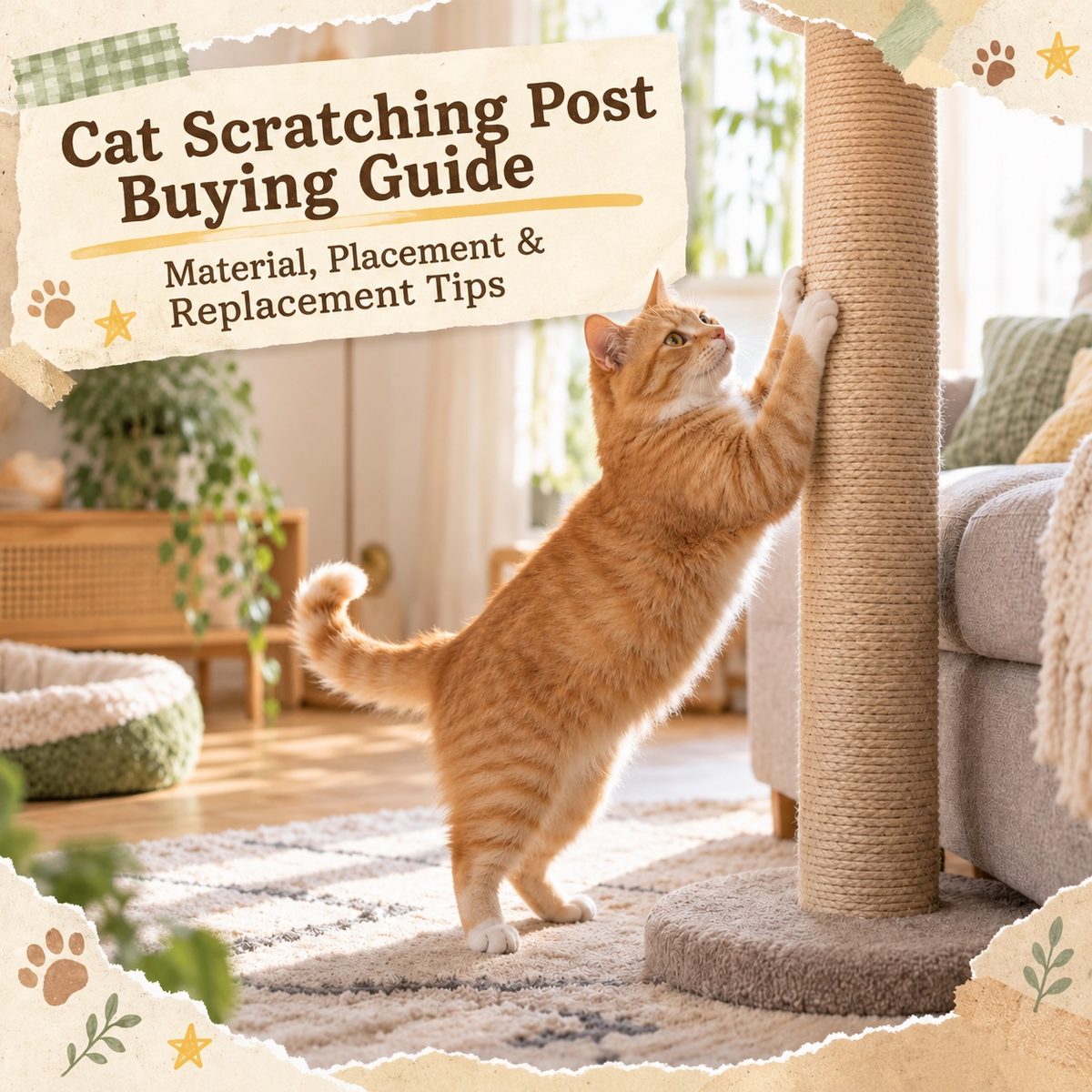
Quick answer: Cats are born to scratch — to sharpen claws, mark territory, stretch, and relieve stress. Rather than forbidding it, provide a sisal or cardboard scratcher that's long enough, has a stable base, and is placed right where they already scratch (by the sofa or door). Add catnip to attract them and reward good behaviour, and your furniture is saved.
Scratching is a natural instinct — sharpening claws, marking territory, stretching muscles, relieving stress. Telling a cat "don't scratch" goes against its nature. The right approach is to provide a suitable scratcher: choose sisal or cardboard, make sure it's long enough for a full-body stretch, and that the base is stable and won't tip. Place it where the cat already scratches (e.g., next to the sofa), add catnip to attract, and praise — your furniture will survive.
Why do cats scratch?
Scratching serves four functions at once:
- Sharpening claws — claws grow in layers; scratching helps shed old shells and reveal sharp new claws.
- Marking territory — paw pads have scent glands; scratching leaves both scent and visual marks, like planting a flag.
- Stretching muscles — a full stretch from head to tail; scratching high up is a daily workout.
- Relieving stress — after a nap or when you come home from work, a good scratch helps them unwind.
Tip: Scratching is not "bad behaviour" — cats need to do it every day. You can't and shouldn't stop them entirely; you can only choose where they do it.
Types of cat scratchers and how to choose
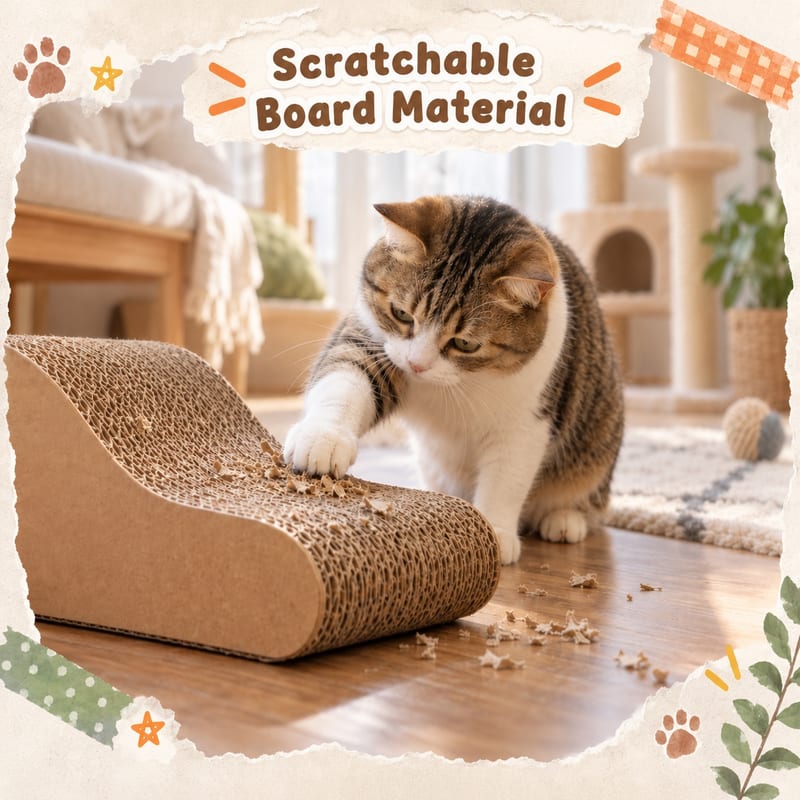
Three main materials:
- Sisal posts/boards — tough, durable fibres; most cats' favourite.
- Cardboard scratchers — cheap and satisfying to scratch, but shred easily and don't last long.
- Cat trees/climbing frames — scratch, jump, and sleep all in one; great for reducing stress in multi-cat homes.
Four key points when choosing:
- Material — try sisal first; if they don't like it, try cardboard or plush.
- Size — height/length must allow the cat to stretch fully; too small and they can't be bothered.
- Stability — if it wobbles or tips, the cat gets a fright and goes back to the sofa; choose a heavy base or fix it to the wall.
- Location — put it where they already like to scratch (sofa corner, door frame, beside the bed), not tucked away in a lonely corner.
Have at least 2–3 scratchers at home, both horizontal and vertical, so the cat can pick its favourite.
| Scratcher type | Material pros/cons | Best for |
|---|---|---|
| Sisal post | Durable, cats love it | Vertical scratchers, multi-cat homes |
| Cardboard board | Cheap, satisfying | Horizontal scratchers, tight budgets |
| Cat tree/climbing frame | Scratch + jump + sleep in one | Small flats, multi-cat stress relief |
Four ways to protect your furniture
- Place it right — put the scratcher right next to the sofa corner they already scratch; take over the old spot and they'll naturally switch.
- Make it attractive — catnip, pheromone spray, toys tied to the top; make the scratcher more fun than the sofa.
- Positive praise — when you see them scratch the right place, praise and treat immediately; don't wait until they scratch the wrong place.
- Protect the furniture — anti-scratch tape on the sofa, bitter spray, and provide a scratcher alternative (if you only repel without giving an outlet, the cat will find a third place).
⚠️ Never: scold, hit, or squirt water — these only teach the cat "don't scratch when you're watching" and add stress; some cats scratch more when stressed.
Beyond the scratcher
- Regular nail trims — every two weeks to a month; greatly reduces damage (see the cat nail trimming guide).
- Throw on the sofa — for cats that like to sleep on the sofa back, a washable throw is practical.
- Watch claw shells in long-haired cats — older cats' overgrown claws can snag in scratchers and tear; check regularly.
- More cats, more scratchers — if one scratcher is guarded by a dominant cat, the weaker one will scratch the sofa; provide enough resources.
Wear and tear is normal — replace cardboard when shredded and sisal when frayed; don't wait until it's unusable.
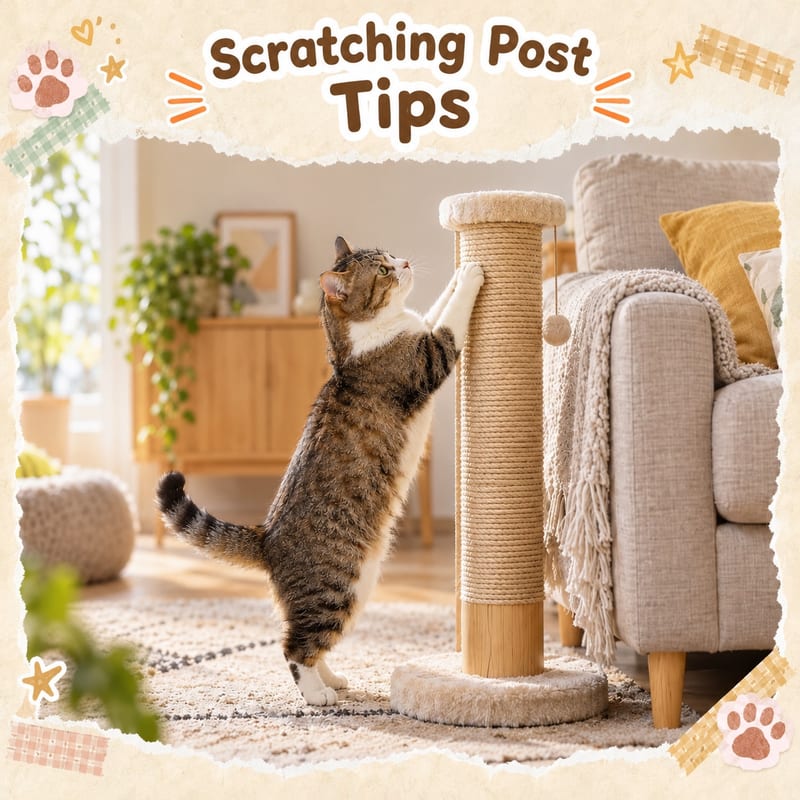
Scratcher placement tactics: location beats style
Many scratchers are bought and never used — 9 times out of 10 it's a placement issue:
- Start at the scene of the crime — if they always scratch the sofa edge, door frame, or bed, put the scratcher right next to it; the closer the better.
- Where they scratch after waking — cats stretch and scratch first thing after a nap; put one next to the bed for a high hit rate.
- Next to the food bowl — scratching after a meal is also common.
- One per floor — in multi-storey homes, have a scratcher on each floor; don't make the cat travel.
- Don't hide it — scratchers aren't eyesores; put them in plain sight. If you think it's ugly, choose one that matches your furniture colour.
Horizontal or vertical? Observe your cat
Cats have their own scratching style; match the scratcher to it:
- Vertical — stands up and scratches down a post (needs a post taller than their full stretch).
- Horizontal — lies on a flat or angled board (cardboard groove types are popular).
- Both — scratches sofa legs and bed corners? You need at least one post and one horizontal board.
Old claw shells are clues
Seeing transparent crescent-shaped claw shells on the floor is normal — proof that scratching is working; don't worry. If a whole claw comes off with flesh or the shell is bloody, that's a vet visit (snag injury, overgrown claw piercing).
Check tenancy/building rules
Some building covenants or tenancy agreements restrict damage to common areas or landlord furniture; anti-scratch fabric, rugs, and plenty of scratchers are your insurance for peaceful cohabitation.
What you can do today
- Note where your cat currently likes to scratch and put a sisal post in the same spot.
- Check existing scratchers for length and stability; replace if inadequate.
- Sprinkle a little catnip on the scratcher; see results in a week or two.
- Apply anti-scratch tape to the most damaged part of the sofa.
- Schedule nail trims; damage drops immediately.
To stock up on scratchers, cat trees, and other supplies, see the PetChill pet supplies buying guide.
This article is for reference only; consult a registered veterinarian for any concerns.
Related product recommendations
You don't need many daily items, just the right ones. Here are related products available at PetChill:
- Fuji One Freeze-Dried Treats Dehydrated Salmon Cubes Vacuum Pack 800g (for cats and dogs) (Fuji One) — freeze-drying locks in nutrition
- Nutriplan Cat Meat Puree Nutrition Plan Korean Meat Puree Pouch Salmon & Tuna 14g 100 packs (64796) (FK CIAO) - Limited Offer (Nutriplan Nutrition Plan) — available at PetChill
See more: Fuji One Brand Guide
Product prices and latest offers are subject to the product page; this article is for reference only.
Further reading
PetChill Pet Supplies Team — Hong Kong's most authoritative pet knowledge platform
- Causes and Prevention of Cat Scratching Furniture →
- 5 Steps to Stop Cats Scratching Furniture →
- 5 Health Insights from Cat Purring →
- 5 Tips for Cat Scratching Training →
- The Secret of Cat Purring →
Hong Kong small-flat action checklist: sort it out after work today
Hong Kong flats are typically 300–500 sq ft; limited space means every inch counts. Follow these steps and get it done within 30 minutes of getting home tonight:
-
Identify the scene of the crimeUse your phone to photograph the three places your cat scratches most (usually the right sofa arm, bedroom door frame, foot of the bed). Pick the one with the most claw marks and put a sisal post there immediately; the post should be at least 60 cm tall (so the cat can stretch fully). If the sofa is against the wall, buy an "L-shaped base" to clamp onto the sofa arm — no drilling needed and it's stable.
-
Use vertical spaceAfter placing a floor post, you can mount a "sisal wall board" — HK$50–80 each from Taobao or pet shops; four 3M damage-free adhesive strips will do, and it's removable for renters. Stick it at the cat's shoulder height so they can stand and scratch.
-
Test two materialsPlace a cardboard horizontal scratcher by the sofa leg at the same time and observe for three days. Keep whichever gets more claw marks; move the other to a second battleground (e.g., outside the bathroom door).
-
Trim nails tonightWhile the cat sleeps, use a small LED light to see the claw and trim only the transparent tip, avoiding the pink quick. Reward with a treat immediately after to build the association "nail trim = food".
-
Before leaving tomorrow morningSprinkle a little catnip on the new scratcher and lay an old towel over the sofa arm as a temporary anti-scratch cover. Set a phone reminder before work to check which scratcher is most popular after three days, then fine-tune the placement.
Remember: Hong Kong buildings are high-rise and noise-sensitive; don't argue with neighbours over scratcher placement. If your tenancy agreement states "no damage to landlord's furniture", buy removable anti-scratch tape and peel it off when you move out to protect your deposit.
📌 Key takeaways
- ✅ Scratching is a daily necessity for cats, not bad behaviour
- ✅ Choose sisal or cardboard, sized so the cat can stretch fully
- ✅ Place scratchers next to the scene of the crime to claim territory first
- ❌ Scolding or squirting water only adds stress and makes scratching worse
- ✅ Regular nail trims + anti-scratch tape together protect your sofa
 Fuji One full guide →


 Fuji Cat full guide →


 Nutriplan full guide →