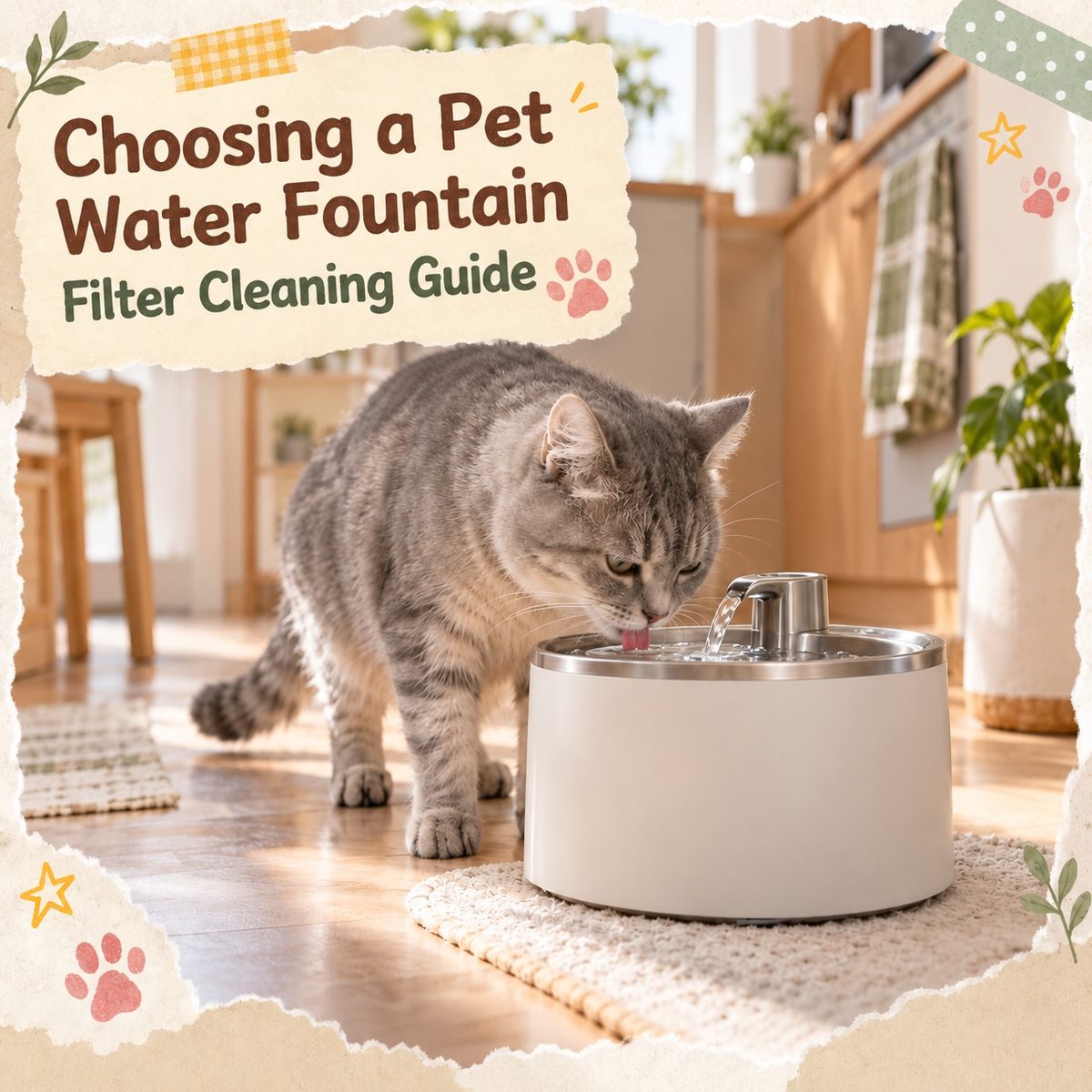
Quick answer: Flowing fountains tap into cats' natural instinct with the sound of running water, encouraging them to drink more and reducing the burden on their urinary and kidney systems. When choosing one, look at capacity, quietness, filter availability and ease of cleaning. Change the water daily and do a full clean weekly to keep it safe and effective.
In one sentence: flowing water appeals to cats' instincts and encourages them to drink more, which is especially important for urinary and kidney health; choose a fountain based on capacity, quietness, filtration and ease of cleaning; you must change the water daily and clean weekly, otherwise bacteria build-up becomes a risk. Here's the breakdown.
Why are cats especially prone to insufficient water intake?
Cats' ancestors came from desert environments, so their thirst sensation is naturally dull — it's not that they're not thirsty, it's that it takes them a long time to remember to drink. In addition, most Hong Kong households feed mainly dry food (only about 10% moisture), compared with about 75% moisture from wet food, so cats on dry food have a bigger water gap. Long-term insufficient water intake puts pressure on the urinary tract (stones, cystitis) and kidneys — a point repeatedly emphasised by feline veterinarians, and one of the background factors in urinary blockage in male cats.
Four benefits of a pet water fountain
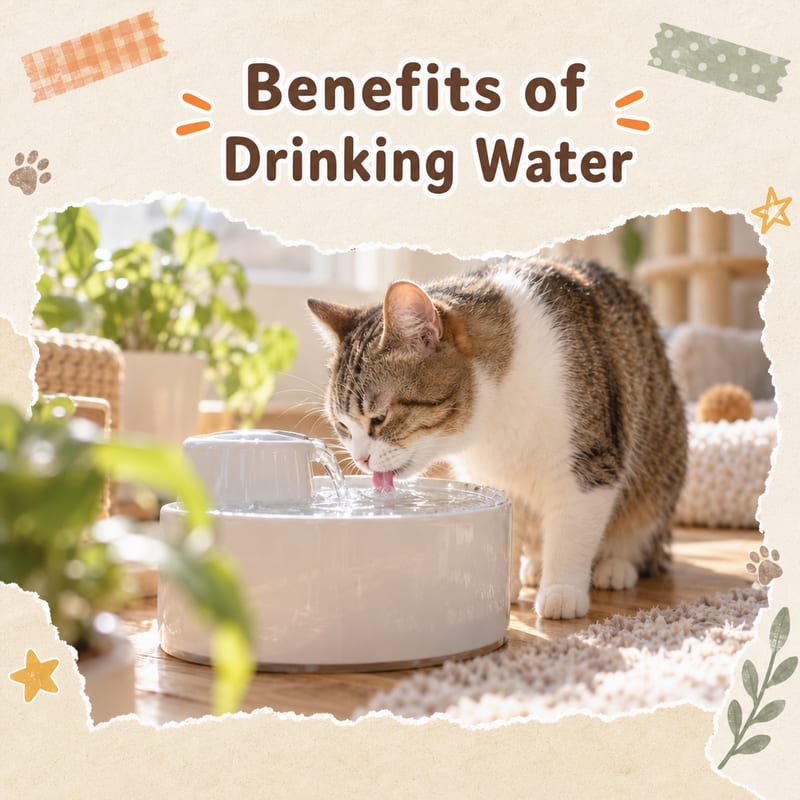
- Encourages drinking (the core benefit) — flowing, noisy, splashing water captures cats' curiosity and hunting instinct; many cats drink as soon as they see running water.
- Filters impurities — activated carbon filters remove chlorine taste and particles, making water cleaner — perfect for fussy cats.
- Fresher water — circulating and oxygenated, less likely to become stagnant and stuffy compared with a bowl left out all day; it tastes much better.
- More drinking triggers — place it along your cat's routes (hallway, corner of the living room) to put a drinking station right in front of them.
Tip: A fountain is not a magic solution. The most effective strategy is a combination: one fountain + two or three water bowls in different places + a higher proportion of wet food — only then will you see water intake rise.
How to choose a pet water fountain? Five key points
- Capacity — Cats need about 50 ml/kg of body weight per day; a 4 kg cat drinks about 200 ml per day, plus losses from daily water changes, so a 1.5–2 L model is safer; multi-cat households need more.
- Quietness — A loud pump will scare cats away, especially at night; when reading reviews, look specifically for real feedback on 'quiet'.
- Filtration — Activated carbon filters are the basics, but also pay attention to long-term filter supply and price — a cheap machine with expensive filters is a common trap.
- Easy to disassemble and clean — Few parts, no dead corners, dishwasher-safe is even better. If it's hard to clean, you'll get lazy, and laziness means bacteria build-up.
- Safety design — Wireless pump / detachable design avoids cords in water; non-slip base; food-grade material labelling.
Also note the height and slope of the drinking spout: older cats with stiff joints may dislike a spout that is too narrow or deep. Consider a shallow-tray water outlet design.
Other ways to encourage drinking without a fountain
You can do these without spending money:
- Add a little water to wet food — the most direct source of moisture.
- Change the water bowl daily, use a wide bowl — wide rim, doesn't touch whiskers.
- Keep water bowls away from food bowls and litter boxes — cats don't like drinking near their food or toilet.
- Multiple locations — one bowl in the hallway, windowsill, and bedroom each.
- Shallow dishes, dripping taps — some cats prefer waiting for a dripping tap in the bathroom; a dish is easier to clean than a bowl.
- Ice water test — some cats like slightly cold water; in hot summer, add two ice cubes and observe.
Cleaning and maintenance: not cleaning harms them
⚠️ The biggest risk of a fountain is not the machine, it's laziness. Still water plus organic matter plus constant temperature is the perfect breeding ground for bacteria and biofilm — drinking that harms cats and dogs.
Fixed routine:
- Daily: Change water, rinse the tray.
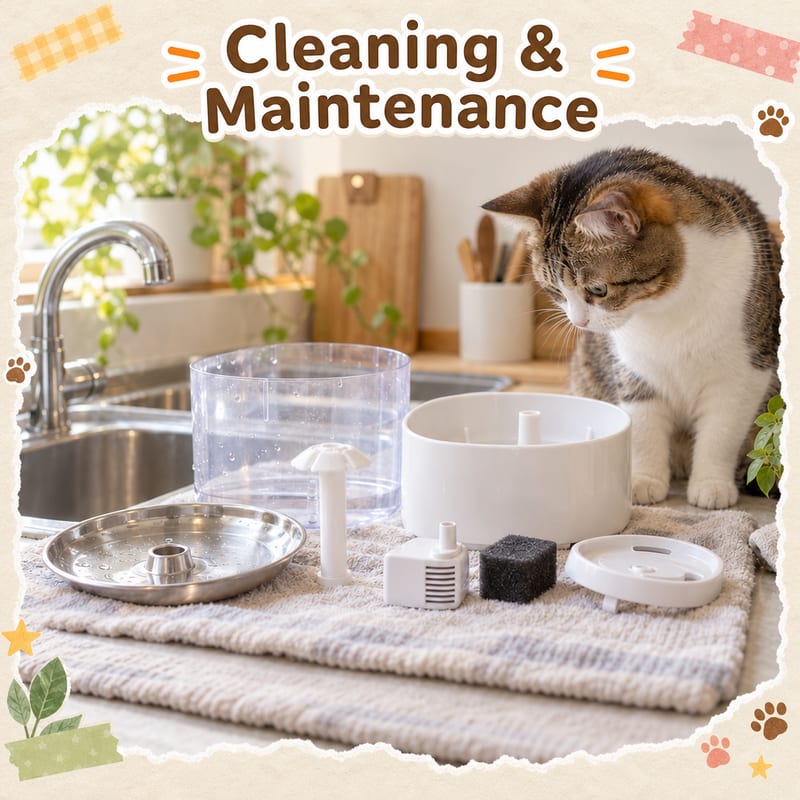
- Weekly: Fully disassemble, clean the tank, pump parts and water channels, scrub away slippery biofilm, rinse and reassemble.
- Every 2–4 weeks: Replace the filter according to the model's instructions (do not wash and reuse).
- Hong Kong summers are hot, so clean more frequently; if the tray feels slimy or smells, clean immediately.
| Item | Recommendation |
|---|---|
| Daily basic action | Change water, rinse tray |
| Weekly must-do | Full disassembly and cleaning, scrub away biofilm |
| Filter replacement | Every 2–4 weeks, do not reuse |
| Summer extra | Clean even more frequently |
| Placement taboos | Next to food bowl, next to toilet |
| Preferred placement | End of hallway, quiet corner of bedroom |
When is it not just a fountain issue?
A sudden increase or decrease in water intake is a health signal: a surge in drinking may be related to kidney problems, diabetes, etc.; not drinking at all, frequent trips to the litter box but unable to urinate, blood in urine, or yowling like a cat in heat may be a urinary emergency (especially urinary blockage in male cats) — these situations require immediate veterinary attention, not a new fountain. The advice in this article is for product reference only; consult a registered veterinarian for any concerns.
Fountain placement mini-lesson
Buying a fountain doesn't guarantee they'll drink:
- Don't place it next to the food bowl — many cats refuse water sources near their food.
- Don't place it next to the toilet — same logic, they don't want to drink water next to the toilet.
- Place it along your cat's daily routes in a quiet corner, such as the end of the hallway or the bedroom.
- Test the volume on the first night; if it's too loud, switch to a low-noise pump model.
What you can do starting today
- Count how many drinking stations you have at home and increase to at least two or three.
- Observe and record how many times your cat visits the water bowl in a week, then decide whether to buy a fountain.
- If buying, choose a quiet, easy-to-clean model and order spare filters at the same time.
- Check the proportion of wet food; if currently on all dry food, gradually fold in some wet food.
Beyond drinking, the moisture and quality of the cat food itself is the root — PetChill's cat food reviews have hands-on comparisons of wet and dry food; check them before choosing food.
Related product recommendations
You don't need many daily items, but they need to be right. Here are related products available at PetChill:
- Nutriplan Dog Canned Food Softmune Soft Texture Series Beef 100g (64888) (Nutriplan) — available at PetChill
- Hills Dog Canned Food Adult 1-6 Healthy Stew Recipe 12.5oz (10450) (Hills) — available at PetChill
Want to see more: Nutriplan Brand Guide
Product prices and latest offers are subject to the product page; this article is for reference only.
Further reading
PetChill Pet Supplies Team — Hong Kong's most authoritative pet knowledge platform
Hong Kong small-flat practicalities: fountain placement + cleaning schedule
Hong Kong homes are small, so placement and cleaning schedules need to be more down-to-earth.
Placement tested
- End of hallway: most units have long narrow hallways; leave 15 cm of passage after placing the fountain, and cats will drink as they pass by.
- Low cabinet in living room corner: 30 cm of space beside the TV cabinet, away from speakers, so the pump noise won't disturb sleep at night.
- Behind bedroom door: the open door just hides the fountain; cats can drink when they get up at night without taking up space.
Cleaning schedule (Hong Kong pace)
- Before brushing teeth in the morning: change the water — done in 30 seconds.
- Sunday after breakfast: disassemble and put in the sink, scrub the pump impeller with hot water and a little dish soap, air dry for 10 minutes and reassemble.
- First Sunday of each month: go downstairs to the pet shop to buy filters and stock up on cat litter — no need to wait for online delivery.
Noise reduction tips for small units
- Stick two kitchen anti-slip mats under the fountain to absorb vibration and prevent slipping.
- Place a piece of kitchen paper under the pump, change every other day, to reduce resonance.
- If the pump is still noisy, switch to quiet mode at night (if available) or turn it off temporarily and leave a water bowl out.
Remember, Hong Kong summers are hot and humid; if the tray starts to feel 'slimy', clean it immediately — don't wait for Sunday.
📌 Key summary
- ✅ Flowing water can increase cats' water intake and reduce urinary problems
- ✅ Choose a fountain based on capacity, quietness, filters, ease of cleaning
- ✅ Change water daily + weekly disassembly and cleaning; only useful if you're not lazy
- ❌ Placing it next to the food bowl or toilet will make cats refuse
- ❌ Sudden changes in water intake cannot be solved by changing the fountain; see a veterinarian immediately
 Nutriplan full guide →