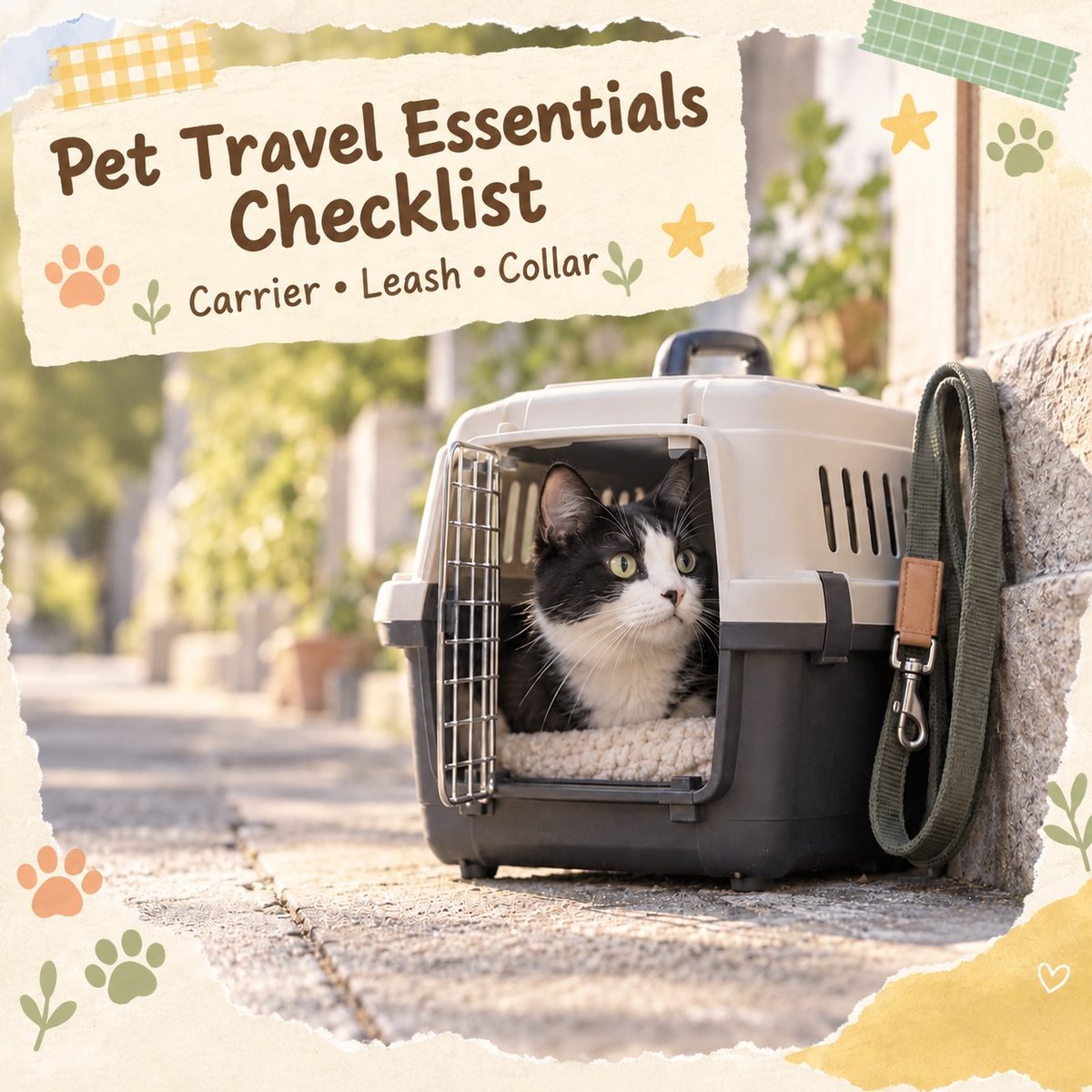
Quick answer: When taking your cat or dog out, remember "cat in a carrier, dog on a leash": cats must use a carrier or crate that is big enough, well ventilated, sturdy and washable to prevent escape; dogs should use a 1.2–1.5 m short leash. Avoid the blazing sun in summer, and train your cat at home to treat the carrier as a bed first, so you won't have to wrestle them into it.
The safety bottom line for taking your cat or dog out: cats in a pet carrier or crate to prevent escape, dogs on a short leash; the carrier must be big enough for them to turn around, well ventilated, sturdy, and have a removable washable pad. This article covers the travel gear checklist, five principles for choosing a carrier, summer heat precautions, and how to train your cat at home to accept the carrier, so taking your pet to the vet or on transport is no longer a wrestling match.
What should I prepare for taking my pet out?
Basic travel gear checklist:
- Pet carrier / crate — the core equipment for safe transport of cats and dogs
- Leash — essential for dogs (cats may use a harness depending on habit)
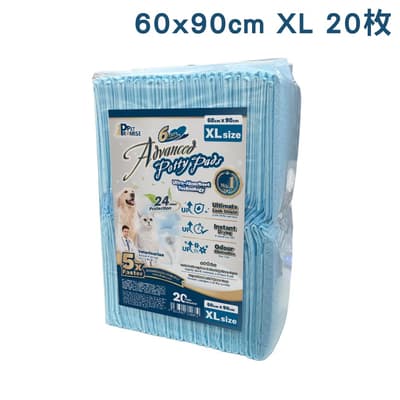
- Pee pads — for dogs when out and about, and to prevent motion sickness leaks in the car
- Water bottle / bowl — for hydration on longer trips
- Treats — for rewards and reassurance, so cats and dogs associate going out with good things
- ID — dog licence, microchip info, to help find them if they get lost
Tip: Always use a carrier or crate for vet visits (to prevent escape), and a leash for dogs when out (legal and safe). Hong Kong is crowded with traffic, so be careful when taking pets out, and make sure the animal is healthy before heading out.
How to choose a pet carrier / crate? Five principles
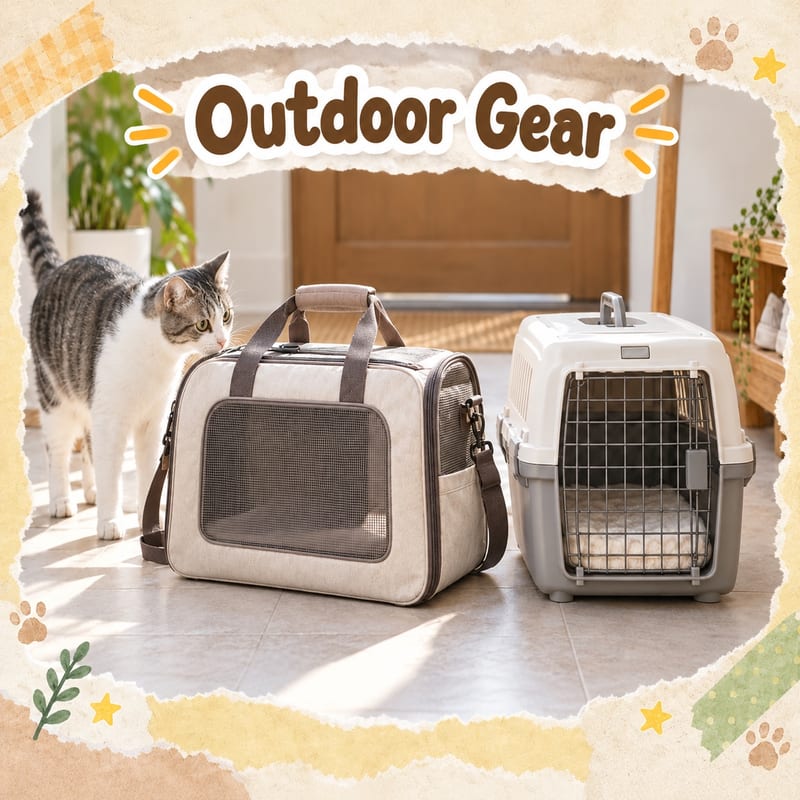
- Big enough — the cat can turn around, stand up, and lie down inside; too small will compress the joints
- Ventilated — multiple breathable mesh panels; a sealed fabric bag will quickly make the cat anxious
- Sturdy — the body shouldn't crush under pressure, to prevent squeezing during transport
- Easy to clean — removable washable pad, manageable if there's vomiting or diarrhoea
- Comfortable — soft pad + top-opening design makes it much easier to put the cat in and check on them
Cat carriers come in three main types: soft bags, hard crates, and backpacks. For taxis, transfers, or shipping, choose a hard crate; for short walks, a soft bag is fine but needs a hard base for support. Cats tend to prefer semi-enclosed spaces, so choose a style with a shaded area to make them feel safer.
How to solve a cat's fear of the carrier? Train at home first
Many cats shrink under the bed at the sight of the carrier because it only means "going to the vet". The solution is to break that association:
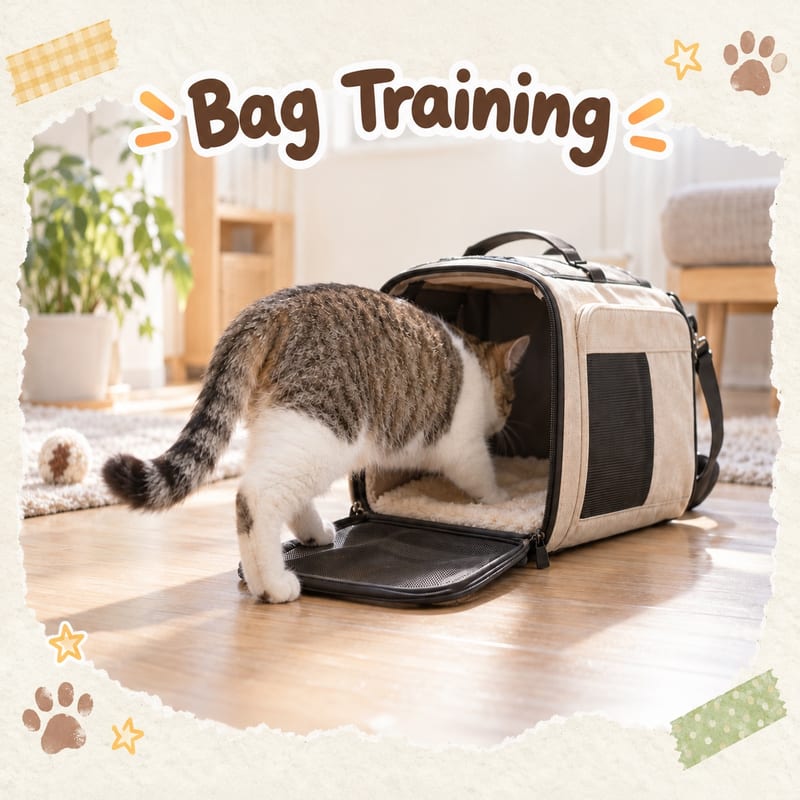
- Leave the carrier in the living room daily, with the door open as a cat bed
- Put a blanket and treats inside, let the cat go in and out freely
- Once the cat voluntarily goes in to sleep, try gently closing the door for a few seconds then opening, gradually lengthen
- Before going out, put food in the carrier in advance; don't grab the cat and stuff it in at the last minute
- Give a treat after every vet visit to build a "going out = reward" cycle
Usually results are seen in one to two weeks; for extremely panicked cats, ask your vet about short-term sedation or pheromone spray.
Dogs out and about: leash and etiquette
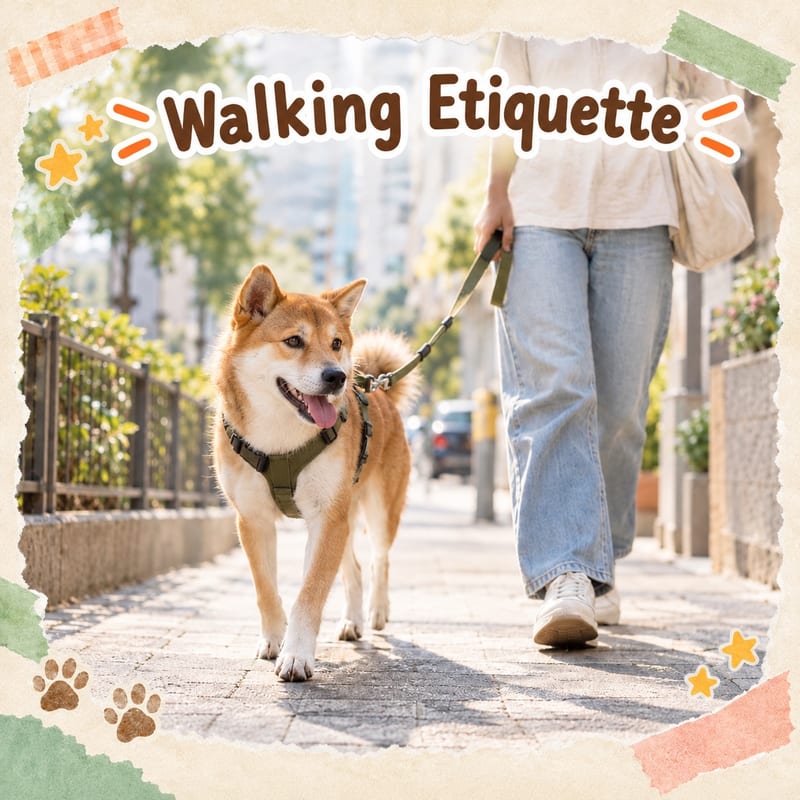
- Short leash (about 1.2–1.5 m) for firm control; retractable leads can't react in time to traffic
- Use a harness for large or strong-pulling dogs to distribute neck pressure
- Bring poop bags and pee pads, be a responsible dog owner
- Avoid peak crowds and waiting in the middle of the road
Seasonal and environmental safety
Summer:
- Avoid the blazing sun when out (mornings and evenings are cooler); hot pavement can burn paw pads, and hot cars are major causes of heatstroke
- The carrier must be ventilated; never leave cats or dogs in a parked car — minutes can be dangerous
Other:
- In crowded, traffic-heavy environments, keep the carrier/leash close; a startled cat can bolt in a second
- Whether the destination is the vet, a friend's home, or transport, let the carrier adapt to the environment in advance
Conclusion: Travel safety relies on two things — a carrier/crate for cats (to prevent escape), and a short leash for dogs (safe and legal). When choosing a carrier, remember: big enough, ventilated, sturdy, easy to clean. Train your cat at home to accept the carrier, avoid the blazing sun when out, and both you and your pet can be at ease.
If your destination is a mall, first check the Hong Kong pet-friendly mall policy tiers to see which require pets to stay in a car or carrier.
Car, plane, ferry: scenario checklist
Different transport modes have different equipment requirements:
| Scenario | What to note |
|---|---|
| Taxi / ride-hailing | Place the carrier on the seat or footwell, state that you have a pet, confirm with the driver in advance |
| Bus / MTR | Most require the pet carrier to meet specifications and not touch the floor throughout; avoid peak hours |
| Ferry | Check the ferry company's terms in advance; some only allow small hard crates |
| Plane | Hard crates must meet airline size requirements; checked or cabin rules vary, ask clearly before departure |
| Driving | Secure the carrier/crate with a seatbelt or place in the footwell; never leave it loose in the back seat |
Long trips: provide water at safe stops; for carsick dogs, fast in advance and ask your vet; put a familiar blanket in the cat carrier for reassurance.
Travel extras beyond the carrier
- Collapsible water bowl — for hydration when tired from walking in the park
- Small treats — reward in small amounts to keep them calm
- Cleaning kit — poop bags, wet wipes, spare pee pads
- Reflective collar / harness — for visibility at night
- Document pouch — licence, vaccination record copies as backup
What you can do starting today
- Check your current pet carrier: if the cat can't turn around inside, go one size up
- Leave the carrier open in the living room for a week, put treats inside to make it a cat bed
- Keep a pack of pee pads and poop bags in the side pocket
- Before going out in summer, feel the pavement heat and avoid midday
- For vet visits, start half an hour earlier
Prepare, don't rush and grab the cat
To help your pet choose the right supplies, check out PetChill's pet supplies buying guide and cat and dog food reviews.
This article is for reference only; consult a registered veterinarian for any concerns.
Related product recommendations
You don't need many daily items, but they need to be suitable. Here are related products available at PetChill:
- Fuji One Freeze-Dried Treats Dehydrated Salmon Cubes Vacuum Pack 800g (for cats and dogs) (Fuji One) — freeze-drying locks in nutrition
- Bella & Molly's Dutch Royal Dog Food AAFCO Grain-Free Series Single Protein Freeze-Dried Dehydrated Fresh Chicken with Chicken 12kg or (6 packs 2kg bag) - Limited Offer (Bella & Molly's) — freeze-drying locks in nutrition
See more: Fuji One Brand Guide
Product prices and latest offers are subject to the product page; this article is for reference only.
Further reading
PetChill Pet Supplies Team — Hong Kong's most authoritative pet knowledge platform
- New Cat Owner Preparation Checklist →
- Decoding Cat Trust Signals →
- 10 Signs Your Cat Trusts You →
- 5 Cat Scratching Training Tips →
- The Secret of Cat Purring →
Hong Kong small flat practical: how to train a cat to accept the carrier in a 300 sq ft home
Hong Kong homes are small, and leaving the cat carrier in the living room can easily be tripped over. You don't need to clear space; just use the "three corners" method:
-
Under the dining chair — lay the carrier flat under the chair, opening facing forward, and the cat will naturally go in as a new sleeping spot. Remember to put their usual small blanket inside; familiar scent is key.
-
Windowsill — if you have a windowsill, place a soft carrier half-open by the window; cats love sunbathing and watching the street, and within days they'll see the carrier as a "private cinema".
-
Top of the wardrobe — high places make cats feel safe; put the carrier on top, opening facing the wall with a gap, and the cat will jump up to "patrol". Put two small treats in daily and gradually lengthen the door-closed time; they'll get used to it in one to two weeks.
Details:
- Before bed each night, move the carrier next to your bed so the cat smells your scent and builds a "carrier = safe" association.
- If the cat is extremely resistant, spray a little cat pheromone inside the carrier, but don't move house or change cat litter at the same time to avoid multiple stresses.
- On the day of going out, place the carrier by the door half an hour early with their favourite treat at the opening; most cats will walk in on their own, no need to force.
Remember, Hong Kong summer indoor temperatures can reach 30°C; keep the fan or air-conditioning on during carrier training to avoid overheating. As long as you stick to three minutes of "feeding inside the carrier" daily, even a small flat can raise a calm cat that travels well.
📌 Key summary
- ✅ The carrier must be big enough for the cat to turn around, stand and lie down; ventilated, sturdy, easy to clean
- ✅ For dogs out and about, use a short leash 1.2–1.5 m; add a harness for large dogs
- ✅ In summer avoid midday; hot pavement and hot cars can cause heatstroke
- ❌ Don't use a retractable lead; can't react in time to traffic
- ❌ Never leave pets alone in a parked car
🆕 2026 update: soft carrier vs hard crate, size formula, 5-step crate training
Direct answer: The cat crate (travel crate) is one of the most needed items for Hong Kong cat owners — cat crate (880/month) is the highest search volume keyword in the entire behaviour supplies category. Uses fall into two types: daily outings/vet visits (handheld carriers, backpacks) and home safety containment (folding crates, aluminium frame crates). The core of selection is "the cat can stand, turn around, and lie flat"; and what really determines success is not the crate type, but crate training.
Soft carrier vs hard crate comparison table
| Comparison item | Soft bag / backpack | Hard crate / airline crate |
|---|---|---|
| Protection | Lower, insufficient protection in collisions | High, sturdy structure |
| Cat's sense of security | Lower (easily shakes) | Higher (can add a cloth cover) |
| Ventilation | Depends on design, mesh must be large enough | Usually better |
| Cleaning | Mostly removable and washable | Easier to wipe with a damp cloth |
| Storage | Foldable, space-saving | Takes up space |
| Suitable scenarios | Short trips, cats already used to going out | Vet visits, long trips, public transport |
| Price (current PetChill) | PETKIT Breezy smart ventilated backpack $479, TOUCHCAT horizontal backpack $599, Petio Add Mate backpack $791 | Pet handheld carrier airline crate travel crate $125, Petio double-door handheld carrier S $348 / M $401, Richell aluminium frame crate 90-60 $888, Petmate transport airline crate 28 inch $1,100 |
| Recommendation | 🟡 For short trips, not recommended for vet visits | 🟢 First choice for vet visits / long trips |
Size formula (just measure)
- Length: cat's nose to tail base body length + about half a leg length (so it can turn around).
- Height: cat's standing height from top of head to floor + about 5–10 cm (head must not touch the crate top).
- Width: at least enough to lie on its side, not too narrow to turn around.
- Door position: top-loading is easier to put the cat in than front-loading, with less stress.
- Weight: you can carry it together with the cat — in Hong Kong most people take the MTR/bus, so one-handed carrying is most practical.
5-step crate training (5–10 minutes daily, results in about 2–4 weeks)
- Days 1–3: place the crate in the living area (door open), put a familiar blanket and a treat inside, let the cat go in and out freely.
- Days 4–7: move feeding inside the crate (first at the entrance, then gradually inside), so the crate = where good things happen.
- Week 2: briefly close the door for 5–10 seconds, then open and reward; repeat 5 times, 1–2 sessions daily.
- Week 3: after closing the door, lift the crate and walk a few steps (indoors), then put down, open and reward; gradually lengthen.
- Week 4: short trip out (downstairs or a 5-minute car ride), reward and return home after success. Only then schedule vet visits or long trips.
Practical tips for going out
- Cover with a cloth: a thin cloth over the crate reduces visual stimulation and is effective for anxious cats; but ensure ventilation in summer.
- Allow extra time: Hong Kong traffic is busy; allow at least 30 minutes buffer before a vet appointment to reduce the sense of urgency.
- Secure with a seatbelt: when in the car, place the crate on the rear floor or secure with a seatbelt to prevent sliding in a collision.
- After returning home: let the cat come out of the crate on its own and return to a safe area; don't immediately greet or pick it up.
🟢🟡🔴 Triage assessment
| Situation | Triage | Advice |
|---|---|---|
| Quiet in the crate, can move short distances | 🟢 | Continue positive training |
| Hides before entering, needs to be caught | 🟡 | Train 2–4 weeks in advance; don't get the crate out at the last minute |
| Cries continuously, drools during the car ride | 🟡 | Cover with cloth, reduce stimulation; train earlier next time |
| Open-mouth breathing, rapid breathing, extreme panic | 🔴 | Stop and ventilate, seek veterinary help ASAP (possible acute stress) |
| Hides for more than 48 hours after returning home | 🔴 | Reduce stimulation and consult a vet |
Sources (supplementary)
- AAFP/ISFM Feline-Friendly Handling Guidelines (transport and handling)
- International Cat Care: Handling and interactions
- AAFP/ISFM Feline Environmental Needs Guidelines (environmental needs)
 Fuji One full guide →


 Fuji Cat full guide →


 Feline Natural full guide →