
🤖 AI Summary
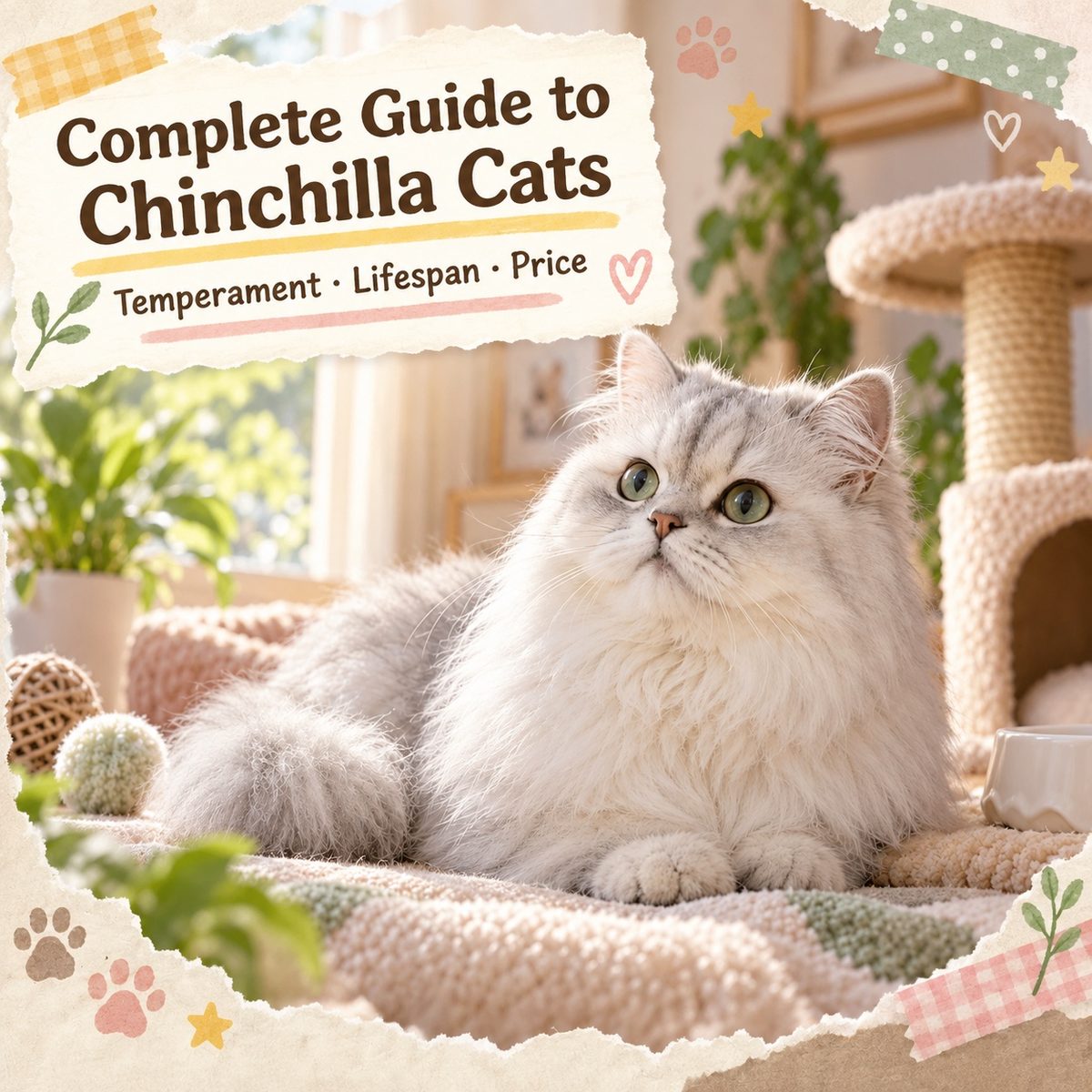
The Chinchilla cat is a silver-white member of the Persian family, developed in 1880s Britain from Persians and Angoras—not a separate breed but a prized colour line of the Persian. Emerald-green large eyes + black eyeliner + shimmering silver-white coat are its hallmarks, earning it the name 'silver fairy'.
• Average lifespan 12-15 years, gentle and quiet, affectionate without being clingy
• Two big tasks for Hong Kong owners: daily brushing + flat-face tear-stain care
• Hong Kong purchase price around HK$15,000-20,000 (prices for reference only)
Quick answer: The Chinchilla is easy to keep, provided you accept daily brushing. It is gentle, quiet, softly voiced and not overly clingy, suiting small flats and office workers; however, its flat face brings tear staining and respiratory issues, and the long coat needs daily grooming to prevent matting. Average lifespan 12-15 years.
Contents
-
What is a Chinchilla? Its relationship to the Persian
-
Is a Chinchilla easy to keep? Personality, pros and cons
-
How long does a Chinchilla live?
-
The 4 major coat colours: silver to golden
-
Flat-faced cat care: tear stains/respiration/diet
-
Hong Kong price ranges and monthly costs (HKD)
-
Practical Hong Kong care: brushing/environment/weather
-
Buying checklist and health checks
-
When to see a vet: red-line list
-
FAQ
Chinchilla price and monthly costs (2026 Hong Kong market)
Buying the cat is only the entry fee; what really affects the decision is the fixed monthly cost. The table below shows actual 2026 Hong Kong rates—ask about every item before paying a deposit, especially the parents' polycystic kidney disease (PKD) screening records.
| Item | Range | Notes |
|---|---|---|
| Registered cattery | HK$15,000–20,000 | Pedigree papers + parents' health records |
| Licensed pet shop | HK$12,000–18,000 | Check the AFCD licence |
| Adoption | HK$0–2,000 | Fewer long-haired breeds available for adoption |
| Vaccines (first-year three) | HK$900–1,500 | Annual booster thereafter |
| Neutering | HK$1,500–3,500 | Cheaper for males, more for females |
| Monthly food | HK$400–700 | Flat-face formula/hairball control |
| Monthly cat litter | HK$200–300 | Fastidious; clean the box often |
| Monthly grooming supplies | HK$100–200 | Comb + slicker brush + tear-stain wipes |
| Monthly medical reserve | HK$250–500 | PKD and respiratory risk |
| Monthly total | About HK$1,050–1,600 | Excludes summer air-conditioning electricity |
The most commonly underestimated cost among Hong Kong owners is air-conditioning electricity. With a flat face and long coat, the double burden means keeping the indoor temperature at 25–26°C in summer; July–September electricity can be HK$300–600 more per month, and this is a necessity, not a luxury.
Annual costs can be broken down for budgeting:
| Expense type | First year | Each subsequent year |
|---|---|---|
| Buying/adopting | HK$0–20,000 | HK$0 |
| Vaccines + deworming | HK$900–1,500 | HK$500–900 |
| Neutering | HK$1,500–3,500 | HK$0 |
| Food + cat litter | HK$7,200–12,000 | HK$7,200–12,000 |
| Grooming supplies + annual check-up | HK$1,500–2,500 | HK$1,500–2,500 |
| Total | About HK$25,000–35,000 | About HK$14,000–22,000 |
So 'can I afford it?' should be judged on ongoing annual spending, not just the purchase price.
Adoption vs buying: cost and risk comparison
Chinchillas are less common in adoption channels, but long-haired breeds do come up for adoption, so it is worth looking first:
For a full look at the Chinchilla's personality, downsides, lifespan and price, see the Chinchilla breed profile.
| Route | Entry cost | Health risk | Suits whom |
|---|---|---|---|
| Registered cattery | HK$15,000–20,000 | Lowest (parents PKD screened) | Values pedigree and health records |
| Licensed pet shop | HK$12,000–18,000 | Medium (inspect the cat on site) | Wants to buy immediately |
| Adoption | HK$0–2,000 | Medium (usually already neutered and vaccinated) | Tight budget, wants to rescue |
Be wary of 'special offer' long-haired cats below half the market price—they may be crossbreeds passed off as purebreds or backyard breeding without health screening.
Three must-ask questions (for any route):
- Have the parents had a polycystic kidney disease (PKD) ultrasound?
- How many vaccines have been given, and when was the last one?
- Is there a microchip record and an AFCD licence (for pet shops)?
Long-haired breeds carry higher health risks, so complete paperwork matters far more than saving a few thousand dollars.
Who is a Chinchilla suitable for? Owner types and self-check
The Chinchilla is gentle, quiet, softly voiced and not overly clingy, making it a popular long-haired choice for small flats and office workers. But long-coat care is a daily task, and 'suitable' largely depends on whether you are willing to brush every day.
| Owner type | Suitability | Reason |
|---|---|---|
| 9-to-9 office worker | Suitable | Not overly clingy; above-average tolerance of being alone |
| Works from home/semi-retired | Very suitable | Time for daily brushing + tear-stain wiping |
| Wants a clingy cat | Not recommended | Chinchillas are 'affectionate but not clingy'; too much holding makes them want to leave |
| Family with children | Depends on age | Gentle, but teach children to be gentle; long coat mats easily |
| Renting a small flat/public housing | Suitable | Soft voice, moderate activity, low noise risk |
| Hates hassle/doesn't want daily care | Not recommended | Brushing and tear-stain wiping cannot be skipped; one lazy day leads to matting |
Reverse self-check (three questions):
- Can you spare 5–10 minutes daily to brush the cat?
- Can you wipe tear stains once a day and accept reddish marks on a light-coloured coat?
- Are you willing to run the air-conditioning (25–26°C) all summer?
If you answer 'no' to two of the three, choose a short-haired breed instead of forcing yourself for the 'fairy' look.
Chinchilla health check schedule (by age)
The Chinchilla's main concerns are polycystic kidney disease (PKD), respiratory tract, teeth and eyes. As a purebred flat-faced long-haired cat, regular checks are far cheaper than fixing problems after they arise.
| Age | Recommended items | Approximate cost |
|---|---|---|
| 2–4 months | First-year vaccines (three) + deworming | HK$900–1,500 |
| 6 months | Pre-neutering blood test + neutering | HK$2,000–4,000 |
| 1 year | Annual check-up + vaccine booster | HK$500–900 |
| 2–6 years | Annual check-up + kidney ultrasound for PKD | HK$1,000–1,800 |
| 7 years and over | Every six months: blood test, urine test, kidney ultrasound, dental check | HK$1,200–2,000 per visit |
Three daily observations (free but must be done every day):
- Drinking and urination: flat-faced cats find drinking laborious; increased drinking and urination plus weight loss are warning signs of kidney disease.
- Breathing: persistent open-mouth breathing or a purple tongue is an emergency in flat-faced cats—do not wait.
- Coat: suddenly stopping grooming altogether or a dull coat is usually a behavioural signal of feeling unwell.
The Chinchilla is a breed with 'subtle symptoms'; early kidney disease often shows no outward signs, so an annual ultrasound is the most practical insurance.
Three budget plans: thrifty, standard, secure
The same Chinchilla can be kept on three budgets. The point is not which is 'right', but to choose in advance so you don't discover a shortfall when something goes wrong.
| Item | Thrifty | Standard | Secure |
|---|---|---|---|
| Food | HK$400/month (dry + hairball) | HK$550/month (dry and wet mixed) | HK$700/month (flat-face complete food) |
| Cat litter | HK$200/month | HK$250/month | HK$300/month |
| Grooming supplies | HK$100/month (basic comb) | HK$150/month (comb + slicker brush) | HK$200/month (+ tear-stain wipes) |
| Medical reserve | HK$0 (rely on cash) | HK$250/month | HK$500/month |
| Summer air-conditioning | Weather-dependent | HK$300/month (Jul–Sep) | HK$600/month (continuous 25–26°C) |
| Monthly total | About HK$700 | About HK$1,500 | About HK$2,300 |
| Suits | Tight budget with cash reserve | Most families | Wants to avoid sudden large expenses |
Insurance vs self-funded reserve: Hong Kong pet insurance annual premiums are generally HK$1,500–4,000 (depending on age and cover), with excess and caps. If you already have HK$20,000+ in liquid cash, self-funding is usually more flexible; if not, insurance is a tool to spread sudden risk. You don't need both.
Four common Chinchilla misconceptions
Before deciding, clear up these four common misunderstandings:
| Misconception | Reality |
|---|---|
| The Chinchilla is a separate breed | It is a silver-white colour branch of the Persian; care needs are basically the same as a Persian's |
| Long-haired cats only need brushing once a month | The undercoat is dense; brush once daily normally and twice daily in moulting season, or it mats |
| A flat face is only a cosmetic issue | The flat structure compresses the tear ducts and narrows the nasal passages, bringing tear staining and respiratory risk |
| Silver is cheapest so it's the worst | Coat depth only affects rarity and price, not health or purity |
In one sentence: most of the Chinchilla's 'cost' lies in 'grooming' and 'air-conditioning'. If you can accept daily brushing, it is one of the most ethereal companion cats for a small flat.
Practical advice (four points):
- Brush 5–10 minutes daily, more often in moulting season; don't wait for mats
- Wipe tear stains once a day; see a vet immediately if discharge turns yellow-green
- Keep the indoor temperature at 25–26°C in summer; air-conditioning is essential
- From 2 years old, do a kidney ultrasound annually to screen for PKD
What is a Chinchilla? Its relationship to the Persian
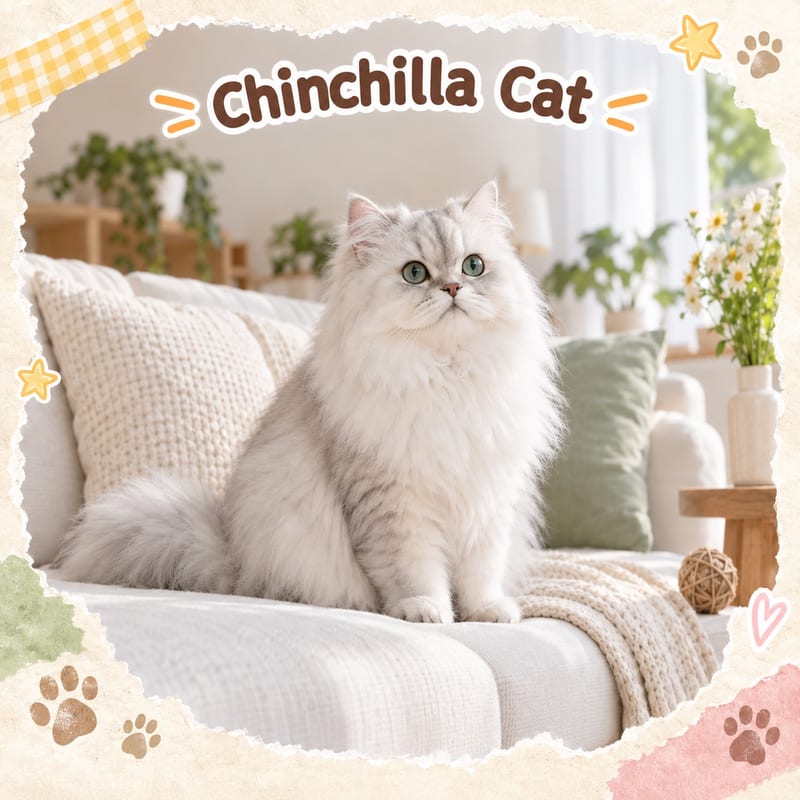
Many people think the Chinchilla is a separate breed—it is not. The Chinchilla is a colour branch of the Persian: in the 1880s British breeders crossed Persians with Angoras and, after years of selection, produced a 'silver-white gradient' effect where only one-eighth of the hair tip is coloured, making the cat shimmer silver all over, just like the coat of the South American chinchilla, hence the name.
Because of this lineage, the Chinchilla inherits the Persian's flat face, round face and long coat, but is lighter in build (about 3-5 kg) with proportionally larger eyes, giving a more 'girlish' look overall. Some cat associations classify the Chinchilla within the Persian group for showing, while others list it as a separate colour line—either way, its care needs overlap heavily with the Persian's.
Chinchilla breed quick facts:
| Item | Details |
|---|---|
| Weight | 3-5 kg (females smaller) |
| Build | Medium, short sturdy legs |
| Coat length | Long double coat, fine silky texture |
| Eyes | Large round emerald/blue-green eyes (blue in kittens) |
| Signature features | Black eyeliner + brick-red nose + tipped colour gradient |
| Average lifespan | 12-15 years |
Chinchilla vs Persian quick comparison:
| Feature | Chinchilla | Persian |
|---|---|---|
| Nature | Persian colour branch | Separate breed |
| Build | Lighter (3-5kg) | Sturdier (3-5.5kg) |
| Activity | Slightly more playful | Quieter |
| Coat colour | Silver/golden gradient lines | All colours |
| Price (Hong Kong) | HK$15,000-20,000 | HK$12,000-25,000 |
Is a Chinchilla easy to keep? Personality, pros and cons
The Chinchilla's personality can be summed up in eight words: gentle and quiet, affectionate but not clingy. They don't beg to be held all day like Ragdolls; instead they like to sit elegantly near you, watching quietly with their emerald eyes—a 'quality roommate' type of companion cat.
Four personality traits:
- Quiet, rarely vocal: soft voice, may not meow even once a day—perfect for noise-sensitive Hong Kong buildings
- Quiet and elegant: doesn't like racing around; moderate activity, perfectly fine in a small flat
- Affectionate with boundaries: likes to be near you but will walk away if held too much; respecting their boundaries improves the relationship
- Clean: fastidious about self-grooming; will protest directly if the litter box is dirty (a warning sign of inappropriate urination)
Honest pros and cons:
| Pros ✅ | Cons ⚠️ |
|---|---|
| Quiet and gentle, suits small flats | Long coat needs daily brushing or it mats |
| Affectionate without being overly clingy | Heavy tear staining on the flat face, needs daily wiping |
| Top-tier looks, full of ethereal charm | Hong Kong summers make it pant easily (poor heat dissipation with a flat face) |
| Low activity, manageable even for elderly owners | Purebred constitution: PKD/respiratory risk |
| Friendly to other cats | Heavy shedding in moulting season |
Chinchilla downsides and responses at a glance (all doable daily/yearly):
| Chinchilla downside | Response already in this file |
|---|---|
| Long double coat mats without frequent brushing | Brush once daily with a comb; 1-2 times daily in moulting season (spring/autumn) with comb + slicker brush |
| Heavy tear staining on the flat face | Wipe once daily from the inner corner outward with pet-safe wet wipes; see a vet immediately if discharge turns yellow-green |
| Hong Kong summers make it pant easily (poor heat dissipation) | Keep indoor 25-26°C; pay extra attention during extreme heat in Jul-Sep |
| Purebred constitution: PKD, respiratory risk | Annual check-up from 1 year; annual kidney ultrasound for PKD from 2 years; every six months from 7 years |
| Heavy shedding in moulting season, hairball risk | Brush more often in moulting season + hairball products to prevent hairball disease (severe cases can block the intestines) |
| Low activity, easy to overfeed | Control weight, aim for a standard 3-5 kg body condition to reduce the flat-face breathing burden |
How long does a Chinchilla live?
The Chinchilla's average lifespan is 12-15 years, similar to the Persian family average. As a purebred flat-faced long-haired cat, its lifespan largely depends on two things: weight management and respiratory health.
Four keys to a longer life:
-
Control weight: Chinchillas are low-activity and easily overfed; obesity worsens the flat-face breathing burden, so aim for a standard 3-5 kg body condition
-
Keep cool indoors: Hong Kong summers are hot and humid, and flat-faced cats dissipate heat poorly; air-conditioning (25-26°C) is a necessity, not a luxury
-
Annual check-up: focus on the kidneys (PKD ultrasound) and teeth (flat-faced cats have crowded teeth and are prone to periodontal disease)
-
Daily brushing: not just for looks—swallowing too much hair can cause hairball disease, which may require surgery in severe cases
The 4 major coat colours: silver to golden
The Chinchilla's coat secret lies in the 'tipped' gene: only the tip (one-eighth) of each hair is coloured, the rest is the base colour, giving the cat a shimmering gradient effect.
| Coat colour | Appearance | Rarity |
|---|---|---|
| Silver Chinchilla | White base + black tips, the most classic | Most common |
| Shaded Silver | Deeper tipping, obvious on the back and face | Common |
| Golden Chinchilla | Warm golden base + black tips | Less common |
| Shaded Golden | Deeper golden gradient, rich gold on the back | Rare, higher price |
Whatever the coat colour, the Chinchilla's hallmarks are the same: large emerald or blue-green eyes + black eyeliner + brick-red nose—a combination that gives it 'eyeliner-wearing ethereal charm' in any colour. Kittens have blue eyes that gradually turn green at about 4-6 months old.
Flat-faced cat care: tear stains/respiration/diet
The Chinchilla inherits the Persian's flat facial structure (brachycephalic), bringing three daily care priorities:
1. Tear-stain care (daily task)
In flat-faced cats the tear ducts are compressed, so tears cannot drain normally and overflow at the eye corners, forming reddish-brown tear stains. Especially obvious on light-coloured coats.
- Wipe once daily from the inner corner outward with pet-safe wet wipes
- For stubborn stains, use vet-recommended tear-stain powder/liquid as an aid
- Sudden worsening of stains + yellow-green eye discharge = conjunctivitis symptoms; see a vet
2. Respiratory care
The flat structure narrows the nasal passages, so the Chinchilla breathes louder than most cats and pants easily after exercise. This is a breed trait, but watch for limits: persistent open-mouth breathing, extremely loud breathing during sleep, or a purple tongue are all abnormal and need immediate veterinary attention. Keeping the environment cool in summer is the most effective prevention.
3. Diet details
The flat facial structure makes them prone to 'messy face' when eating—shallow plates suit them better than deep bowls; choose flat-shaped dry food kibble. Some Chinchillas eat slowly due to their nasal structure, so use shallow wide plates in separate zones. Watch water intake: flat-faced cats find drinking laborious, so a flowing water fountain can encourage more drinking and help prevent kidney disease and urinary stones.
Hong Kong price ranges and monthly costs (HKD)
Chinchilla purchase prices in Hong Kong (2026, for reference only):
| Source | Price range | Notes |
|---|---|---|
| Registered breeder/cattery | HK$15,000-20,000 | Pedigree papers + health records |
| Licensed pet shop | HK$12,000-18,000 | Check the AFCD licence |
| Online low-price ads | HK$5,000-9,000 | ⚠️ Watch for quality and health risks |
The Chinchilla is a mid-to-high-priced long-haired cat in Hong Kong; silver is the most common and relatively cheaper, while golden/shaded golden are rarer and cost more. Be wary of 'special offers' below half the market price: they may be crossbreeds passed off as purebreds or backyard breeding without health screening.
Monthly budget (adult Chinchilla, HKD):
| Item | Monthly cost | Notes |
|---|---|---|
| Cat food | $400-700 | Flat-face formula/hairball control |
| Cat litter | $200-300 | Fastidious; clean the box often |
| Grooming supplies | $100-200 | Comb + slicker brush + tear-stain wipes |
| Toys and sundries | $100-150 | Teaser wand + scratching board |
| Basic total | About $800-1,350 | Excludes medical |
| Air-conditioning electricity (summer) | +$300-600 | Essential for flat-faced cats |
Practical Hong Kong care: brushing/environment/weather
Coat care (the Chinchilla owner's number-one task):
The Chinchilla has a long double coat with a dense undercoat. According to veterinary guidance, long-haired cats need daily brushing, and more often in moulting season, otherwise the coat mats and in the worst case the cat must be shaved all over.
| Period | Frequency | Tool combination |
|---|---|---|
| Normal | Once daily | Comb |
| Moulting season (spring/autumn) | 1-2 times daily | Comb + slicker brush |
Correct brushing technique (vet advice): calm and relax the cat first → comb from the neck down the back with the lie of the coat → use the slicker brush on the undercoat (keep the teeth parallel to the hair to avoid scratching the skin) → finish gently around the belly/legs. While brushing, check the skin for rashes, dandruff or black specks (early signs of ringworm and fleas).
Hong Kong environment tips:
- Air-conditioning essential: flat face + long coat is a double burden; keep indoor 25-26°C in summer; watch out for extreme heat in Jul-Sep
- Humidity management: use a dehumidifier to keep humidity at 50-60% to prevent damp, matted fur and reduce skin disease risk
- Bed position: away from busy walkways; Chinchillas like soft cushions in quiet corners
- Activity space: no need for a large cat tree; a windowsill spot plus a few low platforms is enough for patrols
Buying checklist and health checks
Where to buy:
- Registered cattery: see the parent cats (directly preview adult coat colour and build) + transparent health records
- Licensed pet shop: confirm the AFCD licence is valid; observe cage hygiene and kitten alertness
- Avoid: sellers who take deposits from photos only, refuse on-site viewing, or claim 'home breeding' without any health checks
Six on-site checks:
-
Eyes: clear with no discharge; tear stains should not be red and swollen
-
Nose: slightly moist with no discharge; breathing smooth with no noise
-
Coat: fluffy with no mats or bald patches; silky to the touch
-
Belly: soft with no abnormal swelling (swelling may indicate worms)
-
Documents: vaccination card + microchip record + (cattery) pedigree papers
-
Behaviour: curious and responsive; should not be cowering or panting the whole time
When to see a vet: red-line list
Contact a vet immediately if the Chinchilla shows any of the following:
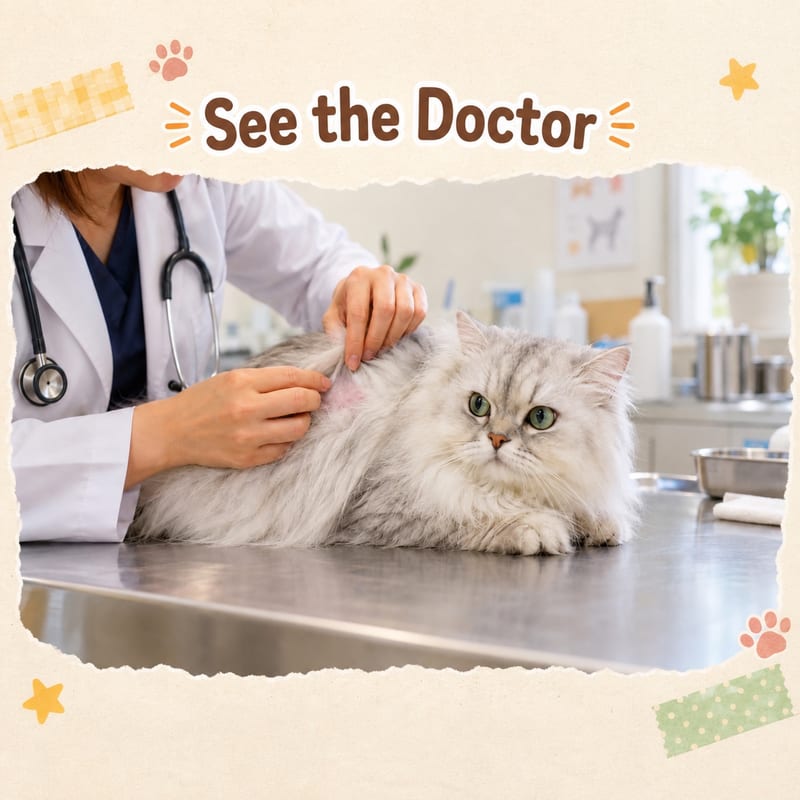
- ⚠️ Open-mouth breathing or laboured breathing—emergency in flat-faced cats (heatstroke/heart problems)
- ⚠️ Not eating at all for 24 hours—cats that stop eating can develop fatty liver
- ⚠️ Increased drinking and urination + weight loss—warning signs of PKD/kidney failure
- ⚠️ Eye discharge turning yellow-green + swollen eyes—conjunctivitis/corneal ulcer
- ⚠️ Vomiting more than one hairball a day—hairball disease blocking the intestines
- ⚠️ Suddenly stopping grooming altogether + dull coat—behavioural signal of feeling unwell
This article is for reference only and cannot replace veterinary diagnosis. If you have health concerns, consult a registered veterinarian.
Further reading
- All articles index
- PetChill pet supplies
- Comparison of 12 cat breeds: personality and price →
- Common diseases, preventive care, vet information →
- cat-coat-color-personality →
- How to choose a litter box? 2026 Hong Kong litter box guide →
- Pet travel supplies →
- The secret of cats purring →
- Complete guide to cat tail language →
📌 Key takeaways
- ✅ Daily brushing prevents mats; increase frequency in moulting season
- ✅ Air-conditioning at 25-26°C helps the flat face dissipate heat
- ✅ Emerald eyes + silver-white coat = off-the-charts ethereal charm
- ❌ Low-price ads at HK$5,000-9,000 are usually traps
- ❌ Unwiped tear stains become stubborn red marks
- ❌ Open-mouth breathing = emergency; see a vet immediately
 Almo Nature full guide →



