

Quick answer: Cat purring isn't just because they're happy! Purring is a communication and self-healing tool for cats—they purr when happy, and also when nervous, in pain, or even during labour to soothe themselves. Scientific research shows that purr frequencies range from 25 to 150 Hz, a range that research suggests may help promote bone healing, relieve pain, and stabilise blood pressure.
Every time you hear your cat make that "grrr-grrr" sound, does your heart melt? Many people think cat purring means happiness, but the secrets behind purring are far more amazing than you imagine!
Why do cats purr?
There are two main reasons cats purr:
- Pleasure: When you pet their favourite spots, play with them, or they rest in a warm place, cats purr to express contentment.
- Emotional stability: Purring is also a way for cats to self-soothe, helping them relieve tension and stress.
Interestingly, even in stressful situations like going to the vet for a check-up, many cats make that "grrr-grrr" sound—this is actually their way of stabilising their emotions!
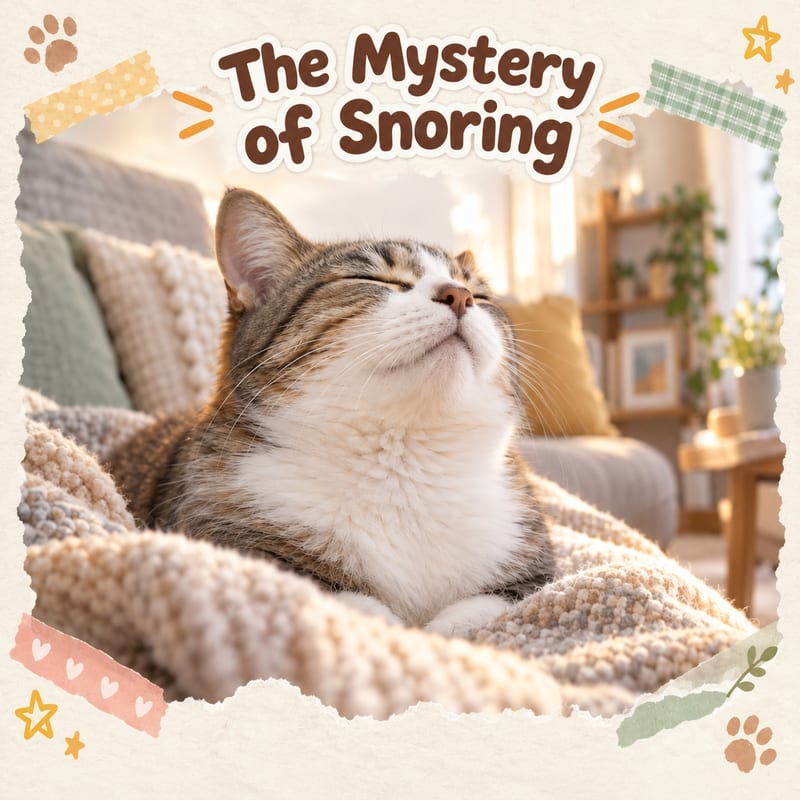
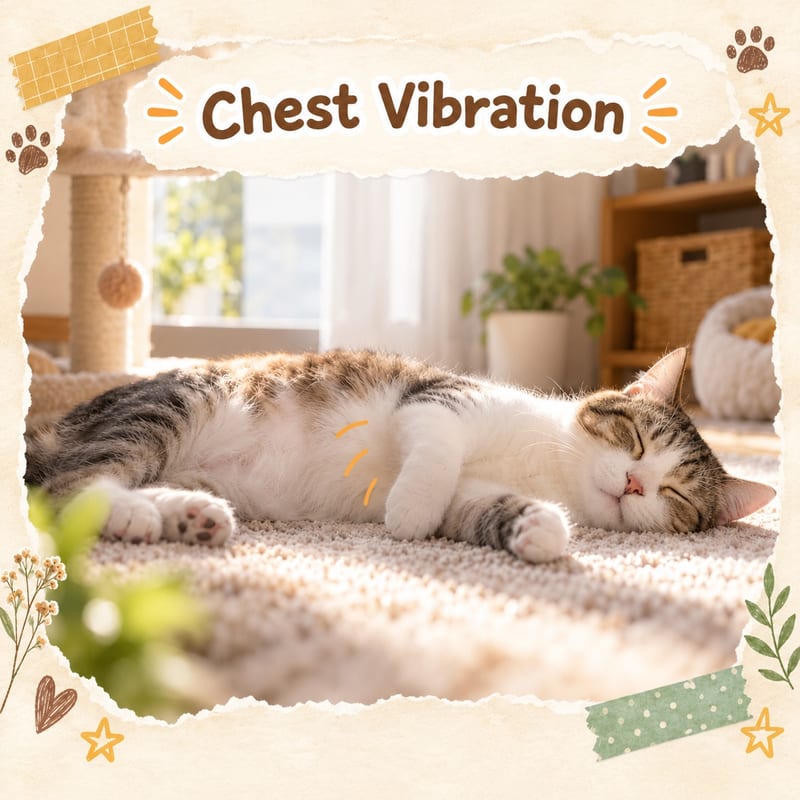
Purring isn't just happiness: 4 common scenarios explained
Many cat owners hear purring and assume their cat is in a good mood, but you actually need to consider the context and body language. Here are 4 of the most common purring scenarios:
- Relaxing and resting: Lying on the windowsill or your lap, purring softly with ears naturally forward—this is the most typical sign of contentment.
- Soliciting food: Research found that cats produce a "solicitation purr" mixed with a high-frequency "meow" sound, specifically to get their owner's attention and say "feed me now".
- Nervous or uneasy: Purring at the vet, in the car, or when meeting strangers is a sign of self-soothing, similar to humans taking deep breaths to calm down.
- Feeling unwell: Cats purr when injured, in pain, or about to give birth. At these times, purring is a self-healing mechanism; if accompanied by crouching, hiding, or loss of appetite, pay special attention.
Remember one principle: Always interpret purring together with the ears, tail, and body posture to accurately judge your cat's true mood.
What's special about the frequency of purring?
Cats start purring about 2 weeks after birth. Scientists have found that the frequency range of purring is between 25 and 150 Hz.
What's special about this frequency range? It turns out these frequencies have:
- Wound healing effects
- Muscle tension relief effects
- Blood pressure stabilising effects
- Potential to reduce the probability of heart attacks
In other words, a cat's purr is not just a sound; it's a natural "healing frequency"!
Here's a comparison table of purr frequencies and their effects:
| Frequency range | Main effect | Practical meaning |
|---|---|---|
| 25-50 Hz | Promotes bone healing, stimulates bone cell growth | Key frequency for self-repair after injury |
| 50-100 Hz | Relieves muscle tension, reduces pain | Relaxes the body, soothes fatigue |
| 100-150 Hz | Stabilises blood pressure, reduces heart rate stress | Helps humans relax and sleep when listening |
What benefits do purrs have for humans?
In recent years, scientists have begun to study the effects of cat purring on human health. They found:
- Listening to cats purr can lower the risk of heart disease in humans.
- Cat owners have a lower probability of heart disease and cerebral infarction than people who keep other animals.
- The vibration frequency of purring can help relax body and mind and reduce stress hormones.
According to the results of the Second National Health and Nutrition Examination Survey Mortality Follow-up Study (2009) conducted in the United States, cat owners had significantly better cardiovascular health indicators than non-cat owners.
Additionally, the low-frequency vibrations of purring are similar to the "om" frequency heard during human meditation, so many cat owners report that hearing their cat purr at night helps them fall asleep more easily. This is also why more and more people use cat purring videos as sleep-aid white noise.
How to distinguish normal purring from health warnings?
Most purring is normal, but there are several situations where you should be alert:
- Purring suddenly becomes harsh, weak, or disappears: If a cat that usually purrs a lot suddenly goes quiet, or the sound changes noticeably, it could be a respiratory problem or discomfort.
- Accompanied by breathing noises: If the purr is mixed with "woo-woo" or "cough-cough" sounds, especially during breathing, it could be a problem with the trachea or nasal cavity; consult a vet as soon as possible.
- Special attention for short-nosed breeds: Persian, Exotic Shorthair, and other short-nosed breeds have narrower respiratory tracts. If their purring is unusually loud or they have difficulty breathing, regular check-ups are needed.
- Judge with other symptoms: If purring is accompanied by runny nose, sneezing, loss of appetite, or lethargy, don't just assume it's happiness.
Simple principle: If the cat is energetic, eating normally, and breathing smoothly, the purring is usually normal; if the sound suddenly changes or is accompanied by other symptoms, consult a vet.
How to make your cat purr more often?
Want your cat to purr happily more often? Try these methods:
Scheduled interactive play
Spend 15-20 minutes playing with your cat every day, using a wand toy or small toys to stimulate their hunting instinct.
Find the petting spots they love
Gently pet their chin, behind the ears, and the base of the tail—spots they enjoy—and you'll soon hear that "grrr-grrr" sound.
Provide a warm, comfortable environment
Cats love warm places. A sunny windowsill or a soft cat bed are great spots to make them purr.
Maintain a daily routine
Cats love routine. Fixed feeding times and daily habits can make them feel secure.
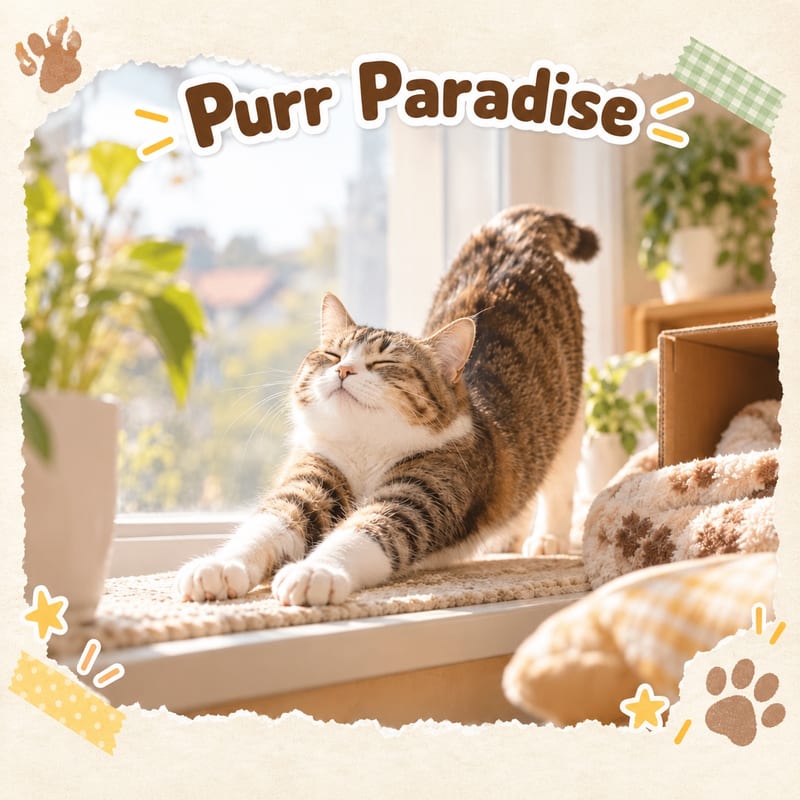
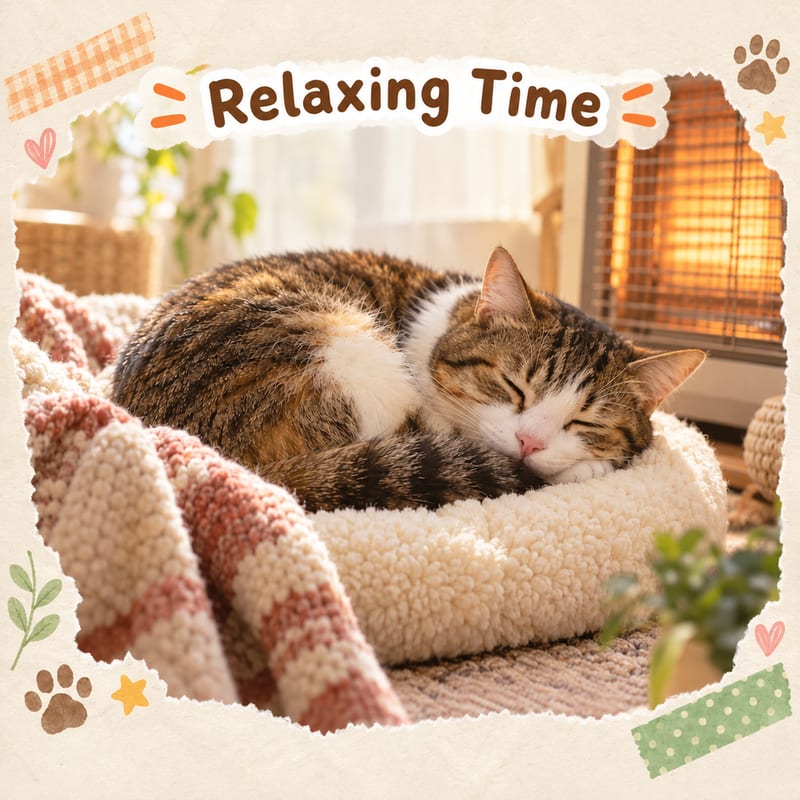
Hong Kong small-flat practical guide: creating a "purr paradise" in a 300 sq ft unit
Hong Kong homes are small, but you don't need a big renovation to make your cat purr happily every day. Just master the "three smalls": small corners, small habits, small props.
Small corners A windowsill is always a cat's favourite. Put down a non-slip mat and a soft bed; when the morning sun shines in, your cat will naturally purr. If there's no windowsill, add a jump board on top of a wardrobe or fridge—high enough for a sense of security, and it can also become a private sunbathing spot.
Small habits Hong Kong people work long hours, so set phone alarms for two daily "15-minute exclusive interaction sessions"—one before leaving in the morning and one after work at night. Use a wand toy for "flash hunting": mimic a bird's flight path; 15 minutes is enough for the cat to burst with energy and then relax, and the purring will follow. Remember to feed after play, making "play → eat → purr and sleep" a fixed routine; your cat's mood will be more stable.
Small props Hong Kong weather is humid, and winters swing between hot and cold. A USB low-temperature pet heating pad (about A4 size) is enough. Place it in a corner of the sofa, set to medium-low heat, and your cat will start purring within five minutes of lying on it. If you're worried about safety, use a microwave-heated warm pad instead—heat it for two minutes daily, saving electricity and giving peace of mind.
Finally, in Hong Kong, neighbours are close. If your cat is stressed by renovation noise or thunder and purrs to soothe itself, prepare a "flash hideout" in advance: a cardboard box on its side, lined with a soft towel, with a thick towel hung at the entrance as a door curtain—instantly a soundproof cave. Just remember to leave air holes; your cat can self-calm with purring inside within two or three minutes, and you don't have to stay with them all the time—a real win-win.
PetChill's Reminder
A cat's purr is a gift from nature—not only healing for the soul but also beneficial for health! Next time you hear your cat "grrr-grrr", take a moment to feel this natural healing power.
For more cat behaviour knowledge, keep following PetChill's latest articles!
Further reading
- All articles index
- PetChill pet supplies
- Cat purring meaning guide →
- How to respond to cat purring →
- Cat carrier buying guide →
- 5 cat scratching training tips →
- The secret of cat purring →
📌 Key takeaways
- ✅ Purring at 25–150 Hz has a natural healing frequency
- ✅ Cats purr when happy, nervous, in pain, or giving birth
- ✅ Listening to cat purrs can lower human heart disease risk
- ❌ If the sound suddenly changes or is accompanied by breathing noises, see a vet
- ❌ Judging mood by purring alone can easily misunderstand your cat
- Purring isn't just a happiness signal—cats also purr to soothe themselves when nervous, in pain, or giving birth.
- Purr frequency is 25-150 Hz, scientifically proven to help promote bone healing, relieve pain, and stabilise blood pressure.
- Listening to cat purrs benefits humans too: lowers heart disease risk, reduces stress hormones, and helps sleep.
- Judge mood together with body language; don't conclude based on purring alone.
- If purring suddenly changes or is accompanied by breathing noises, consult a vet as soon as possible.
🆕 2026 update: purr frequency, healing research, and "purring doesn't always mean happy"
Direct answer: Purring is a low-frequency sound produced by rapid vibration of the laryngeal muscles and vocal cords in cats. The commonly cited range in literature is about 20–150 Hz; a 2023 study in Current Biology further measured that domestic cat larynges can produce low-frequency purrs of about 20–30 Hz without neural input. The most important point: purring indicates "strong emotion", not necessarily happiness—cats may purr when nervous, in pain, giving birth, or even near death.
Purring: 8 scenarios comparison table
| Scenario | Sound characteristics | Body language | True meaning | Triage |
|---|---|---|---|---|
| Being petted, kneading | Steady, medium volume | Soft body, eyes half-closed | Contentment, security | 🟢 Normal |
| Eating, soliciting food | Urgent, occasionally mixed with meows | Looking at you, approaching | Demand signal (studies suggest a "request" acoustic feature) | 🟢 Normal |
| Alone or waiting for you to return | Low, continuous | Pacing | Social anticipation / mild unease | 🟡 Watch |
| At vet, unfamiliar environment | Low frequency, intermittent | Crouching, ears flattened back, dilated pupils | Self-soothing | 🟡 Reduce stressors |
| Pain (joints, mouth) | Continuous low | Reluctant to move, resists being touched | Self-soothing; need to rule out pain | 🔴 Seek help |
| Before/after giving birth | Continuous, with vocalisations | Restless, panting | Strong emotion + physiological process | 🔴 Contact vet immediately |
| Rapid breathing + purring | Irregular | Open-mouth breathing, strong rib movement | Respiratory or cardiopulmonary problem | 🔴 Seek vet immediately |
| Near death | Low frequency, continuous | Extremely weak | Common but not necessarily comfortable | 🔴 Contact vet |
How to understand "purring has healing power"?
- Vibration frequency research: Low-frequency vibration (around 20–50 Hz) has been studied for physical therapy in bone and tissue healing; cat purrs fall in a similar frequency band, hence the common saying "purring aids recovery".
- To be honest: Current evidence is not enough to prove that purring can "helps manage" diseases in cats or humans. The most reliable message from purring is "emotional intensity"; it cannot replace veterinary diagnosis.
- Practical approach: If a cat is purring but has a tense body, refuses food, or breathes fast, don't assume they're happy—arrange a vet check directly.
🟢🟡🔴 Triage guide
| Situation | Triage | Advice |
|---|---|---|
| Purring when petted, sleeping, eating | 🟢 | Normal, no action needed |
| Purring + slight drooling, kneading | 🟢 | Part of relaxation |
| Purring + tense body / ears flattened back | 🟡 | Stop interaction, provide hiding spot |
| Purring + frequent meowing, pacing | 🟡 | Check routine and hunting needs, add playtime |
| Purring + open-mouth breathing | 🔴 | Seek vet immediately |
| Purring + refusing food for over 24 hours | 🔴 | Seek vet same day or next day |
What owners can do (specific actions)
- 2 play sessions × 10 minutes daily, using a wand toy to complete chase → pounce → catch, ending with feeding, to reduce continuous low vocalisations caused by boredom.
- Keep a "purr log" for 2 weeks: record time, scenario, and body language (3 columns). When you see "purring" at the vet clinic or in the middle of the night, you'll understand it doesn't equal happiness.
- Observe at rest: watch for noticeably faster breathing or open-mouth breathing; no need for digital tools—comparing "today vs usual" with your eyes is enough.
- Prepare the carrier early before vet visits: use carrier training (see cat carrier guide) to reduce transport stress, making it easier to distinguish purring from panting.
- Don't use purring as a health indicator: regular check-ups (at least every 6–12 months) are more reliable than listening to sounds.
Sources (supplementary)
- Domestic cat larynges can produce purring frequencies without neural input (2023, Current Biology; institutional version)
- Full text of the same study (Open Access version)
- International Cat Care: Problem behaviour in cats