The most common problems in everyday pet care in Hong Kong come in two halves: one half is sizing and dosage, and the other half is gear maintenance and observing the environment. Measuring with a soft tape from the back of the neck to the base of the tail, litter depth of 5 to 7 cm, and the number of litter boxes being the number of cats plus one — these are the three most basic numbers.
Quick answers
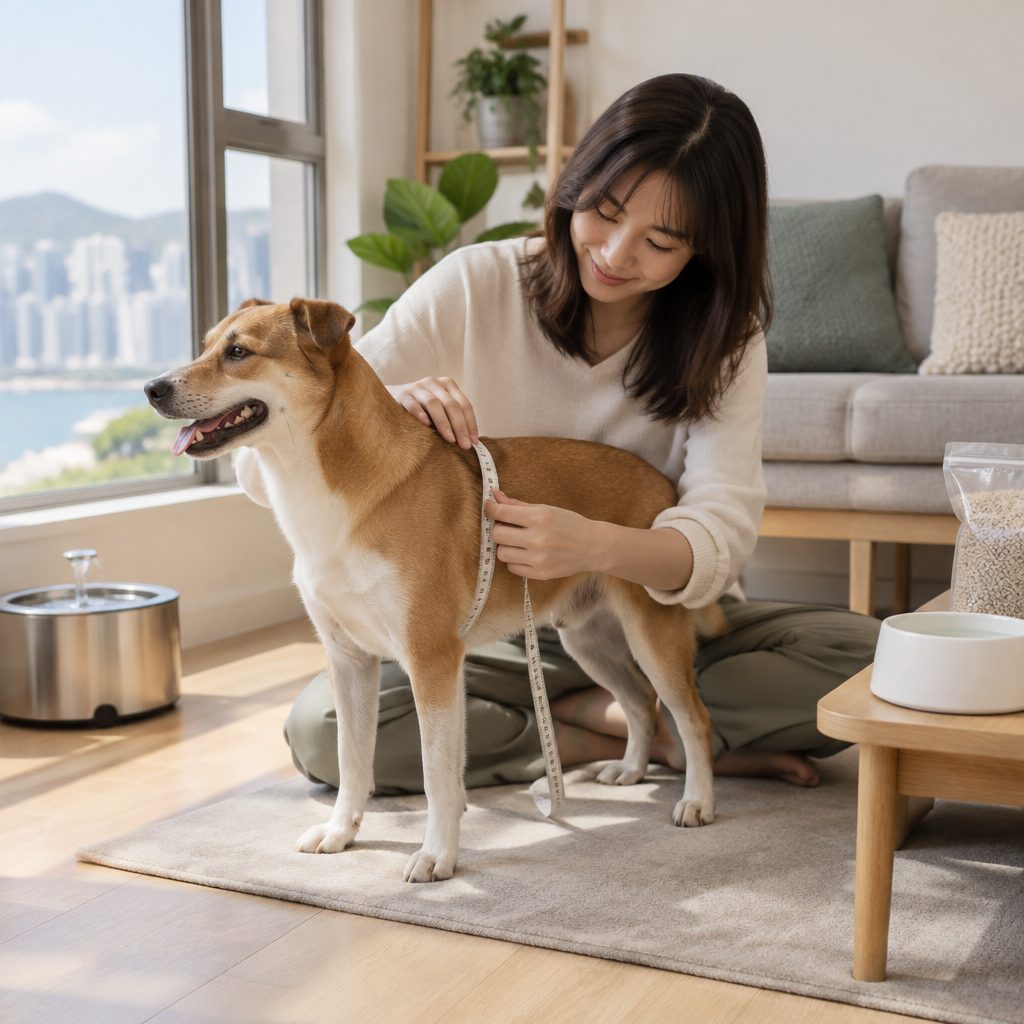
- Measuring a dog's body length: Use a soft tape to measure close to the body along the spine from the back of the neck (behind the shoulder blades) to the base of the tail, with the dog standing squarely on all four legs; measure three times and take the largest reading, then add two fingers' allowance; also measure chest girth and neck girth at the same time — estimating size from body weight alone is the most common mistake.
- Encouraging cats to drink: Running water, ceramic or stainless steel material, and a shallow, wide bowl (12 cm diameter or more) are the three most effective changes; colour is secondary — a light-coloured bowl with strong black-and-white contrast makes it easier to see the water level.
- Litter dosage: Number of litter boxes = number of cats + 1; litter depth 5 to 7 cm; dosage (litres) ≈ base area (square metres) × litter depth (cm) × 10.
- Small animal starter: Hamsters and rabbits are both "not difficult to keep, but not ornaments" — the key is base area, depth of hay or bedding, and temperature control; the number of levels stated on the cage does not equal usable space.
- Gear maintenance: After opening, cat sticks must be refrigerated and eaten within 24 hours; check the label on dog toys before deciding whether they can be machine washed; for everyday wound cleaning, normal saline is the main option and povidone-iodine is supplementary — iodine tincture contains alcohol and is not suitable for open wounds.
- Behaviour and environment: Pheromone diffusers are only supplementary; the core is resource allocation; if a cat refuses food for more than 24 hours during renovation noise, seek veterinary help immediately.
Key summary
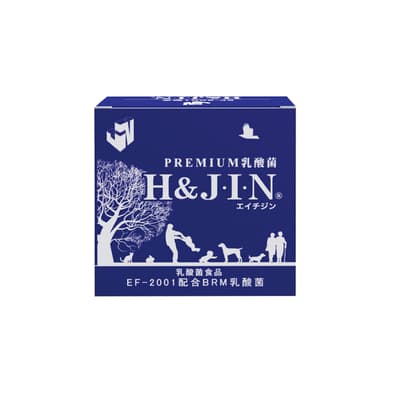
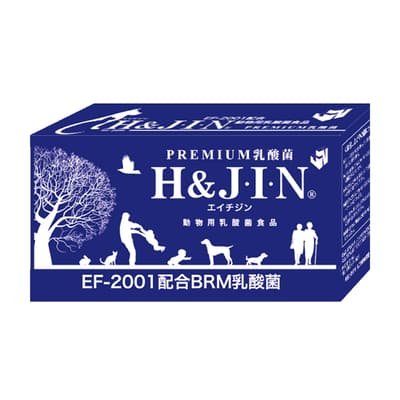
- Before buying gear, first distinguish whether it is labelled "by size" or "by dosage". The same brand can have both types of product — for example, what H&JIN currently lists are lactic acid bacteria supplements, differing between 30 sachets and 90 sachets, with no dog body length involved.
- All measurements must be "same time, same tool, recorded consecutively" — a single reading is meaningless; only the trend is meaningful. The same applies to puppy weight, cat water intake and litter consumption.
- Drinking water and elimination are the two things most easily improved by environmental changes: changing the water bowl's material and shape, and adding litter boxes according to the number of cats — low cost, quick results.
- Most failure cases with small animals (hamsters, rabbits) are not about not knowing how to keep them, but about buying a cage that is too small or choosing the wrong cage base structure — so even cages should be compared by "base area" rather than "how many levels".
- The choice of household disinfection and cleaning products directly affects wound healing; alcohol, hydrogen peroxide and bleach should not be used on open wounds.
- Blood pressure in senior cats must be measured by a vet and managed with medication; diet (low sodium, Omega-3, moisture) is only supplementary and cannot be treated as treatment.
How do you measure a dog's body length to accurately choose the right H&JIN product size? How do you tell whether a dog is small or medium? And what is the normal weight gain range for larger puppies?
First distinguish which type of product you are buying. Sized gear (harnesses, raincoats, beds, cages, car seat covers) must be chosen by measurement; products sold by dosage (supplements, powders, canned food) depend only on the packaging specification. Taking the H&JIN products listed on PetChill as an example, both are EF2001 lactic acid bacteria, differing between 1g × 30 sachets and 1g × 90 sachets — a difference in dosage and packaging, with no dog body length involved — so checking clearly before ordering whether a product is labelled by size or by dosage avoids buying the wrong thing.
How to measure body length: Use a soft tape to measure along the spine from the back of the neck (behind the highest point of the shoulder blades, i.e. the collar position) to the base of the tail (where the tail meets the body). The dog should stand squarely on all four legs with its head facing forward; keep the tape close to the body but do not pull it tight against the skin; measure three times and take the largest reading, then add two fingers' allowance for movement. At the same time measure chest girth (the widest circle just behind the front legs) and neck girth (collar position plus two fingers); giving all three numbers together to staff or checking against the size chart gives the highest hit rate. Measuring by body weight alone is the most common mistake, because dogs of the same weight can differ greatly in body length; conversely, long-backed, short-legged breeds may need a larger back length even if their weight is on the low side.
| Category | Common adult weight (general reference) | Common examples | Key points for measuring and buying |
|---|---|---|---|
| Small dogs | Under 10 kg | Poodle, Chihuahua, Yorkshire Terrier | Focus on chest and neck girth; back length varies greatly; accessories should not be too heavy |
| Medium dogs | 10 to 25 kg | Shiba Inu, Cocker Spaniel, Border Collie | All three — back length, chest girth, neck girth — must be measured |
| Large dogs | 25 to 40 kg | Golden Retriever, Labrador, Husky | Measure full length; support-type gear should have a supportive layer |
| Giant dogs | Over 40 kg | Great Dane, St Bernard, Mastiff | Also measure shoulder height and paw width; note the load limit |
Weight category is only a starting point; actual condition should be judged using body condition score (BCS). The World Small Animal Veterinary Association (WSAVA global guidelines) recommends using the same scoring system to assess pet nutritional status — the method is to look at the waistline and feel the ribs: ribs palpable but not visibly protruding is the ideal range. If the ribs cannot be felt and the belly sags, even if the weight reading is "normal", you should consult a vet first to adjust the diet rather than rushing to buy gear one size larger.

For puppies, choose gear by "estimated adult weight", not current weight. The method is to ask the vet to estimate adult weight by breed, parents' size and growth curve, then check against the size chart; when buying, choose adjustable styles (such as hook-and-loop harnesses), which is safer than buying the large size in one go.
There is no universal "normal range" for weight gain in large puppies that can be rigidly applied, because breed, sex, feed energy density and timing of neutering all have an effect. The practical approach is to build your own curve: measure every week at the same time (empty stomach, same scale), in the same posture, and record the numbers. A general reference is that large breeds reach about half their adult weight at around 4 to 5 months, approach adult weight at around 1 year, but only fully mature at 18 to 24 months. So to judge whether growth is normal, look at "whether it is rising steadily and whether it is in step with body condition score", not at how many grams are gained per day.
| Record item | Method | What to watch |
|---|---|---|
| Weight | Same time every week, same scale, empty stomach | If stalled or falling for two consecutive weeks, ask the vet |
| Body condition score | Feel ribs, look at waistline, once every two weeks | Weight rising but ribs not palpable means fat gain, not muscle |
| Food amount and brand | Record daily portion and product name | Record changes of food or portion at the same time for easy comparison |
| Joint and gait | Observe stairs, hesitation when getting up | Early check-up if a large puppy shows gait abnormalities |
Supplementing puppies with calcium powder or bone supplements is something that requires veterinary instruction and should not be added on your own, because mineral needs in large puppies must precisely match growth rate. For gear, the following two can serve as a starting reference; prices and stock are subject to the online store's current listed price:
- H&JIN EF2001-Lactic Acid Bacteria 1g x 30 sachets (HJB30) — HK$150. A supplement sold by dosage, with no sizing involved.
- H&JIN EF2001-Lactic Acid Bacteria 1g x 90 sachets (HJB90) — HK$360. The large pack suits long-term use; likewise a difference in dosage.
How can changing the material or shape of the water dispenser attract cats to drink? Does using a bowl of a particular colour affect willingness to drink?
Cats are naturally interested in running water, because in the wild still water easily breeds bacteria. So the most direct change is switching from a still water bowl to a circulating pump or water fountain. The second change is material: ceramic and stainless steel do not retain food odours, and unlike plastic they do not scratch easily and harbour bacteria; plastic bowls are light and cheap but once scratched, even after washing they may retain odours, putting off cats with sensitive smell. The third change is shape, which is most often overlooked — if the bowl mouth is too narrow or too deep, a cat's whiskers keep touching the rim when it stretches its head down to drink, causing the discomfort commonly known as "whisker fatigue", so shallow, wide bowls (12 cm diameter or more, water depth 2 to 3 cm) are usually most popular.
| Type | Attraction | What to watch |
|---|---|---|
| Circulating pump fountain | Running water, has sound, most likely to arouse curiosity | Replace filters and clean the pump regularly; if power fails or the pump breaks it becomes still water |
| Ceramic bowl | Easy to wash, no retained odours, heavy enough not to tip easily | Replace if cracked, to avoid cutting the tongue |
| Stainless steel bowl | Durable, releases odours quickly, dissipates heat quickly | Loud clattering; some noise-sensitive cats will avoid it |
| Plastic bowl | Light, cheap, many styles | Scratches harbour bacteria and retain odours; replace regularly |
| Shallow dish-type large bowl | Whiskers do not touch the rim, wide water surface easy to notice | Easily knocked over; use with a non-slip mat |
Colour is a secondary factor, but it is not completely without influence. Cats' colour vision makes blues and greens easier to distinguish, while red is relatively weak; dark bowls make water surface reflections and water level harder to notice, while light-coloured or white bowls are usually easier to see clearly, but the trade-off is that stains are more visible, so they need to be washed more frequently. Since every cat has different preferences, the most reliable approach is a simple comparison test: place two bowls of different materials or colours in the same position for three consecutive days, record the duration and number of drinking sessions each time, then keep the one your cat clearly prefers.
There are three rules for environmental placement: keep the water bowl and food bowl at least 1 metre apart, do not place them right next to the litter box (cats dislike drinking near where they eliminate), and place multiple stations—in multi-cat households, put one set on each floor and in each activity area to avoid resource competition. Change the water daily, wash the bowl weekly with clean water and a soft brush, and there is no need to use scented dish soap. To see the complete approach for water pumps, filter cartridges and cleaning schedules, you can refer to the site's Cat Water Fountain Selection and Cleaning Guide and Dog Drinking Habit Observation. If a cat's water intake suddenly increases or decreases significantly, it is not a product issue and should be treated as a health warning sign.
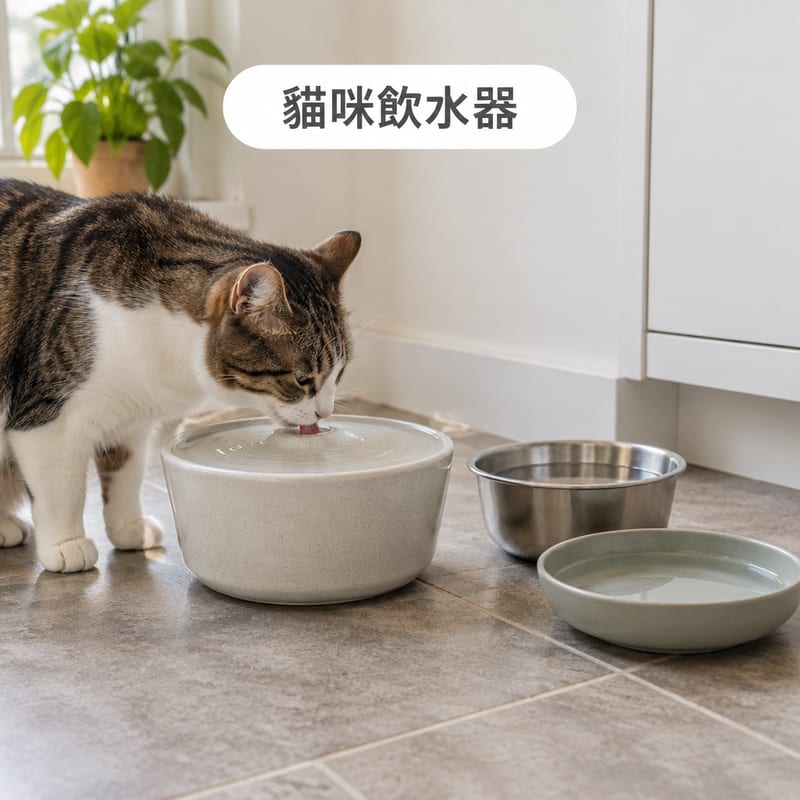
For actual products, the following two can serve as a starting point; prices and stock are subject to the online store's live listed prices:
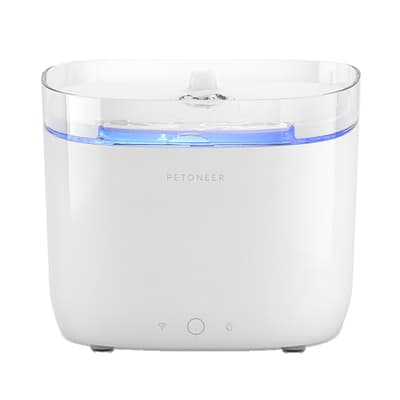
- PETONEER Pet Water Fountain Mini Pro (P00091) — HK$499. Circulating pump design, suitable for households wanting to switch from still water to flowing water.
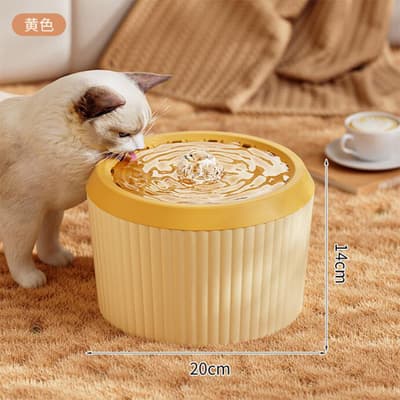
- Selected Series Pet Smart Automatic Flowing Water Circulating Filtration USB Water Fountain — HK$78. Entry-level price, suitable for trying it out first before deciding whether to upgrade.
How to determine cat litter usage based on the number of cats?
Cat litter usage is actually determined by two variables: the number of litter boxes and the litter depth. The general practice for the number of litter boxes is number of cats plus one, and they must be placed in different locations—two cats sharing one box is the most common cause of inappropriate urination and litter box refusal. For litter depth, maintaining 5 to 7 cm when setting up the box is most practical: too shallow and clumps stick to the bottom easily with urine seeping to the box base; too deep and it wastes litter and is easily tracked out of the box.
You can calculate the usage yourself; there is no need to rely on guesswork. The formula is: Usage (litres) ≈ Base area (square metres) × Litter depth (cm) × 10. For example, a 60 by 40 cm litter box is 0.24 square metres; with 6 cm litter depth, setting up the box requires about 14.4 litres of litter; if it is a small 45 by 35 cm box, then about 9.5 litres. This figure is the setup amount; afterwards, scoop out clumps daily and top up with an equivalent amount to maintain the litter depth.
| Number of cats | Recommended number of litter boxes | Setup litter depth | Monthly key points |
|---|---|---|---|
| 1 cat | 1 to 2 | 5 to 7 cm | Scoop daily, full box change every 2 to 4 weeks |
| 2 cats | 3, in two locations | 5 to 7 cm | Clump volume doubles, increase topping-up frequency |
| 3 or more cats | 4 or more, at least one set per floor | 5 to 7 cm | Place in separate zones to avoid box-guarding conflicts |
| With senior or young cats | Add one low-sided box | 4 to 6 cm | Low sides for easy entry and exit, avoid high-sided enclosed types |
Litter type also affects consumption rate. Mineral litter clumps firmly and usage is relatively stable; tofu litter, wood litter and paper litter absorb water quickly but clump more loosely, usually requiring greater litter depth and more frequent topping up. To compare the pros and cons of different litter types and differences in dust and tracking, you can refer to the site's Cat Litter Type Selection Guide and Cat Litter Box Placement and Cleaning Guidelines. In addition, the litter box base area must be large enough—generally the box length should be at least 1.5 times the cat's body length, because cats need to turn around and dig inside the box.
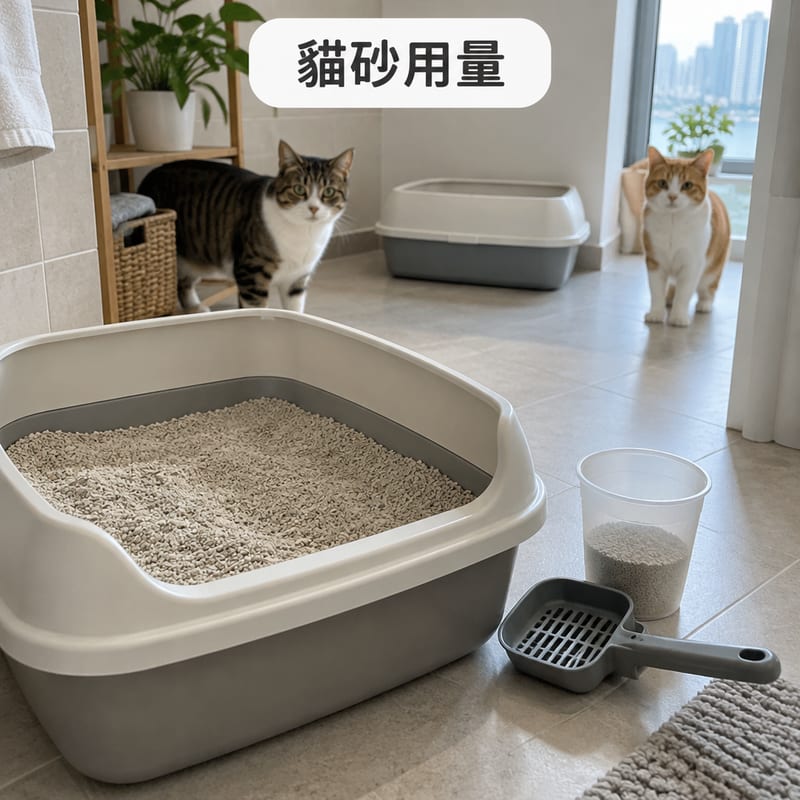
For actual products, the following two can serve as a starting point; prices and stock are subject to the online store's live listed prices:
- Bella & Molly's Tofu Cat Litter Natural Ultra Clumping Activated Carbon Scent 18L (discontinued) — HK$58. 18L large pack, suitable for topping up in one go after calculating usage with the formula.
- Selected Cat Litter Box Extra Large Semi-Enclosed Anti-Tracking — HK$58. Larger base area, suitable for cats with longer body shapes.
Which pets are suitable for keeping in apartments or small spaces? What advice is there for beginners keeping rabbits and hamsters?
For keeping pets in small spaces, the criterion is not "which pet is the smallest", but "how much activity space it needs and how much your flat can accommodate". Cats are the most suitable choice for small flats because cats' activity is three-dimensional; as long as vertical space is provided (shelves, cat trees, windowsills), the usable area can be effectively expanded. Small dogs are also possible, but the prerequisite is at least two outdoor walks daily, and indoor alternative activities on windy and rainy days. Hamsters, rabbits, ornamental fish and parrots are all feasible options for small spaces, but each has hard requirements that cannot be skimped on.
| Possible to keep | Space requirements | Daily time commitment | The one thing that cannot be skimped on |
|---|---|---|---|
| Cat | Vertical space and multiple hiding spots | Two to three interactive play sessions | Number and location of litter boxes |
| Small dog | Daily outdoor route | Two walks, 20 to 30 minutes each | Exercise amount and sunlight time |
| Hamster | Continuous base area, not number of levels | Night-time observation and cleaning | Cage base area and wheel diameter |
| Rabbit | A safe area where it can be free-roaming | Daily hay change, exercise time | Unlimited hay and protection from chewed wires |
| Parrot | Tall cage plus out-of-cage activity | Daily interaction and cleaning | Impact of noise on neighbours |
Rabbit beginner advice: Rabbits are not difficult to keep, but they are definitely not "just put them in a cage and that's it". The core of the diet is unlimited hay (Timothy hay etc.), with a measured amount of rabbit pellets and a small amount of leafy greens, and fresh water changed daily; their teeth grow continuously, so insufficient hay directly causes dental and gastrointestinal problems. Do not use wire mesh on the cage floor, because rabbits have no pads on the soles of their feet, and standing on wire mesh for long periods causes foot sores; the flat also needs protection from chewed wires, and cable management is needed just like keeping a puppy. Rabbits are sensitive to heat, so a cool environment must be maintained in summer; the risk of heatstroke is higher than that of catching cold. Also, do not grab their ears or hold them with their belly off the ground for too long; for adult rabbits, it is recommended to discuss neutering arrangements with a vet.
Hamster cage size: Hamsters are nocturnal animals that can run far in one night, so when comparing cages, what matters is continuous base area, not "how many levels". General keeping standards are a minimum of 45 by 30 cm for dwarf hamsters and a minimum of 60 by 40 cm for Syrian hamsters, the bigger the better, and multi-level designs do not count towards base area. The running wheel diameter must be large enough for the hamster's back to stay straight while running (about 20 cm or more for Syrian hamsters, about 16 cm or more for dwarfs), and a solid running surface should be chosen; do not use wire mesh wheels to avoid trapping feet. Bedding depth is recommended to be at least 5 cm; 15 to 20 cm is even better, because digging is a natural hamster behaviour.
Parasite and deworming treatment for small animals is different from cats and dogs; the types of medication and dosages of cat and dog products cannot be applied, and you can first read the site's Small Animal Deworming and Parasite Prevention, while for space planning for keeping cats in small flats you can refer to Small Flat Cat-Keeping Environment Setup. For actual products, the following three can serve as a starting point; prices and stock are subject to the online store's live listed prices:
- Sanko Japan Rabbit Food Kitter for Small Rabbits Growth Formula 1kg (TBS) (Discontinued) — HK$45. Growth formula for young rabbits, must be paired with unlimited hay and cannot be used as a staple food.
- PetChill Hamster Rabbit Chinchilla Pet Bedding Dust-Free Paper Cotton Pure Paper Cotton 1lb (TBS) (Discontinued) — HK$15. Dust-free paper cotton bedding, suitable for burrowing while reducing dust.
- Hamster Cooling Mat Cooling Pad Summer Heat Dissipation Mat 15x15cm (TBS) (Discontinued) — HK$15. For summer heat dissipation, needs to be wiped dry regularly in Hong Kong's humid weather.
What is the best time of day to feed cats healthy treats? How should CIAO cat sticks be stored to keep them fresh?
The best time for treats is not a particular hour, but a fixed time slot between the two main meals, at least 1 to 2 hours away from main meals. There are three reasons: first, to avoid affecting main meal intake; second, a fixed time slot builds expectation and reduces begging pressure; third, treats can become a training tool. The most effective use is pairing with events that need positive associations, such as rewarding immediately after nail clipping, giving medication, or going into the carrier. Feeding within 1 hour before bedtime is not suitable, especially for cats with sensitive stomachs, to avoid affecting digestion and nighttime routine.
| Time slot | Suitable for | Avoid |
|---|---|---|
| 1 to 2 hours after breakfast | Reward after interactive play, hydration | Using treats to replace breakfast leftovers |
| Midday to afternoon | Training, after nail clipping, after grooming | Constant snacking all day, making main meals secondary |
| 1 to 2 hours before dinner | Small amount of highly palatable treats to stimulate appetite | Portion too large, directly affecting dinner |
| Within 1 hour before bedtime | Not recommended | High-fat or high-calorie treats |
The portion principle is that treat calories should make up a small portion of daily total calories, generally recommended not to exceed ten percent; actual numbers should be calculated based on the cat's weight and staple food calories, so the safest approach is to ask a vet. A 14g meat paste treat can be split into two to three feedings; mixing with water can also help increase water intake; canned treats must be counted into the day's total calories and cannot be treated as "zero-calorie snacks". To learn about suitable occasions for different types of treats, see the site's Pet Natural Treats Selection.
CIAO cat stick storage: Unopened ones should be kept in a cool, dry place, away from direct sunlight and high temperatures, and check the best-before date on the packaging (the online store product page lists this by batch). After opening it's different — leaving them at room temperature for too long can breed bacteria, so leftovers should immediately be put into a food container or zip-lock bag and refrigerated, and consumed within 24 hours; if left at room temperature for more than one to two hours in summer, do not feed. Signs of spoilage include packaging swelling, off odours, obvious colour change, water separation or layering; discard if any of these appear. If the cat has chronic illness or needs weight control, ask a vet before long-term feeding of meat paste. For more principles on post-opening storage and judging expiry, refer to the Pet Food Storage Guide.
For actual products, the following two can serve as a starting point; prices and stock are subject to the online store's live pricing:
- CIAO Cat Treats Japan INABA Churu Spoon Tuna 14g×3P (TSC-261) — HK$15. Individually packaged small portions, convenient for controlling daily treat amount.
- Feline Gourmet Cat Canned Food Hairball Control Formula Tuna and Chicken 80g (FG80-2) — HK$7. Can be used as a main meal accompaniment; remember to count into the day's total calories.
When cleaning cat wounds, is saline better than plain water? Which is more suitable for daily cleaning, iodine tincture or povidone-iodine?
Yes, saline (0.9%) is more suitable than plain water for flushing wounds, because its concentration is isotonic with body fluids, it does not irritate tissue during flushing, and does not destroy newly grown cells; it is especially suitable for flushing around the eyes, near the mouth, or mucous membrane areas. But tap water is not forbidden — if it's initial large-volume flushing (e.g. washing away dirt and sand), clean, room-temperature tap water is acceptable, and finishing with saline afterwards is safer. Two points to note: homemade saline is not recommended because concentration is hard to control; and opened saline cannot be stored long-term — generally discard within 24 hours, do not keep for the next day.
Flushing technique is more important than what water is used: direction should be from the wound centre outwards, to avoid flushing surrounding dirt into the wound; a needleless syringe can be used for pressurised flushing, which is more effective than pouring; after each cleaning, gently blot dry with clean gauze, do not rub hard. Afterwards, if the cat keeps licking or biting the wound, use a cone (collar) rather than applying human ointment.
| Cleaning product | Suitable situation | Note |
|---|---|---|
| Saline 0.9% | Flushing open wounds, near mucous membranes | Use within 24 hours of opening, do not make at home |
| Plain water (room-temperature tap water) | Initial large-volume washing away of dirt | Finish with saline afterwards |
| Povidone-iodine | Disinfection of skin around wounds, lower irritation | Use according to product label, do not apply continuously long-term |
| Iodine tincture (contains alcohol) | Only for small areas of intact skin | Contains alcohol, highly irritating, not suitable for open wounds and mucous membranes |
| Alcohol, hydrogen peroxide, bleach | Should not be used on pet wounds | Destroys new tissue, delays healing |
So the answer is clear: for daily cleaning, use saline as the main product and povidone-iodine as a supplement; iodine tincture can only be used on intact skin. For the complete wound dressing and disinfection procedure, refer to the site's Cat Wound Bandaging Guide and Iodine Tincture vs Povidone-Iodine Cleaning Comparison.
When can you not handle it yourself? If the wound is deep or underlying tissue is visible, bleeding cannot be stopped after several minutes, there is pus or obvious odour, the red and swollen area keeps expanding, the cat keeps licking or biting or completely refuses to let you approach, see a vet immediately. Also, bite wounds (especially cat bites) are more serious than they appear, because the wound is small but deep, prone to abscess formation, and most need vet assessment on whether antibiotics are needed. To understand the difference between infection and normal healing, see Cat Wound Healing vs Infection Assessment.
What specific improvements do pheromone diffusers bring to anxiety or aggression in multi-cat households? How to reduce the impact of renovation noise on cats' appetite? How to judge a dog's level of fear from barking?
Pheromone diffusers are environmental tools, usually cat facial pheromone products, continuously released after plugging in, covering about one room; larger units or multiple floors require additional units by area. They are most effective for "mild to moderate stress caused by environmental change", such as moving, new members joining, renovation, major furniture rearrangement. But for established cat-to-cat conflict, the effect is limited, because the root of conflict is resource competition — food and water locations, litter boxes, resting spots must all be redistributed according to "number of resources plus one", and placed in separate zones, so that each cat can reach needed resources without passing through another cat's territory. Vertical space (shelves, cat trees, high resting spots) and visual barriers are equally important.
Note that pheromones are not medication: if the cat shows persistent aggression, inappropriate elimination, over-grooming to the point of broken skin, these are behavioural or medical problems that need vet assessment and cannot be solved by diffusers alone. A small number of cats may experience respiratory or skin discomfort with diffusers; stop use if this occurs.
| Tool | Suitable scenario | Limitation |
|---|---|---|
| Pheromone diffuser | Environmental change, mild anxiety, multi-cat adjustment period | Covers one room, cannot replace resource allocation |
| Pheromone spray | Carrier, car, preparation before clinic | Wait for alcohol to evaporate before putting cat inside |
| Environmental enrichment | Foundation for all stress cases | Requires ongoing time investment, not a one-time setup |
| Behaviour consultation | Persistent aggression or fear | Requires vet or behaviour expert intervention, cannot handle on your own |
Renovation noise: there are five practical steps: one, coordinate with the renovation workers in advance to concentrate the noisiest work into the same period, so the cat has a clear quiet period; two, find a room in the unit away from the work area as a "safe haven", with water, food, litter box and hiding spots all set up, close the door and use a door gap blocker; three, use white noise, a fan or a radio to mask sudden sounds, and don't wait until work starts to begin playing them; four, isolate workers' comings and goings with a barrier or door curtain, and don't let the cat move freely into the work area (dust and tools are both hazards); five, if the project is long or the noise is extreme, consider temporarily boarding the cat in a quiet environment. Loss of appetite during noise is a common reaction, but if the cat completely stops eating and drinking for more than 24 hours, or shows vomiting, hiding and not coming out, or rapid breathing, that is not "adjusting" and a vet should be seen immediately. The site's cat environmental stress management and cat anxiety environmental modification have more complete checklists.
Dog barking and degree of fear: barking should be read together with body language. Low-pitched, slow, continuous barking is mostly alerting or driving away; high-frequency, short, rapid barking usually indicates tension or fear; screaming short barks with sudden backing away are clear signs of being startled. Body language evidence is more reliable: ears flattened back, tail tucked between the legs, body lowered, backing away, constant nose licking, trembling, dilated pupils are all fear signals. Conversely, if it is the "play invitation" posture with front legs lowered and rear raised, that is not fear. The handling principle is to reduce stimuli, provide sheltered space, and do not force holding or punish, because punishment deepens fear. For fear triggered by sudden noises such as thunderstorms and fireworks, refer to dog thunderstorm phobia management.
Besides fruit, what other dietary recommendations can help senior cats control blood pressure? Which natural foods are the first choice for diuresis? Will long-term use of green tea extract have any effects?
First, the most important sentence: high blood pressure cannot be treated with food. A cat's blood pressure must be measured by a vet with a dedicated blood pressure monitor (usually several repeated measurements averaged), and most cases require medication control. Diet plays only a supporting role, used to reduce the risk of deterioration and to work with coexisting problems such as kidney disease and thyroid disease. So any "blood pressure-lowering food list" should not be treated as a treatment plan.
What can actually be done diet-wise is: reduce sodium intake (no added salt, avoid processed meat and human leftovers), choose an appropriate amount of high-quality protein, supplement Omega-3 (EPA and DHA) to support the cardiovascular system, pay attention to potassium and magnesium according to vet instructions (cats with kidney disease must not supplement indiscriminately), control weight, and increase water intake by adding water to wet food. The World Small Animal Veterinary Association (WSAVA global guidelines) and the International Cat Care (International Cat Care) both emphasise that nutritional management for cats with chronic disease must be adjusted according to the individual condition and vet instructions, and a single formula cannot be applied across the board. The site's senior cat dietary arrangements has itemised explanations by age and condition.
Diuretic natural foods: easily available and safe options include: winter melon (peeled, deseeded, cooked, no salt), cucumber, pumpkin (steamed and mashed), watermelon (deseeded, small amount), unsalted clear chicken broth (skimmed of oil, absolutely no onion or garlic). The common principles are no salt, small amounts, cooked, no seasoning added, and only as an accompaniment and not a replacement for staple food. Special reminder: if the cat has heart disease, kidney disease or is on medication, diuretic foods will affect electrolytes and drug concentrations, you must ask the vet first; cats at risk of dehydration must not be given diuretics on your own.
| Support direction | Can do | Cannot do |
|---|---|---|
| Sodium | Choose low-sodium formulas, no added salt, no processed meat | Season with salt or low-sodium salt on your own |
| Water | Add water to wet food, place water in more locations | Replace water with milk or soup (containing onion and garlic) |
| Fatty acids | Supplement Omega-3 per vet instructions | Add human fish oil capsules on your own |
| Weight | Regularly weigh and body condition score | Sudden drastic dieting |
| Diuretic ingredients | Unsalted winter melon, cucumber, small amounts of pumpkin | Treat as a treatment method, feed large amounts daily |
Blueberry refrigeration and freezing is an extension of the same set of questions. Do not wash before refrigerating — surface moisture is a breeding ground for mould, and washing before putting in the fridge speeds up spoilage; the correct approach is to keep them dry into the fridge and wash with clean water only before eating. Freezing is the opposite: you can first wash the blueberries, dry them, pre-chill in a single layer then put into a zip bag, to avoid clumping into one big lump; portion out the serving size in advance and take out one small bag each time, so there is no need to repeatedly thaw. Re-freezing after thawing is not recommended, because apart from water loss and poorer texture, repeated thawing also increases the risk of bacterial growth; thaw by slow thawing in the lower part of the fridge, or add directly to food, do not soak in hot water.
Green tea extract is completely different from "drinking a few sips of weak green tea". Concentrated extract contains caffeine and high concentrations of catechins, and cats have limited ability to metabolise such components; long-term or excessive use will increase the burden on the liver and gastrointestinal tract, and may also cause vomiting, diarrhoea and hyperactivity. So it is not recommended to feed on your own; any supplement (including products marketed as antioxidants) should first be discussed with the vet, especially for senior cats that already have chronic disease or are on medication.
Besides feeding Feline Gourmet cat food, what other methods can make a cat's coat more glossy? What is the difference between cat shampoo and dog shampoo? How much of the budget do daily supplies for keeping a cat for one month take up?
Coat gloss is a health indicator, and cannot be changed by a single product alone. The most effective order is: one, ensure the staple food is a complete and balanced formula with sufficient protein and fat ratios; two, consider Omega-3 fatty acid supplementation per vet instructions; three, do grooming and remove dead hair well, brushing long-haired cats in the order of "detangle first, then remove undercoat"; four, address parasites and skin problems, because fleas, mites and skin disease directly worsen coat quality; five, avoid over-bathing, because bathing too frequently strips sebum and makes the coat lose its gloss. To learn about the division of grooming tools and frequency, see the site's cat coat care guide.
Cat shampoo and dog shampoo must not be mixed, the main differences come from skin structure and pH: a cat's stratum corneum is thinner, the skin pH is different from a dog's, and cats are sensitive to fragrance and essential oil ingredients. Using dog products to bathe a cat may look clean in the short term, but long term it easily causes dry skin, itching and dandruff, after which the cat will over-groom. So bathing a cat should use a cat-specific formula or one clearly labelled "for cats and dogs", with water temperature kept lukewarm, and thoroughly dried after bathing. Cats groom themselves daily, so unless there is a medical need or obvious soiling, frequent bathing is not necessary. For related practices, refer to cat bathing notes.
| Comparison item | Cat shampoo | Dog shampoo |
|---|---|---|
| Skin pH | Lower, thinner stratum corneum | More neutral to slightly acidic, thicker stratum corneum |
| Cleansing power | Mainly mild, avoid over-degreasing | Targets body odour and oil, higher cleansing power |
| Moisturising ingredients | Focus on soothing, low-irritation formulas | Focus on fluffiness, coat care and removing yellowing |
| Fragrance | Mostly low or no fragrance | More fragrance options |
| Risk of mixing | Dog products easily cause dryness, itching, dandruff | Cat products may have insufficient cleansing power |
Monthly cat ownership expense structure: how much of the budget daily supplies take up does not have a fixed percentage; it depends on the cat's age, health condition and your shopping habits. You can plan in three layers by importance: the largest proportion should be reserved for cat food and cat litter (both are fixed monthly consumables), the second layer is medical and health reserves (including vaccines, deworming, annual check-ups, chronic disease medication), and only the third layer is supplies and toys (mostly one-off or replaced every six months). Home care supplies (nail clippers, brushes, toys) can be extended in lifespan by cleaning and rotation, no need to replace frequently, so the budget can be moved to medical reserves.
| Expense item | Nature | Planning focus |
|---|---|---|
| Cat food | Fixed monthly | Portion by weight and life stage, avoid buying too much that spoils after opening |
| Cat litter | Fixed monthly | Estimate by number of litter boxes and litter depth, bulk packs are more cost-effective but must be protected from moisture |
| Medical and deworming | Monthly or quarterly | Must be reserved, do not use up the budget |
| Health supplements and treats | Flexible | Treats count towards daily calories, cannot be added without limit |
| Supplies and toys | Mostly one-off | Washable and rotatable, extending service life |
For supply choices, the following two can serve as a starting point; prices and stock are subject to the online store's current listed prices:
- WMS Cat & Dog Moisturising Gentle Shampoo Freesia 500ml (WMS014) — HK$198. Labelled as a gentle formula shared by cats and dogs, a type worth considering.
- CIAO Cat Treats Japan INABA Churu Spoon Hairball Control Tuna 14g×3P (TSC-266) — HK$15. Hairball control formula, a treat rather than a main meal.
Will the scent of jasmine cause long-term effects on a cat's respiratory health? How should indoor humidity be controlled? What should be done to protect pets if asbestos building materials are found at home? Can dog toys be washed in the washing machine?
Jasmine needs to be distinguished as plant, flower tea or essential oil. Plants of the true jasmine genus (Jasminum) are listed by the American Society for the Prevention of Cruelty to Animals (ASPCA Toxic and Non-Toxic Plants Database) as toxic to cats and dogs, and ingestion can cause gastrointestinal upset; jasmine essential oil and aromatherapy diffusing carry a higher risk, because cats have a limited ability to metabolise essential oil components, and long-term inhalation or direct contact can cause drooling, vomiting, lethargy and rapid breathing. So the answer is: the scent itself should not be treated as "harmless decoration", and households with cats should avoid jasmine or mixed floral aromatherapy, scented candles, sprays and essential oil diffusers. Flower tea bags should also be stored away, not placed where cats can reach them.
For indoor humidity, Hong Kong summers are hot and humid, and indoor relative humidity should be kept as far as possible in the middle range (about 40% to 60%). The approach is to use a dehumidifier or air conditioning when humid, then use a fan to move the air, while opening windows daily for ventilation. Humidity that is too high easily worsens skin problems and respiratory discomfort, while too dry irritates the nasal mucosa. Three things must also be avoided: do not use aromatherapy sprays in the cat's activity area, do not smoke indoors, and do not let the cat stay against the air-conditioning outlet for long periods. For cats with chronic respiratory or skin problems, see the site's Humid Weather Skin Care for breed-specific care points.
Asbestos building materials are a home safety issue, and the handling principle is "do not remove yourself, do not strike, do not sweep". Hong Kong law requires asbestos-related works to be handled by registered asbestos contractors. When suspected asbestos-containing materials are found (commonly in ceilings, insulation layers, floor tile adhesive or roof panels of older units), the first step is to seal off the area and keep pets out, and the second step is to have a professional assess it, only then carrying out partial repair or removal. When cleaning, use wet wiping or wet cleaning methods rather than a broom or dry brushing, and use a vacuum cleaner with a high-efficiency filter to avoid fibres becoming airborne; during works, temporarily house pets elsewhere, and after workers leave, clean thoroughly and ventilate. Asbestos-related health effects in pets are mostly associated with long-term exposure, and if a cat shows persistent coughing, rapid breathing or reduced alertness, a vet should be seen early. Relevant regulations can be found in the public information of the Hong Kong Environmental Protection Department (EPD) and the Agriculture, Fisheries and Conservation Department (AFCD).
On whether dog toys can go in the washing machine, the answer is "check the label, it cannot be generalised". Generally machine-washable are fabric soft toys without built-in squeakers and without electronic parts; the method is to first rinse surface dirt with water, place in a laundry bag, use pet-specific or fragrance-free detergent, at a water temperature below 30 degrees, without fabric softener and without bleach, and dry completely after washing (do not dry only until the surface is dry, because internal dampness easily leads to mould). The following types are not recommended for machine washing: built-in squeakers or sound makers, those with batteries or electronic components, rope-knot types that easily come apart (cords are an ingestion risk), and leather and hard plastic toys (instead wipe with a damp cloth plus pet-specific cleaner). Toys that are damaged, have missing corners or exposed squeakers should be replaced immediately, because fragments and squeakers are common causes of gastrointestinal obstruction. For daily maintenance and disinfection procedures, see the site's Pet Toy Cleaning and Bacteria Prevention.
When to see a vet immediately
All the above home practices only help you spot problems early and cannot replace diagnosis. If any of the following occurs, do not wait — contact a vet or a 24-hour emergency clinic immediately:
- Complete refusal to eat or drink: more than 24 hours without eating or drinking, or persistent hiding and not eating after renovation or moving.
- Abnormal breathing: noticeably faster breathing at rest, open-mouth breathing, pale or purple gums, or persistent coughing and noisy breathing (especially watch for this after suspected asbestos or dust exposure).
- Worsening wounds: bleeding that does not stop after several minutes, pus or obvious odour, expanding redness and swelling, deep bites, or a cat persistently licking and biting until the skin breaks.
- Abnormal excretion: urinary blockage (especially critical in male cats), persistent diarrhoea or vomiting, sudden change in litter box habits.
- Sudden behavioural change: persistent hissing and hiding in a corner, sudden increase in aggression, lethargy and unresponsiveness, seizures or unsteady walking.
- Warning signs of chronic disease in senior cats: blood pressure-related symptoms (sudden worsening vision, unequal pupil size, suddenly unwilling to jump), obvious weight loss, abnormally increased water intake.
This article was reviewed by the PetChill Veterinary Editorial Team. The content is for reference only and cannot replace veterinary diagnosis, prescription or treatment.
Further Reading
- Complete Guide to Daily Cat and Dog Care|Brushing, Bathing, Nail Trimming, Ear and Eye Cleaning Schedule
- Hong Kong Pet Daily Care, Behaviour Observation and Seasonal Supplies Guide (Part 1)
- How to Choose a Cat Water Fountain? Water Pump, Filter and Cleaning Schedule
- Cat Litter Type Selection Guide|Comparison of Mineral Litter, Tofu Litter and Wood Litter
- Pet Toy Cleaning and Bacteria Prevention
- What Is the Difference Between Iodine Tincture and Povidone-Iodine for Skin Cleaning?
- Senior Cat Diet Arrangement|Adjusting by Age and Medical Condition
- Cat Coat Care Guide|Brushing, Removing Dead Hair and Shine Management
- Pet Food Storage Guide|How Long Can It Be Kept After Opening?
- Cat Environment Setup in Small Flats|Vertical Space and Resource Allocation
In case of emergency, contact a veterinarian immediately; this article is for reference only and cannot replace veterinary diagnosis. Information checked as of 2026-10-14Source: PetChill Editorial Team
⚠️ Some products mentioned in this article have been discontinued (marked "Discontinued" in the text); the relevant prices are records from before discontinuation; for the prices of other products, please refer to the current display on the online store.
 Feline Natural full guide →
 CIAO full guide →
 K9 Natural full guide →