Quick answers
- Detangle first, then clear the undercoat: the order for a long-haired cat is comb first (2 to 3 mm tooth spacing) to confirm the whole section is tangle-free, then a pin brush to clear the undercoat.
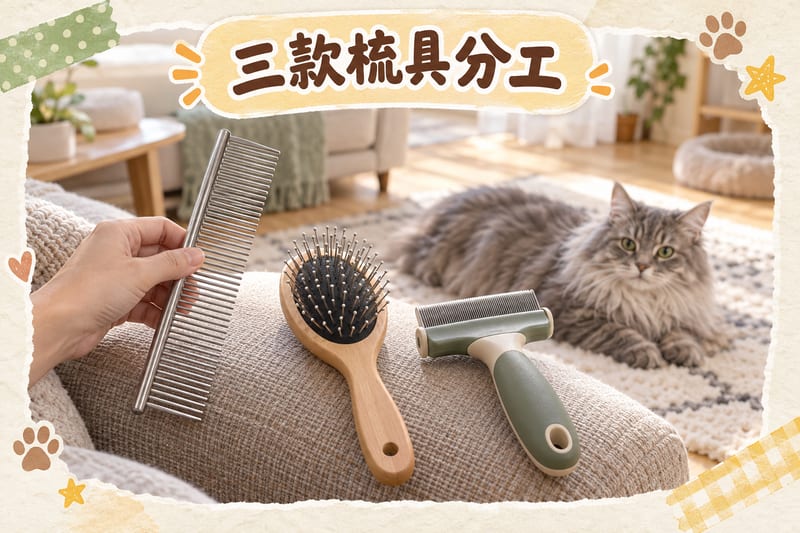
- Three brushes, three jobs: the comb detangles and tidies the top coat, the pin brush clears the undercoat and adds fluff, and the deshedding tool collects loose hair; none can fully replace another.
- Use the deshedding tool sparingly: at most 1 to 2 times a week, every other day in shedding season, 3 to 5 strokes per area; overuse causes patchy thinning.
- 5 to 10 minutes a day: brush a long-haired cat once daily; in shedding season, morning and evening sessions noticeably reduce the amount of hair swallowed and the risk of hairballs.
- Work tricky areas in layers: armpits, behind the ears, the tail base and the inner hind legs mat most easily; part the coat and comb in layers rather than dragging from the surface all the way down.
- Stop at the red lines: if you see red swollen skin, oozing, bald patches, or hard mats bigger than a coin, do not cut them yourself; have a veterinarian check.
Choosing a brush for a long-haired cat is less about buying one "signature brush" and more about understanding the division of labour: the comb detangles, the pin brush clears the undercoat, the deshedding tool collects loose hair. Get the order wrong and even a full kit will hurt the cat — pulling a pin brush or deshedding tool through an unopened mat tears hair and scrapes the skin red, after which the cat hides at the sight of a brush and grooming becomes a daily tug-of-war. The right approach is to spend 5 to 10 minutes a day: first work a comb in from the tips section by section, then switch to a pin brush to clear the undercoat, and save the deshedding tool for shedding season.
Hong Kong's living environment makes this worth extra effort: flats are small, air-conditioning and dehumidifiers create big indoor-outdoor temperature swings, and a long-haired cat's double coat clings to the skin in humid weather; once the undercoat tangles into felted mats, airflow to the skin worsens and rashes and fungal problems follow. Below we break down the differences between the three brush types, how to choose by coat type and body area, the daily five-step routine, when to stop and see a veterinarian, and brush care. For the overall framework of skin problems, see Pet Skin Health Guide; shedding and seasonal heat loss can be read alongside Long-Haired Cat Summer Cooling Care.
Why long-haired cats need daily brushing: mats, skin and hairballs
Long-haired cats (Persian, Maine Coon, Ragdoll, Chinchilla and others) mostly have a double coat: the long, glossy top coat repels water and blocks UV, while the fine, soft undercoat insulates. The problem lies in the undercoat — it renews quickly, with old undercoat shedding daily, but it is wrapped by the long top coat, so shed hair does not fall to the floor; instead it tangles with itself and hooks the top coat, gradually tightening into mats.
Once a mat forms it tightens. A small soy-bean-sized mat can be combed out layer by layer; but when it tightens flat against the skin into a sheet of felted mat, the skin is constantly pulled and the cat hurts when turning, jumping or even being touched. The main risks of not brushing a long-haired cat are four:
- Poor skin ventilation: mats block airflow, trapping moisture and sweat against the skin, which in Hong Kong's humid weather easily leads to rashes, dandruff and fungal problems.
- Pulling and friction causing wounds: mats stuck to the skin pull at the hair roots when the cat scratches or turns, and in severe cases the skin reddens and breaks, with bacterial infection then requiring a vet visit.
- More hair swallowed: a long-haired cat can swallow 2 to 3 times as much hair as a short-haired cat, and brushing is the most direct way to reduce it at source. For the full picture, see Cat Hairball Guide.
- The itch–lick–more mats vicious cycle: skin problems make the cat lick, bite and scratch constantly, and saliva and friction tangle the coat further — the more it scratches the more it mats, and the more it mats the itchier it gets.
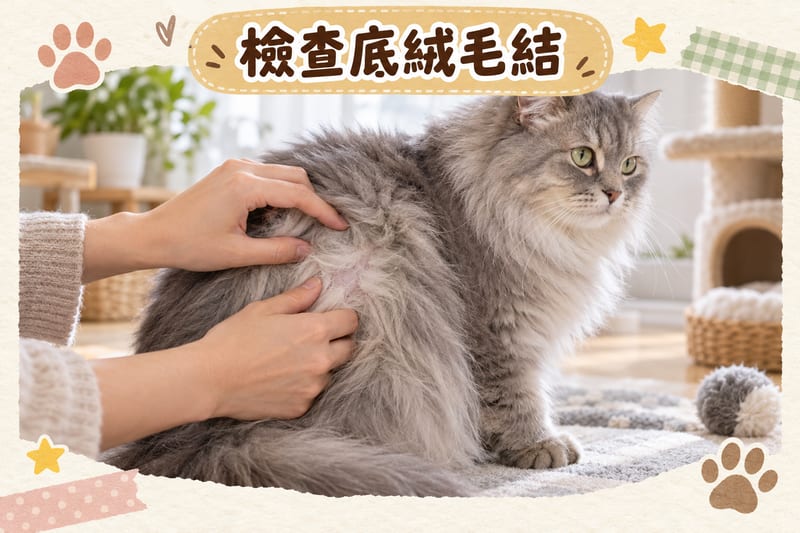
Conversely, brushing is not just grooming but a daily skin check: run your hands over the coat for lumps, dandruff, flea dirt or bald patches, and many problems are first spotted during brushing.
Pin brush, comb and deshedding tool compared
The three types are not about which is "strongest" but about different steps. Look at the purpose, specifications and frequency first, then decide which ones to buy.
| Brush type | Main purpose | Common specs | Suggested frequency | What to watch |
|---|---|---|---|---|
| Comb (metal comb) | Detangling, layered combing, tidying the top coat | 2 to 3 mm tooth spacing, 2 to 3 cm tooth length | Once daily | Too-narrow spacing pulls and breaks hair; always work in from the tips |
| Pin brush | Clearing the undercoat, adding fluff, tidying the coat | 1.5 to 2 cm pins with rounded tips | Once daily, after the comb | Replace when tips deform or the rounded tips fall off; never pull through mats |
| Deshedding tool | Collecting loose hair, reducing shedding in shedding season | Blades or dense metal teeth, some with retractable pins | 1 to 2 times a week | Strong scraping action; 3 to 5 strokes per area; not for kittens or sore skin |
| Rubber glove / grooming glove | Calming, collecting surface hair, for sensitive skin | Silicone or rubber soft spikes | Can be used daily | Cannot reach the deep undercoat; not a substitute for a comb |
The comb is the foundation of the whole routine. When choosing a comb, mind the tooth spacing: about 2 to 3 mm is most practical — too wide and it cannot open small mats, too narrow and the teeth grip and pull at the roots. Start at the tips, comb in only 1 to 2 cm at a time, and only push slowly towards the skin once that section is smooth; stop at resistance rather than dragging all the way down.
The pin brush clears the undercoat; it does not detangle. Feel the pin tips with your fingers: they should be smooth and not scratch, ideally with rounded tips; pins that are too stiff or too closely spaced easily scrape skin red. The technique is to hold the brush close to the skin, lift gently in the direction of the coat and rotate the wrist slightly to bring loose undercoat to the surface, then clear the brush every few strokes.
The deshedding tool is a shedding-season tool, not a daily one. These have blades or dense teeth and are efficient at scraping loose hair, but they also cut some live hair; used too often they cause patchy thinning and a dull coat, so use at most 1 to 2 times a week and stop after 3 to 5 strokes per area. Never use on kittens, or on rashes, wounds or mats.
Choosing by coat type, body area and lifestyle
The same brush can give very different results on different long-haired cats, because undercoat thickness and coat texture vary. The table below lists suggested combinations for common situations; adjust to the cat's tolerance and skin condition.
| Situation | Suggested combination | Reason |
|---|---|---|
| Persian, Chinchilla (thick undercoat, fine coat) | Comb + pin brush daily; deshedding tool once a week | Undercoat felts most easily, so comb in layers daily; deshedding tool only to finish in shedding season |
| Maine Coon, Norwegian Forest Cat (double coat, heavy coat) | Comb + pin brush daily; deshedding tool twice a week | Heavy coat; focus on armpits, tail base and inner hind legs |
| Ragdoll, Siberian (long but less tangle-prone) | Comb daily; pin brush every other day | Slippery coat; too much pin brushing causes static |
| Kittens (under 6 months) | Soft pin brush or rubber glove | Undercoat not yet thick; focus on building the habit, no blades |
| Senior cats or cats with joint pain | Comb + lightweight pin brush, short sessions | Cannot stand or lie on one side for long; do 2 to 3 minutes at a time |
| Existing mats or skin rash | Comb only, detangling section by section; pause the deshedding tool | Follow vet advice on rash areas; do not force |
Technique by body area. The back and flanks are easiest: comb in layers in the direction of the coat. Armpits, behind the ears, the collar area and inner hind legs mat most easily: support the skin with your fingers and use the wider-spaced end of the comb in small sections. For the tail base and tail, hold the tail bone with one hand and comb from tip to base without pulling. The belly has the thinnest undercoat; a few light strokes with the pin brush is enough.
Adjust the pace to the cat's temperament. If the cat runs at the sight of a brush, start with the chin, forehead and around the ears (most cats accept these better), brush for 2 to 3 minutes then give a treat, and gradually extend to 5 to 10 minutes. Avoid excited play right before or after brushing to reduce brush-biting. In multi-cat homes, keep one set of brushes per cat and do not share, as fungal spores and mites can pass on comb teeth.
For the coat characteristics and daily grooming needs of long-haired cats like the Chinchilla, see What is a Chinchilla cat? Personality, downsides, lifespan and price.
Daily five-step brushing routine: practical for Hong Kong's small flats
Hong Kong flats are small, so brushing usually happens on the living-room rug or the bed. The five steps below take about 5 to 10 minutes; do not change the order.
- Check skin and mats first: run your palms from head to tail to find hard mats, dandruff or sore spots, note where they are, and be extra gentle there.
- Detangle layer by layer with the comb: start at the back, part the coat into layers and comb from tips to roots, 1 to 2 cm at a time; at resistance, back off, separate the mat with your fingers and try again — do not pull.
- Clear the undercoat with the pin brush: in the direction of the coat, lift the wrist gently close to the skin to bring loose undercoat to the surface, focusing on armpits, behind the ears, tail base and inner hind legs. Clear the brush every few strokes.
- Finish with the deshedding tool (if needed): only in shedding season or when there is a lot of loose hair, 3 to 5 strokes per area, then feel with your hand for over-thinning or scratches.
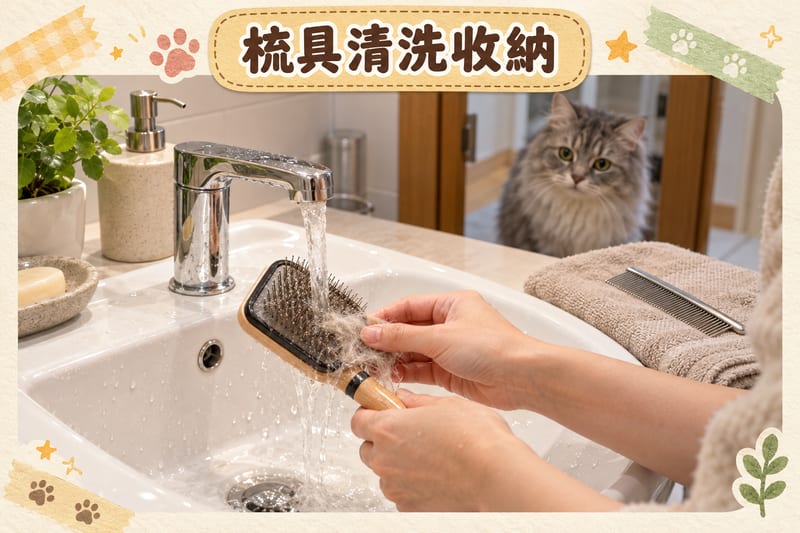
- Clean and store: clear hair from the teeth immediately after each session, use a lint roller on the rug (so the cat does not swallow the hair), and store brushes somewhere dry, not in a damp bathroom.
The three most common mistakes:
- Wrong order: pulling a pin brush or deshedding tool straight through matted hair, resulting in broken hair, red skin and a resistant cat.
- Using only one brush: a comb alone leaves the undercoat, so hair still builds up in shedding season; a pin brush alone cannot detangle, so mats grow.
- Brushing too often or too hard: repeated scraping of the same area quickly causes thinning and red marks; brushing should be "frequent but gentle".
Problems found while brushing: when to stop and see a vet
Brushing is the fastest time to spot skin abnormalities. In the following situations, do not keep brushing, and do not cut the coat or apply medication yourself.
| Seen while brushing | May indicate | What to do |
|---|---|---|
| Hard mats bigger than a coin, stuck to the skin | Felted mats, skin constantly pulled | Do not cut yourself; hand to a professional groomer or veterinarian |
| Powdery dandruff, localised circular bald patches, red skin | Fungal, mite or skin infection | Book a vet check and follow instructions after diagnosis |
| Oozing, crusting, flinching at touch, warmth on touch | Skin infection or wound | See a vet; for telling wounds apart, see the wound healing comparison chart |
| Black specks at the hair roots that turn red-brown in water | Flea dirt, cat has fleas | Follow vet advice on flea control and clean the environment too |
| Rapid breathing after brushing, refusing food for two meals, hiding | Stress or illness | Seek veterinary care the same day; do not wait for the next brushing |
Four red lines — see a vet the same day if any appear: 1) large areas of red swelling, oozing or odour on the skin; 2) a hard lump under a mat or the cat crying out in pain; 3) the cat not eating or drinking for 24 hours; 4) rapid breathing, lethargy or a clearly raised temperature. These are beyond "grooming care" and need a veterinarian's diagnosis.
Brush care, safety notes and daily support
Brushes themselves must be clean, otherwise every session carries dandruff, oil and fungal spores from one spot to another.
- Clear hair after every session: pull the hair wrapped around the teeth off with another brush or your fingers; do not let it build up.
- Deep clean every 2 weeks: soak pin brushes and rubber gloves in warm water with a little mild detergent, rinse thoroughly and dry completely before storing; wipe metal combs dry to prevent rust.
- Check pin tips and rounded tips: replace brushes when the rounded tips fall off or the pins deform or rust, as scratched skin can lead to secondary infection.
- One set per cat, stored separately: especially important in multi-cat homes, to avoid spreading fungal spores and mites.
- Keep out of damp places: bathrooms and kitchen counters are unsuitable; brushes easily go mouldy in Hong Kong's humid weather.
- Support beyond brushing: skin and coat health also depend on diet and parasite control. Protein is the main building block of hair, and cat foods labelled "skin and coat" usually take fatty acid ratios into account; itching from fleas and mites needs regular flea treatment, with product type, dosage and frequency always following vet advice.
Examples of related products available at PetChill:
- Instinct Cat Food — Grain-Free Ultimate Protein Series, Skin & Coat, Chicken + Cod Recipe 10lb (658863) — HK$799
- Instinct Cat Food — Grain-Free Ultimate Protein Series, Skin & Coat, Chicken + Cod Recipe 3.3lb (658504) — HK$339 (available for pre-order)
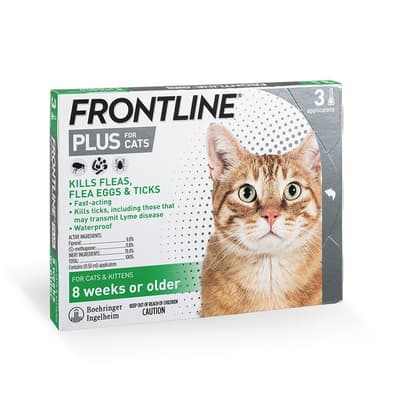
- FRONTLINE Plus for Cats & Kittens spot-on (FPCAT) (HK-53178) — HK$230
Prices and stock are subject to the live prices on the online store. Flea products are medicinal; follow the product label and vet advice on use and dosage, and note the age and weight minimums on the packaging.
Further reading
- Pet Skin Health Guide: itching, hair loss, rashes and fungal problems in one place (2026)
- Long-Haired Cat Summer Cooling Care: a cooling guide for Persian, Ragdoll, Maine Coon and Chinchilla in Hong Kong
- How to tell normal wound healing from bacterial infection in cats: signs compared
- Cat Hairball Guide: long-haired cat care in Hong Kong, hairball prevention and danger signs
In an emergency, contact a veterinarian immediately; this article is for reference only and cannot replace veterinary diagnosis.
Information checked as of 2026-10-12 · Source: PetChill editorial team
 Instinct full guide →
 Fuji One full guide →