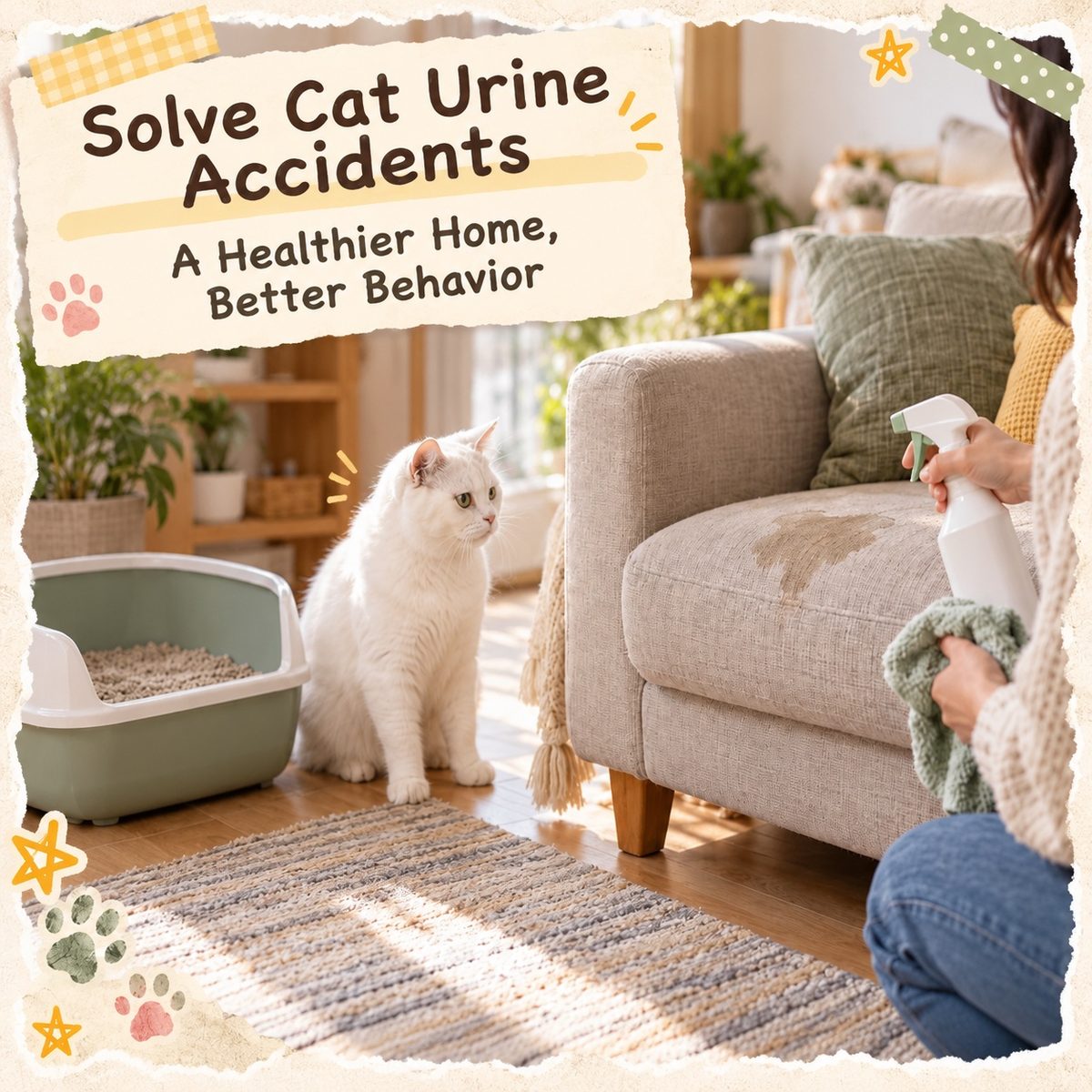
Quick answer: If your cat is urinating outside the box or refusing the litter box, first rule out health problems (urethral obstruction in male cats can be fatal), then review litter box cleanliness, size, location and number (N+1 for multi-cat homes), stress sources and residual old urine odour. Punishment or masking the smell alone will not work; you must address the problem systematically in the order of health → environment → behaviour.
When a cat suddenly stops using the litter box and urinates everywhere, there are usually four types of causes: health, litter box, stress and territory. Do not get the order wrong: the first step is always to see a veterinarian to rule out illness (a male cat straining to urinate with little output may have a urethral obstruction, an emergency that can be fatal), then check the litter box size, cleanliness, location and number (N+1 for multi-cat homes), and only then address stress and residual odour. Let's break it down one by one.
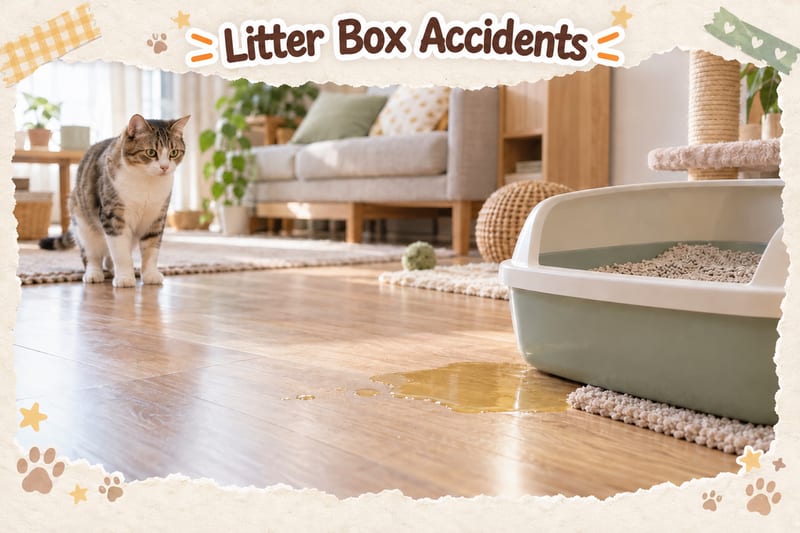
The 4 Main Reasons Cats Stop Using the Litter Box
1. Health problems (rule these out first)
- Urinary tract infection / stones — urination is painful, and the cat associates pain with the litter box, so it looks for another place to toilet (soft beds and bathtubs are popular choices)
- Kidney disease — increased drinking and urgency mean the cat cannot make it back to the box in time
- Joint pain — older cats cannot climb into high-sided boxes and even turning around inside is painful
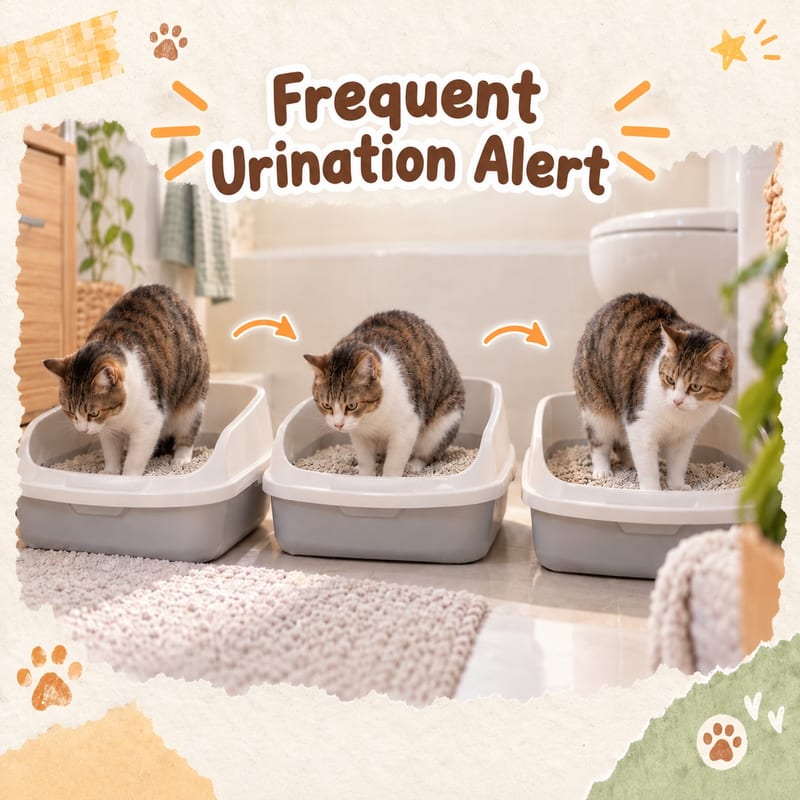
⚠️ Emergency warning signs: frequent trips to the litter box, straining, standing in the box unable to urinate, blood in the urine, crying while urinating — especially in male cats, this may be urethral obstruction, which can be fatal within days. Take the cat to a veterinarian immediately; do not wait.
2. Litter box problems
- Not clean — cats are extremely fastidious; if the box is not scooped for too long, they refuse to use it
- Too small — the cat cannot turn around inside and will not step in
- Wrong litter — a sudden change of litter, scented litter or coarse textures that hurt the paws may all be rejected
- Poor location — noisy (near the washing machine), draughty, near food and water, or with no escape route
3. Stress
- Moving home, a new pet, a new family member, renovations — life changes can alter a cat's behaviour
- Changing the litter box style or litter type is also a stressor
4. Territory / multi-cat
- Multi-cat conflict — a weaker cat is ambushed at the litter box entrance and has no choice but to toilet elsewhere
- Insufficient resources — not enough litter boxes to go around (use the N+1 principle)
Five-Step Solution: From Vet Visit to Litter Box Management
Step 1: See a veterinarian First rule out urinary tract infection, stones, kidney disease and joint pain. Health problems require medical intervention; changing the environment will not help manage illness.
Step 2: Check the litter box
- Large enough — about 1.5 times the length of the cat from nose to tail
- Clean enough — scoop faeces and urine daily, and periodically change all the litter and wash the box
- Right litter — most cats prefer fine-grained, unscented clay litter; you can offer two boxes with different litters and let the cat "vote"
- Quiet location — quiet, well-ventilated, easy to reach, away from food and water bowls
Step 3: Add more litter boxes Multi-cat households should remember N+1: 2 cats need 3 boxes, placed in different locations, not clustered together where a dominant cat can "guard the gate".
Step 4: Reduce stress
- Keep routines stable and minimise environmental changes
- Provide safe spaces: cardboard boxes, cat trees, high places
- Use pheromones to help relaxation
- Introduce new cats or pets gradually with proper separation and introduction procedures
Step 5: Thoroughly clean odours Use an enzyme cleaner on urine spots to break down the odour (ordinary cleaners only mask it) — once a cat smells its own old urine, it will treat that spot as a public toilet and keep going there. Soak-wash or replace mattress and sofa cushions.
Quick Responses to Common Situations
Q: What should I do if my cat likes to urinate on the bed? A: First check health (painful urination? frequent urination?), then clean the bedding with an enzyme cleaner and change the bedding, check whether the litter box is dirty or not private enough, and investigate stress sources (moving home / new pet). Soft, absorbent bedding is attractive to cats with urinary discomfort, so treat "urinating on the bed" as a symptom first.
Q: How should litter boxes be allocated in a multi-cat household? A: Follow the N+1 principle — number of litter boxes = number of cats + 1, placed on different floors or in different rooms, so every cat has a choice without having to queue.
Q: What if my cat completely refuses the litter box I bought? A: Try the old style and old litter (switching too quickly is the most common trigger); place the litter box near where the cat has been secretly urinating and gradually move it back to the target location; make sure the box is large enough and stable (if it wobbles, the cat will be scared).
When to See a Vet
- Any "straining with no urine, blood in urine, crying while urinating" — immediately, especially in male cats
- Sudden inappropriate urination lasting more than a day, especially with changes in appetite or energy
- An older cat that has recently started avoiding the box (suspected joint pain / kidney disease)
- No improvement after two weeks of adjusting the litter box environment — consider a behavioural consultation
Remember: do not punish. Hitting, shouting or rubbing the cat's nose in the urine achieves nothing; it only makes the cat more afraid of you, more stressed, and the inappropriate urination worse.
Bringing a New Cat Home: Prevention Beats Cleanup
How you set up the litter box on the first day you adopt a cat or bring it home directly determines whether there will be "inappropriate urination time bombs":
- First week — place the litter box next to its "safe room" so it does not have to travel far to find a toilet
- Use the old litter — ask which litter it was using before, and mix a scoop of old litter into the new box; the scent helps it recognise the toilet
- Place it in the box once — gently place the cat in the litter box to sniff on the day it comes home; do not hold it down
- Leave a light on at night — in complete darkness, kittens and older cats cannot find the toilet; a night light helps
Daily Litter Box Cleaning Schedule
| Frequency | What to do |
|---|---|
| 1-2 times daily | Scoop faeces and urine clumps, removing wet litter as well |
| Weekly | Top up litter to maintain a depth of about 5 cm |
| Every 2-4 weeks | Change all litter, rinse the box with warm water, do not use scented cleaners |
| Monthly check | Check for scratches or cracks in the box that harbour dirt, and whether the sides are too high for older cats to enter |
Tip: Hot water plus baking soda is enough to clean the litter box; the smell of bleach will drive some cats away. Let it dry completely before adding litter — a wet bottom will make everything clump.
Marking vs Inappropriate Urination: How to Tell the Difference
- Spraying — tail held straight up, backing up with a slight quiver, spraying a small amount on vertical surfaces (walls, sofa sides), mostly related to territorial stress, most common in unneutered cats
- Normal toileting accidents — squatting low, large volume, on horizontal soft surfaces (beds, blankets), mostly related to illness, litter box or anxiety
The approaches differ: for spraying, prioritise neutering (which can greatly reduce it), then address multi-cat stress; for inappropriate urination, follow the three steps of health → litter box → stress.
What You Can Do Starting Today
- Observe your cat's urination: frequency, volume, any crying in pain; if in doubt, book a vet appointment the same day
- Clean the existing litter box, change the litter, and check whether the location is quiet enough and large enough
- In multi-cat households, immediately add N+1 litter boxes and place them separately
- Buy an enzyme cleaner and treat all urine spots
- Review whether there have been any environmental changes in the past week or two, and set up safe havens to reduce stress
Choosing the right cat litter and litter box is the first step in preventing inappropriate urination; see PetChill's cat litter guide and litter box buying guide.
This article is for reference only; consult a registered veterinarian for any difficulties.
Related Product Recommendations
Cat litter needs to clump quickly, be low-dust and control odours reliably. Here are the cat litter products available at PetChill:
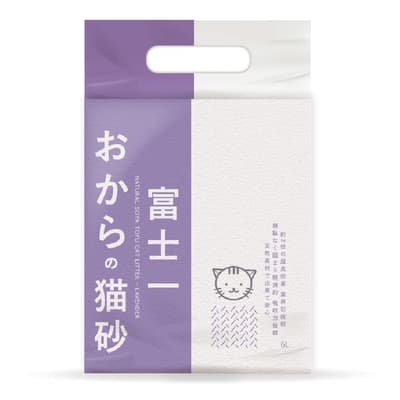
- Fuji One Natural Minimalist Daily 3.0 Tofu Cat Litter Lavender 6L - Original Import (Fuji One) — tofu litter, flushable, low dust
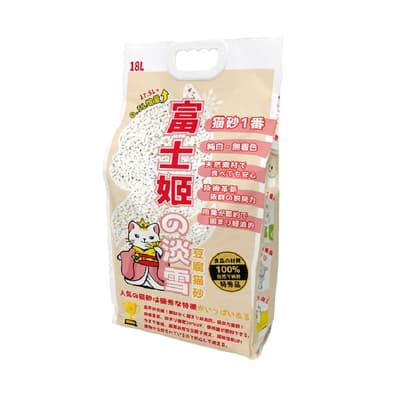
- Fujihime no Awayuki 3.0 Natural Purifying Soy Milk Tofu Cat Litter Original 18L - Original Import (Random Old/New Packaging) (Fujihime no Awayuki) — tofu litter, flushable, low dust
See more: Fuji One Brand Guide
Product prices and latest offers are subject to the product page; this article is for reference only.
Further Reading
PetChill Pet Knowledge Team — Hong Kong's most authoritative pet knowledge platform
- Pros and Cons of Plant-Based Cat Litter →
- How Probiotic Tofu Litter Works →
- N1 Tofu Litter Review →
- Cat Litter Recommendations Hong Kong 2026 →
- Home Care for Cat Upper Respiratory Infections →
Hong Kong Practical Guide: Solutions from Subdivided Flats to Housing Estates
Hong Kong's living environment is unique, with subdivided flats, tong lau and housing estate units each having their own constraints; the principles in this article need to be translated into feasible solutions. First, lack of space does not mean you can sacrifice the N+1 principle — 2 cats need at least 3 litter boxes, which can be spread across different functional areas: for example, beside the TV cabinet in the living room (quiet, little foot traffic), under the bed in the master bedroom (with castors for easy pulling out to clean), inside the balcony glass door (ventilated but sheltered from rain). If you live in a tong lau unit, pay special attention to unstable lighting at stairwells or corridors; at night cats may lose control because they cannot see the way, so consider installing motion-sensor night lights along main routes (brightness ≤3 lumens), avoiding complete darkness without being dazzling. Humidity is a common problem in Hong Kong; clay litter clumps and moulds easily, so besides choosing moisture-resistant formulas, always wipe the bottom of the box dry with a cloth after scooping, then use a handheld fan on low for 3–5 minutes. Do not take the easy way out by putting the litter box in the bathroom — steam and drain smells will put cats off. In addition, "multi-generational living under one roof" is common in Hong Kong; children chasing, elderly people moving slowly and domestic helpers having different cleaning habits can all be stressors. It is advisable to designate a family member responsible for litter box maintenance and stick a cleaning schedule on the fridge (e.g. "Mum: scoop Mon/Wed/Fri; Sister: top up litter Tue/Thu/Sat") to ensure consistency. Finally, if there is still no improvement after two weeks of adjusting according to the steps in this article, contact a PetChill partner veterinarian or an accredited cat behaviour consultant immediately (see the "Emergency Support" page on the website); do not delay intervention during the golden period because you are worried about the hassle.
📌 Key Summary
- ✅ When health warning signs appear (such as frequent urination with no output, blood in urine, crying in pain), take the cat to a veterinarian immediately; do not delay
- ✅ Multi-cat households must follow the N+1 principle: number of litter boxes = number of cats + 1, placed on different floors or in different rooms
- ✅ Always use an enzyme cleaner on urine spots; ordinary cleaners only mask the odour, and cats will repeatedly mark when they smell residual urine
- ✅ Litter box size should be 1.5 times the cat's length from nose to tail; older cats need low-sided designs to avoid refusing the box due to joint pain
- ❌ Do not wash the litter box with bleach or fragranced cleaners — the irritating smell will make cats avoid using it
- ❌ Do not scold or force your cat into the litter box — it only increases fear and stress, making inappropriate urination worse
 Fuji One full guide →


 Fuji Cat full guide →


 K9 Natural full guide →