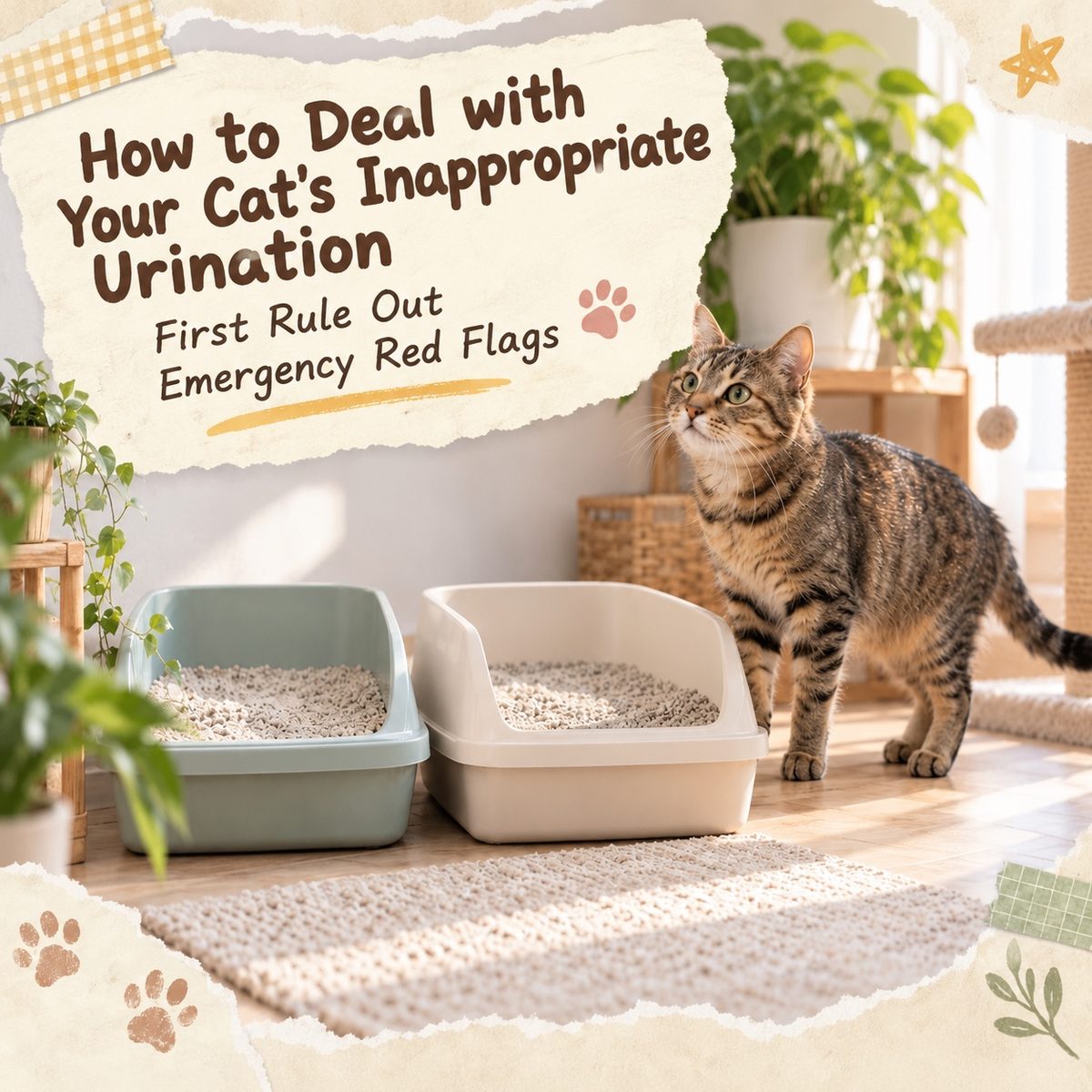
A cat peeing outside the litter box (inappropriate elimination) is not revenge; it is the result of a set of causes. The most important thing is to first rule out emergencies: complete inability to urinate, crying out while straining to urinate, blood in urine, repeatedly entering the litter box without producing urine, or a sudden drop in energy and appetite — these require a veterinarian the same day. After medical problems are ruled out, 80% of cases can be resolved by adjusting the litter box and environment.
First, triage: 5 emergency red flags
| Situation | Severity | What you should do |
|---|---|---|
| Complete inability to urinate, repeatedly entering the box and straining | 🔴 Immediate emergency | Go to a 24-hour veterinarian the same day; urethral obstruction can be fatal within 24–48 hours |
| Crying out, arching the back, extreme restlessness when urinating | 🔴 Immediate emergency | Seek veterinary care the same day; do not wait until tomorrow |
| Blood in urine (pink, red, clots) | 🔴 Seek veterinary care the same day | Urinalysis is needed; do not judge online |
| Frequent litter box visits but only a few drops each time | 🔴 Seek veterinary care the same day | Risk of obstruction, especially in male cats |
| Poor energy, refusing food, vomiting + abnormal urination | 🔴 Seek veterinary care the same day | Systemic problems may already be present |
🟡 Arrange a veterinarian within 24–48 hours: unusually strong urine odour, change in urination posture, excessive licking of the genital area, noticeably increased urine volume (may be related to internal medical conditions). 🟢 You can start with home adjustments: normal urine volume, no blood, no crying, just choosing locations to urinate (sofa, bed, carpet, bathtub).
Important: The above is triage guidance, not a diagnosis. If any red flag appears, contact a veterinarian directly; do not try home methods first.
Inappropriate urination vs spraying: two different things
| Item | Inappropriate elimination (peeing outside the box) | Spraying (urine marking) |
|---|---|---|
| Posture | Squatting, normal toileting posture | Standing, tail raised and quivering |
| Location | Horizontal surfaces (bed, sofa, carpet, clothing) | Vertical surfaces (walls, curtains, door frames) |
| Urine volume | Close to a normal urination volume | Small amount, multiple locations |
| Common causes | Litter box discomfort, urinary problems, environmental stress | Territorial anxiety, multi-cat conflict, oestrus (unneutered) |
| Approach | Litter box environment + medical check | Environmental resources + neutering + stress reduction |
For detailed causes and solutions for spraying, see the complete guide to cat spraying.
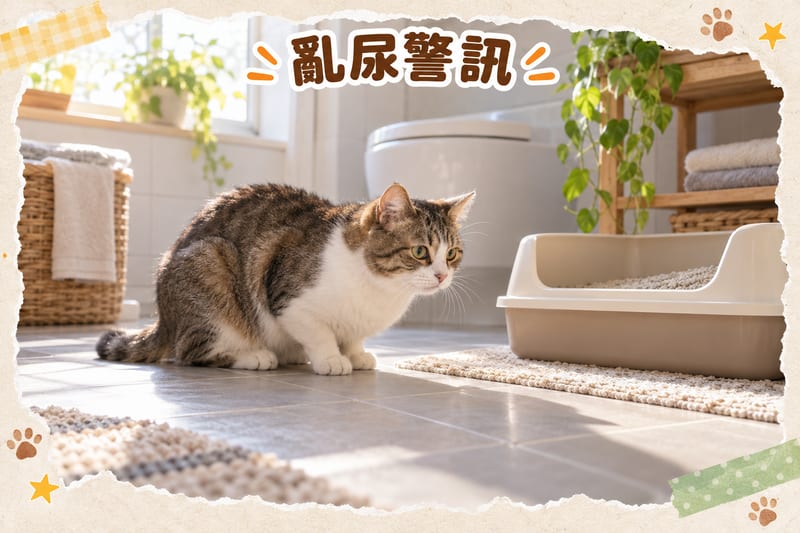
After ruling out emergencies: 6 major causes and solutions
| Cause | Typical clues | Solution |
|---|---|---|
| 1. Not enough litter boxes / too small | Multi-cat household, number of boxes less than number of cats + 1 | Number of boxes = number of cats + 1, spread out in different locations |
| 2. Poor litter box location | Box next to washing machine, near food, in a passageway | Move to a quiet place with an escape route where the cat won't be trapped |
| 3. Wrong litter | Started after changing litter, only uses the edge of the box | Use the mixing method over 7–10 days, try unscented low-dust litter |
| 4. Litter box too dirty / litter too thin | Scooping less than once a day, litter depth less than 5cm | Scoop 1–2 times daily, litter depth 7–8cm, wash the box thoroughly monthly |
| 5. Stress and life changes | Moving house, new family member, new pet, renovation | Restore a fixed routine, increase vertical space and hiding spots |
| 6. Urinary or internal medical problems | Accompanied by red flags, change in urine volume, excessive licking | Have a veterinarian perform urinalysis; do not judge on your own |
Practical steps at home (recommended order)
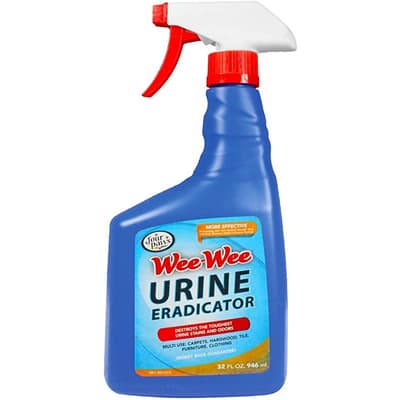
- Use an enzymatic cleaner for cleaning: Regular cleaners cannot remove uric acid crystals, and cats will continue to urinate in the same spot if they smell the old scent. Recommended specialised urine odour removers: Four Paws Urine Odor Remover 32oz ($104), Japan JOYPET Natural Ingredient Urine Odor Remover & Sanitiser ($110), ODOUT Odour Roll Cat Floor Cleaner 1L ($171).
- Temporarily block the problem area: After cleaning, cover with aluminium foil, a plastic mat, or place a food bowl there (cats usually do not urinate next to their food bowl).
- Add a litter box: Start with a large open box (do not start with a covered or automatic box), placed in a different location from the old box.
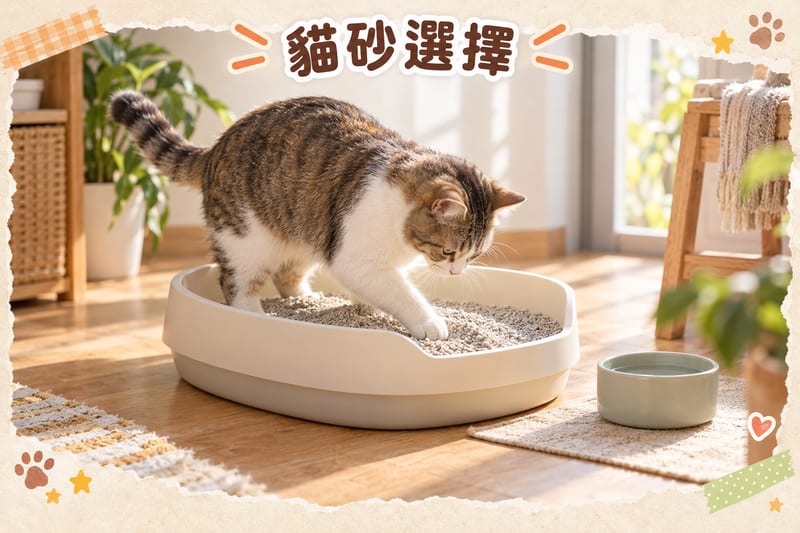
- Litter choice: Temporarily use the type the cat is most familiar with (usually clay litter or tofu litter), and add a box with a new type for comparison, letting the cat choose.
- Reduce stress sources: Fix feeding times, increase interactive play 10 minutes ×2 times, provide high resting places.
- Keep a log: Record the time, location, urine volume, and posture of each urination; this will be very useful for the veterinarian during consultation.
Sources
- Cornell Feline Health Center — Feline Lower Urinary Tract Disease (urinary symptoms, urethral obstruction time window, aggravating risk factors, litter box number principle)
- MSD Veterinary Manual — Behavior Problems in Cats (difference between inappropriate elimination and spraying, environmental needs, punishment not recommended)
- PetChill product database (checked 2026-10-01; prices are front-end selling prices)
Price validity: Prices in this article were verified from the PetChill product database on 2026-10-01; actual selling prices are subject to the product pages.
Further reading
- Cat Litter Recommendations Hong Kong 2026: Comparison of Five Major Types (pillar)
- Complete Guide to Cat Spraying: Causes and Environmental Solutions
- How to Choose a Litter Box: Size Formula and Placement Principles
- Home Care for Cat Urinary Problems
- Feline Lower Urinary Tract Disease (FLUTD) Triage
This article is for general information only and does not constitute diagnosis or treatment advice. If your cat has abnormal urination, please consult a registered veterinarian; in emergencies, go to a 24-hour animal hospital immediately.
 Feline Natural full guide →
 K9 Natural full guide →