Quick answers
- Bright red streaks usually come from the end of the large intestine, commonly caused by parasites, colitis and anal gland problems; see a vet within 24 hours.
- Black, tarry, foul-smelling stool means upper gastrointestinal bleeding and is an emergency; do not wait, seek medical attention immediately.
- Jelly-like mucus with almost no stool reflects severe colonic inflammation or foreign body obstruction; examination is needed the same day.
- For kittens, senior cats or cats with chronic illness, if blood streaks or mucus in stool do not improve within 12 hours, see a vet.
- Prepare 3 things before the visit: a fresh stool sample (submitted within 24 hours), photos of the stool, and a 3-day record of bowel movements.
- There is no home treatment for blood or mucus in stool. Do not give human antidiarrhoeals, haemostatics or antibiotics on your own, and do not stop medications prescribed by your vet.
The answer to "Is blood or mucus in the stool a sign to see a vet?" is: both blood streaks and mucus are signals that you should see a vet promptly, not something to treat as an upset stomach and observe for a few days. Bright red streaks usually indicate bleeding near the end of the large intestine or anus, most commonly caused by intestinal parasites (Giardia, coccidia, hookworm), colitis and anal gland problems; if the stool is black, tarry and foul-smelling, the bleeding is likely in the stomach or small intestine, i.e. upper gastrointestinal bleeding, and requires immediate medical attention. Mucus is a protective response after irritation of the colonic lining; a large amount, jelly-like consistency, or presence with blood all indicate a lesion in the intestine that needs examination.
Judging urgency is not about a single symptom but about three things: first, the colour of the blood (bright red or black); second, the amount and duration (one-off or several consecutive days); third, whether there is accompanying vomiting, lethargy, not eating or weight loss. Below, two comparison tables will help you locate the bleeding and understand the 8 common causes, list 6 warning signs you cannot wait on, and teach you 5 things to prepare before seeing the vet. This article does not provide any home treatment methods—blood and mucus in stool are diagnostic problems, not something you can solve by buying medication yourself. For an overall framework on gastrointestinal problems, see Pet Digestive Health Guide.
What do blood streaks and mucus mean? First, locate the bleeding
The lining of the end of the large intestine (colon) and rectum is rich in blood vessels; when irritated by parasites, inflammation, hard stool friction or foreign bodies, it bleeds and secretes more mucus to protect itself. So "blood streaks plus mucus" appearing together is a typical combination of colonic irritation, not two separate problems. Conversely, if the bleeding is in the stomach or small intestine, the blood is digested and turns black, resulting in tarry, foul-smelling stool. This distinction is key to judging urgency: bright red usually means lower tract bleeding, while black indicates upper gastrointestinal bleeding and requires immediate attention.
Mucus itself has lubricating and barrier functions; normally there may be a transparent mucus thread at the end of the stool that you might not even notice. But when mucus becomes beige, semi-transparent, a thick layer coating the stool, or even jelly-like, it means the colonic lining is persistently irritated. If there are also blood streaks at this point, you should not rely on observation alone, because the amount of mucus and the presence of blood streaks are evidence that the body has already activated a protective response.
One more point: the "amount" of blood streaks is not necessarily proportional to "severity". A ruptured anal gland or a minor anal fissure can cause fresh blood on the litter or around the anus, which looks alarming but is relatively local; whereas a small amount of dark red blood mixed in the stool may reflect a deeper intestinal problem. So the most reliable approach is to take photos, record the colour and approximate amount, and let the vet judge, rather than self-diagnosing online or trying supplements for a few days.
Stool colour chart: bright red, dark red and black mean different things
The table below is arranged by bleeding location and urgency to help you quickly locate the problem, but the table is only an aid and cannot replace veterinary examination.
| Stool colour/appearance | Bleeding location | Common causes | Urgency |
|---|---|---|---|
| Bright red streaks on the surface, small amount | End of large intestine, rectum | Parasites, early colitis, hard stool scratches | See a vet within 24 hours |
| Moderate amount of bright blood, staining litter or around anus | Anal glands, rectum | Inflamed or ruptured anal glands, severe diarrhoea | See a vet the same day |
| Dark red blood mixed in stool | Mid-colon, end of small intestine | Colitis, intestinal polyps, tumours | See a vet the same day |
| Black tarry, foul-smelling | Stomach, small intestine | Upper gastrointestinal bleeding, ulcers, ingested sharp bones | Emergency, seek medical attention immediately |
| Mucus coating formed stool, pinkish | Large intestine | Colitis, parasites | See a vet within 24 hours |
| Jelly-like mucus, almost no stool | Large intestine | Severe inflammation, foreign body obstruction | Emergency, same-day examination |
| Bloody watery diarrhoea | Large intestine, small intestine | Infection, feline panleukopenia, severe gastroenteritis | Emergency, kittens and senior cats immediately |
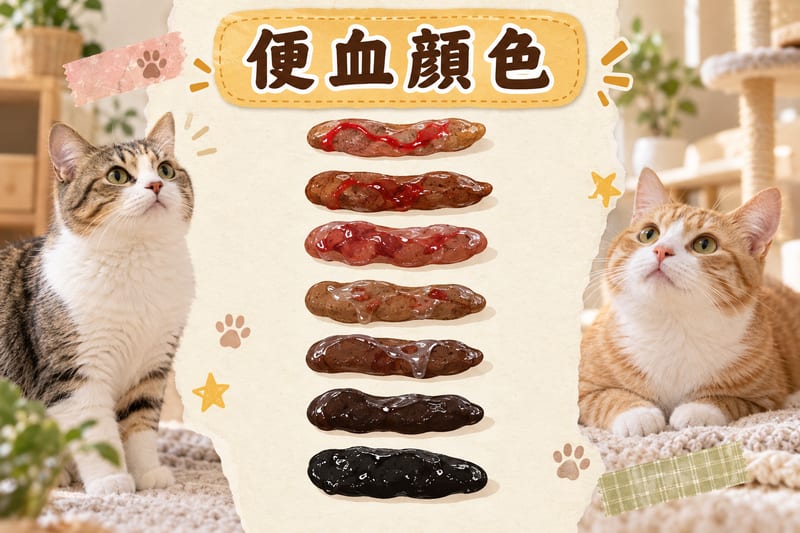
The same colour can have different causes, so the chart can only help you decide "how soon to see a vet", not "what disease it is". Two points are particularly easy to misjudge: first, black stool is not necessarily bleeding—iron supplements, activated charcoal or a large amount of animal blood products can also darken stool, and laboratory tests are needed to distinguish; second, red may also come from food colouring or certain medications, which also need to be ruled out. If you are unsure, treat it as "needs examination". For long-term changes in stool form, you can record alongside the Cat Poop Observation Guide; vets find trends more useful than a single photo.
8 common causes of blood and mucus in cat stool
The following 8 directions are the most common diagnostic order in veterinary clinics; they do not mean you can self-diagnose.
| Possible cause | Typical signs | High-risk groups | Management direction |
|---|---|---|---|
| Intestinal parasites (Giardia, coccidia, hookworm, roundworm) | Recurrent mucus, particularly foul odour, fresh red blood streaks in stool | Kittens, newly adopted, semi-free-roaming or raw-fed cats | Bring fresh stool for examination, use medication as directed by vet |
| Colitis, inflammatory bowel disease (IBD) | Large amount of mucus, increased frequency of defecation, gradual weight loss | Middle-aged and older cats, chronic recurrent cases | Veterinary assessment, may need dietary trial or medication |
| Inflamed or ruptured anal glands | Fresh blood dripping in litter, redness and swelling around anus, restlessness | Cats with chronic soft stool, obese cats | Handled by vet, do not squeeze yourself |
| Constipation, megacolon, hard stool scratches | Blood on surface of hard stool, mucus followed by small amount of hard stool | Senior cats, insufficient water intake, heavy hairballs | Increase water content, consult vet |
| Too-rapid food change or food intolerance | Soft stool with mucus and small amount of blood streaks 2 to 5 days after switching food | Cats with sensitive stomachs, adding multiple new foods at once | Revert to old proportions first, keep a food diary |
| Ingested foreign bodies, sharp bones, string and plastic bags | Mucus with intermittent vomiting, abdominal pain, refusal to eat | Kittens, cats that chew string and plastic bags | Emergency, seek medical attention as soon as possible |
| Medication effects (antibiotics, steroids, NSAIDs) | Blood-streaked or black stool during medication | Cats currently on medication or long-term painkillers | Contact vet immediately, do not stop medication on your own |
| Intestinal polyps or tumours in middle-aged and older cats | Small amount of dark red blood, difficulty defecating, weight loss | Cats over 7 years old | Requires veterinary imaging or endoscopy |
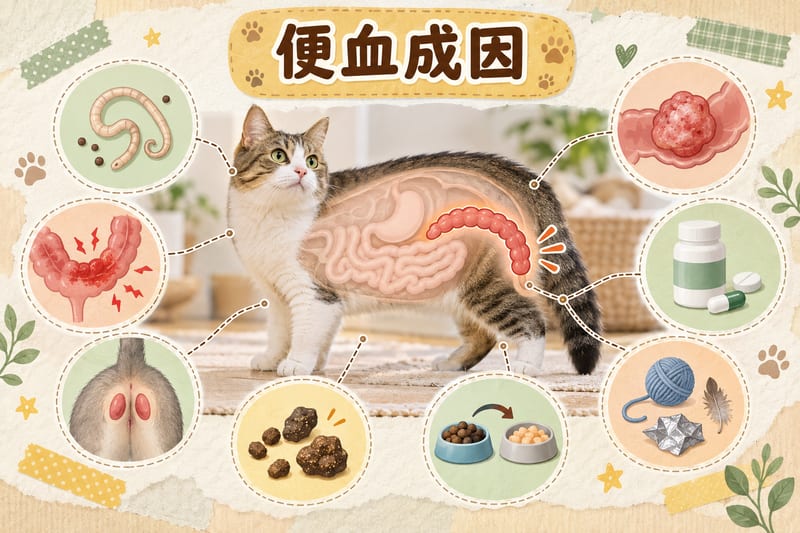
One direction is particularly easily overlooked: kittens with blood streaks or mucus in stool, along with fever, lethargy, and complete loss of appetite, should be considered for viral infection (e.g. feline panleukopenia); such cases can deteriorate within hours and should not wait until the next day. Also, senior cats on long-term NSAIDs who develop black stool are showing a warning sign of medication-related bleeding and must contact the vet immediately, but do not stop the medication on your own—stopping, reducing or switching medications must be decided by the vet; stopping on your own may cause the original condition to spiral out of control and also mask the true cause of the bleeding.
When to see a vet immediately? 6 warning signs you cannot wait on
If any of the following occurs, it is not in the "observe for a couple more days" category:
- Black tarry stool, or dark stool with a distinct foul odour.
- Moderate or larger amount of bright blood, already staining the litter, around the anus or the base of the tail.
- Jelly-like mucus with almost no normal stool.
- Bloody watery diarrhoea, or diarrhoea with blood streaks lasting more than 24 hours.
- Simultaneous vomiting, lethargy, or complete loss of appetite for more than 12 to 24 hours.
- Kittens, senior cats, or cats with kidney disease, diabetes, inflammatory bowel disease, or currently on immunosuppressive drugs.
Cats are very good at hiding discomfort; often by the time they are obviously lethargic, they are already dehydrated or anaemic. So the criterion should not be "he still has energy" but "is any of the above present?" If there is also vomiting, you can refer to the Cat Vomit Colour Chart to understand the meaning of vomit colour, but the combination of vomiting and bloody stool should not be observed at home. The threshold for kittens and senior cats should be lowered, because their tolerance for dehydration and blood loss is much poorer than adult cats; 12 hours can make a big difference.
5 steps before the vet visit: prepare records and samples, do not self-medicate
These 5 steps are to help the vet diagnose faster, not a home treatment plan. There is no home treatment for blood or mucus in stool, especially do not give human antidiarrhoeals, haemostatics or antibiotics—human medications have completely different dosages and metabolism in cats, and some ingredients are toxic to cats.
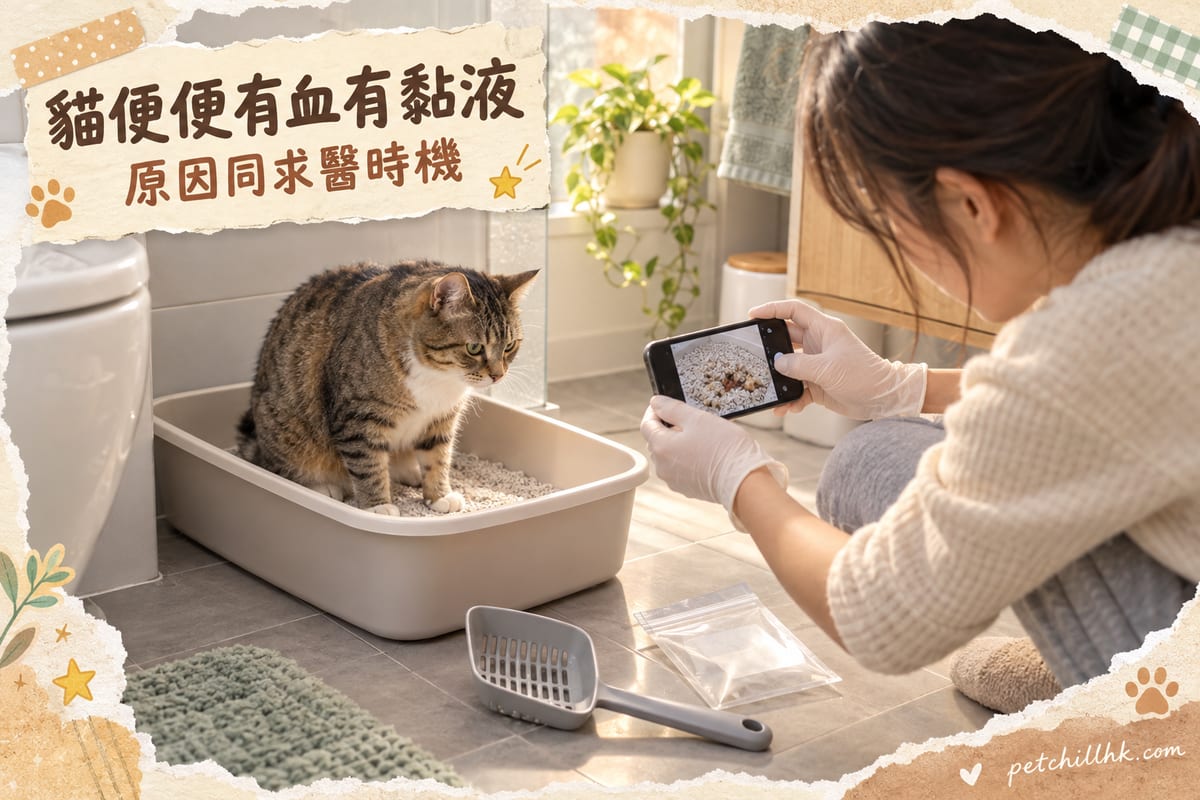
- Preserve a fresh stool sample. Collect in a clean plastic bag or sample container; submission within 24 hours is ideal. Short-term storage in the lower fridge is acceptable, but do not freeze, as freezing can damage some parasite and cyst structures and affect test accuracy.
- Take photos and record. Photograph the stool, blood streaks and mucus; record time, frequency, colour, amount of blood, and faecal score (1 to 7). Record for 3 consecutive days; this information can be used directly by the vet and is much more accurate than verbal description.
- Review the last 7 days. Any food change, new treats, new medications, environmental changes, or contact with other animals? The sequence of symptoms and these time points is often the most important clue.
- Organise medical history. Vaccination and deworming dates, a list of all current medications and supplements, any chronic diseases—bring them all at once to avoid the vet having to ask item by item.
- Provide basic care on the way to the vet. Keep warm, provide clean water, but do not give any medication or supplements, including probiotics, before asking the vet.
Special reminder: do not stop medications prescribed by your vet just because blood streaks appear in the stool. Medication-related bleeding requires the vet to assess whether to adjust the dose, add gastroprotective medication, or switch to another drug; stopping on your own only makes judgement more difficult.
What the vet will check + 4 key points for daily prevention
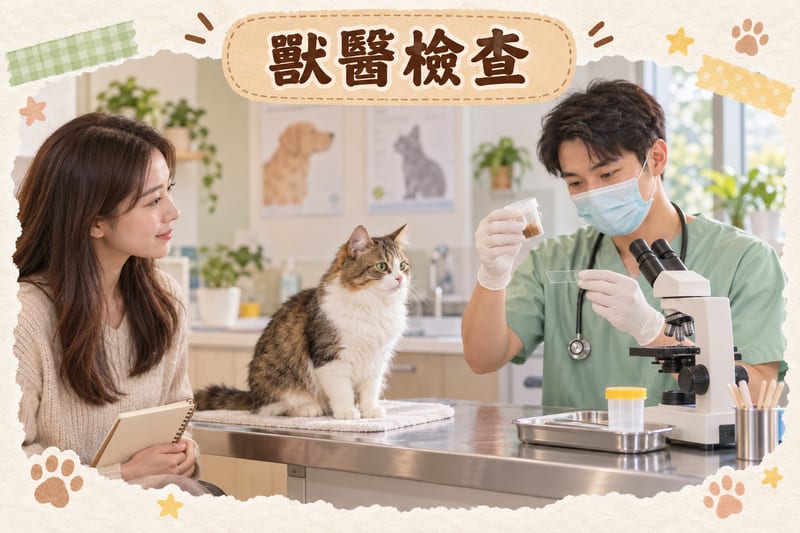
The veterinary diagnostic process usually follows this order: history taking (timeline of symptoms, diet, medication history), then faecal examination (flotation, direct smear, parasite antigen rapid test), with blood tests (anaemia, inflammation markers, organ function) and imaging (X-ray, ultrasound) added as needed. If polyps or tumours are suspected, or recurrent bleeding has no identifiable cause, endoscopy and biopsy may be needed. None of these steps can be replaced at home; only after a clear diagnosis does daily management come into play.
4 key points for daily prevention:
- Use the 7-day gradual food transition. For the first 2 days, 70% old food and 30% new food; days 3-4, half and half; days 5-6, 70% new food; after day 7, fully switch. Treats and wet food pouches also count as "new foods".
- Deworm on time and have regular check-ups. Adult cats are advised to have an annual physical examination, more frequently after age 7; faecal examination and blood tests together—many chronic intestinal problems are caught at this step.
- Ensure adequate water intake. Adding a little warm water to wet food, placing multiple water bowls around the home, or using a flowing water fountain can all increase water intake and reduce the chance of hard stool scratching the lining.
- Keep the environment stable. The number of litter boxes should ideally be "number of cats plus one", placed in separate locations away from food and water; introduce environmental changes gradually to reduce stress-induced intestinal reactions.
If the vet assesses that dietary management or supportive supplementation is needed, the following related products are available at PetChill:
- Nature's Protection Cat Sensitive Digestion dry food for adult cats with sensitive stomachs 400g (FD3510.4K) — HK$54
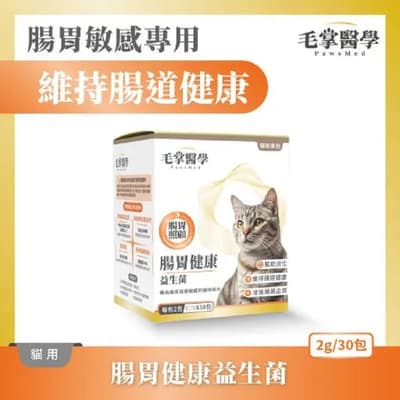
- Vet's Best Cat Digestive Health Probiotics 2g x 30 sachets — HK$141
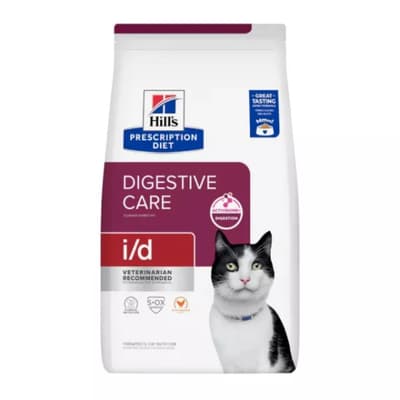
- Hill's Prescription Diet Feline i/d Digestive Care 8.5lbs (8694) — HK$679 (available for pre-order)
Prices and stock are subject to the live prices on the online store.
To be clear: probiotics play a supportive role and are most likely to help with dysbiosis caused by food changes or antibiotics, but they have no therapeutic effect on blood streaks in stool caused by parasites, foreign bodies, colitis or tumours, and cannot replace a vet visit. Prescription diets (such as i/d Digestive Care) are long-term dietary management tools and must be assessed and prescribed by a vet; they should not be fed long-term on your own. If your cat still has bleeding or mucus, the first thing is to book a vet appointment, not buy products.
Further reading
- Pet Digestive Health Guide | Causes of vomiting, diarrhoea, soft stool, mucus stool + how to choose probiotics (2026)
- Is mucus in cat stool normal? Causes, danger signs and management
- Cat Poop Observation Guide | 7 stool forms every Hong Kong cat owner should know + 4-step recording method
- Cat Vomit Colour Chart | Hong Kong cat owners must read: white foam, yellow fluid, coffee-coloured, red—when to see a vet
In an emergency, contact a vet immediately; this article is for reference only and cannot replace veterinary diagnosis.
Information checked as of 2026-10-12Source: PetChill editorial team
 Fuji One full guide →


 Hill's full guide →

 Almo Nature full guide →