Quick answers
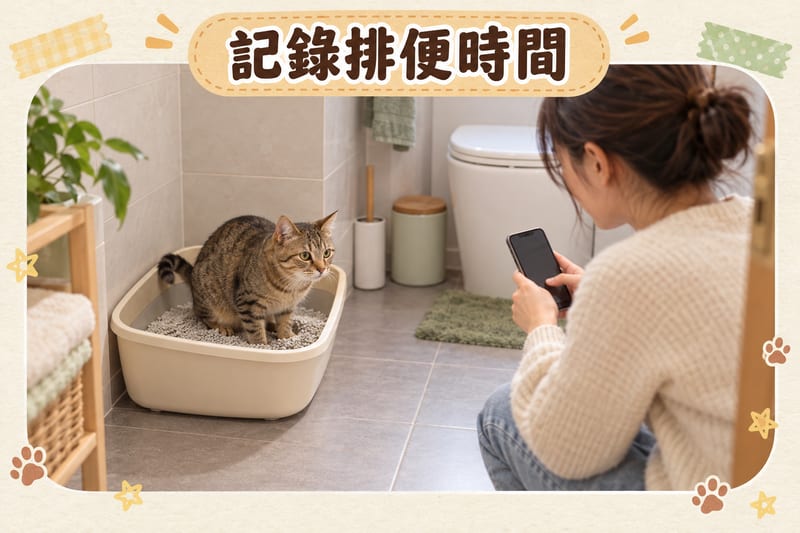
- The first step is not to stop the medication, but to record: note down daily bowel movement frequency, form (using a 1 to 7 scale), and energy and appetite. This record is what your veterinarian most wants to see at the follow-up.
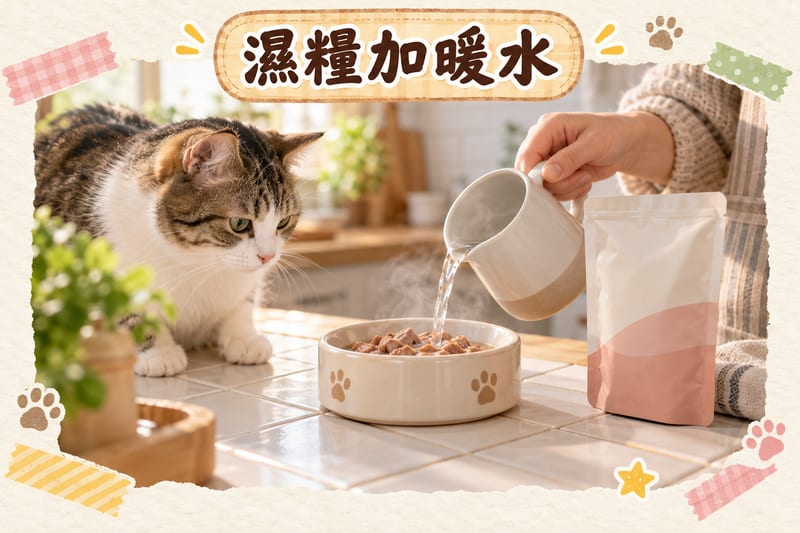
- Hydration is the most practical step: wet food is about 75–80% water, while dry food is only about 6–10%. Adding 2 to 3 tablespoons of warm water to wet food already significantly increases water intake.
- Give probiotics about 2 hours or more apart from antibiotics; giving them at the same time is pointless.
- For constipation, watch the clock: no bowel movement for more than 48 hours means see the vet; more than 72 hours, or accompanied by vomiting or abdominal bloating, is an emergency.
- Red lines: blood in the stool or black stool, watery diarrhoea lasting more than 24 hours, vomiting, complete refusal to eat for more than 24 hours, or lethargy — seek veterinary care immediately.
- All medication adjustments must go through the veterinarian: cats cannot take human anti-diarrhoeal or laxative medications; some ingredients are toxic to cats.
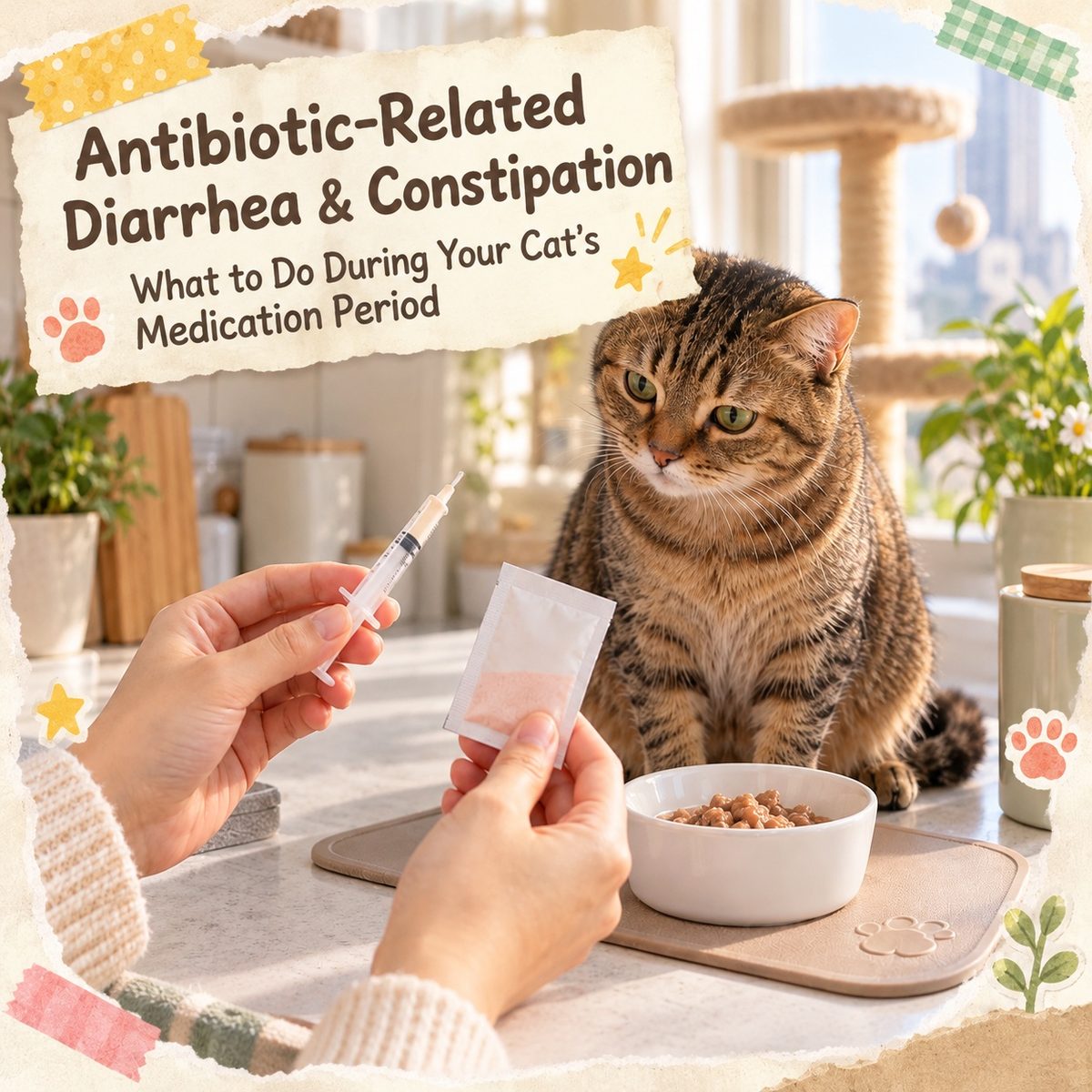
Sudden soft stool or even watery diarrhoea, or no bowel movement for two or three days, while your cat is on antibiotics is one of the most common medication questions in Hong Kong clinics. The approach can be broken into three levels: first, do not stop the medication on your own — stopping before the course is finished can leave the infection untreated and may even select for resistant bacteria; whether to stop, reduce, or change medication must always be decided by the veterinarian. Second, distinguish the severity: mild soft stool and short-term constipation can mostly be managed by continuing medication with home care, but bloody diarrhoea, persistent vomiting, or complete refusal to eat means you should seek veterinary care the same day. Third, hydration, dietary adjustment, and probiotics are the most practical supportive measures, and probiotics should be given about 2 hours apart from antibiotics.
Antibiotics are "indiscriminate" drugs: they kill the pathogens causing the infection, but they also affect the gut's own flora, so diarrhoea is one of the most common side effects. Constipation is also not rare, but its causes differ from diarrhoea. This article will not tell you to adjust medication on your own; instead, it helps you distinguish "how long you can observe" from "when you cannot wait any longer", and explains the home approach for both diarrhoea and constipation, how to choose probiotics, dietary arrangements, and when you must bring records to see the veterinarian. To first grasp the overall framework for judging gastrointestinal problems, you can read Pet Digestive Health Guide.
How antibiotics disrupt the gut: diarrhoea and constipation in two directions
Gastrointestinal reactions during a course of antibiotics are not caused by a single factor. Understanding the mechanisms behind them will help you know which practices are truly useful and which are just psychological comfort.
For diarrhoea, there are mainly three pathways:
- Dysbiosis: Broad-spectrum antibiotics also affect beneficial gut bacteria, reducing microbial diversity and metabolites such as short-chain fatty acids. The gut's ability to absorb water and electrolytes changes accordingly, making stool softer and more watery.
- Altered intestinal motility: Some antibiotics directly affect the speed of intestinal motility, so food residues and water pass through too quickly and are expelled before absorption.
- Opportunistic overgrowth of pathogens: The microbial barrier thins, and some bacteria (such as Clostridium species) may overgrow, causing more severe diarrhoea that may even contain blood or mucus. Veterinary testing is needed to distinguish the cause.
Constipation is mostly indirect:
- Reduced appetite: The bitter taste of pills and gastrointestinal discomfort make cats eat less, so stool volume decreases and stimulation of intestinal motility weakens.
- Inadequate water intake: Eating less usually means drinking less, and the colon absorbs more water from the stool, making it dry and hard and difficult to pass.
- Stress and environmental changes: Daily medication, veterinary visits, or even a short hospital stay can make cats hold their stool or change their usual toilet habits.
One point to note especially: do not assume all symptoms are side effects. If diarrhoea is accompanied by fever, repeated vomiting, obvious abdominal bloating and pain, rapidly deteriorating lethargy, or "straining to defecate but nothing comes out", the cause may be intestinal obstruction, pancreatitis, or another disease. This must be ruled out by a veterinarian and should not be treated as a drug reaction across the board. The gastrointestinal guidelines of the International Society of Feline Medicine (ISFM) and the World Small Animal Veterinary Association (WSAVA) both emphasise that persistent gastrointestinal problems, or those accompanied by systemic signs, require examination first before discussing diet or supplements.
Triage first: which cases can be managed at home and which need an immediate vet visit
The same "diarrhoea during antibiotics" can vary greatly in urgency. The table below helps you quickly locate the situation, but it is only an aid and cannot replace a veterinary examination.
| Observation | Home care (continue medication as instructed by vet) | See vet within 24 hours | Immediate emergency |
|---|---|---|---|
| Diarrhoea form | Soft but still formed, 1 to 3 times a day | Watery diarrhoea, more than 3 to 4 times a day | Fresh blood, black stool, or jelly-like bloody mucus |
| Constipation duration | No bowel movement for 24 to 48 hours, normal energy | No bowel movement for more than 48 hours | More than 72 hours, or completely unable to pass stool + abdominal bloating |
| Energy and appetite | Eating and playing as usual, just softer stool | Appetite halved, quieter than usual | Complete refusal to eat, lethargy, unwilling to walk |
| Accompanying signs | No vomiting, no fever | Occasional vomiting once or twice | Repeated vomiting, fever, obvious abdominal bloating and pain |
| Water intake and urine output | Normal water intake and urine output | Markedly reduced water intake | No urine at all, or frequent squatting but unable to pass urine |
The most easily underestimated row in the table is the last one. "No urine at all" is not a gastrointestinal problem but an emergency sign of urethral obstruction. Once a cat's urethra is blocked, a delay of a few hours can be life-threatening, so immediate veterinary care is essential. Similarly, the red line for constipation is time: more than 48 hours means see the vet, more than 72 hours is an emergency, and long-term repeated constipation may develop into megacolon, which becomes harder to treat the longer it is delayed. For detailed constipation grading and the red-line timeline, see What to Do About Cat Constipation.
Managing diarrhoea: five practical steps
The following steps are the parts you can carry out at home, on the premise that you continue medication as instructed by the veterinarian and do not add, reduce, or skip doses on your own.
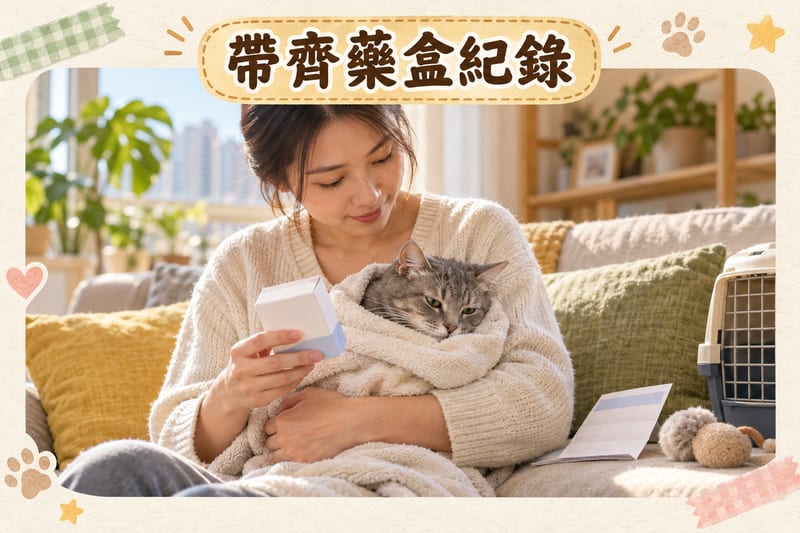
- Record a medication and symptom timeline: write down what time medication was given, what time soft stool started, and daily bowel movement frequency and form. This record directly influences the veterinarian's decision on whether to adjust the course and whether to add a faecal examination.
- Hydration first: add 2 to 3 tablespoons of warm water to wet food, place several water bowls (away from the litter box and food), and avoid relying on dry food alone for hydration.
- Keep the diet unchanged and feed small frequent meals: during diarrhoea, it is best not to change food at the same time; instead, feed 3 to 4 small meals a day and avoid high-fat canned food and new treats.
- Use a cat-specific probiotic formula: give it about 2 hours or more apart from antibiotics; probiotics are supportive and cannot replace treatment and veterinary examination.
- Call the clinic if there is no improvement: if watery diarrhoea lasts more than 24 hours, or red-line symptoms from the table above appear, contact your veterinarian with the records and medicine box.
Three things you should not do:
- Stop, reduce, or skip a dose of medication on your own: an incomplete course can leave the infection untreated or select for resistant bacteria, making it harder to manage later.
- Give human anti-diarrhoeal or laxative medications on your own: some ingredients are toxic to cats, and even if safe, the dose must be calculated by body weight.
- Increase the probiotic dose on your own because of diarrhoea: an overdose will not speed recovery and may worsen bloating and gastrointestinal discomfort.
For other causes of diarrhoea (parasites, food intolerance, gastroenteritis) and how to judge them, see Cat Gastroenteritis Explained.
Managing constipation: water, fibre, and activity
The approach to constipation is almost the opposite of diarrhoea, so first confirm that your cat is truly constipated and not "trying to pass stool but unable to". The following practices are recommended with your veterinarian's agreement.
| Direction | Practical steps | Notes |
|---|---|---|
| Water | Mainly wet food, add warm water to canned food, place multiple water bowls or use a flowing water fountain | Most basic; almost all constipated cats need this |
| Fibre | An appropriate amount of psyllium, or a prescription gastrointestinal diet recommended by the vet | Adding fibre must be accompanied by increased water, otherwise stool becomes harder |
| Activity | Interactive play with a wand toy 2 to 3 times a day, 10 to 15 minutes each time | Stimulates intestinal motility, especially important for indoor cats |
| Environment | Number of litter boxes = number of cats + 1, quiet location, cleaned daily | Holding stool is a common behavioural cause of constipation |
| Hairballs | Regular grooming, once daily for long-haired cats | Hairball accumulation can cause constipation and vomiting together |
| Medication | Laxatives or motility-promoting drugs can only be prescribed by a veterinarian | Self-use is dangerous; dosage must be calculated by body weight |
The most practical entry point during antibiotics is water and appetite: as long as your cat is willing to eat and drink, constipation will usually gradually improve as the course ends. If your cat refuses food because of the taste of the medicine, first discuss medication methods with your veterinarian (for example, using a pill syringe with a small amount of wet food) rather than stopping the medication on your own. If your cat has a history of megacolon or chronic constipation, inform your veterinarian earlier during the course and do not wait until 72 hours.
How to choose probiotics and how long to separate them from antibiotics
Probiotics are the most frequently asked-about supplement during antibiotics, but if used incorrectly they are pointless.
| Item | Recommended practice | Reason |
|---|---|---|
| Timing | About 2 hours or more apart from antibiotics | Antibiotics kill bacteria indiscriminately; giving them at the same time directly reduces probiotic survival |
| Formula | Choose a cat-specific powder or chewable tablet | Human formulas often contain dairy and sugar, which may not suit a cat's gut |
| Strains and labelling | Check the strain names and CFU; there is no need to blindly chase the highest number | Strain selection and storage conditions matter more than the number |
| Storage | Keep in a cool, dry place; after opening, store according to package instructions | Hong Kong is humid and hot; moisture greatly reduces viability |
| Role | Supportive; cannot replace the antibiotic course or veterinary diagnosis | Severe diarrhoea still requires veterinary examination and treatment |
One practical point on routine: if your veterinarian prescribes twice-daily medication, you can give the probiotic between the two doses, for example medication in the morning and probiotic at midday, which naturally separates them by about 2 hours. After giving the probiotic, watch for reactions; if bloating or increased vomiting occurs, pause it and tell your veterinarian.
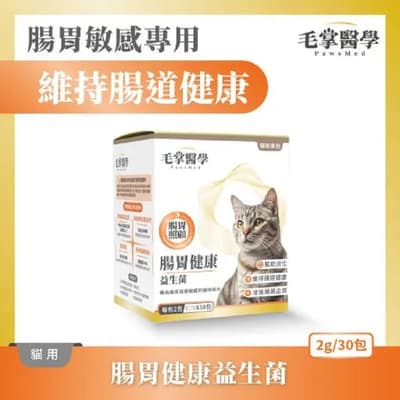
Examples of cat probiotics currently sold at PetChill:
- Vet's Best Cat Digestive Health Probiotics 2g x 30 sachets — HK$141; price and stock are subject to the online store's live price.
Diet during medication: what to feed and when to change food
The dietary principle during a course of antibiotics is just one sentence: stability first, do not make too many changes at once. Diarrhoea and constipation require different fibre proportions, so the direction of a prescription gastrointestinal diet should be chosen by the veterinarian; do not try both randomly.
- Mainly diarrhoea: easily digestible, low fat, small frequent meals; adding water to wet food is the most direct way to hydrate (wet food is about 75–80% water, dry food only about 6–10%).
- Mainly constipation: moderately increase water and fibre proportions, along with daily activity; when increasing fibre, you must also increase drinking water.
- Cats with sensitive appetites: you can choose a formula labelled "sensitive digestion" for transition, but still confirm with your veterinarian whether it suits the current condition.
- Do not switch to a new brand of main food during the course: changing food itself can cause soft stool, and when combined with drug side effects it becomes difficult to distinguish the cause, which slows down judgement.
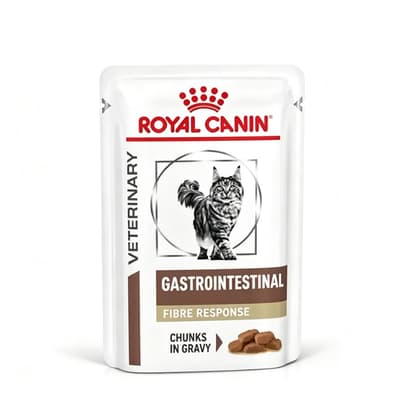
Examples of related products currently sold at PetChill:
- Nature's Protection Cat Sensitive Digestion dry food for adult cats 400g (FD3510.4K) — HK$54
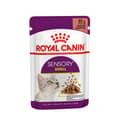
- Royal Canin Veterinary Diet Gastrointestinal Fibre Response adult cat wet food (gravy) 85g (R439300) — HK$19.5 (available for pre-order); price and stock are subject to the online store's live price. Prescription diets are part of dietary management and must be assessed by a veterinarian before feeding.
Further reading
- Pet Digestive Health Guide: Causes of Vomiting, Diarrhoea, Soft Stool, and Mucus Stool + How to Choose Probiotics (2026)
- What to Do About Cat Constipation: See a Vet If No Bowel Movement for 48 Hours? Symptoms, Causes, Red-Line Timeline
- Cat Gastroenteritis Explained: Hong Kong Vomiting and Diarrhoea Management + Scientific Evidence for Probiotics
- What Is Probiotic Cat Litter? Hong Kong Deodorising Tofu Litter Principles and Whether It Is Worth Buying
In an emergency, contact a veterinarian immediately; this article is for reference only and cannot replace veterinary diagnosis.
Information checked as of 2026-10-12 · Source: PetChill editorial team
 Royal Canin full guide →
 Fuji One full guide →


 Almo Nature full guide →