Quick Answer
- Each tablet contains 50 mg praziquantel and 500 mg fenbendazole; the two ingredients target different types of worms.
- Product information states it covers 14 to 18 intestinal parasites at once.
- Nematode coverage includes 3 types: roundworms, hookworms, whipworms; tapeworm coverage includes 3 types: Dipylidium caninum, Taenia, Echinococcus.
- Product information also lists 2 uses: cat lungworm and Giardia in dogs.
- At least 4 groups are not covered: heartworm, coccidia, Toxoplasma, and external parasites such as fleas, ticks and mites.
- Adult dogs and cats generally need routine deworming every 3 months; actual interval follows veterinary advice.
- Dewormers only clear the worms currently in the gut (no immunity); environmental cleaning and flea control must be done at the same time.
"Which parasites does Quantel dewormer prevent?" The answer needs to be split into two halves. One half is what it covers: according to the manufacturer's product information, Quantel contains 50 mg praziquantel and 500 mg fenbendazole per tablet and covers 14 to 18 intestinal parasites at once, mainly nematodes such as roundworms, hookworms and whipworms, and tapeworms such as Dipylidium caninum, Taenia and Echinococcus; the product information also lists use for cat lungworm and Giardia in dogs. The other half is what it does not cover: heartworm, coccidia, Toxoplasma and external parasites like fleas, ticks and mites are not within Quantel's scope. Clarifying this boundary prevents the misconception that "giving a dewormer protects against all worms."
Hong Kong's humid and warm climate allows parasite eggs to survive in the environment for a long time; dogs and cats going for walks, staying at pet hotels, eating raw meat or contacting other animals can bring worms home. The role of a dewormer is to regularly clear worms in the intestine, reducing egg shedding and environmental contamination, thereby lowering the chance of reinfection—this is what "prevention" really means. For confirmed infections, such as whipworm, Giardia or cat lungworm, it is treatment, and dosage and course must be specified by a veterinarian. Below we break down each parasite's coverage, transmission route, and what methods are needed for the parts Quantel cannot handle.
1. How the ingredients work: which parasites each drug targets
Quantel is an oral broad-spectrum deworming tablet. Each tablet contains two active ingredients with non-overlapping mechanisms and target worms: one targets tapeworms, the other targets nematodes and some protozoa. The table below compares them.
| Ingredient | Drug class | Mechanism | Covered worms | Representative species |
|---|---|---|---|---|
| praziquantel | Isoquinoline derivative | Disrupts the worm's tegument, causing contraction, paralysis, detachment and expulsion in faeces | Tapeworms | Dipylidium caninum, Taenia, Echinococcus |
| fenbendazole | Benzimidazole | Binds parasite β-tubulin, prevents microtubule formation, so the worm cannot absorb glucose and dies | Nematodes, and some protozoa | Roundworms, hookworms, whipworms; also listed for cat lungworm and Giardia in dogs |
Also, similar ingredient names do not mean you can copy the dose: some formulations add a third ingredient, with different target ages and worms, so actual dosage must follow the label of the product you have. To compare different deworming strategies and coverage, see the complete pet deworming guide.
2. Breakdown by parasite: intestinal parasites covered by Quantel
The table below lists the coverage, including transmission routes and common signs. Signs are for reference only; diagnosis requires faecal testing and veterinary examination.
| Parasite | Transmission route | Common signs | Quantel coverage |
|---|---|---|---|
| Roundworm (Toxocara canis/cati) | Puppies can be infected via placenta or mother's milk; adults mostly ingest eggs from the environment or eat infected hosts | Puppies with bloated abdomen, white worms in vomit or faeces, diarrhoea, poor nutrient absorption | Covered |
| Hookworm (Ancylostoma/Uncinaria) | Larvae can penetrate skin or be ingested | Blood-sucking, can cause anaemia, pale gums, black tarry faeces | Covered |
| Whipworm (Trichuris vulpis) | Eggs ingested orally, mainly in the large intestine | Chronic mucus and blood in faeces, straining, weight loss | Covered, but treatment course after diagnosis is specified by a veterinarian |
| Dipylidium caninum | Fleas are intermediate hosts; pets ingest infected fleas while grooming | Itching around anus, scooting, rice-like segments in faeces or around anus | Covered, but flea control must be done simultaneously |
| Taenia | Eating raw meat, organs or prey | Signs may be subtle; segments often seen in faeces or near anus | Covered |
| Echinococcus | Ingesting eggs or tissue from intermediate hosts; a zoonotic parasite | Often no obvious signs early; requires veterinary examination | Covered; a public health concern |
| Cat lungworm (Aelurostrongylus abstrusus) | Eating snails, slugs or intermediate hosts | Cough, rapid breathing, reduced energy and appetite | Product information lists treatment; requires veterinary diagnosis first |
| Giardia | Drinking contaminated water, faecal-oral contact | Intermittent diarrhoea, soft faeces with mucus, strong faecal odour | Product information lists use in dogs; treatment use |
In summary: Quantel covers two main groups—intestinal nematodes and tapeworms—and also lists uses for two clinically common parasites that require veterinary management (cat lungworm and Giardia in dogs). Besides coverage, remember: dewormers kill worms currently in the gut and do not make pets immune afterwards. So even after dosing, environmental cleaning and flea control must continue, otherwise Dipylidium caninum brought back by fleas will cause reinfection. For a complete deworming schedule and product types for cats, see the complete cat deworming guide.

3. Parasites not covered by Quantel: these need separate arrangements
The other half of coverage needs clearer explanation, because "not covered" is often the most misunderstood part.
| Parasite/problem | Category | Quantel | Recommended action |
|---|---|---|---|
| Heartworm (Dirofilaria immitis) | Mosquito-borne nematode; adults live in heart and lung vessels | Not covered | Requires separate heartworm preventive, arranged by a veterinarian based on age and local risk |
| Coccidia (e.g., Isospora) | Protozoa; common cause of diarrhoea in puppies and kittens | Not covered | Requires faecal diagnosis and a different class of drug, as directed by a veterinarian |
| Toxoplasma gondii | Protozoa; cats are definitive hosts | Not covered | Requires veterinary diagnosis and specified course |
| Tritrichomonas blagburni | Protozoa; common cause of large bowel diarrhoea in cats | Not covered | Requires faecal testing; course arranged by a veterinarian |
| Fleas, ticks, ear mites, sarcoptic mites | External parasites | Not covered | Use topical or oral flea and tick products |
| Viral/bacterial gastroenteritis, food sensitivity | Non-parasitic | Not covered | Each has other management; dewormers are not anti-diarrhoeal drugs |
The most easily misunderstood is heartworm. Heartworm is spread by mosquito bites; after larvae enter the body, adult worms ultimately live in the heart and lung vessels, and complications can be serious. It is not an intestinal parasite, so intestinal dewormers like Quantel do not cover it at all; a specific preventive is needed. Hong Kong has a long mosquito season, so veterinarians usually recommend year-round or seasonal heartworm prevention; which product and how often should be decided by a veterinarian based on age, weight and local risk.
The second distinction is between Giardia and coccidia. Both are protozoa and cause diarrhoea, but management differs: product information lists Quantel for Giardia in dogs, while coccidia are not covered. For the same dog with diarrhoea, whether it is Giardia, coccidia, whipworm or food sensitivity requires faecal testing to distinguish. So "give a dewormer for diarrhoea" is wrong; dewormers are not anti-diarrhoeal drugs.
4. Routine deworming = true prevention: schedule and seven-step approach
Dewormers have no vaccine effect; the value of "prevention" comes from regularity: regularly clearing intestinal parasites reduces egg shedding and environmental contamination, and prevents worm burdens from building up to the point of signs. Arrangements differ by age and lifestyle.
| Stage/situation | General arrangement | Notes |
|---|---|---|
| Puppies/kittens (under six months) | Highest infection risk; usually need more frequent schedule | Actual interval decided by a veterinarian; do not use adult doses on your own |
| Healthy adult dogs/cats (low risk) | Product information generally suggests once every 3 months | Weigh accurately first, then divide tablets according to label |
| Frequently outdoors, eat raw meat, multi-pet household, fleas present | May need more frequent dosing | Based on veterinary risk assessment; do not increase frequency on your own |
| Confirmed infection (whipworm, Giardia, cat lungworm) | Treatment course | Always follow veterinarian-specified dose and course |
Seven-step approach focused on "reducing reinfection":
- Use the same scale to weigh and record the number. Weight changes affect dosage and are also a reference for growth rate in puppies and kittens.
- Check the label or veterinarian-prescribed dose; do not rely on memory or "half a tablet last time." Tablets may be scored for halving or quartering; use immediately after splitting.
- Check for fleas while grooming. Look for fleas or flea dirt; if present, start flea control simultaneously, because fleas are intermediate hosts of Dipylidium caninum—no flea control means leaving an infection route open.
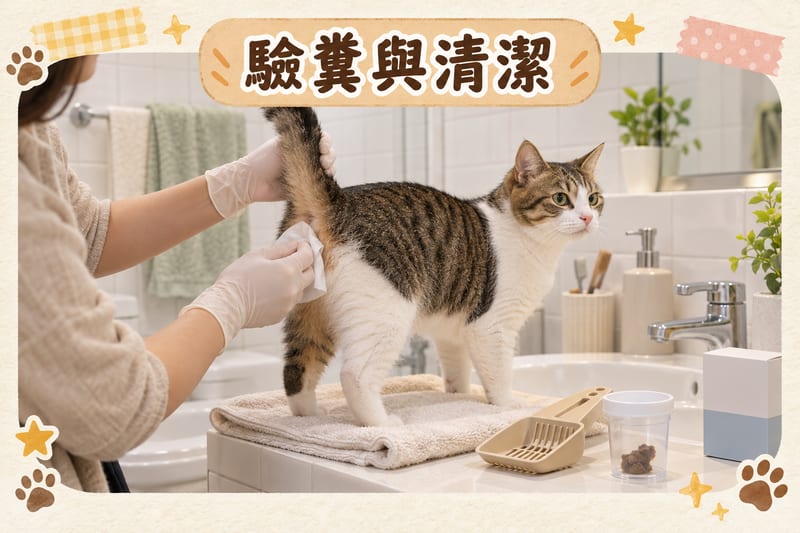
- Clean up faeces and litter tray the same day; do not leave overnight. Eggs are shed in faeces; the sooner cleaned, the less environmental contamination.
- Wash hands and feeding utensils after dosing; store tablets where children and other pets cannot find them.
- Use separate cutting boards for raw meat and organs from cooked food, and cook thoroughly to reduce oral infection chances such as Taenia.
- Use a calendar or phone reminder for deworming day; remind yourself before the next due date, and it is easier to report records to the veterinarian.
5. The other half beyond medication: environment and daily management
Dewormers only treat worms already in the body; the environment is the source of reinfection. The following are as important as dosing:
- Regularly clean litter trays and favourite corners. Eggs are shed in faeces and survive longer in humid weather, so "clean quickly" is more practical than "disinfect frequently."
- Flea control is tapeworm control. If you see rice-like segments, the first thing to check is fleas, not changing drugs.
- Groom and check after pet hotels or dog parks, and look for segments or itching around the anus.
- Isolate and faecal-test new additions; shared litter trays and bedding in multi-pet households are common routes of cross-infection.
- When there are children or pregnant women at home, wear gloves when handling faeces and wash hands afterwards; roundworms and Echinococcus are zoonotic, and basic hygiene is sufficient.
6. Buying, storage and post-deworming digestive support
Buying and storage: Check packaging integrity, batch number and expiry date; buy from trusted retailers; store in a cool, dry place—Hong Kong's humid weather can affect tablet quality if damp; do not keep split tablets until next month.
Two common misconceptions:
- "After deworming, I can feed raw meat and not worry about mosquitoes": Wrong. Dewormers do not cover heartworm and do not prevent oral reinfection; risk behaviours themselves must be managed.
- "Covering 14 to 18 species means full protection": No. Coccidia, Toxoplasma, Tritrichomonas and external parasites are not included and each has its own management.
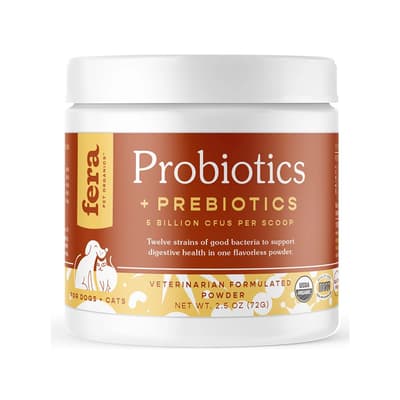
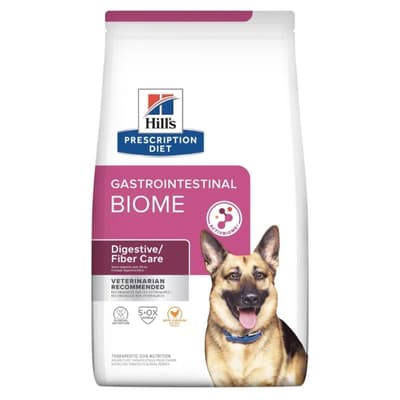
Post-deworming digestive support: Some pets may have soft faeces for a day or two after deworming, usually related to temporary fluctuations in gut flora. During this time, maintain the usual diet, feed small frequent meals, and ensure adequate water. If a veterinarian recommends probiotics or easily digestible food, you can refer to the following products available at PetChill online store:
- Fera Pets Supplement Cat and Dog Nutritional Supplement USDA Organic Certified Organic Probiotic and Prebiotic Nutrition Powder 72g (for dogs and cats) (4581) — HK$326
- Nature's Protection Cat Sensitive Digestion Adult Cat Food for Sensitive Stomach 400g (FD3510) — HK$54
- Hills Prescription Diet Dog Food GI Biome Digestive Care Original Kibble 16lbs (604198) — HK$1029 (available for pre-order)
Prices and stock are subject to the online store's current listed price. Prescription diets require a veterinary prescription; probiotics and sensitive stomach diets are supportive and cannot replace dewormers or veterinary diagnosis. For more on Quantel's ingredient safety, suitable candidates and side-effect warning signs, see the Quantel dewormer safety review; for gastrointestinal signs caused by parasite infections and daily support, the complete guide to cat and dog digestive health provides a full framework.

Further Reading
- Complete Guide to Cat and Dog Digestive Health | Causes of Vomiting, Diarrhoea, Soft Stool, Mucus Stool + How to Choose Probiotics (2026)
- Pet Deworming | Complete Guide to Cat and Dog Dewormers, Schedules, Precautions (Hong Kong)
- Complete Cat Deworming Guide | Internal and External Dewormer Choices in Hong Kong, Frontline Usage and Schedule
- Is Quantel Dewormer Safe? Ingredients, Suitable Candidates and Precautions
For emergencies, contact a veterinarian immediately; this article is for reference only and cannot replace veterinary diagnosis.
Information checked as of 2026-10-12Source: PetChill editorial team
 Almo Nature full guide →
 Fuji One full guide →