Quick answers
- Two things tell you the direction: is the abdomen straining during swallowing, and is the vomit digested.
- Cats that eat too fast usually bring up whole undigested kibble within 5 to 15 minutes after eating – the most common benign regurgitation.
- Normal hairball vomiting is 1 to 2 times a month; once a week or more, large hairballs, or accompanying loss of appetite need veterinary assessment.
- Vet thresholds: vomiting 3 or more times in 24 hours, dry heaving with nothing coming up, blood or yellow-green bile in the vomit, a hard distended abdomen.
- First home step is to withhold food for 2 to 4 hours, keep water available, note the sound and timing, and do not give medication or induce vomiting on your own.
- If swallowing noises come with noisy breathing, open-mouth breathing or dullness, treat it as an emergency and do not wait another 24 hours.
Swallowing noises in cats (such as repeated gulping of saliva, swallowing air, gurgling in the throat) and vomiting are two different things, but often share the same cause. There are really only 2 questions to tell them apart: is there abdominal straining during swallowing? Is the food that comes up digested? If there is no abdominal straining and the vomit is whole undigested kibble, it is usually regurgitation, mostly related to eating too fast; if there is obvious retching and the abdomen contracts repeatedly, it is vomiting, and stomach and intestinal problems should be considered.
This article first helps you distinguish 5 easily confused situations, then breaks down 6 common causes, provides a "normal reaction vs danger sign" comparison table, a 4-step home care flow and a feeding adjustment table, and finally lists 6 vet red lines. All methods here are general nursing principles; anything involving medication must follow veterinary instructions.
What are cat swallowing noises? First distinguish 5 situations
What owners call "swallowing noises" can actually be 5 completely different phenomena. Get the direction wrong and the approach will be completely opposite.
- Normal swallowing and drinking sounds: cats lap water quickly with their tongues, and swallowing makes a regular gurgling sound; crunching dry food also makes a crisp chewing sound. These sounds are consistent, stop after eating, show no pained expression, and are normal.
- Aerophagia (swallowing air): when gulping food, using a deep bowl, competing for food in a multi-cat home or in a stressful environment, cats swallow air along with food into the oesophagus. Typical signs are continuous swallowing in the throat, a slightly bloated abdomen after eating, and sometimes bringing up a lot of white foam.
- Regurgitation: food has not even reached the stomach and passively slides out of the oesophagus. There is no retching, no abdominal straining, and the vomit is tubular, undigested, close to room temperature, usually without yellow bile, most often 5 to 15 minutes after eating.
- Coughing and respiratory problems: sensitive airways, post-nasal drip, or a hairball stuck in the throat can all produce "gurgling" or "coughing" sounds that owners easily mistake for vomiting. These are usually accompanied by neck stretching, noisy breathing, or even open-mouth breathing.
- Mouth or throat pain: periodontal disease, stomatitis, a foreign body in the mouth or enlarged lymph nodes in the neck can make cats swallow saliva frequently but with difficulty; they may tilt their head when eating, drop food, or only accept soft food.
There is a practical home test: film 5 to 10 seconds on your phone and play it in slow motion. Regurgitation looks like "food sliding out"; vomiting looks like "food shooting out after repeated abdominal contractions"; coughing looks like "neck extended forward, mouth open but nothing coming out". Taking this video to the vet clinic is far more accurate than a verbal description.
6 common causes of swallowing noises and vomiting
The following 6 categories cover most situations encountered at home, ordered from most common to most needing veterinary intervention:
| Cause | Typical sound and action | Vomit characteristics | Timing | Approach |
|---|---|---|---|---|
| Eating too fast, swallowing air | Continuous swallowing, stops after eating | Whole undigested kibble, little mucus | 5 to 15 minutes after eating | Slow feeder, small frequent meals, separate feeding |
| Hairball accumulation | Gurgling in throat, retching | Tubular hair mass coated in stomach fluid | Irregular, more in shedding season | More frequent brushing, enough water, hairball products |
| Oesophageal reflux | No abdominal straining, passive slide out | Tubular, undigested, no yellow bile | Within 30 minutes after eating | Record frequency; if persistent, vet should assess oesophagus |
| Acute gastritis or gastroenteritis | Abdominal straining, obvious retching | Food residue, white foam or yellow-green bile | Multiple times a day | Withhold food 2 to 4 hours; if persistent, see vet |
| Ingested foreign body or string | Dry heaving with nothing up, neck stretching, drooling | May only be foam or streaks of blood | Sudden, no warning | Emergency; do not induce vomiting, see vet immediately |
| Parasites or chronic intestinal inflammation | Swallowing sounds with bloating, bowel sounds | Soft stool, mucus stool or intermittent vomiting | Lasting over 1 week | Faecal test; vet decides deworming or dietary treatment |
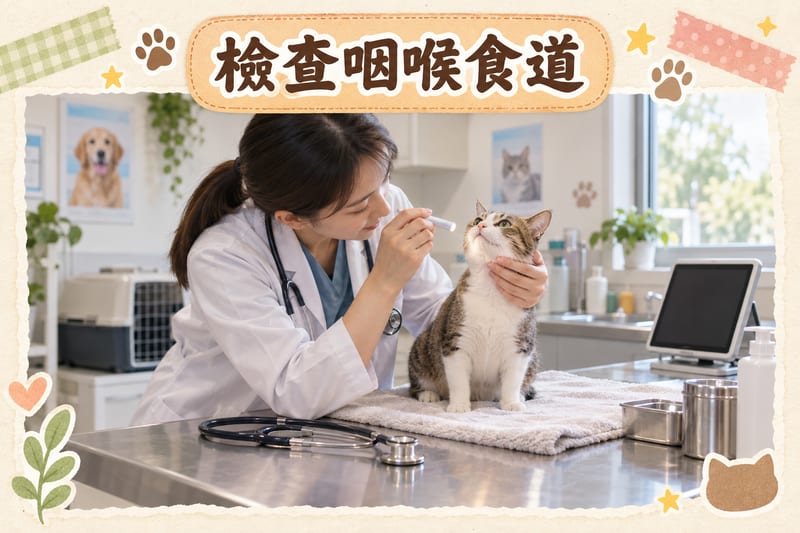
Eating speed and swallowed air is the most underestimated item. The cat's oesophageal sphincter must coordinate opening and closing during eating; eating too fast lets a large amount of air enter the oesophagus with the food, forming an "air column". The cat then swallows repeatedly to push the air down; if it cannot, food and air passively slide back out. This type of regurgitation does not involve inflammation, and switching to spreading food flat on a plate, using a slow feeder, or dividing into 4 to 6 meals a day usually reduces it noticeably within 1 week.
Hairballs and chronic digestive problems need separate handling. Hairball vomiting is a normal physiological response, but the hairball is only the result; behind it often lies insufficient brushing, too little water or slow intestinal motility. If the cat vomits hairballs every week, the hairballs get larger, or appetite and energy drop after vomiting, a veterinarian should assess. Long-term intermittent vomiting with soft stool, mucus stool or even blood may be chronic intestinal inflammation, requiring blood tests, faecal tests and imaging; it cannot be solved by changing food alone.
Ingested foreign bodies are the most dangerous category and look most like "ordinary vomiting". After swallowing string, rubber bands, plastic fragments, hair ties, needles and thread or bone fragments, the foreign body may lodge in the oesophagus or intestine, making the cat dry heave repeatedly without bringing anything up. At this point never induce vomiting on your own, because sharp or string-like foreign bodies can cut the oesophagus during induced vomiting, or even cause intestinal intussusception. The correct action is to see a vet immediately and bring a sample or packaging of the same foreign body to help the vet judge.
Normal reaction or danger sign? One comparison table
Many owners ask: how many times is too many? The table below divides common observations into two sides; if any item on the right appears, contact a vet within 24 hours.
| Observation | Usually can monitor at home | See a vet promptly |
|---|---|---|
| Frequency | Hairball or whole-food regurgitation 1 to 2 times a month | Vomiting 3 or more times in 24 hours, or vomiting 2 days in a row |
| Sound and action | Swallowing stops after eating, no pained expression | Continuous swallowing, dry heaving with nothing up, open-mouth breathing |
| Vomit | Tubular hair mass, whole kibble, small amount of white foam | Fresh blood or coffee-coloured, yellow-green bile, foreign body or string |
| Timing | One-off regurgitation 5 to 15 minutes after eating | Repeated retching hours after eating, or vomiting on an empty stomach |
| Energy and appetite | Wants to eat right after vomiting, normal activity | Refuses food over 12 hours, hides, slow responses |
| Other signs | No signs of abdominal pain | Drooling, neck stretching, hard distended abdomen, ongoing weight loss |

A few points to note. First, "wants to eat right after vomiting" is a very important dividing line: cats with benign regurgitation go straight to the bowl afterwards and act normally; if the cat hides, does not want to eat or responds slowly after vomiting, it should be checked promptly even if it only vomited once. Second, empty-stomach vomiting should not be treated as normal long-term: bringing up yellow or foamy bile in the early morning may reflect too long a fasting period, and may also be related to gastritis, pancreatic or liver and gallbladder problems, needing veterinary judgement. Third, weight and water intake should be looked at together: normal appetite but ongoing weight loss, or a clear increase in water intake, are clues to internal problems.
Breathing should also be simply measured at home. A resting cat usually breathes 16 to 40 times per minute; vets generally use a resting rate of under 30 per minute as a home reference threshold. If a cat at complete rest breathes more than 30 times per minute along with swallowing noises or vomiting, it should not be treated as a digestive problem alone, and a vet should be seen promptly.
4 home steps and feeding adjustments
If you notice swallowing noises or vomiting, do not change food immediately or try random remedies. Follow these 4 steps: they reduce the burden on the stomach and intestines and provide accurate information for the vet.
Step 1: Record. Film 5 to 10 seconds, note the time, frequency, colour and texture of the vomit, and what the cat ate in the hour before.
Step 2: Withhold food for 2 to 4 hours. Let the stomach and intestines rest, but keep water available. Kittens, diabetic cats or cats with chronic illness are not suitable for long fasting; call the vet first to confirm.
Step 3: Resume eating with small frequent meals. After the fasting period, start with one-third of the usual amount, divided into 4 to 6 meals a day; wet food or softened dry food is easier to swallow and digest.
Step 4: Transition food over 7 to 10 days. If the current food is suspected, mix new and old food in proportions, increasing the new food every 2 to 3 days, keep recording, and consult a vet if there is no improvement within 3 days.
| Adjustment | Specific action | Purpose |
|---|---|---|
| Bowl | Use a slow feeder, or spread food flat on a large flat plate | Slow eating, reduce swallowed air |
| Meals | 4 to 6 meals a day, each about one-third of the usual amount | Avoid overloading the stomach at once |
| Food form | Wet food, softened dry food or small kibble | Easier to swallow, less oesophageal irritation |
| Food transition | Mix gradually over 7 to 10 days, adjust every 2 to 3 days | Reduce digestive sensitivity |
| Water | Change water daily, place 2 to 3 bowls around the home | Support hairball passage and gut motility |
| Records | Note time and appearance of every abnormal episode | Provide accurate information at follow-up |
For cats with sensitive digestion or needing short-term dietary treatment, a vet may recommend a specific formula. These are reference options available in store:
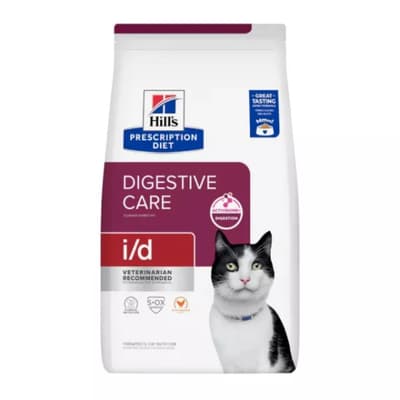
- Hills Prescription Diet Feline i/d Digestive Care 8.5lbs (8694) — HK$679 (available for pre-order)
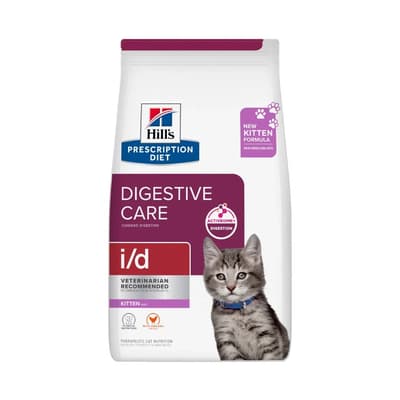
- Hills Prescription Diet Feline i/d Digestive Care Kitten 4lbs (609308) — HK$404 (available for pre-order)
- Nature's Protection Cat Sensitive Digestion Adult Cat Food 400g (FD3510.4K) — HK$54
Prices and stock are subject to the online store's current listed price. Special reminder: prescription diets are veterinary prescription products and should not be fed long-term on your own; consult a vet before use and follow instructions to complete the course and follow-up.
Daily prevention: brushing, feeding and environment
Preventing swallowing noises and vomiting is not about buying more products, but about getting daily details right.
- Brushing: short-haired cats 2 to 3 times a week, long-haired cats once daily, more often in shedding season. Brushing removes dead hair and directly reduces the amount of hair the cat swallows.
- Feeding method: 4 to 6 meals a day, each about one-third of the usual amount, using a slow feeder or flat plate; in multi-cat homes, feed separately to avoid competition.
- Water: place 2 to 3 water bowls around the home, change water daily, and consider a water fountain. With enough water, hairballs and intestinal contents pass more easily.
- Environment: keep routines stable and reduce sudden noises and visitors; stress and anxiety are common triggers for swallowing air.
- Parasite control: regular deworming is the foundation of digestive health. To learn about common parasites in Hong Kong and deworming schedules, see the complete cat deworming guide.
- Stool observation: soft stool, mucus stool and vomiting often appear together. If your cat's stool has a layer of clear mucus on the surface, also read the complete guide to mucus stool in cats to understand causes and what to watch for.
- Regular weighing: weigh once every 2 weeks and record; weight change is one of the most objective indicators.
If your cat already has a history of repeated vomiting, also review the complete guide to cat vomiting to clarify the difference between "hairball vomiting" and "true vomiting", and combine it with the feeding adjustments in this article.
When to see a vet immediately: 6 red lines
If any of the following appears, do not keep observing; contact a vet immediately:
- Vomiting 3 or more times in 24 hours, or vomiting 2 days in a row.
- Dry heaving but nothing comes up, with neck stretching and drooling – possible foreign body obstruction.
- Vomit contains fresh blood, coffee-coloured material or yellow-green bile.
- Hard distended abdomen, painful when touched, or the cat will not let you pick it up.
- Refuses food for more than 12 hours, or hides, responds slowly, or has a low body temperature.
- Breathing becomes laboured, open-mouth breathing, or resting breathing over 30 times per minute.

Before taking your cat to the vet, prepare 3 things: video recordings, photos or samples of the vomit, and a record of diet and stool over the past week. These help the vet narrow things down faster and reduce repeat tests. Also remember that all methods mentioned here are general principles for home observation; anything involving anti-emetics, stomach medication, deworming medication or prescription diets must be used under veterinary diagnosis and instructions, and doses should not be changed or stopped on your own.
Further reading
- Complete guide to digestive health in cats and dogs | Causes of vomiting, diarrhoea, soft stool and mucus stool + how to choose probiotics (2026)
- Complete guide to cat vomiting | Hairball or illness? 6 major causes + first aid every Hong Kong cat owner should know
- Complete guide to mucus stool in cats | What does mucus in stool mean? Causes, observation and when to see a vet
- Complete guide to cat deworming | Common parasites in Hong Kong, deworming schedules and safety notes
In an emergency, contact a veterinarian immediately; this article is for reference only and cannot replace veterinary diagnosis.
Information checked to 2026-10-12Source: PetChill editorial team
 Feline Natural full guide →
 Fuji One full guide →


 Almo Nature full guide →