Quick Answers
- Both ingredients are well-established deworming ingredients on the market for decades
- Product information states coverage of 14 to 18 intestinal parasites
- Adult dogs and cats generally need routine deworming every 3 months
- No fasting required; scored tablets can be split by weight
- Puppies from two weeks of age can use it, subject to veterinary assessment
- Do not self-increase the dose or extend the course
Quantel dewormer's safety advantages mainly come from the ingredients themselves. According to the manufacturer's product information, each tablet contains praziquantel 50 mg and fenbendazole 500 mg. Both are broad-spectrum dewormers used by veterinarians for decades, acting mainly in the gut, requiring no fasting, and the tablets are scored for weight-based splitting. However, "safe" comes with conditions—following the label dose and course is completely different from self-increasing the dose or extending the course.
Hong Kong's hot and humid weather means cats and dogs going outdoors, eating raw meat, or staying at pet hotels can encounter eggs of roundworms, hookworms, whipworms, and tapeworms. Deworming is the lowest-cost part of preventive medicine, but online claims about dewormers contradict each other: one side says "chemical drugs harm the liver and kidneys," the other says "natural ingredients have side effects are uncommon but possible." Both are oversimplifications. This article starts with the ingredients, breaks down Quantel's safety advantages and limitations, explains which cats and dogs it suits, which need a veterinarian's decision, and how to use it with minimal risk.
1. Quantel's Ingredients: Two Ingredients with Divided Roles, Each Targeting Different Worms
Quantel is an oral broad-spectrum deworming tablet. According to the manufacturer's product information, each tablet contains praziquantel 50 mg and fenbendazole 500 mg. The two ingredients have clear roles, covering two completely different major groups of intestinal parasites: one targets tapeworms, the other targets nematodes.
| Ingredient | Drug Class | Mechanism of Action | Main Coverage | Safety-Related Characteristics |
|---|---|---|---|---|
| praziquantel | Isoquinoline derivative | Disrupts the worm's tegument, causing contraction, paralysis, and expulsion | Tapeworms: Dipylidium caninum, Taenia, Echinococcus, etc. | Rapidly absorbed and metabolized; research also suggests it is excreted back into the intestinal lumen by the intestinal mucosa |
| fenbendazole | Benzimidazole | Binds to parasite β-tubulin, preventing microtubule formation and glucose uptake | Nematodes: roundworms, hookworms, whipworms; also used for Giardia and cat lungworm | Selectively targets parasite tubulin; oral absorption limited, mostly stays in the gut |
This division gives relatively broad coverage: product information generally states Quantel can expel 14 to 18 intestinal parasites in cats and dogs at once, and can also treat cat lungworm and canine Giardia.
Note that there is more than one ingredient combination on the market. Besides "praziquantel + fenbendazole," there are combinations such as "praziquantel + pyrantel + febantel," with different parasite coverage and safety considerations; doses are not interchangeable. To first understand the differences between the four major groups of internal parasites, see the complete pet deworming guide.
2. Breaking Down Safety Advantages One by One
"Safety advantages" should be viewed on two levels: the drug properties of the ingredients, and the design of use.
-
Well-established ingredients with decades of safety data. Fenbendazole was approved for use in dogs in the US as early as 1983; praziquantel has also been used by veterinarians for over forty years. Well-established ingredients mean known adverse reactions, interactions, and special population precautions are relatively clearly documented, giving veterinarians enough information to judge.
-
The drugs mainly act in the gut, with limited systemic exposure. Fenbendazole has limited oral absorption, mostly staying in the gut; although praziquantel is rapidly absorbed, research suggests it is excreted back into the intestinal lumen by the intestinal mucosa. The ideal state for a dewormer is "killing worms in the gut with less entering the whole body," which is one reason for the relatively wide safety margin.
-
Not on the MDR1 (ABCB1) problem drug list. Some herding breeds, long-haired whippets, and mixed-breed dogs carry the MDR1 gene mutation and are particularly sensitive to ingredients like ivermectin and moxidectin. Checking Washington State University (WSU)'s MDR1 problem drug list, neither is listed. However, dogs with MDR1 mutations should always have this clearly communicated to the veterinarian before any medication.
-
No fasting required. Product information states no fasting before or after is needed, so there is no stomach upset or low blood sugar from an empty stomach, especially beneficial for puppies, kittens, and anxious pets.
-
Scored tablets allow accurate weight-based splitting. Many adverse reactions to dewormers are not due to the ingredient but to dose estimation errors: underestimating weight leads to insufficient deworming, overestimating equals overdose. Tablets can be split in half or quarters, and with accurate weighing, dosing is closer to actual needs.
-
Clear framework for pregnancy and lactation. Some regional labels state it can be used in pregnant and lactating bitches, but must not exceed the labeled dose; other combination products with similar ingredients state they are not recommended during the first two trimesters. Therefore, use during pregnancy and lactation must be decided by a veterinarian on a case-by-case basis.
-
Oral tablets leave no residue on the coat. Topical spot-on products require waiting for the liquid to dry, separating other pets, and children touching the neck area should wash their hands. Oral tablets avoid this concern, but manufacturer guidelines still remind: wash hands after dosing, and keep tablets out of reach of children and other pets.
| Safety Advantage | Underlying Principle | Practical Significance |
|---|---|---|
| Well-established ingredients | On the market for decades, ample accumulated safety data | Veterinarians can easily assess risks and interactions |
| Action concentrated in the gut | Limited absorption, or excreted back into the lumen | Relatively small systemic impact |
| Not an MDR1-sensitive ingredient | Mechanism differs from ivermectin class | An additional discussable option for MDR1 breeds |

Note: advantages are relative and do not mean "safe no matter how used." Even ingredients with a wide safety margin can cause problems with overdose or excessively long courses; see Section 5 for details.
3. Who It's For: Which Cats and Dogs Are Suitable, Which Need a Vet First
The answer depends on age, weight, health status, and living environment. The table below is general guidance and cannot replace veterinary diagnosis.
| Subject | General Situation | Usage Precautions |
|---|---|---|
| Healthy adult dogs, adult cats | Can be used per label | Weigh accurately first, then split per label |
| Puppies from two weeks of age | Product information states usable | High infection risk; interval and course best arranged by a veterinarian |
| Kittens | Must meet minimum weight threshold | Arrangements before six months best decided by a veterinarian |
| Pregnant, lactating bitches and queens | Label allows but must not exceed dose | Other similar formulations have different restrictions; veterinary judgment required |
| Pets on heartworm preventives | Quantel does not include heartworm prevention | Different functions; not interchangeable |
| Chronic illness, liver/kidney issues, on medication | Ask a veterinarian first | May interact with existing medications |
| Unweaned, underweight, under two weeks old | Do not self-administer | Must be handled after veterinary assessment |
Three most commonly overlooked situations:
- Puppies and kittens are not simply "just feed less". Young animals have immature liver and kidney metabolism, so dose and interval must be stricter; some labels therefore leave arrangements before six months to the veterinarian.
- Multi-pet households must calculate per pet. Three cats in one home can range from 3 kg to 5.5 kg; you cannot "roughly average."
- Heartworm prevention cannot be skipped. Quantel covers intestinal parasites, cat lungworm, and Giardia, but not heartworm; if your pet has a heartworm prevention plan, both should run in parallel.
If your pet recently has soft stool, diarrhea, or mucus in stool, it is best to clarify the gastrointestinal situation before arranging deworming. To distinguish abnormal defecation, see the cat poop observation guide; for an overall parasite protection strategy for cats, the complete cat deworming guide has more complete schedules and product type comparisons.
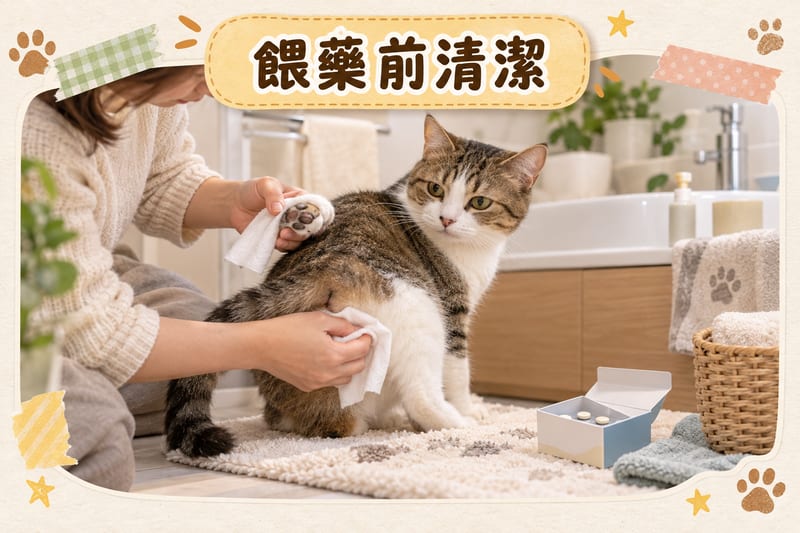
4. Lowest-Risk Usage: Seven Steps
The following seven steps are general practice; actual dose and course should always follow the product label and veterinary instructions.
- Weigh accurately. A home pet scale is most accurate; without one, weigh yourself holding the pet, then weigh yourself alone, and subtract—do not rely on visual estimation or old records.
- Determine the number of tablets per label or veterinary instruction. Tablets are scored and can be split in half or quarters; use immediately after splitting, do not put back in the original box.
- Feed directly or mix into a small amount of wet food. No fasting needed; adding butter or cooking oil is not recommended—such folk methods are unnecessary and may make the pet refuse normal food later.
- Confirm the whole dose is eaten. In multi-pet households, feed separately and observe separately to avoid one pet eating more due to competition.
- Observe for 24 to 48 hours. Record any soft stool, vomiting, changes in energy and appetite, to facilitate communication with the veterinarian.
- Record the date and product batch. Write in a logbook or phone memo so the next deworming is neither repeated nor missed.
- Wash hands after dosing and clean the environment. Clean feces daily and keep the litter box clean; if there is a flea infestation, treat it simultaneously, otherwise tapeworms can reinfect via fleas.
5. Coverage, Limitations, Side Effects, and Warning Signs
The most commonly misunderstood aspect of dewormers is thinking they equal "all-purpose parasite control." The actual division is as follows:
| Parasite Type | Covered by Quantel? | Additional Notes |
|---|---|---|
| Roundworms, hookworms, whipworms | Covered | Mainly by fenbendazole |
| Tapeworms (including Dipylidium, Echinococcus) | Covered | By praziquantel |
| Cat lungworm | Product information states treatable | Requires veterinary diagnosis first; course differs from routine deworming |
| Canine Giardia | Product information states treatable | Clinical treatment use; course specified by veterinarian |
| Heartworm | Not covered | Requires heartworm preventive |
| Fleas, ticks, ear mites, sarcoptic mange | Not covered | External parasites; use other methods |
| Toxoplasma, viral or bacterial gastroenteritis | Not covered | Each has other treatment options; dewormers are not anti-inflammatory drugs |
Regarding side effects, at label doses the most common are transient gastrointestinal reactions; probability and severity are related to dose and course length.
| Situation | Presentation | Management |
|---|---|---|
| Generally acceptable reactions | Soft stool, temporary reduced appetite, one or two vomits within one to two days | Maintain water intake and observe; if persistent, ask a veterinarian |
| Needs veterinary assessment | Vomiting or diarrhea over 24 to 48 hours, marked lethargy | Contact a veterinarian the same day |
| Emergency | Persistent vomiting, pale gums, nosebleeds, petechiae | Seek medical care immediately and bring the drug box |
Overdose and long-term high doses are the most important concern. As of October 2023, the US FDA recorded 12 reports of bone marrow suppression or pancytopenia in dogs after fenbendazole use; all cases involved use beyond the label course, ranging from 5 to 14 days (label dose is 3 consecutive days), with some cases confirmed by bone marrow biopsy. The conclusion is clear: following the label dose and course is the prerequisite for safety; self-increasing the dose or extending the course (e.g., following online "anti-cancer" protocols) carries a completely different risk. Situations requiring an extended course should always be assessed and monitored by a veterinarian.
Also, if your pet is using other deworming products, topical medications, or long-term drugs, remember to inform the veterinarian. Dewormers are only part of gastrointestinal health management; daily diet, water intake, and environmental cleanliness also affect gut status. For the overall framework, see the complete cat and dog digestive health guide.
6. Common Misconceptions, Purchasing and Storage, and Post-Deworming Gut Support
Four common misconceptions:
- "Natural ingredients are always safe": Dewormers are chemical drugs; there is no "natural equals zero risk"; safety depends on dose, course, and individual animal condition.
- "After deworming, there will never be worms again": Dewormers only kill worms currently in the gut; fleas, environmental eggs, and outdoor exposure can cause reinfection, so environmental cleaning must be done simultaneously.
- "Dewormers can be used as anti-diarrhea drugs": No. Soft stool and diarrhea have many causes, parasites are only one; indiscriminate use of dewormers only obscures the condition.
- "No visible worms means no deworming needed": Many infections show no visible worms; routine deworming is itself prevention.
Purchasing and storage notes:
- Check packaging integrity, batch number, and expiry date; buy from reputable retailers; avoid loose or unknown-source tablets.
- Store in a cool, dry place; Hong Kong's humid weather can affect tablet quality if damp.
- Use immediately after splitting; do not save for next month.
Post-deworming gut support: Dewormers kill parasites; they do not "nourish the gut." Some pets may have soft stool for one or two days after deworming, usually related to transient gut flora fluctuations; during this time maintain the original diet, feed small frequent meals, and ensure adequate water. If a veterinarian recommends probiotics or easily digestible diets, you can refer to the following products available at PetChill's online store:
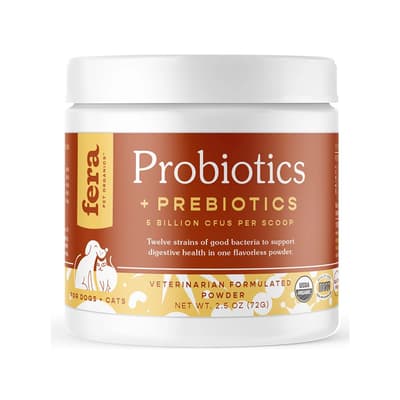
- Fera Pets Supplement Cat & Dog Nutritional Supplement USDA Organic Certified Organic Probiotic & Prebiotic Powder 72g (for dogs and cats) (4581) — HK$326
- Mao Zhang Medical Probiotic Health Meat Paste Pet Gastrointestinal Health Soft Stool Buster for Cats and Dogs 6g x 30 sticks — HK$220
- Nature's Protection Cat Sensitive Digestion Cat Food for Adult Cats with Sensitive Stomach 400g — HK$54
Prices and stock are subject to the online store's current listed price. Probiotics and sensitive stomach food play a supporting role and cannot replace dewormers or veterinary diagnosis.

Further Reading
- Complete Cat and Dog Digestive Health Guide | Causes of Vomiting, Diarrhea, Soft Stool, Mucus Stool + How to Choose Probiotics (2026)
- Pet Deworming | Complete Guide to Cat and Dog Dewormers, Schedules, and Precautions (Hong Kong Applicable)
- Complete Cat Deworming Guide | Hong Kong Internal and External Dewormer Choices, Frontline Usage, and Schedules
- Cat Poop Observation Guide | 7 Shapes and 4-Step Recording Method Every Hong Kong Cat Owner Should Learn
For emergencies, contact a veterinarian immediately; this article is for reference only and cannot replace veterinary diagnosis.
Information checked as of 2026-10-12Source: PetChill Editorial Team
 Fuji One full guide →


 Royal Canin full guide →
 Almo Nature full guide →